Feeds:
Posts
Comments

Archive for January, 2014

Sunshine Smoothie with Kumquats and Turmeric | Relishing It

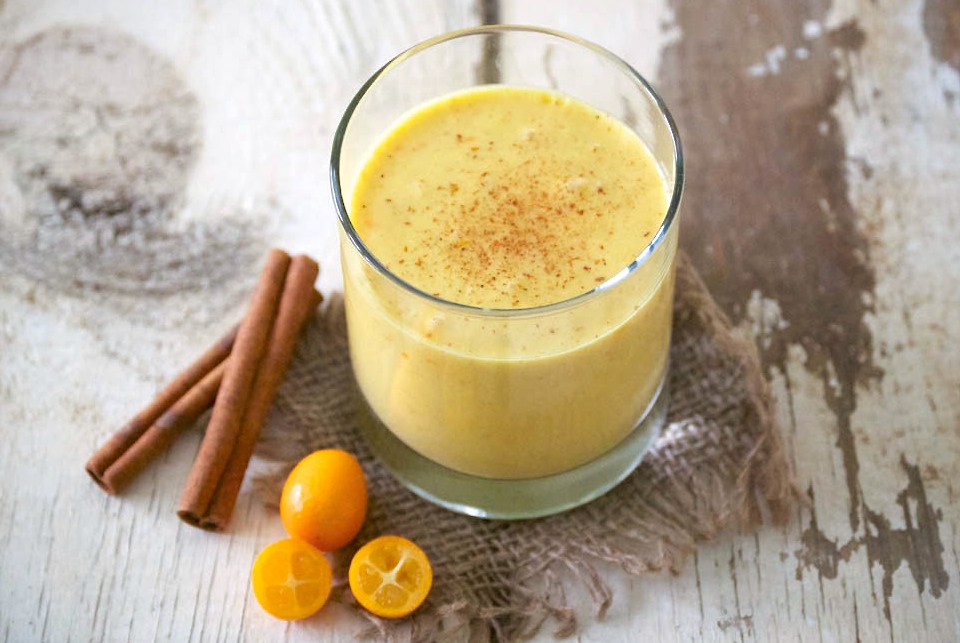
Another round of snow paired with a gray sky in the midwest this morning– at least the temperatures aren’t so bad.   I needed to brighten up my surroundings, so I blended up a Sunshine Smoothie.  I’ve likely mentioned this before, but I go through a bit of a kumquat love-fest this time of year.  They’re brilliant in this marmalade, perfect in vinaigrettes for salads, and they are downright fabulous blended into smoothies.

Sunshine Smoothie with Kumquats and Turmeric | Relishing It

This time, I’ve decided to craft a smoothie using kumquats as the star ingredient.  Yes, I love a smoothie loaded with greens as much as the next person (this one is my personal favorite), but sometimes I want something…a little less green.  The kumquats give this smoothie a fresh vibrancy that will wake you right up.  I also recommend using either fresh or frozen organic mango.  Plain yogurt is the protein that will keep you from getting hungry– I suggest using whole milk yogurt to also help with that.  And turmeric– a fantastic, healthy ingredient that you should eat more of anyway.  You can read about it’s specific properties here.  Curries are a great way to incorporate more turmeric into your diet, or throw a little into a soup, such as this one.  Adding just a bit to this smoothie completely works, too.  It pairs wonderfully with the cinnamon and citrus flavors.  No need to peel the kumquats, just cut them in half and remove the seeds.  Place everything in a blender or food processor and whiz it together.  Hope you enjoy!

Sunshine Smoothie with Kumquats and Turmeric | Relishing It

The Recipe:  Sunshine Smoothie with Kumquats and Turmeric

(makes 1 cup)

7-8 small organic kumquats, cut in half and seeds removed

1/3 cup diced fresh or frozen organic mango

1/3 cup organic whole milk yogurt

1/4 cup organic, unsweetened almond milk

1 teaspoon honey

1/4 teaspoon ground cinnamon

1/4 teaspoon ground turmeric

Place all of the ingredients into a blender or food processor and blend until smooth.  Serve with a sprinkle of cinnamon on top.  Enjoy!

Thanks for stopping by Relishing It today!

Laurie

Read Full Post »

Beer-Braised Pork Shoulder with Polenta | Relishing It

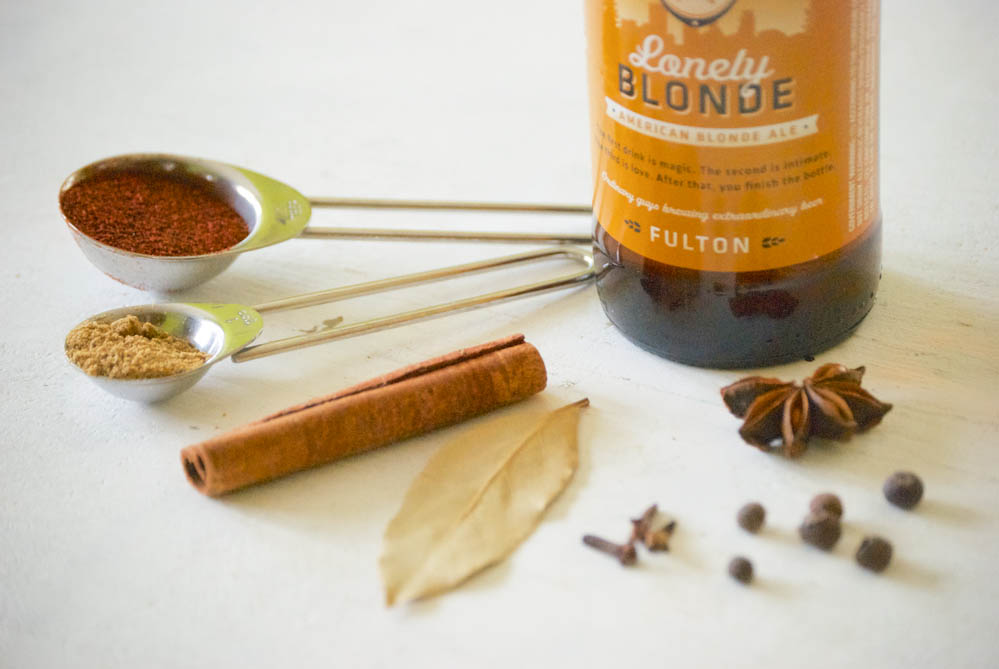
Another polar vortex, another no-school day for the kids.  So another cozy, cold-weather meal is in order.  It was difficult to come up with a name for this dish that would capture the flavors here.  It has so many things going on, but they don’t necessarily fit nicely into a category.  A little bit of Mexican from the ancho chiles and the cumin, and a little bit of Asian from the star anise and the cloves, brought together by the American craft beer.  At any rate, let me tell you about this delicious pork shoulder that you’re going to want to make more than once this winter.

Beer Braised Pork Shoulder with Polenta | Relishing It

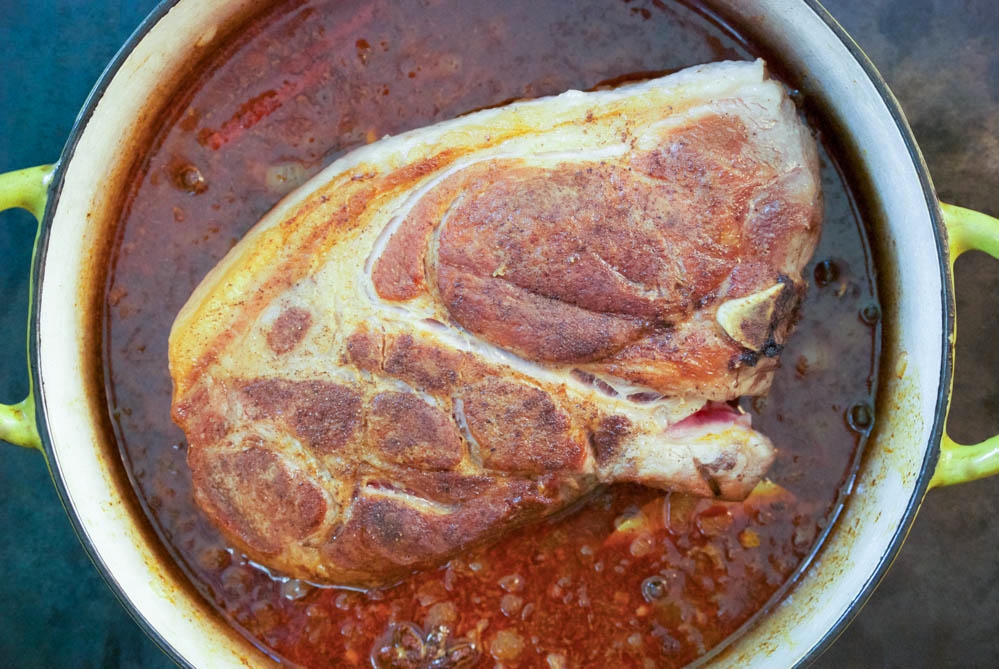
For those of you who have a fear of tackling a large cut of meat, this recipe is an ideal entry point.  Braising a pork shoulder could not be easier and the results are dynamite.  For starters, and not to sound like a broken record– please use a piece of meat that has been raised properly, preferably local.  Braising can be done using any variety of liquids– broth, wine, milk, or plain water.  In this recipe I used a local craft beer that paired with the spices to develop a deep, wonderful flavor.  The pork works wonderfully with the sweeter tones of cinnamon/cloves/star anise/and allspice.  It also works well with ancho chiles and cumin.  Marrying the two combinations together is fantastic.  You’ll love it.  Be sure to top it with a bit of fresh jalapeño– it’s not that hot and the freshness really brightens up the flavors.

Beer-Braised Pork Shoulder with Polenta | Relishing It

We generally serve the pork shoulder on top of  polenta.  I love a creamy, hot bowl of polenta when it’s cold outside.  Polenta is basically just yellow cornmeal.  It’s origin is Italian and from what I gather, true Italians wouldn’t dream of putting dairy into their polenta, instead making it only with water.  I’m not Italian.  So, I opted for a couple pats of butter and a sprinkle of parmesan mixed in with mine.  I think my Fortify friends may have influenced this a bit.  You will find different variations of the grind size when buying polenta.  Medium ground seems to make the most satisfying polenta.  Some people think making polenta is fussy, but I haven’t found that to be the case.  I do however advise you to be ready to sit down and eat the moment the polenta is done.  It doesn’t stay creamy all that long before it starts to harden and become a bit clumpy.  While it still maintains it’s lovely flavor, the silky texture will be lost.  So, be ready to sit down at the table and enjoy this lovely meal.

Beer-Braised Pork Shoulder with Polenta | Relishing It

The Recipe: Beer-Braised Pork Shoulder with Polenta

(serves about 4 with leftovers)

For the Pork Shoulder:

2 tablespoons olive oil, for browning

about a 4-pound pork shoulder (bone-in gives a great flavor)

1 medium white onion, diced

7-8 garlic cloves, minced

1 tablespoon ancho chile powder

1 teaspoon ground cumin

1/2 teaspoon ground allspice

1/4 teaspoon chipotle chile powder

1/4 teaspoon ground cloves

1/4 teaspoon ground coriander

1 4-inch long cinnamon stick

1 whole star anise

1 dried bay leaf

Kosher salt and freshly cracked black pepper

1 12-ounce bottle of really good craft beer (Locally,  Fulton’s Lonely Blonde or Indeed’s Midnight Ryder work really well.  One is a lighter beer and the other is a black ale.  The end results are each different, but both equally delicious.)

For the Polenta:

5 cups water

1 cup polenta, preferably medium grind

salt

a couple pats of butter

a few grates of fresh parmesan cheese

Pre-heat oven to 250 °F.  Over a med-high flame, heat a large Dutch oven coated with olive oil until it is hot.  Pat the pork shoulder dry with a paper towel and season both sides of it with salt and pepper.  Place the pork in the Dutch oven and brown every side (ends, too) until a deep, dark caramel color has formed on all sides.  Remove from the pot and place on a plate.  In the same pot, add the onion and garlic, and a bit more olive oil, if needed.  Sprinkle with salt and pepper.  After about 3 minutes, add the the entire list of spices.  Stir and then add the beer.  Place the pork, along with any juices back into the pot.  Bring to an almost boil, then remove from heat.  Cover and place in the heated oven for about 3 hours.  You will know when the pork is done when you touch it with a fork.  It should feel tender, not tough.  It should practically fall off of the bone when gently tugged at.  If there is too much resistance, roast it a bit longer.  Be sure to have an oven thermometer, so you know the accuracy of your oven.

Meanwhile, begin the polenta.  In a large saucepan heat 5 cups of water seasoned with salt.  When it is boiling, sprinkle the polenta on the top.  Whisk everything together and reduce the heat to a medium simmer.  Continue to whisk every so often to avoid the bottom burning.  The mixture will eventually thicken up– the exact time will depend upon the size of the grain and how high you have the heat– so, I won’t give an exact measurement in minutes (anywhere from 20-40 minutes), just look for it to be the thickness that you desire.  When it is done, remove from heat and mix in a couple of pats of butter and a few grates of fresh parmesan cheese.  Polenta requires a decent amount of salt, to bring out the flavor– re-season, if necessary.  (Note:  leftover polenta can be spread out smoothly onto a baking sheet.  Refrigerate, then cut into squares.  You can bake or fry it and top it with all sorts of things– use your imagination!)

While the polenta is cooking, tend to the pork.  When the pork is done, remove it from the pot.  I like to make a smooth sauce out of the liquid, but the choice is entirely yours.  You can certainly skip this step.  Strain the liquid.  Then pour the liquid portion into a gravy separator to remove the fat, or use a spoon to skim it from the top.   Remove the cinnamon, star anise, and bay leaf and discard.  Place the remaining onions and garlic into a blender.  Then pour the liquid (sans fat) into the blender and blend it together (always be careful when blending hot liquids).  Return the mixture to the Dutch oven and re-season with salt and pepper, if necessary.  Meanwhile, separate the meat from the bone and tear it into big chunks.  Place the meat into the sauce.  Serve with jalapeños and polenta, if desired.  This is a wonderful dish to re-warm, as the flavors deepen even more overnight.  Enjoy!

Thanks for stopping by Relishing It!

Laurie

Read Full Post »

Winter Salad with a Kumquat Vinaigrette | Relishing It

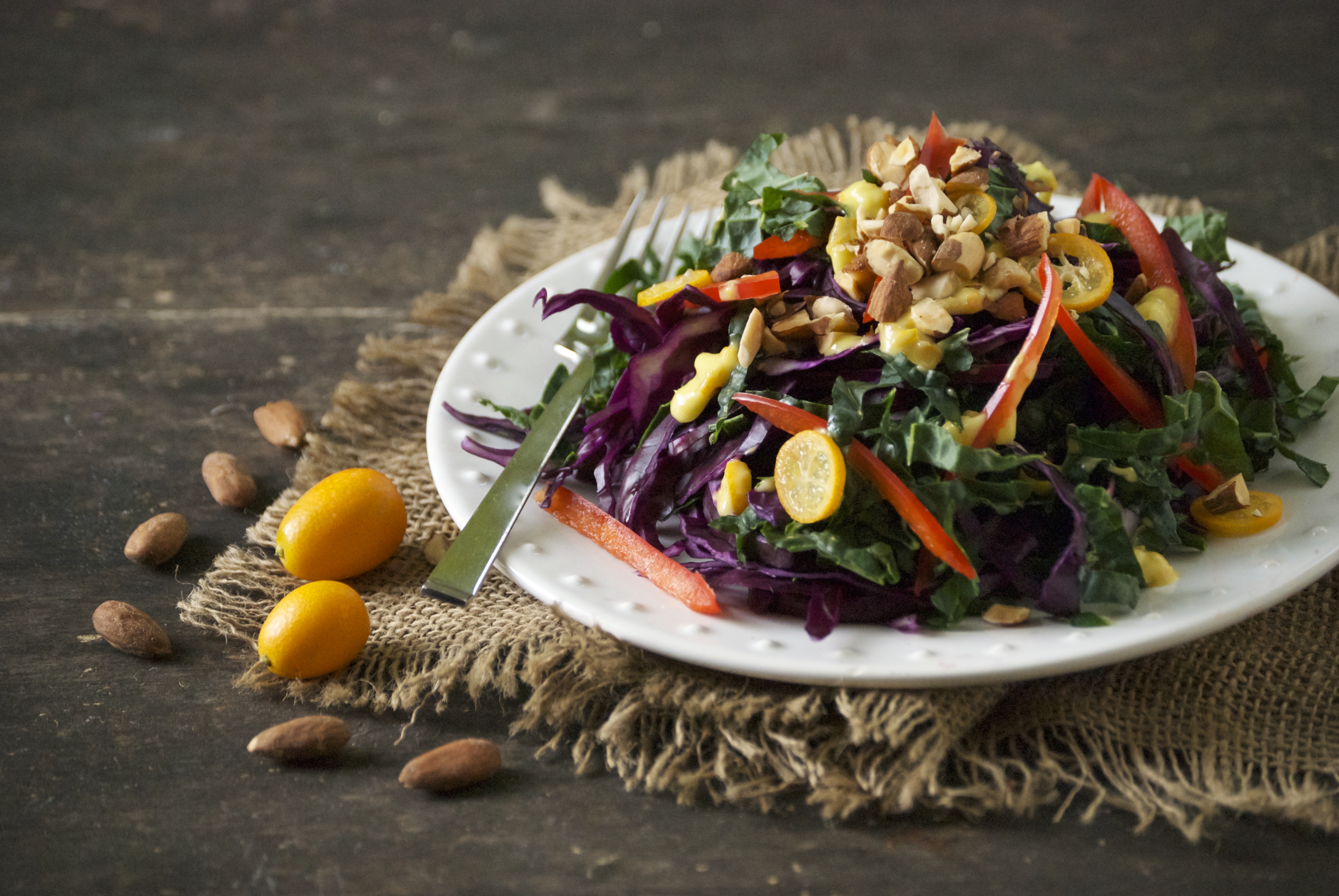
Apparently I’ve been craving a little color lately.  I recently bought a couple of brightly colored sweaters (orange and electric blue).  I just replaced my everyday-lipstick with a few colors that have a bit more pizzazz.  Yep, I just need to see a bit more color this time of year.  The dull gray skies and monotonous white snow just don’t do it for me by late January.   So…this colorful salad fits the bill perfectly.  And aside from the visual beauty, this one is delicious.  I could eat it every day.  Actually, I pretty much did for month straight last year.

Winter Salad with a Kumquat Vinaigrette | Relishing It

Winter Salad with a Kumquat Vinaigrette | Relishing It

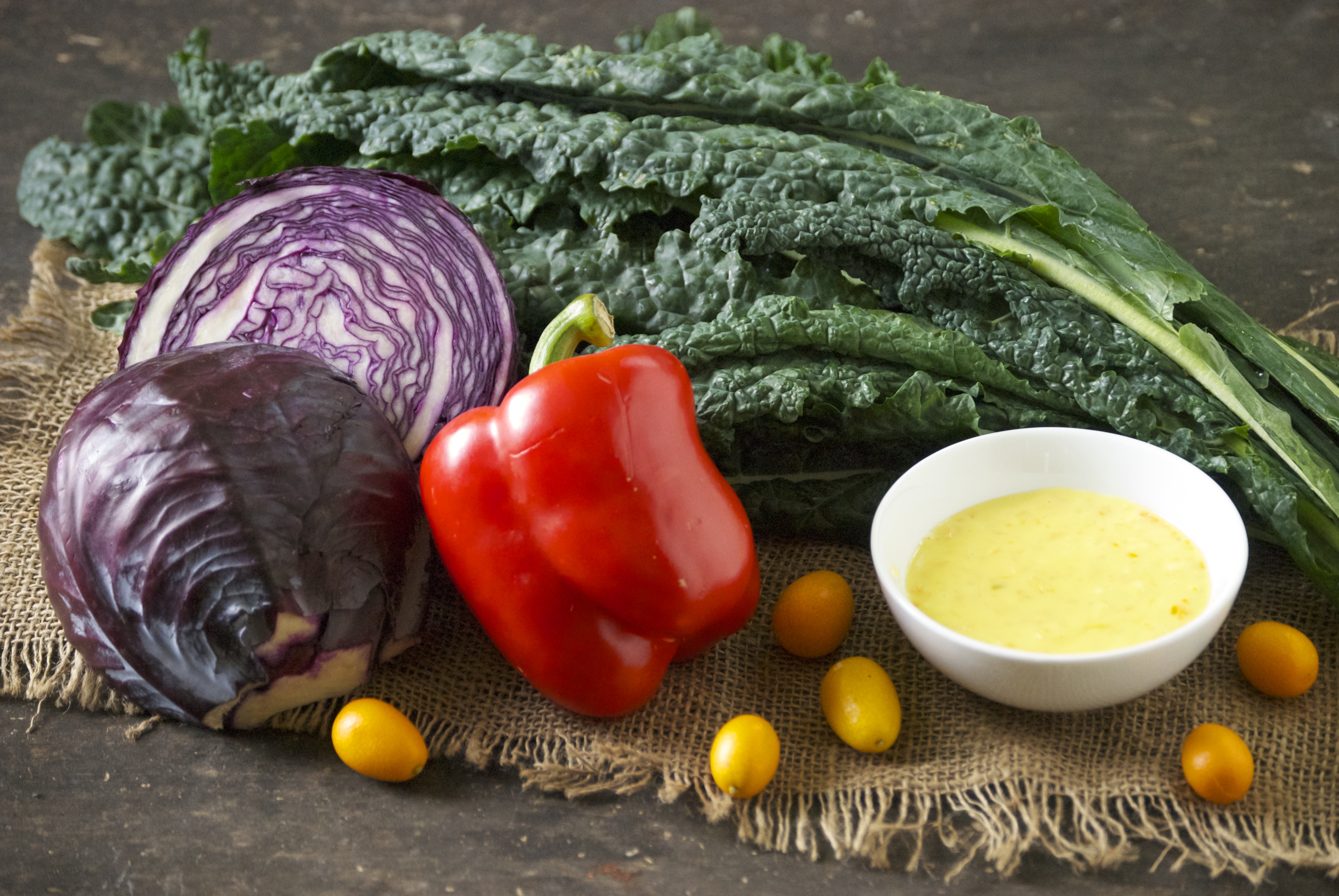
Let’s start with the red cabbage.  I rely on it a lot during winter.  It tastes great, works both hot or cold, and it can hang out it your refrigerator for a while.  This last reason is important, because if you don’t happen to want to eat a salad every day, this ingredient will be waiting for you.  Tuscan kale is another great ingredient.  It’s perfect in soups or massaged and made into a simple salad.  Red peppers were on sale at our co-op the other day, so I bought a few of those too.  My kids love to snack on them all summer long, but they go through withdrawal in winter.  They were probably happier than I was when I brought them home.

Winter Salad with a Kumquat Vinaigrette | Relishing It

Finally, I present to you the kumquats.  They have such a fresh, powerful citrus flavor.  Take a look at this kumquat marmalade that I shared here a while back.  Kumquats always remind me of sunshine, which is obviously just what I need right now.  They’re sweet, tangy, and so fragrant.  I love them thinly sliced and tossed into salads– no need to peel them.  Just remove the few tiny seeds that will be inside. In this recipe, I blend them up (peel too) into a delicious vinaigrette that goes perfectly with any winter salad.  I also add a touch of honey to it to bring out the sweetness a bit more.  It’s a bit on the thick side for a vinaigrette, because the acidic component (the kumquats) is blended whole– but I think it’s absolutely lovely and the hearty winter vegetables work well with it.  The almonds are the perfect finishing touch to the salad.  I hope you give this little salad a try if you need to brighten up your day– I bet it will.  Enjoy!

Winter Salad with a Kumquat Vinaigrette | Relishing It

The Recipe:  Winter Salad with a Kumquat Vinaigrette

Serves 2

For the Vinaigrette:

10 kumquats, cut and seeded (leave the peel on)

1 teaspoon finely chopped shallot, white, or red onion

1 teaspoon honey

pinch of kosher salt

1/4 cup extra virgin olive oil

For the Salad:

About half of a small red cabbage, cored and finely sliced

handful of Tuscan kale (6-7 stalks) stems removed and thinly sliced into ribbons OR a handful of fresh spinach

1/2 red pepper, julienned

handful of almonds, coarsely chopped

3-4 kumquats, seeded and thinly sliced

To make the vinaigrette, place the kumquats into a small food processor and pulse a few times until they are finely chopped.  Add the shallot, honey, and salt.  Pulse a few more times until nearly smooth.  Add the olive oil and blend.  This vinaigrette will remain somewhat thick.  Adjust salt, if necessary.

It’s best to place your salad ingredients (sans almonds and kumquats) into a bowl and pour the vinaigrette on top of them.  Toss to coat.  Plate the salads and top with the almonds and kumquats.  Leftover vinaigrette can be stored covered in the refrigerator.  Let it come to room temperature before using.  Enjoy!

Thanks for stopping by Relishing It today!  Have a wonderful weekend.

xo

Laurie

Read Full Post »

Pho Ga (Vietnamese Chicken Noodle Soup) | Relishing It

When we moved to the Twin Cities from North Dakota in 1999, we were stunned by all of the wonderful restaurants.  More specifically, the ethnic food choices were mind boggling.  We simply did not have access to these types of food where we grew up. One of the very first places we tried was a small Vietnamese restaurant on the Midway in St. Paul.  It had recently been in the paper for having one of the best bowls of pho in town and the photograph that accompanied the article made my mouth water.  I didn’t know what pho was, but I knew I had to try it– and it. was. wonderful.   We still go to that restaurant occasionally during the Winter months, though now it’s more likely that you’ll find me making this dish at home.

Pho Ga (Vietnamese Chicken Noodle Soup) | Relishing It

It’s quite simple to make a delicious bowl of pho ga that can come together quickly so long as you have the homemade chicken broth ready.  And again, here you’ll want to use the homemade broth– it’ll make the difference.  I generally pull a couple of jars of broth and some shredded, cooked chicken from the freezer just a little while before we want to sit down for dinner.  Pho is all about a simple, flavorful base– some chicken, some rice noodles, and then load the top with fresh ingredients.  No two bowls of pho are identical, at least not in our house, because we all add our own little additions.  I love fish sauce and sriracha mixed into my broth– my kids, not so much.  I also load mine up with jalapeños, basil, sprouts, and a healthy squeeze of lime.  It’s sublime.

Pho Ga (Vietnamese Chicken Noodle Soup) | Relishing It

This soup will warm your body and if it were possible to do– I believe that it may actually warm your soul.  Think of a snowy, cold night tucked in at home.  Light a candle or two and nuzzle in.  Slurp on a bowl of this soup with your family or friends.  It makes the Winter months that much more enjoyable.

Pho Ga (Vietnamese Chicken Noodle Soup) | Relishing It

The Recipe:  Pho Ga | Vietnamese Chicken Noodle Soup

(Serves 4)

2 quarts homemade chicken broth (imperative for this recipe)

3- inch piece of fresh ginger, peeled

5 whole cloves

2 teaspoons whole coriander seeds

2 whole star anise

5 whole allspice berries

1 package (about 14 ounces) thin dried rice noodles

1 bunch scallions, thinly sliced

1 bunch fresh cilantro, stems removed

1/2 medium white onion, thinly sliced

About 4 cups shredded chicken,  (save from when making broth OR boil or bake chicken breasts/thighs)

1 bunch of fresh basil, regular or Thai, for garnish

fresh bean sprouts, for garnish

2 fresh jalapeños, for garnish

1-2 fresh limes, quartered, for garnish

Serve with the following condiments: fish sauce, sriracha sauce, hoisin sauce, red chili paste, and soy sauce

For this recipe, I’m assuming you have homemade chicken broth at the ready.  If you don’t– make some immediately.  If you don’t have time to wait the full 24 hours for it to simmer, that’s fine.  Three hours or so,  will work.  Follow these instructions and add the pho ga broth spices (fresh ginger, cloves, allspice berries, coriander seeds, and star anise) right into the pot.  Note:  You will have much more broth than the recipe calls for, but that’s not entirely a bad thing.  You may want to up the amount of spices, as well. 

Begin by adding two quarts of homemade chicken broth to a large saucepan or kettle.  Place the ginger into the pot along with a spice sachet or cheesecloth tied with string filled with the cloves, allspice berries, coriander seeds, and star anise.  Bring to a boil, then reduce to a medium simmer and let cook for about 45 minutes, so that the flavors can infuse.

Meanwhile, when the broth is nearly finished,  cook the rice noodles according to the package instructions (I generally cook them for less time than suggested)– they don’t take very long to cook, so keep a watchful eye.  You do not want the noodles to become mush.  Fill your individual bowls with the rice noodles,  shredded chicken, some sliced white onion, a bit of cilantro, and sliced scallions.

Remove the ginger and spice sachet from the broth.  Ladle the hot broth into the noodle filled bowls.  Serve with accompaniments– fresh basil, bean sprouts, fresh jalapeño, and lime.  Along with the condiments– fish sauce, sriracha sauce, hoisin sauce, soy sauce, and red chili paste.  Enjoy!

I hope you are all having a wonderful week so far.  Take Care!

Laurie

Read Full Post »


LR edited-0098.jpg-0154

I’m sitting here at my desk on this blustery Minnesota morning, reading about blizzard warnings and drinking a hot coffee.  I’m also thinking about this wonderful, warming soup.  I really wish I had a bowl waiting for me downstairs.  Last week I shared with you how to make your own homemade chicken broth and I promised  that a few delicious soup recipes would follow, so here’s number one.  This Sopa De Lima (Mexican Chicken Lime Soup) has become one of our family favorites.  I love it because I’m partial to broth soups– they warm me up in such a perfect way.  I’m also a huge fan of citrus in my soups– I love to finish them with lemon, or in this case with lime.  It really brightens them up.  This soup comes together in no time at all if you’ve done a bit of prep work– i.e., made your broth ahead of time.

Sopa De Lima (Mexican Chicken Lime Soup) | Relishing It

Assuming you’ve made the broth ahead of time, make sure you reserved your chicken meat for this recipe.  This soup is so simple and doesn’t contain a lot of other major ingredients, so the broth really shines.  Honestly, the soup is basically just seasoned broth with chicken, a bit of tomato, puréed charred onion and a lot of fresh toppings.  And it’s amazing.  Traditionally, tortillas are deep-fried for the top of the soup, but even I take shortcuts sometimes.  I generally forego the deep-frying of the tortillas and instead opt to use good quality tortilla chips.  Having a large pot of hot oil on my stove is just a bit too much effort for me, with not enough reward– but, you can certainly choose to give it a go.

Sopa De Lima (Mexican Chicken Lime Soup) | Relishing It

I’ve found that I love the flavor of broiling the onions and garlic until they have a bit of char on them– not too much.  It really emphasizes the smokey flavor.  You’ll want to watch the garlic and most likely remove it from the oven before the onion is done.  Otherwise it may burn.  The toppings at the end are a personal choice, make it as spicy (with jalapeños and cayenne pepper) as you want.  Load it up with tortilla chips, aged white cheddar cheese, cilantro, more lime, and avocados.  I’m kicking myself for forgetting to put the avocados on the soup before I snapped the photos.  Rest assured I plopped some on it before I devoured the bowl.  They’re perfect here, so don’t forget the avocados.  Enjoy!

Sopa De Lima (Mexican Chicken Lime Soup)| Relishing It

The Recipe:  Sopa De Lima (Mexican Chicken Lime Soup)

(Serves 4)

2 quarts chicken broth (preferably homemade using this recipe)

About 4 cups shredded cooked chicken (use chicken from stock that you previously made OR boil or bake some bone-in, skin-on chicken breasts and thighs– then shred)

1 medium white onion, sliced

about 1 1/2 garlic bulbs, peeled (not just the cloves– the entire bulb!)

1 cup puréed or crushed canned tomatoes

1 teaspoon dried oregano

1/2 teaspoon dried thyme

1/2 teaspoon ground cumin

1/4 teaspoon ground cloves

1/4 teaspoon ground allspice

1 4-inch cinnamon stick

1 dried bay leaf

freshly ground black pepper and kosher salt, to taste

zest from two organic limes

1/4 – 1/3 cup fresh lime juice

Toppings: tortilla chips, cilantro, jalapeños, ground cayenne pepper, lime slices, aged white cheddar cheese (or monterey jack), and avocados

Place the sliced onion and peeled garlic cloves on a baking sheet.  Place in the oven and broil until color begins to develop, flipping once.  You may need to remove the garlic before the onion is done, so it does not burn.  Keep a watchful eye while broiling.

Begin the broth.  In a large Dutch oven or kettle, add the chicken broth, tomatoes, oregano, thyme, cumin, cloves, allspice, cinnamon, bay leaf, lime zest, and salt and pepper.  Bring to a boil, then reduce to medium and let cook for about 20-25  minutes.

Meanwhile, place the charred onion and garlic in a blender and add a bit of broth.  Blend until somewhat smooth.  Add the mixture to the soup.  Continue to cook the soup until you reach the 20-25 minute mark.  Remove the bay leaf and cinnamon.   Add the lime juice and taste.  Season with more salt and pepper, if necessary.

You can choose to add the chicken directly into the soup, but I generally heat in up in the microwave and portion it out among the bowls and ladle the hot soup over it.  Then add the final toppings– the tortilla chips, cheese, cilantro, jalapeños, lime slice, cayenne, and avocados.  Enjoy!

Thanks for stopping by Relishing it!

xo

Laurie

Read Full Post »

Homemade Chicken Broth | Relishing It

Hello, friends!  I hope you all had wonderful holidays.  Ours was busy, yet really fun.  We did a bit (17 hours!) of driving and managed to see a lot of our family.  Since Christmas is such a special time, I really try to keep the focus on my kids and making memories with them– thus the lack of blog posts for the last few weeks.  But yesterday I sent the little ones back to school after an additional two-days off due to the extremely cold weather here in Minnesota caused by the…POLAR VORTEX!  Have you heard about this thing?!  I’m kidding, of course you have.  It seems to be pretty much the only thing that’s been on the news for the last two weeks.  Well, we actually didn’t mind it much.  We played a lot of indoor games (Life, Jenga, Battleship, and Uno each saw some use), and we ate a lot of delicious soup.  Which, I guess, is my segue into today’s recipe.

I have two amazing soup recipes that I plan to share over the next week or so, but before I get ahead of myself, I want to talk about homemade chicken broth.  Homemade chicken broth is the cornerstone to both of these recipes.  While I know that making homemade broth is an old hat for some, for most the solution is picking up a box at the supermarket.  I’ll be honest, that’s occasionally been my solution too, though we recently got another freezer, so I’ve been making broth non-stop now that I have more space.  There are so many health benefits that come with good homemade chicken broth.  It was with good reason your Mother and Grandmother fed you chicken noodle soup when you were sick as a child– they knew what they were doing.

Homemade Chicken Broth | Relishing It

One of the nice things about making chicken broth is that it can be as easy or as involved as you want it to be.  Pretty much any amount of effort will most likely yield something far better tasting than what you get in those grocery store boxes.  Throw a chicken in a pot with a few vegetables, a few herbs, water, salt, and perhaps a glug of white wine.  There it is.  So what are you waiting for?

Alright, a little more detail.  Broth can be made with whole chickens, chicken parts, of just bones (though, technically this last one is called stock). I generally buy a whole (organic, pasture-raised, etc) chicken that is about 5 pounds.  And contrary to what you may have heard, the meat from the chicken is definitely still useable after you have simmered it to make broth.  The chicken retains its wonderful texture and moistness.  The key is that you have to know when to remove the chicken from the simmering pot.

Here’s how to do it:  after 2 1/2 – 3 hours of simmering, take the whole chicken out and remove the tender, fully cooked meat.  Then return the bones and skin to the pot and continue to simmer.  I normally simmer my broth for 24 hours– you can get so many healthy things out of that chicken the longer you simmer it.  However, if you can’t simmer it for 24 hours due to your schedule, anything longer than 3 hours will be just fine.  If you can stretch it to anywhere between 8 and 24 hours, it gets even better.

Homemade Chicken Broth | Relishing It

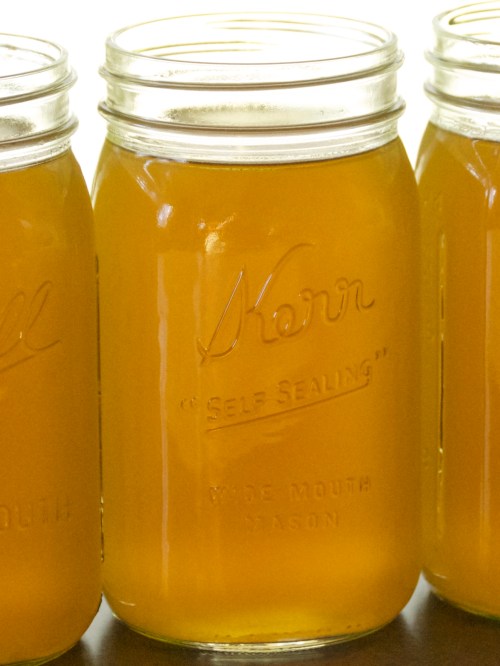
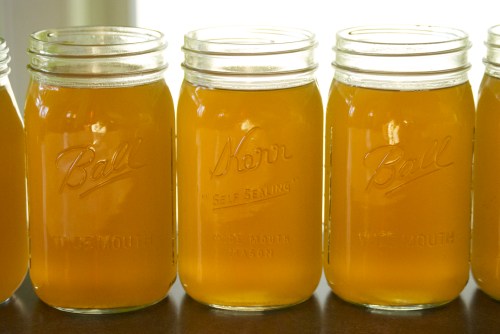
Monetarily speaking, it also makes sense to make your own.  The cost of the chicken alone is less than I would spend on the amount of broth I yield from one bird.  Plus, I get delicious tender, flavorful chicken that I can plan meals around.  I store my broth in the freezer in wide-mouth quart jars.  I’ve made the mistake of using regular jars and have had some crack. I also don’t put the lids on initially, leaving 1-inch- 1 1/2- inches of space at the top to allow enough room for the broth to expand as it freezes.  I then put the lids on after it has frozen.

You’ll find that once you make your first batch of broth, you won’t be able to turn back.  Honestly.  Enjoy– get started on that broth and I’ll meet you back here very soon to talk about some delicious soups you can make with it!
Homemade Chicken Broth | Relishing It

The Recipe: Homemade Chicken Broth

(Yields 5-6 quarts)

4-5 pound organic, pasture-raised whole chicken, or chicken parts, or bones

3-4 celery sticks, rough chopped

1 large carrot, rough chopped

1 large parsnip, rough chopped

1 onion, quartered (no need to peel)

1 bulb garlic, halved (no need to peel)

3/4 teaspoon whole black peppercorns

1 1/2 tablespoons dried thyme

3 dried bay leaves

handful of fresh parsley, rough chopped

About 2 tablespoons kosher or sea salt, more to taste

healthy glug of white wine, about 3/4 cup

Note: Remember, this is my version to make the broth.  If you don’t have all of the ingredients, don’t sweat it.  Use what you do have.  It’ll be delicious.  Also, when using the wine, if you’re not planning to finish the bottle,  portion it out into containers, freeze, and use some the next time you plan to make broth.  It works great!

Add all of the ingredients to a large, heavy-bottomed stock pot.  Fill with cold, filtered water– enough to cover ingredients by 1 inch to 1 1/2 inches.  Bring the ingredients to a near boil, skip off foam using a spoon, then reduce the heat to the lowest setting with the lid ajar ever so slightly.  You’ll want it to be on a very low simmer with the smallest amount of bubbles forming for the remainder of the time.  This will keep the evaporation to a minimum, as well as let the flavors deepen.

Simmer for about 2 1/2 hours.  Then carefully take the chicken from the pot and remove the meat.  At this point the chicken will shred beautifully.  You can use the meat immediately,  or freeze for another time.  Return the bones and skin to the pot and continue simmering for another 21 1/2 hours, or less time if need be.

When the broth is done, you will want to strain and discard the bones and vegetables– they’ve served their purpose.  Using the back of a large spoon, I often push the carrots and parsnips through the strainer– it gives the broth a wonderful color and flavor.  After you’ve removed the large chunks, you’ll want to pour the liquid through a cheesecloth, so it is nice and clear.  At this point, you can decide if you want to remove the fat from the broth or not.  Some people prefer the richness it adds and leave it in there.  I pour it into a gravy separator, the kind where the spout is on the bottom and the fat floats to the top.  If you don’t have that, you can also try a large resealable bag– the fat will float to the top and you can make a small cut on the bottom.  This may be tricky, so be careful.  Another option, is to wait until you place it into the jars or plastic containers, if using.  Once the broth is cold, the fat will harden and you can simply remove it.

When pouring into the jars, or plastic containers, if using– make sure to leave about a 1 1/2- inch space from the top of the jar.  The liquid will expand as it freezes.  Cool the broth completely before placing the the freezer.  I choose not to place the lids on them immediately, instead waiting until after they’ve fully frozen.  Thaw in warm water or place in the refrigerator when ready to use.  Enjoy!

Thanks for stopping by Relishing It today!

Laurie

Read Full Post »