Feeds:
Posts
Comments

Archive for April, 2011

Bostock

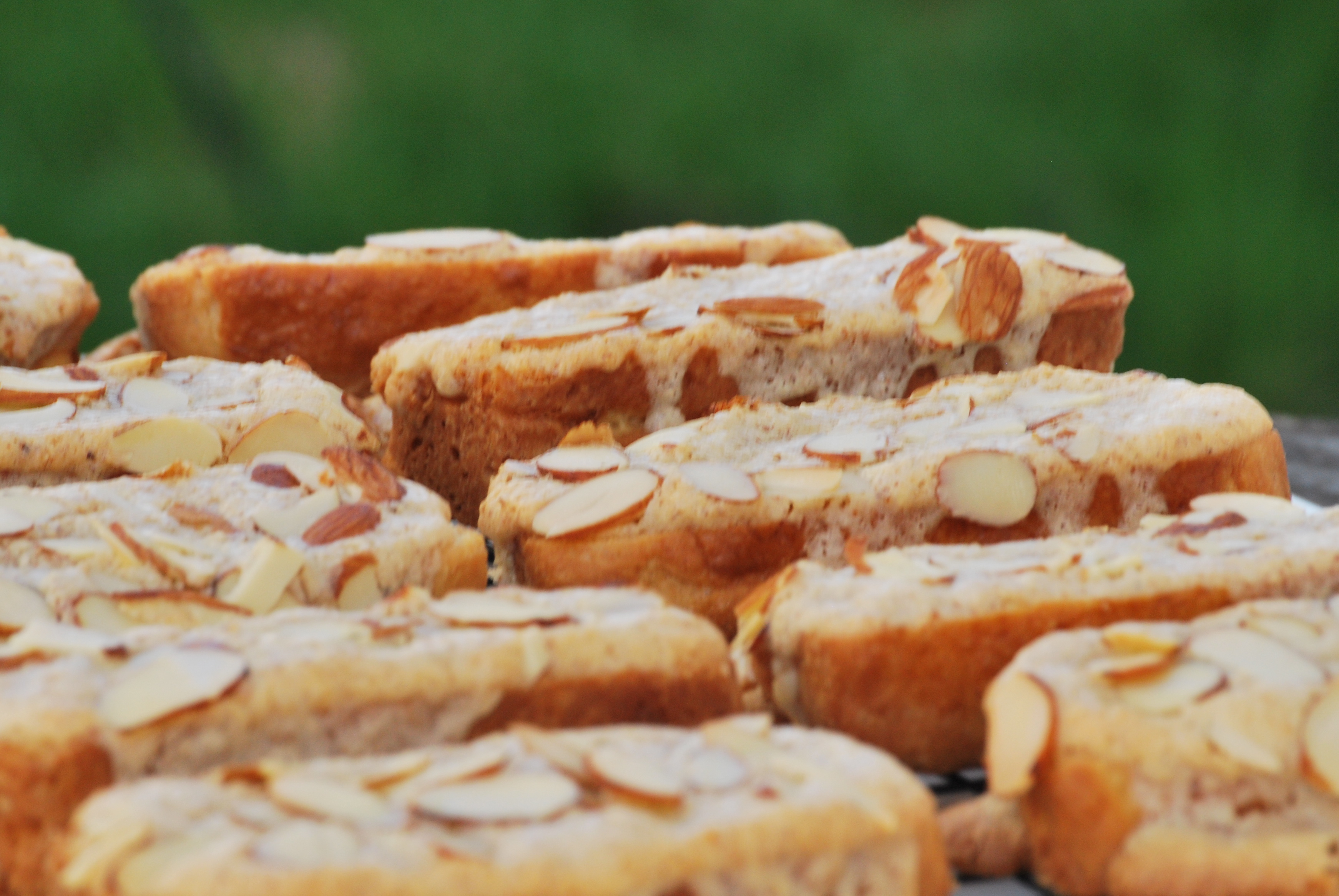
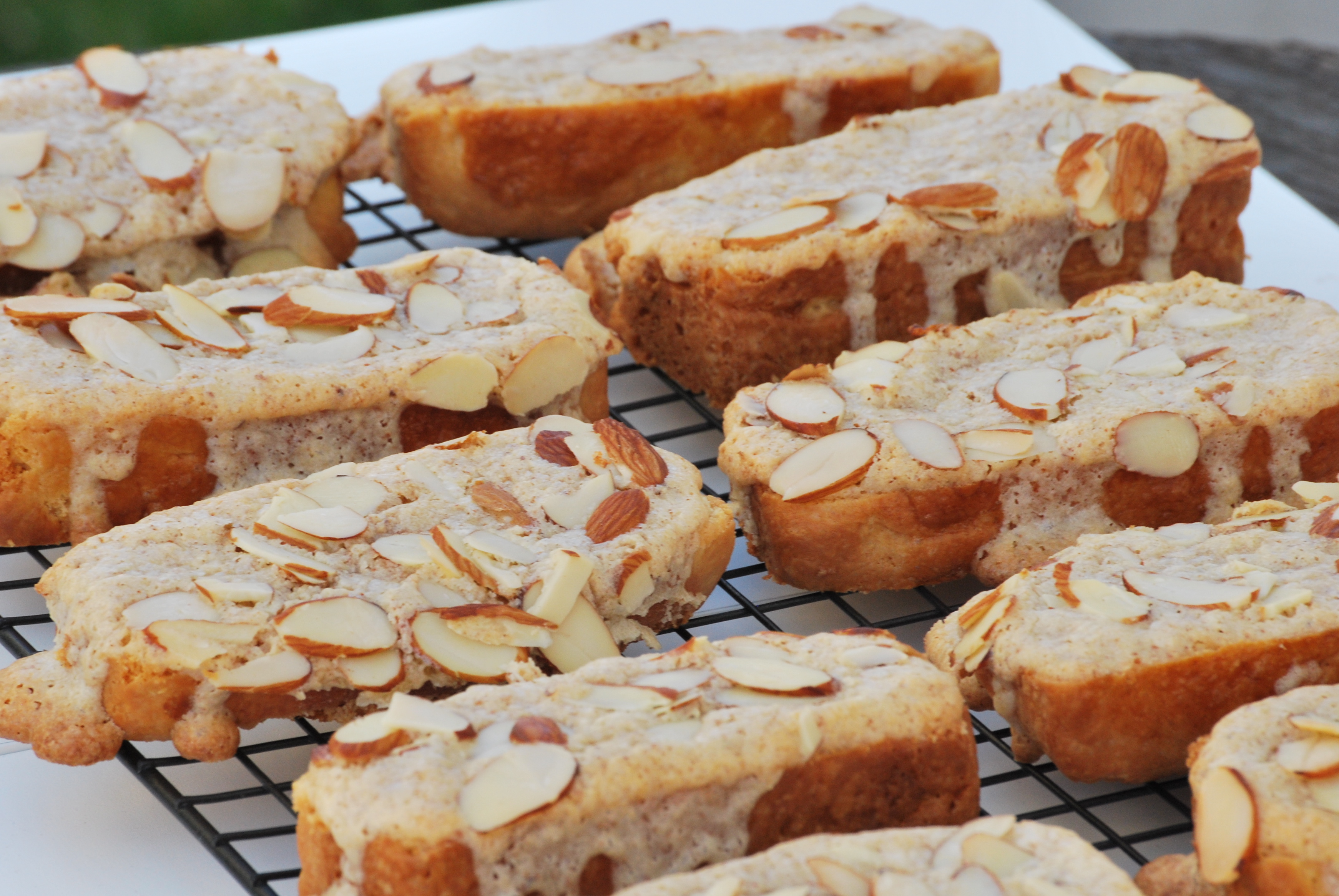
A few weeks back I wrote about brioche — that delicious buttery French bread.  I used half of the dough to make one of my favorite recipes, these sticky buns.   Here’s the thing, in that roll recipe I said you could use half of the dough recipe for rolls, while the other could be made into a fantastic bread.  Full disclosure, that bread loaf rarely stays in it’s original form at my house.  The reason is…bostock.  It’s simple, yet amazing.  Ordinary (though it’s anything but) brioche bread is transformed into a slightly sweet, almond-y treat that begs you to linger over a cup of coffee.  Its exterior is crisp, with a soft, filling body.  Bostock has become my pastry of choice when seeking out sweets at area bakeries.  Now, with the brioche bread recipe, I  make it at home and serve it with strong push-press French coffee.

While you can make as little of the loaf of brioche into bostock as you like, I suggest making the entire thing– you’ll end up craving it after you’ve had a piece or two.  The covered almond cream keeps in the refrigerator for up to 3 days.

The Recipe: Bostock

Use a loaf of brioche from this recipe.

Almond Cream:

3/4 stick (6 tablespoons) unsalted butter, at room temperature

2/3 cup sugar

3/4 cup ground blanched almonds (I usually don’t blanch mine)

2 teaspoons all-purpose flour

1 teaspoon cornstarch

1 large egg

2 teaspoons dark rum or 1 teaspoon vanilla extract

To Make the Cream Using a Food Processor:  Put the butter and sugar in the food processor and process until the mixture is smooth and satiny.  Add the ground almonds and continue to process until well blended.  Add the flour and cornstarch and process to blend, then add the egg.  Process for about 15 seconds more, or until the almond cream is homogeneous.  Add the rum or vanilla and pulse just to blend.

To Assemble the Bostock: Cut a slice of brioche to 1/2  to  3/4- inch thick.  Spread the bread with about 3 tablespoons almond cream, leaving a little border bare, and scatter over some sliced almonds, blanched or not.  Put the bread on a baking sheet lined with parchment paper or a silicone mat, and bake at 350°F until the almond cream is puffed and golden brown, 10 to 15 minutes.  Serve the bostock warm or at room temperature.

Source:  Dorie Greenspan’s Baking from my home to yours

You are going to love this little breakfast treat and you’ll find yourself baking and freezing an extra loaf of bread so you can have these gems whenever you want.  Thanks so much for stopping by!  As always — drop me a comment, I love hearing from you!

Laurie

Follow me on Twitter!

Read Full Post »

My family loves Italian food, though neither my husband or I are Italian.  If we’re celebrating a special occasion, there’s a good chance we’ll be making pasta.  For years we relied on dry, packaged pasta for spaghetti, lasagna, and seafood dishes.  My husband bought a pasta maker some time ago, and while we were first a bit indimidated by the work involved in making fresh pasta, now we’re hooked.  Rather than look at it as extra time and effort, we separate out the tasks and make it a family affair:  I prepare the dough and the sauce, while my husband and four-and-a-half year old son crank out the noodles.  My two-year-old daughter provides moral support– or more accurately does her best to disrupt the process.  My hope is that the group effort makes nice “food” memories for my family and that they’ll always remember our time in the kitchen.

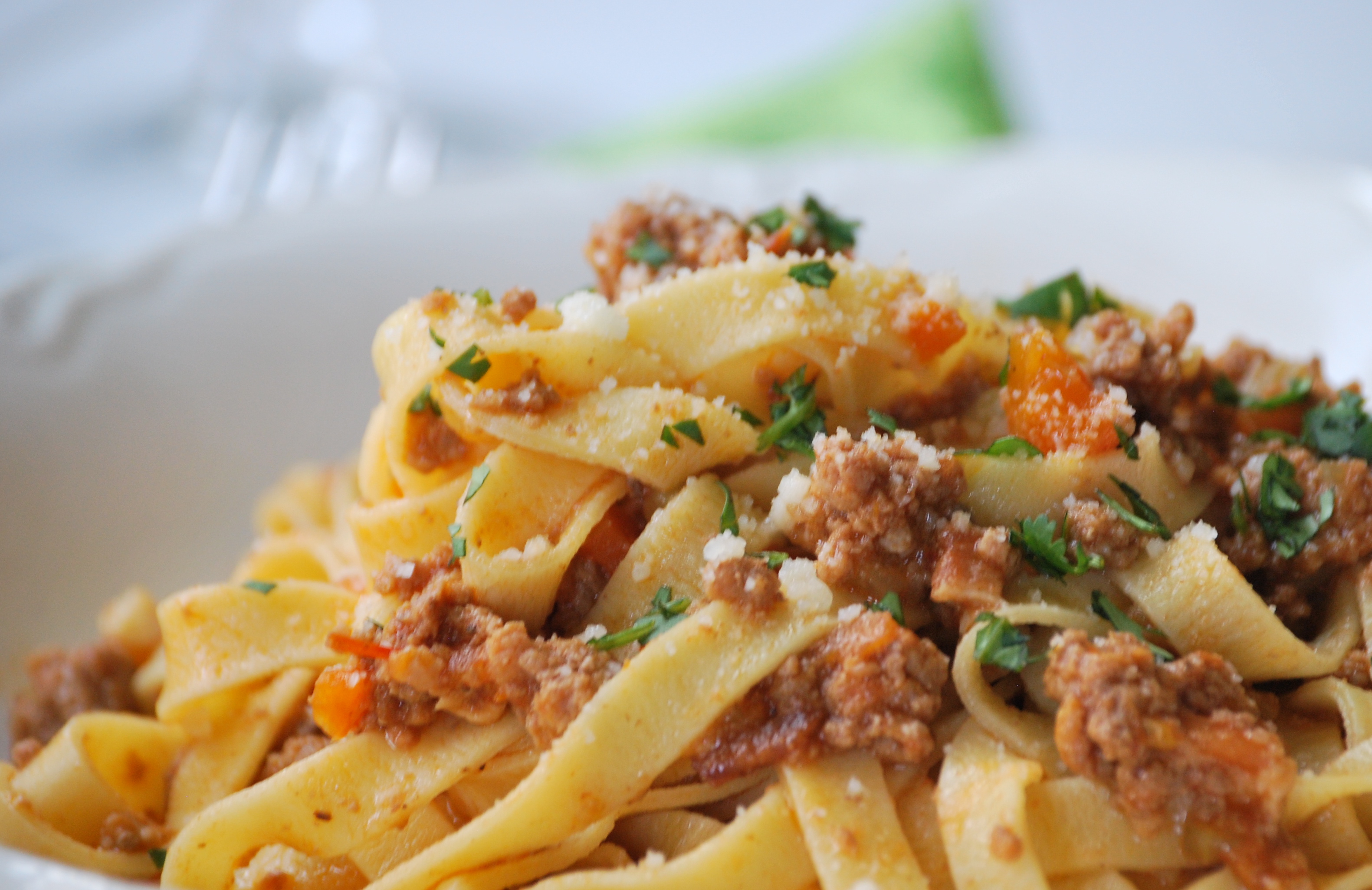
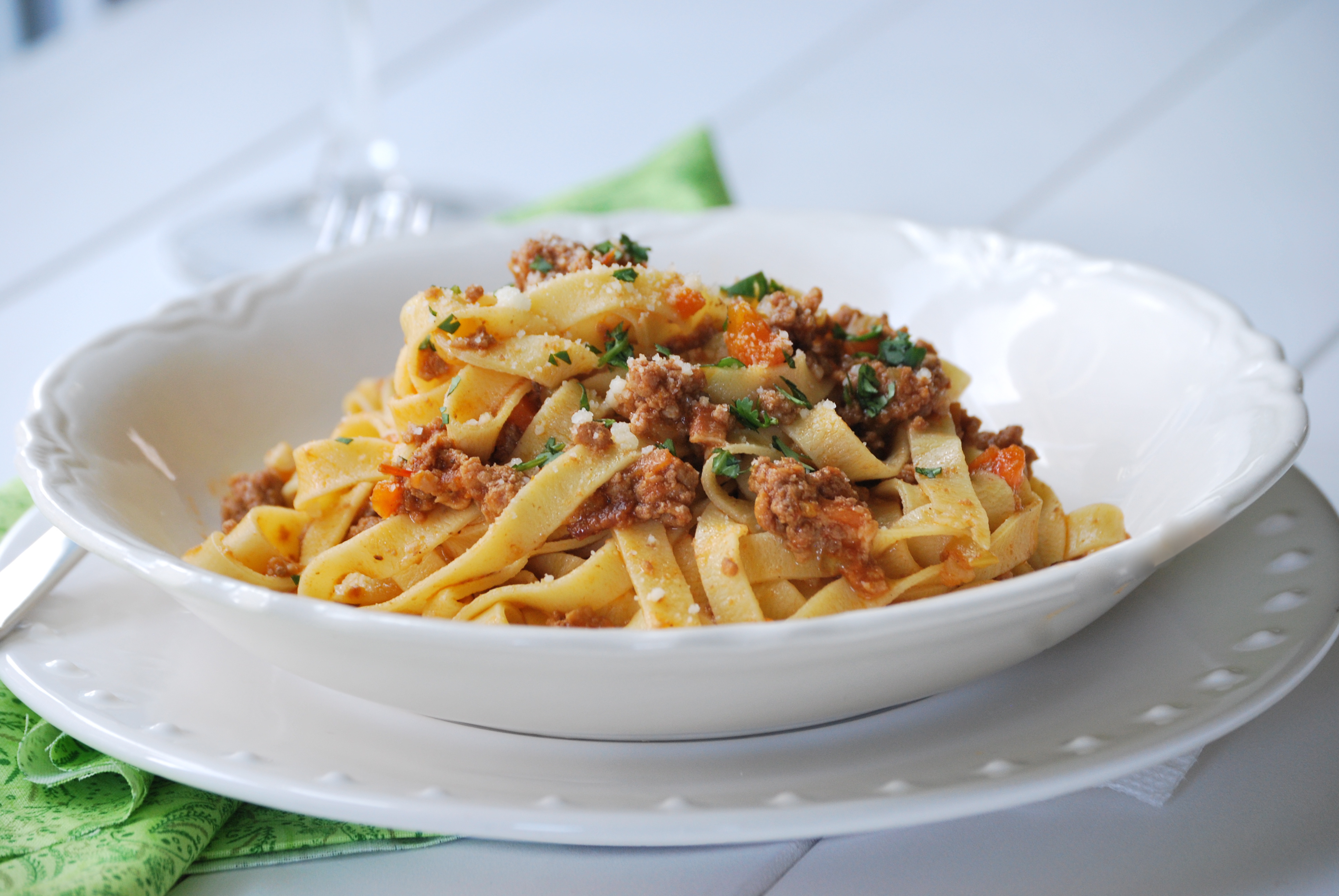
The pasta recipe here comes from one of the queens of Italian cuisine, Lidia Bastianich.  The pasta is silky, beautifully firm, and has that genuine “toothiness” when you bite into it.  If you’ve never had fresh pasta, you’re missing out as the texture is so different from boxed dry noodles.  This particular pasta pairs well with slow-cooked meat sauces.  They cling to it beautifully.  One of my favorites is a bolognese-style sauce.  I’ve made several from cook books, but they’ve never been exactly what I was looking for, so I took my own route for this recipe.  I’ve discovered that ‘bolognese’ sauces can be quite varied.  Some recipes and restaurants use lots of tomatoes, while others rely on them sparingly.  Some call for simmering in milk for long periods of time, while others add cream at the end of the cooking process.  I created this sauce to fit my own tastes– some tomatoes, yet different from a traditional tomato-based sauce.  I slowly simmer it in milk for a few hours to allow the flavors to fully incorporate.  Note that there are no herbs in the sauce, so the meat (especially the pancetta) and vegetables are the stars.

Homemade Tagliatelle: 

(Makes one pound of pasta)

2 cups all-purpose flour

1 egg yolk (from a large egg)

3 large whole eggs

2 tablespoons extra-virgin olive oil

Making the dough in a food processor:

Fit the regular cutting blade in the bowl of a processor  (these batches are too small for the dough blades of most machines).  Measure the flour into the bowl; process for a few seconds to blend and aerate.  Drop the eggs and egg yolk into a spouted measuring cup , or a bowl; beat briefly with a fork to break them up.  Mix in the oil  (you should have 7 fluid ounces).   To minimize the chance of overheating the dough, use eggs right from the refrigerator.

Start the machine running with the feed tube open.  Pour the wet mixture into the bowl quickly; scrape all the egg drippings out of the cup into the processor too.

Let the machine run for about a half minute.  The dough should form quickly; most of it should clump or ball up on the blade – some may spread on the sides of the bowl –  where it will twist and knead.  Let the machine knead the dough for about 10 seconds (no more than 40 seconds total processing).  Turn the dough out onto a very lightly floured surface, and knead by hand for another half minute or so, until it’s smooth, soft and stretchy.  Wrap and rest the dough at room temperature for at least a half hour.  Store, very well wrapped, in the refrigerator for a day; or a month or more in the freezer.  Defrost frozen dough slowly in the refrigerator, and let it return to room temperature before rolling.  Defrosted dough will need a bit more flour.

If you have problems in the food processor – if there’s no apparent clumping after 30 seconds, or the dough stiffens up very quickly – stop the machine and feel the dough.  Adjust for stickiness or dryness by working in either flour or water in small amounts.  You can continue to work the dough in the machine, but don’t process for more than a total of 40 seconds – or turn the dough out to correct the consistency and finish kneading by hand.

Rolling the dough by machine:

I used a manual pasta machine for this.  Have your dough at room temperature for rolling.  Cut 1 pound of dough into four pieces.  Work with one piece and keep the others covered to prevent drying.  Have a large tray or baking sheet nearby (or two if you have them) lightly sprinkled with flour, on which to lay thin dough strips.  Smooth kitchen towels are also useful as resting surfaces and to seperate layers of strips.  Have flour for sprinkling and a knife handy, too.

Turn the knob to the widest setting– you’ll work at this setting for awhile.  Roll the first dough piece out with a rolling pin into an rectangle so that it’s thin enough for the machine to grab on the widest setting.  Roll it through the machine two times.  Fold the now elongated rectangle in thirds, and turn the dough 90 degrees  (so the fold is on the side, verticle), and roll it through.

Catch the dough; fold it and roll it through again with the fold on the side.  Repeat the folding and rolling six more times to strengthen and smooth the dough.  Like kneading, this will make it more resilient and workable.  Lay the first piece down, sprinkle it with a tiny bit of flour on both sides, and cover it (with plastic wrap or a towel).  Put the remaining pieces of dough through the same steps of rolling and folding.

Reset the rollers to the third setting (I roll pasta at every other setting from wide to narrow).  Roll your first strip through, but don’t fold in thirds again.  Let the rollers grab and move the dough– don’t push it or pull it through– and catch it with your hand as it comes out.  Roll the strip again to stretch and widen it; lay the strip down (on the lightly floured tray) and stretch the others in the same way.

Reset the machine even narrower; you should be on the fifth setting by now.  If the rollers fail to grab the dough, apply just a dab of water to the tip of the pasta dough.  Pass the first strip through once; it will lengthen rapidly, and you will need to catch and support it as it comes through the rollers.  Flour the strip lightly if it is sticking to the rollers.  After the second pass, if the strip is 20 inches or longer (and it really should be so), cut it crosswise in half, to get two shorter strips of about 10 to 15 inches.  Lay these down (not overlapping) and dust with flour; roll and cut the other strips in the same way.

You should have eight long strips at this point, each 5 -inches wide (nearly the width of the rollers).  I’ve found that this is generally the thickness that I want.  If you have a different pasta maker, and the noodles are 1/8 – inch thick (and the strips are shorter then 12- inches), you should pass them through the next narrow setting.  Roll the dough as thin as you like, as long as it doesn’t tear or fall apart.  If it does tear, fold the strip in half or thirds (making it shorter and enclosing the tear) and reroll at wider setting.

Set the finished strips down, lightly floured and not overlapping, in the big trays.  If necessary, cover a layer of strips with a floured kitchen towel, and rest more strips on top.

Keeping cut pasta:

You can cook the pasta as soon as it is cut, or let it sit and dry at room temperature until you are ready, but use them within a day.  Lay them out on trays, lightly floured and separated so they don’t stick together.  Arrange the pasta into “nests”.  Pasta that has been air-dried will take a bit longer to cook.

To freeze cut pasta for storage, set the nests  on trays that fit into your freezer.  After they’re solidly frozen, pack them in small airtight plastic bags or containers.  Don’t defrost before cooking; simply drop the pasta into the boiling water.

Cooking the pasta:

For 1 pound of pasta, bring 6  quarts of water to a full boil and stir in 1 tablespoon kosher or sea salt.  The dough has no salt, so it is particularly important that the cooking water be well salted.

Before adding pasta to the water, shake off any excess flour.  Drop the pasta into the boiling water in several batches, stirring with each addition to separate the pieces.

Keep the high heat, but don’t cover the pot.  Cook at a boil at least until the pasta rises to the top.  It should take 2-3 minutes.  Remember, fresh pasta is not cooked until  al dente like dried pastas.  Cook them until they are tender and cooked all the way through.

Source: Homemade Tagliatelle adapted from Lidia Matticchio Bastianich’s Lidia’s Family Table.  Bolognese recipe is my own.

Ragu alla Bolognese

(Simmer time: the longer the better.  At least 2-3 hours for optimum flavor)

2 teaspoons kosher salt

Freshly cracked black pepper

1 dry bay leaf

6 cloves garlic, minced

1 cup onions, finely chopped

1 cup carrots, peeled and finely chopped

1 cup celery, finely chopped

1/4 pound pancetta or bacon, diced

1 pound  free-range ground pork

1 pound grass-fed ground beef

6 tablespoons double-concentrate tomato paste

2 cups puréed canned tomatoes ( I can my own, I would suggest buying something low in sodium)

2 cups whole milk

3/4 – 1 cup white wine, such as Soave or Pinot Bianco (both Italian whites)

In a large Dutch oven, brown the beef and pork over medium-high heat.  Drain and discard the grease and remove the browned meat from the pan.  In the same pan, cook the pancetta or bacon until crisp.  Remove pancetta from the pan leaving the drippings behind.  Sauté the vegetables in the bacon drippings until tender, about 6-7 minutes.   Season with salt and cracked pepper.  Add the ground beef, pork, and pancetta to the pan.  Mix in the vegetables and the tomatoes, tomato paste, milk, bay leaf, and wine.  Bring to a boil, then cover and immediately turn down to low for a long, slow simmer for at least 2 hours, but hopefully a bit more.  The longer you can simmer this sauce, the better it will taste.  3 hours makes it delicious.  Remove cover near the end, if it needs to reduce/thicken  a bit more.  Adjust salt and pepper if necessary.  Combine the bolognese and tagliatelle and top with freshly grated parmesan.  Serve immediately.  Enjoy!

Have a fabulous day, everyone!  Thanks for stopping by, and as always, I appreciate any feedback.

Laurie

Follow me on Twitter!


Read Full Post »

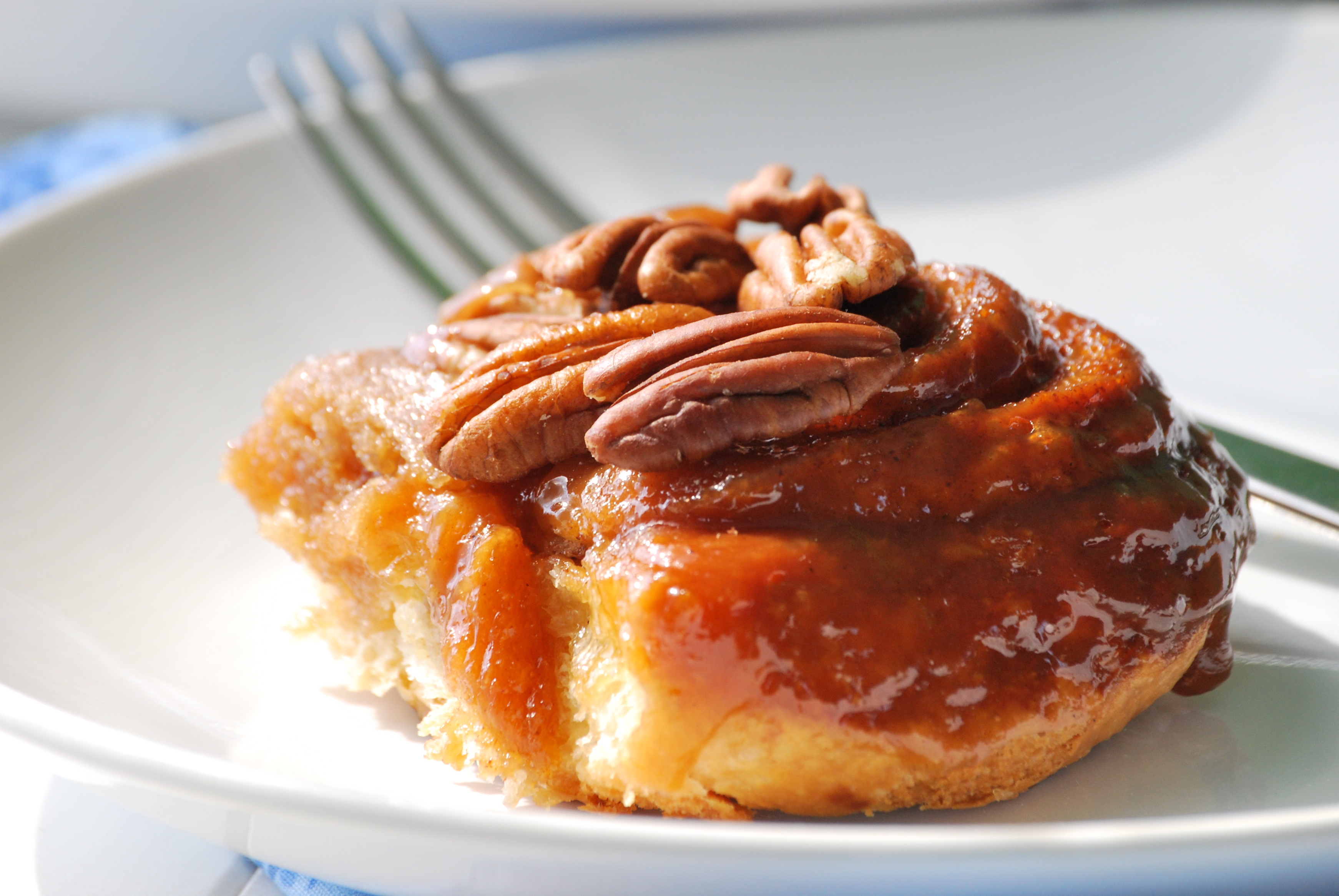
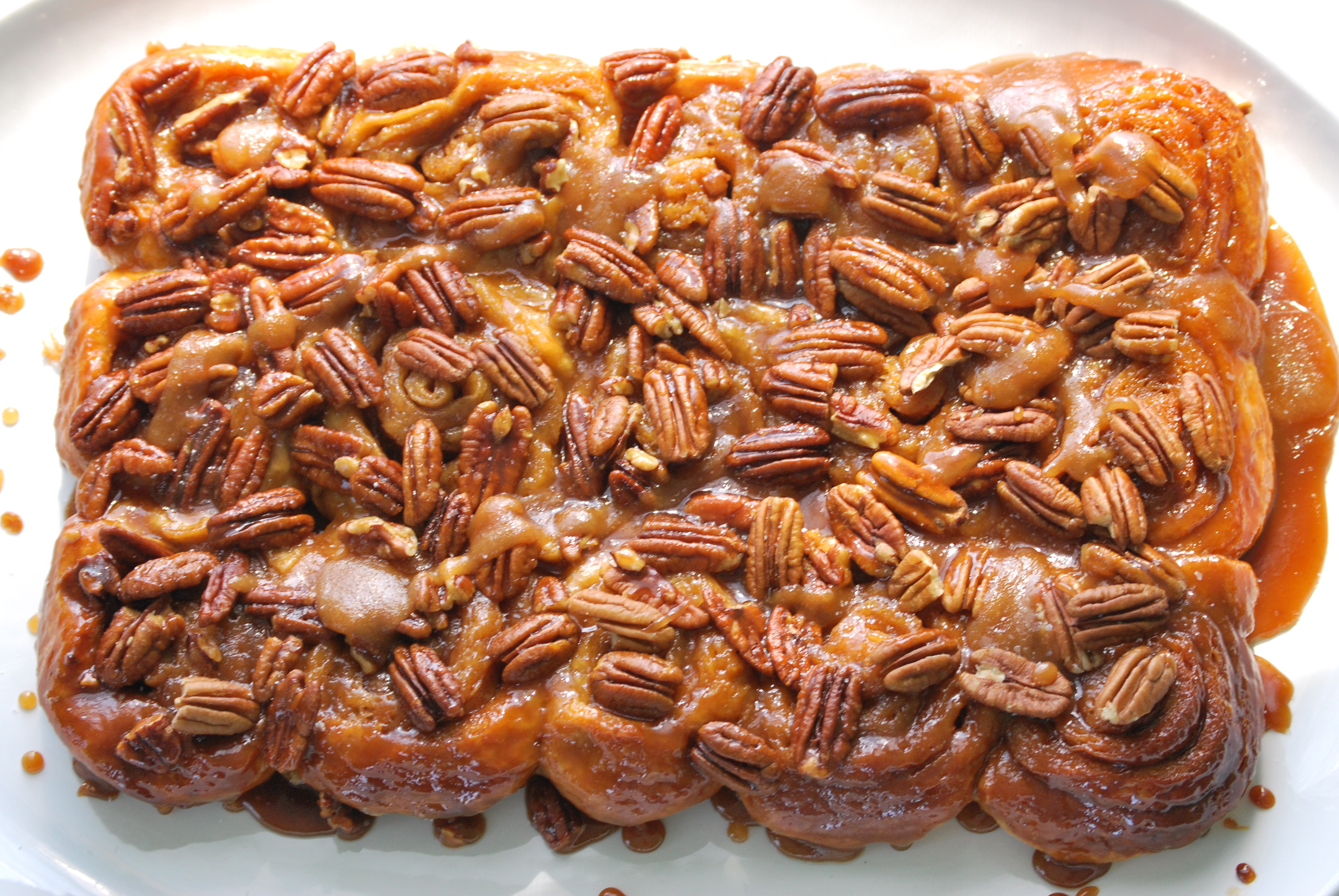
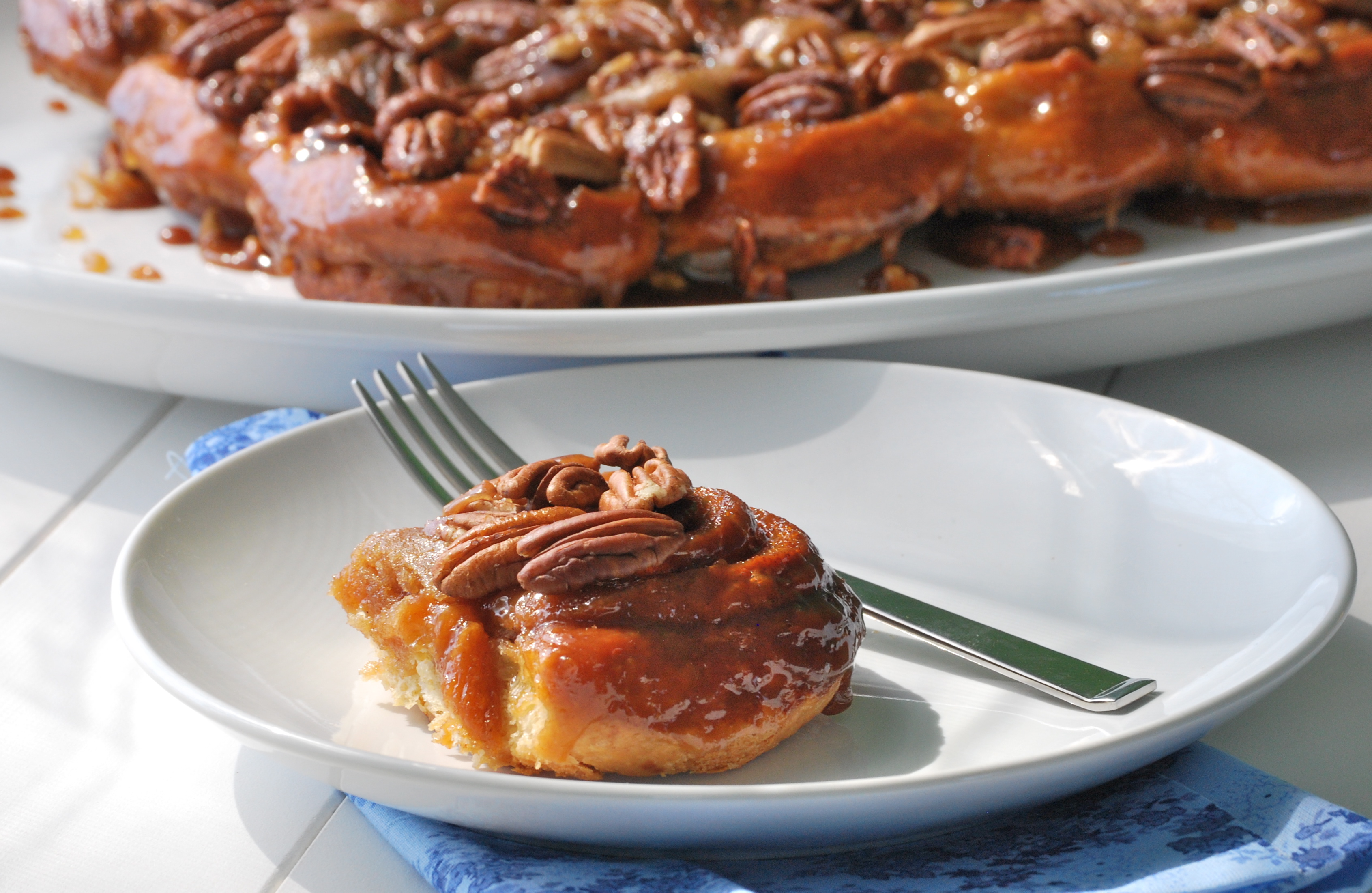
We’re hosting Easter Brunch this year.   In preparation, I spent much of whatever free time I could grab this weekend paging through cookbooks and magazines to put together the menu.   That was the goal, anyway– as usual, I got distracted.  Reading cookbooks, food magazines, and culinary blogs tends to have this effect.  And, of course, I always end up thinking that there is one more cookbook out there that I must have.  Anyway, my hours spent wandering through recipes paid off.  I’ve nailed down most of the brunch menu.  These Pecan Honey Sticky Buns from Dorie Greenspan will definitely make an appearance.  My family loves them.

Even if you’re not a bread baker, don’t be intimidated by this recipe.  While there are several steps, they’re straight-forward and the result is marvelous.  The buns are made from a very silky, buttery brioche dough.  The first time I worked with this dough, I was stunned.  Its soft, like satin– unlike any other dough I had worked with.  It makes the buns flakey, rather than doughy, as in a normal roll.  The brioche also doesn’t ‘puff up’ much, so the buns don’t get as big as you might expect.  I find them to be the perfect size.

The glaze, as you can see, is sublime.  It’s made of brown sugar, butter, honey, and pecans.  The result is firm, delicious toffee-like caramel.  Sprinkle a bit of sea salt on top when they’re done.  The salt will trick your taste buds in to emphasizing the sweetness.  Give ’em a try this weekend!

The Recipe:  Pecan Honey Sticky Buns

Brioche Dough

(Note:  Make sure to allow enough time to let the dough rest overnight in the refrigerator before proceeding with the Pecan Honey Sticky Bun recipe.)

2 packets active dry yeast

1/3 cup just-warm-to-touch water (110 – 115°F worked for me)

1/3 cup just warm-to-touch whole milk

3 3/4 cups all-purpose flour

2 teaspoons salt

3 large eggs, at room temperature

1/4 cup sugar

3 sticks (12 ounces) unsalted butter, at room temperature, but still slightly firm.

Glaze:  (If baking loaves of bread)

1 large egg

1 tablespoon water

To make the Brioche Dough: Put the yeast, water and milk in the stand of a mixer and, using a wooden spoon, stir until the yeast is dissolved.  Add the flour and salt, and fit the mixer with the dough hook, if your have one.  Toss a kitchen towel over the mixer, covering the bowl as completely as your can –  this will help keep your kitchen clean from flour.  Turn the mixer on for a few short pulses, just to dampen the flour.  Remove the towel and increase the mixer speed to medium-low and mix for a minute or two, just until the flour is moistened.  At this point you’ll have a fairly dry, shaggy mass.

Scrape the sides of the bottom of the bowl with a rubber spatula, set the mixer to low and add the eggs, followed by the sugar.  Increase the mixer speed to medium and beat for about 3 minutes, until the dough forms a ball.  Reduce the speed to low and add the butter in 2-tablespoon-size chunks, beating until each piece is almost incorporated before adding the next.  You’ll have a dough that is very soft, almost like a batter.  Increase the speed to medium-high and continue to beat until the dough pulls away from the sides of the bowl, about 10 minutes.   ( Note: Sometimes when I make this dough, it clumps around the hook and pieces don’t incorporate into the dough well.  I’ve found that if this happens, stop the machine, and with a rubber spatula separate the dough from the hook completely and start again.  It really helps to incorporate everything into a uniform dough.)

Transfer the dough to a clean bowl ( or wash out the mixer bowl and use it), cover with plastic wrap and leave at room temperature until nearly doubled in size, 40-60 minutes, depending upon the warmth of your room.

Deflate the dough by lifting it up around the edges and letting it fall with a slap into the bowl.  Cover the bowl with plastic wrap and put it in the refrigerator.  Slap the dough down every 30  minutes until it stops rising, about 2 hours, then leave the covered dough in the refrigerator to chill overnight.

From this point, you can proceed with the Pecan Honey Sticky Bun recipe.  Take note that that recipe calls for only half of this dough.  So, you can either bake two pans of the sticky buns or make the other half of the dough into a loaf of bread.

If choosing to make a loaf of bread:

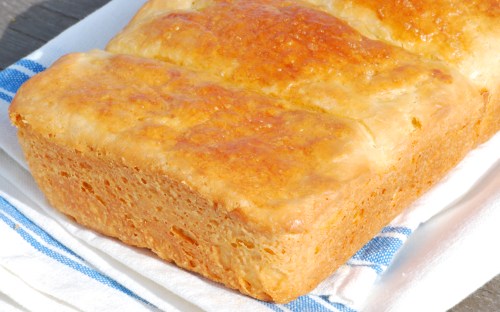
Butter and flour a 8 1/2-x-4 1/2-inch loaf pan.  Using half of the brioche dough, cut each piece into 4 equal pieces and roll each piece into a log about 3 1/2 inches long.  Arrange  4  logs crosswise in the bottom of each pan.  Put the pans on a baking sheet lined with parchment paper or a silicone mat, cover the pans lightly with wax paper and leave the loaves at room temperature until the dough almost fills the pan, 1-2 hours. Again, it will depend on the warmth of your room.

Center a rack in the oven and preheat and preheat the oven to 400°F.

To make the GlazeBeat an egg with water.  Using a pastry brush, gently brush the tops of the loaf with the glaze.  Bake the loaf until it is well risen and deeply golden, 30-35 minutes.  Transfer the pan to a rack to cool for 15 minutes, then run a knife around the sides of the pans and turn the loaf out onto the racks.  Invert again and cool for at least an hour.
Pecan Honey Sticky Buns:  ( Makes 15-16 buns)

For the Glaze:

1 cup (packed) light brown sugar

1 stick ( tablespoons) unsalted butter, cut into 4 pieces

1/4 cup honey

1 1/2 pecans ( whole or pieces)

For the Filling:

1/4 cup sugar

3 tablespoons ground cinnamon

3 tablespoons unsalted butter, at room temperature

For the Buns:

1/2 recipe for the Brioche Dough, chilled.  Don’t be tempted to downsize the recipe.  The dough works better in a larger batch.

Generously butter a 9-x-13-inch baking pan ( a pyrex pan is perfect for this).

To make the Glaze:  In a heavy -bottomed saucepan, bring the brown sugar, buter, and honey to a boil over medium-low heat, stirring frequently to dissolve the sugar.  Pour the glaze into the buttered pan, evening it out as best you can by tilting the pan or spreading the glaze with a heatproof spatula.  Sprinkle over the pecans.

To make the Filling:  Mix  the sugars and cinnamon together in a bowl.  If necessary, in another bowl, work the butter with a spatula until it is soft, smooth and spreadable.

To shape the Buns:   On a flour-dusted work surface, roll the chilled dough into a 16-inch square.  Using your fingers or pastry brush, spread the softened butter over the dough.  Sprinkle the dough with the cinnamon sugar, leaving a 1-inch strip bare on the side farthest from you.  Starting with the side nearest you, roll the dough into a cylinder, keeping the roll as tight as your can.  ( At this point, you can wrap the dough airtight and freeze it for up to 2 months.  Defrost in refrigerator overnight, then proceed with the glaze and let them rise and bake as directed.)

With a chef’s knife, using a gentle sawing motion, trim away just a tiny bit from the ends of the roll of they’re ragged and not well filled, then cut the log into 1-inch-thick buns.  Fit the buns into the pan cut side down, leaving some space between them.

Lightly cover the pan with a piece of wx paper and set the pan in a warm place until the buns have doubled in volume, about 1 hour and 45 minutes.  The buns are properly risen when they are puffy, soft, doubled, and, in all likelihood, touching one another.

Baking the Buns:  When the buns have almost fully risen, center a rack in the oven and preheat the oven to 375°F.  Remove the sheet of wax paper and put the pan on a baking sheet lined with parchment paper or a silicone mat.  Bake the sticky buns for about 30 minutes, or until they are puffed and golden; the glaze will be bubbling.  Pull the pan from the oven.

The sticky buns must be unmolded minutes after they come out of the oven.  Be very careful –  the glaze is very hot and and sticky.

Source:  Dorie Greenspan’s Baking From My Home to Yours

I do hope your try this recipe — it isn’t as complicated as it seems, and the end result is so worth your time!  As always, I love to hear your feedback!   Thanks for stopping by.

Laurie

Follow me on Twitter!


Read Full Post »

I bought a new pan– a mini-bundt pan, and I love it.  I’ve recently found myself coming up with excuses to bake more, just so I can see those tiny, adorable cakes.  As my husband has mentioned (after listening to me justify making another little bundt-shaped treat) , the line between a hobby and mental illness can be a thin one.  Who cares when the results are fabulous?  I love these orange and vanilla-scented bundt cakes.  They’re incredibly flavorful, and just small enough to justify eating more than one.

For this recipe, do not cheat and use anything other than freshly-squeezed orange juice.  Trust me, you won’t get the concentrated flavor that these cakes can deserve from a bottle or from a frozen can.  I love it when a cake recipe delivers a potent, layered, flavor.  Here, the orange zest in the cake batter is the first wonderful layer.  Next, there’s the glaze with its freshly-squeezed orange juice that also moistens the cake.  Finally, there’s the fantastic icing.  These three layers really combine for a powerful citrus punch.  Here’s the thing though, the cake flavors aren’t limited solely to orange citrus.  This cake also offers strong vanilla notes.  If you’ve baked with vanilla beans before, you know that they are not subtle.  They give you big flavor.  Together, the vanilla and orange citrus pair beautifully in this cake–or cakes, if you want to break out the mini-bundt pan.

The Recipe: Orange and Vanilla Scented Bundt Cake

( Makes 1 bundt cake or 26 mini-bundt cakes)

Cake

3 cups unbleached all purpose flour

3/4 teaspoon salt

1/2 teaspoon baking soda

1 2/3 cups sugar

1 tablespoon finely grated orange peel

1 vanilla bean, split lengthwise  (2 teaspoons vanilla can be substituted, if in a pinch)

3/4 cup (1 1/2 sticks) unsalted butter, room temperature

3 large eggs

2/3 cup freshly squeezed orange juice

2/3 cup buttermilk  (To make your own buttermilk — 2/3 cup regular milk with 2 teaspoons white vinegar mixed in.     Let sit for 10 minutes).

Glaze

1/2 cup freshly squeezed orange juice

2 tablespoons sugar

2 tablespoons (1/4 stick) unsalted butter

Icing

2/3 cup powdered sugar

4 teaspoons (roughly) freshly squeezed orange juice

For the Cake:

Position rack in center of oven and preheat to 350° F.  Butter and flour 12-15 cup Bundt pan.  Whisk flour, salt, and baking soda in medium bowl to blend.  Using electric mixer, beat sugar and orange peel in large bowl at low speed to release essential oils from peel.  Scrape seeds from vanilla bean into sugar mixture and beat to blend well.  Add butter and beat until light.  Add eggs one at a time, beating well after each addition.  Mix in orange juice (mixture will look curdled).  Stir in flour mixture, then buttermilk.  Transfer batter to prepared pan; smooth top.  Bake cake until tester inserted near center comes out clean, about 50 minutes.  (Note: if using mini bundt pans — fill them 3/4 full and bake between 12-15 minutes. A toothpick inserted should come out clean.)

For the Glaze:

Meanwhile, boil orange juice, sugar, and butter in heavy small saucepan over medium heat until reduced to 1/2 cup, swirling pan occasionally, about 5 minutes.

Cool cake in pan for 10 minutes ( less for mini-bundts).  Using small sharp knife, cut around the sides and center tube of pan to loosen cake.  Turn cake out onto rack and brush with glaze.  Cool completely.

For the icing:

Place sugar in small bowl.  Mix in orange juice, 1 teaspoon at a time, until thick pourable consistency forms.  Drizzle icing over cake.  Let stand until icing sets.  (Note: I felt there wasn’t enough icing to top all of the mini-bundts, so I double the icing ingredients.  The recipe already reflects the change). Enjoy with a relaxing cup of coffee or tea.

Source: Bon Appetit Desserts

I hope you all enjoy this cake as much as we did!  Have a great day and see you soon!

Laurie


Read Full Post »

Spicy Braised-Beef Tacos

So I have cravings.  I’m not really sure what brings them on, but once I start thinking about certain flavors, I can’t stop.  Sometimes the cravings are typicial (vanilla ice cream with peanut butter, anyone?), while other times they’re a bit more “specific”.  Recently I found myself coating bananas in honey and dipping them in Grape Nuts cereal.  Seriously.  My latest obsession was to find something that would satisfy a spicey/tangy desire.  First, I ended up eating pickled jalapenos out of the jar with a dab of  Sriracha sauce on top.  Again, I’m not kidding.  Keep in mind, this need for spicy food is new for me.  I used to be a “medium heat” girl.   Now it seems as though there’s nothing I can’t handle.  The hotter, the better.

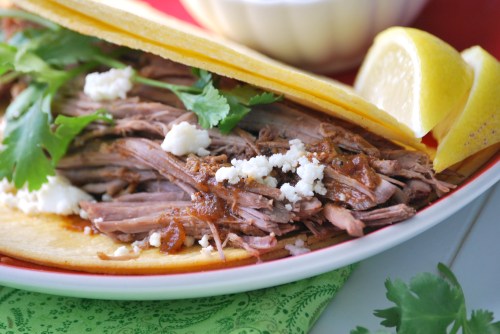
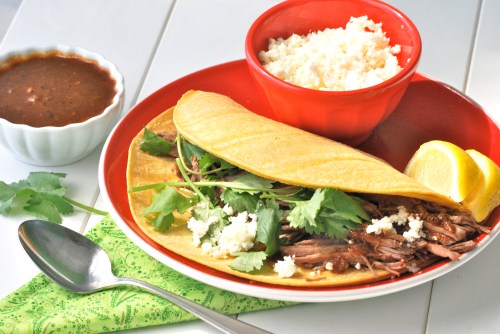
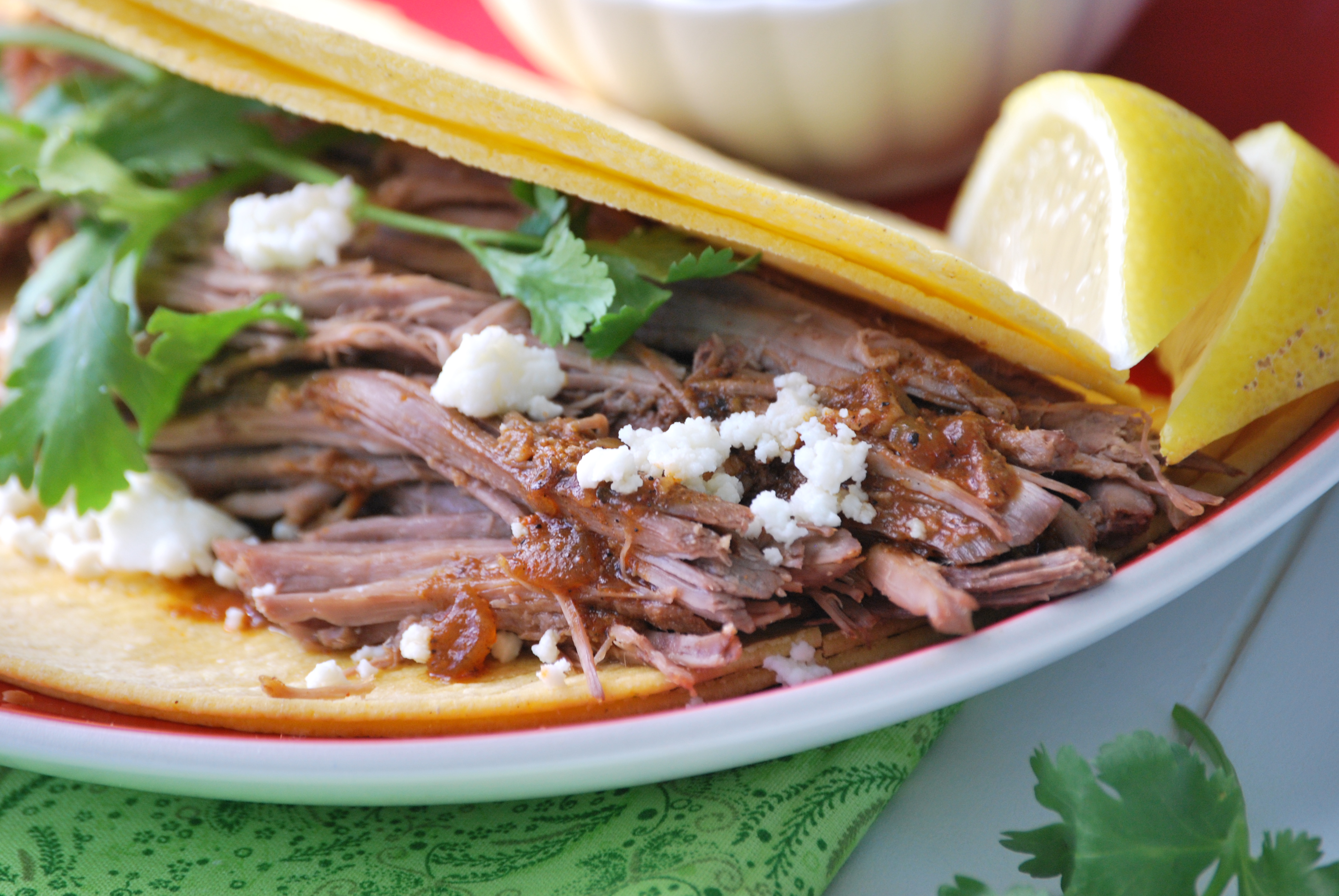
I found the answer to my cravings with today’s recipe.  You’re looking at an excellent braised-beef taco.  Though it has a bite, it isn’t so hot that it should scare you away.  It’s more on that “tangy” side that I had been craving– though you can adjust the heat to your liking.   I added queso fresco (Mexican cheese) for balance, and plenty of cilantro to give it a fresh flavor.  Corn tortillas give it an authentic texture, though my guess is it’ll be good with flour ones, as well.   For the beef, I turned to Mr. Reliable, Mark Bittman.  The result was a tender, perfectly-flavored braised meat.  While these tacos pack a little heat, it’s not overwhelming.  My kids were able to eat them.  For my own, I scaled up the scovilles by loading them with fresh-chopped jalapenos.

If you prefer a milder dish, reduce the amount of cayenne pepper.  You can also use less vinegar if you don’t want that powerful tangy “pop” that I was looking for.  Even scaled down, the combination of the warm spices and the vinegar cooking with the beef for hours makes an incredible sauce.  You’ll want to drizzle it on the tacos, and use it as a dipping sauce.  I can’t stress this enough, but like all meat-based dishes, you should use the best meat you can find and/or afford.  I used a grass-fed beef brisket for this recipe.  Enjoy!

The Recipe:  Spicy Braised-Beef Tacos with Vinegar

The Spice Rub:

1 teaspoon salt

2 teaspoons sugar

2 teaspoons ground cumin

1 teaspoon ground black pepper

1-2 teaspoons cayenne pepper

1/2 teaspoon ground coriander

2 teaspoons paprika ( I used 1 tsp sweet and 1 tsp sharp)

Ingredients:

5 tablespoons vegetable or olive oil, divided

1 whole beef brisket, about 5 pounds

salt and lots of freshly ground pepper

2 cups minced onions

3 tablespoons tomato paste or 1 large ripe tomato, cored and chopped (peeled and seeded if you have time)

3-4 cloves minced garlic

3 cups chicken, beef, or vegetable stock, or water ( I used chicken)

3-5 tablespoons white vinegar ( more, if necessary)

1. Preheat oven to 325° F.  ( You can cook also cook this brisket on top of the stove if you like).    In a small bowl mix together the mixture for the spice rub: salt, sugar, cumin, black pepper, cayenne, coriander, and paprika.  Rub mixture over the meat.  At this point you can choose to sear the meat or not.  If you chose to do so, heat 2 tablespoons vegetable or olive oil in a large Dutch oven that can be covered over medium -high heat for 2-3 minutes.  Swirl oil around, then add the beef.  Sear it for about 5 minutes on each side, or until it is nicely browned.  Remove to a platter.

2. Wipe out pan with paper towel and return to medium heat.  Add the remaining 3 tablespoons of vegetable or olive oil.  Add the onions and cook, stirring, until they are golden and soft, about 10 minutes.  Add salt and pepper, then stir in the tomato paste/or tomato and garlic.  Return the meat to pan, add the stock or water and vinegar, and cover.

3. Cook over low heat or in the oven, turning the meat about every 30 minutes, until tender, 2 1/2  – 3 hours.  If the sauce seems too thin, allow the meat to rest on a platter for a few minutes while you boil the liquid down over high heat, scraping the bottom of the pan with a wooden spoon, until it thickens somewhat.  Taste the sauce and add more salt, black pepper, or vinegar if necessary.  Shred the meat and assemble the tacos.  Serve with corn or flour tortillas,  queso fresco, cilantro, and jalapenos.  Be sure to serve with plenty of the sauce for dipping your taco into.  Enjoy!

Source:  Adapted from Mark Bittman’s How to Cook Everything

Thanks so much for stopping by Relish it today.  As always, I love to hear your feedback.

Laurie

Follow me on Twitter: @LaurieJKul

Read Full Post »