Feeds:
Posts
Comments

Archive for the ‘Savory’ Category

So Summer is obviously on its way out.  I hope you had a chance to get out and enjoy the last several weeks of warm weather.  Me?  I’ve been trying to cram as many activities in as possible.  We traveled a bit (back home to western North Dakota, again), went to the lakes several times, and did our best to eat the local parlors out of ice cream.  And, my little boy started pre-school (deep breathe…).   I confess, I was not particularly looking forward to this.  But I survived.  He survived.  I’m happy to see him grow and experience new things, yet sad to watch time slip through my fingers.   And I know this is just the first of many partings.  Cherish every day.

With Fall rushing in, I raced to the Farmers’ Market to snatch up as many tomatoes as I could.  I’ve spent the week canning whole tomatoes, salsa, sauce, and tomato jam (more on this unbelievable find soon).  Then there’s this fantastic use: homemade tomato ketchup.  If you have an abundance of tomatoes from your garden, or you can get to the local markets to buy a bushel or two, you’ve got to give this a try.  I made it for the first time this year, and am kicking myself for not having done so sooner.

First though, you need to know this tastes NOTHING like the mass-market store brands you’re used to.  Full disclosure:  I like Organic Heinz.  I even like regular Heinz.  They’re pretty good, and they have basically defined the flavor of ‘ketchup’ for everybody (sorry Hunt’s).  I’d describe this as a thick, red, salty-sweet vinegar concoction.  Simply put, there isn’t much complexity — no herbs, little actual tomato flavor.  This homemade ketchup is very different.  At first I had a difficult time wrapping my brain around it– I was wired to expect ‘ketchup’, and by that I mean Heinz.  But this homemade version has fennel, ginger, garlic, basil, and tomatoes– lots of tomatoes.   The layers of flavor are amazing– not just salt/sweet/vinegar.  They’re fresh, interesting, and work together so well.  Yes, it tops a burger nicely, but it really shines on a roast beef sandwich or with those homemade fries.  And don’t forget to pair it with my homemade mustard recipes.  Give them both a try.

The Recipe:  Homemade Tomato Ketchup

(Makes about 1 pint)

1 large red onion, peeled and chopped

1/2 bulb of fennel, trimmed and chopped

1 stick of celery, chopped

1-2 tablespoons extra-virgin olive oil

1 tablespoon fresh ginger, peeled and grated

3 cloves garlic, chopped

1/2 fresh red chili, seeded and chopped

a bunch of fresh basil, leaves picked, and stalks chopped

1 tablespoon coriander seeds

2 cloves

1 teaspoon freshly ground black pepper

sea salt

1 pound  cherry or plum tomatoes, halved,  plus 1 pound canned plum tomatoes, chopped  OR  2 pounds yellow,  orange, or green tomatoes, chopped

3/4 cup plus 2 tablespoons red wine vinegar

1/4 cup brown sugar  (Note: the next time I make this, I’m going to use a bit less.  I would suggest decreasing by 1-2 tablespoons.  Taste and adjust, though remember — the flavors really  take time to develop in this particular recipe.)

Put all of the vegetables into a large, heavy bottomed, saucepan with the olive oil, ginger, chili pepper, basil stalks, coriander seeds and cloves.  Season with a pinch of salt and cracked black pepper.

Cook gently over a low heat for 10-15 minutes.  Stirring frequently.  Add the canned tomatoes and 1 1/2 cups of cold water.  Bring to a boil and simmer gently until the sauce reduces by half.

Add the basil leaves, and blend with an immersion blender or food processor.  Push it through a sieve to make it smooth.  Put the sauce into a clean pan and add the vinegar and the sugar.  Place the sauce on a medium-low heat and simmer until it reduces and thickens to  your desired consistency.  Correct the seasonings at this point.

Spoon into sterilized bottles or jars, then seal tightly and place in a cool dark place or the refrigerator.  It should keep for about 6 months.  Enjoy!

Source:  Adapted from Jamie Oliver’s Jamie At Home cookbook

Thanks so much for stopping by!  Take Care.

Laurie

Follow me on Twitter!

Read Full Post »

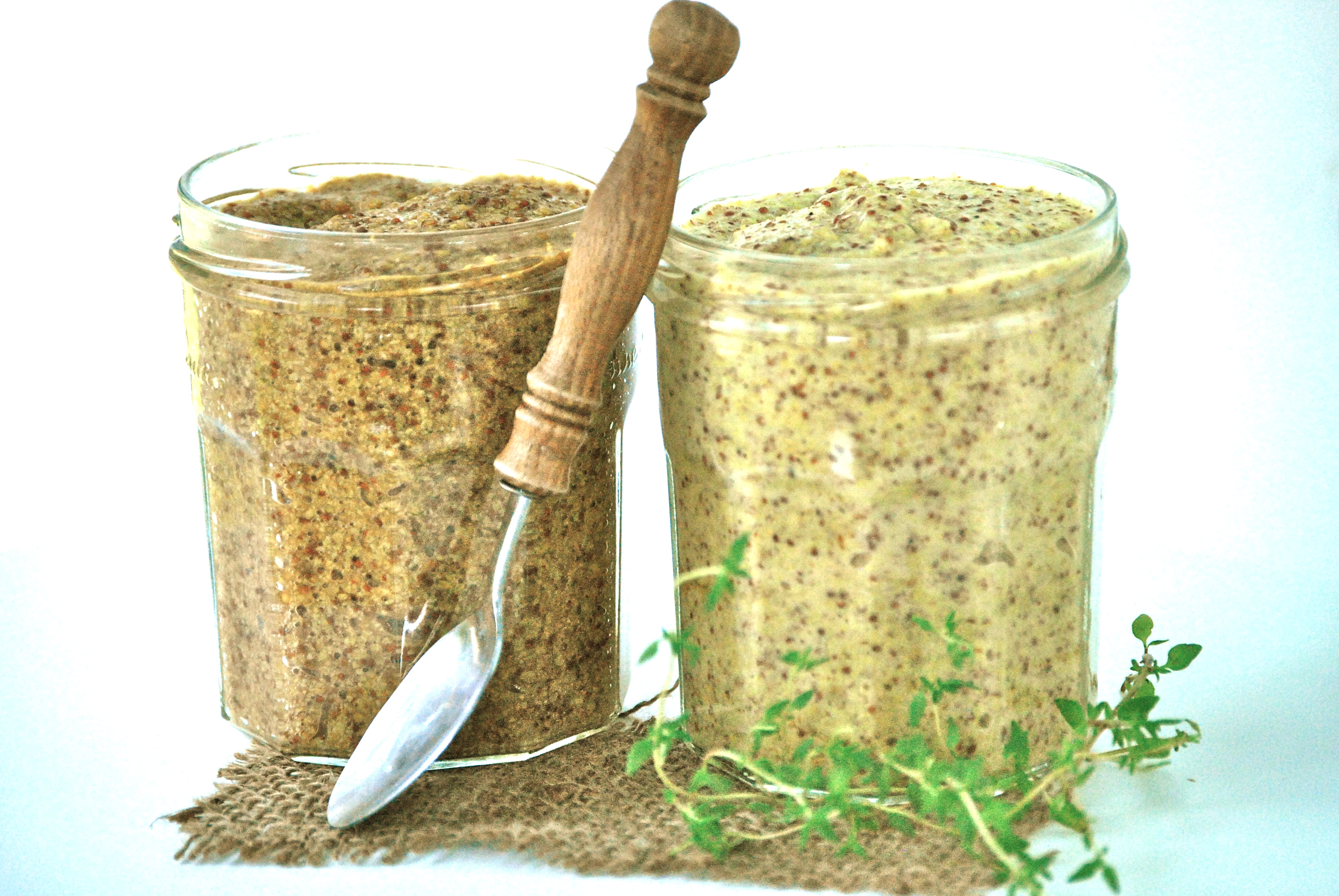
Homemade condiments?  Seriously?  Why bother making homemade mustard when there are several perfectly adequate mustards on the grocery store shelf?  My quick answer is, ‘why not.’  Alright, that response, alone, may not convince you.  How about this– I generally believe that almost anything homemade from fresh ingredients is better.  I like to know where my food comes from, and when I make it from whole ingredients, I get that piece of mind.  But there’s another aspect to making food– even condiments– from scratch.  I love the process.  I enjoy working with each individual ingredient, watching them all combine into something wonderful.  In the end I feel like I’ve accomplished something.  It’s calming– therapeutic even.

Like many of you, I’m a bit embarassed by the shelves of my refrigerator door– stuffed with old half-full condiment jars that rarely get called into action.  (How many versions of Louisianna Hot Sauce does one need?!)  While clearing out some of those forgotten toppings, I decided to add a few of my own– these two jars of mustard and one of homemade ketchup (stay tuned for a post on that one.)  Mustard is so much more versatile than many people realize.  And this grainy mustard version is marvelous.  Aside from the typical burger/hotdog summer fare, it makes for magnificent turkey or ham sandwiches, works well in vinaigrettes,  and– at least if you ask my daughter Aria– is best suited for dipping pretzels.  This weekend I plan to grill wild salmon and add a teaspoon of fresh thyme to the white wine vinegar mustard for a topping.  Very exciting!

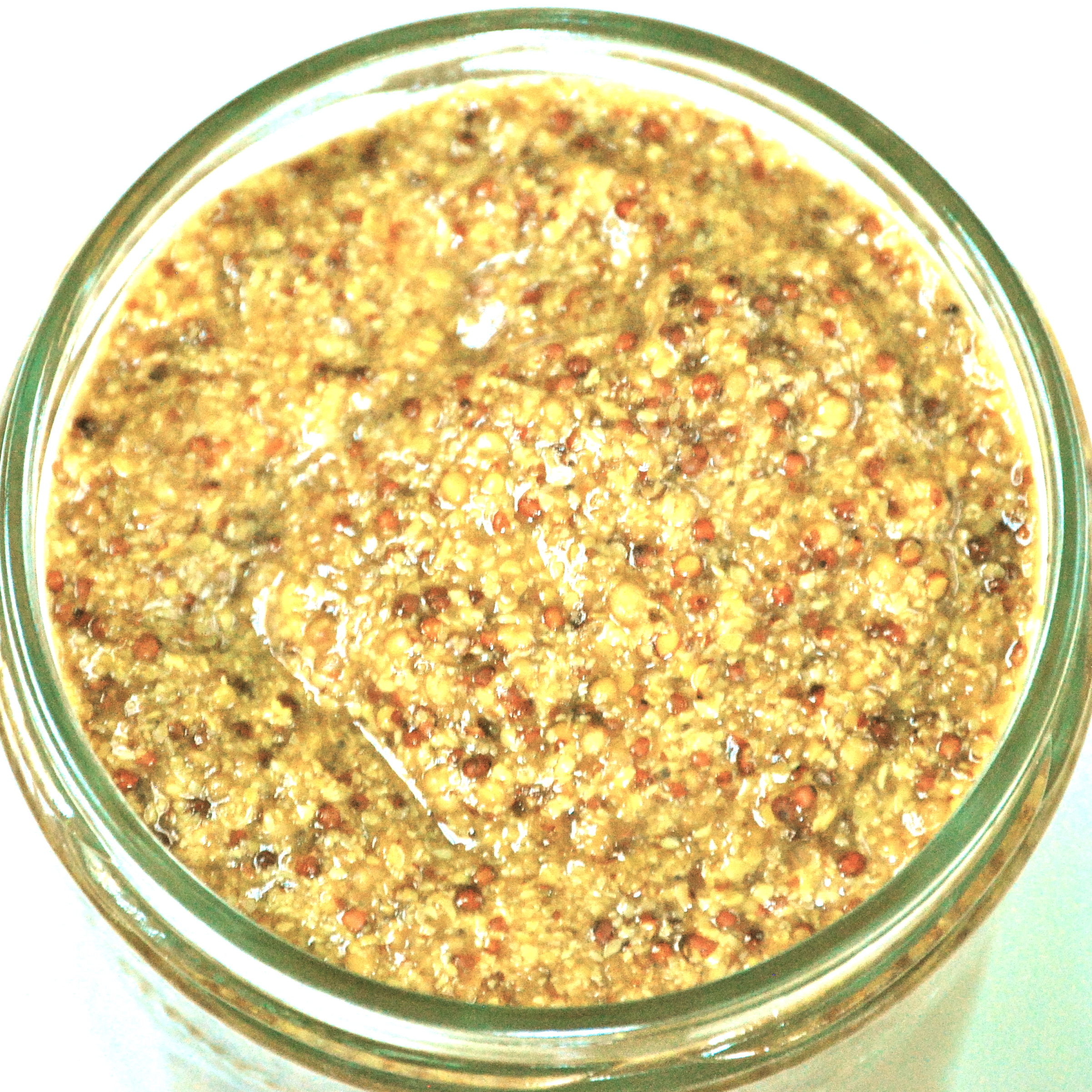
I made two variations of mustard, though you can certainly customize your own.  The first was a basic mustard, which I think I enjoyed just a tad more.  The second, the ‘brewhouse’ version, featured a fairly robust dark beer as a central ingredient.  Both were delicious.  Other possible additions to the basic recipe include:  tarragon (1 T, fresh), rosemary (1 tsp, fresh), tomato paste (1 T), honey (2 T), molasses (1 T), balsamic vinegar (1-2 T), cayenne pepper (1/4 tsp), roasted garlic (2-3 cloves, mashed), peach (1/4 cup fresh puree), chili (1 tsp, minced), and mango (1/4 cup fresh puree).  One thing to keep in mind though, if you add any of the above, your mustard won’t keep as long– probably about a week.

The Recipe: Homemade Grainy Mustard

Makes 1 1/2 cups

Basic Grainy Mustard

1/4 cup yellow mustard seeds

1/4 cup brown mustard seeds

1/2 cup water  (red wine can also be used)

1/2 cup white wine vinegar (or any vinegar with at least 5% acidity)

pinch of salt

(Note:  A Port Wine Mustard can also be made by substituting 1/2 cup tawny or ruby port for the water or red wine.)

Brewhouse Mustard

1/4 cup yellow mustard seeds

1/4 cup brown mustard seeds

1/2 cup sherry vinegar (or any vinegar with at least 5% acidity, such as malt)

1/2 cup strong flavored beer (such as a porter, stout, dark or amber ale)

pinch of salt

Put all of the ingredients into a jar with a tight fitting lid.  Give it a good shake and let it rest for about 2 days. This will allow the mustard seeds to become soft.  After the 2 days,  pour the mixture into a blender or a mini food processor.  Blend it to your desired consistency. If it appears to be too thick you may need to add a bit of water.  Make sure to scrape down the sides of the bowl.  You’ll never achieve a completely smooth mustard from this mixture.  Return the mustard to the jar and store in the refrigerator or a cool, dark place for several months.  The mustard will mellow and thicken a bit over time.  Enjoy!

Source:  Adapted from Mark Bittman’s How to Cook Everything Vegetarian

Thanks for stopping in for a visit!

Laurie

Follow me on Twitter!

Read Full Post »

This recipe blew me away!  How’s that for an opening?  When I read about these savory pancakes, I figured they’d be delicious– the flavors sounded like they really worked well together.  But I had no idea that they would meld into such a heavenly combination.  The first bite was, honestly, a revelation.

This dish comes from the amazing Yotam Ottolenghi.  He owns the highly-regarded Ottolenghi restaurant in London’s Notting Hill district.  This recipe can be found in his latest cookbook– devoted to vegetables– called Plenty.  Both the recipes and presentation are brilliant.  The photography, ingredients, and flavor combinations of his creations are an inspiration.

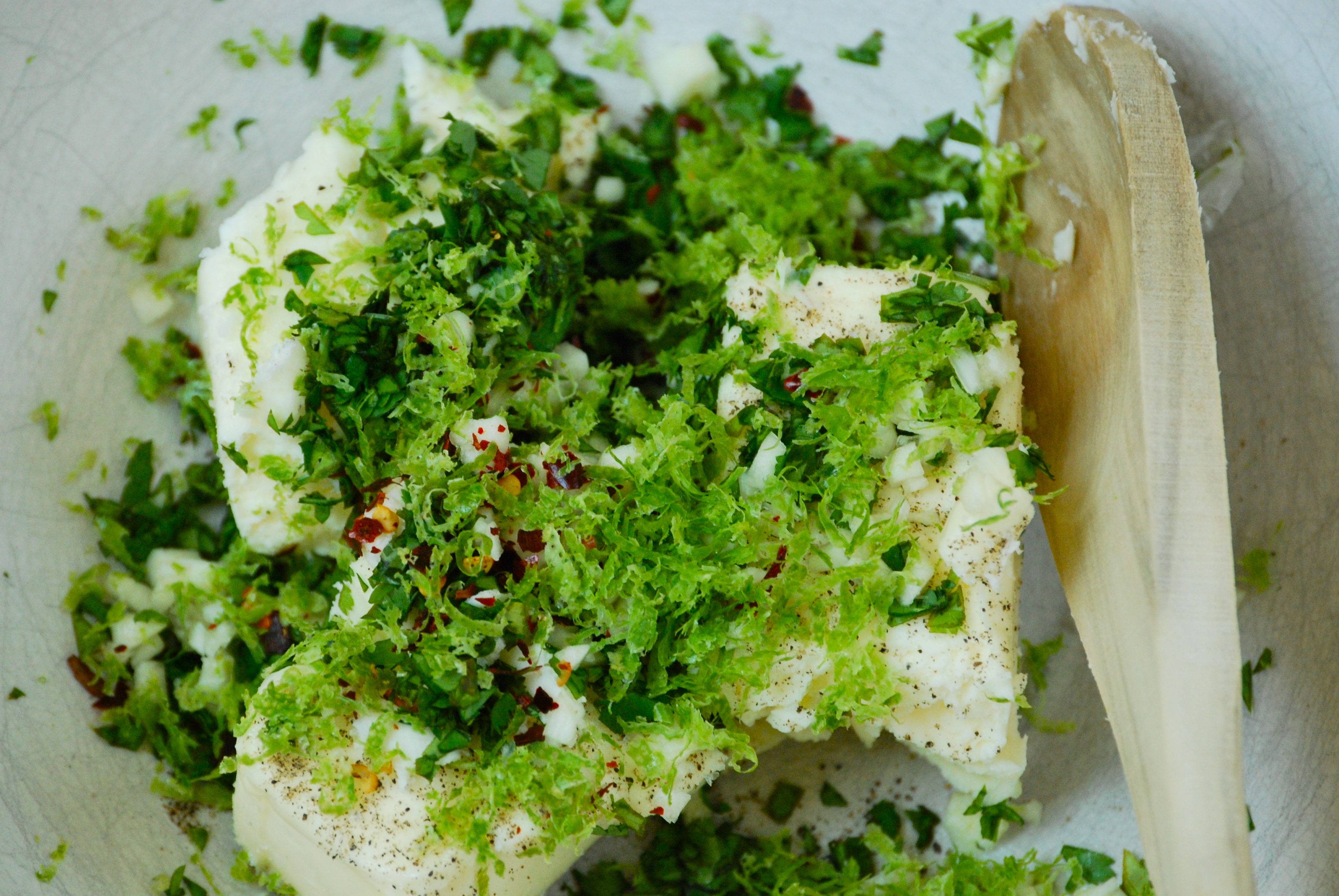
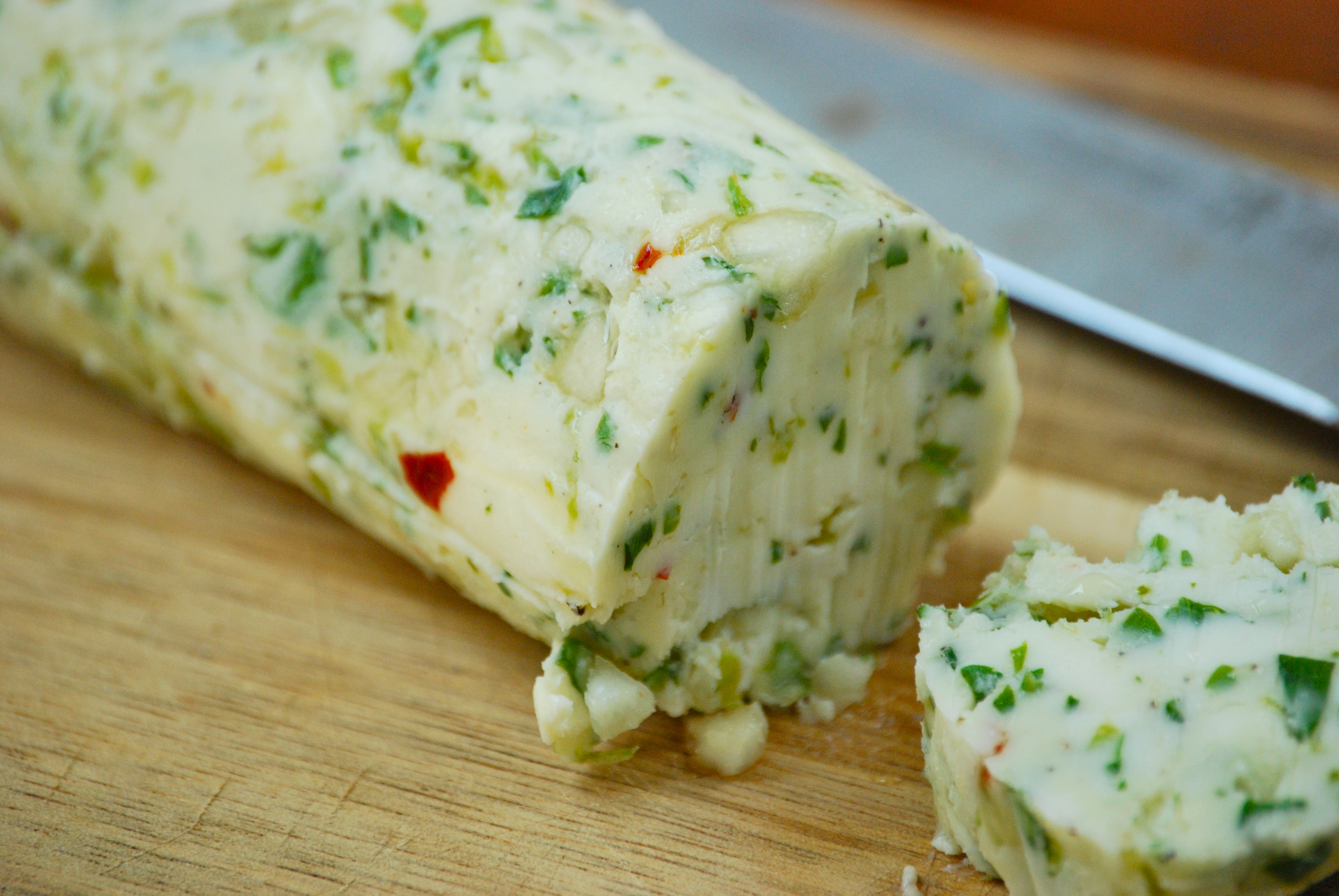
Aside from their incredible flavor, these pancakes are also a perfect way to get more greens into your day.  I used rainbow Swiss chard, along with green onions and cumin in the batter– they combine into a wonderful flavor.  But the real showstopper in this dish is the cilantro lime butter.  It is not subtle– more like a ‘flavor punch’ to your tastebuds.  You won’t need to use all of the butter on your pancakes, but you should make the entire amount. Once you taste it, you’ll see why.  I’m already thinking of other foods to put it on, like grilled sweet corn and sweet potatoes.  These pancakes make a fantastic star for any brunch menu, but work just as well for dinner, given their savory flavor.  Hope you enjoy them as much as we did.

The Recipe:  Savory Green Pancakes with Cilantro Lime Butter

Serves 3-4

Cilantro Lime Butter

8 tablespoons (1 stick) unsalted butter, soft, but somewhat cold

grated zest of 1 lime

1 1/2 tablespoons lime juice

1/4 teaspoon kosher salt

1/2 teaspoon black pepper

1 tablespoon cilantro, finely chopped

1 clove garlic, finely minced

dash of chile flakes, to taste

Savory Green Pancakes

1/2 pound (8 ounces) Swiss Chard, washed, stems removed

3/4 cup self – rising flour

1 tablespoon baking powder

1 egg

4 tablespoons unsalted butter, melted

1/2 teaspoon kosher salt

1 teaspoon ground cumin

2/3 cup milk (I used 2%)

5-6 medium green onions, finely sliced

1 fresh green chili, thinly sliced  (more if you prefer heat)

1 egg white

olive oil for frying

(Note: to make self-rising flour, combine 1 cup flour, 1 1/4 teaspoon baking powder, and a pinch of salt)

To make the cilantro lime butter: Place the somewhat chilled butter in a medium bowl (I liked working with the butter slightly chilled, because it was easy to roll into a log — it does take a little more muscle to get the ingredients mixed into it).  Mix in the rest of the ingredients until the butter mixture is creamy and uniform.  I formed the butter into a log using the wrapper from the butter,  you could also use plastic wrap and twist the ends of the wrap.  Chill until firm.

Wilt the Swiss chard in a hot frying pan with a splash of water.  Drain in a colander and when completely cool, squeeze out the remaining liquid using a paper towel or your hands.  Chop well and set aside.

Place the flour, baking powder, whole egg, melted butter, salt, cumin, and milk in a large mixing bowl and whisk until smooth.  Add the green onions, chiles, and Swiss Chard and combine with a spoon.  Whisk the egg white to soft peaks (I used my electric mixer, but you could do it by hand) and gently fold into the batter.

Pour a small amount of olive oil into a heavy frying pan and place on medium-high heat.  For each pancake, ladle 2 tablespoons of the batter into the pan.  These are meant to be small pancakes, about 3 inches in diameter and 3/8-inch thick.  Cook for about 2 minutes on each side, or until you get a beautiful golden color.   Enjoy with a small slice of the cilantro lime butter placed on each pancake.

Source:  Adapted from Yotam Ottolenghi’s Cookbook, Plenty

Thanks for stopping by today — hope you all have a glorious weekend!

Laurie

Follow me on Twitter!

Read Full Post »

Hello everyone!   Summer finally arrived in the Upper Midwest, and boy, did it show up with a vengeance!  Those living nearby probably don’t want to hear more about just how miserable the weather is, but for those of you in distant lands, the heat index has been flirting with 120 degrees here all week.  I’m seriously starting to look forward to a nice winter snow storm…which will probably be only a few months away.  Ahhh… Minnesota.

So where have I been, you ask?  Well, we’ve had a busy July.  As you know, I took the kids to North Dakota to visit family.  We had such a great time seeing everyone.   Shortly after we got back, we took our first trip to the world-famous Wisconsin Dells.  It was so much fun, and so cheesy (Wisconsin pun intended).  Waterslides, go-cart racing, food, a tour down the river on some sort of World War II vehicle.  Our kids are still talking about the trip.  They want to go back right away.

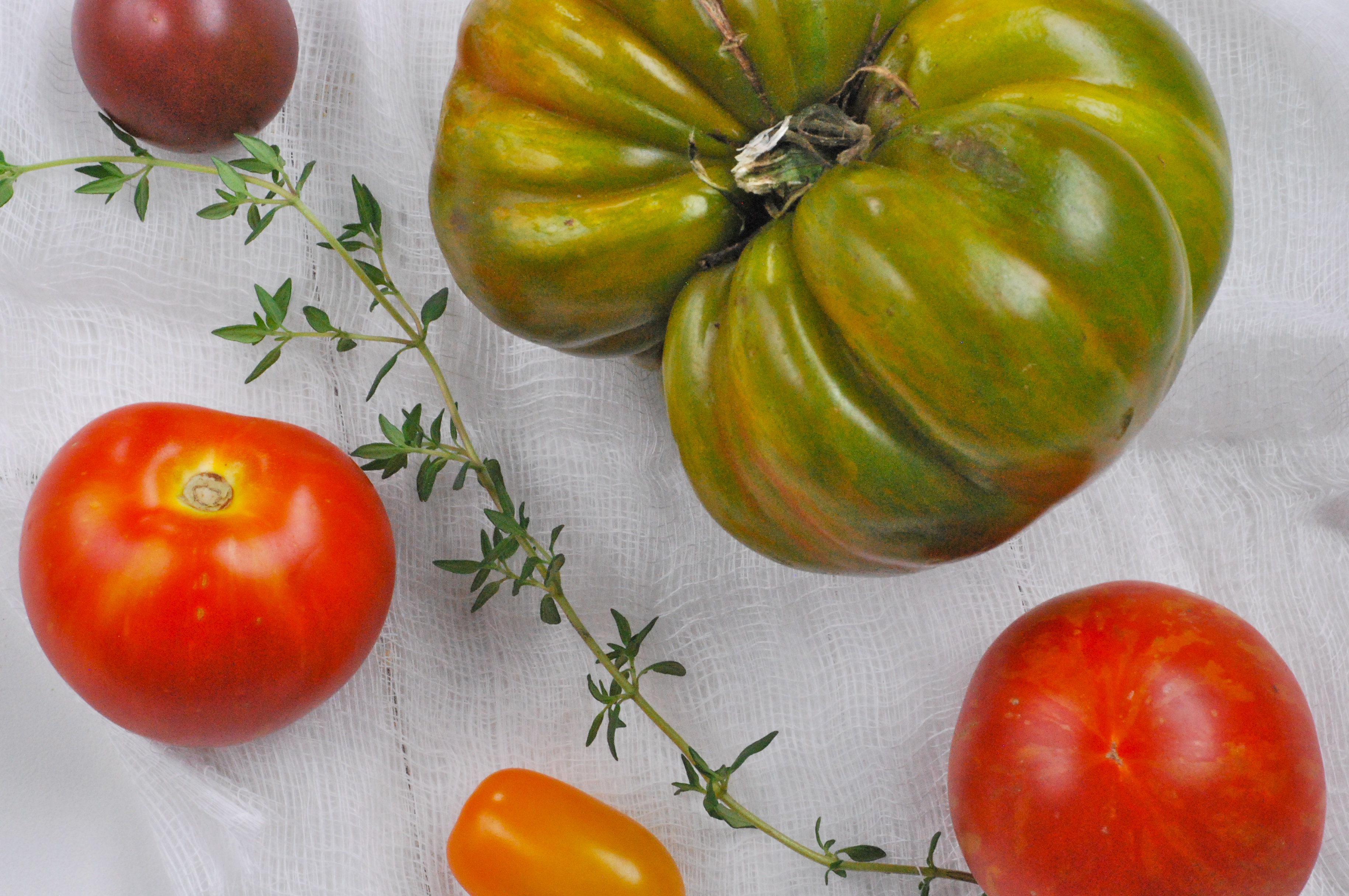
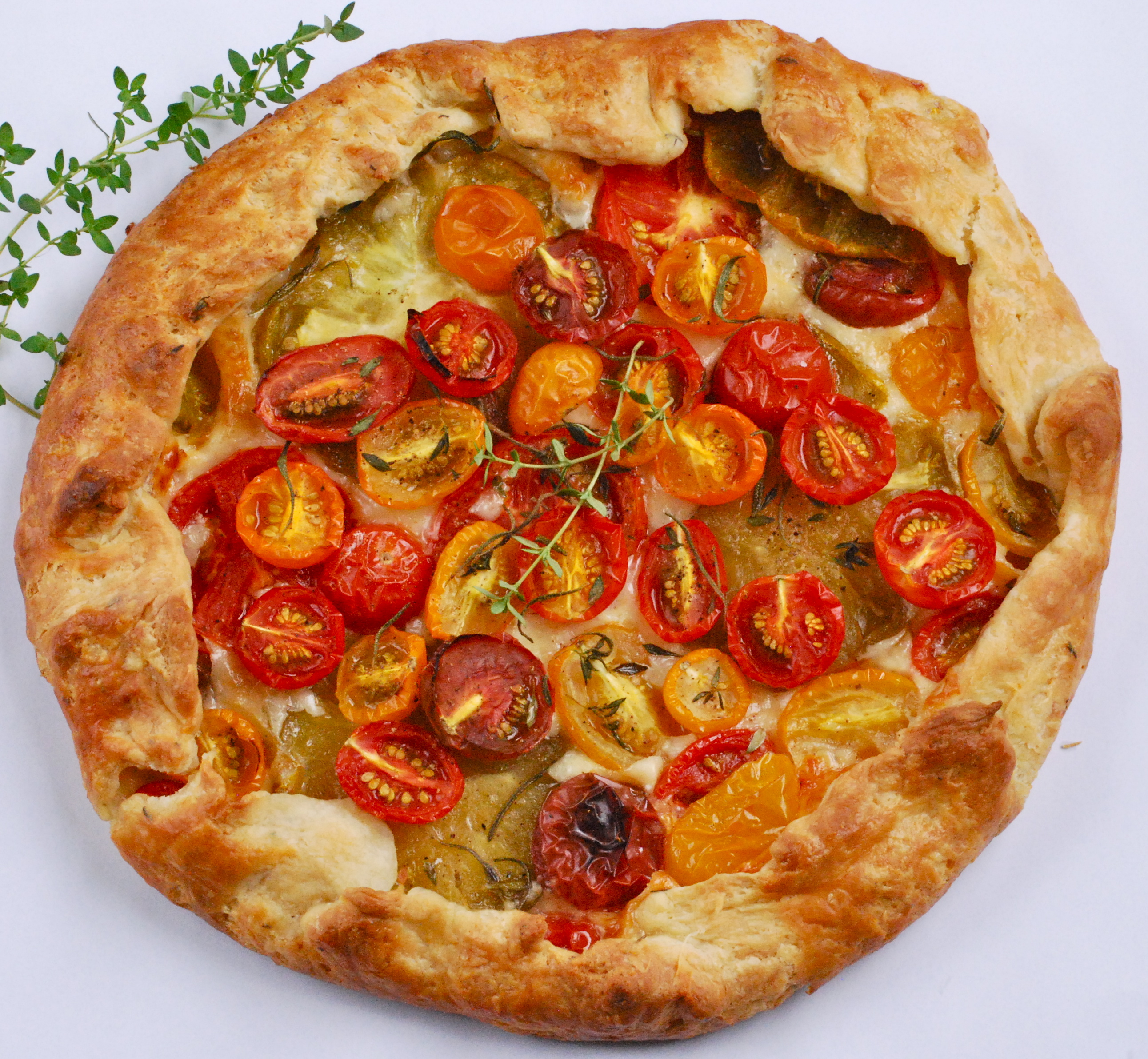
Now that you’ve had the family update, let’s talk food again.  Wow!  Do I have some exciting things to share with you!  Let’s start today with this gorgeous heirloom tomato galette.  You know I love fresh tomatoes, but are you aware that I’m that slightly-crazy person who refuses to buy one all winter long?  More than any other vegetable (cucumbers are a close second), tomatoes purchased out of season and shipped in simply do not taste the same.  Not even close.  Thankfully, they’re  in-season now, so you can expect to see several more tomato-based dishes in the coming weeks.

This show-stopper of a tart is the perfect way to feature the pure flavor of ripe tomatoes.  I’ve been waiting to make this recipe for awhile– not only because it looks incredible– but because it’s the creation of chef/owner Naomi Pomeroy from the fabulous restaurant Beast in Portland, OR.  Last October, Radd and I vacationed in the Pacific Northwest and stumbled into Beast– a communal-style locavore paradise.  We shared a table and company with six strangers.  The food was divine, and it was easily one of the best dining experiences I’ve ever had.  When I saw that this tart came from Beast, I knew I had to make it.

So how is it?  Better than you can imagine.  When I showed Radd, he thought it looked great, but he wasn’t exactly fired-up to try it.  After his third piece, he said it was one of the best things he’s eaten in a long, long time.  The crust is so delicate and flakey.  The manchego cheese adds a creaminess that perfectly compliments the acidity of the tomatoes.  Finally, the olive oil and herbs provide subtle complexity– the flavor really goes on and on.  It’s delicious warm, but even better at room temperature.  If you make only one savory dish from my blog over the next couple of weeks, it should be this one.  It’s that good.

The Recipe:  Heirloom Tomato Tart

Makes one 12-inch tart

Serves 4 to 6

For the Galette

1 cup all-purpose flour; plus more for work surface

1/2 teaspoon course salt; plus more for tomatoes

1 teaspoon baking powder

1 teaspoon chopped fresh thyme or rosemary for the dough, plus more for on top of the galette

1 stick (8 tablespoons), unsalted butter, chilled and cut into 1/2 – inch pieces

1/2 cup sour cream (full fat), chilled

1 pint tomatoes  (a combination of heirloom cherry tomatoes and other tomatoes, cut in half or sliced if large)

1/3 pound manchego cheese, or other semi-hard sheep’s milk cheese

1 egg white,  for an egg wash

For the Garnish (Optional)

1 bunch microgreens (arugala microgreens worked well)

Extra-virgin olive oil

Red-wine vinegar

Coarse salt

To make the dough: Combine the flour, salt, baking powder,  and 1 teaspoon of minced herbs in a food processor and pulse a few times to mix.  Then add the butter and pulse until the butter is just incorporated into the dry ingredients, making sure not to over-mix.  Some of the butter may be the size of a pea, which is fine.  This can also be done by hand if you don’t have a food processor.  Mix in the sour cream, being careful, once again, not to over-mix.  Turn the entire mixture out onto a cutting board and gently push it together into a ball.  Wrap it tightly with plastic wrap and refrigerate for 2 hours.

To make the filling: Put the tomatoes in a colander and sprinkle generously with coarse salt.  Lay the tomatoes on several sheets of paper towel to drain (dried tomatoes will make a crisp tart).

In the meantime: Heat the oven to 425°F.  Lay out a sheet of parchment paper that will fit onto your baking sheet.  Dust it with flour, as well as your rolling pin, and roll the dough out to a 12-inch circle about 1/8 – inch thick.   Leaving a  3 -inch border, scatter the cheese on the top of the dough, then arrange the tomatoes evenly over the cheese.  Sprinkle with a bit more thyme and rosemary.  Fold the edges of the dough over the tomatoes, making pleats as you fold and leaving the center of the tart open.  Make sure there are no holes in the dough; pinch the dough together if one appears.  Whisk the egg white and apply to the tart dough with a pastry brush or paper towel.  Transfer the tart with parchment paper still underneath to a baking sheet.

Bake the galette until golden brown, 30 -40 minutes.  Let cool on rack.

While the galette cools, lightly dress the microgreens with the olive oil, vinegar and salt.  Drizzle the top of the galette with olive oil and sprinkle it with course salt.  Slice the galette and serve with microgreens, of desired.    Enjoy!

Source:  Adapted from Harvest to Heat Cookbook via Naomi Pomeroy from Beast in Portland, OR

Thanks for visiting Relishing It today!  Hope you are all enjoying your summer.  See you soon.

Laurie

Follow me on Twitter

Read Full Post »

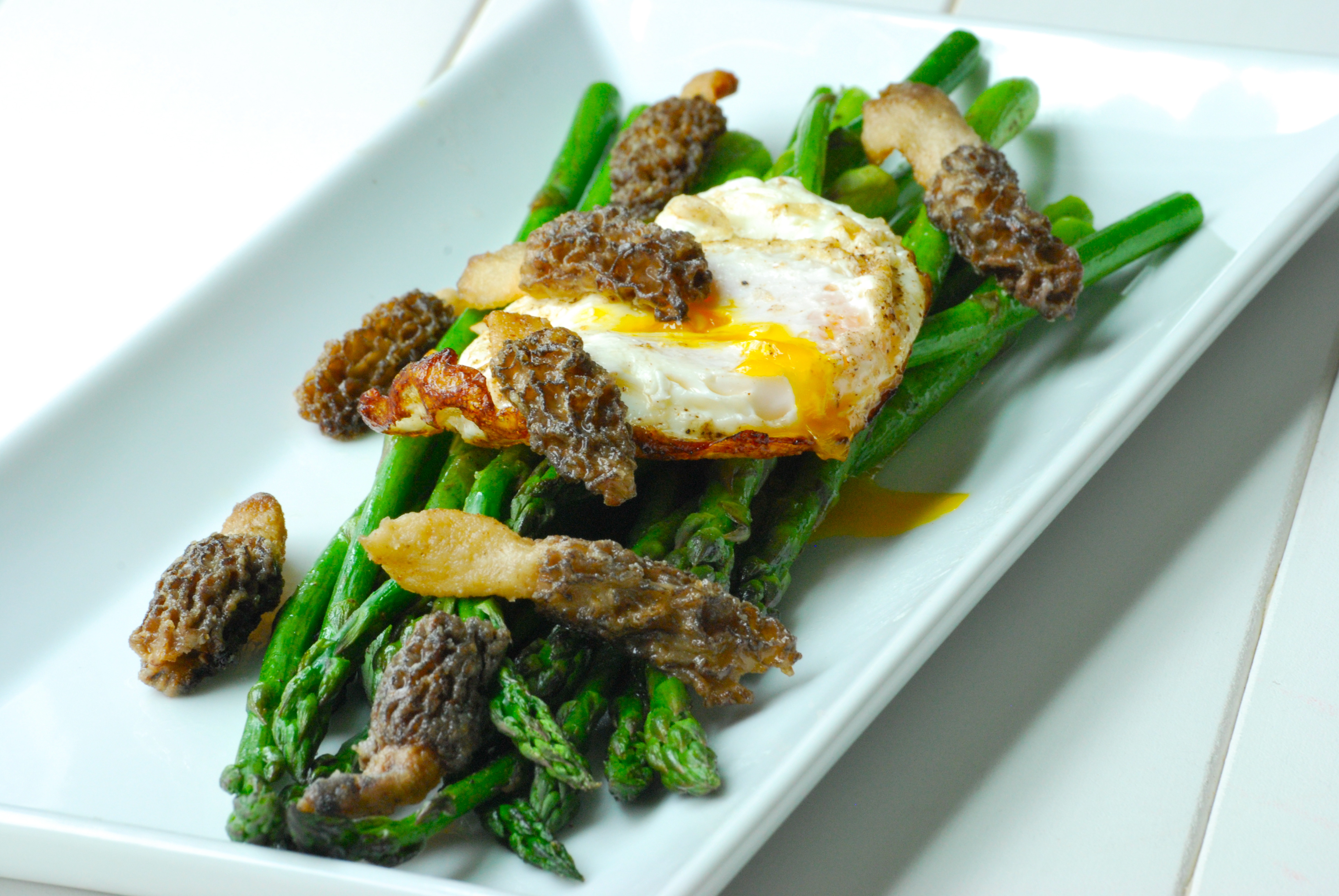
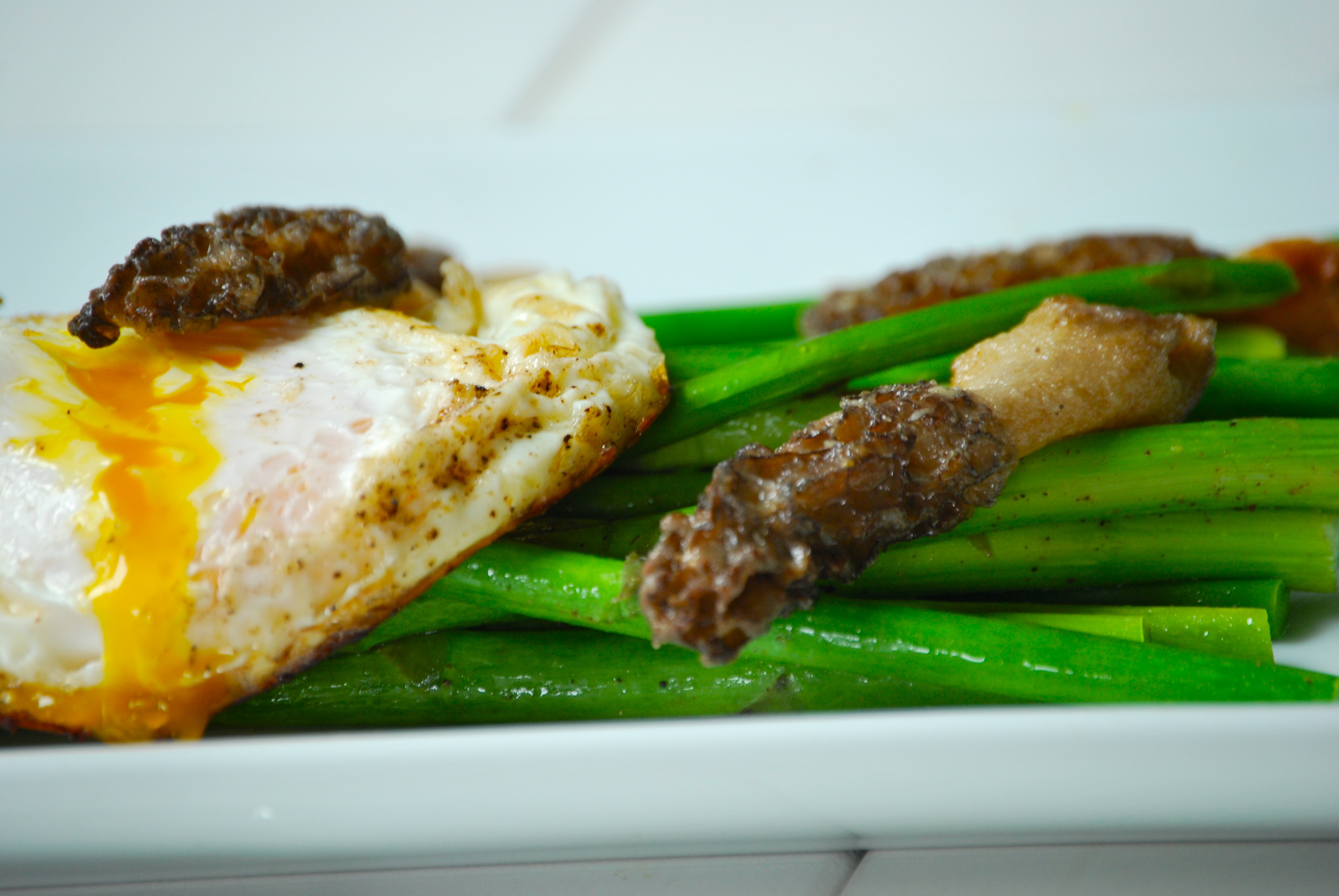
Too soon for another asparagus recipe?  Of course not.  Actually this recipe isn’t really about the asparagus, though it is beautiful and works well as an accompaniment to the real star– these gorgeous morel mushrooms.  Like asparagus, morels are now in season in Minnesota.  These rather odd looking mushrooms tend to grow in moist conditions and are often found around dying or dead Elm, Sycamore, and Ash trees.  Old apple orchards are another place to hunt for them.  Morels have an unbelievable, almost indescribable flavor.  As you’d expect, it’s very earthy, but there’s some other unique complexity there as well.  I can’t place it, but it is incredible. The texture is firm and meaty– there’s real substance.

I’ve always wanted to be a mushroom forager, but simply haven’t had the time– yet.  From what I can tell, foraging is both a science (separating the poisonous from the edible) and an art (instinct about where and when to hunt.)  There’s also mystery and secretiveness.  Foragers don’t like to share their hunting grounds.  Exciting!  Though perhaps this is more a reflection of my entertainment standards than anything else.

My husband surprised me with a small bag of morels this week.  He saw some at a Farmer’s Market for a better price than I’d found anywhere else.  Here’s the bad news:  morels are expensive.  Remember that “part science/part art” comment above?  There’s a cost for that.  Even so, you shouldn’t let the price deter you because you won’t need many to make a dish shine.  Their powerful flavor is apparent even in small quantities.  For this dish, I borrowed an idea from my friend Matt, who swears that sauteing them in butter is the best way to enjoy morels.  That’s what I did here, and it turned out beautifully.   This is less a ‘recipe’ and more me just combining three separate ingredients.  With morels, keep in simple in order to focus on the flavor of the mushroom.

The Recipe: Morels with Roasted Asparagus and Crispy Fried Eggs

(Serves 2)

1 bunch thin asparagus (ends trimmed, peeled if necessary)

2 tablespoons olive oil

1/4 pound  morel mushrooms

4 tablespoons salted butter

2 free-range eggs

Flour, for coating the mushrooms

salt and freshly cracked pepper

To Prepare the Mushrooms:  Cut the mushrooms in half, lengthwise.  Place in a bowl of cold water with 2 tablespoons of salt.  This will kill any bugs that may be on the mushrooms.  Let them sit for a few hours or overnight.  Rinse with cold water when ready to use and pat dry.  Allow to air dry a bit, if time permits.  (Note:  People are quite divided on the subject of wiping them off with a damp cloth or submerging into water.  Do whatever you want.  This worked for me.)

To Roast the Asparagus:  Pre-heat oven to 400°F.  Place asparagus on a rimmed baking sheet and toss with the olive oil. Sprinkle with salt and pepper.  Roast for 10-12 minutes, or until tender.

Meanwhile:  In a medium-sized skillet, heat the butter.  Lightly coat the mushrooms in the flour.  Place into the hot butter and saute for around 2 minutes on each side, depending upon the size of your mushrooms.  When finished, remove mushrooms and place on a paper towel.

In the same skillet, using the butter the mushrooms were sauteed in, cook the eggs to your liking.  I prefer mine over-easy.

To assemble: Place the roasted asparagus on a plate and put the egg on the top.  Then sprinkle with the crispy mushrooms.  Finish with salt and pepper, if necessary.  Enjoy!

I hope you enjoy the morels as much as I do.  For other inspirational ideas, check out my friend, Amy’s blog, “Green Your Plate”.  Thanks for stopping by today — have a great weekend!

Laurie

Follow me on Twitter!

Read Full Post »

I grew up on a farm in a very rural area of the country.  We had a big grove of trees right behind our house that was perfect for all sorts of adventures– not to mention a few fantastic tree forts.  As a kid, this ‘forest’ was our playground to explore– so long as we were mindful (due to constant warning) of not trampling the wild asparagus.  It grew in bunches right in the middle of the grove, and popped up in late spring.  I recall my parents (as well as my grandmother) ceremoniously harvesting the first asparagus of the year.

I don’t grow my own asparagus, though I wish I did.  Instead, I [im]patiently wait for it to show up at the local farmer’s markets each Spring.  And once it does we tend to go through an “asparagus fest” for the two weeks that its in season. I know, I know, it’s available almost year round at some grocery stores.  I’d rather not buy it unless it’s actually in season though, just as I wait for summer tomatoes and cucumbers to show up locally in July.  It’s just not worth it to buy transported asparagus in the winter– it’s not a winter vegetable, so it doesn’t taste the same.

This Asparagus and Gruyere Tart is so easy it’s almost embarassing to write a blog post about.  The ‘crust’ is made from puffed pastry.  If your not familiar with this little gem, you can either choose to make your own (which can take a little while), or you can buy it ready-made from the grocery store.  This is one of those few times where I recommend buying the pre-made product– it’s in the freezer section, and is generally high-quality and easy to work with.

When preparing the asparagus for the tart, choose medium to thick stalks.  Cut the stalk-ends off, and use a vegetable peeler to peel them about 1/2 way up the stalk.  This will ensure  that the asparagus is tender.  This vegetable pairs so beautifully with the gruyere cheese, while the ridiculously flakey puff pastry is a the perfect canvas to hold it all together. The flavor is incredible.  My husband confessed that he really wasn’t looking forward to this meal– but he ended up loving it.

The Recipe:  Asparagus and Gruyere Tart

(Serves 4)

Flour, for work surface

1 sheet frozen puff pastry  (thaw it according to package instructions)

2 cups shredded Gruyere cheese (Emmentaler or Fontina cheese would also work beautifully)

1 1/2 pounds medium or thick asparagus spears (bottoms trimmed and peeled for optimum tenderness)

1 tablespoon olive oil

Salt and freshly cracked pepper

Preheat oven to 400°F.  On a floured surface, roll the puff pastry into a 16 x 10 – inch rectangle ( I had a difficult time getting mine to 16 inches — use your best judgement).   Trim uneven edges.  Place pastry on a baking sheet.  With a sharp knife, lightly score the pastry dough 1 inch in from the edges to mark a rectangle.  Using a fork, pierce dough inside the markings at 1/2-inch intervals.  Bake until golden, about 15 minutes.

Remove pastry shell from the oven, and sprinkle with the Gruyere cheese.  Place asparagus in a single layer over the cheese, alternating ends and tips.  Brush  with oil, and season with salt and pepper.  Bake until spears are tender, 20 – 25 minutes.   Can be served warm or at room temperature.

Source: Everyday Food: Great Food Fast

Thanks for stopping by Relish It today!  Hope you’re having a great start to your week!

Laurie

Follow me on Twitter!

Read Full Post »

Confession time:  I may have a bit of an addiction to cookbooks.  Obviously I cook a lot, so this probably doesn’t sound too out of the ordinary.  Here’s the thing though, even when I acquire a new one (which seems to be happening more and more lately) I’m not satisfied.  I plow through it looking for ideas and admiring the photos, yet almost immediately want another.  This is true, no matter how good the book.  Yup, its an addiction.

There has been chatter lately that with the advent of electronic reading devices, cookbooks may become a thing of the past.  I guess the idea is that the internet (including blogs) and paperless “cookbooks” will make those comforting recipe tomes obsolete.  I disagree.  It seems that as a country, we’re becoming more interested in real, wholesome food.  As people become more comfortable with cooking at home again, I think they’ll return to beautifully written and photographed hard-copy cookbooks.  Sure, being able to find a meal based on ingredients you have on hand by using your computer is nice, but stumbling across a recipe that expands your horizons is what it’s all about.

Anyway…2010 was a stellar year for cookbooks.  Take a look at a few lists here or here.  Today’s recipe comes from one of my favorite new books– Harvest To Heat by Darryl Estrine and Kelly Kochendorfer.  It’s a collaboration of recipes from America’s best chefs, farmers, and artisans.  It is an absolute stunner.

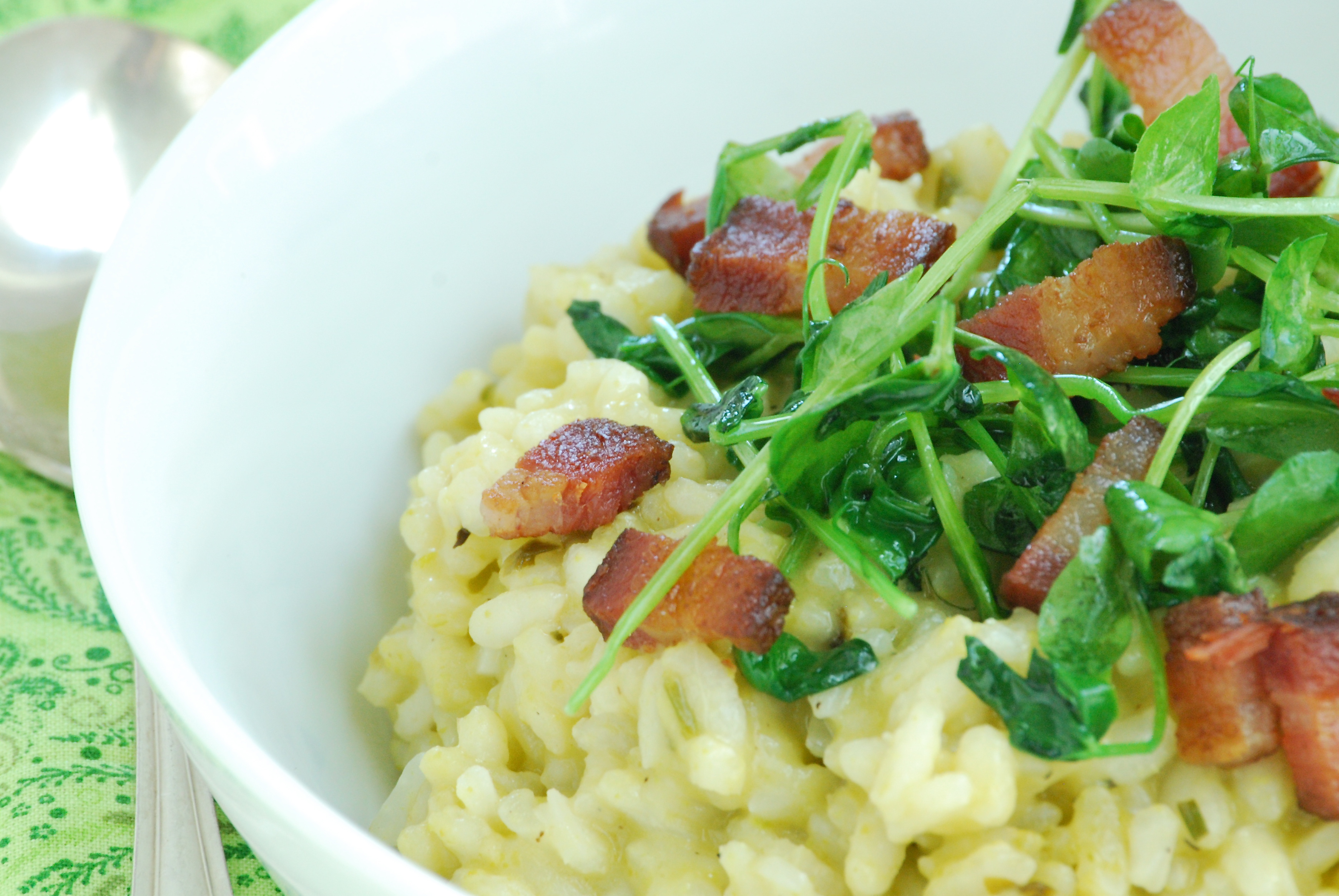
This dish uses pea shoots, which are in-season, locally.  Hopefully, you can get your hands on some of these little gems.  If you can’t, don’t worry.  You can still make it by simply omitting the pea shoots at the end.  Pea shoots are the leaves and tendrils of pea plants.  They are delicate and taste just like peas, but with a bit of a crunch.   Mixing them with salad greens is another way to really enjoy them.  In this dish they are sauteed for just a few seconds and then placed on top of this fantastic risotto.

The risotto itself has a pea puree  swirled into it.  My first thought was to skip making the puree and just add whole peas.  I’m so glad I didn’t.  The puree is lovely and gives the risotto a beautiful soft-green hue.  This dish comes together quickly, so go ahead and put the extra effort in by making the puree.   The herbs add loads of character to what would otherwise be a straight-forward risotto.  The fennel, in particular, really stands out.   The additional acidity of the white wine, countered by the rich flavor of the bacon really brings it together.  It’s creamy, salty, smokey, and fresh– all at once.

The Recipe:  Risotto with Pea Shoots and Bacon

(Serves 6)

2 cups fresh peas (or frozen)

4 sprigs fresh flat-leaf parsley, 2 left whole and 2 chopped (2 tablespoons)

4 sprigs fresh thyme

2 bay leaves

1 teaspoon black peppercorns

1 teaspoon fennel seeds

4 cups chicken or vegetable broth

5 tablespoons unsalted butter

1/2 small yellow or white onion, finely chopped

1 clove garlic, minced

2 cups arborio or carnaroli rice

2 cups dry white wine (I used a Sauvignon Blanc from the Loire– though next time I’ll try a less aggresive style.  Perhaps a Pinot Bianco or Pinot Grigio.)

1/4 cup grated Parmesan or Grana Padano cheese

1/4 pound bacon or pancetta (about 6 slices), diced

2 cups pea shoots

1 tablespoons finely chopped fresh chives

Course salt and freshly ground pepper

Bring a small saucepan of water to a boil.  Add the peas and cook for 1 minute.  Drain and cool.  Transfer to a food processor or blender and puree; strain through a mesh strainer and discard and solids.  Set aside.

Wrap the whole parsley sprigs, thyme, bay leaves, peppercorns, and fennel seeds tightly in cheesecloth and tie with butcher’s twine.

Heat the broth in a medium saucepan over medium heat to a simmer.  Melt 4 tablespoons of butter in a large saucepan over medium heat; add the bouquet of herbs, the onions, and the garlic.  Cook until the onions and garlic are softened, about 5 minutes.  Add the rice and stir to coat evenly with the onion mixture.  Add the wine, increase the heat to medium-high, and cook, stirring constantly, until the wine is almost completely absorbed, about 15 minutes.  Reduce the heat to medium, then add the warm broth 1 cup at a time, stirring the rice constantly until most of the liquid is absorbed before adding additional broth.  Continue to add broth, stirring until the rice is almost cooked through, about 20 minutes.  ( Note: you may not need to use all of the broth.)

Meanwhile, in a medium skillet over medium-high heat, cook the bacon or pancetta until crisp, 5-8 minutes.  Drain on a paper towel-lined plate, then transfer to a small plate and set aside.  Wipe out the skillet and heat 1 teaspoon butter over medium heat; add the pea shoots and cook until just wilted, about 1 minute.  Set aside.

When the rice is just cooked through, remove the bouquet of herbs,  then add the pea puree, chopped parsley, chives, and Parmesan or Grana Padano cheese.  Season with salt and pepper to taste.

To serve, ladle the risotto into soup bowls.  Top each bowl with the crisp bacon or pancetta and pea shoots.  Enjoy!

Source:  Adapted from Harvest to Heat Cookbook

Thanks for stopping by!  I love your feedback, so feel free to leave a comment.  Have a fabulous weekend!

Laurie

Follow me on Twitter!

Read Full Post »

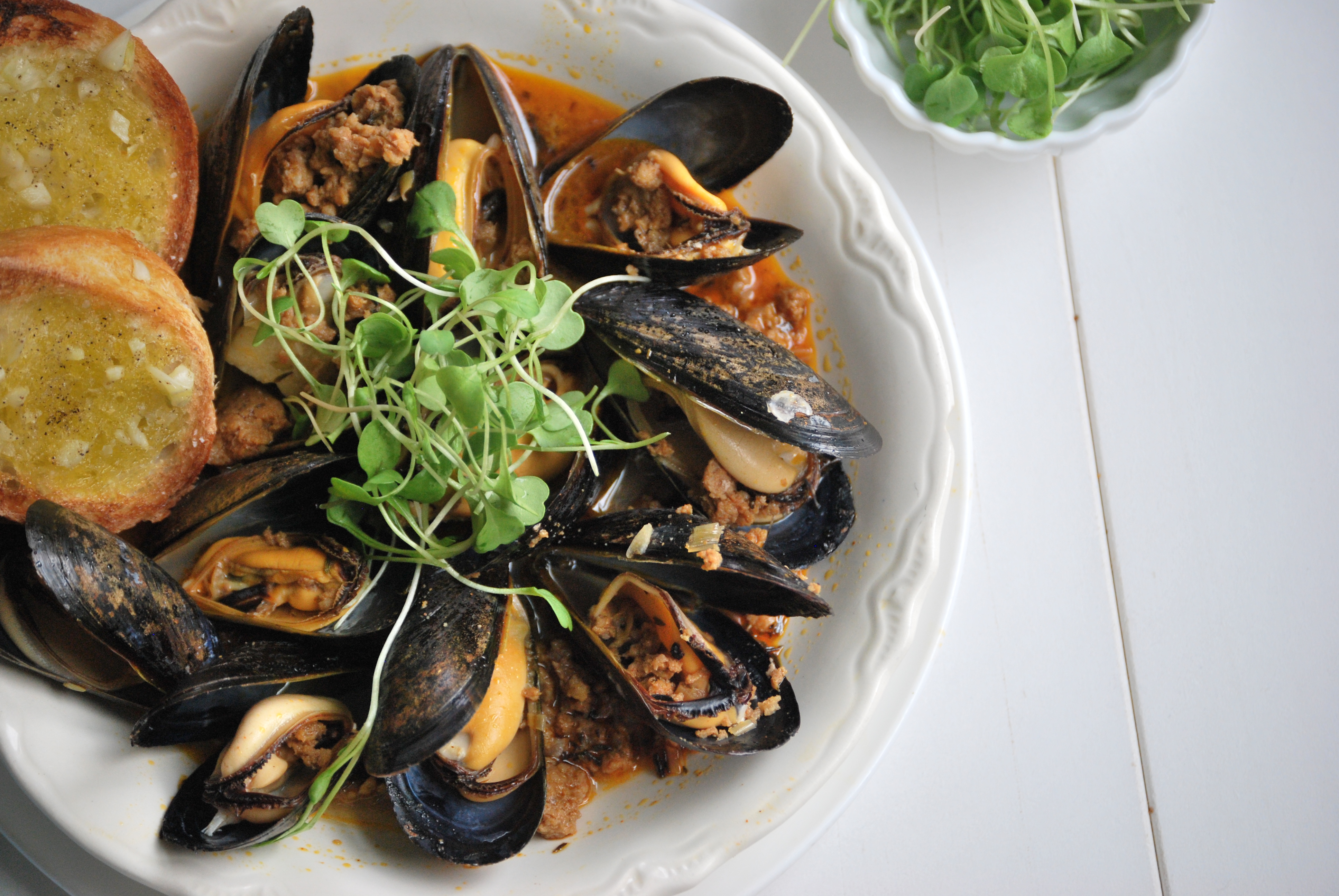
I have been craving steamed mussels for a few weeks now.  The culprit was a visit to our favorite gastropub a month or two ago, where we shared steamed mussels with sliced chorizo sausage and had a few local craft beers.  It was a good night.  I love seafood, but don’t get a chance to eat it as much as I’d like here in the Upper Midwest.  A week later, as if to taunt me, the most recent issue of ‘Fine Cooking’ had a steamed-mussel recipe that looked similar to what I’d recently loved while out on the town.  Then I saw another variation on this theme on her blog.  Obviously this was a sign, so I headed down to Coastal Seafoods to buy some shellfish.

No, this is not a “local” dish.  I wish it were.  But fresh walleye is about as close to local seafood as I’m going to get in Minnesota, and this dish definitely won’t work with fish.  Now, back to the mussels.  I can’t believe I don’t make these more often!  They turn an ordinary middle-of-the-week dinner into an exciting and new meal.  Did I mention that they’re incredibly easy to make?  That they taste amazing?  That they’re relatively inexpensive?  How about this:  the whole process– start to finish– takes less than 30 minutes.

The mussels flavor is best described as a “briny goodness.”  The chorizo adds a little spice and contrasting texture.  I chose ground chorizo specifically because of this textural variation– and because we have a local (Yay!) brand that competes for the best I’ve ever tasted.  You can certainly use a Spanish-style, rather than ground, chorizo if you’d like.  Just slice it up 3/8 -inch thick.   The ramps (see here for a discussion on ramps), garlic, and smoked paprika combine nicely with the chorizo.  The dish is completed with a a small amount of white wine.  I made this with a Spanish Albariño– it’ll never lead you astray when matching with seafood.  The dish tastes spicy and divine.  Serve it with the garlicky croutons, pour a glass of that delicious wine, and settle in on the patio for the night.

The Recipe:  Steamed Mussels with Chorizo, Ramps, and Smoked Paprika

Serves 2, generously

3 tablespoons of extra-virgin olive oil

4 cloves garlic, 2 minced and 2 thinly sliced

1/2 bunch of ramps, chopped  (white and green parts, only)

1 cup dry white wine,  an Albariño worked nicely (though I’m intrigued by how a minerally wine, like a Sancerre or even Chablis would change the flavor)

1/2 teaspoon smoked sweet paprika

1/2 pound ground chorizo

1 teaspoon dried thyme (or 2 sprigs fresh)

2 pounds mussels, scrubbed and debearded

1 baguette, cut on the diagonal into 1/2-inch slices

Sea salt and cracked black pepper

Microgreens (for garnish, optional)

Combine the olive oil and the 2 cloves of minced garlic in a small bowl and set aside.

Position an oven rack about 4 inches from the broiler element and heat the broiler on high.

In a 6-quart Dutch oven, brown the chorizo until fully cooked.  There should be a bit of oil leftover from the chorizo in the pan, if not add a couple tablespoons of olive oil.  Add the garlic and ramps and saute along with the chorizo for just a few minutes, until soft.  Add the smoked paprika and cook for 30 seconds longer.  Add the wine and thyme and bring to a simmer, stirring occasionally.  Stir in the mussels, coating them with the sauce mixture.  Cover and cook, stirring 2 or 3 times, until the mussels have opened, 8 to 10 minutes.

Meanwhile, arrange the baguette slices in a single layer on a rimmed baking sheet and brush them with the garlic oil, dividing the bits of garlic evenly among the slices.  Sprinkle with salt and pepper and then broil, rotating the baking sheet as needed, until evenly browned and crisp, 1 to 2 minutes.  Make as many as you like.

Discard any mussels that have not opened.  Serve the mussels with the sauce, croutons, and microgreens.  Enjoy!

Source:  Adapted from Fine Cooking Magazine

Make sure to come out and support the National Food Blogger Bake Sale on Saturday.  Proceeds to support Share Our Strength.  Our local gathering in Minneapolis/ St. Paul is at the Midtown Global Market –920 East Lake St. Minneapolis.  The hours are 11:00am – 4:00 pm.  Check to see if your city is having one.

Thanks again for stopping by– I appreciate all of your kind comments.  Hope you all have a wonderful weekend.

Laurie

Follow me on Twitter!

Read Full Post »

Ramp Pesto

Spring is here!  I know, I know– it was official a while back.  But, it’s really official now because ramps have arrived! I look forward to ramp season every year– so much so that my husband eventually ridicules how often I mention “ramps.”  Unfortunately, they’re not available for long, which forces me to fit as many ramp recipes as I can into a brief amount of time.

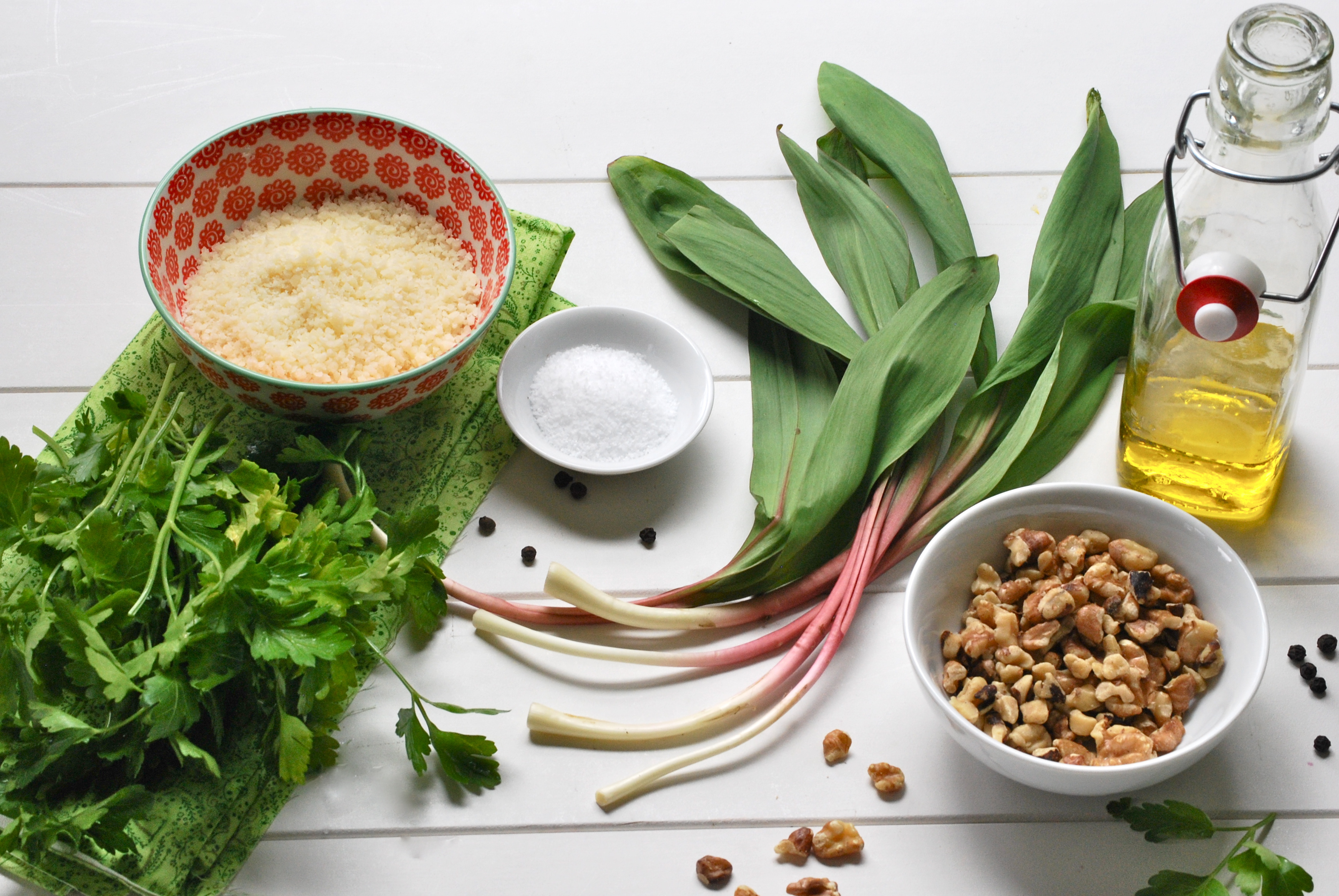
For the uninitiated, a ramp is actually a wild leek.  Their flavor most closely resembles a cross between a green onion and garlic.  While this makes them versatile, I really love allowing their unique flavor to take center stage.  This pesto does just that.  The wonderful garlic notes from the ramps blend well with the parsley and parmesan without overpowering them.  And ramps and eggs are a heavenly match, whether scrambled (with chopped ramps) or poached, as in this version of Eggs Benedict.

There are many ways to get the most out of this pesto.  It’s a fantastic sauce for pasta with a sprinkle of parmesan, add it as a topping to a rich risotto, or spread some on a toasted baguette with roasted tomatoes.  As the ramp season is so short, you can make extra pesto and freeze it– it keeps well.  Then, when tomatoes peak later this summer, you can bring some out and really get the best of this combination.  I can’t wait!

The Recipe:  Ramp Pesto

1/2 cup toasted walnuts pieces

1 cup Italian parsley (packed, then loosely chopped)

1 bunch ramps, (white and red parts only), chopped

1/4 cup grated Parmesan or Grana Padano cheese

1/2 cup extra virgin olive oil

kosher salt and cracked black pepper, to taste

red pepper flakes, to taste

Begin by toasting the walnuts in a small frying pan for a couple of minutes until they become aromatic.  Stirring and being very careful not to burn them.   They don’t need to be fully toasted, just enough to bring out their nutty flavor.  Remove from pan, and set aside.

Next, in a small food processor, combine the ramps, parsley, walnuts, parmesan, red pepper flakes, and a sprinkle of salt and cracked black pepper.  Pulse the mixture for a few seconds until it is somewhat mixed.  Turn the food processor on and slowly stream the olive oil through the liquid hole on top of the lid.  When the pesto looks homogeneous, after a minute or two, turn off the machine and  adjust seasonings, if necessary.  The pesto will keep covered in the refrigerator for around 3 days.  Enjoy!

I hope you all have a wonderful week!  Thanks for stopping by!

Laurie

Follow me on Twitter! 

Read Full Post »

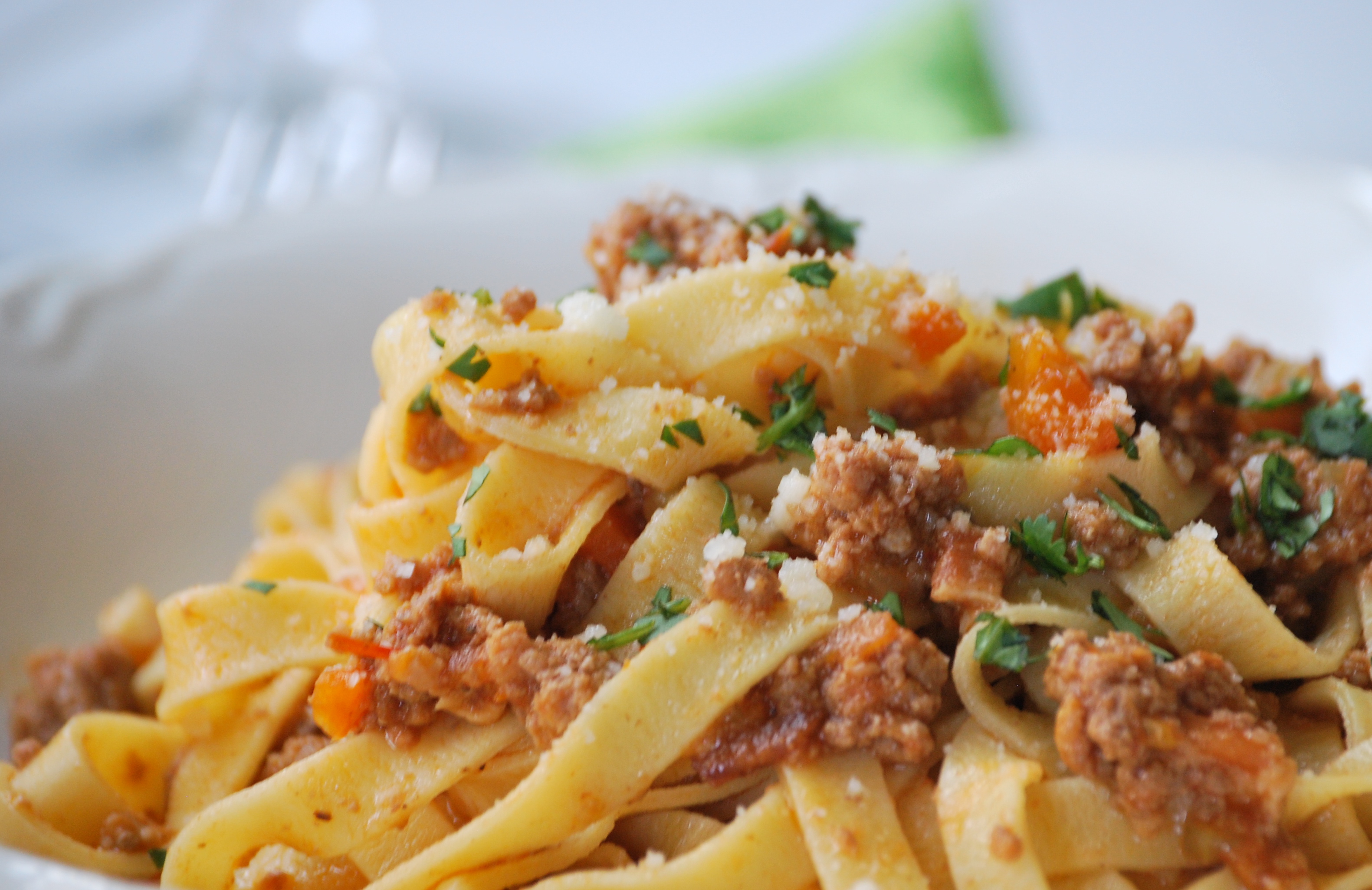
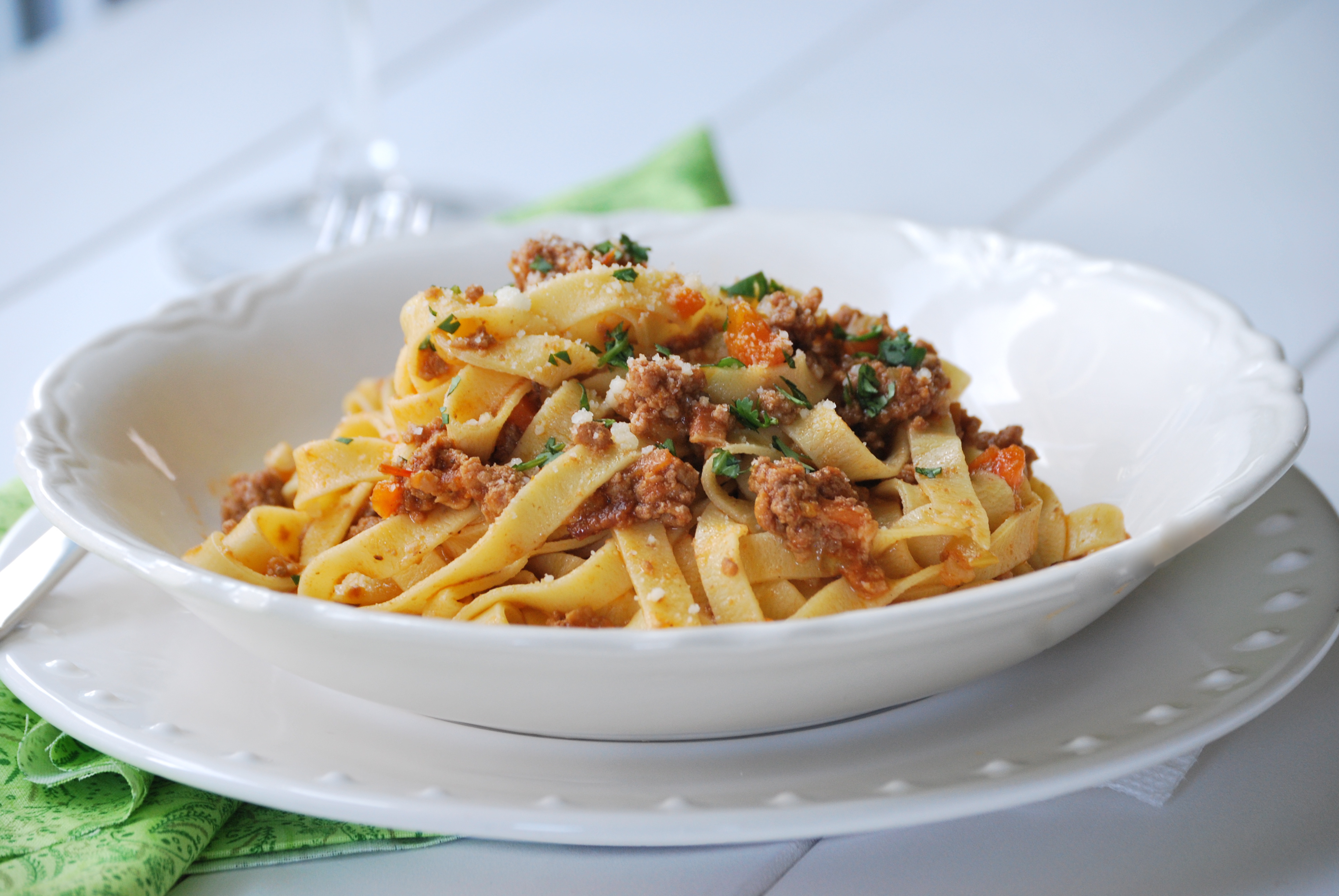
My family loves Italian food, though neither my husband or I are Italian.  If we’re celebrating a special occasion, there’s a good chance we’ll be making pasta.  For years we relied on dry, packaged pasta for spaghetti, lasagna, and seafood dishes.  My husband bought a pasta maker some time ago, and while we were first a bit indimidated by the work involved in making fresh pasta, now we’re hooked.  Rather than look at it as extra time and effort, we separate out the tasks and make it a family affair:  I prepare the dough and the sauce, while my husband and four-and-a-half year old son crank out the noodles.  My two-year-old daughter provides moral support– or more accurately does her best to disrupt the process.  My hope is that the group effort makes nice “food” memories for my family and that they’ll always remember our time in the kitchen.

The pasta recipe here comes from one of the queens of Italian cuisine, Lidia Bastianich.  The pasta is silky, beautifully firm, and has that genuine “toothiness” when you bite into it.  If you’ve never had fresh pasta, you’re missing out as the texture is so different from boxed dry noodles.  This particular pasta pairs well with slow-cooked meat sauces.  They cling to it beautifully.  One of my favorites is a bolognese-style sauce.  I’ve made several from cook books, but they’ve never been exactly what I was looking for, so I took my own route for this recipe.  I’ve discovered that ‘bolognese’ sauces can be quite varied.  Some recipes and restaurants use lots of tomatoes, while others rely on them sparingly.  Some call for simmering in milk for long periods of time, while others add cream at the end of the cooking process.  I created this sauce to fit my own tastes– some tomatoes, yet different from a traditional tomato-based sauce.  I slowly simmer it in milk for a few hours to allow the flavors to fully incorporate.  Note that there are no herbs in the sauce, so the meat (especially the pancetta) and vegetables are the stars.

Homemade Tagliatelle: 

(Makes one pound of pasta)

2 cups all-purpose flour

1 egg yolk (from a large egg)

3 large whole eggs

2 tablespoons extra-virgin olive oil

Making the dough in a food processor:

Fit the regular cutting blade in the bowl of a processor  (these batches are too small for the dough blades of most machines).  Measure the flour into the bowl; process for a few seconds to blend and aerate.  Drop the eggs and egg yolk into a spouted measuring cup , or a bowl; beat briefly with a fork to break them up.  Mix in the oil  (you should have 7 fluid ounces).   To minimize the chance of overheating the dough, use eggs right from the refrigerator.

Start the machine running with the feed tube open.  Pour the wet mixture into the bowl quickly; scrape all the egg drippings out of the cup into the processor too.

Let the machine run for about a half minute.  The dough should form quickly; most of it should clump or ball up on the blade – some may spread on the sides of the bowl –  where it will twist and knead.  Let the machine knead the dough for about 10 seconds (no more than 40 seconds total processing).  Turn the dough out onto a very lightly floured surface, and knead by hand for another half minute or so, until it’s smooth, soft and stretchy.  Wrap and rest the dough at room temperature for at least a half hour.  Store, very well wrapped, in the refrigerator for a day; or a month or more in the freezer.  Defrost frozen dough slowly in the refrigerator, and let it return to room temperature before rolling.  Defrosted dough will need a bit more flour.

If you have problems in the food processor – if there’s no apparent clumping after 30 seconds, or the dough stiffens up very quickly – stop the machine and feel the dough.  Adjust for stickiness or dryness by working in either flour or water in small amounts.  You can continue to work the dough in the machine, but don’t process for more than a total of 40 seconds – or turn the dough out to correct the consistency and finish kneading by hand.

Rolling the dough by machine:

I used a manual pasta machine for this.  Have your dough at room temperature for rolling.  Cut 1 pound of dough into four pieces.  Work with one piece and keep the others covered to prevent drying.  Have a large tray or baking sheet nearby (or two if you have them) lightly sprinkled with flour, on which to lay thin dough strips.  Smooth kitchen towels are also useful as resting surfaces and to seperate layers of strips.  Have flour for sprinkling and a knife handy, too.

Turn the knob to the widest setting– you’ll work at this setting for awhile.  Roll the first dough piece out with a rolling pin into an rectangle so that it’s thin enough for the machine to grab on the widest setting.  Roll it through the machine two times.  Fold the now elongated rectangle in thirds, and turn the dough 90 degrees  (so the fold is on the side, verticle), and roll it through.

Catch the dough; fold it and roll it through again with the fold on the side.  Repeat the folding and rolling six more times to strengthen and smooth the dough.  Like kneading, this will make it more resilient and workable.  Lay the first piece down, sprinkle it with a tiny bit of flour on both sides, and cover it (with plastic wrap or a towel).  Put the remaining pieces of dough through the same steps of rolling and folding.

Reset the rollers to the third setting (I roll pasta at every other setting from wide to narrow).  Roll your first strip through, but don’t fold in thirds again.  Let the rollers grab and move the dough– don’t push it or pull it through– and catch it with your hand as it comes out.  Roll the strip again to stretch and widen it; lay the strip down (on the lightly floured tray) and stretch the others in the same way.

Reset the machine even narrower; you should be on the fifth setting by now.  If the rollers fail to grab the dough, apply just a dab of water to the tip of the pasta dough.  Pass the first strip through once; it will lengthen rapidly, and you will need to catch and support it as it comes through the rollers.  Flour the strip lightly if it is sticking to the rollers.  After the second pass, if the strip is 20 inches or longer (and it really should be so), cut it crosswise in half, to get two shorter strips of about 10 to 15 inches.  Lay these down (not overlapping) and dust with flour; roll and cut the other strips in the same way.

You should have eight long strips at this point, each 5 -inches wide (nearly the width of the rollers).  I’ve found that this is generally the thickness that I want.  If you have a different pasta maker, and the noodles are 1/8 – inch thick (and the strips are shorter then 12- inches), you should pass them through the next narrow setting.  Roll the dough as thin as you like, as long as it doesn’t tear or fall apart.  If it does tear, fold the strip in half or thirds (making it shorter and enclosing the tear) and reroll at wider setting.

Set the finished strips down, lightly floured and not overlapping, in the big trays.  If necessary, cover a layer of strips with a floured kitchen towel, and rest more strips on top.

Keeping cut pasta:

You can cook the pasta as soon as it is cut, or let it sit and dry at room temperature until you are ready, but use them within a day.  Lay them out on trays, lightly floured and separated so they don’t stick together.  Arrange the pasta into “nests”.  Pasta that has been air-dried will take a bit longer to cook.

To freeze cut pasta for storage, set the nests  on trays that fit into your freezer.  After they’re solidly frozen, pack them in small airtight plastic bags or containers.  Don’t defrost before cooking; simply drop the pasta into the boiling water.

Cooking the pasta:

For 1 pound of pasta, bring 6  quarts of water to a full boil and stir in 1 tablespoon kosher or sea salt.  The dough has no salt, so it is particularly important that the cooking water be well salted.

Before adding pasta to the water, shake off any excess flour.  Drop the pasta into the boiling water in several batches, stirring with each addition to separate the pieces.

Keep the high heat, but don’t cover the pot.  Cook at a boil at least until the pasta rises to the top.  It should take 2-3 minutes.  Remember, fresh pasta is not cooked until  al dente like dried pastas.  Cook them until they are tender and cooked all the way through.

Source: Homemade Tagliatelle adapted from Lidia Matticchio Bastianich’s Lidia’s Family Table.  Bolognese recipe is my own.

Ragu alla Bolognese

(Simmer time: the longer the better.  At least 2-3 hours for optimum flavor)

2 teaspoons kosher salt

Freshly cracked black pepper

1 dry bay leaf

6 cloves garlic, minced

1 cup onions, finely chopped

1 cup carrots, peeled and finely chopped

1 cup celery, finely chopped

1/4 pound pancetta or bacon, diced

1 pound  free-range ground pork

1 pound grass-fed ground beef

6 tablespoons double-concentrate tomato paste

2 cups puréed canned tomatoes ( I can my own, I would suggest buying something low in sodium)

2 cups whole milk

3/4 – 1 cup white wine, such as Soave or Pinot Bianco (both Italian whites)

In a large Dutch oven, brown the beef and pork over medium-high heat.  Drain and discard the grease and remove the browned meat from the pan.  In the same pan, cook the pancetta or bacon until crisp.  Remove pancetta from the pan leaving the drippings behind.  Sauté the vegetables in the bacon drippings until tender, about 6-7 minutes.   Season with salt and cracked pepper.  Add the ground beef, pork, and pancetta to the pan.  Mix in the vegetables and the tomatoes, tomato paste, milk, bay leaf, and wine.  Bring to a boil, then cover and immediately turn down to low for a long, slow simmer for at least 2 hours, but hopefully a bit more.  The longer you can simmer this sauce, the better it will taste.  3 hours makes it delicious.  Remove cover near the end, if it needs to reduce/thicken  a bit more.  Adjust salt and pepper if necessary.  Combine the bolognese and tagliatelle and top with freshly grated parmesan.  Serve immediately.  Enjoy!

Have a fabulous day, everyone!  Thanks for stopping by, and as always, I appreciate any feedback.

Laurie

Follow me on Twitter!


Read Full Post »

« Newer Posts - Older Posts »