Feeds:
Posts
Comments

Archive for the ‘Breakfast’ Category

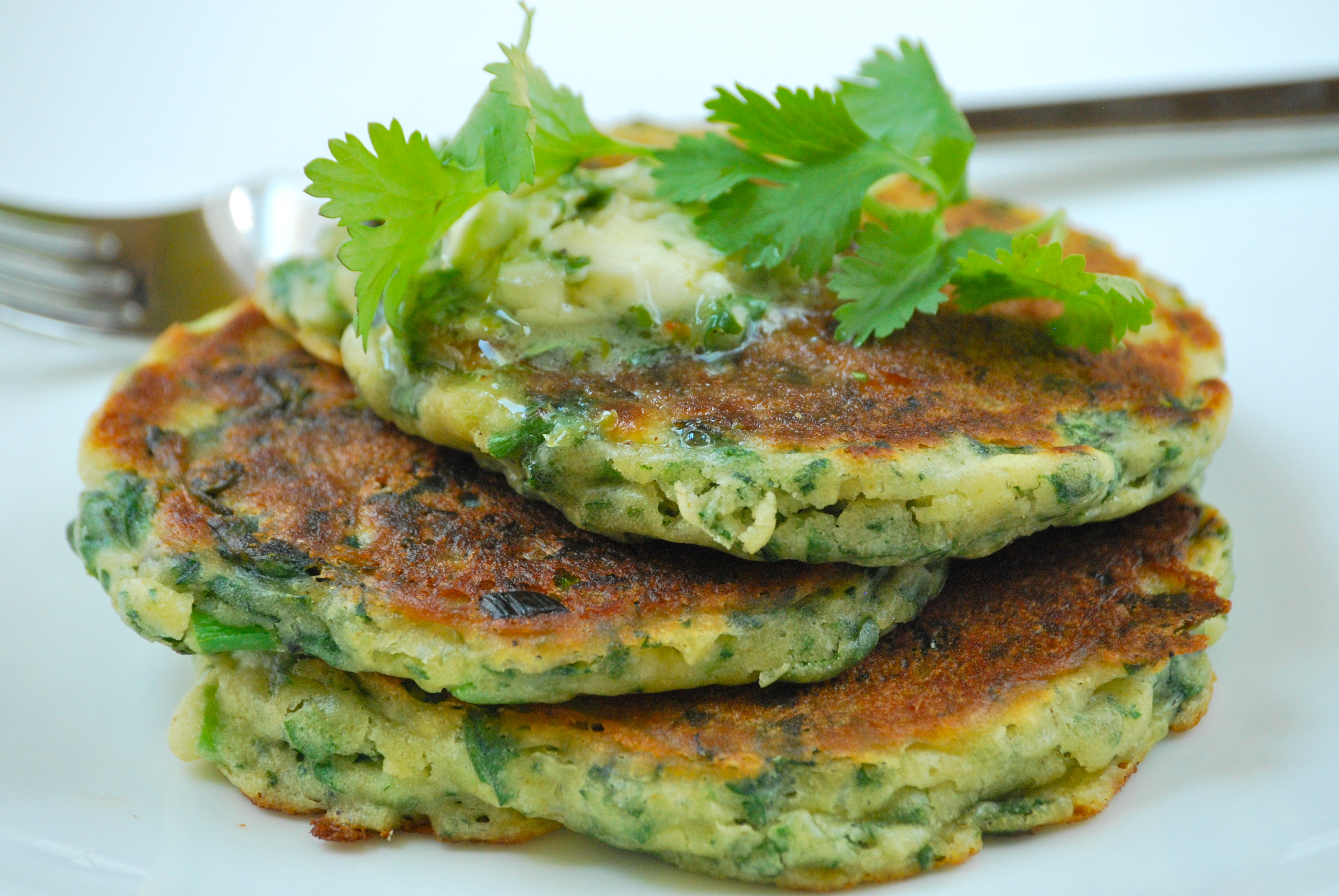
This recipe blew me away!  How’s that for an opening?  When I read about these savory pancakes, I figured they’d be delicious– the flavors sounded like they really worked well together.  But I had no idea that they would meld into such a heavenly combination.  The first bite was, honestly, a revelation.

This dish comes from the amazing Yotam Ottolenghi.  He owns the highly-regarded Ottolenghi restaurant in London’s Notting Hill district.  This recipe can be found in his latest cookbook– devoted to vegetables– called Plenty.  Both the recipes and presentation are brilliant.  The photography, ingredients, and flavor combinations of his creations are an inspiration.

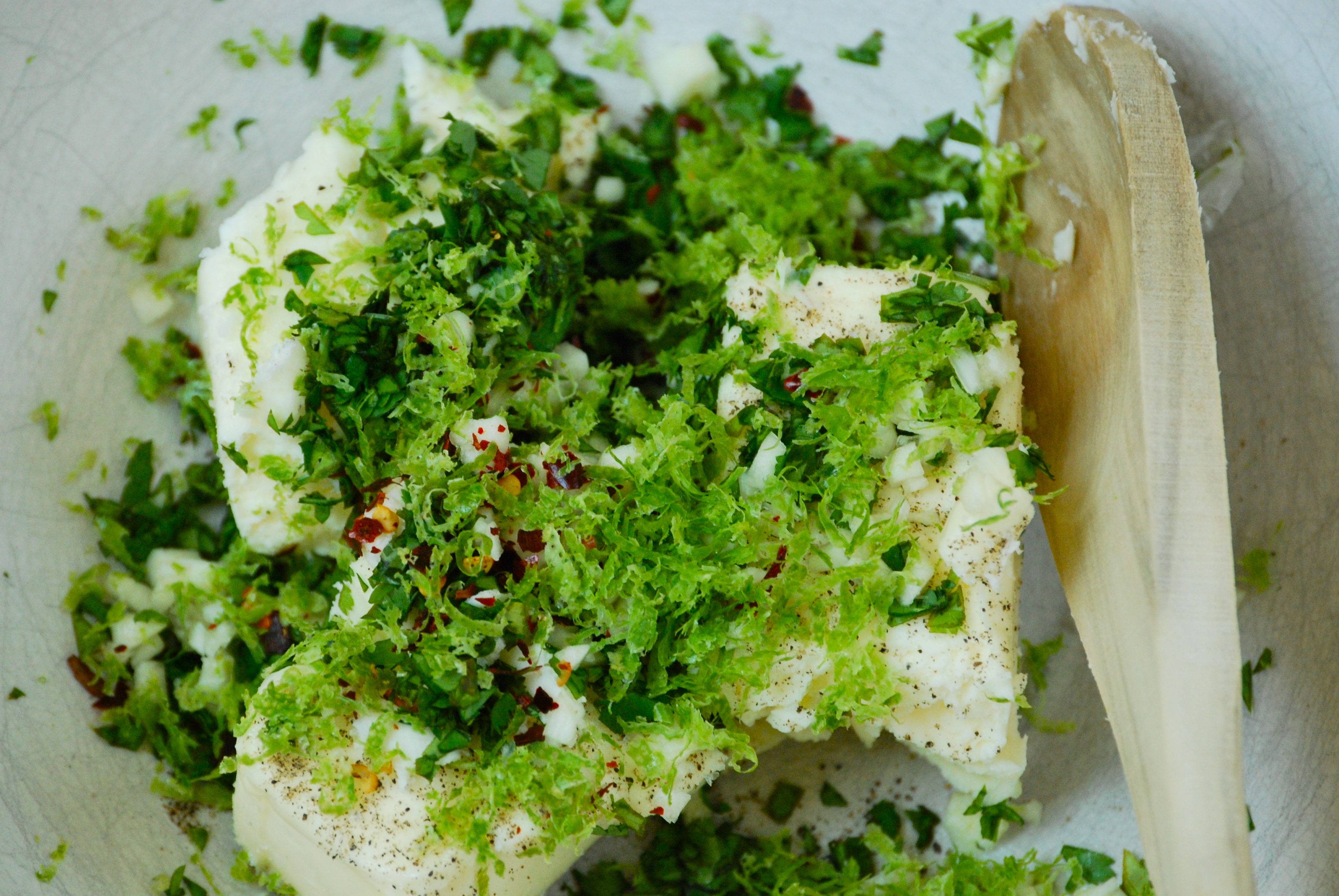
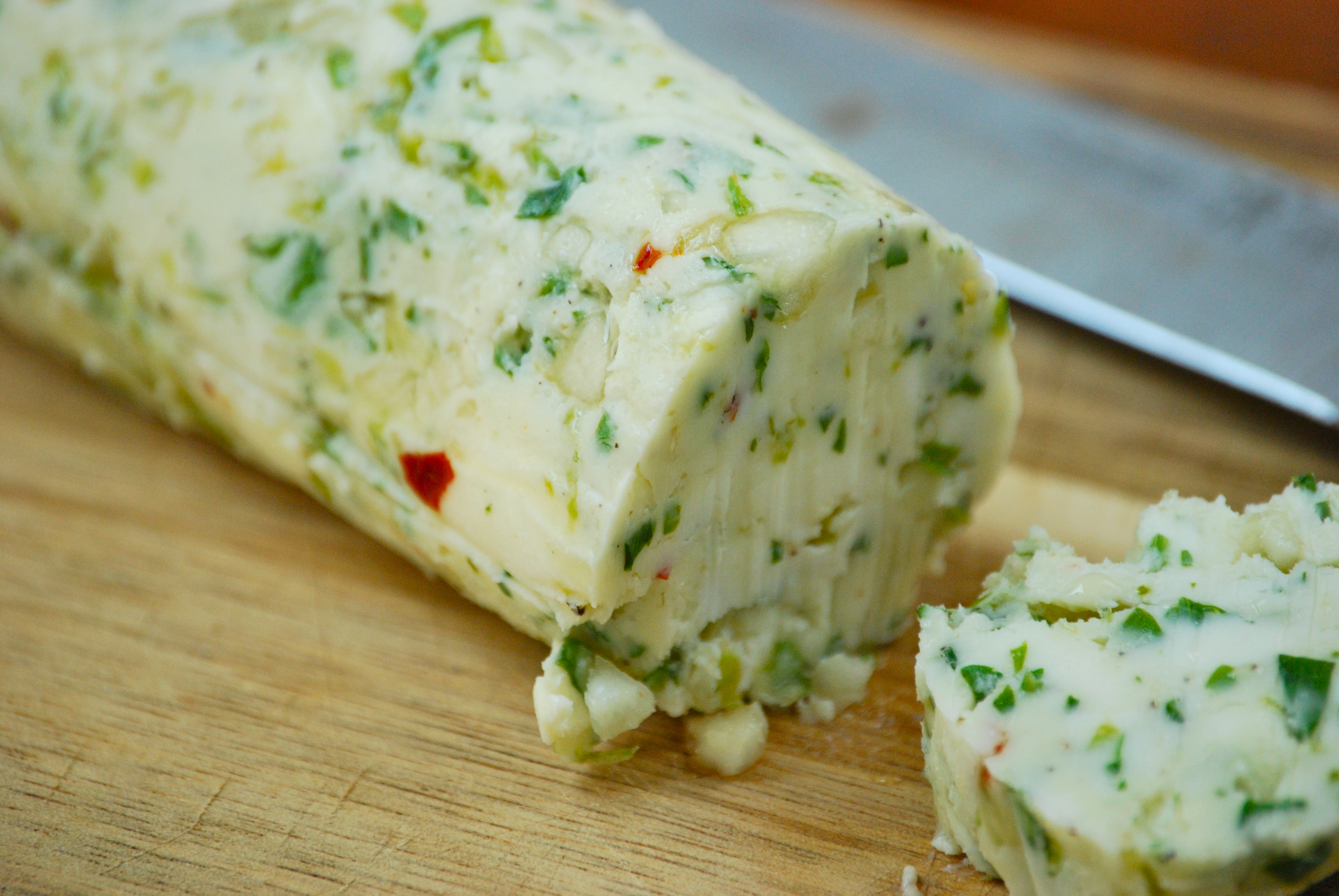
Aside from their incredible flavor, these pancakes are also a perfect way to get more greens into your day.  I used rainbow Swiss chard, along with green onions and cumin in the batter– they combine into a wonderful flavor.  But the real showstopper in this dish is the cilantro lime butter.  It is not subtle– more like a ‘flavor punch’ to your tastebuds.  You won’t need to use all of the butter on your pancakes, but you should make the entire amount. Once you taste it, you’ll see why.  I’m already thinking of other foods to put it on, like grilled sweet corn and sweet potatoes.  These pancakes make a fantastic star for any brunch menu, but work just as well for dinner, given their savory flavor.  Hope you enjoy them as much as we did.

The Recipe:  Savory Green Pancakes with Cilantro Lime Butter

Serves 3-4

Cilantro Lime Butter

8 tablespoons (1 stick) unsalted butter, soft, but somewhat cold

grated zest of 1 lime

1 1/2 tablespoons lime juice

1/4 teaspoon kosher salt

1/2 teaspoon black pepper

1 tablespoon cilantro, finely chopped

1 clove garlic, finely minced

dash of chile flakes, to taste

Savory Green Pancakes

1/2 pound (8 ounces) Swiss Chard, washed, stems removed

3/4 cup self – rising flour

1 tablespoon baking powder

1 egg

4 tablespoons unsalted butter, melted

1/2 teaspoon kosher salt

1 teaspoon ground cumin

2/3 cup milk (I used 2%)

5-6 medium green onions, finely sliced

1 fresh green chili, thinly sliced  (more if you prefer heat)

1 egg white

olive oil for frying

(Note: to make self-rising flour, combine 1 cup flour, 1 1/4 teaspoon baking powder, and a pinch of salt)

To make the cilantro lime butter: Place the somewhat chilled butter in a medium bowl (I liked working with the butter slightly chilled, because it was easy to roll into a log — it does take a little more muscle to get the ingredients mixed into it).  Mix in the rest of the ingredients until the butter mixture is creamy and uniform.  I formed the butter into a log using the wrapper from the butter,  you could also use plastic wrap and twist the ends of the wrap.  Chill until firm.

Wilt the Swiss chard in a hot frying pan with a splash of water.  Drain in a colander and when completely cool, squeeze out the remaining liquid using a paper towel or your hands.  Chop well and set aside.

Place the flour, baking powder, whole egg, melted butter, salt, cumin, and milk in a large mixing bowl and whisk until smooth.  Add the green onions, chiles, and Swiss Chard and combine with a spoon.  Whisk the egg white to soft peaks (I used my electric mixer, but you could do it by hand) and gently fold into the batter.

Pour a small amount of olive oil into a heavy frying pan and place on medium-high heat.  For each pancake, ladle 2 tablespoons of the batter into the pan.  These are meant to be small pancakes, about 3 inches in diameter and 3/8-inch thick.  Cook for about 2 minutes on each side, or until you get a beautiful golden color.   Enjoy with a small slice of the cilantro lime butter placed on each pancake.

Source:  Adapted from Yotam Ottolenghi’s Cookbook, Plenty

Thanks for stopping by today — hope you all have a glorious weekend!

Laurie

Follow me on Twitter!

Read Full Post »

Notice anything different?  Look at the URL (and blog title) above.  That’s right, my blog is now ‘Relishing It’, with the profanity in my web address (though it provided a few chuckles) now gone.  Let me know what you think.

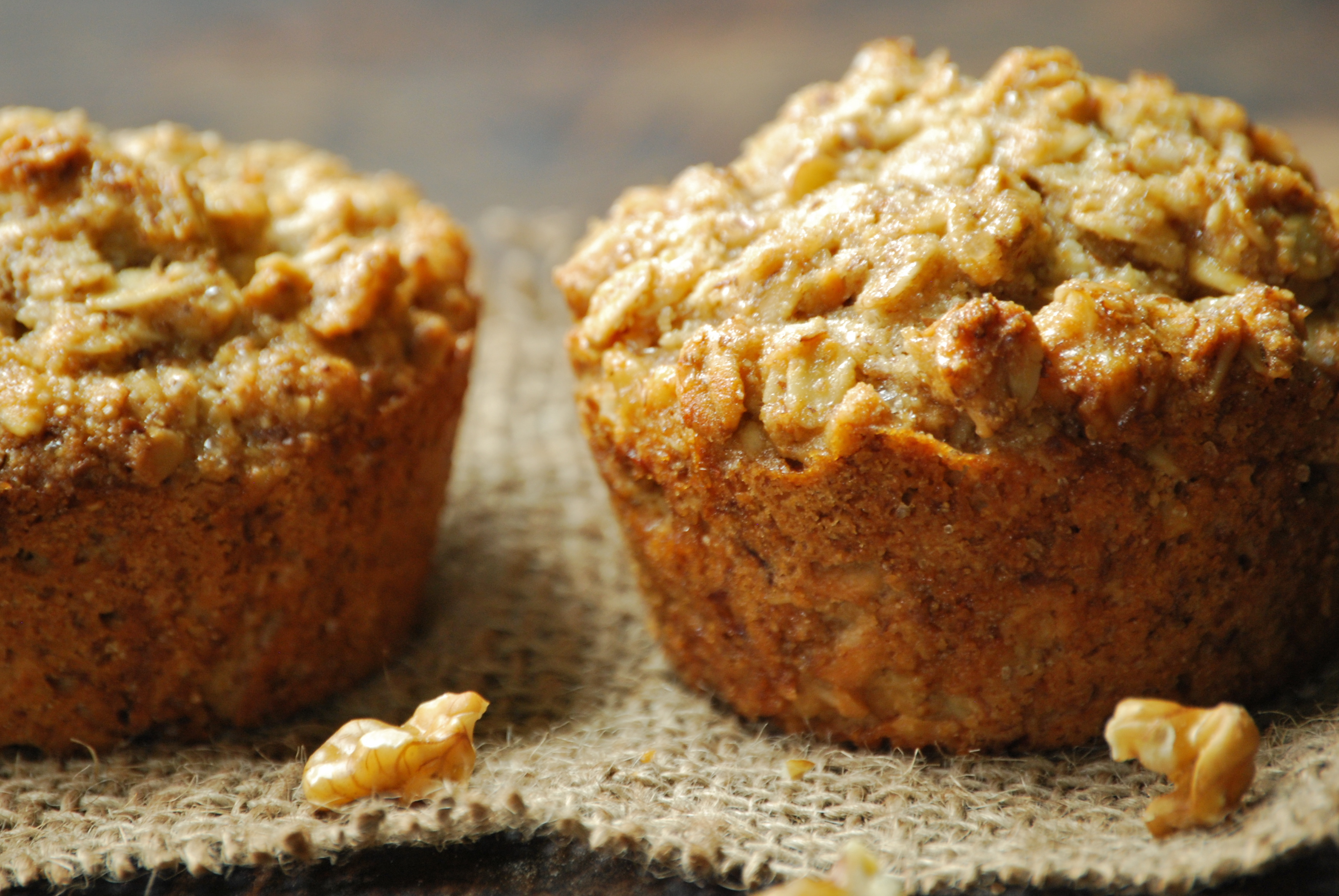
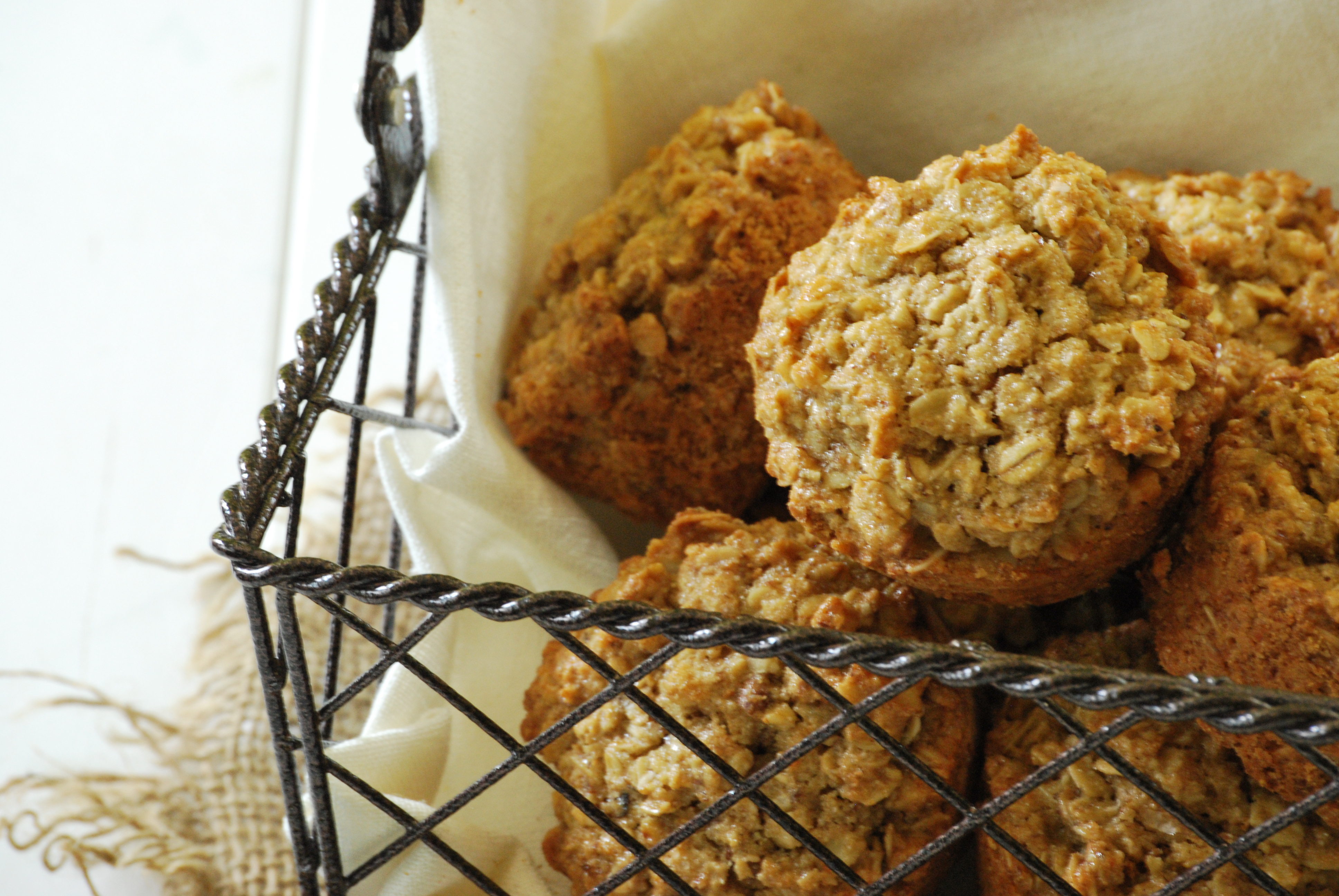
On to today’s post.  Oatcakes?  No doubt the title of this recipe alone is so inviting that you can’t wait to try it.  Alright, it may not sound exciting, but these little creations are incredible.  I want implore you to make them to prove that even with a title like ‘oatcakes’, these are delicious.  Did I mention that they’re also easy and convenient?   I stumbled across these hearty cakes in another recently published cookbook, Super Natural Every Day by Heidi Swanson.  Heidi authors the blog 101 Cookbooks  , which I’ve been following for some time.  This book is fantastic, with a concentration on healthy and vegetarian foods.  I’ve made these oatcakes several times over the last couple of weeks, as my family (mostly my husband) devours them.  These are most certainly not muffins.  To be honest, I’m not really a muffin fan.  While they’re sweet and cake-like, I find that I always choose something else if given the option.  Yes, these oatcakes have that tell-tale ‘muffin shape’, but the comparison ends there.  These are very dense, hearty, and flavorful, though not particularly sweet.  Even better, they’re filled with ingredients that are nutricious and tasty.  You’ll see that the recipe contains a few items that you may not have on hand.  Don’t let that stop you from making them.  My guess is that once you have the ingredients on-hand, you’ll make this recipe again and again.

Whole grains, oatmeal, and whole wheat pastry flour provide the heft here.  The original recipe also called for whole flax seeds, though my variation relies on flax meal.  Whole flax seeds are too hard for your body to break down.  They simply pass through, without giving you the healthy benefits of omega-3 fatty acids, fiber, and antioxidants that you get in the ground form.  Whether you use whole seeds or ground meal, store them in the refrigerator once opened.  Heart-healthy walnuts add a nutty crunch to the cakes, and also contain omega-3 fatty acids that are good for you.  The cakes are sweetened with raw cane sugar, honey, and maple syrup– a sublime combination.  Here I deviated from the original recipe as well, as it called for just the maple syrup and sugar.  I was feeling a bit stingy about my dwindling maple syrup supply being depleted by another 3/4 cup, so I substituted half with honey.  It really paid off, as the honey and oat combination is heavenly.  There are also two different oils that keep the cakes moist– butter and extra virgin coconut oil.  The latter is emerging as a healthy alternative oil that’s seeing more use in cooking and baking.  You can read about some of it’s health benefits here.  When you go to purchase it, take note that it will not be a liquid.  It will be white and solid.

These oatcakes are a perfect snack for your busy summer.  They keep well and transport easily.  Take them on walks, bike rides, camping, or for a simple morning breakfast.  They are very filling, and they’ll satisfy your hunger for longer than you think.  I hope you enjoy them as much as we do!

The Recipe: Oatcakes

(makes 1 dozen)

3 cups rolled oats

2 cups whole wheat pastry flour or spelt flour

1/2 teaspoon aluminum-free baking powder

2 teaspoons kosher salt

1/4 cup flax meal

3/4 cup chopped walnuts, lightly toasted

1/3 cup extra virgin coconut oil

1/3 cup unsalted butter

1/4 cup plus 2 tablespoons honey

1/4 cup plus 2 tablespoons maple syrup  (Note:  just to be clear — 3/4 cup total of equal parts maple syrup and honey)

1/2 cup raw cane sugar or natural cane sugar

2 large eggs, lightly beaten

Preheat the oven to 325°F with a rack in the top third of the oven.  Butter a standard 12-cup muffin pan.

Combine the oats, flour, baking powder, salt, flax meal, and walnuts in a large mixing bowl.

In a medium saucepan over low heat, combine the coconut oil, butter, honey, maple syrup, and sugar and slowly melt together.  Stir just until the butter melts and sugar has dissolved, but don’t let the mixture get too hot.  And if it does, let it cool a bit – you don’t want it to cook the eggs in the next step.

Pour the coconut oil mixture over the oat mixture.  Stir a bit with a fork, add the eggs, and stir again until everything comes together into a wet dough.  Spoon the dough into muffin cups, nearly filling them.

Bake for 25-30 minutes, until the edges of each oatcake are deeply golden.  Remove pan from oven and let cool for a couple of minutes.  Then run a knife around the edges of the cakes and tip them out onto a cooling rack.  Serve warm or at room temperature.  They are especially good with a smear of butter and a drizzle of honey.  Enjoy!

Source: Adapted from Super Natural Every Day Cookbook by Heidi Swanson

Thanks again for stopping by!

Laurie

Follow me on Twitter!

Read Full Post »

Bostock

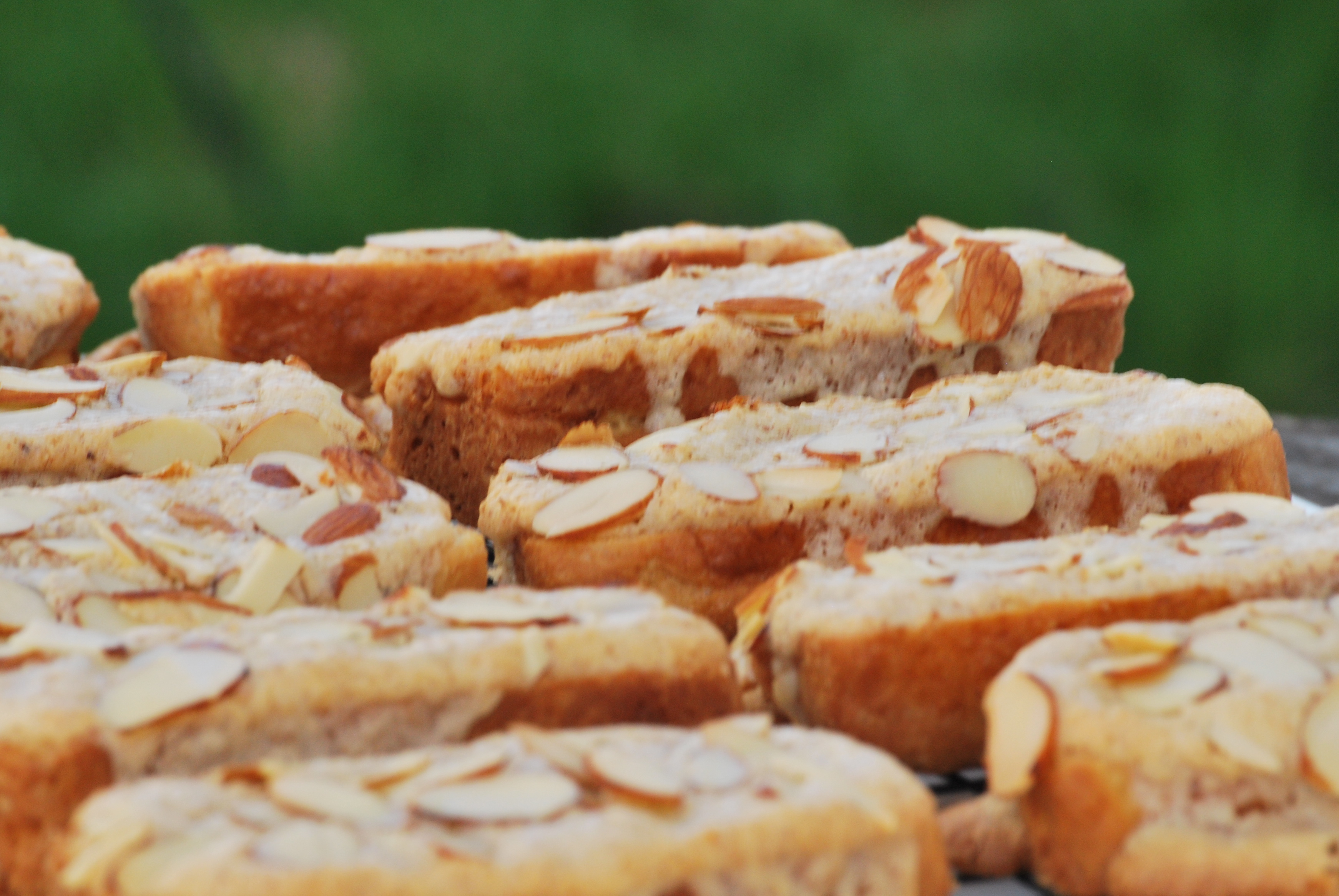
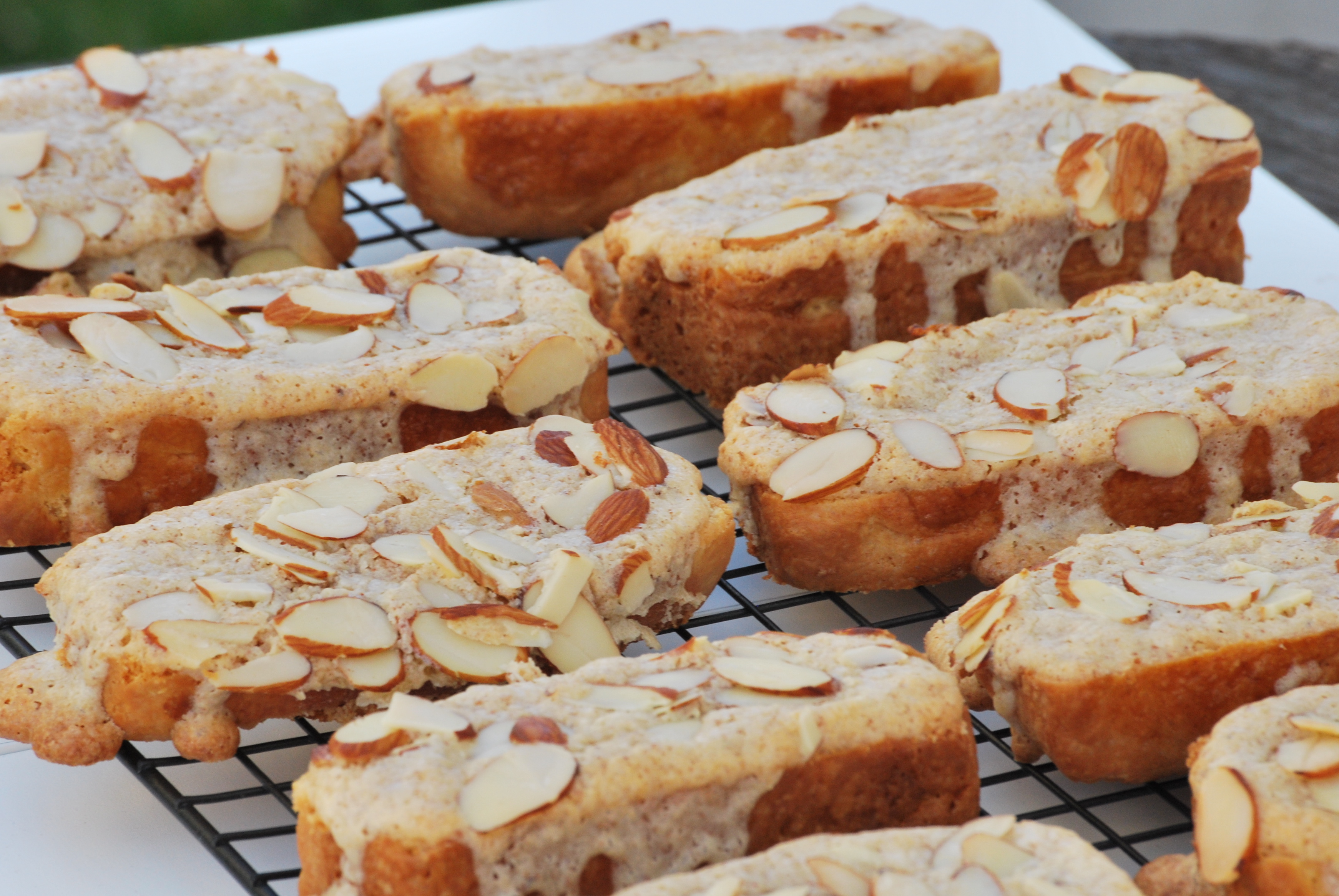
A few weeks back I wrote about brioche — that delicious buttery French bread.  I used half of the dough to make one of my favorite recipes, these sticky buns.   Here’s the thing, in that roll recipe I said you could use half of the dough recipe for rolls, while the other could be made into a fantastic bread.  Full disclosure, that bread loaf rarely stays in it’s original form at my house.  The reason is…bostock.  It’s simple, yet amazing.  Ordinary (though it’s anything but) brioche bread is transformed into a slightly sweet, almond-y treat that begs you to linger over a cup of coffee.  Its exterior is crisp, with a soft, filling body.  Bostock has become my pastry of choice when seeking out sweets at area bakeries.  Now, with the brioche bread recipe, I  make it at home and serve it with strong push-press French coffee.

While you can make as little of the loaf of brioche into bostock as you like, I suggest making the entire thing– you’ll end up craving it after you’ve had a piece or two.  The covered almond cream keeps in the refrigerator for up to 3 days.

The Recipe: Bostock

Use a loaf of brioche from this recipe.

Almond Cream:

3/4 stick (6 tablespoons) unsalted butter, at room temperature

2/3 cup sugar

3/4 cup ground blanched almonds (I usually don’t blanch mine)

2 teaspoons all-purpose flour

1 teaspoon cornstarch

1 large egg

2 teaspoons dark rum or 1 teaspoon vanilla extract

To Make the Cream Using a Food Processor:  Put the butter and sugar in the food processor and process until the mixture is smooth and satiny.  Add the ground almonds and continue to process until well blended.  Add the flour and cornstarch and process to blend, then add the egg.  Process for about 15 seconds more, or until the almond cream is homogeneous.  Add the rum or vanilla and pulse just to blend.

To Assemble the Bostock: Cut a slice of brioche to 1/2  to  3/4- inch thick.  Spread the bread with about 3 tablespoons almond cream, leaving a little border bare, and scatter over some sliced almonds, blanched or not.  Put the bread on a baking sheet lined with parchment paper or a silicone mat, and bake at 350°F until the almond cream is puffed and golden brown, 10 to 15 minutes.  Serve the bostock warm or at room temperature.

Source:  Dorie Greenspan’s Baking from my home to yours

You are going to love this little breakfast treat and you’ll find yourself baking and freezing an extra loaf of bread so you can have these gems whenever you want.  Thanks so much for stopping by!  As always — drop me a comment, I love hearing from you!

Laurie

Follow me on Twitter!

Read Full Post »

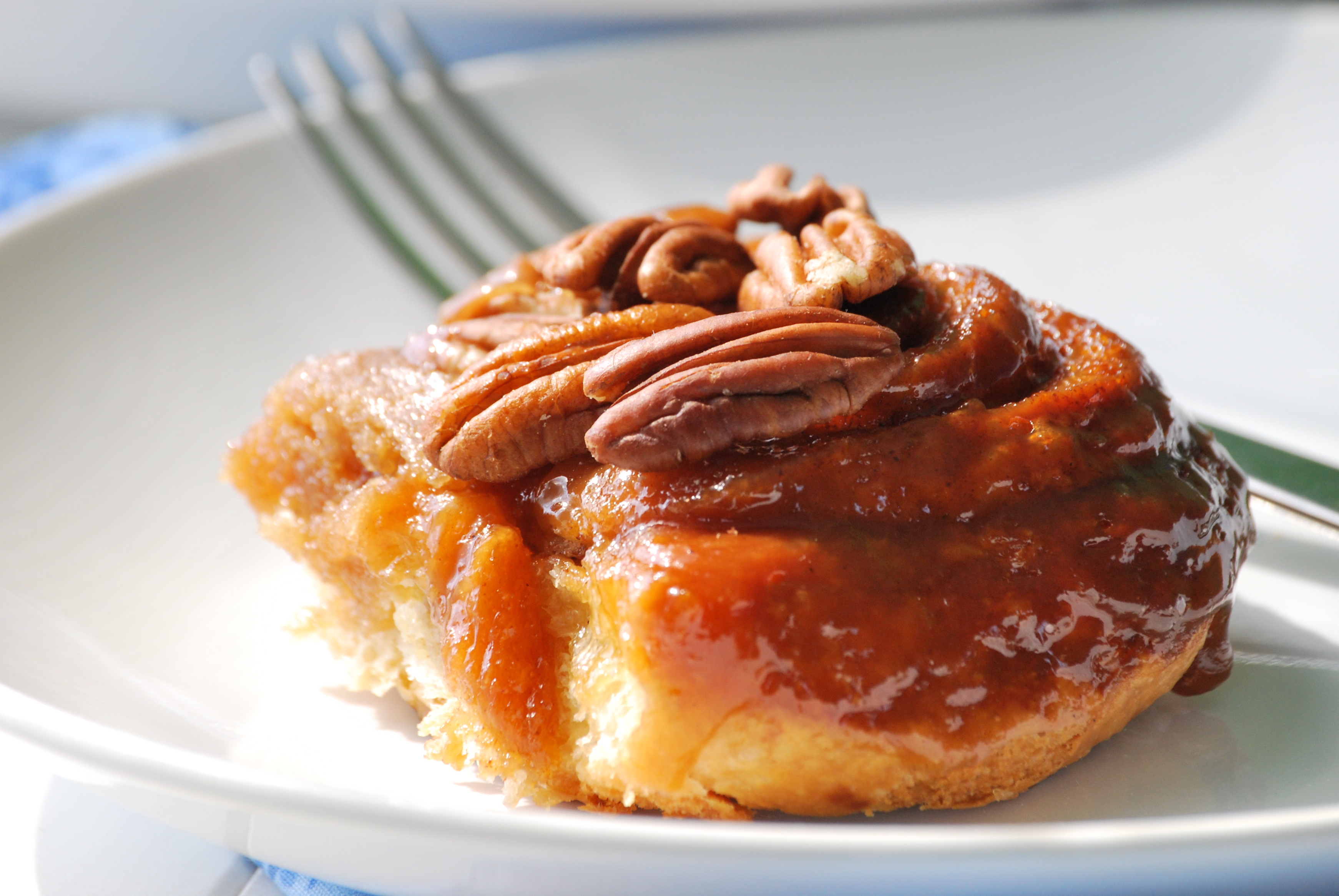
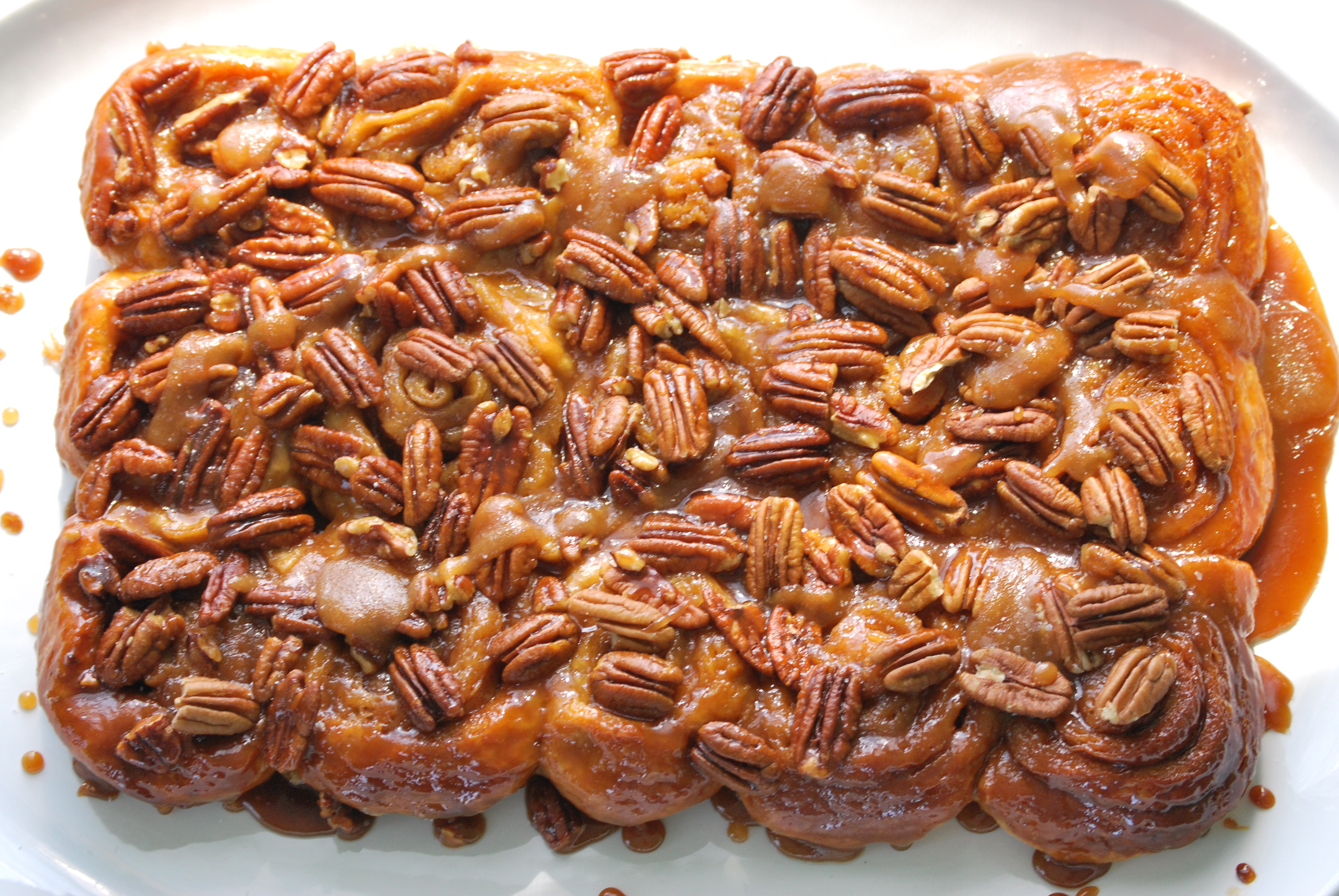
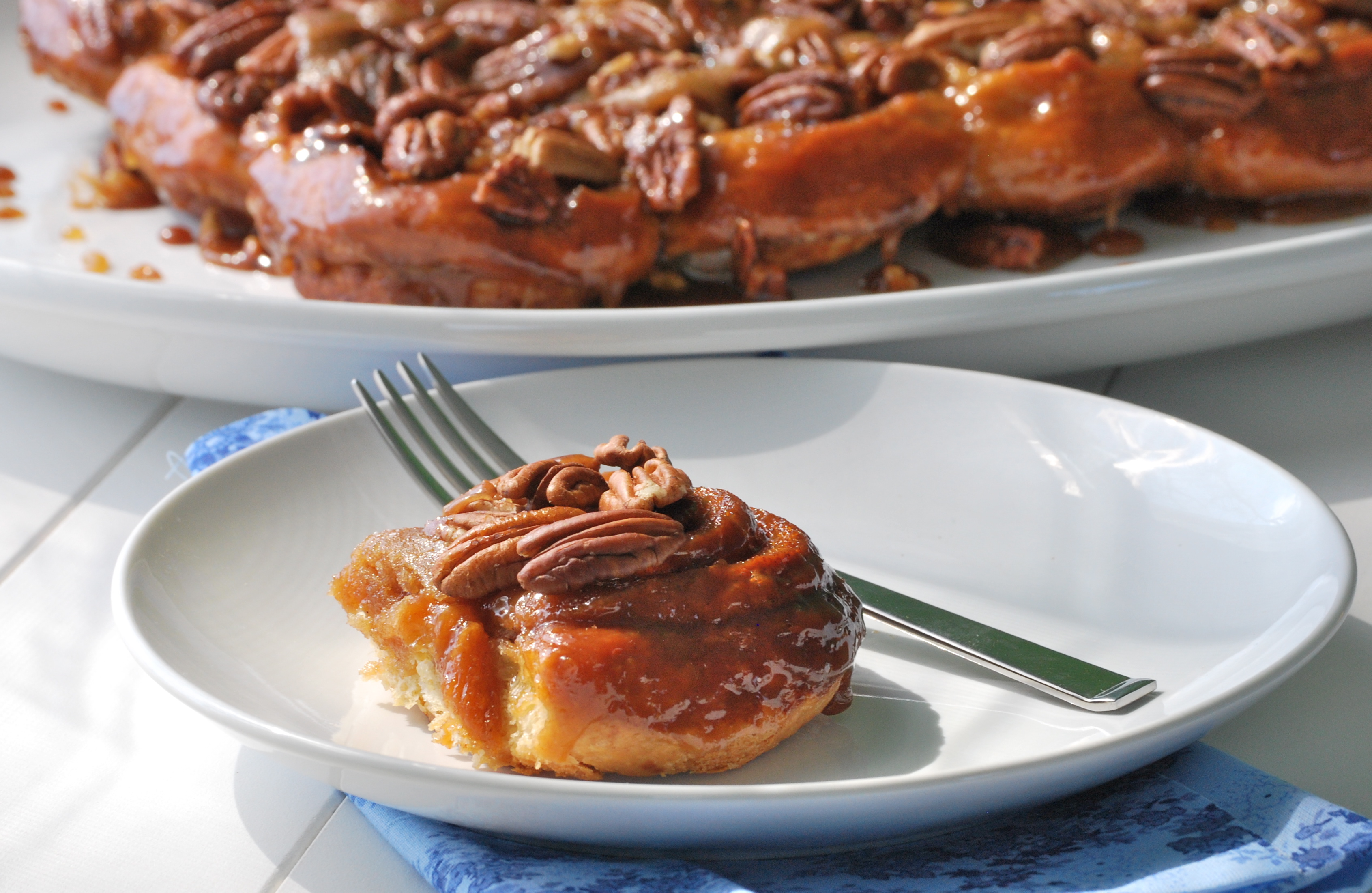
We’re hosting Easter Brunch this year.   In preparation, I spent much of whatever free time I could grab this weekend paging through cookbooks and magazines to put together the menu.   That was the goal, anyway– as usual, I got distracted.  Reading cookbooks, food magazines, and culinary blogs tends to have this effect.  And, of course, I always end up thinking that there is one more cookbook out there that I must have.  Anyway, my hours spent wandering through recipes paid off.  I’ve nailed down most of the brunch menu.  These Pecan Honey Sticky Buns from Dorie Greenspan will definitely make an appearance.  My family loves them.

Even if you’re not a bread baker, don’t be intimidated by this recipe.  While there are several steps, they’re straight-forward and the result is marvelous.  The buns are made from a very silky, buttery brioche dough.  The first time I worked with this dough, I was stunned.  Its soft, like satin– unlike any other dough I had worked with.  It makes the buns flakey, rather than doughy, as in a normal roll.  The brioche also doesn’t ‘puff up’ much, so the buns don’t get as big as you might expect.  I find them to be the perfect size.

The glaze, as you can see, is sublime.  It’s made of brown sugar, butter, honey, and pecans.  The result is firm, delicious toffee-like caramel.  Sprinkle a bit of sea salt on top when they’re done.  The salt will trick your taste buds in to emphasizing the sweetness.  Give ’em a try this weekend!

The Recipe:  Pecan Honey Sticky Buns

Brioche Dough

(Note:  Make sure to allow enough time to let the dough rest overnight in the refrigerator before proceeding with the Pecan Honey Sticky Bun recipe.)

2 packets active dry yeast

1/3 cup just-warm-to-touch water (110 – 115°F worked for me)

1/3 cup just warm-to-touch whole milk

3 3/4 cups all-purpose flour

2 teaspoons salt

3 large eggs, at room temperature

1/4 cup sugar

3 sticks (12 ounces) unsalted butter, at room temperature, but still slightly firm.

Glaze:  (If baking loaves of bread)

1 large egg

1 tablespoon water

To make the Brioche Dough: Put the yeast, water and milk in the stand of a mixer and, using a wooden spoon, stir until the yeast is dissolved.  Add the flour and salt, and fit the mixer with the dough hook, if your have one.  Toss a kitchen towel over the mixer, covering the bowl as completely as your can –  this will help keep your kitchen clean from flour.  Turn the mixer on for a few short pulses, just to dampen the flour.  Remove the towel and increase the mixer speed to medium-low and mix for a minute or two, just until the flour is moistened.  At this point you’ll have a fairly dry, shaggy mass.

Scrape the sides of the bottom of the bowl with a rubber spatula, set the mixer to low and add the eggs, followed by the sugar.  Increase the mixer speed to medium and beat for about 3 minutes, until the dough forms a ball.  Reduce the speed to low and add the butter in 2-tablespoon-size chunks, beating until each piece is almost incorporated before adding the next.  You’ll have a dough that is very soft, almost like a batter.  Increase the speed to medium-high and continue to beat until the dough pulls away from the sides of the bowl, about 10 minutes.   ( Note: Sometimes when I make this dough, it clumps around the hook and pieces don’t incorporate into the dough well.  I’ve found that if this happens, stop the machine, and with a rubber spatula separate the dough from the hook completely and start again.  It really helps to incorporate everything into a uniform dough.)

Transfer the dough to a clean bowl ( or wash out the mixer bowl and use it), cover with plastic wrap and leave at room temperature until nearly doubled in size, 40-60 minutes, depending upon the warmth of your room.

Deflate the dough by lifting it up around the edges and letting it fall with a slap into the bowl.  Cover the bowl with plastic wrap and put it in the refrigerator.  Slap the dough down every 30  minutes until it stops rising, about 2 hours, then leave the covered dough in the refrigerator to chill overnight.

From this point, you can proceed with the Pecan Honey Sticky Bun recipe.  Take note that that recipe calls for only half of this dough.  So, you can either bake two pans of the sticky buns or make the other half of the dough into a loaf of bread.

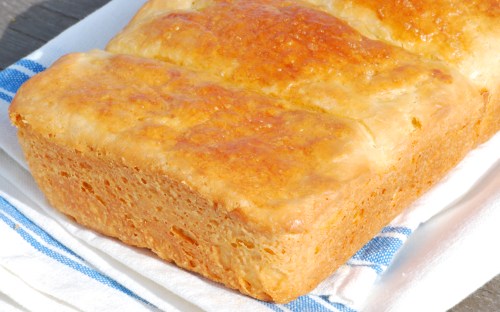
If choosing to make a loaf of bread:

Butter and flour a 8 1/2-x-4 1/2-inch loaf pan.  Using half of the brioche dough, cut each piece into 4 equal pieces and roll each piece into a log about 3 1/2 inches long.  Arrange  4  logs crosswise in the bottom of each pan.  Put the pans on a baking sheet lined with parchment paper or a silicone mat, cover the pans lightly with wax paper and leave the loaves at room temperature until the dough almost fills the pan, 1-2 hours. Again, it will depend on the warmth of your room.

Center a rack in the oven and preheat and preheat the oven to 400°F.

To make the GlazeBeat an egg with water.  Using a pastry brush, gently brush the tops of the loaf with the glaze.  Bake the loaf until it is well risen and deeply golden, 30-35 minutes.  Transfer the pan to a rack to cool for 15 minutes, then run a knife around the sides of the pans and turn the loaf out onto the racks.  Invert again and cool for at least an hour.
Pecan Honey Sticky Buns:  ( Makes 15-16 buns)

For the Glaze:

1 cup (packed) light brown sugar

1 stick ( tablespoons) unsalted butter, cut into 4 pieces

1/4 cup honey

1 1/2 pecans ( whole or pieces)

For the Filling:

1/4 cup sugar

3 tablespoons ground cinnamon

3 tablespoons unsalted butter, at room temperature

For the Buns:

1/2 recipe for the Brioche Dough, chilled.  Don’t be tempted to downsize the recipe.  The dough works better in a larger batch.

Generously butter a 9-x-13-inch baking pan ( a pyrex pan is perfect for this).

To make the Glaze:  In a heavy -bottomed saucepan, bring the brown sugar, buter, and honey to a boil over medium-low heat, stirring frequently to dissolve the sugar.  Pour the glaze into the buttered pan, evening it out as best you can by tilting the pan or spreading the glaze with a heatproof spatula.  Sprinkle over the pecans.

To make the Filling:  Mix  the sugars and cinnamon together in a bowl.  If necessary, in another bowl, work the butter with a spatula until it is soft, smooth and spreadable.

To shape the Buns:   On a flour-dusted work surface, roll the chilled dough into a 16-inch square.  Using your fingers or pastry brush, spread the softened butter over the dough.  Sprinkle the dough with the cinnamon sugar, leaving a 1-inch strip bare on the side farthest from you.  Starting with the side nearest you, roll the dough into a cylinder, keeping the roll as tight as your can.  ( At this point, you can wrap the dough airtight and freeze it for up to 2 months.  Defrost in refrigerator overnight, then proceed with the glaze and let them rise and bake as directed.)

With a chef’s knife, using a gentle sawing motion, trim away just a tiny bit from the ends of the roll of they’re ragged and not well filled, then cut the log into 1-inch-thick buns.  Fit the buns into the pan cut side down, leaving some space between them.

Lightly cover the pan with a piece of wx paper and set the pan in a warm place until the buns have doubled in volume, about 1 hour and 45 minutes.  The buns are properly risen when they are puffy, soft, doubled, and, in all likelihood, touching one another.

Baking the Buns:  When the buns have almost fully risen, center a rack in the oven and preheat the oven to 375°F.  Remove the sheet of wax paper and put the pan on a baking sheet lined with parchment paper or a silicone mat.  Bake the sticky buns for about 30 minutes, or until they are puffed and golden; the glaze will be bubbling.  Pull the pan from the oven.

The sticky buns must be unmolded minutes after they come out of the oven.  Be very careful –  the glaze is very hot and and sticky.

Source:  Dorie Greenspan’s Baking From My Home to Yours

I do hope your try this recipe — it isn’t as complicated as it seems, and the end result is so worth your time!  As always, I love to hear your feedback!   Thanks for stopping by.

Laurie

Follow me on Twitter!


Read Full Post »

« Newer Posts