Feeds:
Posts
Comments

How does one measure patience?  As the mother of small children, mine (and to be fair, theirs) is tested daily.  But that’s not really what I’m talking about today.  I’m talking more about the ability to delay gratification, or to be patient enough to wait until the time for something is right.  Heck, maybe I’m not talking about that at all, but the point is, I’ve been patiently waiting to make this cake for a very long time.  I’ve  drooled over admired this recipe for a decade.  Seriously.  I’ve always known I was going to make it, and this year I finally decided the timing was right.  No more delayed gratification here– that’s the sort of patience I’m talking about.
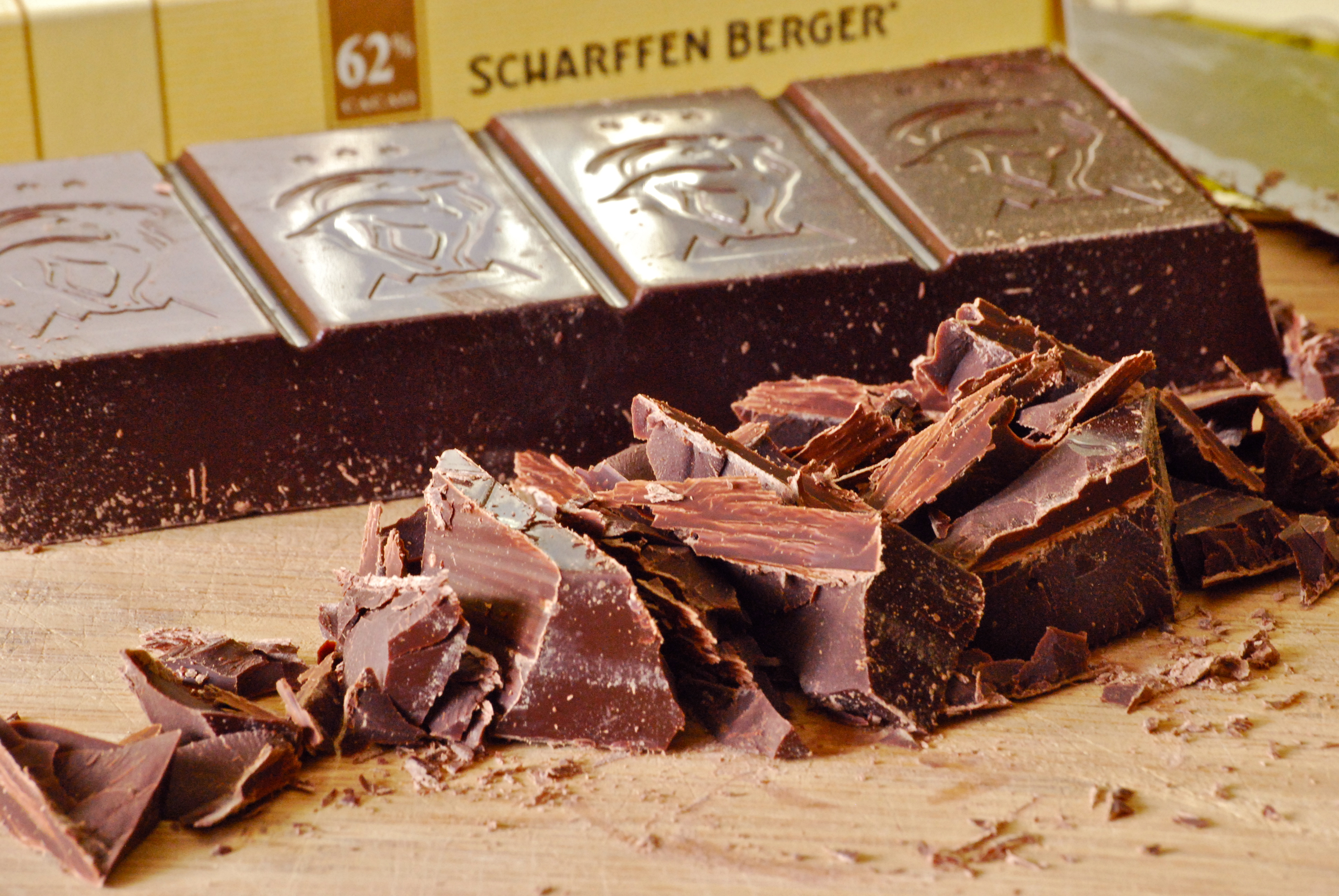
So was it worth a 10-year wait?  Absolutely.  This beautiful cake is a stunner.  Not only does it look spectacular, it’s loaded with deep, rich chocolate flavor throughout.  The cake and glaze are primarily dark chocolate, while the center boasts creamy milk chocolate to vary the flavors.  It also perfectly combines refreshing mint– chocolate’s soul-mate during the holiday season.  The layering of the flavors is marvelous.  This decadent cake is the perfect ending to your holiday meal, so don’t wait a decade to make it.

The Recipe: Triple Chocolate and Peppermint Cake

(Serves 12)

Filling:

8 ounces good quality milk chocolate, finely chopped

1/2 cup whipping cream

1 tablespoon light corn syrup

1 teaspoon peppermint extract

Cake:

1 cup sifted unbleached all-purpose flour

1/3 cup unsweetened cocoa powder

1 teaspoon kosher salt

1/4 teaspoon baking powder

1/4 teaspoon baking soda

3/4 cup (1 1/2 sticks) unsalted butter, room temperature

1 cup granulated sugar

1/3 cup (packed) dark brown sugar

2 teaspoons vanilla extract

3 large eggs,  room temperature

1/2 cup buttermilk

1 1/2 cup semi-sweet chocolate chips, chopped or miniature chocolate chips

Chocolate Glaze:

8 ounces bittersweet or semisweet good quality chocolate, finely chopped

1/2 cup (1 stick) unsalted butter, cut into pieces

1 tablespoon light corn syrup

1 teaspoon peppermint extract

chopped peppermint candies for garnish

To make the Filling:  Place chocolate in a medium bowl.  Bring cream and corn syrup to a simmer in a small saucepan.  Pour over the chocolate; add extract.  Let sit for one minute.  Whisk until smooth.  Let mixture sit at room temperature while cake is baking and cooling.

To make the Cake:  Position rack in the middle of oven.  Preheat to 350°F.  Prepare a 9-inch cake pan with 2-inch sides by buttering, lining with parchment paper, buttering again, and dusting with flour.  Tap out excess flour.  Whisk the flour, cocoa powder, salt, baking powder, and baking soda together in a medium bowl.   Set aside.  In a stand mixer, fitted with the paddle attachment, beat the butter until light and fluffy.  Gradually beat in both sugars, then vanilla.  Add the eggs one at a time, beating well after each addition.  Be sure to scrape down the sides of the bowl, as needed.  Beat in the dry ingredients alternately with buttermilk in 2 additions each.  Mix in the chocolate chips with a rubber spatula.

Transfer batter to prepared pan.  Bake cake until tester inserted into center comes out clean, about 45- 50 minutes.  Be sure not to over bake.  Cool cake in pan for 5 minutes.  Turn out onto a rack.  Remove parchment paper.  Cool completely.

Using a stand mixer fitted with the whisk attachment, beat the filling until fluffy and lightened in color, about 1 minute.  Using a serrated knife, cut the cake horizontally in half.  Place 1 layer, cut side up, on rack set over baking sheet.  Spread filling over.  Top with second later, cut side down.  Chill for 20 minutes.

Meanwhile, prepare glaze:  Stir chocolate, butter, and corn syrup in heavy small saucepan over low heat until melted.  Mix in extract.  Cool glaze until just lukewarm but still pourable, stirring occasionally, about 20 minutes.

Pour 1/2 cup glaze over center of cake.  Spread over top and sides of cake.  Chill for 15 minutes.  Pour remaining glaze over the center of cake, then spread quickly over the tops and sides.  Sprinkle with peppermint candies.  Serve after the glaze has set and the cake is at room temperature.  Store at room temperature under a cake dome.

Source: Adapted from Bon Appetit Magazine, December 2001

Thanks so much for stopping by today!

Laurie

Join me on Twitter

While we’re a few days closer to the holidays– and you’re probably expecting a sinfully decadent recipe– I’ve decided to shake things up a bit with this simple, wonderfully savory soup.  This winter warmer is one of my family’s favorites.  It’s modest, yet combines enough interesting flavors and textures to stand out.  For starters, can we talk about how fabulous smoked paprika is?!  I love the stuff.  And paired with the cumin in this soup, you get a real flavor explosion.  Add a little lime and cilantro, and you end up with a perfect, fresh complement to the spices.

The other key ingredient is hominy.  While I’ve been making this soup for a long time, I only recently switched from using the canned variety to dried hominy.  You’ve seen in previous posts that I always advocate using dried, rather than canned beans.  Well, I wondered if the same texture and flavor differences applied to hominy, so I had to give it a try.  Wow!  It really makes the soup that much better.  Dried hominy added a more ‘tooth-some’ (am I making up words again?) quality to the soup.  It’s firm (though not hard), and helps make the dish more substantial.  I won’t be going back to buying the canned version.

You may have to work to track down dried hominy.  I eventually found it in a local Mexican foods market.  The point is this– if you can find it, use it.  If not, the soup is still brilliant using canned hominy.  If you go the canned route, use about 3-4 cans, drained.  One thing to keep in mind, this soup will thicken more the day after it is made.  The hominy continues to soak up liquid, so you may want to add more broth on the following days if you have leftovers.  Make it– you’ll love it.  And as for those sweet recipes, I have a few up my sleeve for next week.  Have a great weekend!

The Recipe: Mexican Chicken and Hominy Soup

Serves about 6

1 tablespoon olive oil

1 green bell pepper, chopped

1/2 white onion, chopped

1 jalapeño, finely chopped

3 garlic cloves, minced

1 quart canned crushed tomatoes

2 cups shredded roasted chicken

2 cups dried hominy, soaked overnight in cold water and drained

1  1/2 quarts chicken broth

2 tablespoons ground cumin

2 teaspoon smoked paprika

kosher salt and black pepper to taste

juice of one lime

1/3 cup chopped cilantro

In a large Dutch oven over medium heat, sauté the green bell pepper, onion, garlic, and jalapeño in the olive oil until tender, about 4-5 minutes.  Add the tomatoes, hominy, chicken broth, cumin, smoked paprika, salt and pepper.  Bring to a boil and then reduce to a simmer.  Cook until the hominy becomes tender, about 30-40 minutes.  In the last 10 minutes of cooking time, add the roasted chicken.  Doing so too early will cause the chicken to fall apart.  When the soup is done, stir in the lime juice and cilantro.  Adjust seasonings, if necessary.  Serve with tortilla chips and queso fresco, if desired.  Enjoy!

Thanks for stopping by today.

Laurie

Join me on Twitter

Though chocolate is my favorite sweet, around this time of the year I love to bake with those warm, delicious holiday spices.  You know the ones I’m talking about– cinnamon, cloves, ginger, allspice, and nutmeg.  Along with their unique flavors, I love their warm, comforting aroma wafting through the house.   It wakes me up from the cold-weather coma that sets in in December and January.  Ok, that might be a bit dramatic, but I’m still trying to grapple with the fact that Winter is here.   This week Aria and I did our best to fight cold outside by staying in the kitchen to bake gingerbread with cinnamon icing.  It was perfect.

The flavor of this dessert is exactly what I was looking for– the rich molasses and spices are sublime.  If you really like ginger, you can grate it and combine it with the minced crystallized form instead of using the ground variety.  If you do so, you’ll want about three tablespoons of each.  Another nice thing about this gingerbread recipe is that is works equally well in regular regular cake form or in mini-bundts, like I chose to do.  They are the perfect make ahead sweet snack, and they keep well for several days in an airtight container.  The moist, tender texture alone is a nice change of pace from all the holiday cookies that come flooding in over the next couple of weeks.  If you really want the full experience, make a hot chai latte and curl up on the couch with one of these.  It makes watching the falling snow and wind-whipped trees so much better.

The Recipe:  Gingerbread with Cinnamon Icing

(Makes 24 mini-bundts)

2 1/4 cups sifted (9 ounces) unbleached, all-purpose flour

1/2 teaspoon baking soda

1/2 teaspoon kosher salt

2 1/2 teaspoons ground ginger

1 teaspoon ground cinnamon

1/2 teaspoon ground cloves

1/2 teaspoon freshly grated nutmeg

1/2 teaspoon ground allspice

1 teaspoon Dutch-processed cocoa

8 tablespoons (1 stick) unsalted butter, melted and cooled to room temperature

1/2 cup molasses

3/4 cup (5 1/4 ounces) granulated sugar

1/2 cup buttermilk  (can be made by mixing 1 1/2 teaspoons white vinegar into 1/2 cup milk — let sit for 10 minutes)

1/2 cup milk

1 large egg

Cinnamon Icing

1 1/2 cups powdered sugar

1 teaspoon cinnamon

2-3 tablespoons milk (you may need a bit more or less)

Preheat oven to 350°F.  Position an oven rack to the middle.  If making mini-bundts, spray them with cooking spray or butter them.   An 11 x 7-inch pan or a 9-inch square pan can also be used; butter the bottom and sides and dust with flour, tapping out the excess.

Whisk together the flour, baking soda, salt, ginger, cinnamon, cloves, nutmeg, allspice, and cocoa in a medium bowl.  Set aside.

Using a stand mixer fitted with a paddle attachment, beat the butter, molasses, sugar, buttermilk, milk, and egg on low speed.  Add the dry ingredients and beat on medium until smooth and thick, about 1 minute.  Be sure to scrape down the sides of the bowl as needed.  As with all cakes, do not overmix.   Pour batter into selected pan.

Bake until the top springs back when lightly touched and the edges have pulled away from the sides of the pan, 12-13 minutes for the mini bundts and about 40 minutes for the 11 x 7-inch pan.  Remove mini-bundts from pan immediately and cool on racks.

To make the icing: mix the powdered sugar and cinnamon together.  Slowly add the milk, a little at a time, until you get the desired constancy you want.  You will want it so you can easily dip each mini-bundt into the bowl.  Let icing harden before serving.  Enjoy!

Source:  Adapted from The New Best Recipes Cookbook

Thanks for stopping by!

Laurie

Join me on Twitter

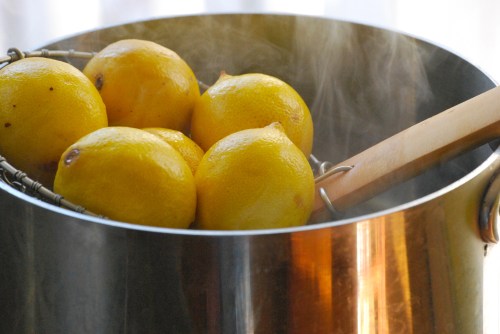
Here’s a recipe to make now and set aside for a month or so.  It’ll be ready for you (and you for it, trust me) once the holidays have passed.  Chances are you won’t want to think of another heavy meal or of holiday sweets by then, so these preserved lemons are a perfect addition to lighter fare.  Preserved lemons have a wonderfully pickled flavor and silky texture.  While they’re often found in Moroccan and Middle Eastern cooking, they’re so versitile that you can use them in most anything.  Officially, these little gems should be ready to use in about four weeks (though, I usually never wait quite that long).  Even better, since preserved lemons cost a fair amount at the market, when you make these at home you’ll not only get better flavors, but you’ll save money.

The entire lemon is used– rind and all.  Here are a few ideas for using their wonderful zing to brighten up your typtical meals.  They are wonderful finely chopped and mixed into sautéed vegetables, like green beans.  Mix them into couscous or rice and create a wonderful side dish.  Or, add thin strips to meats that are braising during the last few minutes of cooking.  They also pair wonderfully with roasted chicken or chicken salad, and are amazing with steamed fish.  You can even put them on a pizza with chicken and arugula for a change of pace.

However you choose to use them, make sure to not over-salt the original dish as the lemons will add a fair amount.  You may see a white substance develop on the lemons, but don’t be concerned.  This film is normal, and should simply be rinsed off with cool water.  Another thing to keep in mind is to use kosher or sea salt– table salt can add a harsh chemical flavor.   While I have yet to try it, I’ve read that the liquid the lemons are preserved in makes wonderful cocktails.  Bloody Mary, anyone?  Plan ahead and make these lemons now– by mid-January with its Winter darkness, they’ll be ready to brighten your meals.

The Recipe: Preserved Lemons

(Makes 1 quart)

About 1 – 1  1/2 pounds of organic lemons (make sure your lemons are wax-free)

2-3  quarts water, plus 2 cups

3 tablespoons kosher or sea salt

1 cinnamon stick

1 dried bay leaf

sprinkle of black peppercorns

sprinkle of coriander seeds

A few tablespoons of mild-flavored olive oil

Bring 2-3 quarts of water to a boil in a large saucepan.  Add the lemons and simmer for about 4 minutes to soften the skin.  Drain and rinse in cold water.  Pack tightly into a sterilized quart jar.  You may need to cut them into halves or quarter to fit them all in.

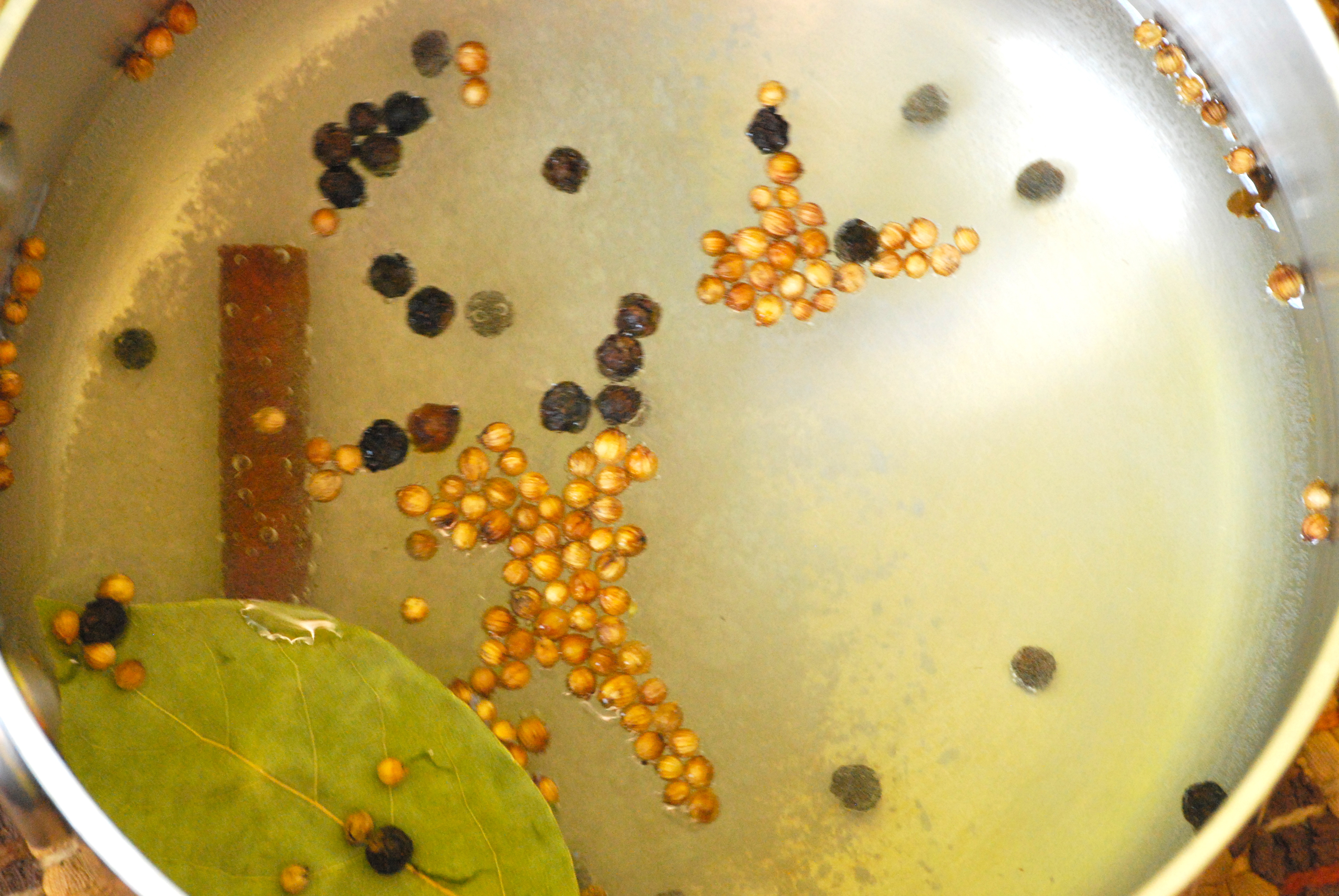
In a small saucepan, combine the 2 cups of water, salt, cinnamon stick, peppercorns, coriander, and bay leaf together and bring to a boil.  Cool slightly.

Pour brine over the lemons and cover completely.  You will probably have brine leftover.  Coat the surface with olive oil and screw on the lid.  Age the lemons for about 4 weeks in a cool, dark spot.  Always use clean tongs or a fork (not your fingers) to remove the citrus from the jar.  Taste a piece and rinse under cool water if it seems too salty.  Refrigerate after opening.  Preserved lemons can be kept for up to a year, or more.

Source:  Adapted from The Zuni Cafe Cookbook by Judy Rodgers

As always, I love your company.  Thanks so much for stopping by.

Laurie

Join me on Twitter

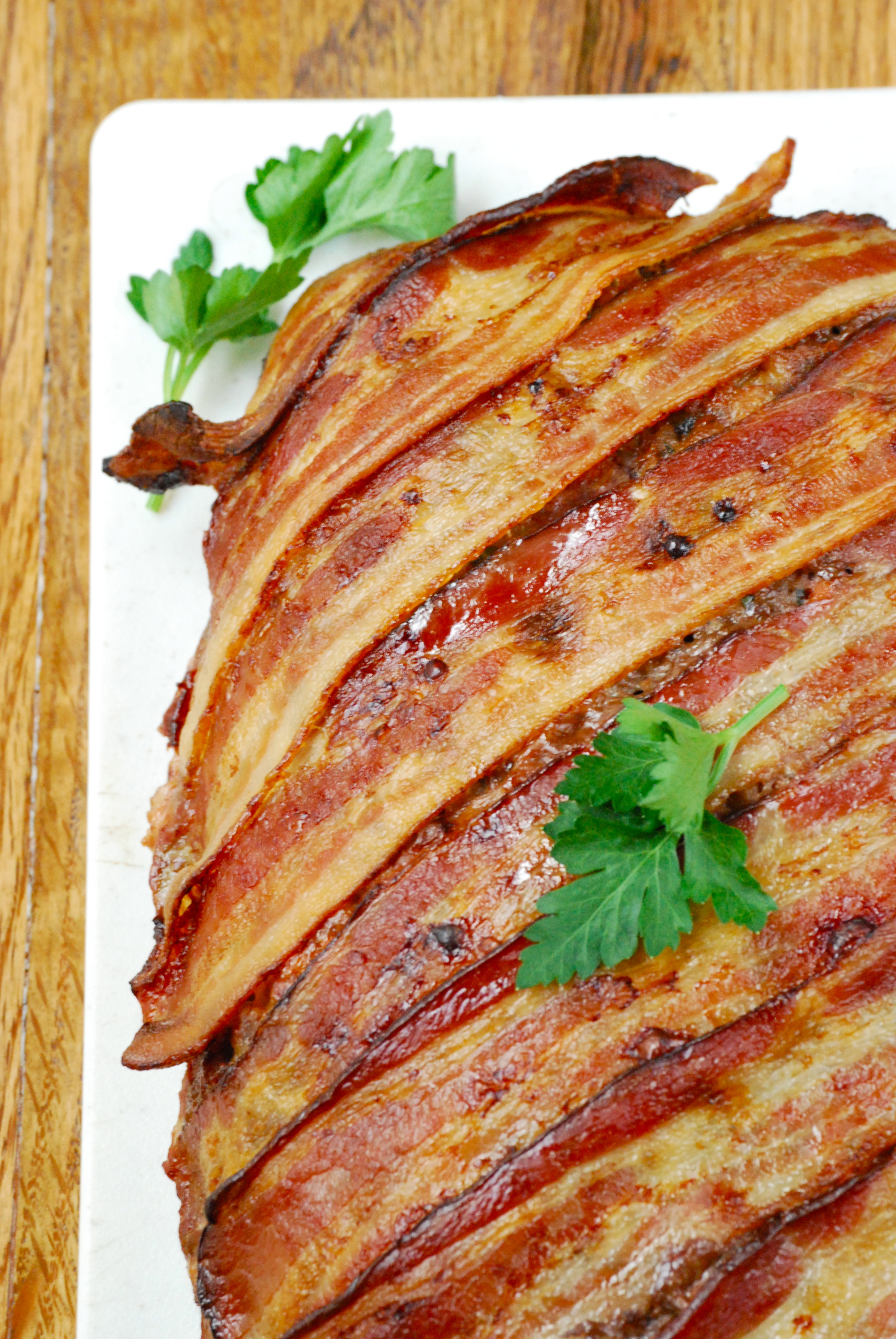
So, how glamorous does meatloaf sound?  Personally, I thought Bat Out of Hell was a fine album, though I wouldn’t say he sounds glamorous.  Er, wait.  Wrong meatloaf.  Poor jokes aside, the dish generally doesn’t sound that elegant either, but this recipe makes me weak in the knees.  It’s one of those meals that I think about far too often.  The problem with most meatloaf– aside from the unappetizing name– is that it’s usually a bland brick that’s really only edible when covered in a pile of ketchup.  I always think of the grade school lunch variety.  This is a whole different experience.  Just look at that bacon!  And if you’re ready to move on from Thanksgiving leftovers, this hearty version is perfect. 

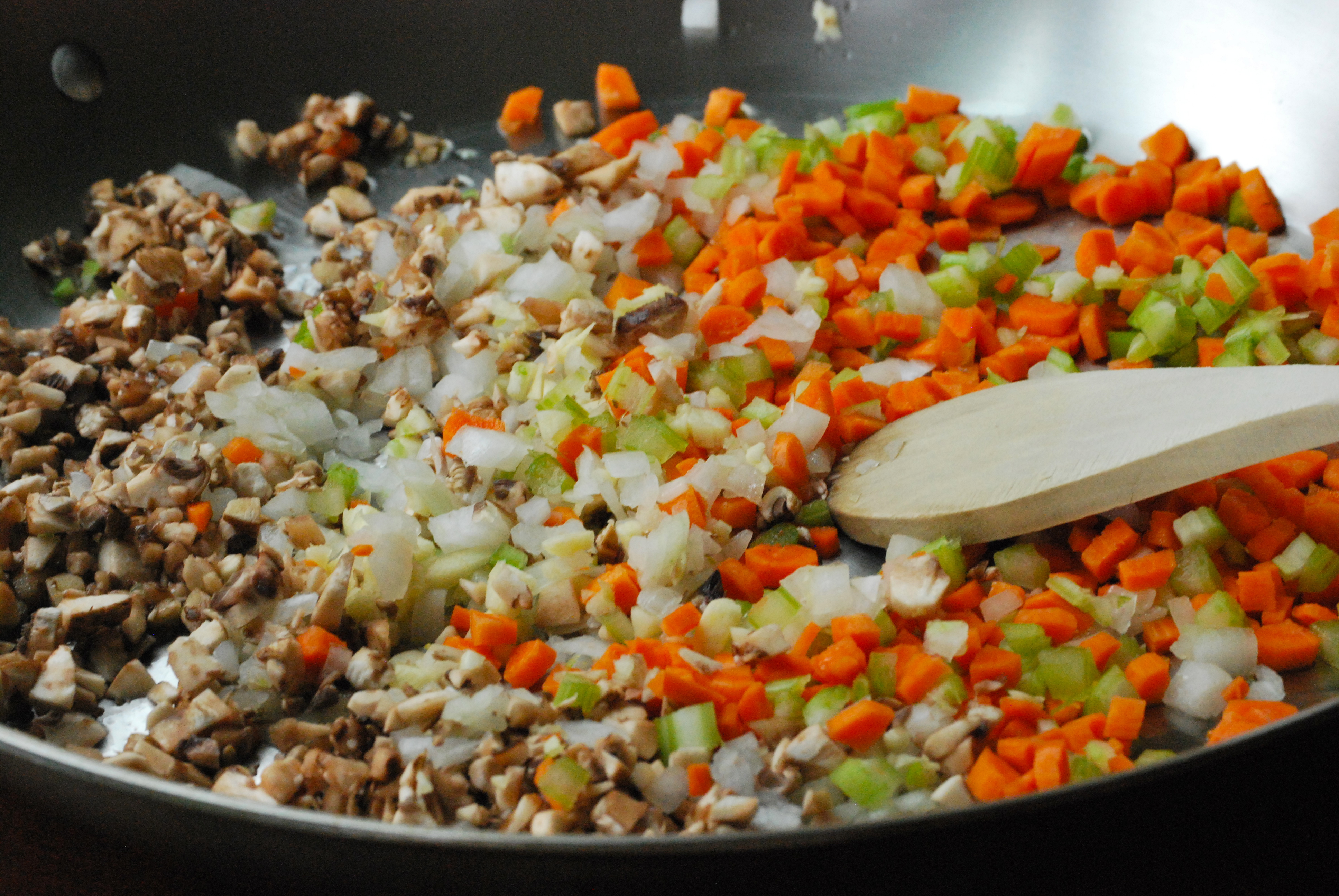
So what makes this meatloaf different?  What makes it special?  As always, it’s the ingredients.  Aside from the carrots, celery, and onions that form a good base, this dish relies on mushrooms for a complex earthiness.  There’s also cheddar to add more depth, texture, and a hint of saltiness.  And beer.  I used one of Radd’s home-brewed dark stouts, which worked nicely with the mushrooms and cheddar.  Finally, there’s the bacon.  Wow.  It makes the dish.  Not only does it add so much flavor, but it helps keep the meatloaf juicy.  Keeping this meal moist is key, so aside from the bacon, the milk-soaked bread is essential.

This meatloaf would be a wonderful centerpiece meal, accompanied by several sides, but– to be honest with you– I made it for sandwiches.  I was craving a to-die-for meatloaf sandwich and I got it.  I cut a nice thick piece and put it on a ciabatta roll, covered it with a bit of mayo and harissa and a mound of hot peppers.  Amazing.  I also found that it was incredible when paired with the homemade ketchup I made this Summer.  I’m not sure which one I like better, so I’m tempted to make another meatloaf just to find out.

The Recipe : Cheddar and Stout Meatloaf

Serves 8

2 tablespoons olive oil

2/3 cup chopped onions

3 cloves garlic, finely chopped

1/2 cup carrots, finely chopped

1/2 cup celery, finely chopped

3/4 cup crimini mushrooms, finely chopped

1/4 cup fresh parsley, chopped

4 ounces french bread,  (about 2 1/2 cups, cubed)

1 cup whole milk

3/4 cup Stout ale

2 pounds grass-fed ground beef

2 large eggs, lightly beaten

1 tablespoon Worcestershire sauce

2 1/4 teaspoons kosher salt

1/2 teaspoon freshly ground black pepper

1/2 cup grated sharp cheddar cheese

10 ounces thin-sliced bacon (about 9 pieces)

Heat the oil in a 10- to -12 inch skillet over medium heat.  Cook the onion, garlic, carrots, celery, and mushrooms until softened and just beginning to brown, about 6-8 minutes.  Add the stout ale and simmer until almost all of the liquid is gone, about 4-5 minutes.  Transfer to a large bowl and let cool.

Meanwhile,  in a shallow dish soak the bread and milk, flipping once, until soggy but not falling apart, 5-10 minutes, depending upon the freshness of your bread.  Gently squeeze the milk from the bread with your hands.  You will want the bread to be moist, but not drenched.  Finely chop the bread and add to the bowl of cooked vegetables.

Position rack to center of oven and pre-heat to 375°F.  Begin to add the remaining ingredients to the bowl of vegetables and milk soaked bread — ground beef,  eggs, salt, pepper, Worcestershire sauce, parsley, and cheddar cheese.    Use your hands and gently mix all of the ingredients until just combined — try not to compact the mixture as you do this.

Line the bottom of a large rimmed baking sheet with parchment paper.  Put the meatloaf mixture on the pan and form a 10 x 4 – inch rectangular block (it will become loaf shaped as it bakes).  Wrap the meatloaf with the bacon in a diagonal pattern.  Leave a 1/2- inch over hang around the edges and tuck under the meatloaf.  Some pieces of bacon will need to be trimmed.

Bake until an instant read thermometer inserted into the center of the meatloaf reads 160°F, 50-60 minutes.  Then, broil the meatloaf 6-inches below the heating element until the bacon is brown and crisped, about 3 minutes.  Let rest for 10 minutes before serving.  Enjoy!

Source:  Adapted from Fine Cooking Magazine, Feb/March 2011

Thanks for stopping by today!

Laurie

Join me on Twitter

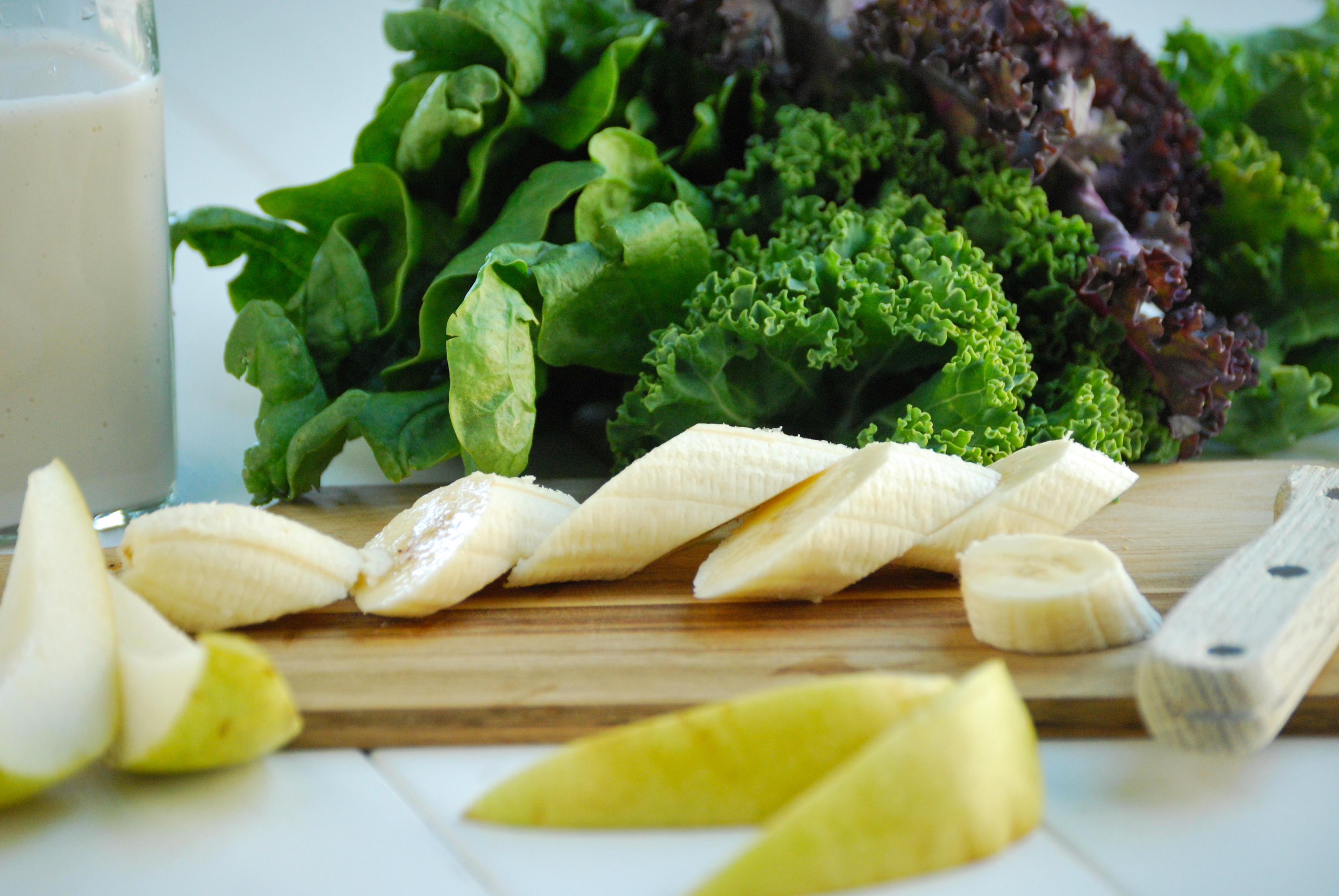
G-R-E-E-N-M-A-C-H-I-N-E  Green Machine, Green Machine, Gooo….Green Machine!  This was the chant that my husband and all of his friends would yell when they were young boys playing little league baseball.  Somehow it has stuck around, though it now only is hollered on those rare occasions that Radd gets together with old friends and has a few (too many) beers.  Boys are odd.  In any case, I’ve co-opted the name for this uber healthy drink that is perfect for reviving you from that post-Thanksgiving feast coma.  “Green Machine” just rolls off the tongue more easily than “Pear, Kale, and Spinach Smoothie”.

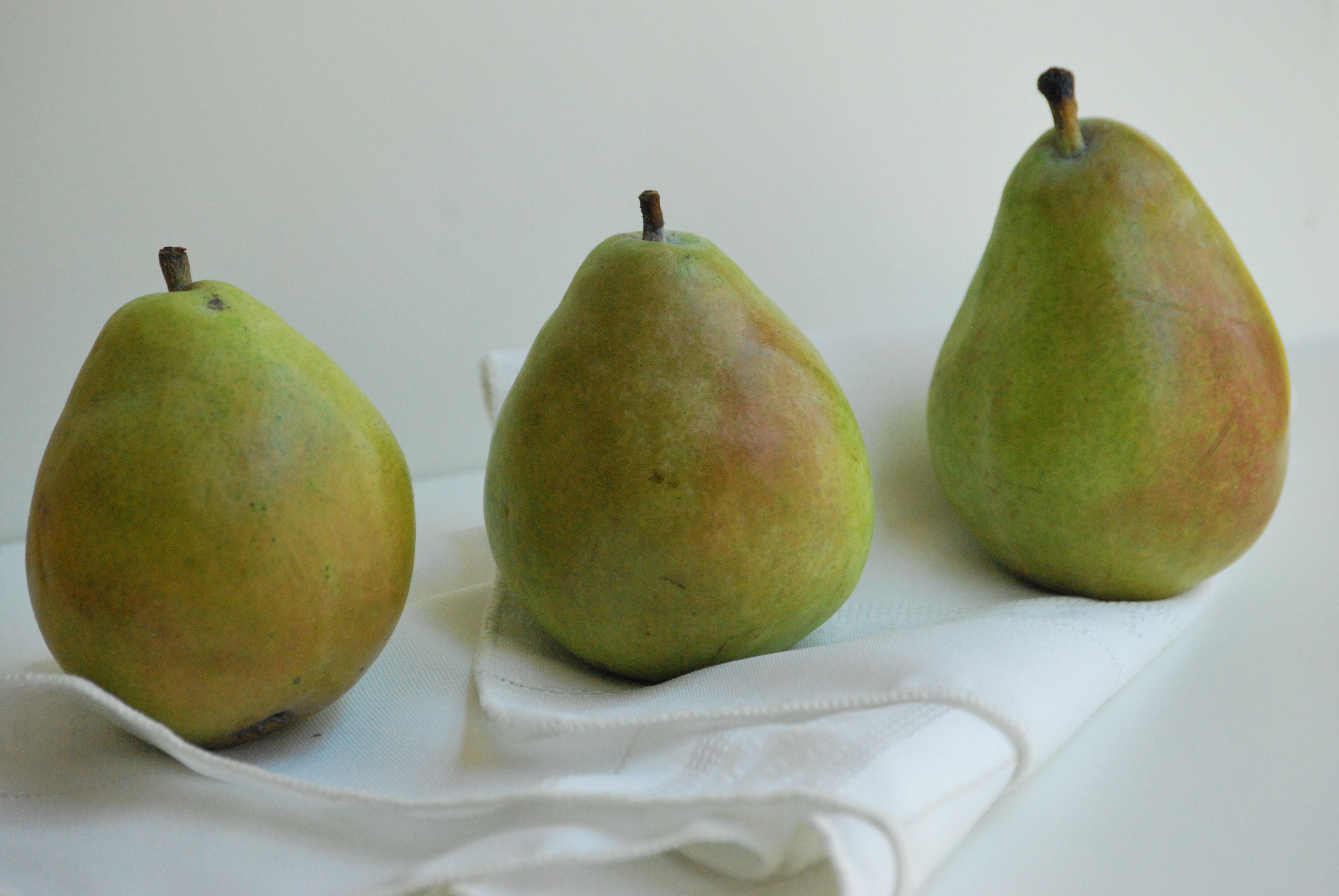
This drink makes you feel good.  It’s loaded with delicious and nutritious greens and sweet juicy pears.  I’ve made a similar version of this smoothie with other fruits, but keep coming back to the pears.  They add the perfect smooth texture.  A few times a week I blend one of these smoothies up for lunch.  It’s filling, and to be honest, very addicting.  The flavor of the greens is present, but in a subtle way– not overpowering at all.  The banana brings it all together by adding a little more natural sweet silkiness.  I drink mine from a freezer-chilled glass mug, and it’s oh-so refreshing and good for you.  Give this one a try– you body will thank you!

The Recipe: Green Machine / Pear, Kale, and Spinach Smoothie

Serves 1

1 cup unsweetened cold almond milk

1 cup spinach

1 cup chopped kale, stems removed (any type works fine, I prefer curly kale)

1 pear, cut into large slices

1/2 banana, cut into chunks

Blend the almond milk, spinach, and kale together until smooth.  Add the pear and banana and blend again until almost uniform.  Feel free to add more or less almond milk, depending upon how thick you like it.  Serve in a chilled glass.  Enjoy!

Source:  Adapted from Joy the Baker

As always, thanks for stopping by Relishing It!

Laurie

Join me on Twitter!

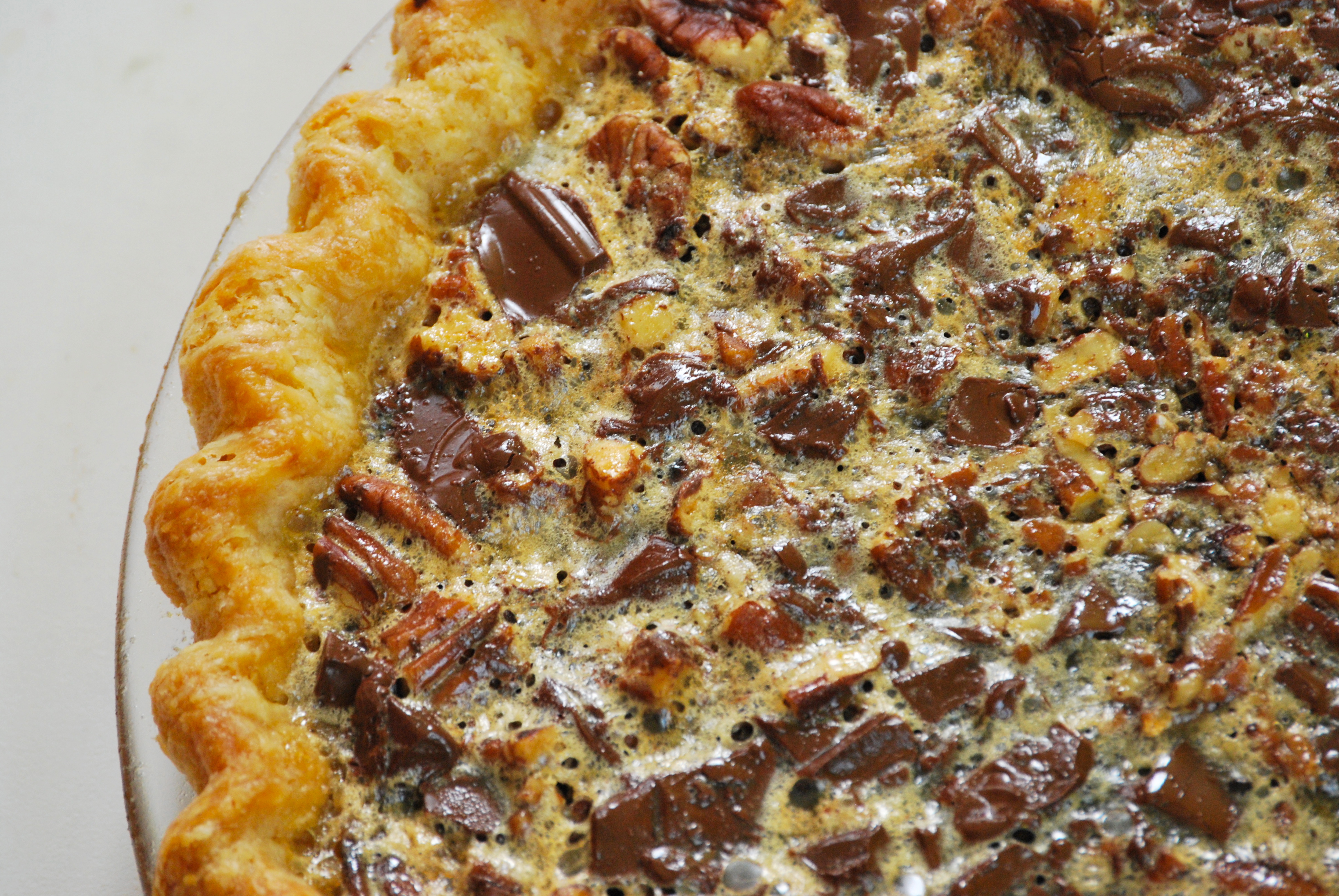
I’ve finally gotten around to baking a pie for Relishing It.  (I don’t believe this galette and these hand pies count.)  I’m not sure how it worked out that this Chocolate Pecan beauty is my first pie here– especially since (confession time) I generally don’t much care for pecan pie.  I figure this has something to do with my insatiable sweet tooth.  If a typical pecan pie were the only choice, then yes I’d eat it, but it would never be my first choice.  How’s that for a ringing endorsement?  Come to think of it it, maybe that’s how to convince you to make this dessert as well.  Even though I’m not a pecan pie fan, this is one of the best pies I’ve EVER tasted.

So what convinced me to make a pecan pie?  Two words: bourbon and chocolate.  I love desserts that layer typically sweet ingredients with the subtle flavors of a good spirit.  Here, combining oaked smokey bourbon with the sweetness of chocolate and earthy nuts is perfect.  The flavors are just so interesting that I kept wanting another bite.  The crust is almost croissant-like, yet really holds up well to the liquid filling.   This ended up being one of those rare pies that was perfect.  Perfect texture, perfect flavor combinations.  Just perfect.  Enjoy it with a cup of coffee or a shot of bourbon– both pair nicely.  And save a spot at your Thanksgiving table for this dessert (and this one)– I will be making both.

The Recipe:  Bourbon-Chocolate Pecan Pie

For the Pie Dough:

7 1/2 ounces (1 2/3 cups) all-purpose flour

2 tablespoons granulated sugar

1 teaspoon kosher salt

6 ounces (3/4 cup) cold unsalted butter, cut into small cubes

5 to 7 tablespoons ice water

For the Bourbon-Chocolate Filling:

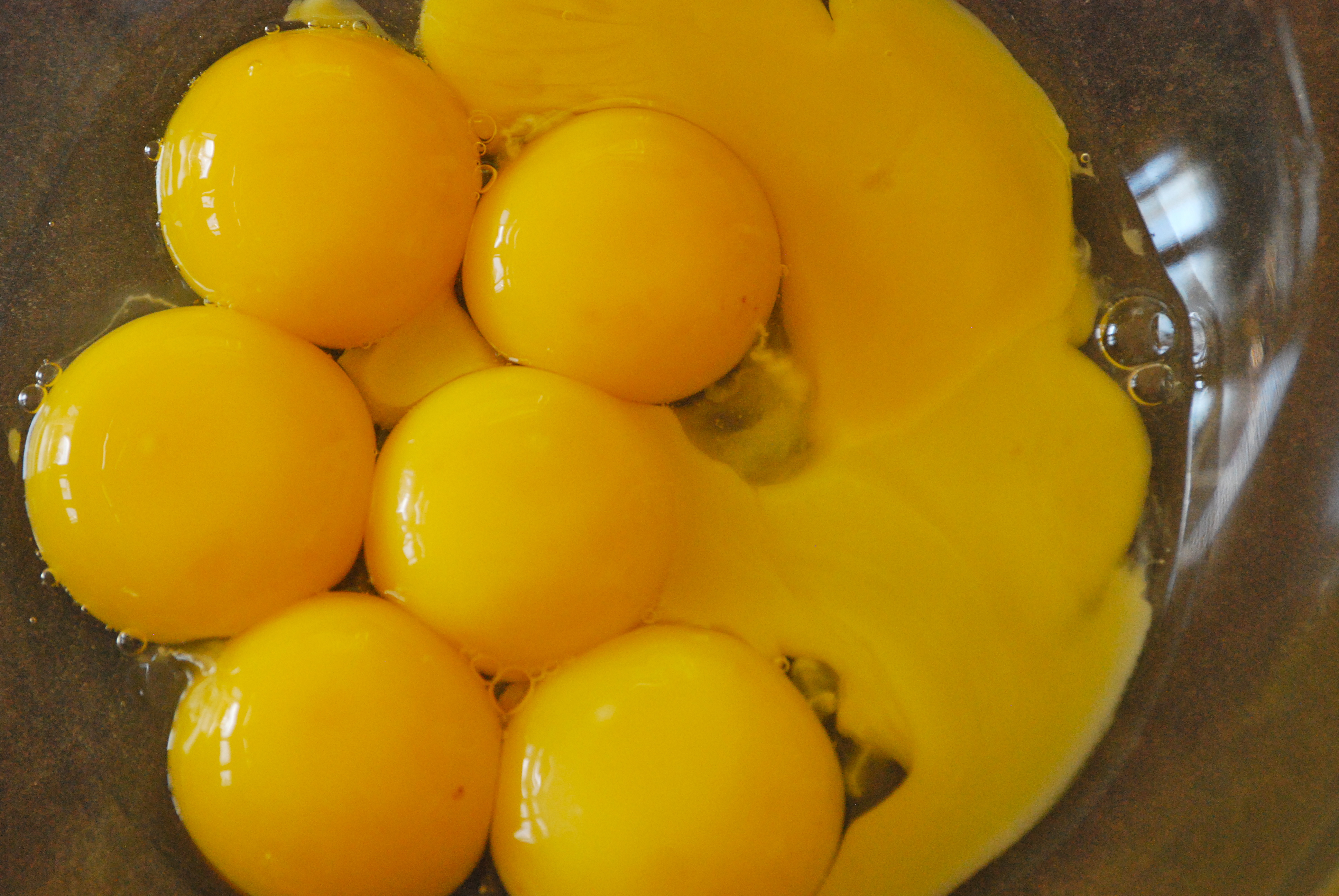
8 large egg yolks

1 teaspoon vanilla extract

4 ounces (1/2 cup) unsalted butter, cut into 4 pieces

2/3 cup light brown sugar

1/2 cup light corn syrup

1/2 cup heavy cream

3 tablespoons bourbon (Maker’s Mark or Knob Creek are good choices)

3/4 teaspoon kosher salt

1 1/2 cups pecan halves, toasted, cooled, and coarsely chopped

4 ounces chopped bittersweet chocolate  (Ghirardelli 60% cacao works well)

To make the pie dough: Place the flour, sugar, and salt in a food processor and pulse to combine.  Add the cold butter and pulse for 8-12 one-second pulses, or until the butter is roughly the size of corn kernels.   Drizzle 5 tablespoons of ice water over the  flour mixture and pulse until the mixture becomes moist and crumbly, another 4-6 pulses.  It should hold together when squeezed in your hand.  If it doesn’t, add another tablespoon or two of water and test again.   Turn the dough out onto a work surface and form a disk shape.  Wrap the dough in plastic wrap and refrigerate for at least an hour or up to two days.  Dough can be frozen for up to 1 month, defrost in the fridge overnight before using.
To Make the Crust:  Let the dough sit at rom temperature to soften slightly.  It should be firm, but not rock hard, 5-20 minutes (depending upon how long it was refrigerated).  I find that I prefer to roll pie crust on a piece of parchment paper to be the best method for me.  I lightly flour my rolling pin. If you prefer to roll it on the counter-top, just be sure to use as little of flour as possible.  As too much flour makes for very tough pie crusts.  When rolling the dough on the parchment paper, use a rolling pin and roll from the center outward.  You want your dough to get to be about 13-inches wide and about 1/8-inch thick.  Flip the dough into a 9-inch pie plate (Pyrex worked great).  Gently peel the parchment paper away.  Make sure that the dough is pressed firmly against the pie-plate.  Tuck the extra over-hang underneath to build up the edge of the crust.  Gently make it as uniform as you can.  I used every bit of dough for the pie and didn’t have to cut any away.  Crimp the edge of the crust with your fingers.  With the tines of a fork, prick the crust all over.  Chill for up to 1 hour in the refrigerator, or 30 minutes in the freezer.

To Bake the Crust: Position a rack in the center of an oven.  Preheat it to 425°F.  Line the piecrust with aluminum foil and fill it with dried beans or pie weights.  Bake for 15 minutes.  Remove the foil and weights.  Reduce the oven temperature to 375°F and continue baking until the bottom looks dry and the edges are golden,  About 10-12 minutes more.  Cool on a rack while you prepare the filling.  Reduce the oven temperature to 325°F and place a large rimmed baking sheet on the oven rack.

To Make the Filling:  Place the egg yolks in a medium bowl set on a kitchen towel and add the vanilla.  Combine the sugar, butter, corn syrup, cream, bourbon, and salt in a 1-quart saucepan.  Heat over medium heat just until the butter is melted and the mixture is hot, but not boiling, 3-5 minutes.  This is key — whisking vigorously and constantly, very slowly pour the hot sugar mixture into the yolks, this will keep the yolks from curdling.  Strain through a fine strainer set over a 1-quart measuring cup.

Spread the pecans evenly over the piecrust.  Sprinkle the chopped chocolate evenly over the pecans.  Slowly and in a spiral pattern pour the  filling over the pecans/chocolate.  Doing it slowly and in this pattern will prevent the nuts/chocolate from moving too much.  Place the pie onto the baking sheet and bake until the pie is slightly firm to the touch and the filling doesn’t wobble when nudged, 35-40 minutes.  Let cool for at the very least 1 hour before serving.  However,  I enjoy the pie the most hours or a day after it’s been baked and has a chance to properly set.  It keeps well and can be made a day ahead of time.  Store it at room temperature and cover with a tea towel.  Enjoy!

Source:  Adapted from Fine Cooking Magazine, Oct/Nov 2011

So happy you stopped by today — it’s always a pleasure!

Laurie

Join me on Twitter!

If you have small children, there’s a good chance you’ve read the book “Pumpkin Soup” by Helen Cooper.  It’s an adorable tale about three friends: a duck, a cat, and a squirrel.  They live in a pumpkin patch, play music, and go on adventures to find spices.  Every night for dinner they make– surprise!– pumpkin soup.  “The best you ever tasted.”  Just after we first read the book to Aanen when he was two, he started asking for pumpkin soup.  This is the version I make for him.  (P.S. Yes, it’s technically squash soup, but I’m comfortable with the deception.)

This is a simple, light squash soup.  It’s nothing fancy, and I think I appreciate it for that very reason.  The squash alone is silky, so I don’t add heavy cream.  I made it with whole milk once, and though it was good, I prefer it this way.  I like to use red Kuri squash for this soup, but Buttercup or Sweet Mama varieties are also wonderful options.   Sometimes I swap the onion for a couple of leeks, but given the abundance of onions in my home, I generally use them.  The key to the soup is the freshly grated nutmeg.  It gives this soup a subtle depth that is difficult to pinpoint.  Nutmeg has a way of doing that, which is one of the reasons I use it as much as I do.  The other essential  ingredient is fried sage leaves.  If you haven’t eaten a sage leaf fried in butter, do yourself a favor and give it a try.  Amazing stuff.

This soup would make a perfect starter for your Thanksgiving meal– I made it for that very purpose last year.  It’s a wonderful soup to make ahead of time and reheat right before you serve it.  And it’s not so heavy that your friends and family will leave too much turkey on the platter.  Also, remember that you can adjust the thickness by adding more or less chicken stock.

The Recipe: Red Kuri Squash Soup

Serves 4

1 tablespoon extra-virgin olive oil

1 medium-large red kuri squash

1 medium white onion

6 -7 cups chicken broth

kosher salt and cracked black pepper

freshly grated nutmeg, about 1/2 teaspoon

Garnishes

3-4  tablespoons butter

fresh sage leaves, use as many as you like (2-3 per bowl of soup works well)

toasted and salted pepitas

sour cream or creme fraiche

Preheat oven to 400°F.  Cut the squash in half and remove seeds.  Place squash cut side up in a baking dish and cover with lid or aluminum foil.  Bake for 30-40 minutes, or until tender.

Meanwhile, in a dutch oven set on the stove top, begin to sautee the onion in olive oil when the squash is nearly cooked.  Add the chicken broth and bring to a simmer.  When the squash is tender, scoop the flesh from the skin and add it to the dutch oven.  Let cook for a few minutes to make sure the squash is completely cooked through and to let the flavors meld.  Season with salt, pepper, and nutmeg.  Use an emersion blender to puree the soup or transfer it to a regular blender.  Adjust seasonings, if necessary.

In a medium skillet, melt the butter over medium heat.  Add the sage leaves and sautee for just a minute.  Remove from heat.  Ladle hot soup into bowls and top with sour cream, pepitas, and the fried sage leaves.  Enjoy!

Thanks for stopping by Relishing It today.

Laurie

Join me on Twitter!

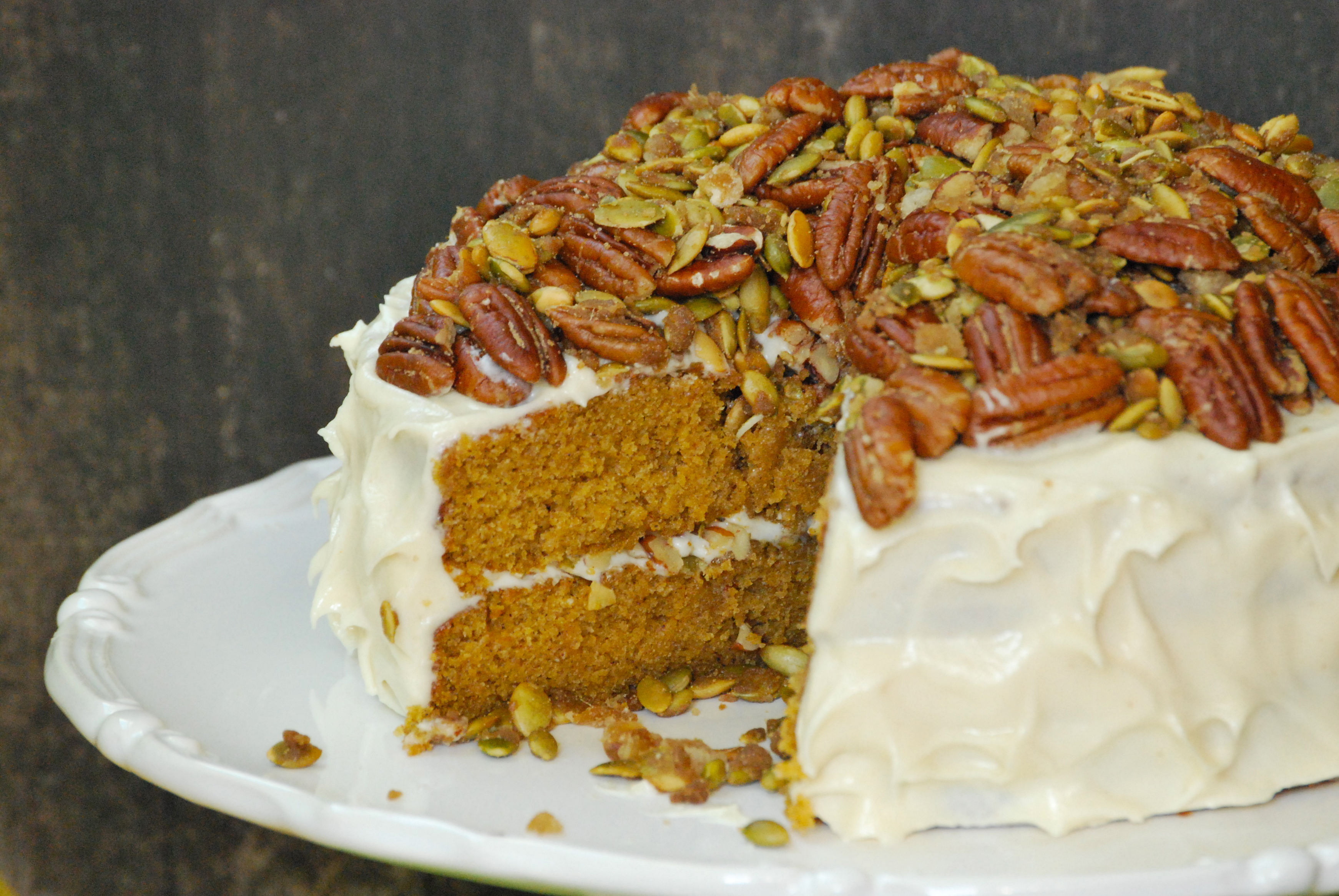
Thanksgiving is just a week away, but fear not, I’m here to help with your holiday dessert decisions.  This Brown Butter Pumpkin Layer Cake is the answer– trust me.  You already know that we’re a cake-crazy family (just take a look under the recipe section if you need proof), but this is one of our all-time favorites.  I’ve already made it several times this year– most recently for my husband’s birthday a week ago.  It’s beautiful, tastes as good as it looks, and screams ‘celebration’.  Why fall back on the old standards of pumpkin or apple pie, when you can end your Thanksgiving meal with this stunner?

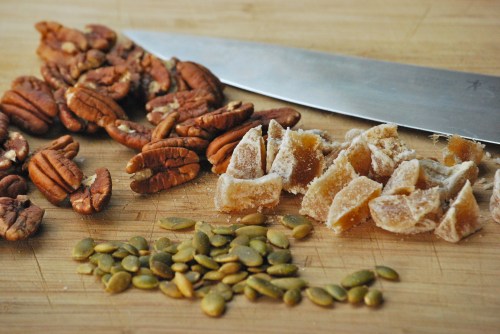
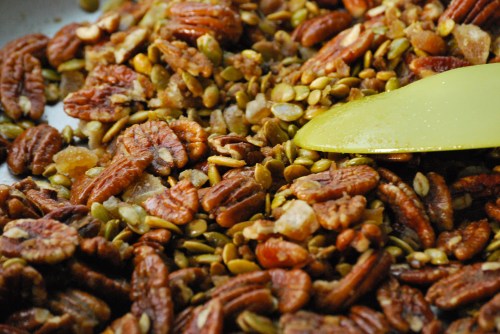
The key component in this cake is brown butter.  I’m of the opinion that it makes everything better.  Brown butter has a complex, nutty, almost caramel-like flavor.  Here, you’ll find it in both the cake and the frosting.  It adds those wonderful, layered flavors that set this cake apart from a typical pumpkin dessert.  And then there’s the nuts.  I’ve topped this cake with a mountain of pecans, pepitas, and ginger– all enveloped by melted brown sugar.  Sublime.  If you don’t want  as many nuts on your cake (what’s wrong with you?), you can half the amounts and sprinkle them in a circle design on top.  I like the grandness of  the big pile on top, plus they’re an addictive snack that you’ll munch on as you assemble this beauty.

I’ve always made this cake with a homemade pumpkin puree.  Aside from the freshness of doing it this way, it’s rewarding to do something with all of those pumpkins that have been decorating the house.  If you have too many things on your plate (yes, I realize that’s a poor pun), feel free to use canned pumpkin puree.  As always, try to use organic and make sure it contains only pureed pumpkin.  Make this cake, and you’ll impress your guests– I promise.

The Recipe: Brown Butter Pumpkin Layer Cake

For the Puree

1 medium-large Sugar Pie pumpkin, cut in half and seeded  (large enough to yield 1 1/2 cups of puree)

For the Cake

6 ounces (3/4 cup) unsalted butter; plus more for pans

9 ounces (2 cups) unbleached all-purpose flour; plus more for pans

1 1/2 teaspoon baking soda

1 1/2 teaspoon ground cinnamon

1 teaspoon ground ginger

1 1/2 teaspoon kosher salt

1/4 teaspoon ground cloves

1 1/2 cups granulated sugar

2/3 cup firmly packed light brown sugar

2 large eggs, at room temperature

1/3 cup buttermilk  (Note: to make your own add 1 teaspoon white vinegar to 1/3 cup milk and let stand for 10 minutes)

For the Topping:

3 tablespoons unsalted butter

1 1/3 cups pecans halves

1 cup roasted and salted pepitas (raw and unsalted will work, too — just toast them a bit more with the pecans)

4 tablespoons firmly packed light brown sugar

3/4 teaspoon kosher salt

3 tablespoons chopped crystallized ginger

For the Frosting

4 ounces (1/2 cup) unsalted butter

8 ounces cream cheese, at room temperature

1/4 cup firmly packed light brown sugar

5 ounces (1 1/4 cups) confectioners’ sugar

To make the Pumpkin Puree:  Preheat oven to 350°F.  Position racks in the center of oven.  Place pumpkin in a baking dish covered with lid or aluminum foil and bake for about 40 minutes, or until tender when pierced with a fork.  Let cool.  Scoop pumpkin flesh into a food processor and puree until smooth.  You will need 1 1/2 cups of puree for the cake.  Refrigerate or freeze any leftovers.

Preheat oven to 350°F.  Position rack in the center of the oven.  Prepare two 9-inch round cake pans by buttering them liberally, lining with parchment paper, buttering once again, and flouring the pans.  Make sure to tap out any excess flour.

To make the Cake: Melt the butter in a heavy-bottomed 1-quart saucepan over medium heat.  Swirl the butter occasionally until the butter turns a nutty golden-brown, about 4 minutes.  Pour into a small bowl and let stand until cool but not set, about 15 minutes.

In a medium bowl, whisk the flour, baking soda, cinnamon, ginger, salt, and cloves.  In a large bowl, whisk 1  1/2 cups of the pumpkin puree with the granulated sugar, brown sugar, eggs, and buttermilk until blended well.  Using a rubber spatula, fold in the flour mixture until just combined.  Gently whisk in the brown butter until fully incorporated.  Divide the batter evenly between the prepared pans.

Bake the cakes until the a tester inserted in the center comes out clean, about 25-30 minutes.  Let the cakes cool in pans for 10 minutes.  Turn the cakes out onto racks, remove parchment paper, and cool completely.

Make the Topping: Melt the butter in a large 12-inch skillet.  Add the pecans and cook until they brown slightly, about 2 minutes.  Sprinkle in the brown sugar, pepitas, and salt and stir until the sugar melts and the nuts are glazed, about 2 minutes.  Stir in the ginger.  Remove from heat and let cool in skillet.

To make the Frosting: Melt the butter in a heavy-bottomed 1-quart saucepan over medium heat.  Swirl the butter occasionally until the butter turns a nutty golden-brown, about 4 minutes.  Pout into a small bowl and let stand until all of the brown solids settle to the bottom of the bowl, about 5 minutes.  Carefully transfer bowl to freezer and chill until just firm, about 18 minutes.  Using a spoon, carefully scrape the butter from bowl, leaving behind the brown solid bits.  Discard the brown bits.

Using a stand mixer fitted with the whisk attachment, beat the butter, cream cheese, and brown sugar on medium-high speed until light in color and the brown sugar has dissolved, about 2 minutes.  Gradually beat in the confectioners’ sugar and continue to beat until light and fluffy, about 1-2 more minutes.

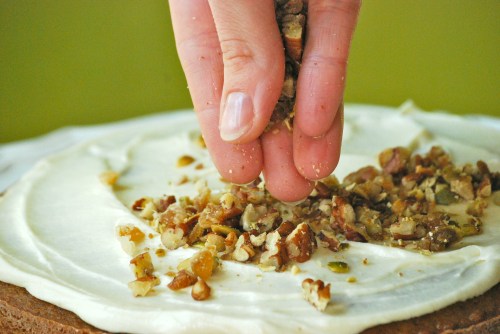
To assemble the Cake: Place one layer of cake on a cake plate.  Spread 1/2 cup of frosting on it.  Sprinkle 3/4 cup (scant) of the nut mixture (rough chop this small amount, so it stays in the cake better) over the frosting and top with another layer of cake.  Frost the top and sides of cake and place remaining nut mixture on the top.  Serve immediately or refrigerate.  Serve at room temperature.  Will keep well for a few days.  Enjoy!

Source:  Adapted from Fine Cooking Magazine, Oct/Nov 2010

Thanks so much for stopping by today!

Laurie

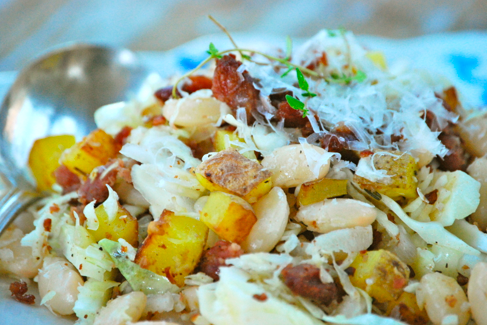
So how much Halloween candy have you been sneaking this week?  Me?  Far too much.  Though I love how worked-up my little ones get about trick-or-treating, when I take stock of how much candy I have eaten I feel more than a little guilt.  That’s why there’s no better time to eat a nice, light dinner of…dried beans and cabbage.  I know, I know.  It doesn’t sound too tantalizing, but take a look at this dish.  It’s so satisfying.  I love cooking with dried beans.  If I can convince you of anything (aside from the benefits of eating organic, local, and unprocessed foods), its to use more dried beans in meals.  They’re inexpensive, and their taste and texture is so much more appealing than canned versions.  The only drawback is that using them requires just a bit of planning.  But even this isn’t difficult, as cooked beans can be stored in the freezer and thawed for whenever you need them.

Cabbage is another of those ‘lost’ ingredients that often goes unappreciated.  I love it’s versatility– it works in salads, soups, and main dishes.  Cabbage has that nice crunch when you want it, or you can rely on it for a softer, underlying texture.  And that mellow, slightly sweet flavor works well is so many dishes.  For this meal, I’ve also turned to the amazing smoky, saltiness of bacon, though it’s not necessary.  The flavorful beans and cabbage are powerful enough to stand up on their own here.  I make it both ways, depending upon my mood.  This is a simple, healthy, and most importantly, delicious dish.  Make it this week– it’ll become one of your everyday light meals, too.

The Recipe:  Cabbage, White Beans, and Bacon

(serves 4)

2 tablespoons extra-virgin olive oil

2 smallish yellow potatoes, unpeeled, cut into cubes

1/2 medium onion, diced

2 cups cooked and cooled white beans (roughly 1 cup dry)  OR 1 15-ounce can, rinsed and drained

3 cups finely shredded green cabbage

1 garlic clove

1/2 pound bacon, cooked and crumbled  (use more or less to your liking)

freshly grated parmesan or grana padano cheese, for sprinkling

sea salt and cracked pepper, to taste

In a large skillet, cook the bacon over medium heat until your desired crispiness.  Remove from pan.  Crumble when cool.  Begin to cook the potatoes next.  For more flavor, cook them in the bacon grease — or for a healthier version, drain the grease and add the olive oil.  Season potatoes with salt and pepper and cook over medium-high heat.  Cover and cook until the potatoes are cooked all the way through, 5-8 minutes.  Be sure to stir a couple of times, so all sides become golden brown.

Next, stir in the onion, garlic, and beans.  Try to cook each side of the beans, so they brown a bit, as well.  When the beans have developed some color and are a bit crispy, stir in the cabbage and cook for another minute, or until the cabbage begins to wilt a bit.  Stir in the bacon.  Season with salt and pepper, if necessary.  Sprinkle with a bit of cheese.  Enjoy!

Source:  Adapted from Heidi Swanson’s Super Natural Every Day

Hope you all have a fun Halloween evening — my kiddos are super excited to go trick-or-treating!  Thanks for stopping by today.

Laurie

Follow me in Twitter