Feeds:
Posts
Comments

The leaves have been tumbling down for the last couple of weeks here.  It seems that even after several hours of weekend raking– or what Radd calls ‘the worst possible way to spend an afternoon’– we wake on Monday morning to a blanketed backyard.  I don’t mind it so much.  Having a huge, majestic tree makes it worthwhile.  In the Spring, I love seeing the new green leaves come in. It also protects us from the brutal afternoon Summer sun while the kids play in the backyard through July and August.  And for a few all-to-brief weeks in October, I get to enjoy the transformation of leaves from deep green to brilliant yellow and orange.  Then they fall.  And they keep falling.  I’ll take it though, even if it means we have to rake our tails off for a few days every October.

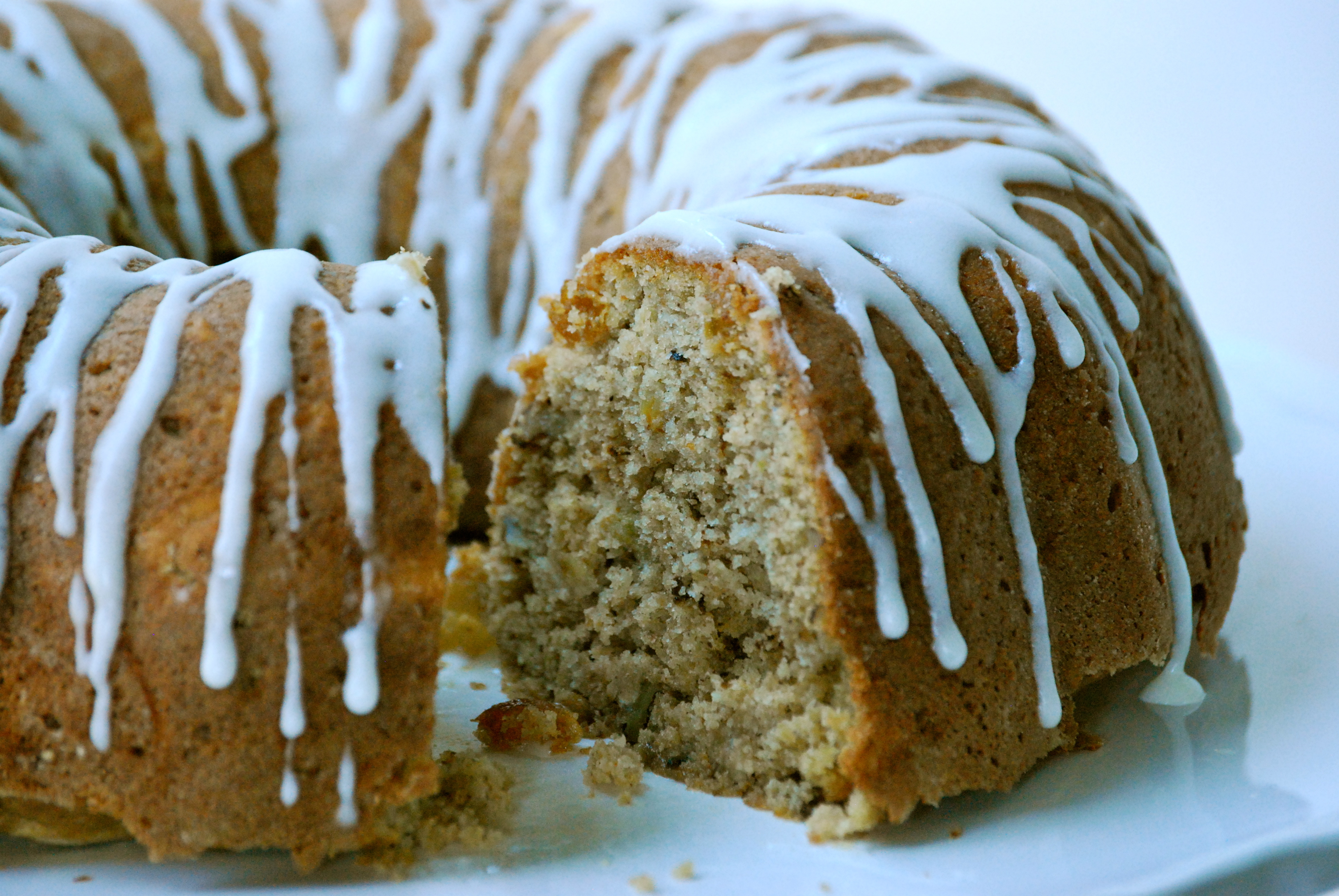
Speaking of October, I’m still hooked on those delicious, tart apples, so I thought I’d throw together an apple dessert.  This Double Apple Bundt cake is one of my favorite styles.  It’s dense, moist, and fuss-free.  To be honest, I actually find most bundt cakes to be better the day after they’re made.  It’s as if they’ve had a chance to consolidate, or come together a bit more…it’s hard to explain, but there’s just more substance the day after baking.  Aside from having fantastic flavors, this cake is also a great make-ahead dessert.

This cake has a BIG apple flavor.  It combines a double-shot of grated apples and either apple butter or apple sauce.  I’ve made it both ways, and they’re equally good.  The addition of toasted walnuts and white raisins provide nice texture, though neither is overpowering.  I’m not a huge raisin fan, but they really work here.  I also added whole grains and cut back on the sugar and butter.   Make this cake– with a cup of coffee, it tastes like Fall.

The Recipe:  Double Apple Bundt Cake

1 cup all-purpose flour

1 cup white whole wheat flour (substitute all-purpose, if necessary)

1/2 teaspoon baking soda

2 teaspoons baking powder

1 teaspoon cinnamon

1/4 teaspoon freshly grated nutmeg

1/4 teaspoon ground ginger

1/2 teaspoon kosher salt

1 stick unsalted butter  (8 tablespoons)

1 cup brown sugar

3 eggs, room temperature

1 cup apple butter or applesauce

2 medium apples, peeled, cored, and grated

1 cup walnuts, chopped and toasted

1/2 cup plump golden raisins  (regular will work, too)

Confectioners’ sugar for dusting, optional

For the Icing

1/3 cup confectioners’ sugar

about 2 tablespoons orange juice

Preheat oven to 350°F.  Butter a 9-to-10-inch (12 cup) Bundt pan.  Dust pan with flour if it’s not non-stick.

Whisk together the flours, baking powder, baking soda, spices, and salt.  Using a stand mixer fitted with the paddle attachment, beat the butter and the sugar on medium speed for about 3 minutes.  Scrape the bowl as needed.  Add the eggs one at a time, beating for about 1 minute after each addition. Reduce the speed to low and add the apple butter or sauce — your batter will look curdled.  Add the grated apples and mix to completely blend.  Add the dry ingredients  and mix until just combined.  Do not over mix.  Using a rubber spatula, fold in the nuts and raisins.

Pour mixture into the prepared Bundt pan and smooth the top.  Do not place on a baking sheet.  Bake for 35-45 minutes, or until a toothpick inserted into the center comes out clean.  Transfer to a rack to cool for 5 minutes before unfolding and cooling the cake to room temperature.  If you can stand it — cover the cake overnight with either plastic wrap or a cake dome and let sit at room temperature.  This will allow the flavors to meld and the texture of the cake will be wonderful.

Make the icing by combining the confectioners’ sugar and some of the orange juice into a bowl.  Slowly add more of the juice until you get your desired consistency to drizzle on the cake.  Ice the cake and allow a few minutes to dry before slicing into it.  Enjoy!
Source:  Adapted from Dorie Greenspan’s Baking From My Home To Yours

Thanks for stopping by Relishing It today– enjoy your weekend!

Laurie

Follow me on Twitter

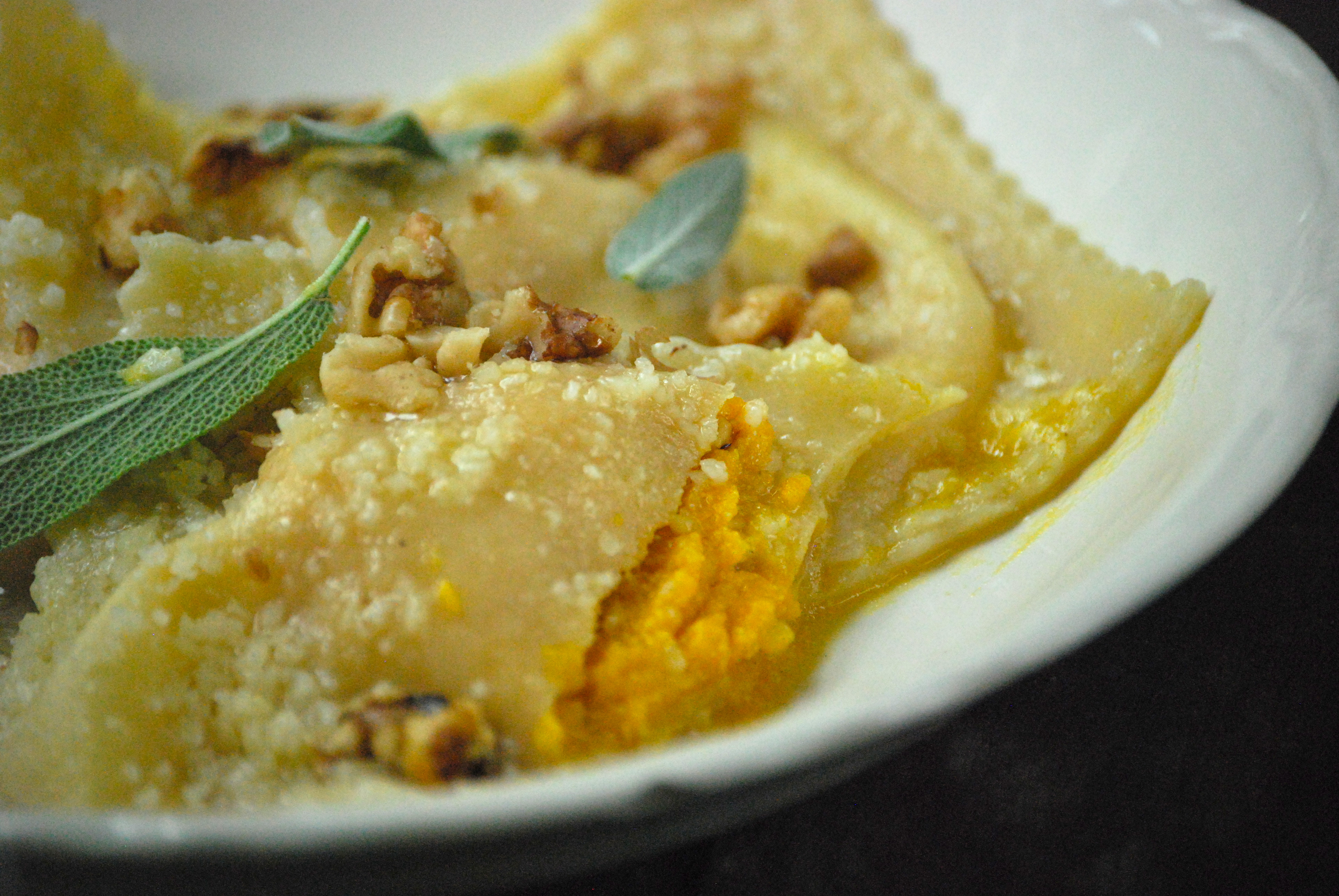
Last week I told you I’d have another fabulous recipe for you to use up any left-over winter squash you have from this dish.  Here it is, and it’s a remarkable Squash Ravioli, which also happens to be one of my favorite meals.  I’ve always felt that homemade pasta is the perfect comfort food– and pairing it with squash and browned butter with sage makes for a sublime Autumn dinner.

Browned butter and sage sauce is so simple to make, yet the incredible flavor will really stay with you.  I crave this sauce for weeks after we make this dish– you will too.  Seriously, it’s that good.  It perfectly compliments the sweetness of the squash, the creamy ricotta cheese, and the hint of freshly-grated nutmeg– all of which make up the filling.  The walnuts add texture to counter the pillow-soft ravioli.  And topping almost anything with Parmesan cheese makes it a little bit better.  Serve the ravioli with the crispy sage leaves (if you can keep yourself from eating them before dinner).

Now I know making homemade pasta may not be on your agenda.  Here’s the thing, though– fresh pasta really is that much better than the dried varieties you see at the market.  There’s no comparison.  And as I’ve said before, if you make it a family project you’ll enjoy the process, rather than thinking of it as just preparation.  As for the equipment, while it’s certainly easier to use a food processor and pasta roller, all you really need are strong arms, a sturdy wooden spoon, and a rolling pin.  Hey, it’s exercise, right?  Give it a try and you’ll be pleasantly surprised by how satisfying it is to make your own pasta.  And even more satisfying when you get to fill it with amazing ingredients like this.

The Recipe:  Squash Ravioli with Browned Butter and Sage

The Pasta Dough:

(Makes 1 pound of dough)

2 cups all-purpose flour

2 large whole eggs

1/4 cup extra-virgin olive oil

3 tablespoons water

1 egg (reserved for ravioli wash)

The Squash Filling:

1 1/2 cups squash puree

1/2 cup ricotta cheese

1/4 teaspoon freshly grated nutmeg

1 teaspoon kosher salt

1/2 teaspoon cracked pepper

Browned Butter and Sage Sauce:

1 stick unsalted butter

6 sage leaves

2/3 cup water

1/2 cup grated Parmesan cheese

salt and pepper

1/2 cup toasted walnuts

To make the pasta dough:  Mix 2 eggs and olive oil into a measuring cup.  Add 3 tablespoons water (or however much needed to reach 7 fluid ounces).  Put the flour into a food processor fitted with a regular blade and pulse a couple of times to aerate (there will not be enough dough to successfully use the dough blade).  Start running the machine and pour the egg mixture down the feed tube, carefully getting every drop in there.  A dough ball should form quickly.  Do not process for more that 40 seconds total.  Turn machine off and turn dough onto a lightly floured surface.  Knead by hand for  a half minute, or until it’s smooth.  Form it into a ball and wrap it tightly with plastic wrap.  Let rest at room temperature for at least a half hour.   Store in the refrigerator for a day, or freeze for a month or more.  Defrost in the refrigerator and let sit at room temperature before rolling.

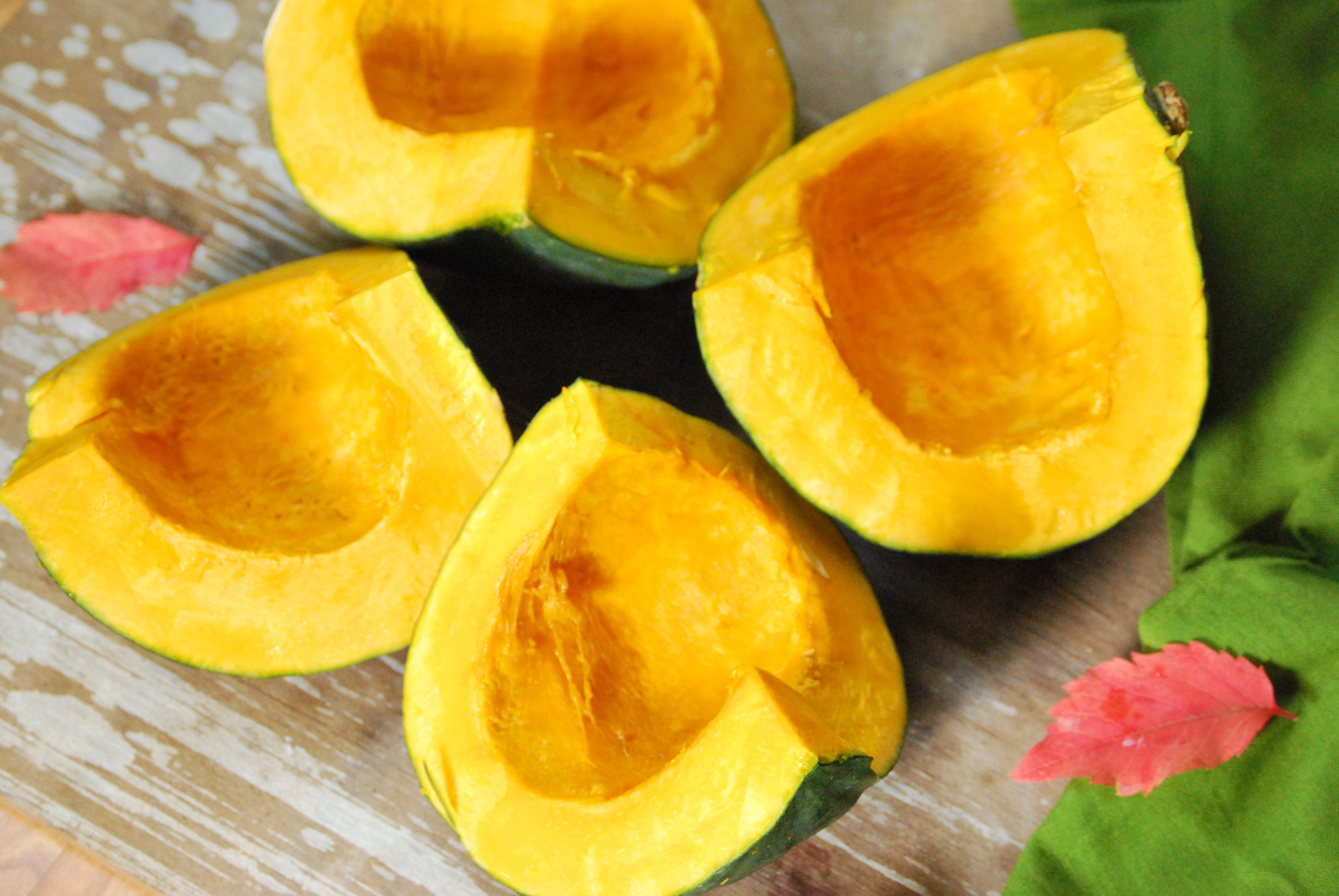
To bake the squash: Preheat oven to 375°F.  Place a quartered, seeded squash on a cookie sheet lined with aluminum foil.  Cover with foil and bake until soft and tender, 35-45 minutes.  Let cool.  Scoop out flesh into food processor.  Add a bit of water if necessary and puree until smooth.  Cool.

To make the filling:  Add the squash, ricotta cheese, nutmeg, salt and pepper to a bowl.  Mix and set aside.  There may be some leftover filling.  Refrigerate and enjoy by the spoonfuls the next day.

To form the ravioli:  Quarter the dough ball.  Use a pasta machine or roll each section by hand.  Making sure to flour your work surface well.  The goal is to get the dough very thin and long.  Once you achieve this, straighten up the sides, if necessary and cover.  Repeat with another quarter of the dough.  You’ll want to get two matching sections.  Make the ravioli however big you like.  Using a pastry brush, apply an egg wash (beaten egg) along the edges of each ravioli.  Place a tablespoon of filling in the middle of each section and top with the other section of dough.  Press the dough together along the egg wash– this will seal the filling inside.  Use a pasta cutter to cut the ravioli into sections.  Or use a knife and press down with fork tines to seal.

To make the browned butter and sage sauce:  In a medium-sized sauce pan, place a stick of butter and the sage leaves.  Begin to brown the butter until it’s fragrant and has a nice caramel color.  Stir frequently.  Add 2/3 cup of pasta water and cook for another 3-4 minutes.  Remove from heat.

Place the ravioli in a large pot of salted, boiling water.  You will want to work in batches.  Place three ravioli (depending upon the size of your pot) into the water.  Cook for about three minutes.  The dough will shrink and tightly enclose the mound of filling when done.   Remove from water and repeat with remaining ravioli.  Toss the cooked ravioli into the brown butter and sage sauce immediately, so they don’t stick together.  When serving, sprinkle with Parmesan cheese and the toasted walnuts.  Enjoy!

Source:  Pasta and Sauce adapted from Lidia Bastiancich’s Lidia’s Family Table

Thanks for stopping by Relishing It!  Have a great day.

Laurie

Follow me on Twitter!

As I’ve said in prior posts, my family eats a lot of soup through the chilly Fall and Winter months.  Some lighter soups I prepare as a first course to a meal, while other more substantial versions become the meal itself.  This is one of those that is hearty enough to stand alone.  It has the added benefit of not only being delicious, but it’s somewhat unique.  It has an interesting flavor that breaks up the monotony of all those broth-based soups.  My neighbor introduced me to this beautiful soup two years ago.   It is has become one of our favorites.

Take a look at all of those vegetables!  Just when you think you cannot possibly add more, it’s time to put an entire bag of spinach into the pot.  The veggies are just one of the many reasons to love this soup.  The broth is another.  It’s hefty and creamy, with just the right amount of peanut, ginger, and curry to give it that unique flavor.  You may think you’re cheating by eating such an indulgent dish, but fear not– the small amount of peanut butter goes a long way here.  Another reason to love this soup is that it comes together in a snap and cooks up in little time.  The sweet potatoes become tender quickly, so it doesn’t need to simmer on the stove for long.   Finally, the addition of chicken is a nice contrast to all of the vegetables, and makes the soup even more substantial.  If you prefer, you can easily leave it out for a vegetarian version– just be sure to add a few more vegetables.

The Recipe:  African Peanut Soup

Makes 4 -6 servings

1 tablespoon olive oil

1 medium red onion, chopped

1 medium green pepper, chopped

1 medium red pepper, chopped

1/2 cup chopped carrot

1/2 cup chopped celery

3-4 cloves garlic, minced

2 tablespoons minced fresh ginger

2 tablespoon curry powder

2 cups canned crushed tomatoes

1 bay leaf

4 cups organic chicken stock

1 large sweet potato, peeled and cubed into bite size pieces

1 – 1 1/2 pounds organic/free-range  chicken breast, cooked and cubed

1/2 cup  or more of peanut butter (try to use a natural kind containing just ground peanuts)

1/4 cup chopped fresh cilantro

1 – 5 oz bag of baby spinach leaves, torn

kosher salt and freshly cracked pepper chopped

peanuts and lime wedges,  for garnish

To make the soup:  Heat the olive oil in a large Dutch oven.  Saute on medium heat the onion, peppers, carrots, and celery until soft — about 5 minutes.

Add the garlic, ginger, and curry powder.  Saute for about  a minute.  Add the tomatoes and bay leaf.  Cook for three more minutes, so the tomatoes can reduce a bit.

Add the broth, sweet potatoes, and chicken.  Bring to a boil.  Reduce heat to low and simmer until the potatoes are soft. 10 – 15 minutes.  Stir in the peanut butter and cook for another 2 minutes.  Stir in the cilantro and spinach.  Cook until spinach wilts.  Season with salt and pepper.  Serve with a wedge of lime and a sprinkle of peanuts.  Enjoy!

Source: Adapted from an article in Parade Magazine, I’m told

Thanks for stopping by Relishing It  — have a wonderful weekend!

Laurie

Follow me on Twitter!

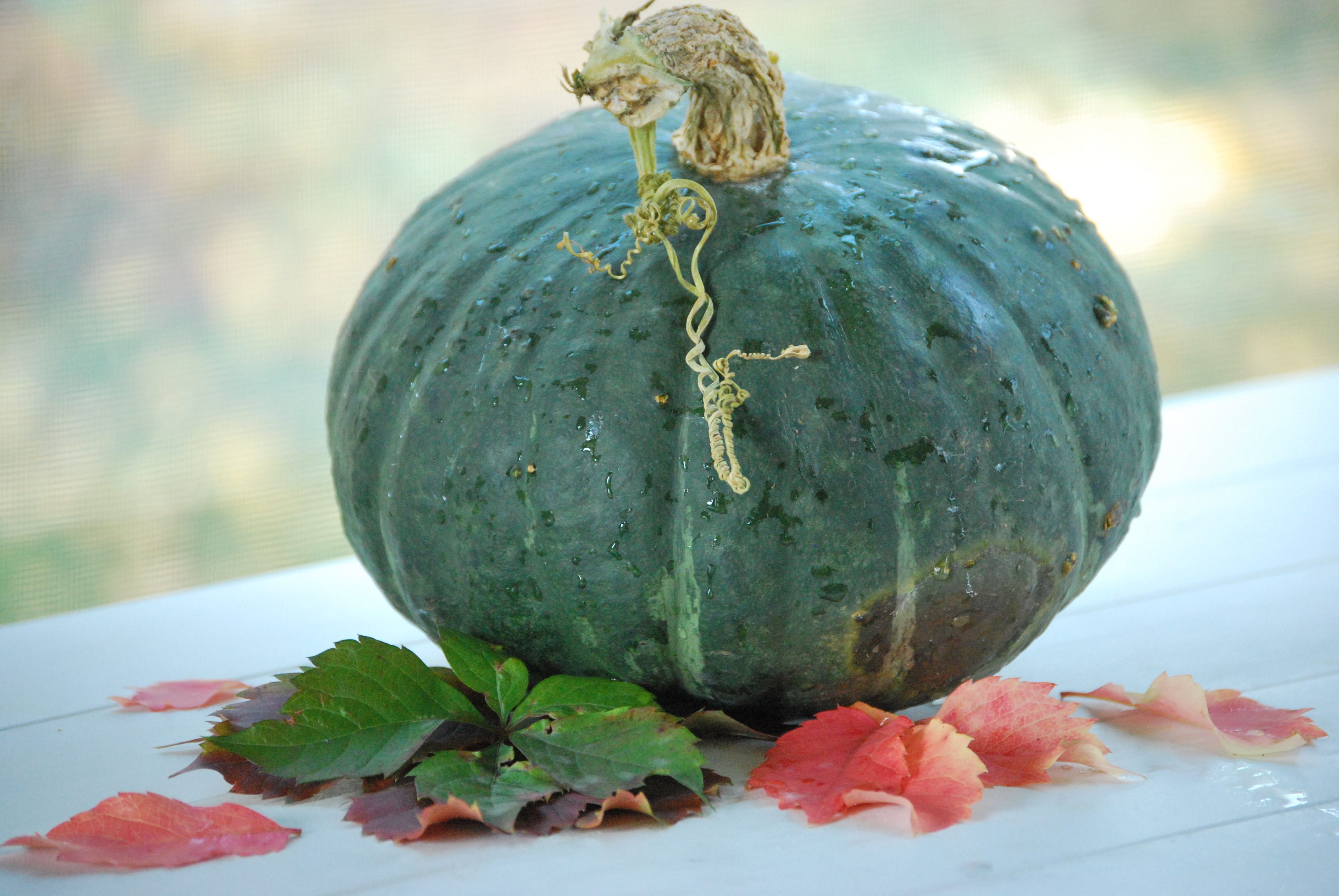
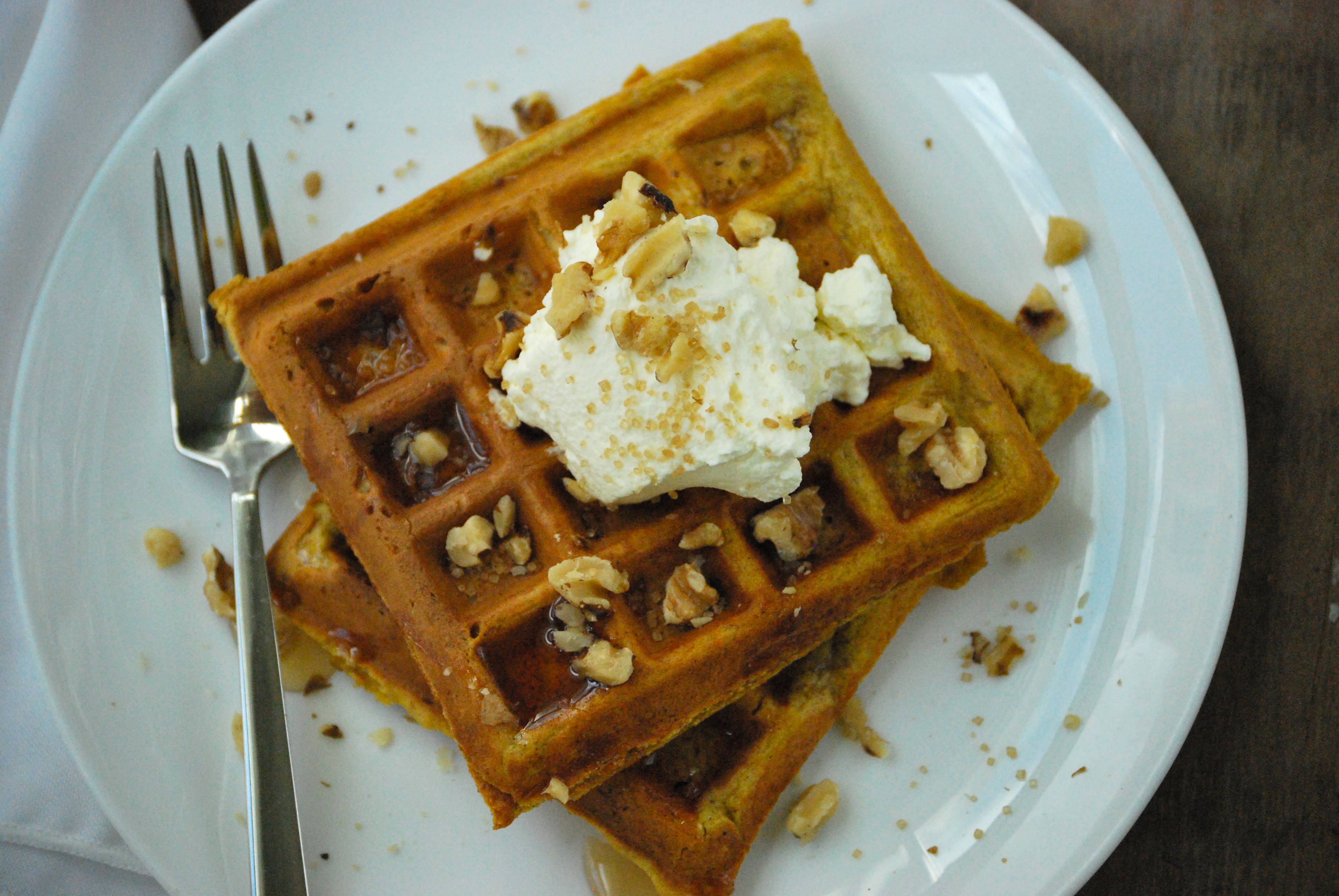
The title of this post might be a little misleading…mainly because it is, in fact, misleading.  These aren’t pumpkin waffles. These are Sweet Mama Winter Squash Waffles.  Aside from the fact that it doesn’t roll off the tongue, I figured ‘squash waffles’ might turn some of you away.  Here’s the thing though, these taste a lot like fresh pumpkin.  And besides, most of the canned pumpkin you find at the market contains squash.  Bet you didn’t know that.  I guess what I’m saying is, I’m comfortable with the deception.

Weekend breakfasts are one of my favorite Fall events– and yes, I consider them an event.  We aren’t in as big a rush to leave the house in the mornings as we are in the Summer.  The farmers market isn’t as picked over when we don’t get there just after sunrise.  Instead, we lounge around in the morning, watching Liverpool play soccer and drinking French-press coffee, while the kids play nearby.  My homebody boys, Aanen and Radd, really love these lazy Fall weekend mornings.

Although I was a bit deceptive at the top, I’m not when I say these waffles are near perfect.  I’ve done my best to make them more healthy by adding whole grains, smaller amounts of sugar, and just a bit of butter.  They are perfectly spiced– not too much, not too little.  I made these particular waffles from a Sweet Mama Squash, which tastes very similar to a Butter Cup.  I’ve also made them with Sugar Pie Pumpkins, as well as canned 100% organic pumpkin.  They all work well, so don’t feel that you must puree your own.  (But if you do, I have another fantastic recipe later this week for your left-over squash).  Whatever you decide to use, I strongly urge you to top them with a dollop or more (so much for healthy) of freshly whipped cream and raw turbinado sugar.  It adds such an amazing, sweet crunch.  Try these this week, you’ll end up making them all the time.

The Recipe:  Pumpkin Waffles

(Makes about 10 waffles)

1 cup white unbleached all-purpose

1 cup whole wheat flour

1/2 teaspoon kosher salt

2 teaspoons baking powder

2 tablespoons brown sugar

1/4 teaspoon allspice

1/4 teaspoon ground cloves

1/4 teaspoon freshly grated nutmeg

1 teaspoon cinnamon

1 teaspoon vanilla

2 tablespoons melted butter, plus more for waffle iron

1/2 cup winter squash or pumpkin puree

2 eggs, lightly beaten

1 1/4 cups 2% milk (add a bit more, if needed)

Do ahead:  To make the puree — Preheat oven to 375°F.  Quarter the squash or pumpkin if large or half it if smaller.  Remove the insides.  Place on a baking sheet lined with aluminum foil.  Cover with aluminum foil if quartered.  If only halved, place cut side down and you shouldn’t need to cover them.  Bake for about 45 minutes or until the squash is fork-tender.  Remove from oven and let cool a bit.   Puree in a food processor until very smooth.  Refrigerate until ready to use.

To make the waffles:  Preheat the waffles iron.  Place the dry ingredients into a large mixing bowl and whisk them together.  Add the eggs, squash puree,  2 tablespoons melted butter, vanilla, and milk.  Whisk until just mixed.  Let sit for 5 minutes.  Add more milk, if too thick.

Brush the waffles iron with a bit of melted butter.  Ladle 1/4 cup into each section of the waffle maker.  Make sure to smooth it out as much as possible.  Cook until a deep, golden brown.  Remove and let cool for a minute or so.  Top each waffle with real maple syrup, freshly whipped cream, toasted walnuts, and a sprinkle of raw turbinado sugar.  Enjoy!

Thanks for stopping by!

Laurie

Follow me on Twitter!

Unfortunately the glorious Indian Summer in Minnesota appears to be ending.  That’s the way of it up here, I guess.  The tempermental mid-Summer months were suffocating at times, keeping us indoors more days than I like.  And the cool comfort of Fall just isn’t long enough.  At least it was magical.  Now the last couple of days have been gray, wet, and cold.  I’m not ready for the long dark of Winter, though I expect my wishes won’t hold it back much longer.  I suppose I should be thankful for the recent– if brief– temperate weather, because I recall  as a child trick-or-treating in October during snowstorms.  Memories of huge freshly-piled snowbanks, and the frustration of not being able to see because my glasses had fogged-up beneath my mask.  Yes, it’s time to appreciate these few weeks, even if they are getting cool, windy, and wet.

One benefit of the colder weather is that many of our meals shift towards warming comfort foods, like soup.  I love soup.  Not like a typical person loves soup, but on a fundamental– maybe inherited genetic– level.  My Mom likes to declare that she “could live on nothing more than soup!”  And she cooks up some divine ones.  While I won’t be so bold as to say I could survive on it alone, soup gets me through those bone-chilling days.  It’s genius– a hearty bowl is the best way to warm up from the inside out, and the smell of a simmering kettle on the stove for a few hours chases the cold away for awhile.

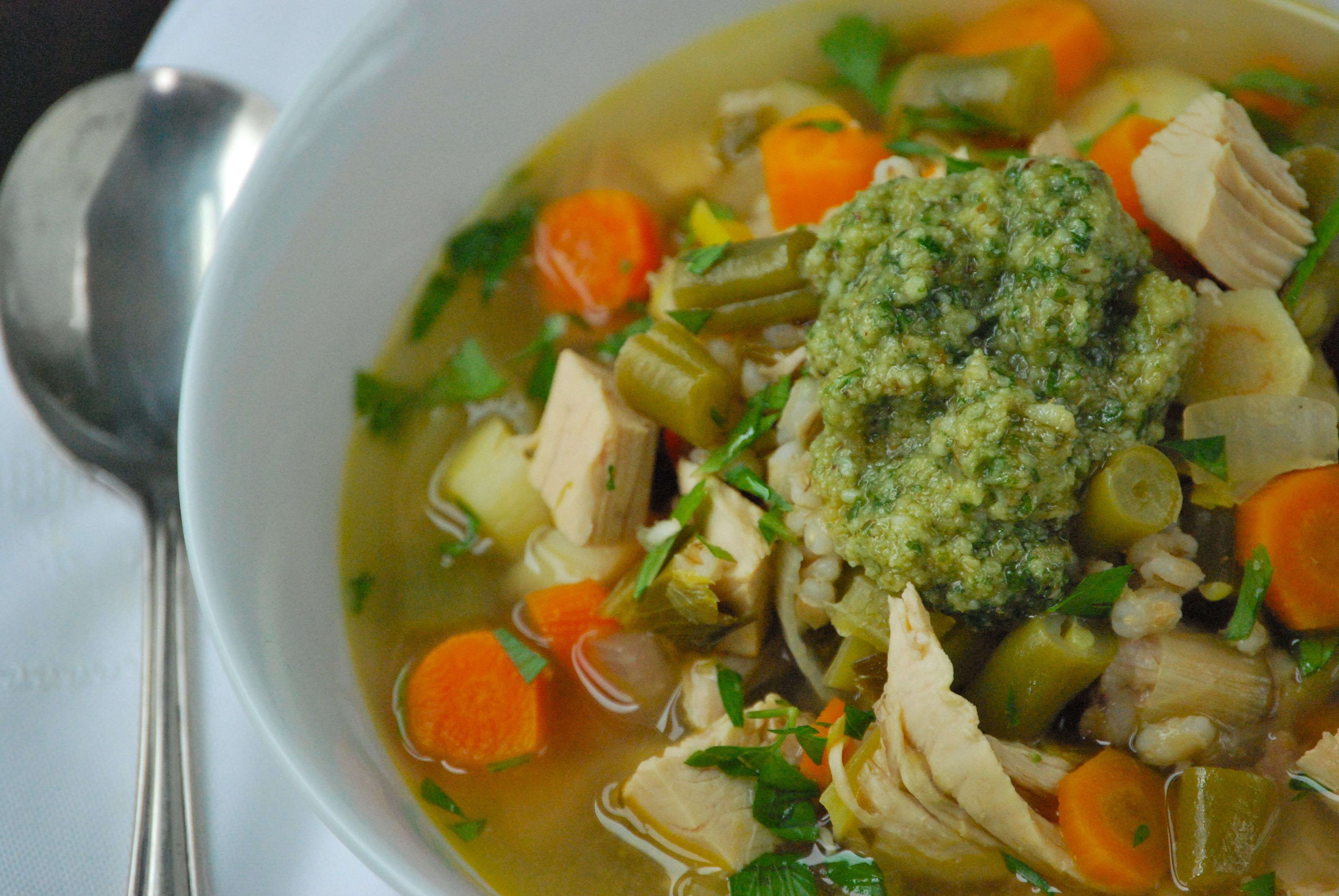
Today’s recipe is my variation on the old ‘vegetable-chicken’ soup that is the staple of so many Winter meals.  While it may look familiar, it offers so much more than the simple vegetable, chicken, and broth flavors you’re used to.  The reason is the addition of lemon and pesto (or pistou if you prefer to make it without the nuts…and want to show off your command of Provençal).  The lemon provides a subtle, though noticeable, hint of interesting acidity.  And the dollop of pesto is brilliant.  It combines the boldness of fresh herbs along with a delicate saltiness.  You can make your own, or buy it at your local market.  For the meat, I generally use roasted chicken, though it is also beautiful with the more potent flavors of wild pheasant.  Like most soups, you can experiment with the ingredients to make it your own.  This soup has become a family favorite that we all love– even my little ones.  I hope you enjoy it, too.

The Recipe:  Roasted Chicken Vegetable Soup with Lemon and Pesto

(As always, you will get the best results by using fresh organic ingredients.)

2 tablespoon olive oil

1 small leek, chopped

4-5 medium carrots, peeled and diced

4-5 medium parsnips, peeled and diced

2 small celery stalks with leaves, diced

1 medium white onion, diced

2 cloves garlic, minced

3/4 cup green beans, trimmed and chopped

Zest and juice of 1 lemon

1 1/2 cups roasted chicken, cut into bite-sized pieces

1/2 cup pearled barley, rinsed

1 bay leaf

1 1/2 tablespoons parsley,  finely chopped

2 quarts chicken stock (homemade or store -bought)

kosher salt and freshly cracked black pepper, to taste

red pepper flakes, to taste

Pesto:

1 3/4 cup fresh basil, torn

1/4 cup fresh parsley, torn

1/3 cup grated Parmesan-Reggiano cheese (or Grana Padano — almost as wonderful, but at a much better price.)

1/4 cup lightly toasted walnuts, chopped

2-3 cloves of garlic, chopped

1/2 cup extra-virgin olive oil (adjust more or less, depending upon your desired consistency.)

pinch of red pepper flakes

Kosher salt, to taste

To make the soup: Heat the olive oil in a large Dutch oven.  On medium heat, sauté  the onion, leek, celery, carrots, parsnips, green beans, and a bit of salt and pepper until the vegetables start to become tender, about 5 minutes.  Add the garlic and sauté for another minute.  Add the chicken broth, barley, chicken, and bay leaf.  Bring to a boil, then reduce heat and let simmer until the barley is done, about 3o-40 minutes.  Add the lemon zest and juice.  Stir in the parsley.  Season with more salt and pepper, if needed, and a pinch of red-pepper flakes.

To make the pesto:  Add the basil, parsley, garlic, Parmesan-Reggiano cheese, walnuts, pinch of salt and red pepper flakes to a mini-food processor.  Pulse a few times to incorporate everything together.  With the machine running, slowly add the olive oil.  Adjust seasonings, if necessary.  Serve a dollop on top of a bowl of hot soup.  Enjoy!

Thanks for stopping by Relishing It today — wishing you all a wonderful weekend!

Laurie

Follow me on Twitter
If you’ve spent even a small amount of time here, you know that I love cookbooks.  Even on hectic days when my two little ones run me ragged, I try to find time to clear my head with a warm cup of coffee and a few peaceful moments paging through recipes.  So what makes a cookbook ‘good’?  Well, rather than listing page after page of instruction, for me the best cookbooks are like settling in and sharing ideas with a comforting friend.  They have stories wrapped around a theme, emotions that tie the dishes to the author’s life and loved ones, and– obviously– brilliant food.  I want to know the recipes are part of the author’s life, that they’re important enough that she needs to share them.  I want to make them become part of my family’s traditions and story, because that’s really what eating together is about– shared experiences.

One of my favorite cookbook authors is Melissa Clark.  Along with her popular column for the New York Times (A Good Appetite), she has authored or co-authored dozens of fantastic works.  Her cookbook “In the Kitchen with a Good Appetite” gives you a flavor of her journey to where, and who she is today.  I’ve waxed about her creativity in the kitchen and her way with words in this past post.  Today’s recipe, these decadent brownies, comes from her new book, “Cook This Now”.  In a word, both the brownies and the book are brilliant.  In her latest collection, she shares experiences of her life as both a mother and a wife centered around meals for family and friends.  The book’s format mirrors the seasons– which is how I try to cook.  The individual recipes are varied, creative, and mouth-watering.  I decided to make these brownies first, to share with a friend on his birthday– he loves chocolate and coconut.

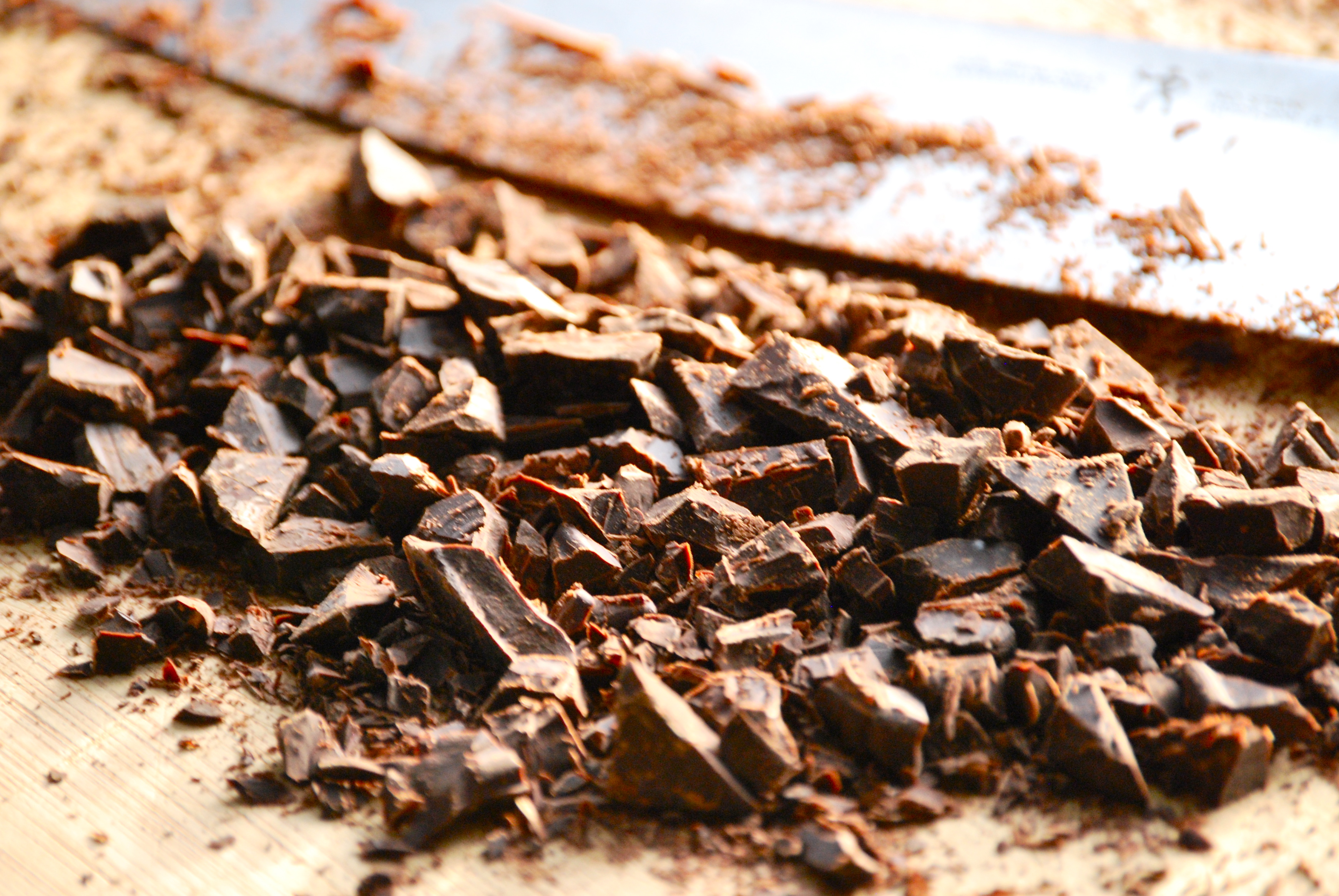
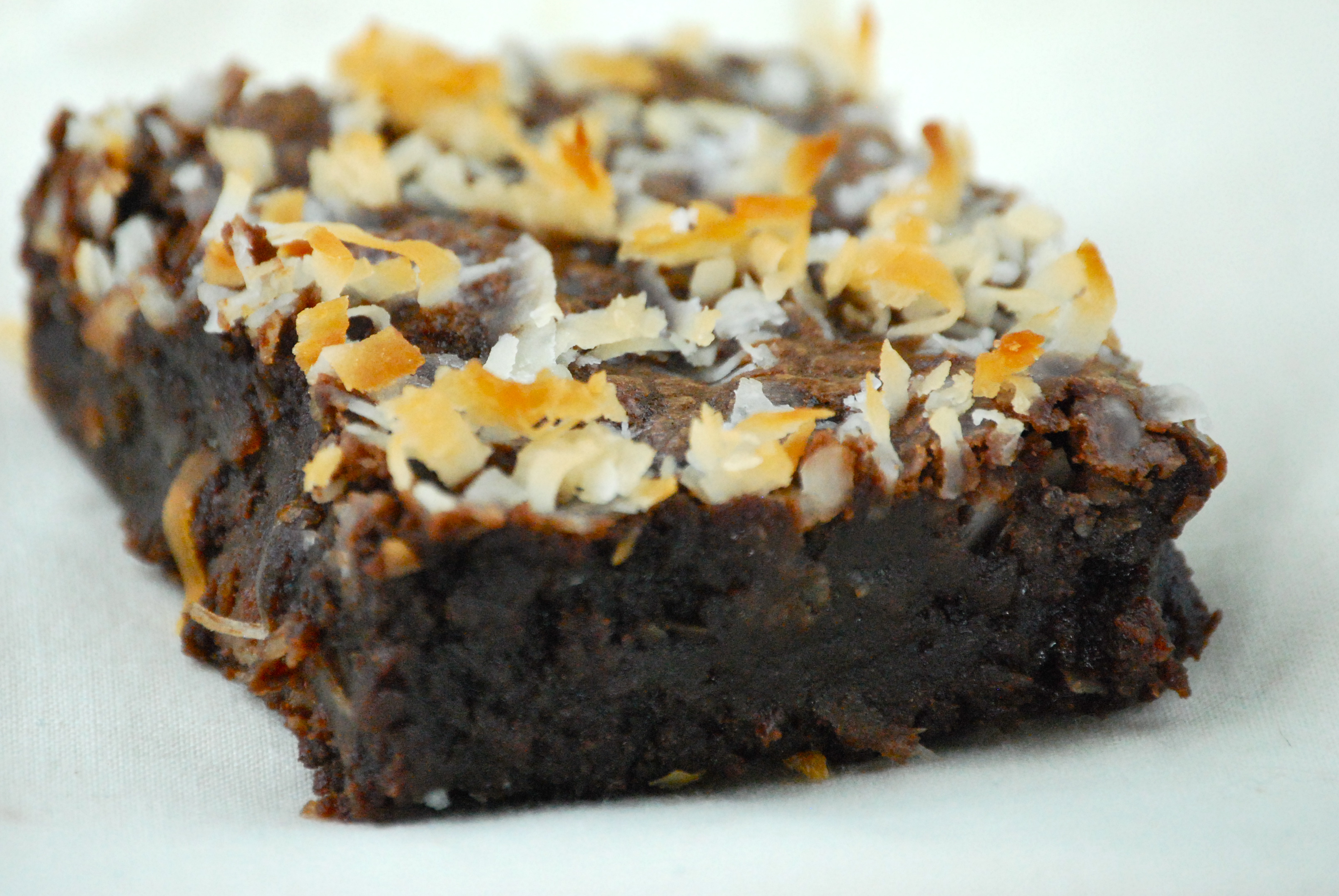
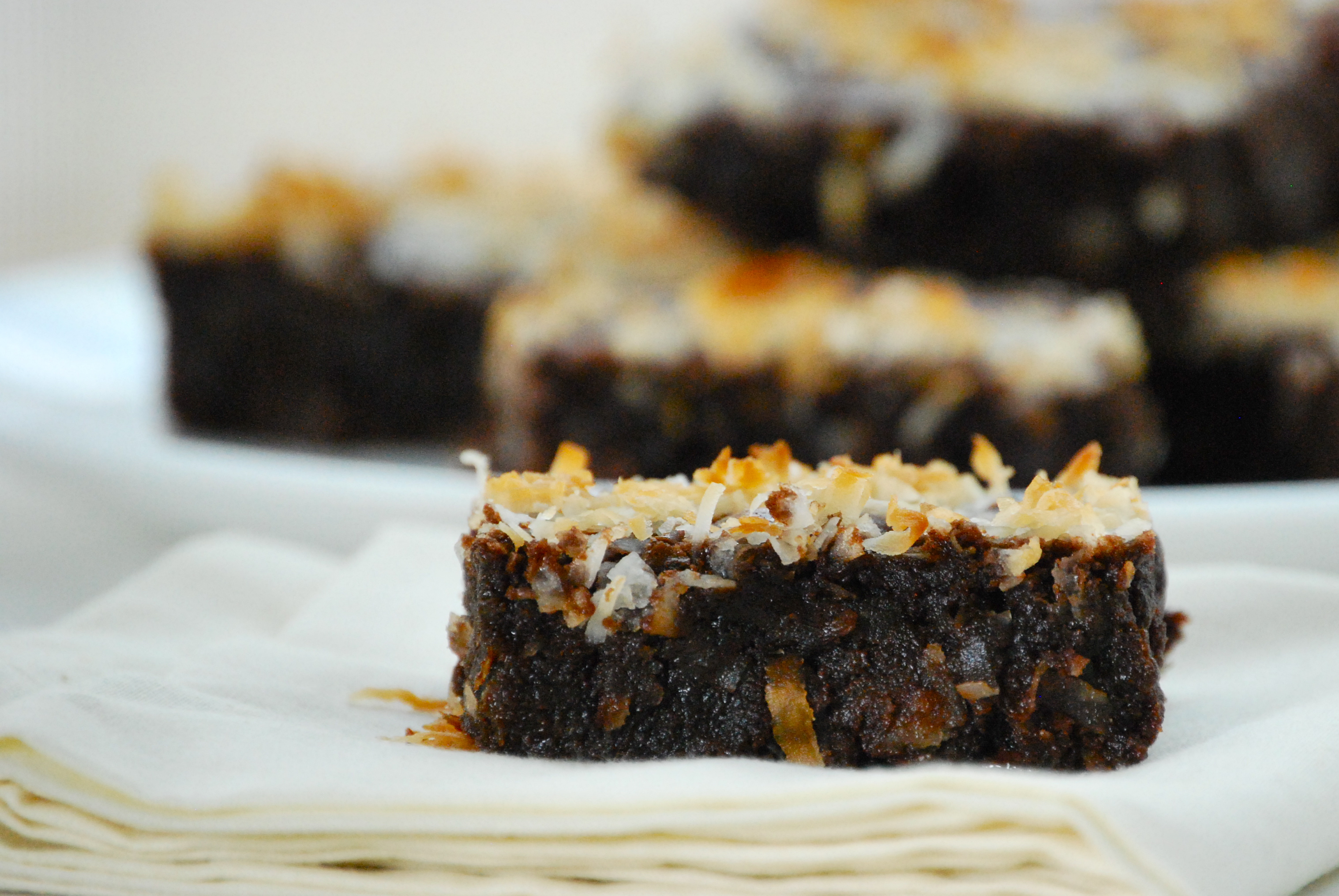
I love the coconut/chocolate pairing, and in this recipe they really work together brilliantly.  This is not a normal, cake-like brownie.  Instead, it has a moist fudge-y density and texture that delivers a huge chocolate punch.  And the two layers of coconut add nice subtlety.  The first coconut layer (on top) crisps up beautifully.  The second (baked into the brownies) provides nice textural contrast to the brownie itself.   A sprinkle of fleur de sel on top makes them perfect.   Enjoy them with coffee while reading a good cookbook, or share them with a friend.

The Recipe: Coconut Fudge Brownies

1/3 cup Dutch process cocoa

1/2 cup plus 2 tablespoons boiling water

2 ounces unsweetened chocolate, finely chopped

4 tablespoons unsalted butter, melted

1/2 cup plus 2 tablespoons coconut oil (butter may be substituted, if necessary)

2 large eggs

2 large egg yolks

2 teaspoons vanilla

2 1/2 cup sugar

1 3/4 cup unbleached all-purpose flour

1/2 teaspoon kosher salt

3 ounces bittersweet chocolate, cut into 1/2-inch pieces

2 cups sweetened shredded coconut  (do not substitute unsweetened, as it will be too dry for the brownies)

Fleur de sel, for sprinkling (kosher salt may be substituted)

Pre-heat oven to 350°F.  Butter a 9 x 13-inch baking pan.

In a large mixing bowl, whisk the cocoa powder, unsweetened chocolate, and boiling water together until smooth.   Whisk in the the melted butter and coconut oil.  Don’t be alarmed if the mixture looks curdled.  Add the eggs, egg yolks, and vanilla, and whisk until combined.  Whisk in the sugar until fully incorporated.  Add the flour and salt and gently fold with a spatula until just combined.  Fold in the bittersweet chocolate pieces.

Pour half of the batter into the prepared pan and smooth in out.  Sprinkle 1 cup of coconut on top of it.  Spread the remaining batter on top of  the coconut.  Sprinkle the remaining cup of coconut on top of that.  Dust with a bit of fleur de sel and bake until a tester inserted into the center of the brownie is just set and shiny, 30-35 minutes.  If you test with a toothpick, it may seem wet, which is fine.   It will solidify as it cools.  It is better to under- bake these brownies, than to over-bake them.  Cool completely before cutting into squares. Enjoy!

Source: Adapted from Melissa Clark’s Cook This Now Cookbook

Thanks for stopping by today!

Laurie

Follow me on Twitter

Every once in a while I try a recipe that turns out so much better than I anticipated.  It usually ends up being a recipe that I crave days, weeks, or even months after I make the dish.  This is one of those meals, and it stunned me.  Sure, I expected it to be tasty, but to be honest I was more focused on the health benefits when I decided to make these cakes.  I didn’t expect the flavors to be so vibrant, the taste so fresh. And I had no idea that my family would love them as much as I did.

I was drawn to this recipe the moment I read it.  It is loaded with healthy ingredients that I generally keep on hand, contains Indian spices, and it’s in a tiny cake-form.  That’s right, I’m not above making a dish because I like little cakes.  Hey, they’re fun.  Another nice aspect to this dish is that is works as both a side accompaniment to a larger meal, or as the centerpiece with a salad or fruit.  Or how about this?  Stuff a couple of the cakes into pita bread along with some fresh vegetables like cucumber, tomato, and red onion.  Top with the sauce and it’s a perfect lunch to take to work, the park, or wherever you like.

The extra cakes from the recipe keep very well and heat up easily  without loosing any their wonderful texture.  It really is a nice meal to make at the beginning of the week that you can come back to over several days.  Just a note, you can roast a head of garlic for the raita (sauce).  I decided to use fresh garlic in the sauce, and it was incredible.  I substituted 2 cloves instead of the whole head, as fresh garlic is much more pungent.  Also, the roasted garlic need not be mixed into the raita, but can be served on the side.

The Recipe: Indian – Spiced Lentil Cakes with Raita

(2-4 servings)

Raita

1 -2 cloves garlic, finely chopped

1 tablespoon extra-virgin olive oil

1/4 teaspoon cumin seeds (substitute ground, if necessary)

1 cup plain low-fat yogurt

1/4 cup finely chopped peeled and seeded cucumber

1 teaspoon chopped fresh mint

1 teaspoon chopped fresh cilantro

1 teaspoon seeded jalapeno

1 teaspoon fresh lemon juice (or more)

kosher salt and freshly ground pepper to taste

Lentil Cakes

1/2 cup mix dried legumes (lentils, chickpeas, mung beans, green or yellow split peas all work well)

1/4 cup brown basmati rice

1 garlic clove, minced

1 teaspoon chopped fresh ginger

1/2  jalapeno, seeded and minced

1 cup leaves from pea tendrils, arugula, or spinach, chopped

1/2 cup frozen peas, thawed and chopped

1/4 cup chopped fresh cilantro

1/4 cup chopped scallions

3 tablespoons chopped fresh mint

1 teaspoon kosher salt

1 teaspoon freshly ground black pepper

4 tablespoons extra-virgin olive oil, divided

To prepare the Raita: Toast the cumin seeds in a dry skillet for 2-3 minutes, or until golden brown and fragrant.  Let cool.  Pulverize with a mortar and pestle or finely crush with a sharp knife.  Mix the yogurt, cucumber, cilantro, mint, jalapeno, cumin, and 1 teaspoon lemon juice.  Season with salt and pepper.  Set aside.

To prepare the lentil cakes:  Rinse legumes; place in a medium bowl with rice and cover with 3-inches of water.  Let mixture sit at room temperature for 3-5 hours.  Drain mixture and transfer to a food processor.  Add garlic, ginger, and jalapeno.  Process until grainy paste forms (add 1-2 tablespoons water, if necessary).  Transfer to a large bowl; mix in your choice of chopped greens, peas, cilantro, scallions, mint, salt and pepper.

Heat 1 tablespoon of oil in a large skillet over medium-high heat.   Fill a 1/4 cup measuring cup almost full and gently compress it.  Tap mixture out onto your hands, careful to keep it’s shape and gently place into the hot skillet.  Reduce heat to medium and saute until golden brown and cooked through, add 1 more tablespoon of oil (if necessary) and flip.  Cook about 4-5 minutes per side, of whenever they are your desired color and doneness.  Repeat with remaining oil and mixture.   Top with raita — enjoy!

Source:  Adapted from the September 2011 issue of Bon Appetit Magazine

Have a great day!

Laurie

Follow me on Twitter
Ah, the evening chill of Fall.  It turns the switch in my brain from wanting the cool, crisp vegetables that I’ve been eating all summer to warm, comforting dishes.  Yes, it’s hard to say goodbye to those fabulous cucumbers for the next several months, but I’m ready to slowly warm my house and enjoy the lingering smell of roasted vegetables.  I’m ready to have Radd come home from work, open the front door, and see him smile when he notices those beautiful aromas.  There is something therapeutic about it.  I get so excited to share this style of warm, homecooked meal with my family.

You already know that (aside from sweets) vegetables are really all I need.  While I love those raw fresh and crisp summer specimens, roasting imparts– or perhaps emphasizes– other flavors entirely.  They develop a bit of a personality and a little more character.  They are both sweeter and more complex.  This recipe really showcases what I’m talking about.

The vegetables are prepared in a large baking dish where they slowly caramelize in the oven.  They take on those fantastic roasted notes, and become oh-so tender.  But there’s more.  This meal has another layer of flavor due to a superb caper vinaigrette.  To be honest, I was a little hesitant to add the dressing at first.  Capers– though I love them– can really overpower a dish.  Adding their salty, briny character struck me a bit odd.  Much to my surprise, the result was brilliant.  The maple syrup accentuates the sweetness of the vegetables.  The Dijon mustard, lemon juice, and olive oil meld to create a beautiful canvas for the punch of those potent little capers.  Rather than compete to overpower your taste buds, the flavors end up nicely balanced, each taking its turn.  They complement each other perfectly, and once you taste these vegetables, you won’t roast them any other way.

For the vegetables, most any combination of your favorite root variety will work here.  Some will need longer roasting times, so adjust accordingly.  When choosing parsnips, try to choose medium sized ones.  If you can only find large ones, just make sure to quarter them and cut away the woody center.  This dish would be wonderful paired with a roasted chicken or a braised pork shoulder.  Or make them on their own.  Just be sure to share.  Enjoy!

The Recipe:  Roasted Vegetables with Caper Vinaigrette

(Serves 4)

4 medium parsnips

4 medium red onions

2 medium sweet potatoes, unpeeled

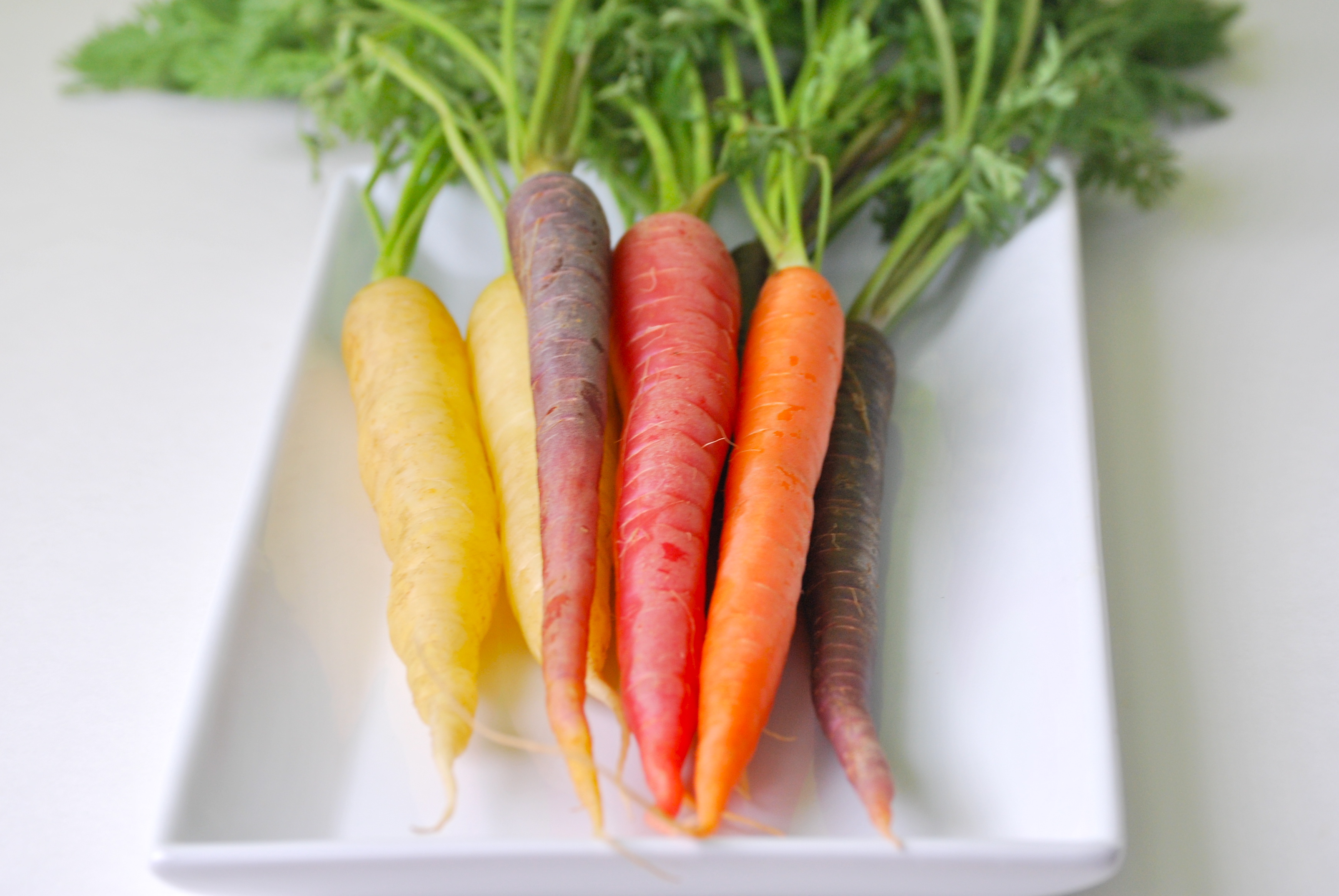
2 -3 medium purple carrots (regular can be substituted)

2/3 cup olive oil, divided

4 thyme sprigs (about 1 teaspoon dried can be substituted)

2 rosemary sprigs (about 1 teaspoon dried can be substituted)

1 head garlic, halved horizontally

handful of cherry tomatoes, halved

salt and pepper

2 tablespoons lemon juice

3 tablespoons small capers

1/2 tablespoon maple syrup

1/2 teaspoon Dijon mustard

Preheat the oven to 375°F.  Peel the parsnips.  Cut the carrots and parsnips into halves and then into 2-3-inch segments.  Peels the onions and cut each into 6 wedges.

Place the parsnips, carrots, and onions on a roasting pan and toss with 1/2 cup of the olive oil, the rosemary, thyme, garlic, 1 teaspoon salt and some pepper.  Spread out evenly and roast for 20 minutes.

Prepare the sweet potatoes by cutting their ends off.  Then cut them into halves. Then each half into six wedges.  Add the potatoes to the dish of vegetables, toss, and return to the oven for a further 40 minutes, or so.

When the vegetables are cooked through and have taken on a golden color, toss in the tomatoes and roast for another 10 minutes.  Meanwhile, whisk together the lemon juice, maple syrup, mustard, capers,  1/2 teaspoon salt, and remaining 2 tablespoons of olive oil.

Pour the dressing over the roasted vegetables as soon as they are removed from the oven.  Adjust seasonings, if necessary.  Enjoy!

Source:  Adapted from Yotam Ottolenghi’s Plenty Cookbook

For more healthy fare inspiration, take a look at these other ideas via womenshealthmag.com   —  Thanks for stopping by!

Laurie

Follow me on Twitter

It’s finally apple season!  Both my children and I have done our best to make a dent in the local apple harvest over the last couple of weeks by chomping on several a day.  Minnesota’s own Honeycrisp has become our household favorite, though we’ve eaten more than our fair share of Zestars, Cortlands, and Sweet Tangos.  There are so many beautiful varieties available right now– both sweet and tart.  For me, apple season arrives just in time.  Aside from getting to take the kids out to the apple orchard for a nice Saturday event, it’s the signal that cool, crisp Autumn days are finally here.  And, to be honest, it shows up just when I think I can’t possibly eat another berry.  That’s one of the things I love about eating seasonally– just when I start to tire of one type of produce, another one comes along to freshen things up.

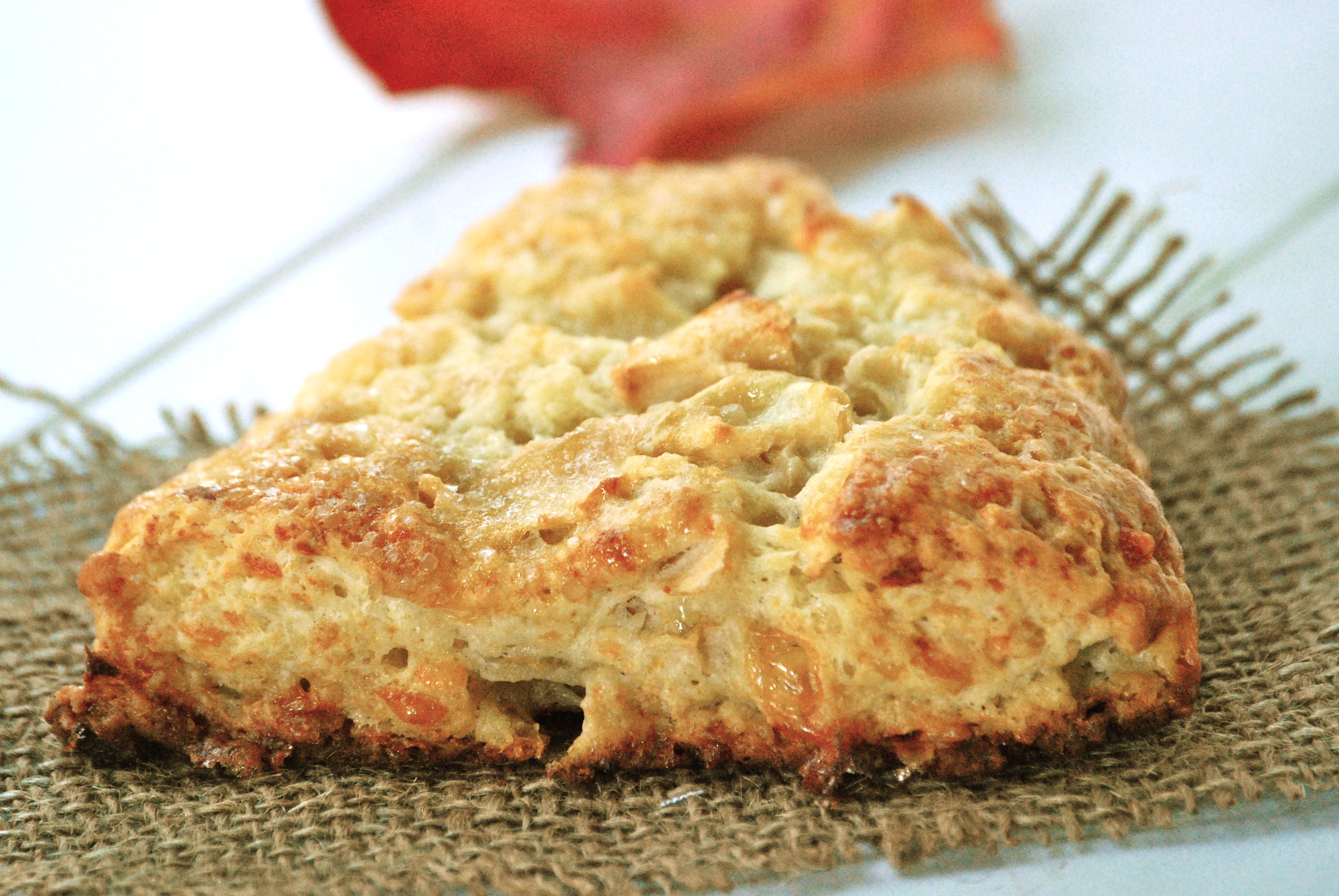
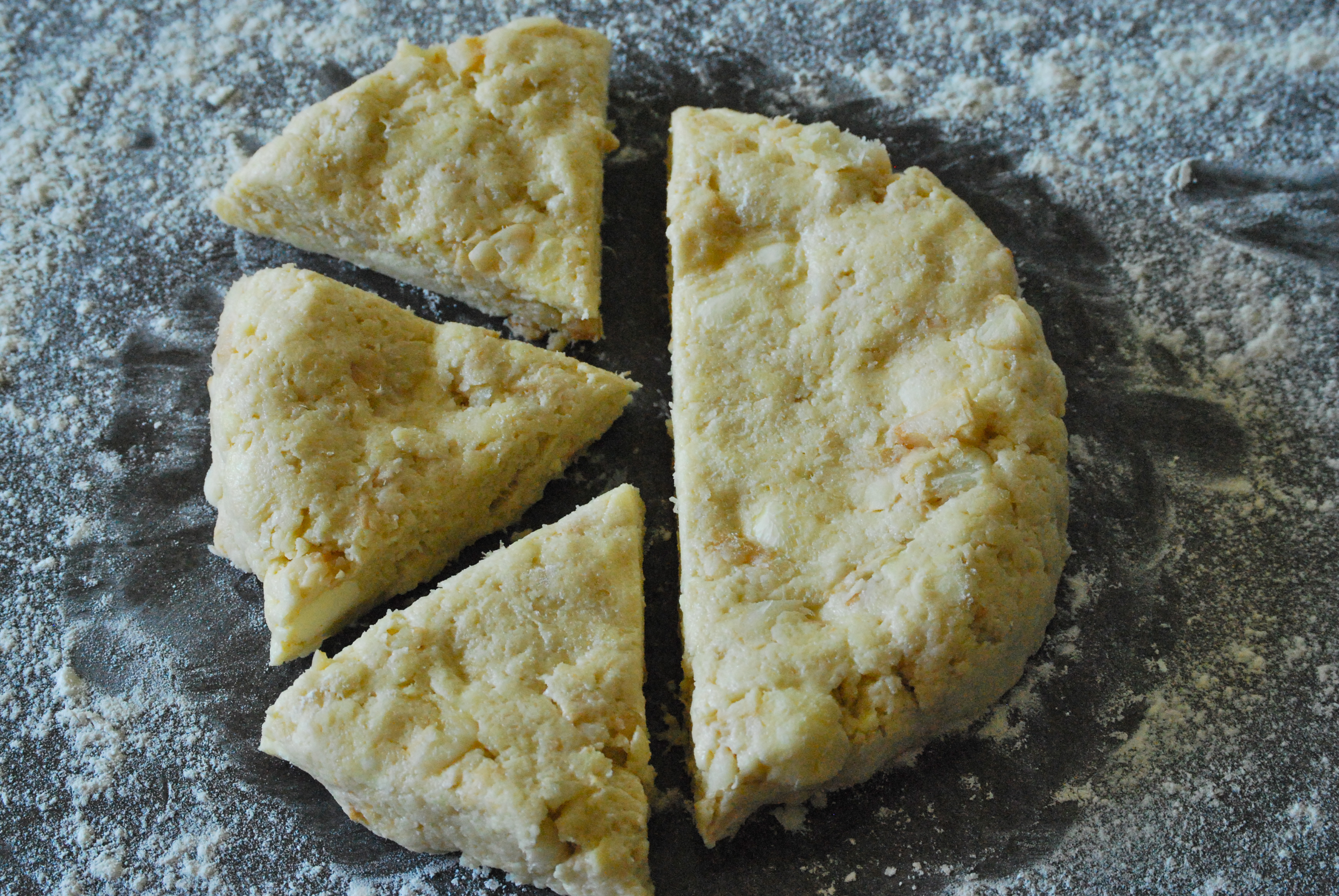
What you’re looking at is one of my favorites little treats– apple and white cheddar scones.  Think about that for a minute– apples and cheese.  Sweet and savory complimenting one another perfectly!  My taste buds have been craving these scones every morning, but my jeans remind me that it maybe isn’t such a good idea.  Moderation, right?   These scones are nicely tender on the inside.  While the firm, crusty exterior really gets that whole contrasting-textures thing right.  Each bite starts with a nice crunch, followed by a perfect, melt-in-your-mouth center.

I like to use a nice tart apple variety for these scones.  The recipe calls for white cheddar, though I’ve made them with regular cheddar and they’ve been just as tasty.   Another convenient thing about this recipe is that it makes a fairly small batch– just six scones.  Your jeans will be thankful for that.  You’ll want to eat these scones soon after they come out of the oven.  However, if you are unable to eat them all on the day they were made (this WILL NOT be a problem), just leave them out uncovered.  They will retain a bit more of their crunchiness that way.

The Recipe:  Apple and White Cheddar Scones

(Makes 6)

2 firm tart apples (about 1 pound, 454 grams), peeled, cored, and cut into sixteenths

1 1/2 cup all-purpose flour (195 grams)

1/4 cup  granulated sugar (52 grams)

1/2 tablespoon baking powder (7.35 grams)

1/2 teaspoon kosher salt (1 gram), plus extra for egg wash

6 tablespoons unsalted butter (85 grams) chilled and cut into 1/2-inch cubes

1/2 cup sharp white cheddar cheese (65 grams), shredded

1/4 cup heavy cream (57 grams)

2 large eggs (96 grams), at room temperature

2 teaspoons raw cane sugar  (this adds a nice crunch, substitute granulated sugar if you don’t have any)

Preheat oven to 350°F.  Position rack to center of the oven.  Line a rimmed baking sheet with parchment paper.  Place the cut apples  in a single layer onto the baking sheet and bake for 20 minutes, or until they develop a little color and are dry to the touch.  Remove from oven and let cool.

Sift the flour, sugar, baking powder, and salt together and set aside.

Place the chilled butter in the bowl of an electric mixer fitted with a paddle attachment.  Add the apples, cheese, cream, and one of the eggs.  Add the flour mixture on top of everything and mix on low until the dough just comes together.  Do not overmix.

Liberally flour a work surface and place the dough on it.  Put a little flour onto your hands and gently flatten the dough into a 6-inch circle.  Make sure the dough is even throughout, so that it bakes evenly.  Cut the circle into 6 wedges and transfer them to a lined baking sheet.

In a small bowl, beat the remaining egg with a pinch of salt.  Brush the egg wash onto each scone and sprinkle with the raw sugar.  Bake for 25-30 minutes, or until they are firm and very golden.  Transfer to a wire rack to cool.  Enjoy!

Source:  Adapted from Bill Yoses and Melissa Clarks’s The Perfect Finish Cookbook

Thanks for stopping by today!

Laurie

Follow me on Twitter

I spent a fair amount of time this season talking food with friends old and new.  Along with discussing recipes and how to prepare food, we talk about what we like, and what we don’t.  Inevitably, I bring up beets– one of my favorites.  I’ve been a bit surprised to find that people either love beets or hate them.  There seems to be no middle ground.  But I have a theory here– that people only think they despise this lovely vegetable.  If you fall on the side of those who don’t appreciate these deep-crimson beauties, I have a question.  Have you ever eaten a fresh beet?  Because like all foods, an opinion based on a grocery store canned good doesn’t count.  If your experience is based on those sad, flavorless little cubes poured into a bowl, you have to give this recipe a try.  It’ll change your mind.  And if you already love beets, add this fantastic dish to your salad repetoir.

Obviously I love fresh beets.  Every time I cut into one, revealing its brilliant, deep red, I smile.  This color happens naturally!  Amazing.  Fresh beets are slightly sweet, with delicious earthy undertones.  They have a lovely crunch when eaten raw and a tender silkiness when cooked.  My favorite way to eat beets is roasted and unpeeled, baked in the oven, and then tossed with a bit of olive oil.  Of course, they shine in soups as well.  Here, I’ve used them as the centerpiece for this fantastic salad.  How’s that for versatility?

This beet salad is so simple, yet it will blow your mind.  The dark and viscous spicy sweet balsamic dressing is a standout made specifically to pair with the beets.  It’s one of the most unique dressings you’ll ever taste– very intense, explosive flavors.  The creamy cheese provides balance to the acidity of the dressing, and adds that additional layer of complexity that I think most salads need.  And the crunch from the toasted nuts is a nice textural addition.  It’s fantastic served with greens, or as a stand alone.  Enjoy!

The Recipe: Roasted Beet Salad

6 medium beets, roots and tops trimmed

Olive oil to coat

1/2 cup walnuts (or pecans), toasted

1/2 cup good quality goat or blue cheese, crumbled  ( I’ve had it with both cheeses, go for the blue)

Handful of leafy greens

Dressing:

1 cup balsamic vinegar, reduced to 1/3 cup

1/2 teaspoon red pepper flakes

1/2 teaspoon ground cinnamon

1/2 teaspoon allspice

1/2 teaspoon cayenne

Preheat oven to 425°F.  Toss beets in olive oil to coat.  Line a rimmed baking sheet with aluminum foil.  Place beets on baking sheet and roast until tender, about 35-45 minutes.  Let cool.

Combine ingredients for dressing together.  Set aside.  Toast nuts by placing in a small skillet over medium heat, stirring frequently.  When nuts become fragrant, remove from heat, about 4-5 minutes.

When beets are cool, peel and cut into wedges.  Place on top of a bed of greens.  Sprinkle with cheese and toasted nuts.  Drizzle the dressing over the top.  Enjoy!

Source:  Adapted from Nosh Restaurant via The Minnesota Homegrown Cookbook

Thanks for stopping by today!  Have a great weekend.

Laurie

Follow me on Twitter