Feeds:
Posts
Comments

Today’s dish is one of the most-satisfying, healthy salads around.  It combines several healthy food pyramid components– protein, vegetables, and grains, so in a sense it’s a ‘one-plate meal’.  It has the added benefit of being convenient and delicious, not to mention looking gorgeous, too.  The centerpiece of this salad is the salmon.  In this dish, it’s simply prepared.

Now it’s time for a little story.  Radd and I have had an ‘on again/off again’ relationship with salmon over the last few years.  Have you ever eaten one particular food so often that its no longer appealing?  That’s what happened to us.  You see, during both of my pregnancies we ate a ton of wild salmon.  It’s loaded with omega 3’s, which are important for a baby’s developing brain.  So…we went overboard.  I’m sure my memory is tricking me now, but I swear we ate salmon three to four times a week.  It got to the point where it was almost torturous to sit down to a nice grilled meal.  After Aria was born we swore off salmon for awhile.  That ‘awhile’ turned into nearly two years, so our kids never really got to try it.  Well, we finally came around, gave it a try, and remembered all those things that we love about the fish.  And as luck would have it, turns out our kids love it too.

Along with the salmon, this salad has those wonderful Spring fava beans and radishes.  The beans add a nice ‘pop!’ of color along with their firm texture, while the radishes give the dish a healthy crunch.  Another ingredient is black rice.  Not familiar?  You can read about it here.  Aside from looking pretty cool, it’s loaded with fiber and iron.  It’s also an anti-inflammatory and great source for antioxidants.  I used ‘forbidden’ black rice in this dish.  The texture is the same as a firm white rice, but the flavor is a bit more ‘nutty’– kind of like wild rice.  If you can’t find black rice, you can use wild rice, quinoa, or wheat berries.  All will work well here.

The final ingredient is a mustard tarragon vinaigrette, which brings all of the flavors together.  It’s worth experimenting with tarragon vinegar, if you can find it– it’s so interesting.  Tarragon has a strong anise-like flavor, so make sure it suits your palate before you add it to the vinaigrette.  And if you don’t have it, a nice white wine or champagne vinegar will work just fine.  Enjoy!
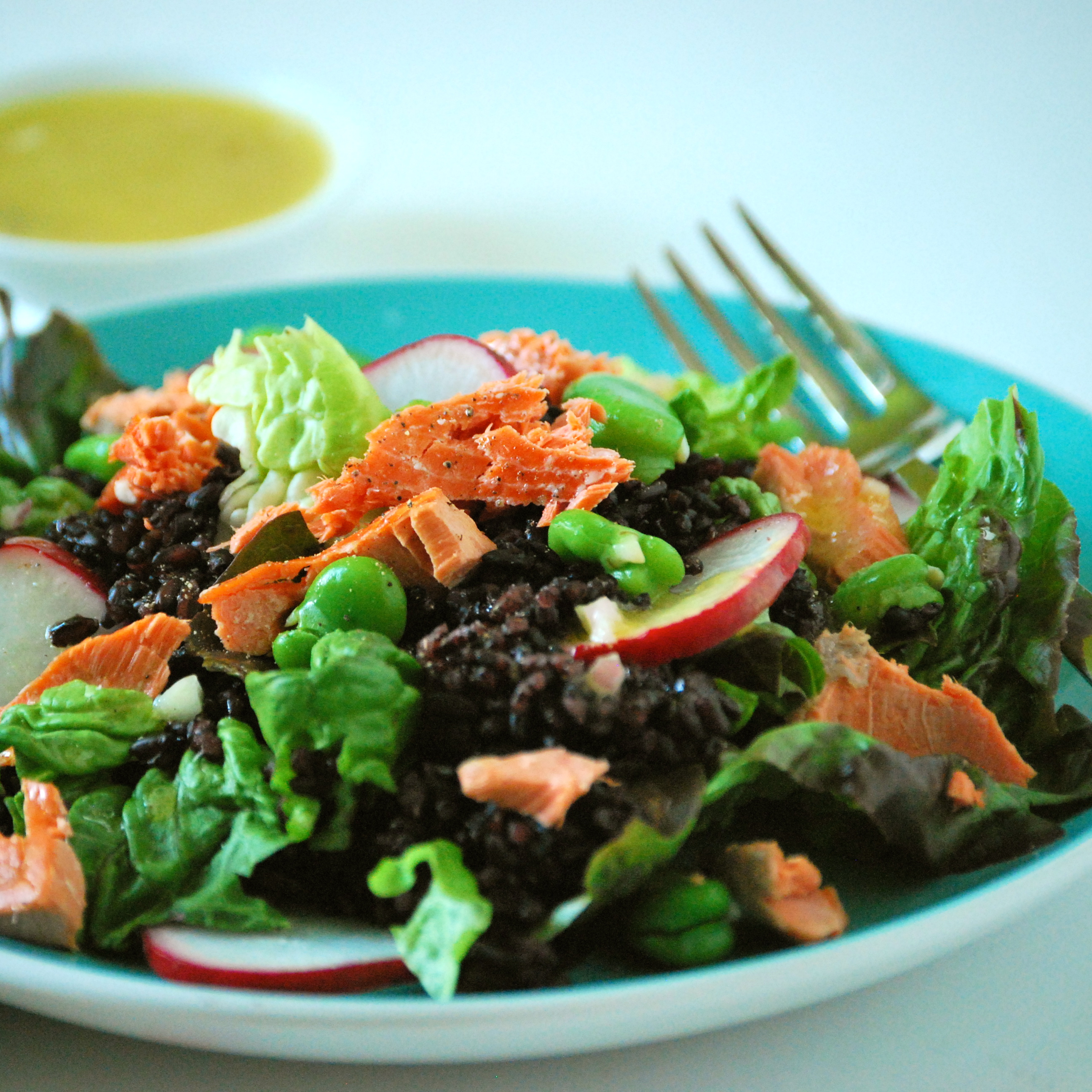
The Recipe:  Wild Salmon with Black Rice, Fava Beans, and Spring Radishes

(Serves 4)

1 pound wild salmon

1 cup forbidden black rice, rinsed

1 bunch Spring radishes, sliced

1 head boston, bibb, or romaine lettuce, torn

1/2 – 1 cup shelled fava beans

olive oil, for drizzling

Mustard Tarragon Vinaigrette:

1 clove garlic

1 tablespoon shallot, chopped

1/4 cup tarragon vinegar, or white wine vinegar

2 teaspoons Dijon mustard, more if you like it more potent

1/2 cup extra-virgin olive oil

sprinkle of red pepper flakes

kosher salt and cracked pepper, to taste

To begin:  Place the rinsed black rice in a medium sauce pan with a scant 1 3/4 cup of water.  Bring to a boil uncovered.  Then cover and reduce heat to low and cook for about 35 minutes, or until the rice is tender and the water has been absorbed.  If the rice is tender, yet a bit of water remains, just drain it off.  Fluff with a fork and set aside.

Meanwhile, preheat an oven to 375°F.  Line a large baking sheet with aluminum foil.  Place the salmon on it along with a drizzle of olive oil and salt and pepper.  Bake for about 15-20 minutes, or until it just barely flakes when you twist a fork into it.  Keep in mind that it will continue to bake after you remove it from the oven from the residual heat, so be careful not to over-bake.  Remove from oven and break apart into chunks, when cool.

Prepare the fava beans by placing the shelled beans into a small saucepan of boiling water.  Boil for about 2 minutes.  Drain water and place beans in a bowl of ice water.  Remove the light green peel.  Set beans aside.

To make the vinaigrette:  place the garlic, shallot, Dijon, vinegar, salt, pepper, and hot pepper flakes into a bowl.  Slowly whisk in the extra-virgin olive oil.  Taste.  Adjust seasonings, if necessary.

On a large platter, place the torn lettuce, black rice, salmon, radishes, and fava beans.  Pour the mustard tarragon vinaigrette over the salad and gently toss.  Ricotta salata cheese also works very well with this meal.  Enjoy!

I hope you all have a fantastic weekend!  See you next week!

Laurie

A quick stroll through my dessert and cookie sections pretty much confirms that I have an insatiable sweet tooth.  Even so, when we go to our near-by patisserie, I choose a savory bite almost every time.  And if they’ve made a savory tartlet, my decision is easy.  Thankfully, I now have a recipe to make these little beauties at home– and this is one of the best tartlets I’ve ever had.

This wonderful, firm but flakey crust is made from olive oil rather than butter.  It lends a light floral, almost earthy, quality to the dish. Even though it is not par-baked, the crust becomes perfectly crispy on the outside, yet is still substantial enough to hold up to the liquid center.  Even after days in the refrigerator, the crust has an excellent texture.  And you know what that means– this is a great dish to make ahead of time.

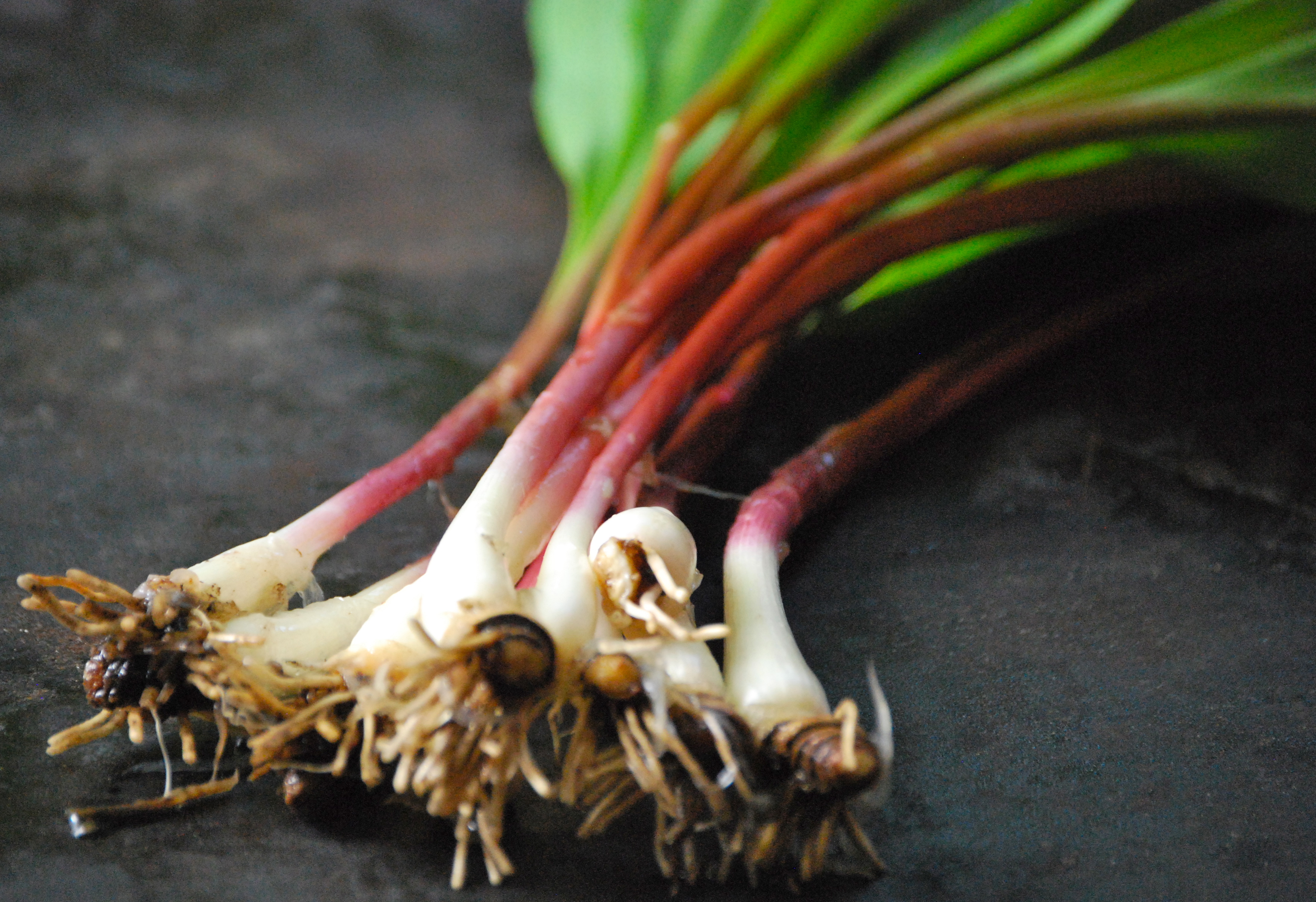
The savory filling contains ramps, gouda, and goat cheese.  That’s right, it’s ramp season.  Remember last year when I was so excited and made this ramp pesto?  Well, I’m just as excited this year– and Radd is again making fun of the fact that I talk about ramps far too much.  If you don’t recall, or are unfamiliar with them, ramps are basically a wild leek.  They taste a bit like green onions combined with garlic.  If you find them, buy and enjoy them right away.  They’re not in season for long.  If you can’t find ramps, substitute green onions or leeks with a couple cloves of garlic.  It will still taste amazing.  I love the combination of ramps and goat cheese, and in this dish it really shines.  The goat cheese is soft and pillowy as you bite into the tartlet, while the gouda melts into the creamy center.  Enjoy!

The Recipe:  Ramp and Goat Cheese Tartlets

(Makes six 4-inch tarts or one 9 – 10-inch tart)

For the Savory Tart Dough:

3/4 cup all-purpose flour

1/2 cup white whole wheat flour

1/2 teaspoon kosher salt

1/2 teaspoon granulated sugar

2 large eggs, lightly beaten

1/4 cup olive oil

For the Tart Filling:

about 1  1/4 ounces goat cheese, crumbled

about 1  1/2 ounces gouda, grated

3 ramps, chopped (about 1/4 cup plus 1 tablespoon)

4 eggs

1/4 cup heavy whipping cream

kosher salt and black pepper, to taste

To make the Savory Tart Dough:  Place both flours, salt, and sugar in a food processor and pulse a few times to combine.  Add the eggs and olive oil and pulse about 10-15 times until the dough forms a ball.  Remove dough and place on a lightly floured work surface.  Knead  3-4 times, careful not to over work the dough.  Wrap in plastic wrap and place in the refrigerator for at least 1 hour.   Can be made ahead and kept in the refrigerator for up to 2 days or frozen.  The dough will defrost quickly at room temperature when you are ready to use it.

Preheat oven to 400°F.  Position rack in the center of the oven.  If making tartlets, measure out the dough into 6 equal portions, about 1  7/8 ounces each.  Roll the dough in a circle 1-inch larger than the tartlet pan or just press the dough evenly into the pans.  Distribute the goat cheese, gouda, and ramps evenly between the 6 pans.  In a small bowl, combine the eggs and cream and pour over each of the tarts, careful not to over fill them.

Place tartlets on a baking sheet and put into the oven.  Bake for about 35 minutes, or until the crust is a deep golden brown and the filling is puffed and becoming golden brown, as well.  Serve the tartlets warm or at room temperature.  They keep well for about 3 days in a covered container in the refrigerator and can be reheated in a 350°F oven.  Serve with a dollop of creme fraiche, if desired. Enjoy!

Source:  Olive Oil Crust adapted from Nick Malgieri’s How to Bake

Thanks for stopping by!

Laurie


I seems like I’ve been preaching the ‘Spring vegetable gospel’ for the last few weeks.  I can’t help it.  That’s how excited I get about them.  For this dish, I decided to incorporate one of those Spring gems– fava beans.  They aren’t available for very long, so I grab them when I can.  Preparing fava beans is a little out-of-the-ordinary.  They need to first be shelled, then peeled.  Once you’ve removed the shells, boil for a few minutes and place them in an ice bath.  The light green peel then comes off easily.  It’s a bit of a process, but it’s worth it.  Fava beans are soft and delicious, and again, they’re versatile.  They’re perfect mixed into sauces, tossed into salads, or mashed into a fantastic bruschetta topping.

Fava beans are a great addition to the typical meat sauce like this one.  Here, they add an interesting texture, and pair wonderfully with the sweet Italian sausage and tomatoes.  I buy a local sausage that has plenty of seasoning, so I didn’t add much.  In fact, I didn’t use one grain of salt– the sausage and grana padano cheese added enough.  Test your sauce as you go, add seasonings and salt as you see fit.  I also didn’t have white wine on hand, but would have added a glug or two if I did.  Even my freezer wine stock was empty.  As an aside, you can freeze leftover wine in ice cube trays and add them to sauces as you need them.  Slick, huh?  For the pasta, you can use dry pappardelle, or if you want that silkiness of fresh pasta, use this recipe.  It’ll be more time-consuming, but the texture is amazing.  If you make it fresh, note that you’ll need to cut the pasta a bit wider than shown in the recipe.  Hope you give this pasta with fava beans a whirl.

The Recipe:  Pappardelle with Italian Sausage and Fava Beans

(serves 4)

1 pound fresh or dried pappardelle pasta (you can use this recipe for fresh pasta)

1 pound sweet Italian sausage

1 1/2 cups shelled fava beans

1/2 medium white onion, chopped (about 3/4 scant cup)

3 garlic cloves, finely chopped

1 teaspoon dried oregano

1 1/2 cups crushed canned tomatoes

2 tablespoons tomato paste

cracked black pepper

grated grana padano or parmesean-reggiano, for garnish

To begin, bring a small saucepan of water to a boil.  Once it is boiling, add the fava beans that have been shelled.  Boil for 1 1/2  to  2 minutes.  Remove from heat, drain, and immerse the beans into an ice bath (a bowl of cold water with ice in it).  Let cool in the water for a couple of minutes.  Next, remove the light green “peel” from the beans using your hands.  The fava beans will be dark green in color.  Set aside.

Bring a large pot of water to a boil for the pasta.  Meanwhile, begin making the sauce.  Heat a large skillet and add the Italian sausage to it.  When it is cooked, drain and discard any grease.  Add the onion and garlic to the pan of Italian sausage and continue to cook for a few minutes over medium-high heat until the onions start to become somewhat tender.  Add the tomatoes, tomato paste, oregano, and cracked black pepper.  Cook for a few minutes until the flavors have combined a bit and the sauce has thickened.  Add the fava beans and cook a few more minutes.  Taste the sauce and adjust the seasonings.

Add the pasta to the pot of boiling water when the sauce is nearly done.  Cook pasta until al dente.  Reserve a bit of the pasta water, in case you need to loosen your sauce with it.  Drain pasta and combine with the sauce.  Serve sprinkled with generous amounts of grana padano cheese!  Enjoy!

I hope you all have a wonderful weekend — do you have any big plans?  I’m looking forward to having some fun with my family and hopefully getting a chance to do some relaxing and a little cooking/baking.  See you next week!

Laurie

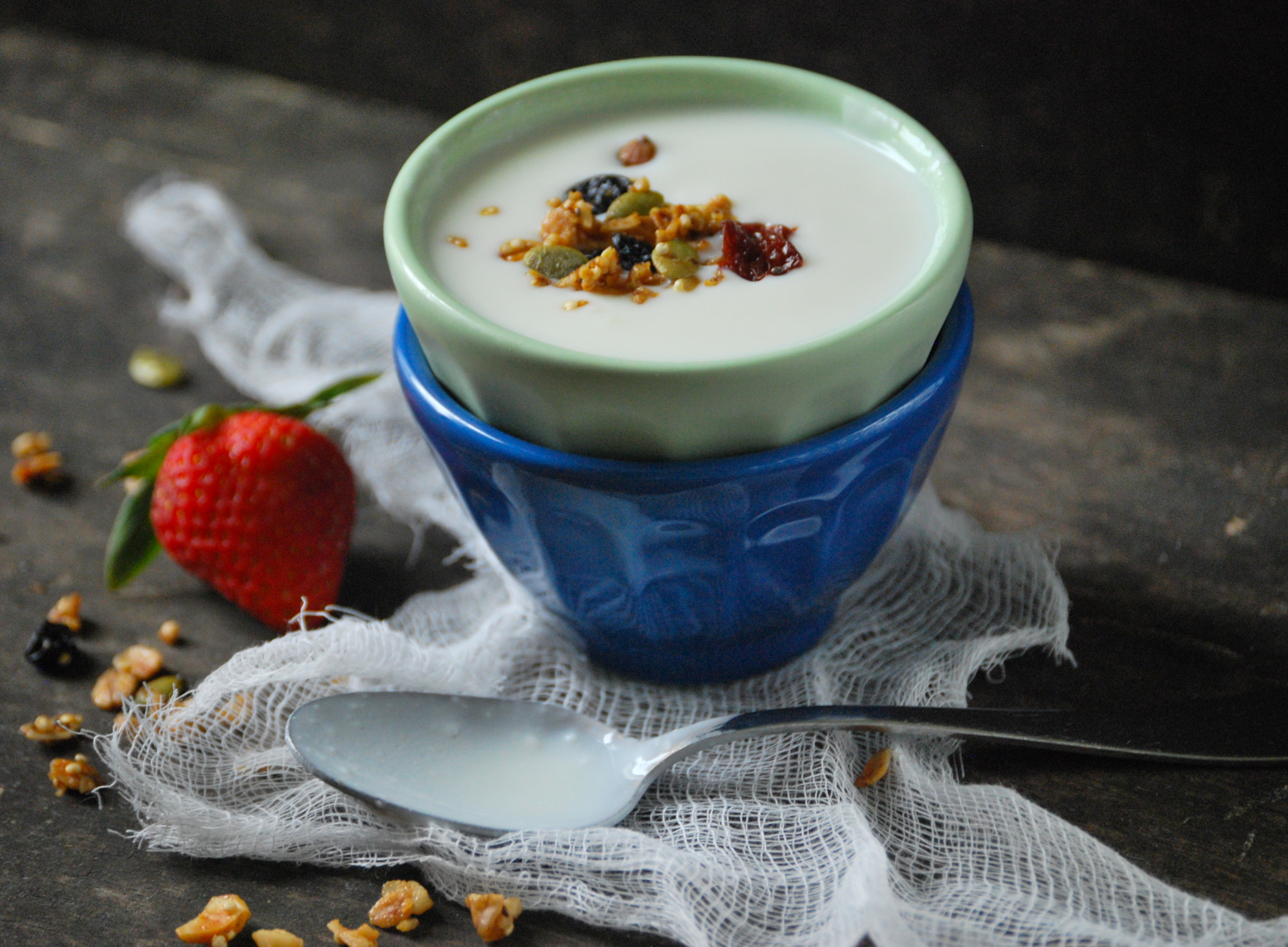
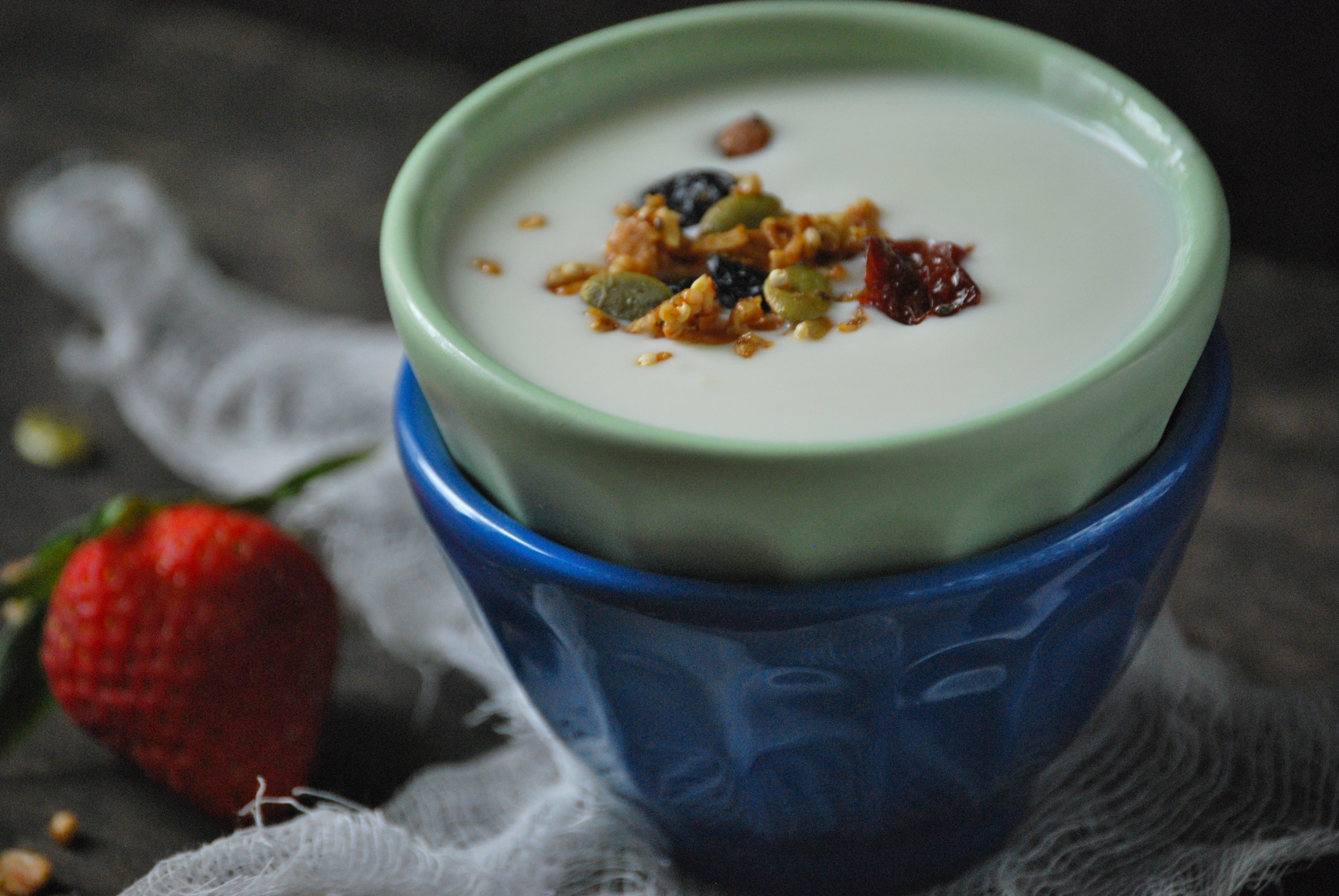
As promised, here is the granola recipe I mentioned when we chatted about homemade yogurt earlier this week.  It’s the perfect crunch to top that tart yogurt.  And it’s just sweet enough that you won’t need to add anything else.  And even if you don’t make it as a yogurt topper, it’s a perfect stand-alone snack.

Again, the advantage of making your own granola is that you have control over what goes into it.  I use not only organic ingredients, but more interesting, healthy additions that you won’t find in a typical store-bought granola blend.  Quinoa, chia seeds, flaxseed meal– all of these are phenomenal, nutritious foods.  Uncooked steel-cut oats in granola?  You bet!  They add such a nice texture.  It’s also nice to be able to choose the type of fat to use.  Olive oil works perfectly here, and is so good for you.  I also love using coconut oil (you remember my coconut oil obsession, right?), it imparts such a lovely flavor.

If you don’t have all of these ingredients, or you want to try something else, by all means, do so.  Maple syrup comes to mind.  Or if you want a chunkier granola, increase the rolled oats and add less steel cut oats or quinoa.  Dark chocolate, cinnamon, or unsweetened coconut flakes, anyone?  See what I mean?  Have fun with this. Just remember to try to keep the ratio of dry/wet ingredients the same when substituting.  Pack it for a snack at work, or take it for your kids’ events.  If you make it– they will eat it.

The Recipes:  Homemade Granola Two Ways

Homemade Granola with Coconut Oil, Vanilla, Dried Blueberries and Cherries:

1 cup rolled oats, dry

1/2 cup chopped walnuts

1/2 cup chopped almonds

1/3 cup pepitas

1/2 cup steel cut oats, dry

1/2 cup quinoa, dry

1 tablespoon flaxseed meal

2 tablespoons chia seeds

1/2 cup dried cherries

1/2 cup dried blueberries

3 tablespoons virgin coconut oil

1/3 cup honey

1 teaspoon vanilla extract

pinch of kosher salt

Homemade Granola with Olive Oil, Ginger, Almond, and Dried Cherries:

(As shown in the photographs)

1 cup rolled oats, dry

1/2 cup coarsely chopped walnuts

1/2 cup coarsely chopped almonds

1/3 cup pepitas

1/2 cup steel cut oats, dry

1/2 cup quinoa, dry

1 tablespoon crystallized ginger, finely chopped

1/2 cup dried cherries

1/2 cup dried currants

1 tablespoon flaxseed meal

2 tablespoons chia seeds

3 tablespoons olive oil

1/3 cup honey

1 teaspoon almond extract

pinch of kosher salt

Preheat an oven to 250°F.  Line a large baking sheet with parchment paper, set aside.  In a large bowl mix all of the dry ingredients together, with the exception of the salt and dried fruit.  In a small bowl, mix together the oil (if using coconut oil, be sure to melt it in a small saucepan first, so it can liquify) honey, and extract.  Mix the wet ingredients and the dry ingredients together.  Here is where you need to make a decision — you can either mix the dried fruit into this mixture and bake it for two hours or you can mix it in during the last 10 minutes of baking.  Doing so right away will yield a very chewy fruit, which some people tend to enjoy.  Doing so later, will keep the fruit more soft and tender.  The choice is yours.  I enjoy both ways.

Spread the mixture onto the lined pan and sprinkle with kosher salt.  Bake in the oven for two hours, stirring every 15-20 minutes, or so.  The grains will get evenly toasted this way.  After 2 hours, remove from the oven and let the granola sit, untouched, for a bit to cool and firm up.  When it’s cool, you can break it into chunks.  Keeps well for days in a sealed container with a lid.  Enjoy!

Thanks for stopping by Relishing It — hope you enjoy the granola!

Laurie
Today’s post is kind of like a public service announcement: Make your own yogurt!  It’s so easy, you’ll be amazed!  Honestly, I can’t believe it took me this long to start making yogurt at home.  For some reason I was under the impression that it was more complicated.  I don’t know if I thought it required fancy equipment, took up too much refrigerator space, or what.  Turns out it’s only two little ingredients and a very simple process.  And given the amount of yogurt we eat, this discovery ended up being a game changer.

Here’s a little insight into our yogurt-centric family.  My kids and husband eat yogurt every single day.  I certainly like it, but the other three are nuts.  So until this homemade-yogurt discovery, week after week I ended up buying loads of the stuff.  I always sought out the organic versions, but even they were often packed with unnecessary, processed sugar.  That always troubled me a bit.  And the cost of keeping Radd, Aanen, and Aria’s yogurt supply stocked was embarrassing.  The good stuff is not cheap.

So far, I’ve been making plain yogurt.  It’s more versatile, and I like to use it in preparing other meals, too.  We make Indian food frequently, so it works perfectly swirled into various dishes.  I’ve also been putting it into different egg-salad recipes, making salad dressings from it, baking with it, and once summer hits I can’t wait to make frozen yogurt-pops for the kids.  It’s been so convenient to have such a large supply on hand every week.

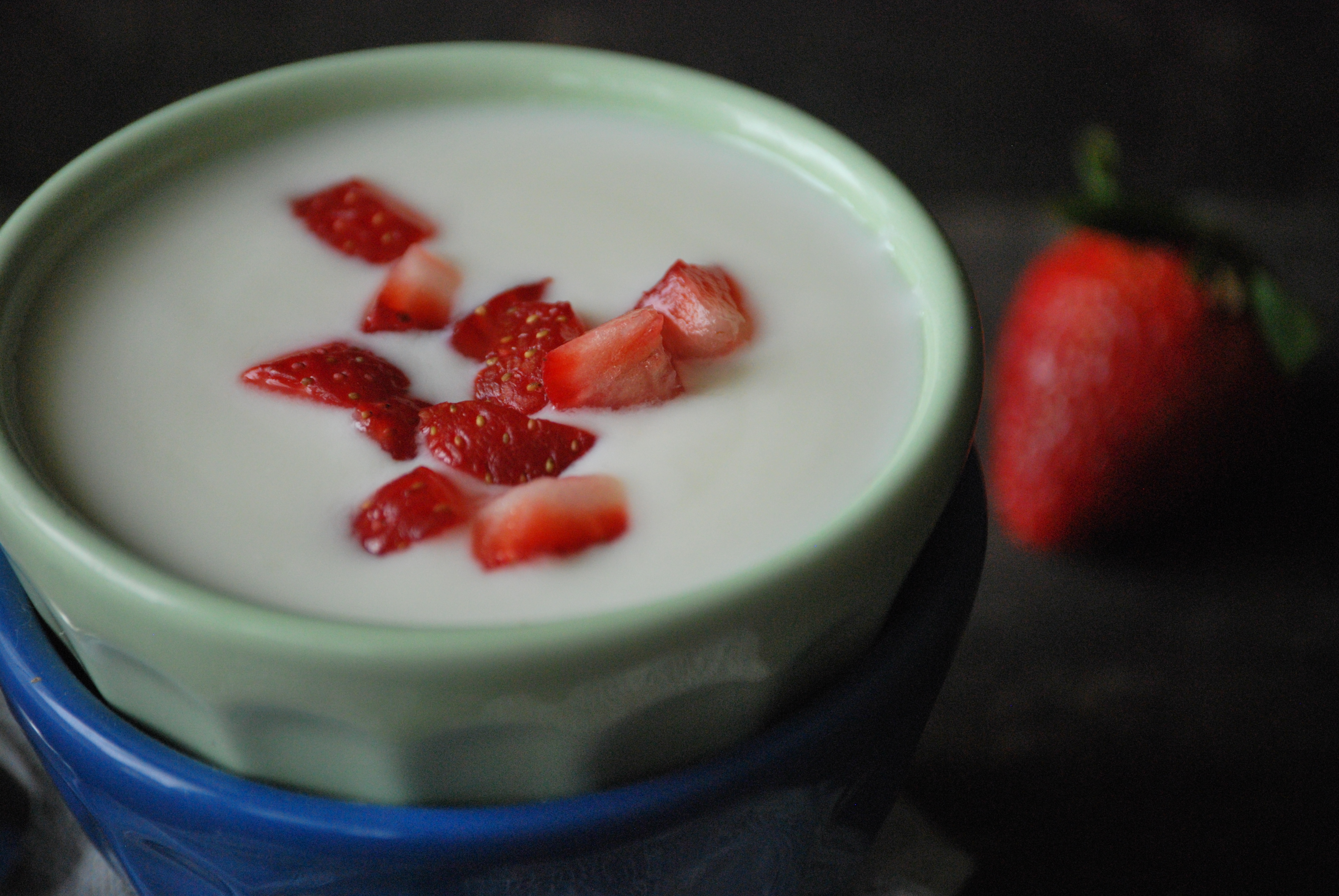
This homemade yogurt is creamy and not overly tart.  I imagine that part of the flavor will depend upon the milk that you use.  I’ve made several batches using milk with different fat contents, and I’ve mixed both regular and Greek yogurt into the heated milk.  They’ve all worked well.  If you prefer a thicker yogurt, you’ll want to strain it in a few layers of cheesecloth when it’s finished.  I might do that in the future, but right now I want to enjoy every last spoonful.  Radd and I have been enjoying it plain with homemade granola (recipe to come later this week).  The kids like it sweetened with a touch of honey.  I’ve also pureed fruit and stirred it in, and can’t wait until berry season arrives.   The process could not be simpler.  Once I put the yogurt in the oven, I don’t give it another thought until the morning.  Look here if you’d like to experiment with other methods.

A few other things to consider:  When you make your own yogurt, you know exactly what’s going into it.  We buy milk from grass-fed cows from a local dairy.  Aside from having more control over our food supply chain by buying local, the grass-fed milk contains more omega 3’s (among other health benefits).  I also love that I can keep my family’s yogurt habit satisfied at a fraction of the cost of buying those individual packages.  And without those individual plastic packages, there’s less waste.  Alright, enough preaching for now.  Go make a batch!

The Recipe:  Homemade Yogurt

1/2 gallon milk, preferably organic (you choose the fat content)

1/2 cup plain yogurt with active live cultures, preferably organic

To make the yogurt:  In a large saucepan heat the milk to 170°F, stirring every so often.  This will kill anything that isn’t supposed to be there.  Let the milk cool to 110°F.  This process will take about an hour, stir occasionally to release steam.  In the meantime, heat your oven to the lowest setting.  Once the milk reaches 110°F, stir a bit of the warm milk into the 1/2 cup of plain yogurt to temper it, then add the entire yogurt mixture to the saucepan and mix everything together.

Pour the mixture into a large glass bowl and lightly press cheesecloth onto the liquid.  This will prevent a “skin” from forming on the yogurt.  Put the bowl on a baking sheet and place in the oven.  Turn the oven off and turn on the oven light.  This will generate enough heat in the oven for the yogurt to stay active.  You want to try to maintain an oven temperature of about 110°F.  After about 12 hours in the oven, the yogurt is done. Experiment with the duration of time — you may prefer it with a shorter time in the oven.  Remove the cheesecloth and give it a stir.  Pour it into individual glass bowls or just leave it in the bowl, cover it, and refrigerate.  The yogurt will keep well for about 10 days, but it will more than likely be gone before then!

Source:  Adapted from Zoe Bakes

Thanks for stopping by today!

Laurie

Before Radd and I had kids, there would be nights that we weren’t able to have dinner together.  School, work, and friends sometimes just got in the way of sitting down for a full meal with each other.  Now if I happened to be home on one of those nights, there was absolutely no doubt about what my dinner plan would be– egg salad.  Wild, right?

You see, I was never able to make egg salad for the both of us because– and I still don’t understand this– Radd despises hard-boiled eggs. To this day, I’m quite certain he would gag if he had to swallow a bite of egg salad.  Even more incomprehensible is the fact that he’ll eat eggs any other way.  He loves these pickled versions, and can even do this mollet version.  Why not regular?  Weirdo.  At any rate, I’ve always loved egg salad.  It’s creamy and so versatile.  I make it a different way almost every time.

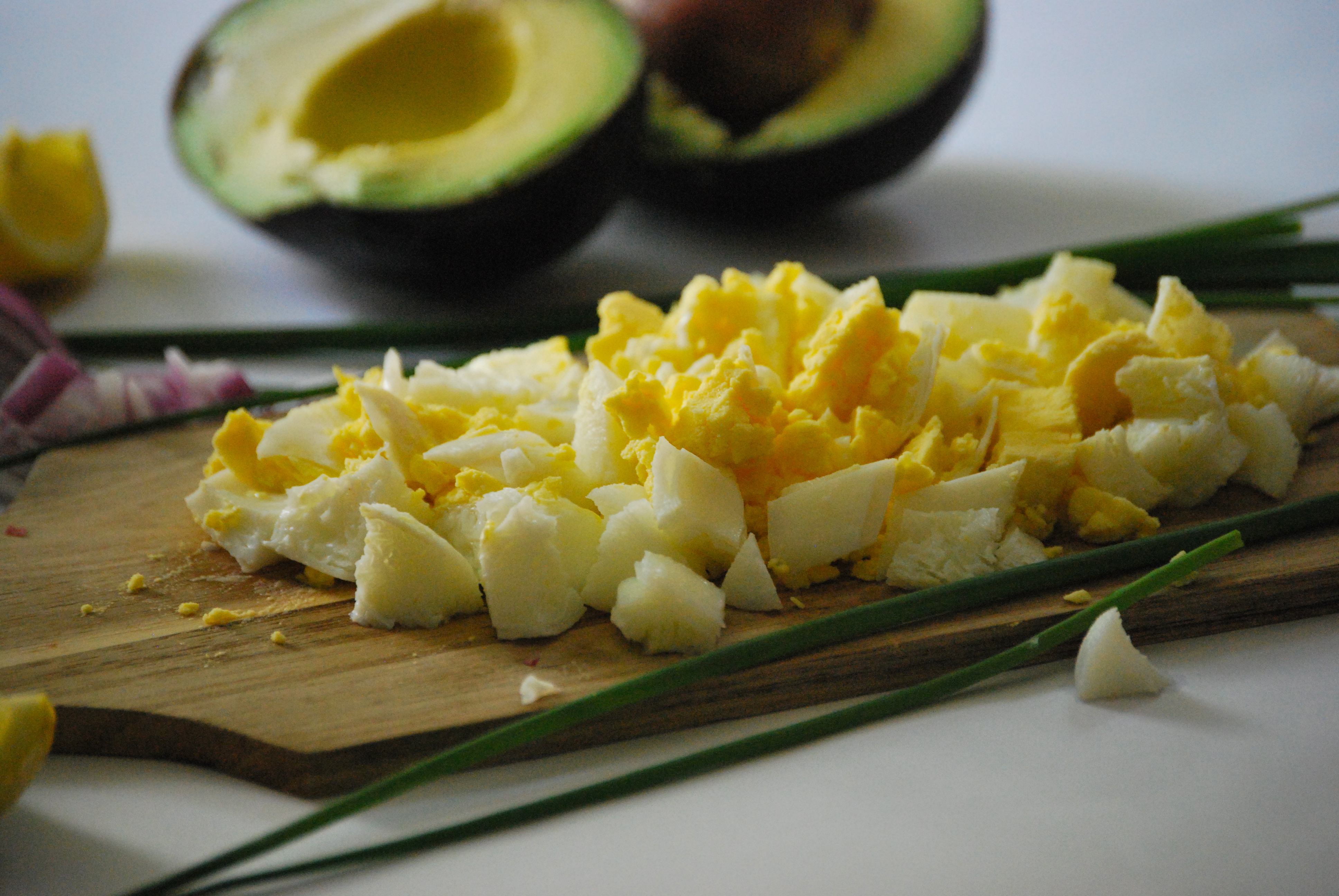
Here, I’ve swapped out mayonnaise for a mashed avocado.  Let’s be clear, I have no problem with a little bit of mayonnaise.  Especially the really good homemade stuff.  But, I love avocados so much, that I figured I’d incorporate them into a spread.  Plus, they are loaded with good fat that your body needs.  I like to keep the eggs diced and gently fold them in– nice for a bit of texture.  The avocado binds everything together wonderfully and adds such beautiful color.  This is comfort food– delicious, quick to prepare, and healthy.  And in case my constant urging for you to buy organic/local eggs hasn’t convinced you to do so quite yet — read this article.  Want another option?  Check out this fantastic recipe for Curried Egg Salad.

The Recipe:  Avocado Egg Salad

(Serves 1)

2 hard-boiled eggs, diced, preferably organic/local

1/2 ripe avocado, mashed

1 1/2 tablespoons red onion, diced

1 1/2 tablespoons fresh chives, finely chopped

juice of 1/4 of a small lemon

kosher salt and freshly cracked pepper

How to make perfect hard-boiled eggs:  In a sauce pan, place the eggs in a single layer.  Fill pan with cold water and make sure it covers the eggs by an inch.  Place pan on the stove and bring to a boil.  Boil for 1 minute.  Cover and remove from heat.  Set a timer for 10 minutes.  After 10 minutes, place eggs into an ice bath to stop the cooking process.

To make the egg salad:  In a medium-sized bowl, mash the avocado and some of the lemon juice together until creamy, add salt and pepper.  Remember you can always add more lemon juice at the end to get it to your desired consistency, but you can never take it out.  Gently fold in the egg, red onion, and chives.  Re-season with lemon juice, salt, or pepper, if necessary.  Feel free to add a jalapeño or sriracha sauce for a bit of heat.  Enjoy with arugula and whole wheat bread or by the spoonful!

Have a wonderful weekend, friends!

Laurie

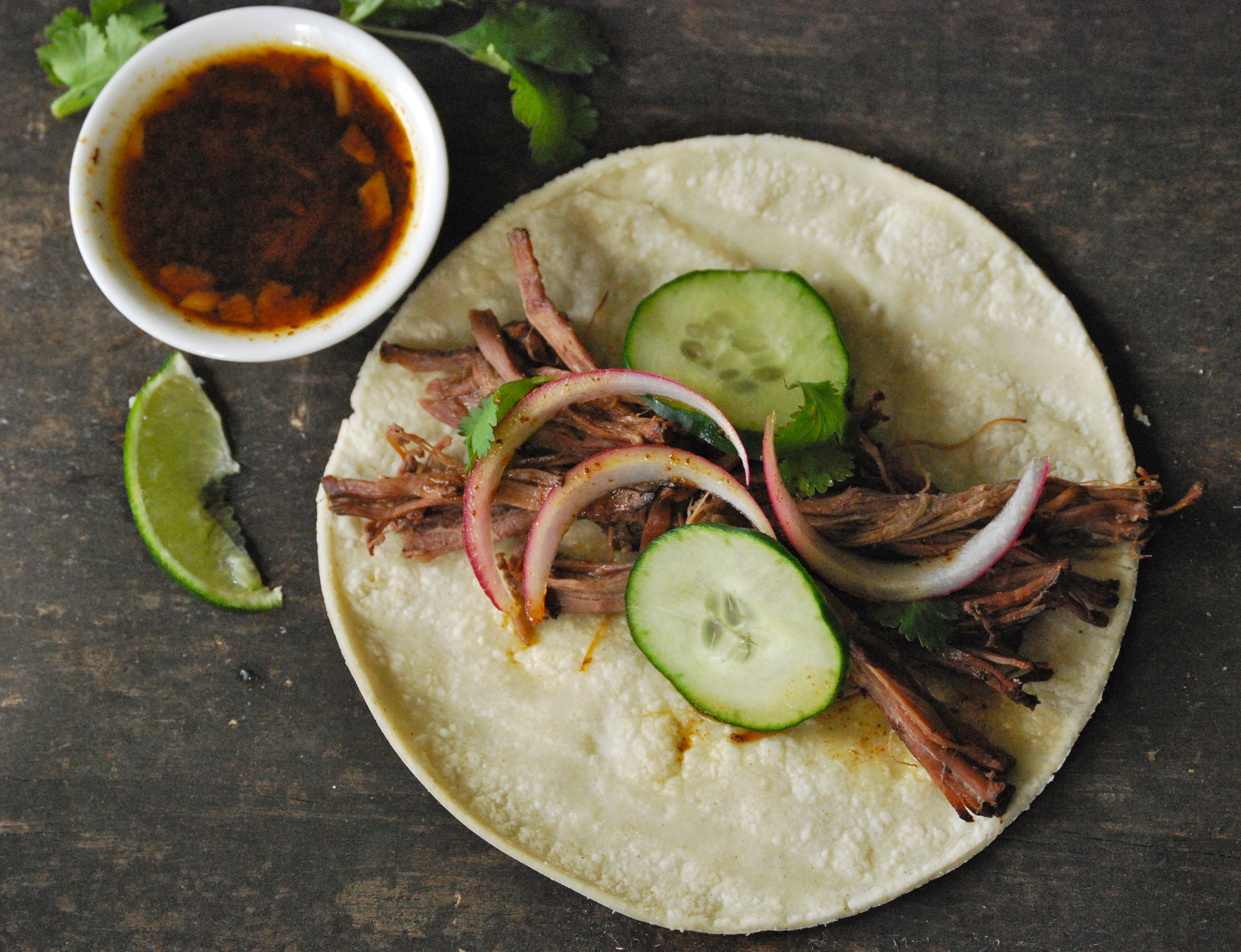
As a blogger, I try not to write about dishes that other bloggers have recently covered.  Obviously, many of us are cooking with seasonal produce, so there’s going to be some ingredient overlap.  For other, more random foods that can be made everyday, I try to avoid imitation.  But every once in awhile, I come across something like these amazing tacos.  I first encountered these beauties on Pinterest, and knew I had to make them right away.  Aaand…they were incredible.  Really, really incredible.  So good that I figured I had to share them with you.

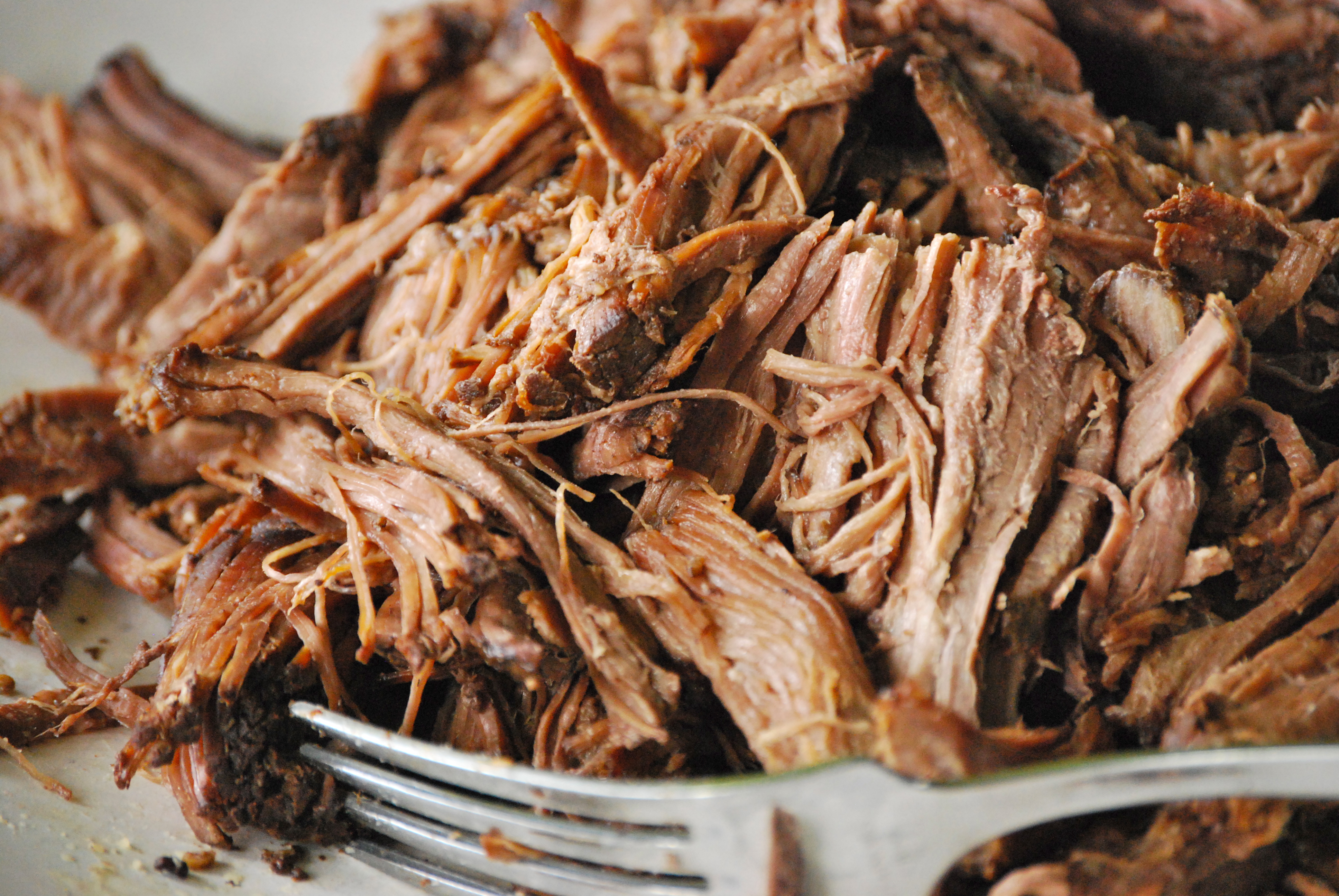
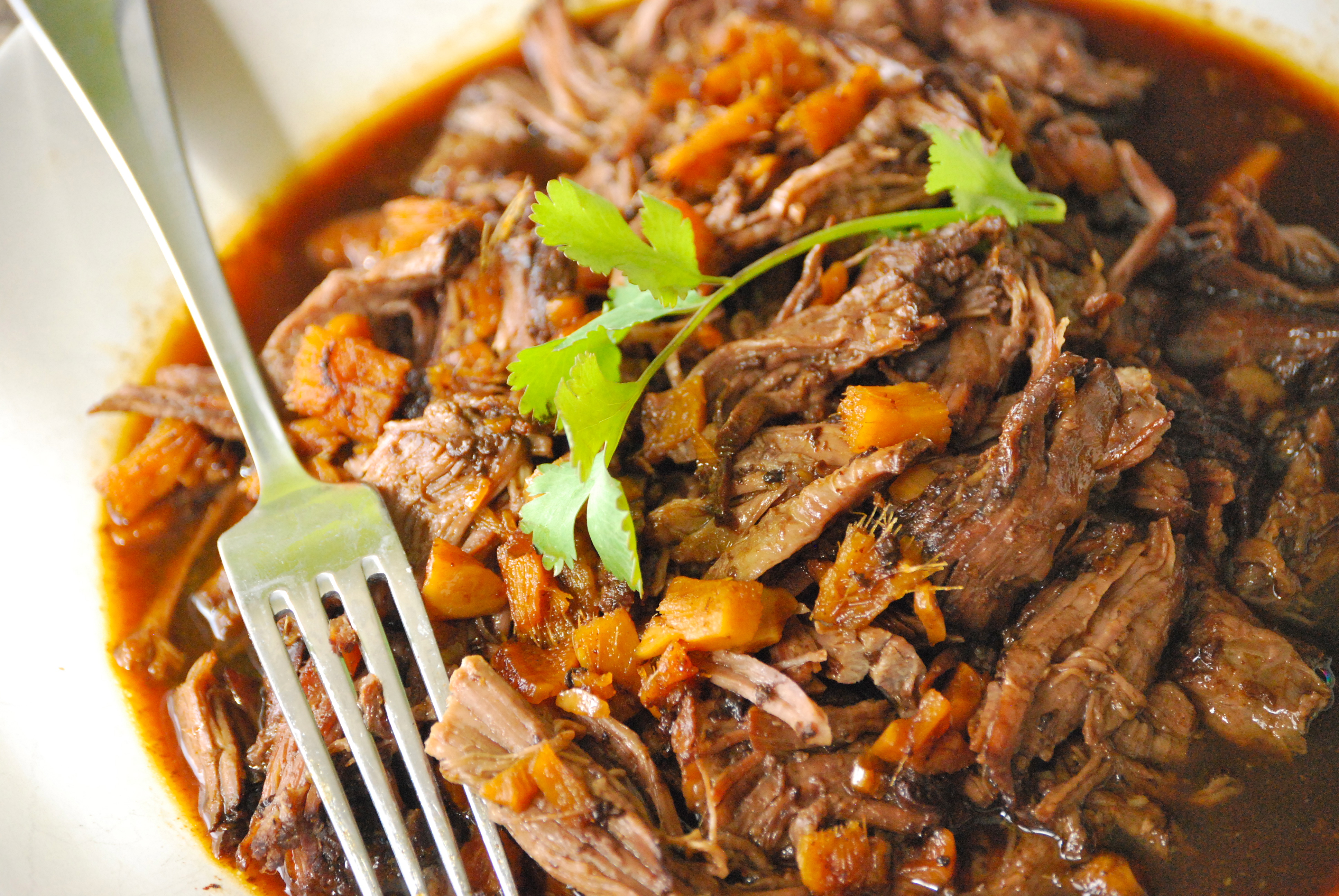
One of the strange paradoxes of Spring and Summer is that as the days get longer, our amount of free time for preparing meals gets shorter.  More time spent driving kids from one practice to the other.  More time trying to squeeze every last minute of fun out of warmer days.  These tacos are a nice solution to that time crunch.  You can put the meat in the crockpot in the morning or the night before.  As an aside, I find it odd that so many people think the crockpot is for winter cooking.  Who wants to turn on the oven in the middle of the summer heat?  I use mine as much, if not more, during the warm months.  And again, if you don’t own a crockpot, throw all the ingredients into a Dutch oven and braise.

These Asian-inspired tacos taste amazing. The ginger and garlic mixed in with the subtle, sweet flavors pair perfectly with the beef.  I made these mildly spicy  for my kids, but feel free to add extra sriracha sauce for more of a punch.  I love the pickled cucumbers and red onions.  It’s a quick extra step that shouldn’t be avoided.  The pickled flavors are the final perfect touch to this  meal.  Hope you enjoy!

The Recipe: Asian-Inspired Beef Tacos with Pickled Vegetables

2 – 2  1/2 pounds of grass-fed beef chuck roast

1/2 cup water

3  1-inch knobs of ginger, finely chopped

4 – 6 cloves of garlic, rough chopped

3 tablespoons soy sauce

3 tablespoons rice vinegar

1 tablespoon sesame oil

1 tablespoon sriracha sauce

1/4 cup dark brown sugar

2 tablespoons fresh orange juice

For the Garnishes:

1 English cucumber, thinly sliced

1/2 red onion, thinly sliced

cilantro or green onions

lime wedges

about 1/2 cup white vinegar

To make the tacos:  In a small bowl, combine the water, ginger, garlic, soy sauce, rice vinegar, sesame oil, sriracha sauce, brown sugar, and orange juice.  Place the chuck roast in a crock pot and pour the mixture over it.  Set the crockpot to low and leave on overnight.

In the morning, remove the chuck roast,  place on a plate, and wrap in aluminum foil.  If time allows,  place the liquid from the crockpot into the refrigerator or freezer for about a half hour.   The fat will harden and be easy to remove.  Otherwise, spoon out as much fat as you can.  Place liquid (don’t strain) into a small sauce pan and simmer until it has reduced a bit.  Re-season, if necessary.

Meanwhile,  place the sliced cucumbers and red onion into a small bowl.  Pour enough white vinegar over them so they are covered and let them sit for a bit to “pickle”.  After a while,  use two forks and shred the chuck roast.  Pour the reduced sauce over the meat.  Serve with tacos shells,  pickled cucumbers and red onions, cilantro, and limes.  Enjoy!

Source:  Adapted from Confections of a Foodie Bride

Thanks for stopping by Relishing It today!  See you soon.

Laurie

Ahhh…citrus in Spring.  Fresh, vibrant, and beautiful.  You already know that I’m a sucker for pretty much anything citrus-related– just take a look at these and this… and these… and this…and this..and these…and these…and this…  Wow!  I didn’t realize I was that big of a sucker for citrus!  Well, you get the point.  Another great way to indulge in these brilliant fruits is by making curd.  I know, the name doesn’t sound very appealing, but think of it more as a silky, citrus pudding.  Much better.

Today’s dish relies on my favorite citrus curd recipe.  It’s foolproof.  You can use any type of citrus (lemon, grapefruit, and lime work too!), and it’ll turn out perfect every time.  Personally, I love lemon curd the best, but Radd is a big fan of orange, so this batch was for him.

One of the best things about curd is that it’s so versatile.  It’s a great topping for shortbread or toast.  I often fill white cupcakes with it and top them with a beautiful meringue frosting.  And of course, it is perfect paired with classic scones, the second recipe for today’s dish.  You know the kind I’m referring to– the one’s that aren’t fussy or fancy.  The ones that go with anything.  Jam and clotted cream, anyone?  Spread a little fresh citrus curd on a scone, pour a cup of coffee, and take in the Spring morning.  Perfect.

The Recipe: Orange Curd with Classic Scones

Orange Curd

6 tablespoons (3 ounces) unsalted butter, at room temperature

1 cup granulated sugar

2 large eggs

2 large egg yolks

2/3 cup fresh orange juice

2 teaspoons grated orange zest

In a small bowl, combine the eggs and egg yolks and lightly beat, set aside.  In the bowl of a stand mixer fitted with the whisk attachment, add the butter and sugar.  Beat for about 2 minutes.  Slowly add the eggs.  Beat for 1 minute.  Pour in the orange juice and continue to mix.  The mixture will look curdled — this is fine, it will smooth out as it cooks.

In a medium heavy-bottomed saucepan, cook the mixture over low heat until it begins to look smooth.  The curdled appearance will disappear as the butter melts.  Increase the heat to medium and cook, stirring constantly, until the mixture thickens, between 10-15 minutes.  It should leave a path on the back of a spoon and a thermometer should read 170°F.  Do not let the mixture boil.

Remove from heat.  Stir in the orange zest.  Transfer to a bowl and place plastic wrap against the curd to keep a skin from forming.  Place in the refrigerator.  The curd will thicken as it chills.  It will last in the refrigerator covered for 1 week or frozen for up to 2 months.


Classic Scones

(Makes 8-10 scones)

2 cups unbleached cake flour (11 ounces), plus more as needed

1/2 teaspoon kosher salt

2 teaspoons baking powder

3 tablespoons turbinado sugar (or anything coarse), divided

5 tablespoons cold butter, cut into pieces

1 egg, lightly beaten

1/2 – 3/4- cup heavy cream, plus more for brushing

Preheat oven to 450°F.  Line a baking sheet with parchment paper.  Add the flour, salt, baking powder, and 2 tablespoons of the sugar into a food processor.  Pulse a few times to combine.  Add the butter, and pulse a few more times until the mixture resembles cornmeal.  Medium chunks of butter are just fine.

Add the egg and enough of the cream to form a slightly sticky dough.  It should stick to your hands a bit, but shouldn’t be overly wet.  Adjust cream/ flour as necessary.

Remove dough from food processor and place on a lightly floured surface.  With flour on your hands, pat dough into a flat 3/4-inch thick circle.  Use a round 2-inch biscuit cutter to cut out scones.  Place them on the baking sheet.  Brush with cream and sprinkle with remaining sugar.  Bake for 9-11 minutes, or until they are golden brown.

Source: Scones adapted from the New York Times.  Orange curd adapted from Fine Cooking

Thanks for stopping by Relishing It!  Hope you all have a wonderful weekend.

Laurie

I know, I’ve made another dish with a fancy French word.  Well, I’ve found that a good rule is,  if it comes from French food culture it’s going to be good.  Mollet eggs (rhymes with Olé) are wonderfully soft eggs with a firm egg-white, and a beautiful oozy center.  They’re not what we would generally call a soft egg, with it’s more liquid albumin.  I’ve been obsessed with these eggs for the last two months.  By obsessed, I mean I’ve eaten at least one for breakfast or lunch almost every day.  And can I just mention how brilliant they are this time of year!  If you’re using organic, free-range chicken eggs, you’ll see the yolks are almost orange right now, as the birds get out and take in those nutritients.  Happy chickens means a happy me.  I’ll put an egg on most anything.  “Put an egg on it!” is my “Put a bird on it!”.  (Portlandia anyone?)

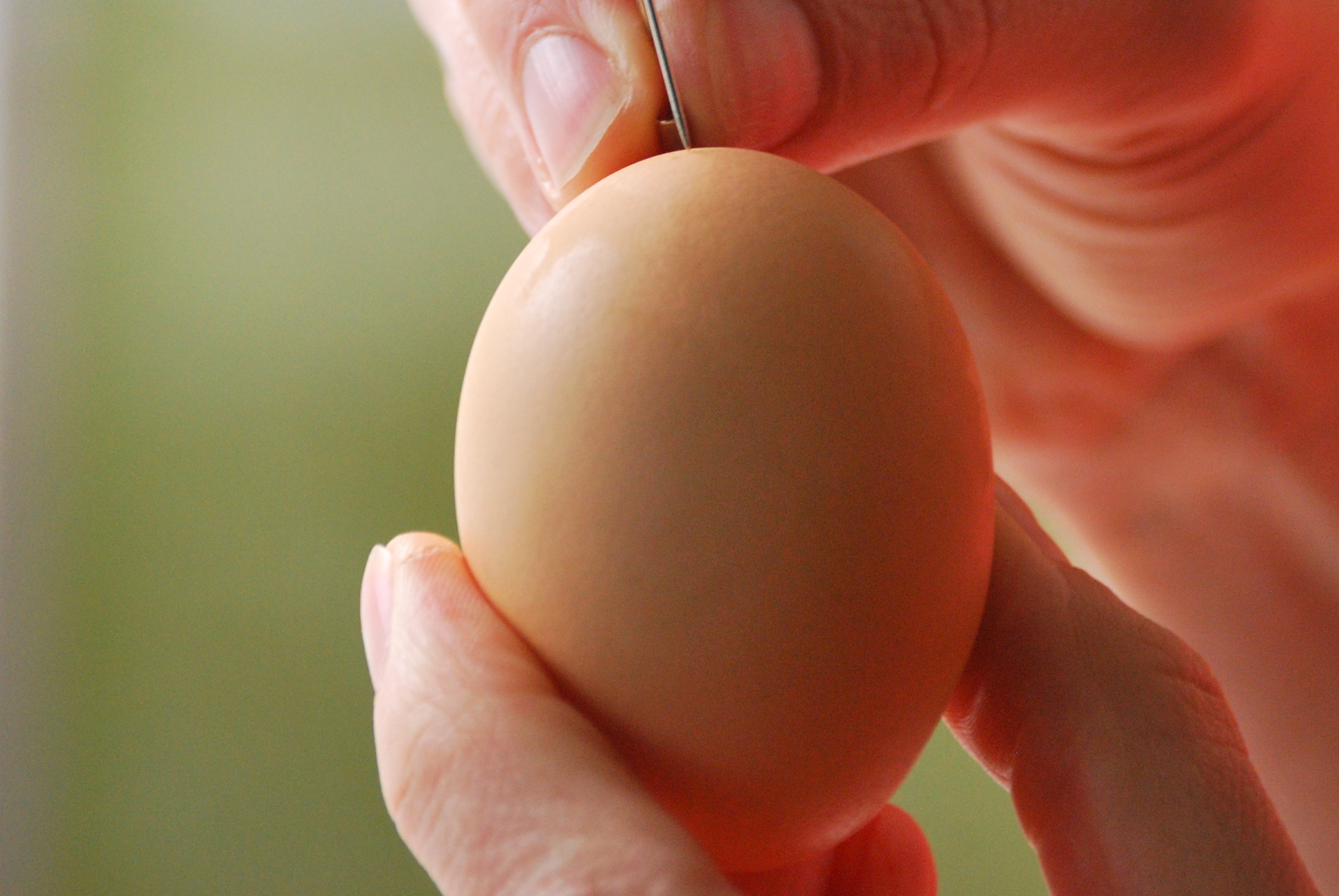
I don’t always like to use oil when I prepare eggs, so that leaves me with the options of either hard-boiled (which I make often) or poached.  And more often than not, I’m too lazy to poach them.  I’ve found that mollet eggs are the perfect solution.  This technique, which I first saw used by that French culinary sage, Jacques Pepin, is foolproof.  First, bring a saucepan of water to a boil.  Use a pin or thumbtack to poke a hole into the largest end of the egg.  This hole prevents the egg shell from cracking while it’s cooking.  Boil the eggs for six minutes and then pour out the water.  Shake the pan to crack the shells a bit.  Finally, peel the eggs under cold, running water.  The water gets under the shell and membrane, causing it to slough off without taking any of the firm egg-white.  The egg is perfect every time.

Now the egg is only part of this breakfast dish.  We love hash– the perfect big breakfast to start the weekend.  It’s even better when you have friends come over to enjoy it with.  I make the pork shoulder in a crock pot, though of course you can just use your oven and braise the pork shoulder if you like.  One of the things I love about this meal is that most of it can be made in advance.  Much of the morning can be spent visiting and sipping on a cup of French-press coffee.  I love being able to make most of this meal ahead of time,  it makes the morning so much more relaxing.  And even better, the leftovers (if you somehow have any) heat up very well, and make a fine lunch.  Here’s to your next weekend breakfast!

The Recipe: Mollet Eggs with Pork Shoulder Hash

(serves 6 comfortably)

4 tablespoons olive oil

6 cloves garlic

2 sprigs rosemary

1 teaspoon dried thyme

1/2 – 3/4 cup water

1 large white onion, chopped, plus another 1/2 onion

3 pounds organic fingerling potatoes, steamed, then diced

3 celery ribs, chopped

2 pounds pork shoulder

1/4 cup chopped fresh chives

6 organic eggs, or more

kosher salt and fresh black pepper

To make the pork shoulder:  The night before you plan to serve it, place the pork shoulder seasoned with kosher salt and fresh black pepper, 1/2 white onion cut into chunks, garlic cloves, 1 rosemary sprig, thyme, and 1/2 cup of water (or a bit more, if you see fit) into a crock pot set at low.  Leave on overnight.  In the morning, remove the meat and and shred it with two forks, discarding any fat. Add the soft garlic cloves to the meat.  Set aside.

Prepare the potatoes the night before, as well.  Add the potatoes to a large saucepan with a steamer inserted into it.  Set the heat to medium-high and cover with a lid.  If they don’t all fit into your pan, steam them in two batches.  Steam for 10-15 minutes, depending upon the size of your potatoes, or until a knife inserted into them goes in with ease.  Let cool and place them covered in the refrigerator overnight.  Dice them in the morning.

In the morning,  heat a large skillet (mine is 14-inches) to medium-high heat.  Add the olive oil and then sauté the onion until it develops a nice golden color, about 5-7 minutes.  Add the celery and sauté until it softens a bit.  Sprinkle kosher salt and fresh black pepper into the pan.  Add the diced potatoes and cook until they are heated through and have developed a bit of a golden color to them.  Add the shredded pork shoulder to the pan and continue to sauté until everything is hot.  Re-season, if necessary.  Sprinkle with chives and chop up the remaining rosemary sprig and add that, as well.

 Meanwhile, while the potatoes are cooking, bring a medium saucepan filled with water to a boil.  When the potatoes are on the verge of being done, gently push a pin or thumbtack  into the large end of each of the eggs.  Gently lower them into the boiling water.  Reduce the heat to a small boil.  Set a timer for six minutes.  When the timer goes off, remove from heat.  Drain the hot water into sink leaving the eggs in the pan.  Gently, but with a bit of force, shake the pan back and forth, so that the eggs crack a bit.  Run some cold water and begin to peel the eggs underneath it.  It is important to get the water under the shell and the membrane.  Once that occurs, peeling the egg will be a cinch.  Dry the eggs on a paper towel.

Have the pork shoulder hash plated and place one egg (or more) on the top.  Cut into the egg and enjoy the golden yolk oozing all over the crisp potatoes and pork shoulder.  Enjoy!

Thanks for stopping by!
Laurie


First, I want to thank all of you who left comments on my One Year Blogiversary post.  I wanted to thank each of you individually, but that would have complicated things for the contest a bit.  I really do appreciate that you take time out of your day to stop by and see what has been happening in my kitchen.  Congratulations to Tammy Kimbler, who won the cookbook!  She chose that fantastic cookbook, Plenty, by Yotam Ottolenghi.

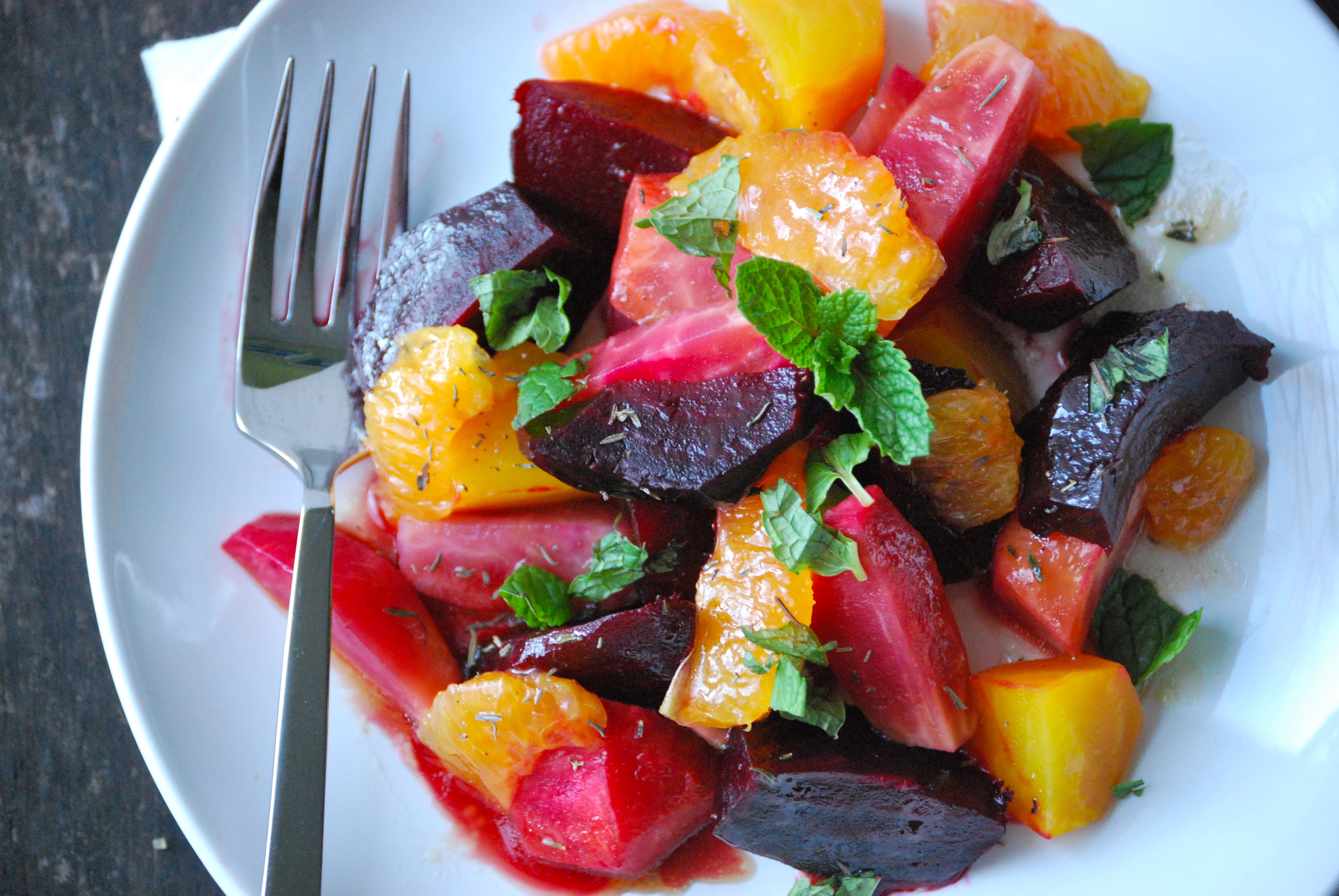
On to today’s recipe.  I know I’ve mentioned a time or two that I love beets.  Again, I’m not talking about the tasteless little purple cubes that come out of a can.  Beautiful, fresh beets can really be amazing.  One of my favorite ways to prepare them is by roasting.  Roasting brings out their natural sweetness, making them a perfect match for the honey and oranges in this salad.  The balsamic vinegar adds a nice tangy dimension, and the mint provides its signature crisp, freshnesh that ties this dish together.  I sometimes make this dish just for myself– no sharing.  True statement.  I hope you enjoy this salad as much as I do– it’s simple, stunning, and so tasty.

The Recipe:  Roasted Beets with Orange and Mint

(Serves about 4)

About 12 assorted small beets (dark reds, chioggia, and golden)

2 medium oranges, supremed

handful of mint leaves, torn

5 tablespoons olive oil

2 tablespoons balsamic vinegar

2 teaspoons honey

1 teaspoon dried thyme

salt and pepper, to taste

Preheat oven to 400°F.  Wash and trim the beets, but leave the skins on.  Place on a aluminum foil lined baking sheet and drizzle about 2 tablespoons olive oil on them. Cover with more foil and roast in the oven until tender and a knife can cut through them with ease, about 25 minutes.  Remove from oven and let cool.  Use a sharp knife to remove the skins and cut the beets into chunks.

Meanwhile, in a small bowl, mix the remaining olive oil, balsamic vinegar, honey and thyme together.  Place  the beets and the oranges that have been supremed into a large bowl and pour the dressing over the top. Gently toss to coat.  Add salt and pepper, if necessary, and sprinkle with the torn mint.  Enjoy!

Source:  Adapted from Harvest to Heat

Thanks for stopping by Relishing It!

Laurie