Feeds:
Posts
Comments

Ah yes, lemon season…  It’s that one bright seasonal food that falls just when I need it the most–right in the middle of Winter.  The lemons are sublime right now.  Obviously I love to bake with these beauties.  This tart  and these bars always make me weak in the knees. And this delicious yogurt cake  is one of the best desserts I’ve ever made.  But don’t stop at baking.  Remember to preserve a batch of lemons to use in savory dishes as well.  With lemons around, the dull gray of late February just seems a little less oppresive.

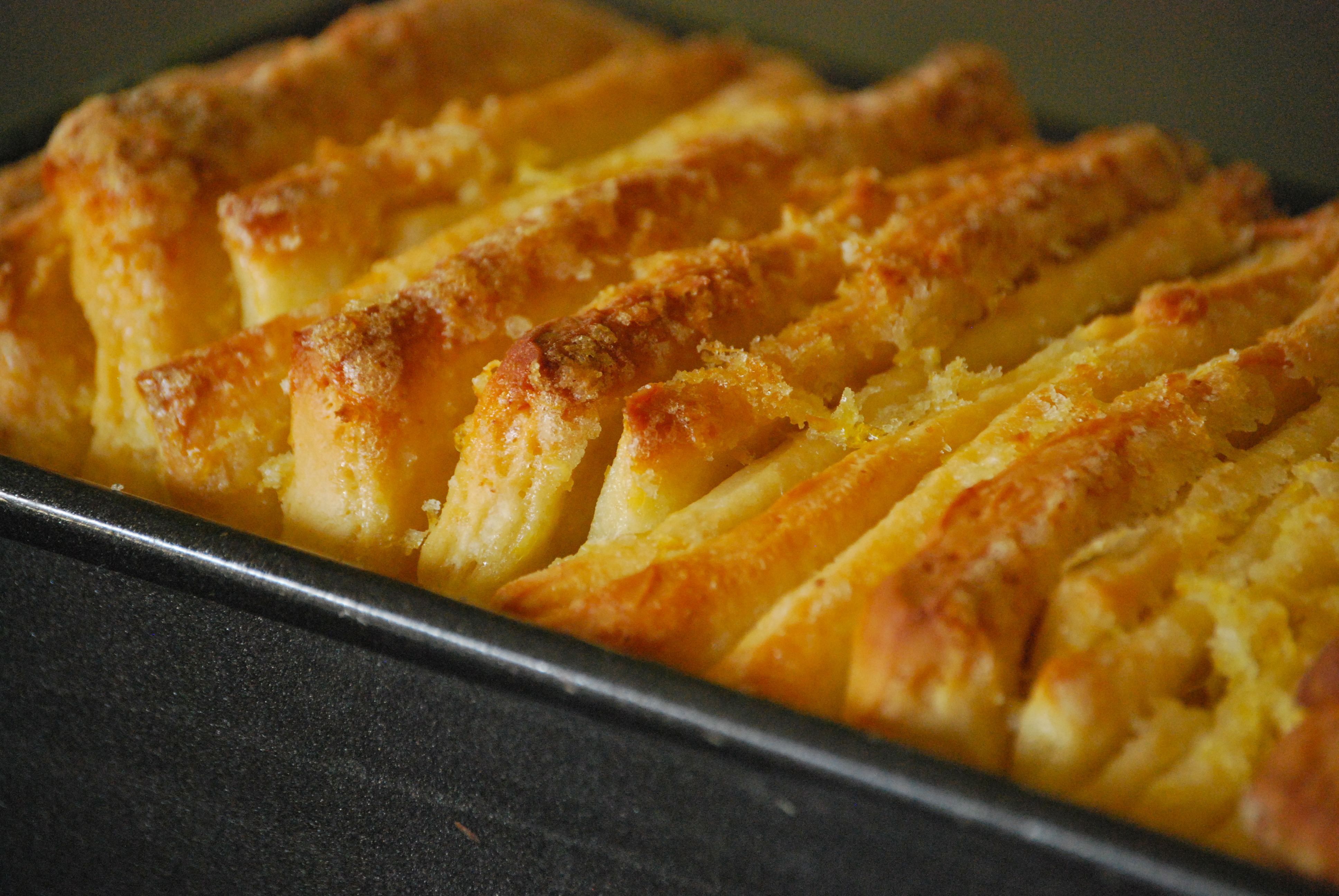
This fantastic pull-apart bread is another mouth-watering way to bring that lemon-y zing into your baking.  And how good is this bread?  It knocked our socks off!  My family was wowed by this one– we inhaled it in one day.  It really is that good.  I mean, it’s so good that you’ll want to invite friends over to share so they can ”ooooo…”  and “ahhh…” at your masterpiece.

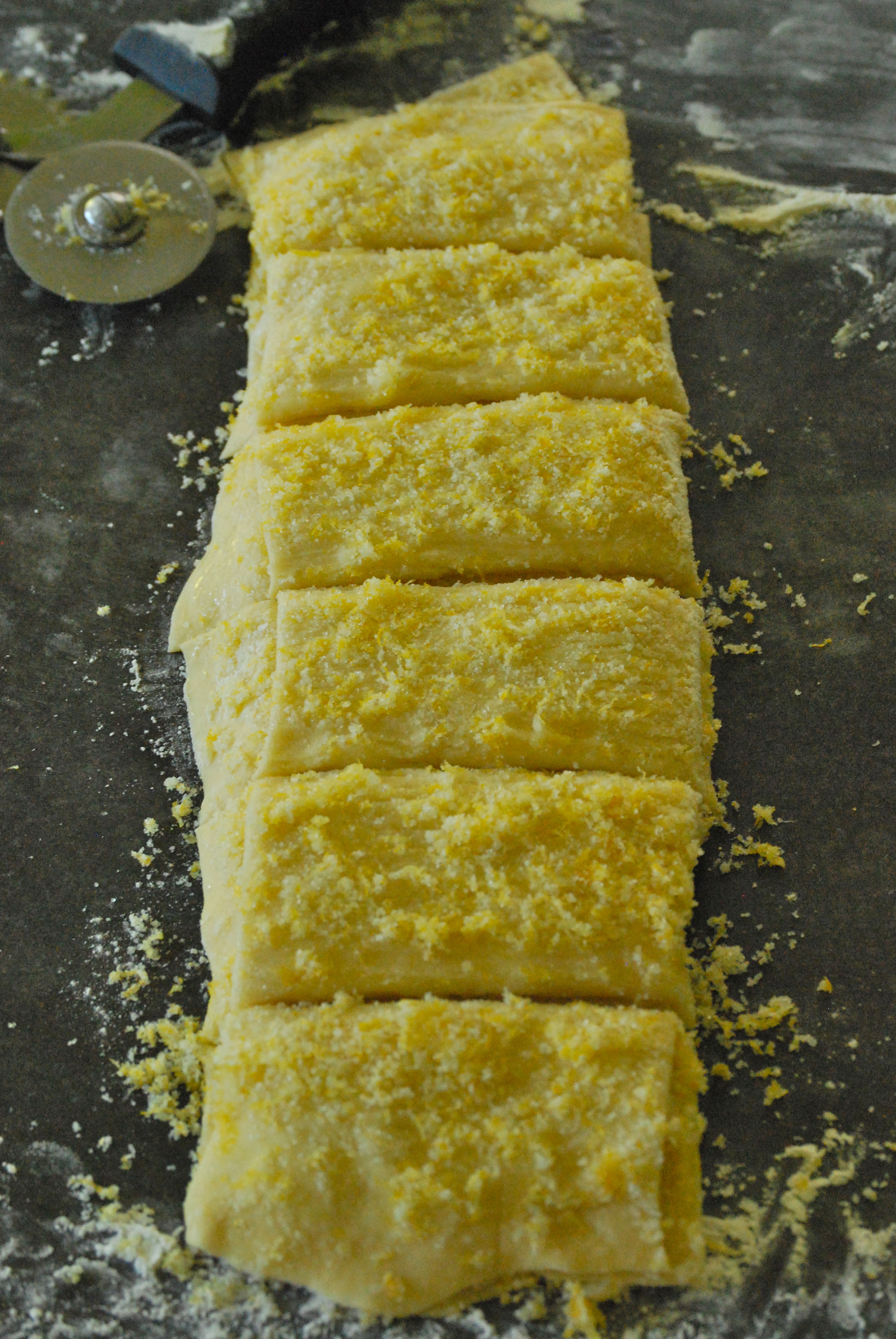
Don’t be intimidated by the recipe’s length– it’s not difficult.  The photos here show you how to cut the dough, which seemed to be the most confusing part of the original directions.  Just remember the goal– make a dough, let it rise, roll it into a large rectangle, top with lemon/sugar mixture, cut into 30 small, equal rectangles, stack in a bread pan, let rise, and bake.  That’s it.  The cutting measurements don’t have to be perfect, so slight variations in shape are just fine.  The key is to make sure you bake it long enough.  Otherwise, the center may not be done, which will ruin your bread.  If you make the dough and store it in the refrigerator, you’ll find it really shortens the wait if you plan on making it for breakfast.  Enjoy!
 

The Recipe: Lemon Pull-Apart Bread

(Makes one loaf)

For the Dough:

2 3/4 cups (12 1/4 ounces) all-purpose flour

1/4 cup (1 3/4 ounces) granulated sugar

2 1/4 teaspoons (1 envelope) instant yeast

1/2 teaspoon kosher salt

1/3 cup (2 1/2 ounces) whole milk

2 ounces (4 tablespoons), unsalted butter

1/4 cup water

1 1/2 teaspoon vanilla extract

2 large eggs, at room temperature

For the Lemon Paste Filling:

1/2 cup (3 1/2 ounces) granulated sugar

4 tablespoons finely grated lemon zest (4 lemons)

2 ounces unsalted butter (4 tablespoons), melted

For the Icing:

3 ounces cream cheese, softened

1/3 cup (1 1/4 ounce) confectioners’ sugar

About 2 tablespoons lemon juice

I recommend  making the dough and refrigerating the night before.  The dough is remarkably easy to handle this way.  To make the dough, mix together 2 cups (9 ounces) flour, sugar, salt, and yeast in the bowl of a stand mixer.  In a small sauce pan, heat the butter and milk until it is entirely melted.  Remove from heat and add the water and vanilla.  Set aside until the temperature drops to  120°F – 130°F.

Pour the milk mixture over the flour mixture and stir with a spoon until moistened.  Attach bowl to mixer and using the paddle attachment, begin to add the eggs one at a time while the mixer is on low.  Mix until just incorporated after each egg.  Stop the mixer and add 1/2 cup of the remaining flour, and continue to mix on low until the dough is smooth, 30-45 seconds.  Add 2 more tablespoons of flour and mix on medium speed until the dough is smooth, soft, and slightly sticky, about 45 seconds.

Sprinkle work surface with 1 tablespoon of flour, knead dough by hand for about 1 minute, or until no longer sticky.  1-2 tablespoons of flour can be added, if needed.  Butter a large bowl and place dough in it and cover with plastic wrap.  Let rise until doubled in size, about 1 hour.  Gently deflate the dough.  At this point, either refrigerate the well-covered dough overnight or proceed onto the next step.

Meanwhile, while dough is rising, make the lemon filling.  In a small bowl, add the sugar and lemon zest.  Using a spoon or your hand, mix together until it forms a sandy mixture.

Center a rack in the center of an oven pre-heated to 350°F.  Butter a 9 x 5 – inch loaf pan, line the bottom with parchment paper, and butter again.  Set aside.

On a lightly floured work surface roll the dough out to a 20 x 12 – inch rectangle.  Use a pastry brush (or smear with your hands) to distribute the melted butter onto the dough.  Sprinkle the lemon/sugar mixture evenly over the melted butter.  Give the mixture a gentle pat so that it sticks well.  Using a pizza cutter, cut the dough crosswise into 5 equal strips (each about 12 x 4 – inches).  Carefully stack all 5 strips of dough.  Again using the pizza cutter, cut the stack into 6 equal sections (each about 4 x 2 -inches).

Carefully place all of the stacks, widthwise, into the prepared bread pan.  Make sure the dough pieces are close/snug with each other.  There will be extra room at the end of the pan and that’s good.  The dough will rise and fill that space in.  Loosely cover with plastic wrap and let rise in a warm place until doubled in size, about 30-50 minutes, or a bit longer if the dough was refrigerated.

Bake the bread until the top is a beautiful golden brown and an instant read thermometer inserted into the center of the bread reads about 200°F, about 35 minutes.  If the bread seems to be browning too quickly and the inside is not yet done, place some aluminum foil over the bread while it continues to bake.  Transfer to a wire rack and let cool completely in pan, or else the bread will fall apart.

Gently run knife around the edges of the pan and carefully invert cooled bread into your hand, then place on a plate.  Using a wooden spoon or whisk, mix the cream cheese, confectioners’ sugar, and lemon juice together — using more or less lemon juice depending upon your desired consistency.  Drizzle over the bread.  Stores well in an airtight container.  Enjoy!

Adapted from Flo Braker’s Baking for All Occasions via Leite’s Culinaria

Thanks for stopping by!

Laurie

I finally went on a full-scale cleaning and organizing mission.  I love my kitchen, but I could always use more space– just one more cupboard.  The focal point of my organizing was the food pantry.  There was a time, not long ago, when I got excited everytime I looked in the pantry– so many possibilities!  So many dishes to create!  Lately, opening that door just led to me being annoyed.  Plastic bags with twist ties, hiding all of those beautiful grains/legumes/dried fruit/and nuts that I buy in bulk.  Random boxes half-full of dried pasta.  I needed a better system, and mason jars were the answer.  They stack beautifully and best of all, I can see all of those beautiful dried goods– including these amazing lentils.

I love lentils: red, french, green, brown– they all have fantastic flavors.  Lentils are high protein and fiber and low fat.  They’re also convenient, since they don’t take long to prepare, so they’re perfect for when you need to get a quick weeknight dinner on the table.  Even better, they’re inexpensive.  I like to prepare them with an egg on top (because eggs make everything better), or made into simple, flavorful soups like this one.  They’re brilliant!

The flavors in this lentil soup mingle perfectly.  The ginger, curry, cardamom, and cumin are stand-outs.  They give the soup an identity.  And the lemongrass adds that little zing that really brightens things up.  Depending on where you are, lemongrass may be difficult to find.  If so, just add a bit of lemon zest and a healthy squirt of lemon juice before serving.  The coconut milk is the backbone here,  it ties all of the other wonderful flavors together.  It is rich and creamy, and envelopes those warm spices.  I use a whole can in this recipe, but if you want to reduce the calorie count, add just a half can.  If you do so, make sure to compensate for the loss of liquid by adding a bit more broth or water.  And don’t buy the ‘lite’ versions of coconut milk– they’re not particularly good.  Pair this soup with a nice piece of crusty bread drizzled in olive oil, and enjoy!

The Recipe:  Lentil Soup with Lemongrass and Ginger

(Serves 4 comfortably)

5-6 small/medium carrots, chopped (1 1/4 cup)

1 medium red onion, chopped  (about 1 cup)

1 stalk lemongrass, outer leaves removed and discarded, finely minced

1-inch knob of ginger, peeled and minced

2 tablespoons olive oil

1 cup crushed tomatoes

1 1/2 cup dried brown or green lentils, rinsed

1 can (13.5 ounces) organic coconut milk

1 tablespoon curry powder

1 teaspoon cardamom

1 quart organic chicken broth

pinch of salt

lemon, cilantro, and sour cream for garnish, optional

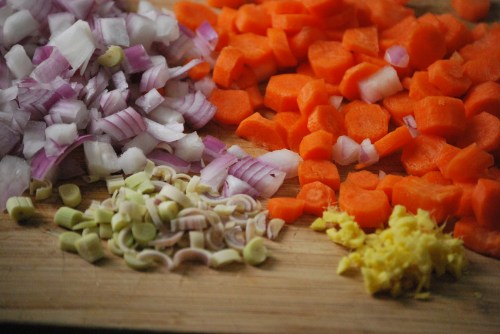
In a large Dutch oven placed over medium heat add the olive oil.  When hot add the carrots, red onion, lemon grass, ginger, a sprinkle of salt and sauté  for about 7- 10 minutes until the vegetables start to soften.  Then add the curry powder and cardamom and  toast for just 30 seconds, or so.  Immediately add the tomatoes, chicken stock, coconut milk, and lentils.  Raise heat and bring to a small boil.  Immediately lower heat to low/medium and cook the soup covered for about 20-30 minutes, or until the lentils are your desired consistency.  The amount of time will vary depending upon how high your flame is.  Taste the soup and adjust salt accordingly.  Take note that this is a soup that will thicken as it sits, so leftovers may need a splash of broth or water to loosen it up.  Serve with sour cream, cilantro, and lemon, if desired, and a drizzle of olive oil.  Enjoy!

Have a wonderful weekend!

Laurie

Join me on Twitter

If you’ve taken a spin through my recipe section, you know that I pretty much love any and all types of food.  But meatballs are one of my favorite bites.  Last year I wrote this post, where I confessed that when we get together back in North Dakota, my mother often makes four different styles for our family holiday meal.  I’m not saying I’m an expert, but I certainly have the experience.  These meatballs were a huge hit with my family.  My kids (gasp!) even loved them, and they are proving to be borderline vegetarian lately. I served them with a simple quinoa side dish, but couscous, rice, or polenta would also be wonderful.

For this particular meatball, I wanted to use non-tradional flavors– at least non-traditional for a German-Hungarian from the Great Plains. I was in the mood for an ethnic twist.  Here, I made lamb meatballs infused with beautifully fragrant spices.  The toasted cumin– which smells amazing, by the way– and the coriander really stand out in this dish.  And the vibrant fresh herbs are heavenly.  I also made a red-wine sauce, and simmered the meatballs to add richness.  Turns out, I like the sauce enough that I could drink it by the ladleful.  Finally, I topped the dish with a bright chimichurri.  It adds a nice zing that really makes every bite ‘pop!’

These meatballs are very easy to make.  And they’re loaded with flavor– not just some bland lump covered in sauce.  For this recipe, I used a technique that makes perfect meatballs every time– I bake them in the oven.  The result is a firm, evenly browned meatball that is succulent.  Not dry, but perfect.   Buy the best ground lamb you can find.  The quality of your meat will always be reflected in your dish.  Also, buy whole spices if you can.  Toast them, as it enhances the flavor.  Once they’re toasted, crush them with a mortar and pestle, or anything else that ends up giving you mostly-ground spices.  In a pinch, even placing them in a plastic bag and crushing them with a rolling pin will work.  If you only have ground spices and don’t want to buy whole ones, don’t worry.

The Recipe:  Lamb Meatballs in Red Wine Sauce with Mint Chimichurri

(Serves 4 comfortably)

For the Meatballs:

1 tablespoon whole cumin seed, toasted and ground

1 teaspoon whole coriander seed, toasted and ground

1 tablespoon chopped fresh mint

2 tablespoons chopped fresh parsley

1 pound ground lamb

1/4 cup chopped red onion

1/4 cup crumbled feta cheese

2 tablespoons toasted white bread crumbs

1 egg, lightly beaten

3 cloves garlic, minced

1 teaspoon salt

freshly ground pepper

Red Wine Sauce:

2 tablespoons olive oil

2 tablespoons chopped red onion

1 garlic clove, minced

1 tablespoon tomato paste

1 cup dry red wine

1 cup chicken broth

1 teaspoon whole cumin seed, toasted and ground

2 cups crushed tomatoes

kosher salt and freshly cracked pepper, to taste

1 heaping tablespoon freshly chopped parsley

Mint Chimichurri:

1/4 cup packed fresh mint, roughly  chopped

1/2 cup packed fresh parsley, roughly chopped

1 garlic clove, minced

about 1/3 cup extra-virgin olive oil

kosher salt,

1-2 tablespoons red wine vinegar

1 tablespoon finely chopped preserved lemon (a bit of lemon zest can also be substituted)

water to loosen chimichurri a bit, if necessary

(Note:  To toast the cumin and coriander seed, place them in a small skillet on medium heat.  Stir or toss frequently and toast until the seeds become very fragrant, a few minutes.  Be careful not to burn the seeds.  Remove from heat and let cool on a plate.  Then use a mortar and pestle to grind them.)

Preheat the oven to 350°F.  Line a baking sheet with parchment paper.  Set aside.  In a 12-inch skillet with a lid, heat the olive oil until hot and add the chopped red onion and garlic.  Saute for a couple of minutes until tender.  Add the tomato paste,  red wine, ground cumin, chicken stock, crushed tomatoes, and salt and pepper, to taste.  Bring to a boil, then immediately turn heat down.  Simmer for about 50 minutes with the lid on.

In a large mixing bowl, add the ground lamb, ground cumin and coriander seed, mint, parsley, red onion, feta cheese,  bread crumbs, egg, garlic, kosher salt and cracked black pepper.  Gently mix with your hands.  Make sure to get everything incorporated, but being sure to not over mix.  Doing so will lead to a tough meatball.  Using a small scoop or form into balls with your hands,  drop onto the prepared baking sheet spacing them an equal amount of distance apart.  Bake for about 35-40 minutes, or until the edges of the meatballs are a deep golden brown.

Remove meatballs from oven and place in the red wine sauce.  Simmer together for about 20 more minutes so the flavors can incorporate.  If the sauce is too watery, leave the lid off and increase the heat, so the sauce can reduce.  If the sauce is a nice consistency already, simmer with the lid on.  When it seems to be done and the sauce is perfect, stir in the chopped parsley and remove from heat.

Meanwhile, using a mini-food processor (a blender or knife can also be used), add the mint, parsley, lemon, garlic, vinegar and salt.  Pulse a few times to incorporate.  Slowly add the olive oil — use more if you see fit.  Or add a bit of water to loosen the chimichurri.  Blend until smooth.  Taste.  Add more salt, if necessary.  Serve along with the meatballs and red wine sauce.  Enjoy!

I’m always delighted that you stopped by Relishing It  — thank you!  Have a wonderful day.

Laurie

Join me on Twitter

Where to begin?  My goodness, I love these babies!  I had been craving a proper chocolate cupcake with a salted caramel frosting for a long time.  I knew where I could probably buy one, but sometimes I get a little ticked at the steep price tag for just a “bite” of cake– especially when my kids beg for (and usually get) them every week.  I got to thinking, and decided to try to make them myself.  I combined several recipes, and came up with cupcakes that are even better than I imagined.

I used my favorite chocolate cupcake recipe, but made it with coconut oil.  The cake is moist and dense.  I’ve become addicted to coconut oil lately (I’ve even made a coconut oil body butter–but more on that another time).  These cupcakes have a nice, subtle coconut flavor that blends perfectly with the chocolate and caramel.  Now my goal was to use a healthier fat– which worked– though I’m not sure the ‘healthiness’ mattered, since I piled a mound of buttercream on top.  Oh well, they are cupcakes, after all.

Now, let’s talk about the salted caramel.  Salt and caramel are such a heavenly combination.  So perfect.  You will not use all of the caramel, which is a good thing.  Just keep it in your refrigerator, and use later poured over ice cream.  Or drizzle it over a brownie.  Or just enjoy it by the spoonful (or maybe that’s just me).

And you know that deliciously thick and rich frosting that makes those specialty shop cupcakes so good?  Yeah, that’s this stuff.  It not just a buttercream, it’s meringue buttercream.   Big difference.  This one uses egg whites, but don’t worry, they’re perfectly safe because they’ve been carefully cooked.  They whip up beautifully and become a silky treasure when mixed with the butter.  Add that liquid gold salted caramel, and you’ve just made one of the most delicious frostings possible.

The Recipe: Chocolate Cupcakes with Salted Caramel Meringue Buttercream

(Makes 16-18 frosted cupcakes)

Salted Caramel:

1 cup granulated sugar

2 tablespoons light corn syrup

1/2 cup heavy cream

1 1/4 teaspoon fleur de del (regular sea salt or even kosher will also work)

1/4 cup sour cream

To make the caramel: In a medium saucepan, combine the sugar and corn syrup along with 1/4 cup water.   Gently stir them together, being careful not to splash the sides of the pan.  Cook over high heat until an instant-read thermometer reads 350°F, or until the mixture is a dark amber in color, about 6-8 minutes.  Keep a watchful eye on it, as it can turn from a golden amber color to burnt very quickly.  Remove from heat and slowly add the cream (be careful, it will bubble), and then add the fleur de sel.  Whisk in the sour cream.  Set aside to cool to room temperature.  Or refrigerate if making ahead of time, then bring to room temperature before mixing into the buttercream.

Chocolate Cupcakes:

1/2 cup natural unsweetened cocoa powder

2 ounces high-quality semi-sweet chocolate (60% cacao works great), chopped

1/2 cup strong, very hot coffee

1/2 cup sour cream

1 cup unbleached cake flour

3/4 teaspoon baking soda

3/4 teaspoon kosher salt

2/3 cup (packed) dark brown sugar

1/2 cup virgin coconut oil

1/2 cup granulated sugar

2 large eggs, room temperature

1 teaspoon vanilla extract

 For the CupcakesPreheat oven to 350°F.  Line 16-18 standard (1/3 cup) muffin cups with paper liners.  Combine cocoa powder and chocolate in medium bowl.  Pour 1/2 cup hot coffee over; whisk until smooth.  Whisk in sour cream.
Whisk flour, baking soda, and salt in another medium bowl to blend.  Using a stand mixer, beat brown sugar, coconut oil, granulated sugar, eggs, and vanilla in large bowl until light and creamy, about 2 minutes.  Beat in flour mixture, alternating with chocolate mixture in 2 additions. Careful not to over-mix.  Divide batter among paper liners.

Bake until tester inserted into center comes out with some crumbs attached, about 16-18 minutes.  Cool in pans for about 10 minutes.  Transfer cupcakes to cooling racks and cool completely.

Salted Caramel Meringue Buttercream:

4 large (1/2 cup) egg whites

1 cup sugar

pinch of kosher salt

3/4 pound (3 sticks) unsalted butter, at room temperature, cut into 1-inch chunks

1/3 cup salted caramel

To make the meringue buttercream:  Put the egg whites, sugar and salt into a medium-sized heatproof mixing bowl over a pan of simmering water, and whisk gently and continuously until the egg whites reach 140°F.  The eggs whites will be hot and the sugar will be dissolved, about 3-4 minutes.

Remove from the heat and pour into a bowl of a very clean stand mixer.   Using the whip attachment, whip mixture on high until thick and cooled, about 5 minutes.  (Make sure the meringue is cooled to room temperature before adding the butter, or  the butter will melt and will not make a proper frosting).  With the mixer running, slowly add the butter to the meringue, one chunk at a time.  Beat until the buttercream is smooth and spreadable, scraping down the sides of the bowl, as needed.  With the machine still running, slowly add the salted caramel and beat until well blended, about 2 minutes.

Troubleshooting:  If for some reason your buttercream is too soft (perhaps your meringue wasn’t cooled enough), stir the buttercream over ice water; then beat with a machine until smooth and spreadable.  Sometimes buttercream separates – it will look like scrambled eggs.  If this happens, briefly immerse the bottom of the mixing bowl into some hot tap water, then beat again until the buttercream is smooth and spreadable.

To Assemble the Cupcakes:

After the caramel and cupcakes have cooled to room temperature, using a small knife carefully cut out a 1/2-inch circle midway down in the center of the cupcakes.  Fill the hole with the salted caramel just to the surface.  Place the salted caramel meringue buttercream into a large pastry bag and top each cupcake with a swirl of it — be generous!   Frosted cupcakes should be eaten as soon as possible, but will hold their shape for a couple hours.  Unfrosted cupcakes can be stored in an airtight container for a few days.  Leftover caramel should be treated as gold, because it is that delicious.  Store in jar and refrigerate — it makes a wonderful topping for ice cream.  Enjoy!

Sources:  Chocolate Cupcakes adapted from this recipe.  Salted Caramel adapted from Baked Explorations.  Meringue Buttercream adapted from How to Bake.

Thanks for stopping by Relishing It today — hope you enjoy these cupcakes!

Laurie

Join me on Twitter

My kids love to help me make holiday cookies.  We smear them with frosting (which must be tasted, over and over as we work), and decorate them with a hodgepodge of sprinkles.  And yes, the kids get to help with everything.  It’s worth it, even if the process takes a bit longer.  The kitchen counter ends up covered with frosting, and the floor is dusted with sprinkles that hide and reappear for days.

If you have children, you know how important it is to have a go-to sugar cookie recipe for the kids to cut out and decorate.  Heck, as far as I’m concerned, even if you don’t have kids you should have a great sugar cookie recipe.  I’ve tried so many different versions, and after years of testing have decided that this one is my favorite.  It’s quick, reliable, and most importantly it’s very, very good.

These sugar cookies are just what I like– crisp around the edges and soft in the middle.  They have a rich buttery flavor, and the frosting is soft and perfect.  Even better, these cookies are simple to make.  So there is no reason to settle for that pre-made cookie dough with the funky aftertaste from the supermarket.  Make these.  You’ll be happy you did.

The Recipe: Cut-Out Sugar Cookies

(Makes about 2 dozen cookies, though it depends on the size of your cookie cutter)

1 cup (2 sticks/228 grams) unsalted butter, at room temperature

1 1/2 cups (300 grams) granulated sugar

2 eggs, at room temperature

1 tablespoon vanilla extract

3 cups (420 grams) unbleached all-purpose flour

2 1/2 teaspoons baking powder

3/4 teaspoon kosher salt

Frosting

About 3 1/4 cups (1 pound/ 454 grams) confectioners’ sugar

About 3 tablespoons milk, more if necessary

4 ounces softened cream cheese

Using a stand mixer fitted with a paddle attachment, cream together the butter and granulated sugar on medium speed for about 5 minutes, or until the mixture is light and fluffy.  Make sure to scrape down the sides of the bowl a couple of times.  Beat in the eggs and vanilla on medium speed for 2-3 minutes, or until thoroughly combined, making sure to scrape down the sides of the bowl, once again.

In a medium bowl, stir together the flour, baking powder, and salt until well mixed.  On low speed, slowly blend the flour mixture into the butter-sugar mixture.  Mix until evenly incorporated.

Place the dough onto a sheet of plastic wrap and form into a disk shape, about 8-inches in diameter and 1-inch thick.  Wrap completely in plastic wrap.  Refrigerate for 1 hour, or until it is firm enough to roll out.  Dough can be stored in the refrigerator for up to 5 days, or in a freezer for up to 1 month.  If frozen, thaw overnight in the refrigerator. Then let sit at room temperature for 1 hour before using.

Position rack in the center of an oven, and heat to 350°F.  Line a cookie sheet with parchment paper.

Lightly flour a work surface, place the dough on the surface and lightly flour the dough, as well as the rolling pin. Roll out dough to be about 1/4-inch thick.  Make sure to keep the work surface well-floured to prevent sticking.  Use a cookie cutter and cut out as many cookies as possible.  Place them on the lined cookie sheet with a normal amount of space between them.  Gather scraps and reroll; continue until all of the dough is gone.

Bake cookies for about 15 minutes, or until golden brown on the edges and pale to light brown in the centers.  The baking time may be shorter or longer depending upon the size of your cookies.  Keep a watchful eye.  Let them cool on the pan for 2-3 minutes, then transfer to a cooling rack to cool completely.

To make the frosting, using a stand mixer fitted with a paddle attachment, beat the cream cheese for a couple of minutes until soft and smooth.  Add the confectioners sugar and milk.  Mix until well incorporated.  Add a bit more milk, if necessary.  You will want the frosting to be somewhat thick, or else it will slide off of the cookies.  Mistakes can easily corrected by adding more confectioners’ sugar or milk.  Frost the cookies and sprinkle with decorations.  Let set for a few minutes before serving.  The cookies keep well in an airtight container for about 4 days.  Enjoy!

Source:  Adapted from Joanne Chang’s Flour Cookbook

Thanks for stopping by Relishing It today!

Laurie

Join me on Twitter

You would think I made this meal for a special occassion, wouldn’t you?  Actually, it was a Wednesday.  And ‘no’ I most certainly do not spend hours preparing weeknight meals.  Believe it or not, this halibut and clam dish is just about as easy as it gets.  We love seafood, but live in land-locked Minnesota.  We’re about as far from the ocean as one can get in this country.  Fortunately, we have a good seafood import market near our house.  I picked up the halibut and clams, and spent a total time in the kitchen of about 30 minutes.  We lit a candle in the center of our table– our ritual that makes the meal feel special– and sat down to this beautiful weeknight dinner.

Halibut is one of my favorite fish.  It’s so silky, and works wonderfully in this flavorful dish.  The clams (which Aanen loved!) add a nice briny flavor, while the mushrooms and leeks lend a deep earthiness.  And don’t forget the butter.  It flavors the broth and gives a creamy texture to the whole meal.  I actually cut back on the butter a bit when I made this dish, but feel free to add a few more tablespoons if you like.  This is a great meal to pair with a white wine for a romantic weekend dinner, but it’s also so easy to prepare that you can make it anytime– even a Wednesday night.

The Recipe: Braised Halibut with Leeks, Mushrooms, and Clams

(serves 3-4)

3 tablespoons butter

1 large leek, white and light green parts thinly sliced

1 clove garlic, minced

2 cups chicken broth

1 pound fresh Halibut, skin removed  (preferably wild)

1 pound Littleneck or Manila clams, scrubbed

about 2 cups crimini mushrooms, quartered  (oyster or hen-of-the- woods are good substitutes)

lemon zest

1 tablespoon freshly chopped parsley

sea salt and cracked black pepper

Melt the butter over medium heat in a large 12-inch straight-sided sauté skillet with a lid.  Add the mushrooms, garlic clove, and leeks; season lightly with salt and pepper.  Cook until softened, but not browned, 6-8 minutes.  Add the broth, raise the heat to medium high, and bring to a boil.

Season the halibut with salt and pepper.  Nestle the fish and the clams in the skillet.  Bring the broth back to a boil, cover tightly, and reduce heat to low.  Cook gently until the fish is just cooked through and the clams have opened, about 7 minutes.  If all of the clams are not open, remove the fish and the opened clams and continue cooking until the remaining clams open, another 2-3 minutes.  Discard any clams that have not opened by this time.  Stir in the lemon zest and sprinkle with the parsley.

Serve the fish and clams in a shallow bowl topped with the delicious broth and vegetables.  Enjoy with a piece of crusty bread and glass of a nice  white wine.

Adapted from Fine Cooking Soups & Stews Magazine, 2010

Thanks for stopping by Relishing It today!

Laurie

Join me on Twitter

Pretty much every time I walked into my Grandma Jesch’s home as a child, there was a newly-baked cake waiting for me.  And I stopped by to visit at least every other day.  I guess that’s likely the source of my infatuation with cake.  I love them.  I love every kind of cake.  I love big decadent cakes with billowing frosting.  And tarts loaded with pastry cream and topped with ripe summer berries, make me swoon.  But sometimes…sometimes I want a simple cake.  A snacking cake.  Like the ones my Grandma Jesch made.

This orange and olive oil cake is the perfect snacking cake.  It’s interesting and delicious, without being too glamorous.  The olive oil lets you know it’s in there, though it’s subtle.  It adds a slightly floral flavor that works wonderfully with the brightness of the orange zest.  The cake stays moist with the help of the olive oil and the yogurt; and in my experience, it’s better after sitting for a few hours or even overnight.  Be warned though, the modesty of this cake may deceive you.  Since it doesn’t have the pomp of a fancy chocolate layer cake, you won’t think of it as dessert.  Your guard will be down.  You’ll wander into the kitchen several times over the course of the afternoon, and suddenly, half of the cake will be gone.  Not that that happened to me.  And I certainly wouldn’t tell you if it did…

The Recipe:  Orange and Olive Oil Cake

3 cups all-purpose flour

1 tablespoon baking powder

1 teaspoon kosher salt

4 large eggs, separated

2 cups granulated sugar

1 cup plain yogurt

3/4 cup good-quality extra-virgin olive oil  (preferably something fruity, if possible)

zest of 3 oranges

1 1/2 teaspoons vanilla extract

confectioners’ sugar, for dusting

Preheat the oven to 350°F.  Place rack in the center of oven.  Generously spray the inside of a 10-inch Bundt pan with a nonstick cooking spray; or butter it well, flour it, and tap out any excess.

In a large bowl, whisk together the flour, baking powder, and salt.  Set aside.

In the bowl of a stand mixer fitted with the paddle attachment, beat the egg yolks until they are pale and light; slowly pour in the sugar until it is completely incorporated.  Add the yogurt and olive oil and mix until thoroughly combined.  Add the orange zest and vanilla, mix until just incorporated.

Add the flour mixture to the wet ingredients in two parts, beating after each addition until just combined (it should only take 10 seconds).  Scrape down the bowl and beat again for 5 seconds.

In another large bowl, beat the egg whites until stiff peaks form.  Scoop 1 cup of the egg whites into the batter.  Use a rubber spatula to gently fold them in.  After about 30 seconds of folding, add the remaining egg whites and gently fold until they are almost completely combined.  Do not rush this process.

Pour the batter into the prepared pan and bake for 40-50 minute, rotating the pan half way through the baking time, or bake until a toothpick inserted into the center comes out clean.  Transfer the pan to a wire rack to cool for 10-15 minutes.  Gently loosen the sides of the cake from the pan (an offset spatula works well) and turn out onto a rack to cool completely.  Dust with confectioners’ sugar right before serving.  This cake stores well at room temperature for about 3 days in a tightly covered container.  Enjoy!

Source: Adapted from Baked Explorations

Thanks for stopping by today!

Laurie

Join me on Twitter

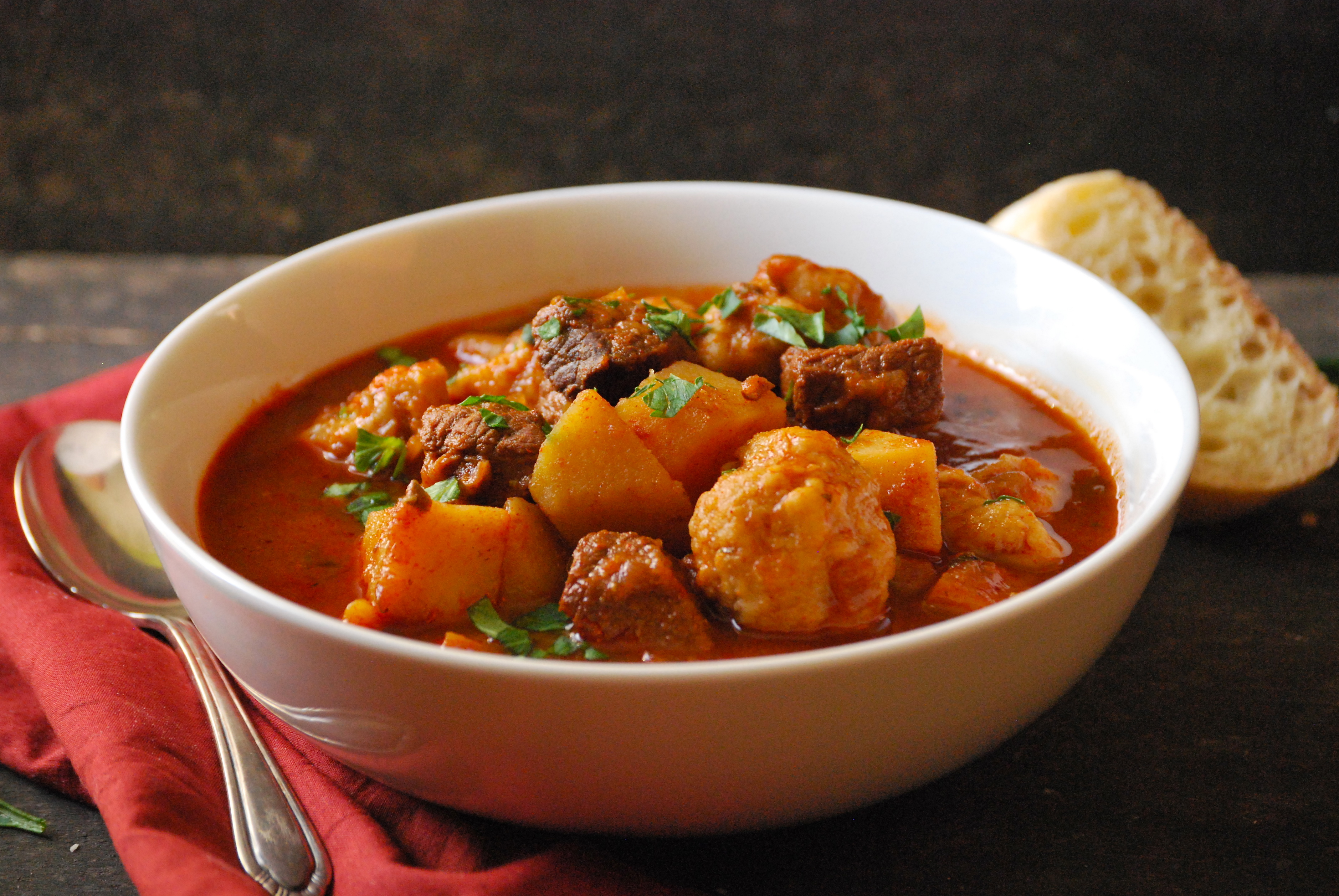
Paprikash.  Just saying it reminds me of being a little girl, coming in from playing in the snow to that amazing aroma of paprika wafting through our farmhouse.  My brother and cousins were there, of course, with the same frigid hands and red wind-blown cheeks.  This soup– more than any other meal– defined my childhood.  Paprikash is nourishing and delicious, but it’s so much more than that to me.  It’s family and friends.  Paprikash meant company was about to arrive, and that we kids had the freedom of the farm while the adults chatted the afternoon away.  It meant the comfort of having my parents, siblings, grandparents, aunts, uncles, and cousins all together to share a communal meal.  And now, paprikash is nostalgia.  It’s a bit strange to write about it here.  It’s bittersweet because I loved those days, and know that I can never have them back.  I’m reminded of how very lucky I was to grow up in rural North Dakota– to see my extended family every week.  This soup reminds me of those family traditions.  I love traditions.  I also love this soup.

This is my version of paprikash.  Like nearly every mother, grandmother, and aunt in my hometown, I’ve developed my own take on this Hungarian soup.  The foundations are the same:  beef, onions, potatoes, and dumplings.  And they’re all enveloped by a thick, rich, beef broth.  It’s a hearty soup that has a profoundly deep, comforting, flavor thanks to sweet paprika.  This is the bowl you want to eat when the snow is falling outside your dining room window.

Now for a few pointers.  First, use good paprika.  I can’t stress this enough.  The paprika is the canvas upon which the rest of the soup is created.  Buy the best you can.  Second, the soup takes a bit of patience.  The beef needs time to become tender.  When it’s ready, you will know.  And if you’ve never made egg dumplings before, they may seem a bit odd or confusing.  They are almost paste-like.  Here’s the thing though– just get them in there.  Drop a bite-size portion into the hot soup, they’ll cook, and turn out beautifully.  Finally, just how good this soup turns out will depend on the salt.  The amounts I list below should be fine, but remember that every beef broth is different.  Some are much saltier than others, so you’ll want to taste, taste, taste, as you add ingredients.  Better to add more salt later, than ruin an amazing meal.  I really hope you make this soup.  There’s nothing else like it.

The Recipe: Paprikash

(Serves 6)

5 tablespoons olive oil

1 1/4 -1 1/2 pounds of grass-fed beef stew meat, cut into small cubes

1 large onion, chopped (about 4 cups)

5 tablespoons sweet Hungarian paprika

2 quarts homemade or good quality beef broth

2 pounds yellow potatoes or yukon gold, peeled and cubed

6 eggs, lightly beaten

1 3/4 cup all-purpose flour

2 teaspoons kosher salt, plus a bit more.

cracked black pepper

3 tablespoons freshly chopped parsley, plus more for garnish

In a large Dutch-oven over medium-high heat, add 2 tablespoons of olive oil.  When it is hot, add the cubed beef and a sprinkle of salt and freshly cracked pepper.  Stir the meat a couple of times, and cook for about 5-6 minutes.  Transfer the beef, along with it’s juices, to a bowl and set aside.

In the same Dutch-oven over medium-high heat, add the remaining 3 tablespoons of olive oil.  When it is hot, add the 4 cups of chopped onion.  Cook for about 10 minutes, stirring often, until they become golden brown and are very fragrant.

Still on medium-high heat, add 5 tablespoons of paprika to the browned onions and toast for about 30 seconds.  Add 2 quarts of beef broth, the reserved cooked beef and juices, 1 teaspoon salt, and cracked black pepper.  Bring to a boil.   Reduce heat to simmer.  Simmer on low-medium for about 2 hours, or until the beef is very tender.

When the beef is tender, raise the temperature to medium and add the cubed potatoes.  Cook for about 10-15 minutes, or until the potatoes are cooked through and tender, but not falling apart.

Meanwhile, in a medium bowl, using a large spoon, mix the lightly beaten eggs with the flour and 1 teaspoon salt.  It will form a sticky paste.  This is normal.  When the potatoes are cooked through, begin to add the dumplings one at a time.  Using a small spoon, gently “plop” a bite-sized portion into the hot soup.  You may want to use another spoon (or your finger) to help you.  It will sink at first, and then float to the top.  Repeat until all of the egg/flour mixture is in the soup.  The soup will look crowded, and you will need to “push” some of the dumplings out of the way to make room for more.  Once they are all in the soup, let them cook for another 5-10 minutes.  At this point, taste the soup.  Much of the flavor is dependent on the amount of salt.  Add more if necessary.  Remove from the heat and stir in the parsley.  Enjoy with a piece of crusty bread.  Please note that this soup is even better the next day!

Thanks for stopping by.  I always look forward to hearing from you!  Come join SoupaPalooza at TidyMom and Dine and Dishsponsored by KitchenAidRed Star Yeast and Le Creuset 

Laurie

Join me on Twitter!

If you happen to have gorged on too much of this dip from Friday’s post, have no fear.  Today it’s all about health food.  This light, fresh, kale salad is one of my favorites.  Kale is one of those all-important super foods that is loaded with vitamins and antioxidants.  Here is a little run-down on just how good it is for you.  Personally, I probably eat more kale than any other vegetable.  It’s such an important part of my daily diet, that I eat nearly one bunch per day– by myself.  We also make kale chips very often.  My three-year old loves them, and despite the fact that Radd jokes about ‘being forced to eat kale’, he likes them too.

I think the way people view kale has changed significantly in the last decade or so.  In college I worked for the university dining service.  I remember being told to put the kale all around the salad bar to make it look “pretty”.  It was never prepared for a meal, but strictly used as a garnish because it was green and firm.  I’m glad that we’ve moved past the “kale-as-a-garnish” phase.  It’s so delicious, and so good for you.

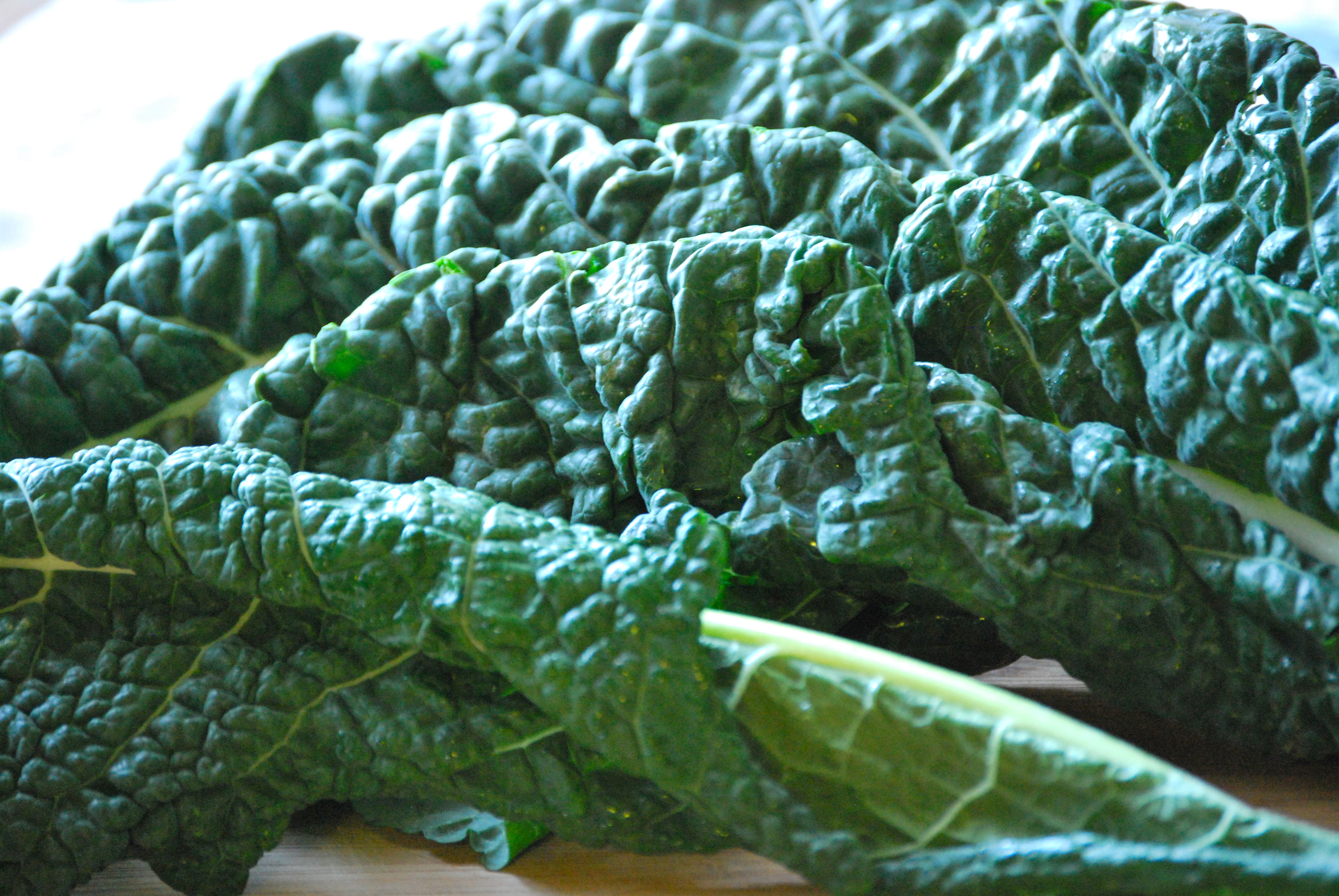
On to this fantastic salad.  If you haven’t eaten raw kale before, this Tuscan kale salad is a great place to start.  The salad really highlights the wonderful aspects of raw kale– though note that this salad really should only be made with Tuscan kale.  It’s the variety that is tender enough to still be edible uncooked.  The dressing is a perfect match.  I’ve made it with each of the three cheeses, listed below.  They all work wonderfully.  I love the fact that the cheese is mixed right into the dressing– it makes it a bit creamier.  Also, I tend to like things a little heavy on the garlic-side.  If you don’t , adjust to your particular taste.  The toasted bread crumbs are a nice touch as well.  They add that little textural crunch, without resorting to whole oil-ladened croutons.  Give this salad a try– you’ll like it.

The Recipe: Raw Tuscan Kale Salad

1 bunch Tuscan kale (also know as black, dinosaur, or lacinato)

1 slice whole wheat bread

1 clove garlic

1/4 teaspoon kosher salt

1/4 cup finely grated parmesan cheese (grand padano or pecorino work well, too)

3 tablespoons extra-virgin olive oil

Juice of 1 lemon (about 4 tablespoons)

Red pepper flakes, to taste

Freshly ground black pepper, to taste

To make the breadcrumbs: Tear the piece of bread into small sections and place in a mini- food processor.  Pulse a few times until the mixture resembles small breadcrumbs.  Place the breadcrumbs into a small skillet on medium heat.  Stir frequently and toast them until they are crunchy, but not burnt, just a couple of minutes.  Remove them from the heat and set aside.

To make the dressing:  Using a chef’s knife, mince then mash the garlic glove and place into a medium-sized bowl.  Add the salt and mix it together until a paste forms.  Add the cheese, lemon juice, olive oil, cracked black pepper, and red pepper flakes.  Whisk to combine.  Taste.  Adjust seasonings, if necessary.

To make the salad:  Wash and remove the thick “stem” from the center of the kale leaves and discard.  Cut the kale into thin ribbons.  Place the kale in a large salad bowl and pour some of the dressing on it.  Mix well, as the dressing is thick.  I tend not to use the entire amount of dressing on my salad, though you may enjoy your salads more dressed than I do.  Let the salad sit for about 5 minutes (if you can wait, I usually can’t) and top with the whole wheat bread crumbs.  Enjoy!

Source: Adapted from Melissa Clark’s In the Kitchen with a Good Appetite

I hope the start to your week is a great one — thanks for stopping by!

Laurie

Join me on Twitter

Yeah, you read correctly.  I’ve decided to class this place up with a chip dip recipe that has a swear word in the title.  We’re talking very sophisticated gourmet fare here.  Alright, this post isn’t exactly champagne and gougéres, but in the right environment there’s no better snack than Kick-Ass Dip.  Why is it called ‘Kick-Ass’?  Well, because it’s that damn good.  This is one of those recipes that somehow emerged, fully-formed, from our college years.  We’ve been making it for years– from Super Bowl gatherings to our pre-children New Year’s Eve parties.  And this dip is always a huge hit.  Always.  I’m not going to try to convince you that this is, in any way, healthy.  But take a look at the ingredient list.  It’s not as bad as you might think.  And anyway, once in awhile you just need salty chips and dip.

The combination of flavors here is genius.  The spiced sausage and silky cream cheese are wonderful.  There are also those tomatoes with the nice kick of green chilies, and my favorite part of the dip– the corn kernels.  They’re slightly sweet, and stay just firm enough to add nice texture.  And it’s all brought together by fresh, brilliant cilantro.  Open a cold beer, pull the chips close, and enjoy.   If you plan on getting together with friends for the Super Bowl, or any other event where you park it in front of the television, get this dip simmering in your crockpot.  You’ll end up passing the recipe on to others, because it really does kick ass.

The Recipe:  Kick-Ass Dip

2  – 8 ounce packages of cream cheese

1 pound ground mild breakfast sausage

1 pound ground spicy breakfast sausage

2 – 10 ounce cans of Original Ro-Tel tomatoes with green chilies (do not drain)

2 cups frozen corn

1/4 cup chopped fresh cilantro

In a large skillet over medium heat, brown the breakfast sausage until cooked through.  Drain the grease.  In a large crockpot, combine the cream cheese and tomatoes.  If your crockpot has a removable stone,  I usually microwave the tomatoes and cream cheese for about 3-5 minutes, until it has melted.  Stirring occasionally.  If it doesn’t have a removable stone, just continue with the recipe.  Add the breakfast sausage, corn, and cilantro to the crockpot.  Cook on high until the mixture is very hot and bubbly, about 1 hour,  stirring often (and trying to snitch very little — good luck with that).  Reduce heat to low and enjoy with loads of chips and many friends!

Hope you all have a wonderful and fun-filled weekend!

Laurie
Join me on Twitter!