Feeds:
Posts
Comments

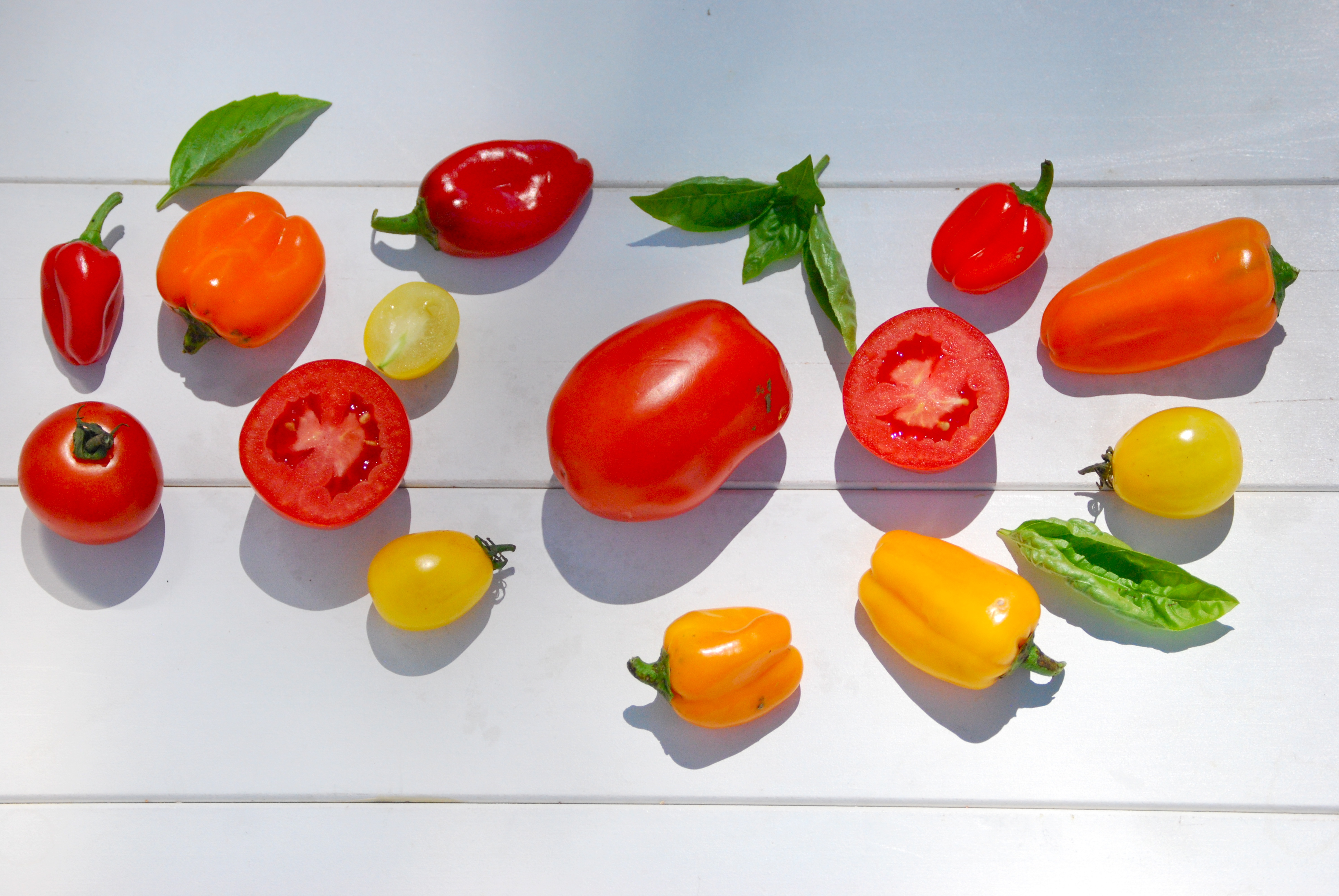
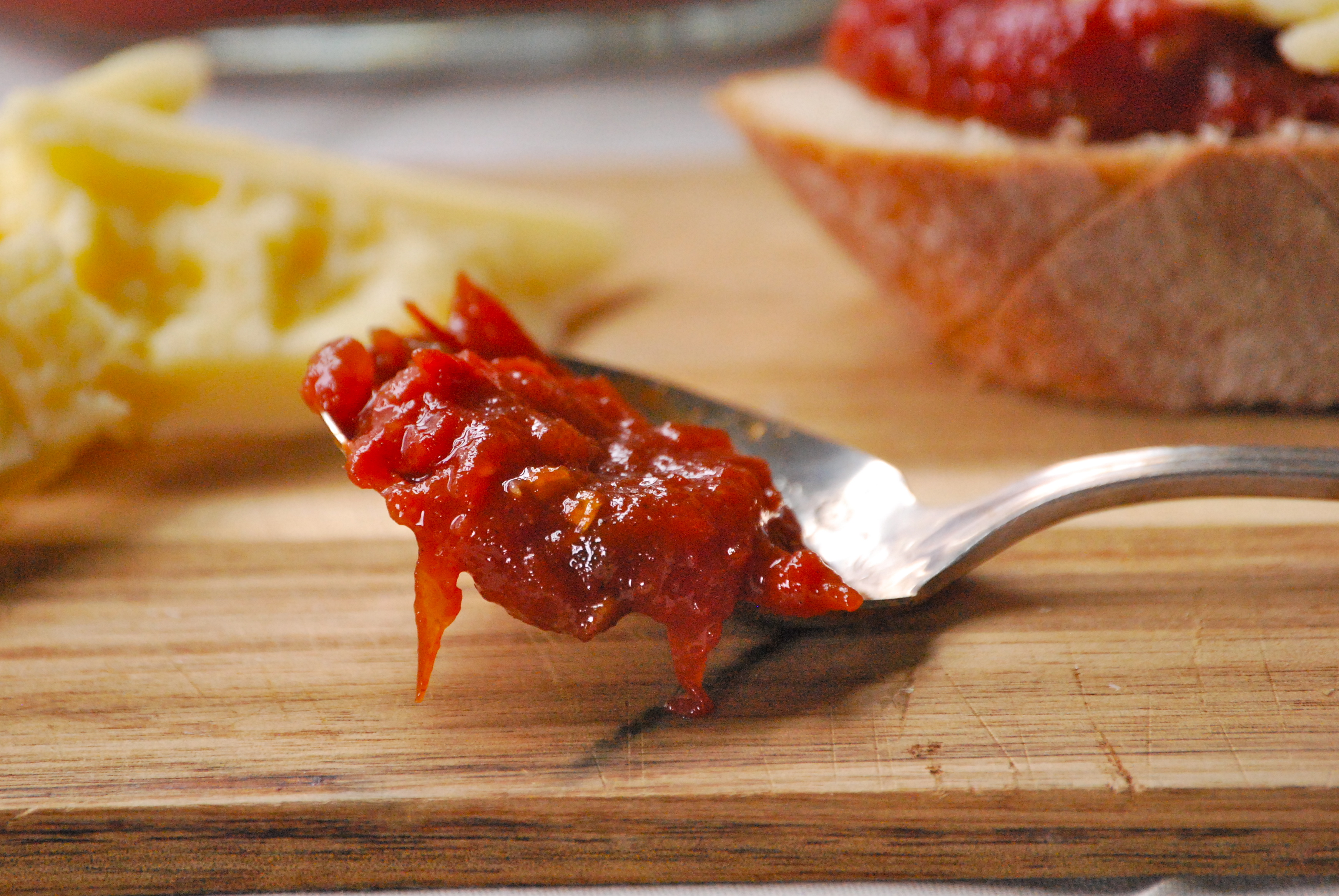
You are looking at my latest addiction– tomato jam.  You read correctly, it’s  jam made from tomatoes.  I’ve been eating this heavenly spread on everything lately.  Now you may not have heard of tomato jam, but in food circles it seems as though everyone is talking about it.  The recipe is simple and easily adaptable into both sweet and savory versions.  To me, it’s perfection in a jar.

So how simple is it?  Just chop up the tomatoes, add a few spices, and plop everything in a kettle.  Stir.  Wait an hour, or so for it to thicken. Done.  Depending on what you add, you can make it as sweet or savory as you like.  I’ve been using both versions… a lot.  The sweet jam pairs beautifully with crusty bread and a rich cheese, like a nice white cheddar or goat cheese.  Or how about serving it on top of a beautiful round of brie, with cocktails?  The savory jam is a perfect match for eggs, bacon, or braised meat sandwiches.  And that’s just the start.  Once you taste this topping– like me, you’ll spread it on everything.
Like any other jam, you’ll want to refrigerate this one (it should be used within 2 weeks).  You can also ‘can’ the jam for later by following basic canning instructions.  That way you’ll have it available throughout the winter.  It’s a good idea to double or triple (or more) the batch if you’re going to go through the work of canning it.  It’ll need 20 minutes in a hot water bath.  I’ll certainly be canning several jars, because for the past few weeks I’ve been starting my day off with an egg and tomato jam breakfast sandwich.  And I don’t want this new-found favorite to end anytime soon.  It’s so quick and easy.  Try it, you’ll be happy you did!

The Recipes: Tomato Jam: Two Ways

Somewhat  Sweet Version:

(Makes a bit more than 1 pint)

2 pounds tomatoes, chopped  (Roma are best,  though I used regular)

3/4 cup brown sugar

1/8 teaspoon ground cloves

1/2 teaspoon ground cinnamon

1 teaspoon kosher salt

1 teaspoon ground cumin

2 tablespoons lime juice  (may substitute lemon)

1 serrano pepper, minced (or any hot pepper of choice)

1 tablespoon ginger, minced

Combine all ingredients into a large, heavy- bottomed sauce pan.  Bring to a boil.  Reduce heat and simmer, uncovered.  Make sure to stir often.  Cook for roughly 1 hour, or until it reaches your desired consistency for jam.  Remove from heat and let cool.  Place in a jar and refrigerate.

Source:  Adapted from Mark Bittman via The New York Times

Smokey, Savory Version:

(Makes 1 pint)

1 pound tomatoes , chopped

1/3 cup granulated sugar

1 teaspoon ground cumin

2 teaspoons smoked paprika

pinch of kosher salt

2 tablespoons lime juice

1 serrano pepper, minced (or any hot pepper you prefer)

Combine ingredients into a medium, heavy -bottomed sauce pan.  Bring to a boil.  Reduce heat to simmer and cook uncovered, stirring frequently.  Cook for roughly 45 minutes, or until the mixture has reached your desired jam consistency.   Remove from heat, cool, and refrigerate.

Source:  Adapted from Molly Hermann from Tastebud Tart Catering via Fresh Tart @ Minnesota Monthly Magazine

I hope you enjoy both versions of tomato jam.  Have a wonderful day and thanks for stopping by.

Laurie

Follow me on Twitter!

This is the cake that conjures up childhood memories every time I make it.  The original recipe is nestled in one of those tattered  ‘Hometown Cookbooks’ that was a staple for those of us who grew up in the rural Midwest.   My Mom made this cake while I was growing up, as did half the residents in my tiny town.  But my specific memory of this cake takes me to the farm of my childhood best friend several miles down a gravel road east of Regent.  Most everytime I shared a meal with Allison at her family home, her mother would make chocolate zucchini cake.  I loved it.

While I loved the recipe as written, I’ve made several changes that add more wholesome ingredients like whole grains, reduce the sugar, and intensify the chocolate flavor.  I tested the changes on my Dad (also a chocolate fanatic), who thought it was perfect.  My Mom, on the other hand, thought it may be too chocolate-y.  I took this as a good sign since there’s no such thing as too much chocolate, and she’s not crazy about it like my Dad and me.   This is a delightful, versitile everyday cake.  It’s well- suited for coffee, ice cream, a cold glass of milk, and friends. It’s very moist due to the zucchini, has nice texture because of the nuts, and the rich chocolate  flavor is impressive.  It’s a comfort dessert, or maybe that’s just me, thinking about my hometown.

Speaking of my hometown, I figure this is as good a place as any to give you a glimpse at western North Dakota.  On our recent trip over Labor Day, Radd and I took the kids down some of the old country backroads– including the short-cut between my hometown of Regent and Radd’s hometown of Bowman, 60 miles away.  We drove that road (below) nearly every weekend to see each other 20 years ago.  While it wasn’t that impressive to our two and four year olds, it sure brought on the nostalgia.  Enjoy the pictures– and the cake!

The Recipe: Chocolate Zucchini Cake

1/2 cup butter

1/2 cup extra-virgin olive oil (canola or vegetable oil can also be used)

1 cup granulated sugar

1/2 cup brown sugar

2 eggs, at room temperature

1/2 cup milk (2%)

1 1/4 cup all-purpose flour ( I prefer King Arthur or Bob’s Red Mill Flours)

1 cup white whole wheat flour (substitute all-purpose, if you don’t have this)

1/2 cup Dutch-process cocoa, plus more to coat pan

1 teaspoon espresso powder

1 teaspoon vanilla

1 teaspoon baking soda

1 teaspoon kosher salt

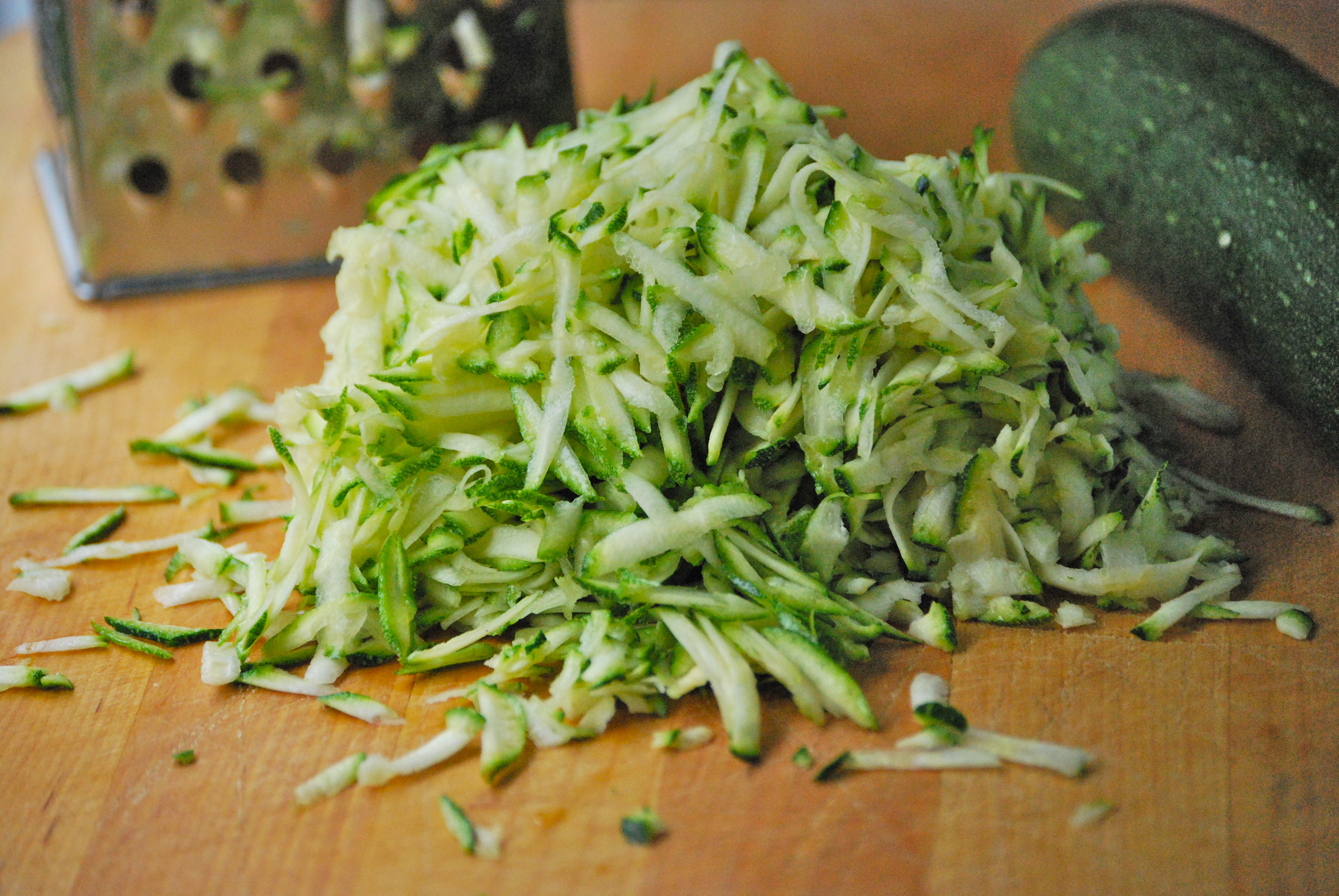
2 cups coarsely grated zucchini (about 1 large)

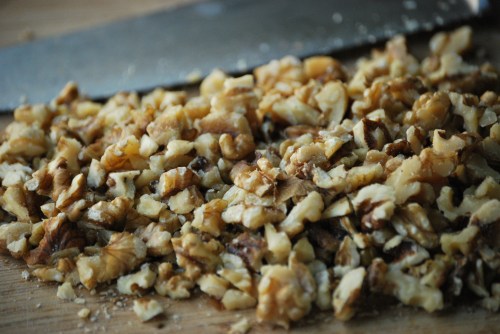
1 cup chopped walnuts, toasted

1 cup chocolate chips (Ghirardelli 60% cacao are my favorite)

Preheat oven to 350°F.  Generously butter a 9 x 13 -inch cake pan, then sprinkle with cocoa powder.  Tap off any excess.  In a small skillet toast the walnuts over medium heat, until they become fragrant, about 4-5 minutes.  Making sure to stir them during that time.

In a medium-sized bowl, sift together the flours, cocoa powder, salt, baking soda, and espresso powder, set aside.  In a liquid measuring cup mix the milk and vanilla together, set aside.

 In a stand mixer fitted with a paddle attachment, cream the butter, oil, and sugars until light and fluffy, about 5-6 minutes.  Add the eggs one at a time and beat well.  Alternate adding the flour mixture and the milk mixture.  Starting  and ending with the flour.  Be sure to scrape the bowl down when necessary and make sure not to over-mix the batter.

Remove paddle attachment and gently fold the zucchini into the batter with a rubber spatula.  Pour into the cake pan and spread flat.  Top with toasted walnuts and chocolate chips.  Bake for about 35-45 minutes.  A cake tester should come out with a few dry crumbs clinging to it.  This cake keeps extremely well.  I think it’s almost better served the day after it is made.  Make sure to enjoy it with a big scoop of vanilla ice cream.

Source:  Inspired by recipes in cookbooks from my hometown of Regent, North Dakota.

Thanks for stopping by today — hope you all have a lovely weekend!
Laurie

Follow me on Twitter!

So Summer is obviously on its way out.  I hope you had a chance to get out and enjoy the last several weeks of warm weather.  Me?  I’ve been trying to cram as many activities in as possible.  We traveled a bit (back home to western North Dakota, again), went to the lakes several times, and did our best to eat the local parlors out of ice cream.  And, my little boy started pre-school (deep breathe…).   I confess, I was not particularly looking forward to this.  But I survived.  He survived.  I’m happy to see him grow and experience new things, yet sad to watch time slip through my fingers.   And I know this is just the first of many partings.  Cherish every day.

With Fall rushing in, I raced to the Farmers’ Market to snatch up as many tomatoes as I could.  I’ve spent the week canning whole tomatoes, salsa, sauce, and tomato jam (more on this unbelievable find soon).  Then there’s this fantastic use: homemade tomato ketchup.  If you have an abundance of tomatoes from your garden, or you can get to the local markets to buy a bushel or two, you’ve got to give this a try.  I made it for the first time this year, and am kicking myself for not having done so sooner.

First though, you need to know this tastes NOTHING like the mass-market store brands you’re used to.  Full disclosure:  I like Organic Heinz.  I even like regular Heinz.  They’re pretty good, and they have basically defined the flavor of ‘ketchup’ for everybody (sorry Hunt’s).  I’d describe this as a thick, red, salty-sweet vinegar concoction.  Simply put, there isn’t much complexity — no herbs, little actual tomato flavor.  This homemade ketchup is very different.  At first I had a difficult time wrapping my brain around it– I was wired to expect ‘ketchup’, and by that I mean Heinz.  But this homemade version has fennel, ginger, garlic, basil, and tomatoes– lots of tomatoes.   The layers of flavor are amazing– not just salt/sweet/vinegar.  They’re fresh, interesting, and work together so well.  Yes, it tops a burger nicely, but it really shines on a roast beef sandwich or with those homemade fries.  And don’t forget to pair it with my homemade mustard recipes.  Give them both a try.

The Recipe:  Homemade Tomato Ketchup

(Makes about 1 pint)

1 large red onion, peeled and chopped

1/2 bulb of fennel, trimmed and chopped

1 stick of celery, chopped

1-2 tablespoons extra-virgin olive oil

1 tablespoon fresh ginger, peeled and grated

3 cloves garlic, chopped

1/2 fresh red chili, seeded and chopped

a bunch of fresh basil, leaves picked, and stalks chopped

1 tablespoon coriander seeds

2 cloves

1 teaspoon freshly ground black pepper

sea salt

1 pound  cherry or plum tomatoes, halved,  plus 1 pound canned plum tomatoes, chopped  OR  2 pounds yellow,  orange, or green tomatoes, chopped

3/4 cup plus 2 tablespoons red wine vinegar

1/4 cup brown sugar  (Note: the next time I make this, I’m going to use a bit less.  I would suggest decreasing by 1-2 tablespoons.  Taste and adjust, though remember — the flavors really  take time to develop in this particular recipe.)

Put all of the vegetables into a large, heavy bottomed, saucepan with the olive oil, ginger, chili pepper, basil stalks, coriander seeds and cloves.  Season with a pinch of salt and cracked black pepper.

Cook gently over a low heat for 10-15 minutes.  Stirring frequently.  Add the canned tomatoes and 1 1/2 cups of cold water.  Bring to a boil and simmer gently until the sauce reduces by half.

Add the basil leaves, and blend with an immersion blender or food processor.  Push it through a sieve to make it smooth.  Put the sauce into a clean pan and add the vinegar and the sugar.  Place the sauce on a medium-low heat and simmer until it reduces and thickens to  your desired consistency.  Correct the seasonings at this point.

Spoon into sterilized bottles or jars, then seal tightly and place in a cool dark place or the refrigerator.  It should keep for about 6 months.  Enjoy!

Source:  Adapted from Jamie Oliver’s Jamie At Home cookbook

Thanks so much for stopping by!  Take Care.

Laurie

Follow me on Twitter!

First, a warning:  this is an overly-enthusiastic blog post today because…IT IS MY BIRTHDAY!  That’s right, I still get REALLY excited about my birthday.  Even though I’m clinging to my mid-thirties, like a child I still get giddy whenever August 26th rolls around.  I look forward to the phone calls with my family and friends.  I wait for the e-mails, cards, and Facebook wishes.  I love it all.

Now a second warning:  I’m going to get a bit sentimental.  The truth is, I still love my birthday so much because I look back on my life thus far, and forward to another wonderful year.  I’m so fortunate to be married to my wonderful husband, and I have two beautiful children.  I had the benefit of growing up in a loving family and then marry into another.  Thanks for having me, Mom and Dad.  Here’s to many more great years!

So what about the food?  Rather than make a birthday cake, I decided to go with one of my all-time favorites.  This carrot cake is easily one of the best I’ve ever eaten.  After giving my neighbors a sample, they agreed that this is as good as carrot cake gets.  It has the perfect amount of nuts– they provide just enough texture and flavor without overwhelming the dessert.  It has no raisins, which, to be honest, I don’t really miss.  The cake is dense, as you’d expect, but not heavy– in short, it’s perfect.  The two secrets to this cake are oranges and limes.  Freshly-squeezed orange juice and a little zest really add a fragrant punch, while the icing– laced with lime juice and zest– make it unforgettable.

The Recipe: Carrot Cake with Lime Mascarpone Icing

For the Cake:

1 1/4 cups unsalted butter, softened

2 cups light brown sugar

5 large free-range or organic eggs, separated

zest and juice of 1 orange

1 1/2 cups of self-rising flour, sifted

1 heaping teaspoon baking powder

1 cup ground almonds

4 ounces / 1 cup chopped walnuts, toasted, plus more for topping the cake

1 heaping teaspoon ground cinnamon

1/4 teaspoon ground cloves

a pinch of freshly ground nutmeg

1/2 teaspoon ground ginger

10 ounces/ 3 cups organic carrots, peeled and coarsely grated

pinch of kosher salt

For the Lime Mascarpone Icing:

4 ounces mascarpone cheese

8 ounces full-fat cream cheese

1 cup confectioners’ sugar, sifted

zest and juice of 1 lime

Preheat oven to 350°F.  Grease and line with parchment paper a 9 – inch square or round cake pan.  (Note:  I used mini-loaf pans and yielded 6).  Beat the butter and sugar together by hand or using a stand mixer until pale and fluffy.  Beat in the egg yolks one at a time and add the orange zest and juice.  Gently stir in the sifted flour and baking powder, and add the ground almonds, walnuts, spices and the grated carrots.  Mix together well.

In a separate bowl, whisk the egg whites with a pinch of salt until stiff, then gently fold them into the cake mix.  Scoop the batter into the prepared cake pan and bake for about 50 minutes (less if using the mini-loaf pans) until golden and risen.  To check cake using a toothpick, insert into cake for 5 seconds — it’s done when it comes out clean.  If it feels sticky, bake a bit longer.  Let cake cool in pan for 10 minutes.  Turn out onto a cooling rack and let cool completely.

To make the icing: mix all of the ingredients except the lime juice together.  Carefully add 1 teaspoon at a time.  Making sure the icing doesn’t get too thin.  Spread generously on the cake and top with walnuts.  Enjoy!

Source:  Adapted from Jamie Oliver’s Cook With Jamie Cookbook

Thanks again for stopping by Relishing It today.  I hope you all have a wonderful weekend — I know I will.

Laurie

Follow me on Twitter

Homemade condiments?  Seriously?  Why bother making homemade mustard when there are several perfectly adequate mustards on the grocery store shelf?  My quick answer is, ‘why not.’  Alright, that response, alone, may not convince you.  How about this– I generally believe that almost anything homemade from fresh ingredients is better.  I like to know where my food comes from, and when I make it from whole ingredients, I get that piece of mind.  But there’s another aspect to making food– even condiments– from scratch.  I love the process.  I enjoy working with each individual ingredient, watching them all combine into something wonderful.  In the end I feel like I’ve accomplished something.  It’s calming– therapeutic even.

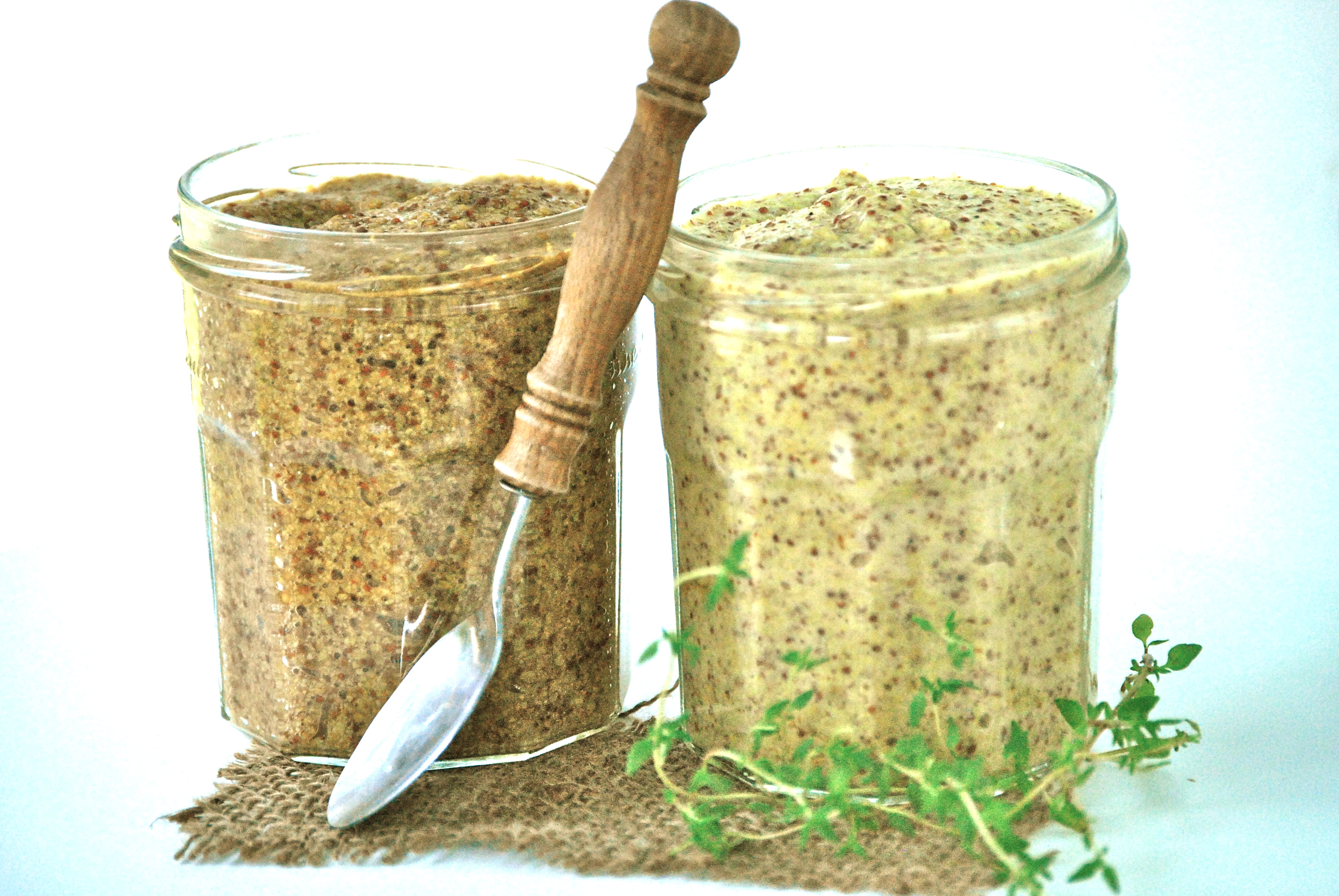
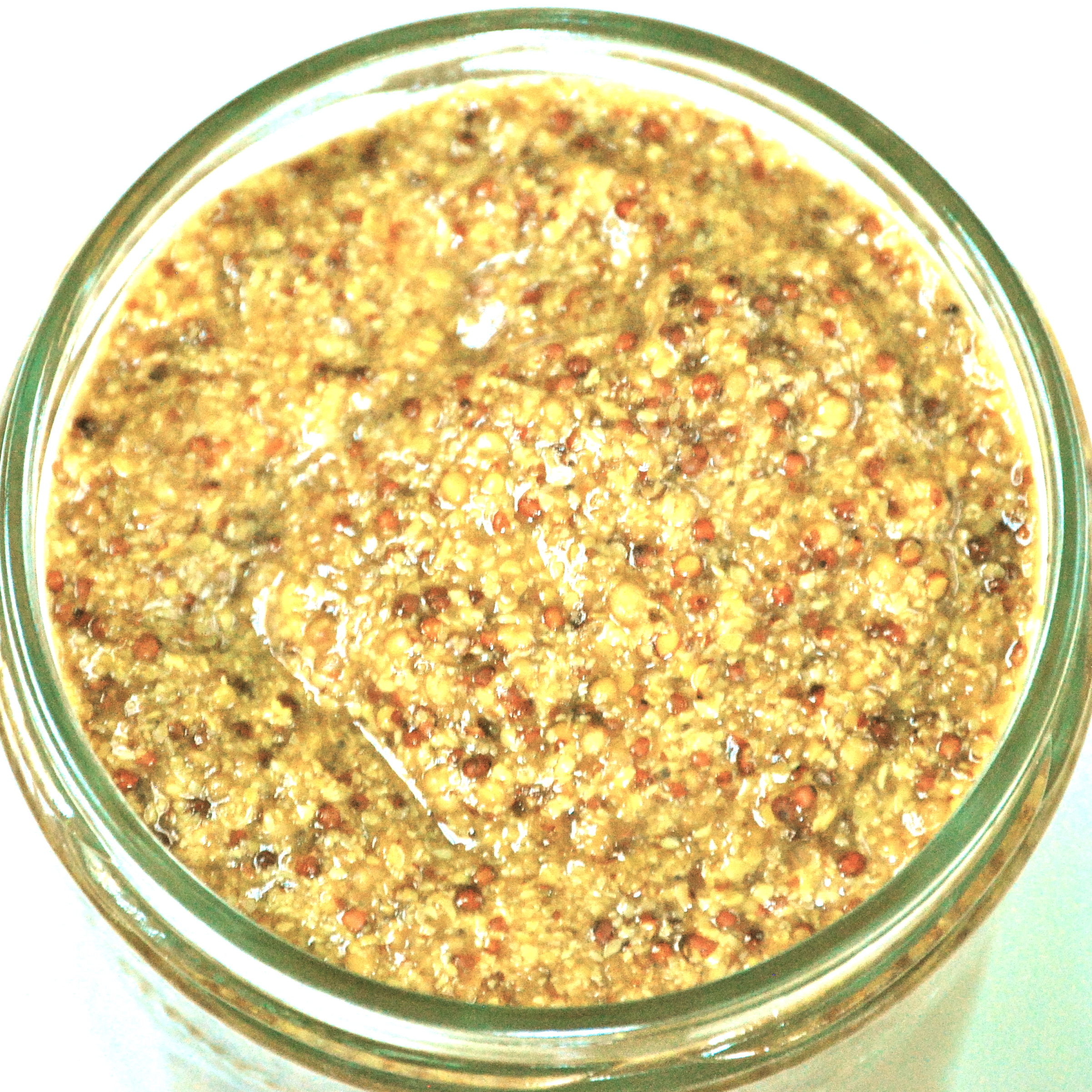
Like many of you, I’m a bit embarassed by the shelves of my refrigerator door– stuffed with old half-full condiment jars that rarely get called into action.  (How many versions of Louisianna Hot Sauce does one need?!)  While clearing out some of those forgotten toppings, I decided to add a few of my own– these two jars of mustard and one of homemade ketchup (stay tuned for a post on that one.)  Mustard is so much more versatile than many people realize.  And this grainy mustard version is marvelous.  Aside from the typical burger/hotdog summer fare, it makes for magnificent turkey or ham sandwiches, works well in vinaigrettes,  and– at least if you ask my daughter Aria– is best suited for dipping pretzels.  This weekend I plan to grill wild salmon and add a teaspoon of fresh thyme to the white wine vinegar mustard for a topping.  Very exciting!

I made two variations of mustard, though you can certainly customize your own.  The first was a basic mustard, which I think I enjoyed just a tad more.  The second, the ‘brewhouse’ version, featured a fairly robust dark beer as a central ingredient.  Both were delicious.  Other possible additions to the basic recipe include:  tarragon (1 T, fresh), rosemary (1 tsp, fresh), tomato paste (1 T), honey (2 T), molasses (1 T), balsamic vinegar (1-2 T), cayenne pepper (1/4 tsp), roasted garlic (2-3 cloves, mashed), peach (1/4 cup fresh puree), chili (1 tsp, minced), and mango (1/4 cup fresh puree).  One thing to keep in mind though, if you add any of the above, your mustard won’t keep as long– probably about a week.

The Recipe: Homemade Grainy Mustard

Makes 1 1/2 cups

Basic Grainy Mustard

1/4 cup yellow mustard seeds

1/4 cup brown mustard seeds

1/2 cup water  (red wine can also be used)

1/2 cup white wine vinegar (or any vinegar with at least 5% acidity)

pinch of salt

(Note:  A Port Wine Mustard can also be made by substituting 1/2 cup tawny or ruby port for the water or red wine.)

Brewhouse Mustard

1/4 cup yellow mustard seeds

1/4 cup brown mustard seeds

1/2 cup sherry vinegar (or any vinegar with at least 5% acidity, such as malt)

1/2 cup strong flavored beer (such as a porter, stout, dark or amber ale)

pinch of salt

Put all of the ingredients into a jar with a tight fitting lid.  Give it a good shake and let it rest for about 2 days. This will allow the mustard seeds to become soft.  After the 2 days,  pour the mixture into a blender or a mini food processor.  Blend it to your desired consistency. If it appears to be too thick you may need to add a bit of water.  Make sure to scrape down the sides of the bowl.  You’ll never achieve a completely smooth mustard from this mixture.  Return the mustard to the jar and store in the refrigerator or a cool, dark place for several months.  The mustard will mellow and thicken a bit over time.  Enjoy!

Source:  Adapted from Mark Bittman’s How to Cook Everything Vegetarian

Thanks for stopping in for a visit!

Laurie

Follow me on Twitter!

While growing up, I recall my parents, grandparents, and aunts and uncles always talking about how much they loved Borscht.  As a child, I had to disagree.  They couldn’t be talking about that deep-red vegetable soup that I sat at the table and stared at, hoping it would somehow disappear so I could go play, could they?  I’d like to believe I wasn’t too keen on Borscht because of the not-so-wonderful sounding name, though no doubt my palatte has simply changed.  I get what my family was talking about.  Now I make this soup all of the time.  Take one look at that beautiful color, and then a spoonful of those lovely vegetables and comforting broth, and you’ll see why.

Beets– probably the most vibrant vegetable around.  I love their slightly-sweet flavor, and eat them both roasted and raw.  They are the foundation of this soup, along with a nice selection of other fresh vegetables.  I like to add as wide a variety of vegetables as possible– in particular root vegetables– but if you don’t have exactly what I used, don’t worry.  Like any good soup, this one is forgiving and you should be able to find a substitute.  I used fresh tomatoes because I had them on hand.  I also used the last of my homemade tomato juice.  When I don’t have fresh tomatoes in winter, I rely on my homemade crushed canned tomatoes– about 2 cups.  If you use canned crushed tomatoes, be sure to make the appropriate adjustments to the amount of liquid you add.  In other words, you may not need as much water.

Speaking of the broth, this is generally the only soup that I make using just water.  In this soup the ingredients are so numerous and fresh that they provide that additional flavor that you generally get from vegetable broth.  If you want a little more taste, you can add a ham shank or ham juice– like my Mother does.  Both wonderful additions.  The two ingredients where you won’t want to vary from the recipe are the fresh dill and addition of vinegar.  Both are keys to making this soup complete.  So how do you add fresh dill in early January when you want to linger over a bowl of Borscht?  Thankfully, dill freezes very well.  Stick it in a freezer storage bag and it’ll last for months.

So why am I writing about a warm soup in late August?  Good question.  The last two weeks have seen crisp air at night here in Minnesota.  I bought apples at the farmers’ market this weekend.  And right now my house smells of cinnamon, as my husband is bottling a batch of his home-brewed Autumn Spice Ale.  It has seemed like an unusually short summer– and though it going to be hard to let it go, I think I’m getting ready for Fall.  This soup was a test and I think it feels right.

The Recipe:  Borscht

2-3 tablespoons olive oil

4 tomatoes, diced

4 beets, peeled and diced

4 carrots, peeled and diced

3 parsnips, peeled and diced

1 turnip, peeled and diced

1 onion, chopped

1/2 head small cabbage, chopped

1/4 cup fresh dill, finely chopped

1 bay leaf

3 tablespoons white vinegar

2 1/4 teaspoons kosher salt

3/4  teaspoon cracked black pepper

6 cups water

1 cup tomato juice

In a large heavy-bottomed kettle, such as a Dutch oven, heat the olive oil and add the onion, beets, carrots, parsnips, turnip, and tomatoes along with the kosher salt and black pepper.  Saute until the vegetables start to soften, 10-12 minutes, stirring frequently.  Add the cabbage and allow to wilt a bit, another 3-4 minutes.  Add the water, tomato juice, bay leaf and vinegar.  Bring to a boil and reduce heat to simmer.  Allow to simmer until the vegetables are tender, 30-45 minutes, depending upon how high the heat is.  Stir in the fresh dill.  Make seasoning adjustments if necessary.   Serve with a dollop of sour cream.  Enjoy!

Thanks again for stopping by Relishing It!  Have a great day.

Laurie

Follow me on Twitter!

Just in case I haven’t been clear, I LOVE the colorful array vegetables available this time of season.  For today’s recipe, I put together one of my favorite beautiful, delicious salads.  Panzanella is an Italian salad that usually consists of soaked stale bread and tomatoes.   My version includes a greater variety of ingredients, and a little more crunch from the bread.  Now a purist may say that it isn’t panzanella, but when it tastes this good, why quibble over the name?  Panzanella it is, and it’s marvelous.

This was the first week that I finally found red peppers at the farmers’ market.  My kids and I love them as a snack.  Here I used mini sweet multi-colored peppers.  Cute and tasty!  Since fresh cucumbers and red onions are plentiful now, I added those as well.  For the cheese, I used (surprise!) ricotta salata.  Yes, it’s my go-to addition, but the creamy texture and saltiness work perfectly in so many dishes.  It seems I’m always poking around for another piece of it with every bite.   The ricotta salata also makes this salad a bit more substantial– we ate it as a light meal rather than a starter.

Of course the star of the salad is the crusty bread and red wine vinaigrette.  I like to tear my bread rather than cut it– more dressing seems to get into the crevices.   I could eat the bread and dressing alone, which I guess that’s the point of the salad— it’s nice to get some healthy vegetables in there, too.  When assembling the salad try to keep most of the vegetables relatively the same size.  I love this combination of flavors– it’s one of my favorite things to eat during the summer.  It makes a nice, light meal that I find myself eating pretty much every day for lunch.

The Recipe:  Panzanella

(The measurements are vague — make as big of a salad as you want.  You will have plenty of dressing.)

2 large cucumbers, chopped

2 cups mini multi-colored peppers, chopped  (or 1 red and 1 yellow bell pepper, chopped)

6 Roma tomatoes, chopped

3 mini – red onions, thinly sliced  (or 1 small red onion)

handful of fresh garden lettuce, torn

12-15 basil leaves, whole

1/3 cup cubed ricotta salata cheese  (feta can be substituted)

1 baguette, torn into bite-sized pieces

2 tablespoons extra-virgin olive oil

salt and pepper

1 teaspoon fresh thyme, chopped  (or 1/2 teaspoon dried)

Red Wine Vinaigrette

1/4 cup red wine vinegar

1/2 cup extra-virgin olive oil

1 clove garlic, minced

1 teaspoon Dijon mustard

1/2 teaspoon fresh thyme, chopped

kosher salt and freshly cracked pepper to taste

To Toast the Bread:  Preheat oven to 375°F.  Toss the torn bread with 2 tablespoons olive oil,  1 teaspoon fresh thyme, salt and pepper.  Put onto a baking sheet and bake until the bread chunks are golden brown and have a nice crunch to them — about 10-15 minutes.  Remove from oven and set aside.

To Make the Vinaigrette:  In a medium-sized bowl, mix the vinegar, garlic, 1/2 teaspoon thyme, and mustard.  Using a whisk, slowly add the extra-virgin olive oil, whisking all the while.  Add salt and pepper to taste.  Set aside.

To Assemble the Salad:  In a large salad bowl, add the garden lettuce, cucumbers, peppers, tomatoes, ricotta salata cheese, red onion, basil, and toasted bread.  Pour some of the dressing onto the salad.  Toss.  Let sit for a few minutes before eating so the dressing has a chance to soak into the bread a bit.  Add more dressing, salt, and pepper, if necessary.  Enjoy!

I hope you are enjoying your summer produce as much as we are.  This is a beautiful time of year!  Have a great weekend.  Take Care.

Laurie

Follow me on Twitter

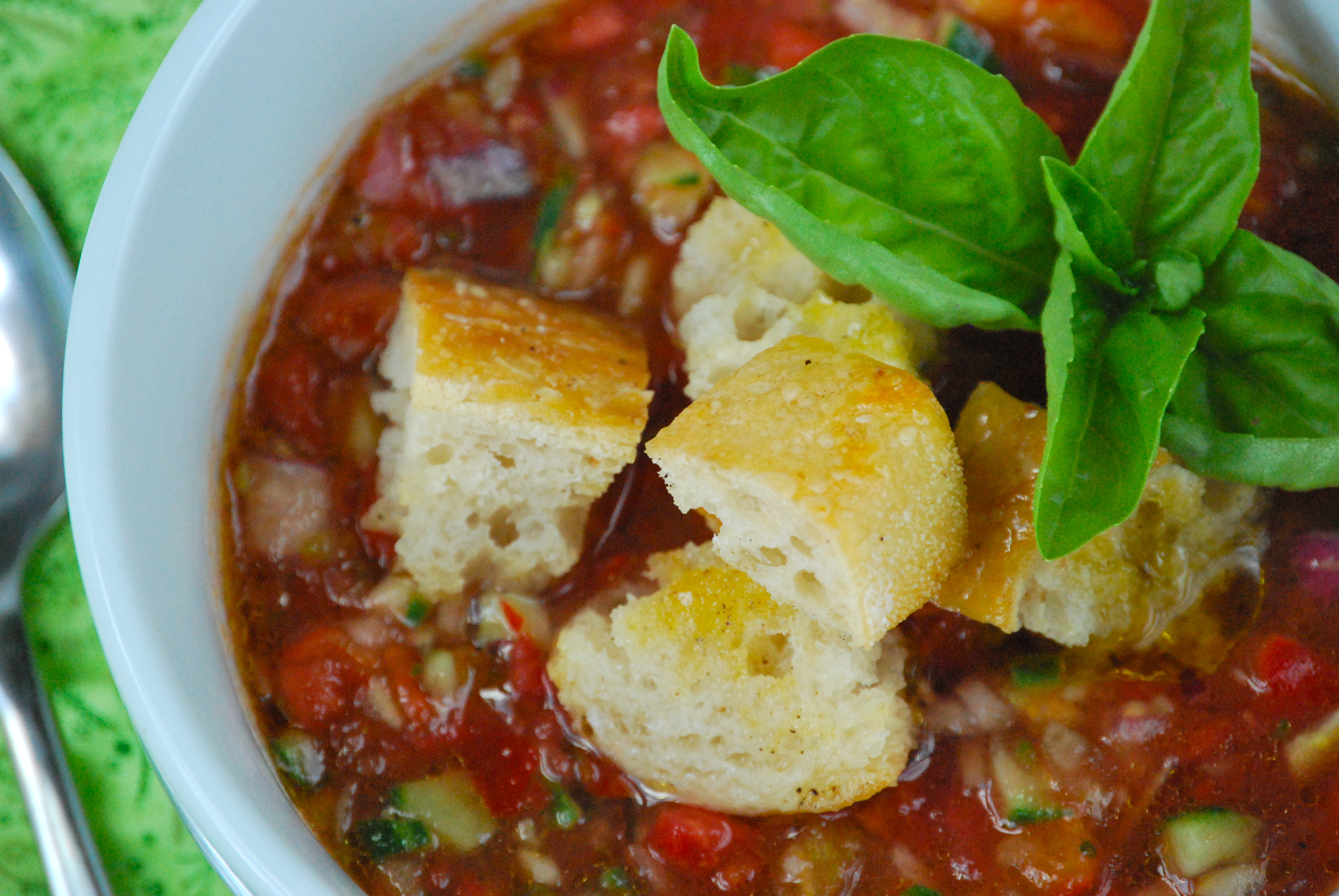
Gazpacho.  Cold soup.  Not much of a selling point is it?  But for those of you who have had gazpacho, you know just how refreshing it is.  Gazpacho is a Spanish tomato-based raw vegetable soup.  It originated in the sunny southern region of Andalusia as a fresh, cool meal to combat the summer heat.  There are many different versions, though this one is my favorite.  For those of you who are hesitant to eat a cool soup, I can only say this: give it a try– I guarantee you’ll make this one every summer as the temperatures get above 90 degrees.  It’s one of the most refreshing dishes you’ll ever taste.

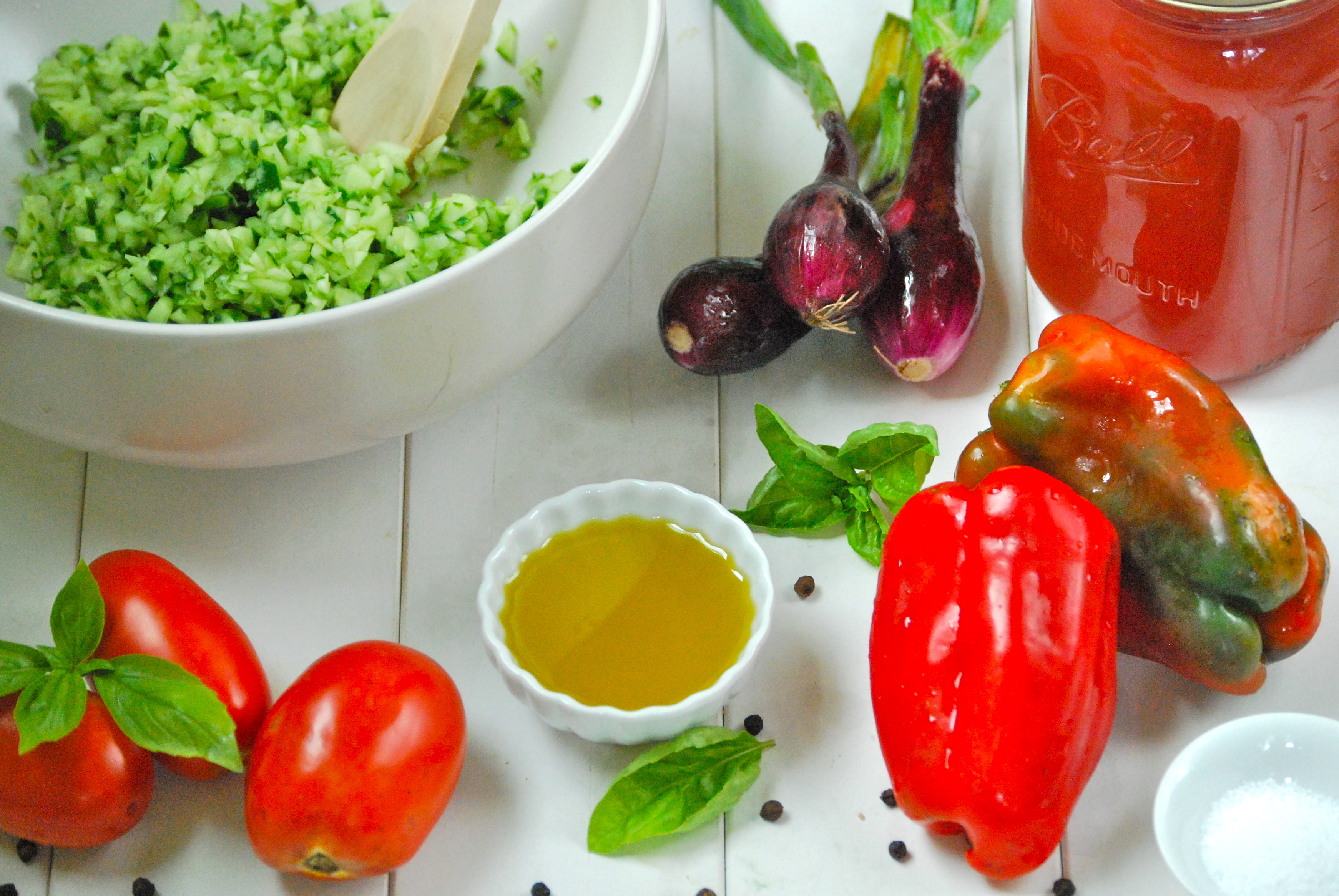
The soup is a combination of the all the wonderful usual suspects from your late-summer garden or farmers’ market– cucumbers, red peppers, purple onion, garlic, and fresh tomatoes.  They’re finely chopped in a food processor and then combined with tomato juice,  a bit of white wine vinegar, and a really good olive oil.   For gazpacho, you’ll definitely want to go with the best olive oil you have as it’s flavor is central to the soup.  I also used my homemade, canned tomato juice, though as my stock is running low (canning tomatos will be available soon!) I can’t lend you an extra jar.  If you can juice, use it as you’ll notice the difference in the final flavors.  As an alternative, several grocery stores carry high-end juices which should work well.  If you instead use a nation-wide brand, use Sacramento.  I personally think it tastes better than any of the other well-known brands.

Gazpacho is the perfect make-ahead dish.  It tastes better the longer it sits– the flavors have a chance to meld together.  I like to make some homemade croutons to top it all off with.  Hope you enjoy!

The Recipe:  Gazpacho

2 medium-sized garden cucumbers, halved and seeded, but not peeled

2 red bell peppers, cored and seeded

5-6 Roma tomatoes

1 red onion

3 large garlic cloves

3 cups good quality tomato juice

1/4 cup white wine vinegar

scant 1/4 cup good extra-virgin olive oil

1/2 tablespoon kosher salt

1 teaspoon freshly ground black pepper

Add 1/4 teaspoon red pepper flakes for a little heat, if desired

For the Croutons:

2 – 3 cups crusty bread, such as a baguette, cut into 1-inch cubes

2 tablespoons olive oil

salt and pepper

To make the croutons: Preheat oven to 375°F.  Toss cubed bread pieces with the olive oil, salt and pepper.  Place on a baking sheet.  Bake for about 10-15 minutes or until they have reached your desired crunchiness.

Roughly chop the cucumbers, bell peppers, tomatoes, and red onions into small pieces, roughly a 1-inch cube.  Put each vegetable into a food processor fitted with a steel blade, separately.  This is important for texture.  Pulse until it is coarsely chopped.  Make sure not to over-process.

After each vegetable is processed, combine them in a large bowl and add the garlic, tomato juice, vinegar, olive oil, salt and pepper.  Mix well and chill before serving.  The longer it sits, the better it will be.  Before serving top each bowl of soup with a handful of homemade croutons and some torn basil, if desired.  Enjoy!

Source:  Adapted from Ina Garten’s The Barefoot Contessa Cookbook

Thanks for stopping by!

Laurie

Follow me on Twitter!

I was so excited by what I found at the co-op the other day– sour cherries!  Finally.  I’ve been waiting for these little babies to show up for nearly a year, though to be honest there wasn’t much chance in me missing them.  The walk to the co-op has become a daily– yes daily– adventure for my daughter.  Aria has decided that a walk to the co-0p, and more importantly her getting to push around a little cart and help pick out the food, is as good as it gets for a daily field trip.  I’m not complaining.  We get a bit of exercise on the way to browsing through organic, local food.  It’s a mini-adventure for us, and given the home-body nature of my boys (Aanen and Radd), it’s nice to know I have an ally.  Train them while they’re young, right?

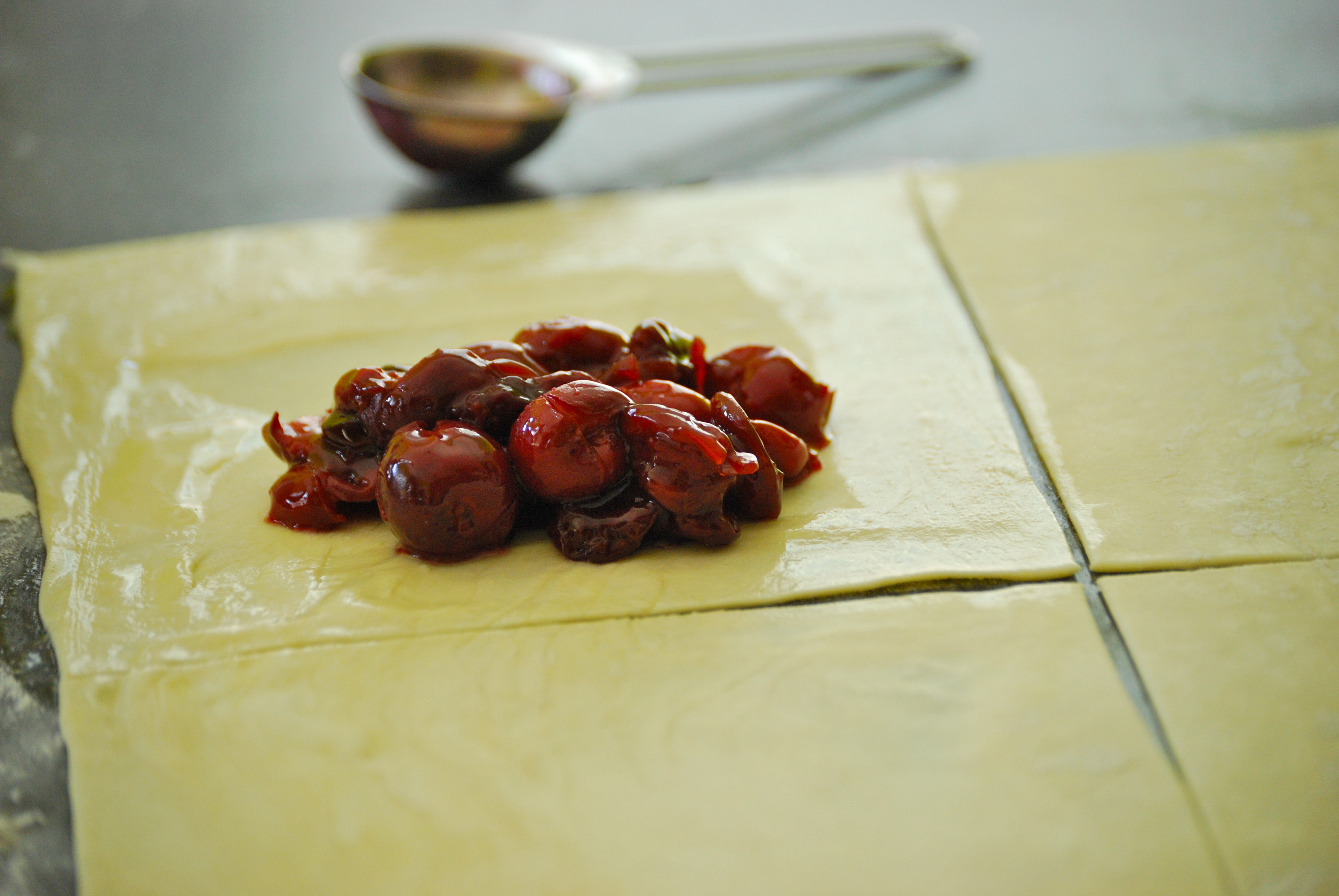
We don’t get sour cherries that often in Minnesota.  Despite checking daily, I think I was lucky to get my hands on these.  I knew exactly what I wanted to do with these perfectly tart, bright red cherries.  A couple months back, I saw a recipe in Bon Appetit for Cherry Hand Pies.  They looked incredible, and though they called for regular cherries, I wanted to wait for the sour ones in order to add a little zing.  I love tart desserts.  If you’re not fortunate enough to find sour cherries, use the Bing variety– no doubt you’ll still be very satisfied with the result.

This is a great recipe for those of you who don’t have some of the equipment necessary for a few of the other recipes here on Relishing It.  All you’ll really need are a skillet, rolling pin, and cookie sheet.  Even better, the dough is simple because it’s already-prepared puffed pastry.  That’s right, very little effort goes into this fantastic dessert.  The filling is brilliant– it combines sour and dried cherries, nicely balancing both the sweet and tart sides of the fruit.  And the consistency is firm enough that you won’t end up with a sogged-out pie.  I’ve talked about puffed pastry here before– I love working with it.  It turns out perfectly flakey, and in this dessert it holds everything together beautifully.  Finally, the raw sugar sprinkled on top for finishing adds a nice crunch.  I made eight of these the other night, planning to give most of them away to friends and neighbors.  They were so good that we ate almost every one…in one evening.  So beware, they’re really that good.  Enjoy!

The Recipe:  Sour Cherry Hand Pies

(Makes Eight)

1 1/2 tablespoons cornstarch

2 cups (12 ounces) sour cherries , stemmed and pitted  (frozen cherries can be used if thawed)

2/3 cups dried cherries

1/2 cup granulated sugar

1 teaspoon almond extract (vanilla can be substituted)

1/4 teaspoon kosher salt

1 17-ounce package puffed pastry, thawed in the refrigerator  (use all-butter if you can, I used Pepperidge Farm)

2 large egg whites mixed with 2 tablespoons water

2 tablespoons raw sugar for sprinkling (use more if you want)

Line a large rimmed baking sheet with parchment paper.  (Note: I ended up using two pans and baking the pies in two separate batches).  Stir the cornstarch with  1 1/2 tablespoons of cold water in a small bowl.  Set aside.  Combine the fresh cherries along with the dried cherries, granulated sugar, almond extract, and salt into a large saucepan.  Cook over medium heat until the cherries begin to release some of their juices, about 5 minutes.  Add the cornstarch mixture and bring to a boil, stirring often.   Remove from heat and let cool to room temperature.

Roll out one of the puffed pastries on a lightly floured work surface. I found that rolling it into a big square of 16-inches worked the best.  Cut the sides with a pizza cutter or sharp knife so they are completely even.  Cut the dough into four even sections.  Repeat with the next pastry dough when complete.

Working with 1 section at a time, brush the egg wash along the sides of the pastry.  Scoop 3 tablespoons of the cherry mixture onto one side.  Gently fold the dough over the filling.  Crimp the edges with a fork to seal.  Using a sharp knife, cut three slits on the top of the pie to vent.  Place on prepared baking sheet; repeat with remaining dough and filling.

Brush tops with remaining egg wash and sprinkle with raw sugar.  Chill for 30 minutes.  Preheat oven to 375°F.  (Make sure your oven is accurate).  Bake pastries until tops and bottoms are golden brown, 25-35 minutes.  Let cool for 10 minutes on baking sheet.  Then transfer to a cooling rack…or your mouth.  Store at room temperature.

Source:  Adapted from the July, 2011 issue of Bon Appetit Magazine

Thanks again for stopping by for a visit.  I always enjoy hearing from you.  Have a great day!

Laurie

Follow me on Twitter!

Here’s a little insight into what’s going on in my head– and I realize this is not normal– but the highlight of my week usually involves hitting the local farmers’ markets with my family.  Aria, my two-year-old daughter, loves it as much as I do.  We pretty much have to drag the home-body boys (Aanen and Radd), who protest all the way.  Well, maybe not all the way.  Once they’re out of the  house, I think they enjoy it, too.    

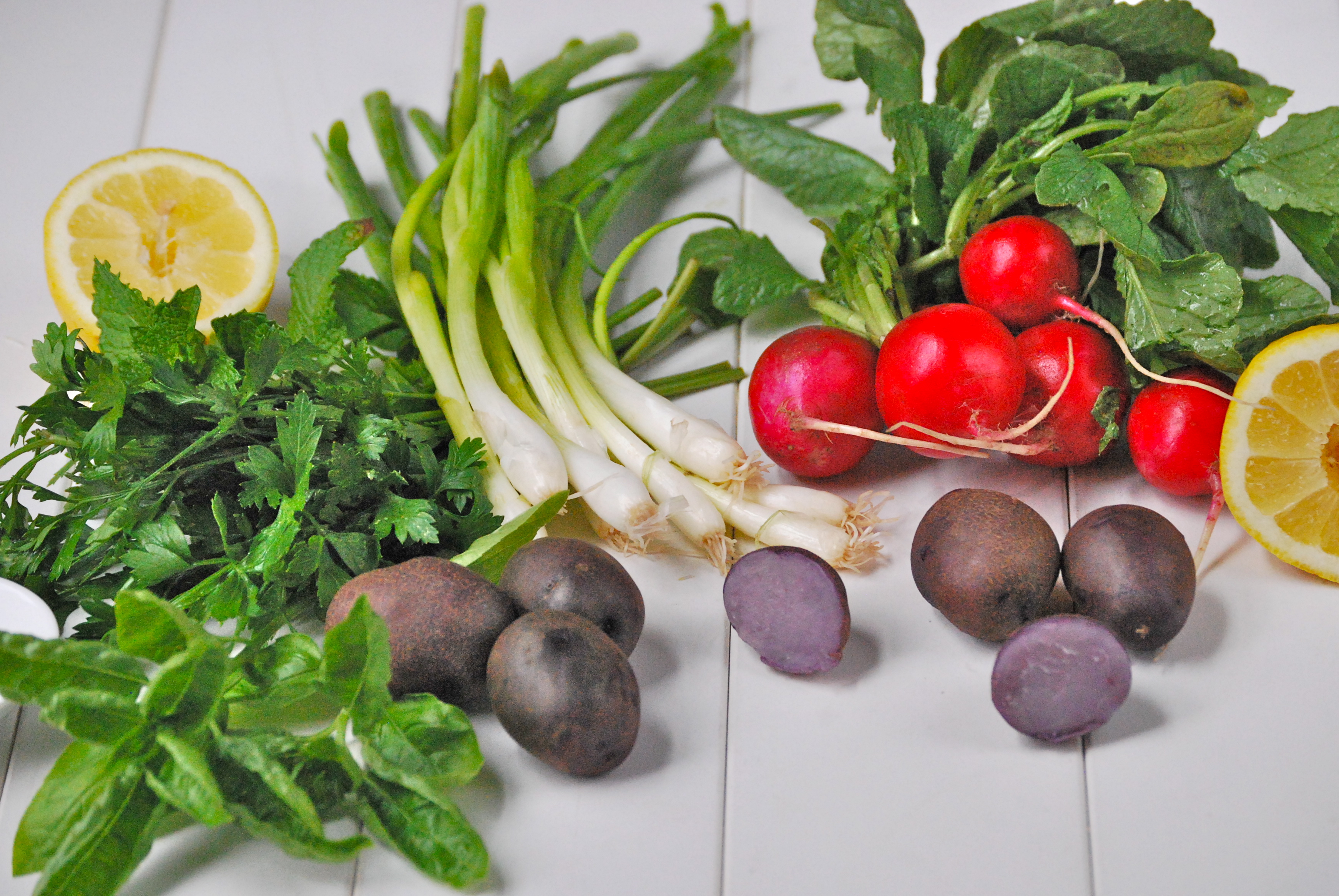
Anyway, late Summer is when the market really shines– so many different varieties of produce to choose from!  Last weekend I snagged these gorgeous purple potatoes.  Look at how vibrant they are!  This is nature.  This is food.  And it still amazes me.  Despite what some sources say– and I know it’s probably just in my head– I feel like purple potatoes have a more earthy flavor that a plain-old white ones.  If not, well then they’re just more interesting.

This potato salad keeps it simple, yet looks fantastic.  The point is to let the beautiful colors and fresh flavors be the center of attraction, rather than cover everything up with a glop of mayo.  The addition of the herbs (especially the mint, do NOT omit the mint!) make this salad taste like Summer.  The subtle flavor of creme fraiche lets the produce shine, yet adds that creaminess you expect in a potato salad.  The radishes give a contrasting delightful crunch.  If you don’t have creme fraiche, you can use sour cream, but you’ll notice a bit more of a tang.  I love to finish this salad with a drizzle of olive oil and a squeeze of lemon juice.  It just works and it’s one of my favorite potato salads.

The Recipe:  Creme Fraiche, Herb, and Purple Potato Salad

1 – 1 1/2 pounds new purple potatoes

handful of parsley, mint, and basil chopped (around 3/4 cup total)

5-6 green onions, chopped

6  large radishes, chopped

1/2  lemon

1/3 – 1/2 cup creme fraiche

3-4 tablespoons extra-virgin olive oil

kosher salt and cracked blacked pepper, to taste

To steam the potatoes:  I prefer steaming to boiling– the potatoes retain less water this way.  Put potatoes in a steamer basket placed in a saucepan with a tight lid.  Make sure to put enough water into it.  Steam potatoes until nearly done, then turn off heat and let them sit for 10 more minutes.  The potatoes will continue to cook with the heat turned off.  The cooking time will vary based upon the size of your potatoes, so be sure to check it.  I steamed mine for 25 minutes, and let them sit for another 10 minutes.  Yours may take less time.  Just be sure to check them by inserting a sharp knife into them.  Be sure your saucepan doesn’t run out of water.

Sprinkle potatoes with a bit of salt and let them cool.  Meanwhile, chop the herbs, radishes,  and green onions.  Add them to the cooled potatoes, along with the creme fraiche, olive oil, and a squeeze of the lemon juice.  Don’t squeeze the full amount right away.  Taste as you go along, and definitely feel free to adjust measurements to your liking.  You may want a bit more creme fraiche and olive oil.   Be sure to season with salt appropriately, as the salt really brings all of these flavors together.    Enjoy!

Thanks for stopping by Relishing It today.  Have a great weekend!

Laurie

Follow me on Twitter!