Feeds:
Posts
Comments

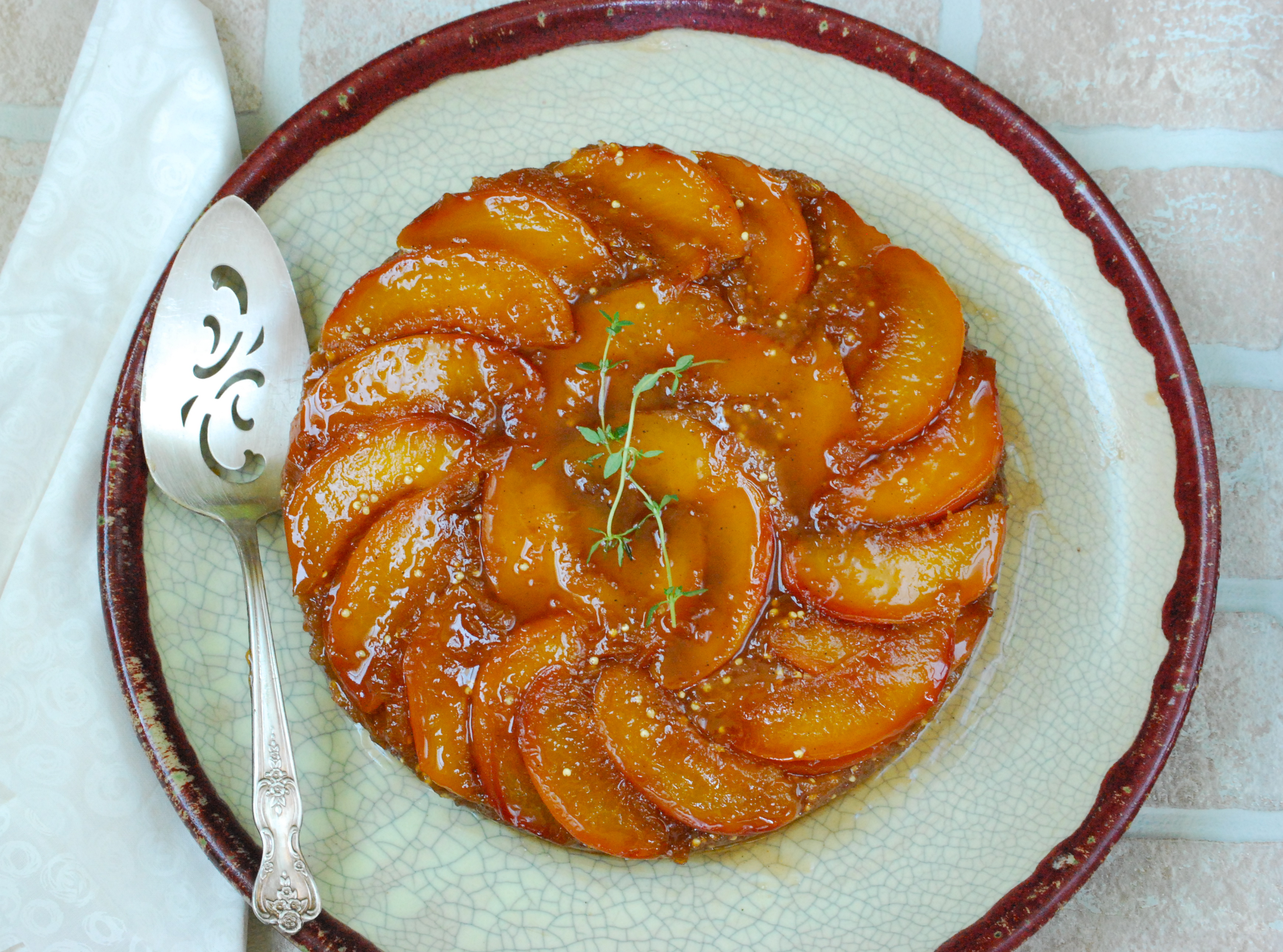
This summer my son, Aanen, declared that peaches are his favorite fruit.  Given the quality of the organic peaches from our co-op this year, he may be right– they’ve been perfectly ripe, juicy, and delicious.  We’ve eaten so many in the last month– and not just for snacks.   Turns out they’re perfect for baking (surprise!) as well.

I’ve made this cake twice in the last couple of weeks– and if the judgment of my family and neighbors is any measure– it’s fantastic.  More than one person has mentioined that it’s one of the best cakes I’ve made.  I agree, and it’s all about the peaches.  This cake is adapted from a fellow Minnesota Food Blogger and friend, Zoe Francois.  I’ve mentioned her before, though you may know Zoe from her well-known cookbook Artisan Bread In Five Minute A Day.  She is an top-notch pastry chef who always has wonderful ideas on her blog, Zoe Bakes.

A few words about what makes this cake stand out.  First, the sauce is unforgettable.  The peaches, butter, and brown sugar meld together to create an amazing flavor.  The addition of three tablespoons of whiskey adds additional complexity.  Both times I’ve made it I’ve wanted to keep licking the spoon.  Second, the flavors of the sauce combine with the caramel-like addition of browned butter in the cake.  I’ve found that the toasty, nutty, carmel flavors of the browned butter make most any dish better.  Here, it really acts as the framework– a subtle backdrop that accentuates the the peach, brown sugar, and whisky perfectly.  Finally, I decided to toast and add millet, a whole grain, for a little bit of texture.  As with most any grain, the toasting adds additional ‘toasty’ flavors.  Here, it also provides a nice little crunch that makes this cake unique.  If you don’t have access to millet, don’t worry.  It’s not a necessity.
The Recipe:  Upside-Down Peach and Cardamom Cake

Peaches:

2 tablespoons unsalted butter

3/4 cup brown sugar

pinch of kosher salt

1 teaspoon vanilla extract

1/4 teaspoon ground cardamom

3 tablespoons whiskey (substitute orange juice, if you don’t cook with alcohol)

1 pound peaches (about 2 1/2 large) Cut into slices, peelings can be left on.  (Firm peaches will work well here, as they won’t break down as much)

Cake:

4 ounces (8 tablespoons unsalted butter)

1 cup  (5 ounces) all-purpose flour

1 teaspoon baking powder

1 teaspoon cinnamon

1/4 teaspoon ground cardamom

1/2 teaspoon kosher salt

3/4 cup brown sugar

2 eggs at room temperature  (To do this quickly:  place eggs in a dish of warm water for roughly 10 minutes)

1 teaspoon vanilla extract

1/3 cup buttermilk  (To make your own: mix 1 teaspoon white vinegar into 1/3 cup milk — let sit for 10 minutes)

1/3 Millet, toasted

To toast the Millet:  Place millet into a small frying pan over medium heat, toast until golden and fragrant.  Being careful not to burn.  Remove from heat and set aside.

To brown the butter for the cake:  Place butter into a small saucepan over low heat.   Cook the butter until it is a beautiful caramel color and smells toasted, making sure to stir all the while. Being careful not to burn.  There will be dark brown bits in the pan.  Remove from heat and strain.  Set aside to cool slightly.

To make the peaches: In a large skillet cook together the butter, brown sugar, salt, cardamom, vanilla, whiskey, and peaches.  Cook them on low heat until the juice is as thick as maple syrup.  I ended up removing the peaches so they didn’t fall apart and cooked the juices down a bit more.

Place the peaches and juice into a 8-inch round or square cake pan. (And if you’re a little bit neurotic like myself, you can make a pattern with the peaches while carefully trying not to burn your fingertips.) I also made it in a 9-inch cake pan and it turned out fine, if that’s all you have.  The cake will not be as thick, but still delicious.  (Note: Both times I made the cake, I didn’t butter the pan and it came out easily, but if you’re hesitant — feel free to butter away!)

Preheat oven to 350°F.

To make the cake batter:   In a medium bowl, whisk together the flour, baking powder, cinnamon, cardamom, and salt. Set aside.   Using a paddle attachment, on an electric mixer  (a hand mixer will also work), beat together the browned butter that has cooled a bit, brown sugar, and vanilla.  Add the eggs one at a time, making sure to scrape down the sides of the bowl after each one.    Alternate adding the flour mixture with the buttermilk, starting and ending with the flour mixture.   Finally, fold in the toasted millet with a spatula.

Place the batter evenly over the peaches and spread it out smoothly.  Bake for 30-35 minutes or until the cake is set and a tester comes out clean.  Let sit until the pan is cool enough to handle and invert onto a serving platter.  I prefer to let the cake cool completely before serving.  This cake begs to be served with a scoop of vanilla ice cream along side of it.  Enjoy!

Source:  Adapted from Zoe Francois at Zoe Bakes

As always, thanks for stopping by Relishing It today.  This little blog has become  such an amazing place for me to connect with new friends and still keep in touch with old ones.  I am so happy to share it with all of you.

Laurie

Follow me on Twitter!
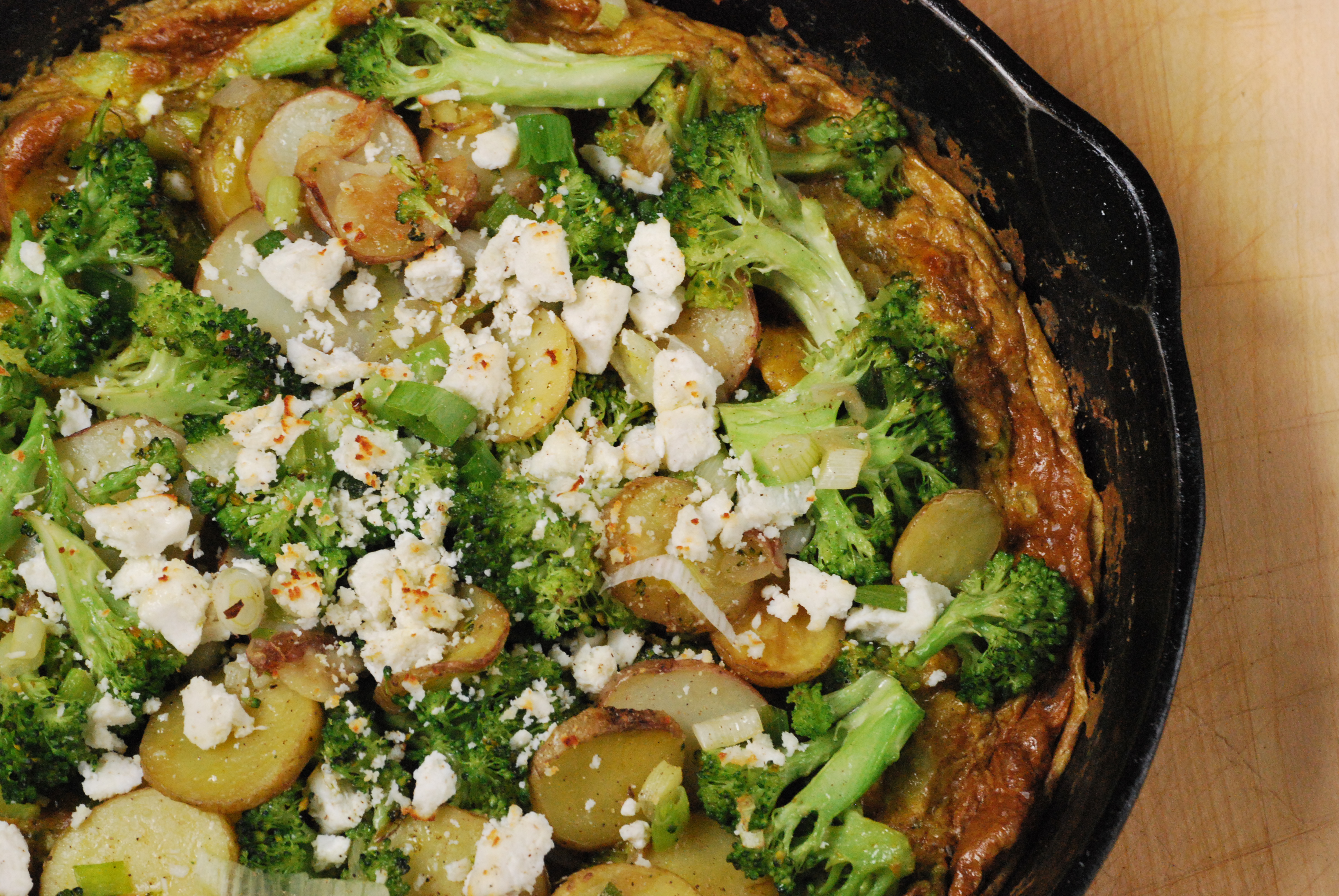
I love when I can make a meal entirely out of ingredients that I have on hand.  No trip to the market required.  I love it even more when everything–with the exception of the olive oil and curry powder–is organic and locally-produced.  For today’s post I made this delicious, hearty frittata by raiding only my refrigerator and pantry.  This dish works well as either a breakfast or dinner option.  Even better, its both filling and healthy.

The two major components are vegetables and fresh eggs.  The vegetables can be easily adapted to fit taste– like I did, you can use whatever you have on hand.  I used onions, potatoes, and broccoli, though summer squash or asparagus would make a tasty variation.  Since I  seem to always have ricotta salata cheese on hand, I relied on it as well.  It added a nice creaminess.   Goat cheese or feta can be substituted as well.  Finally, I wanted something a little out-of-the-ordinary, so I turned to curry powder.  The spice added a nice complexity to this dish.  We really enjoyed this simple meal, and I hope you do too.

The Recipe:  Seasonal Frittata

2 tablespoons extra-virgin olive oil,  plus more for drizzling (melted butter would work, too)

1/2 onion, chopped

8 ounces new potatoes, unpeeled, sliced very thin

8 ounces chopped broccoli (or any other seasonal vegetable you prefer)

4-5 green onions, thinly sliced

9-10 large eggs, well beaten

1 tablespoon curry powder

1/4 cup crumbled ricotta salata cheese (or goat or feta)

salt and pepper

Heat the oil in a ovenproof 12-inch skillet (cast-iron worked great) over medium – high heat.  Stir in the onions and potatoes and a big pinch of salt and pepper.  Cover and cook, stirring occasionally, until the potatoes are just cooked.  About 5 minutes.  Stir in the broccoli and green onions and cook for a few more minutes until they are soft and to your liking.    Remove half of the mixture from the pan.

Whisk the eggs together with the curry powder and pour the eggs into the skillet.  Cook over medium-low heat until the eggs are just set and there isn’t much liquid in the pan.  To make sure this happens, run a spatula underneath the perimeter of the frittata and tilt the pan so the undercooked eggs run to the underside.  You want to avoid browning the bottom of the frittata.  Top with the set aside vegetables and sprinkle with the cheese.

Place under a broiler for a couple of minutes, until the top of the frittata is puffed and set and it has a somewhat golden look to it.  Keep a watchful eye, as it can burn quickly.  Remove from the broiler and let rest for a couple of minutes.  Drizzle with olive oil and serve either warm or at room temperature.  Enjoy!

Source:  Adapted fro Heidi Swanson’s Super Natural Every Day

Thanks for stopping by today — see you soon.

Laurie

Follow me on Twitter!
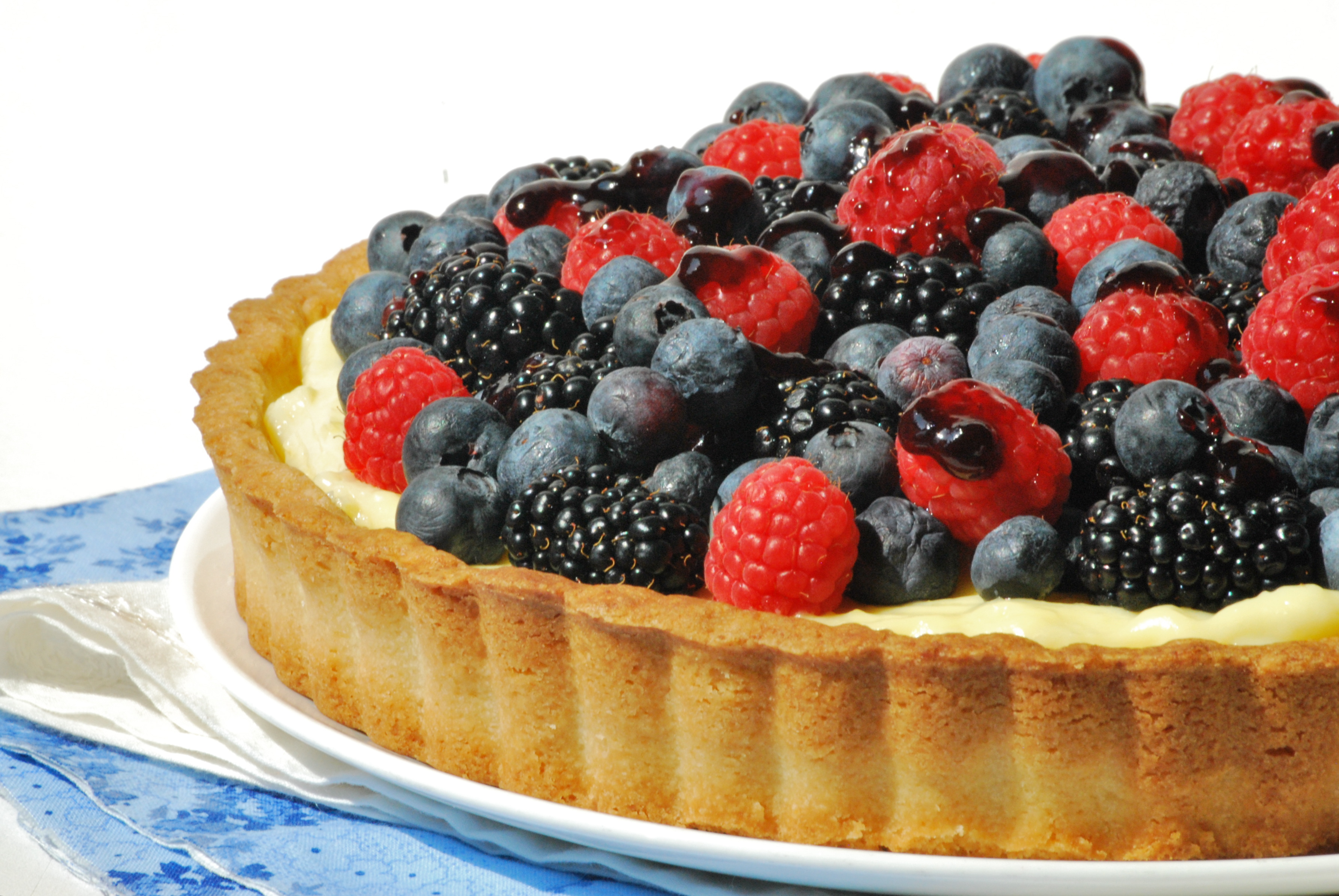
So you already know that I love a good tart.  I think I’ve been open about my love of pastry cream, as well.  This week, I’ve combined both and added fresh, dazzling fruit for this fabulous Summer dessert.  Not surprisingly, my kids love pastry cream, too.  And who can blame them– it’s virtually a custard or pudding.  As for the berries, now is the time to really start using them in dishes like this– they’re fresh and full-flavored. 

Most sources recommend freezing an unbaked tart shell in the tart pan– to be baked right before you assemble the dish.  If you do this, the dough can be kept frozen for up to two months, and refrigerated up to five days.  Keep in mind, if you bake it right before serving, you must make sure the crust is completely cooled before filling with the pastry cream and berries.  On hot days like we’ve had for much of the past month, I like to actually bake the tart shell ahead of time, wrap tightly and freeze it.  It’ll last for a few days that way.  This allows me to bake at night (or early morning) when the stifling heat of the day has dropped a bit.  When I’m ready to fill it with pastry cream and berries, I take it out of the freezer and thaw– it really doesn’t take long.    Enjoy!

The Recipe:  Classic Berry Tart

2 pints of berries, use your favorites

1 9 – inch tart shell made with this Sweet Tart Dough

Lemon Pastry Cream:

2 cups whole milk

6 large egg yolks

1/2 cup sugar

1/3 cup cornstarch, sifted

1 teaspoon vanilla extract

zest of 1 lemon

3 1/2 tablespoons unsalted butter, at room temperature, cut into small pieces

Glaze:

1/3 cup blackberry jam

1 teaspoon lemon juice


To bake the crust:  Butter a 9-inch fluted tart pan with a removable bottom.  Press the dough evenly over the bottom and up the side of the pan, using all but one little piece of the dough, which you should save in the refrigerator in case the tart needs to be patched after it is baked.  Butter the shiny side of aluminum foil and press against the tart.  Freeze the crust for 30 minutes before baking.   Leave the foil on the tart and place on a baking sheet.  Bake at 375°F for 25 minutes.  Remove the foil and bake for another 8-10 minutes, or until the crust is a beautiful, deep golden brown.  If the tart has a crack and needs to be patched — apply the extra dough and bake for just two minutes.

To make the pastry cream:  Bring the milk and lemon zest to a boil in a sauce pan.

Meanwhile, in a medium heavy-bottomed saucepan, whisk the yolks together with the sugar and cornstarch.  Still whisking, slowly add about 1/2 cup of the hot milk — this will temper the yolks, so they won’t curdle.  Still whisking, slowly add the rest of the hot milk.  Put the pan over medium heat and whisk vigorously and constantly.  Make sure to get the edges of the pan, too.  Bring to a boil.  Keep at a boil for 1-2 minutes, or whenever it appears to be thick enough. Remove from heat.

Whisk in the vanilla extract.  Let sit for 5 minutes, then whisk in the bits of butter, stirring until they are completely incorporated and the pastry cream is smooth and silky.  Scrape the cream into a bowl.  You can press a piece of plastic wrap against the cream to create an airtight seal and refrigerate until cold.  Or, if you need it cooled more quickly than that, place the bowl of cream into a larger bowl filled with ice and water.  Stir the pastry cream until cold, around 20 minutes.

To make the glaze:  Bring the jam and lemon juice to a boil.  Using a pastry brush or paper towel,  dab the glaze onto the fruit.  Feel free to drizzle it onto the pastry cream, as well.  This tart is best eaten the day it is made, but leftovers can be loosely covered and refrigerated.  Enjoy!

Source:  Adapted from Dorie Greenspan’s Baking from my home to yours

Thanks for stopping by Relishing It today!  See you soon!

Laurie

Follow me on Twitter

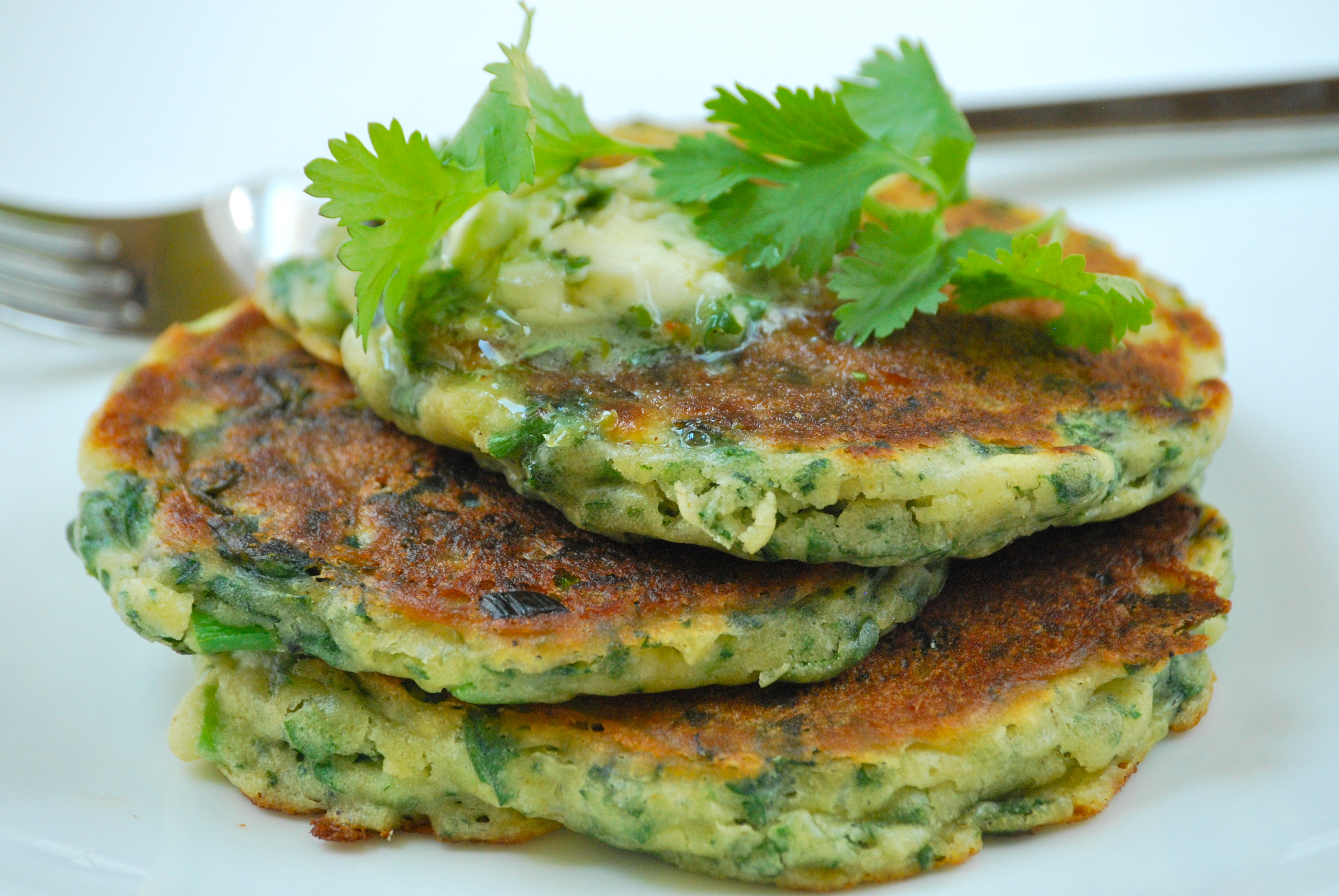
This recipe blew me away!  How’s that for an opening?  When I read about these savory pancakes, I figured they’d be delicious– the flavors sounded like they really worked well together.  But I had no idea that they would meld into such a heavenly combination.  The first bite was, honestly, a revelation.

This dish comes from the amazing Yotam Ottolenghi.  He owns the highly-regarded Ottolenghi restaurant in London’s Notting Hill district.  This recipe can be found in his latest cookbook– devoted to vegetables– called Plenty.  Both the recipes and presentation are brilliant.  The photography, ingredients, and flavor combinations of his creations are an inspiration.

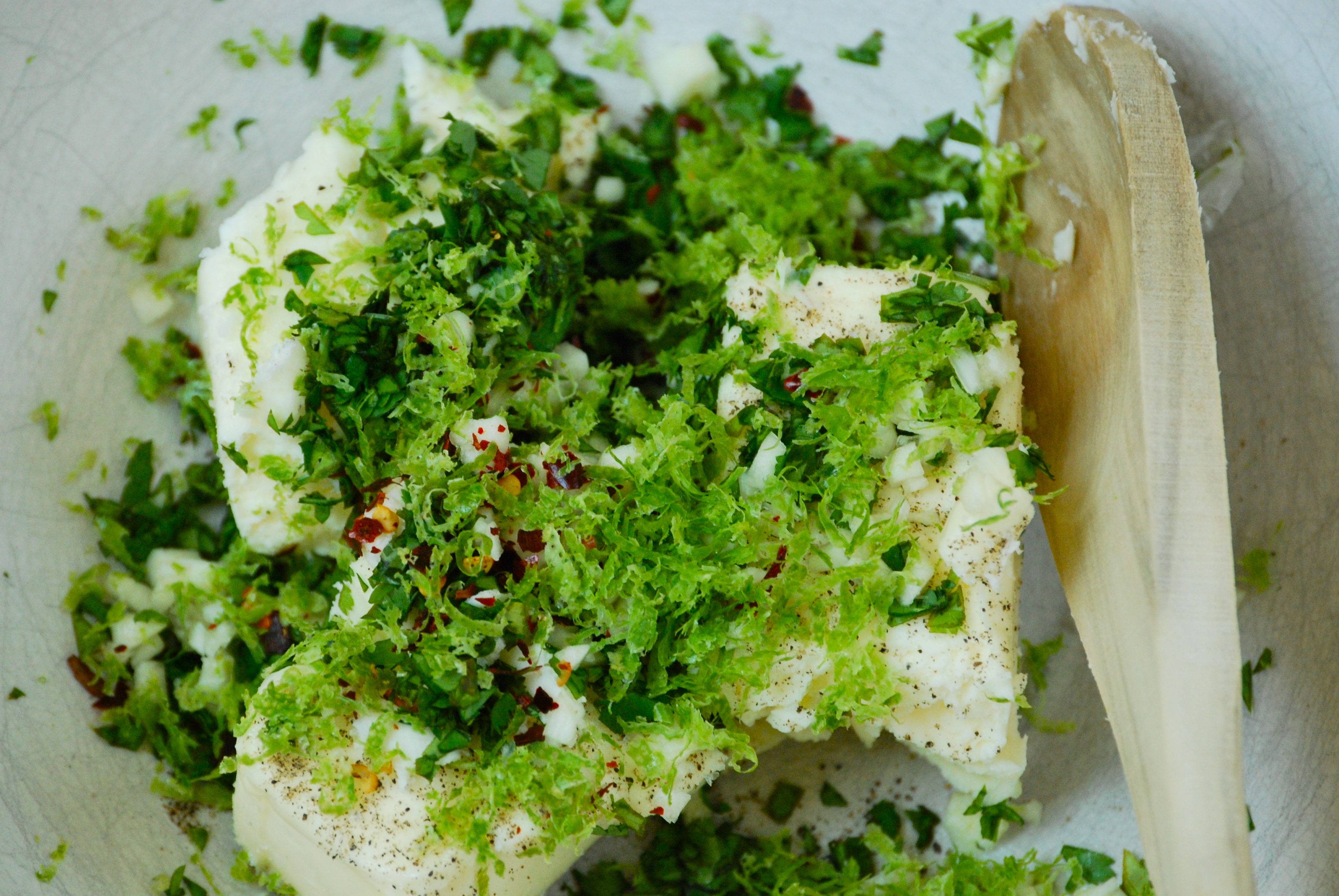
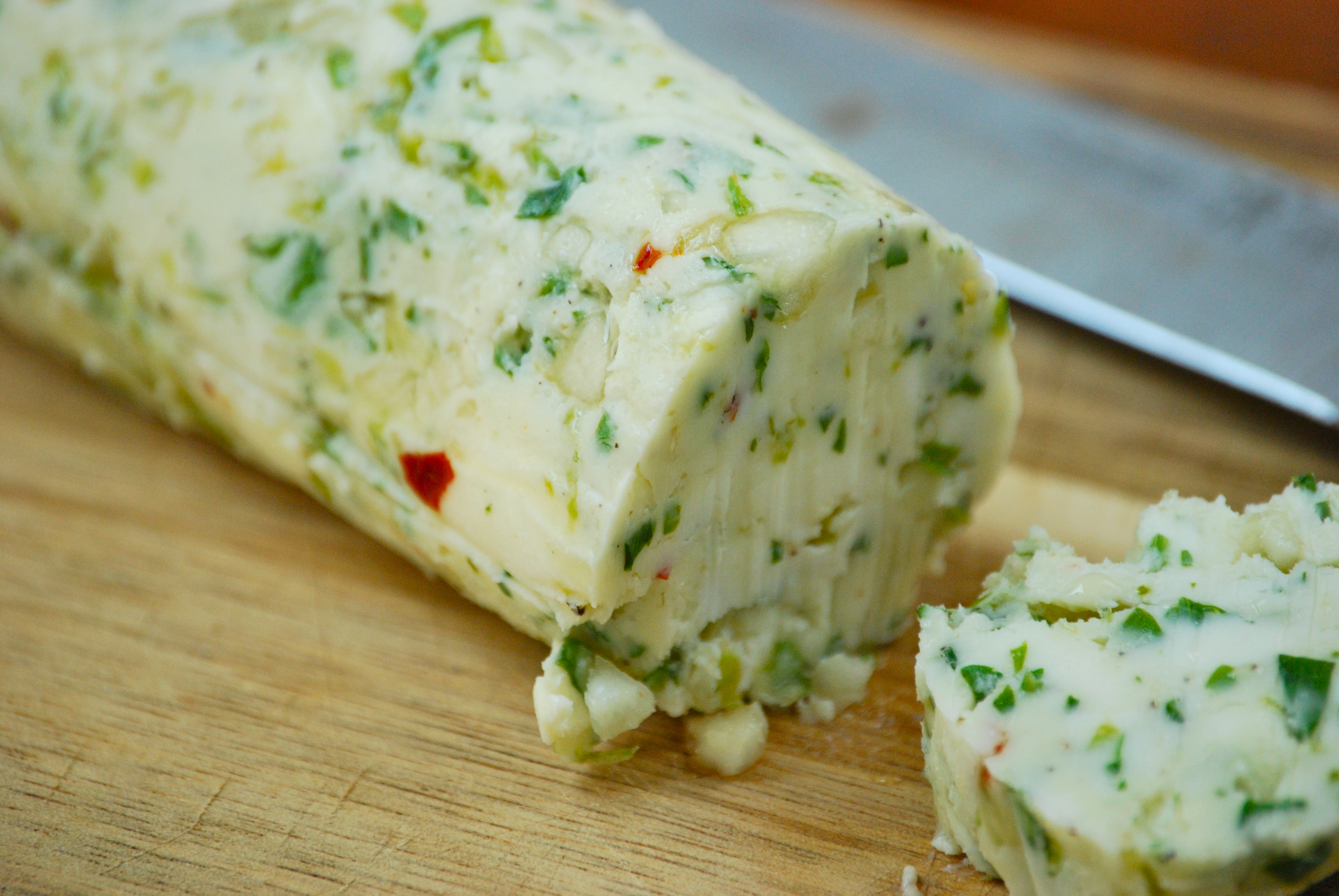
Aside from their incredible flavor, these pancakes are also a perfect way to get more greens into your day.  I used rainbow Swiss chard, along with green onions and cumin in the batter– they combine into a wonderful flavor.  But the real showstopper in this dish is the cilantro lime butter.  It is not subtle– more like a ‘flavor punch’ to your tastebuds.  You won’t need to use all of the butter on your pancakes, but you should make the entire amount. Once you taste it, you’ll see why.  I’m already thinking of other foods to put it on, like grilled sweet corn and sweet potatoes.  These pancakes make a fantastic star for any brunch menu, but work just as well for dinner, given their savory flavor.  Hope you enjoy them as much as we did.

The Recipe:  Savory Green Pancakes with Cilantro Lime Butter

Serves 3-4

Cilantro Lime Butter

8 tablespoons (1 stick) unsalted butter, soft, but somewhat cold

grated zest of 1 lime

1 1/2 tablespoons lime juice

1/4 teaspoon kosher salt

1/2 teaspoon black pepper

1 tablespoon cilantro, finely chopped

1 clove garlic, finely minced

dash of chile flakes, to taste

Savory Green Pancakes

1/2 pound (8 ounces) Swiss Chard, washed, stems removed

3/4 cup self – rising flour

1 tablespoon baking powder

1 egg

4 tablespoons unsalted butter, melted

1/2 teaspoon kosher salt

1 teaspoon ground cumin

2/3 cup milk (I used 2%)

5-6 medium green onions, finely sliced

1 fresh green chili, thinly sliced  (more if you prefer heat)

1 egg white

olive oil for frying

(Note: to make self-rising flour, combine 1 cup flour, 1 1/4 teaspoon baking powder, and a pinch of salt)

To make the cilantro lime butter: Place the somewhat chilled butter in a medium bowl (I liked working with the butter slightly chilled, because it was easy to roll into a log — it does take a little more muscle to get the ingredients mixed into it).  Mix in the rest of the ingredients until the butter mixture is creamy and uniform.  I formed the butter into a log using the wrapper from the butter,  you could also use plastic wrap and twist the ends of the wrap.  Chill until firm.

Wilt the Swiss chard in a hot frying pan with a splash of water.  Drain in a colander and when completely cool, squeeze out the remaining liquid using a paper towel or your hands.  Chop well and set aside.

Place the flour, baking powder, whole egg, melted butter, salt, cumin, and milk in a large mixing bowl and whisk until smooth.  Add the green onions, chiles, and Swiss Chard and combine with a spoon.  Whisk the egg white to soft peaks (I used my electric mixer, but you could do it by hand) and gently fold into the batter.

Pour a small amount of olive oil into a heavy frying pan and place on medium-high heat.  For each pancake, ladle 2 tablespoons of the batter into the pan.  These are meant to be small pancakes, about 3 inches in diameter and 3/8-inch thick.  Cook for about 2 minutes on each side, or until you get a beautiful golden color.   Enjoy with a small slice of the cilantro lime butter placed on each pancake.

Source:  Adapted from Yotam Ottolenghi’s Cookbook, Plenty

Thanks for stopping by today — hope you all have a glorious weekend!

Laurie

Follow me on Twitter!

Minneapolis/St. Paul was buzzing this weekend.  There were so many things going on!  On Saturday alone, the Twins won, U2 played an amazing outdoor set in the driving rain, the summer Aquatennial festival wrapped up with fireworks, and one of our favorite bands– local blue-grass boys Trampled By Turtles– put on a fantastic concert.  While Radd and I only had time to catch the last of those events, we had a great night.  My brother and sister-in-law took in both the baseball game and the U2 show, and said both had this incredible vibe.  What a great weekend!  It makes me so happy to live here.

How does this relate to food?  No clue, but I’ll do my best to tie them together.  Summer is a busy time and often you need quick, healthy meals that you can simply pull from the fridge–or ones that you can make at the beginning of the week and eat over several meals.  For that, I offer you this filling, fabulous salad.  Quinoa (KEEN-wa) is one of my favorite grains.  It’s quick, easy and sooo healthy.  Chickpeas are a nice compliment, as they’re full of protein, healthy, and don’t leave you hungry.  There’s real heft to this salad– you’ll know you’re eating something substantial.  I used black quinoa in this version, but you can use whichever kind you have.  As for the recipe, think of it more as a list of suggestions– play around a bit to find the mix that you like best.  Add ingredients that are your favorites, or that you simply have on hand.  Fresh cucumbers come to mind.  Also, while I love mixing fresh garden lettuces into the salad, if I know I’m going to have leftovers I don’t mix them into the whole batch.  The lettuce tends to wilt.  Instead, add it to the other ingredients just prior to serving.     Hope you enjoy– let me know what wonderful combinations you come up with!

The Recipe:  Summer Quinoa and Chickpea Salad

1 cup black quinoa, rinsed

1 cup dried chickpeas, cooked

1 cup small cherry tomatoes, halved

1/3 cup ricotta salata cheese, cubed

Fresh garden greens, torn

Fresh herbs, such as basil, parsley, mint, or thyme

Red Wine Vinaigrette

1 clove garlic, minced

1/4 cup of red wine vinegar

1 teaspoon Dijon Mustard

1/2 cup (or more to taste) of extra-virgin olive oil

salt and pepper

sprinkle of sugar, if desired

To make the chickpeas:  Place them in a medium saucepan and cover with water.   Bring to a rolling boil.  Boil for one minute and remove from heat.  Cover with lid.  Leave the chickpeas in the pan of water, covered for 2 hours.  After that, check for tenderness.  Cook a bit longer if needed.  Drain and sprinkle with a tiny bit of kosher salt.   Allow to cool.  (Note:  Feel free to make more than needed for the recipe and keep extras in the freezer.  They are a wonderful addition to many salads, or like my two year old daughter– you can just eat them for a snack.)

To make the quinoa:  Rinse quinoa and place in a medium saucepan.  Add 1 – 3/4 cup water to the pan.  Bring to a boil.  Turn heat down to a simmer.  When most, but not all of the water is absorbed, remove from heat and cover.  Forget about it for a for about 10-15 minutes.   All of the water should be absorbed and the quinoa should easily fluff with a fork.  Cool.

To make the Vinaigrette:  Add all of the ingredients in a bowl except the olive oil.   Slowly whisk in the olive oil.  Taste.  Adjust seasonings, if necessary.

To assemble the salad:  Place chickpeas, quinoa, tomatoes, ricotta salata cheese, herbs, and torn lettuce into a bowl.  Pour most of the dressing over the salad (I usually reserve some because I dislike a salad that contains too much dressing — more can be added, but never taken away).  Gently fold the  ingredients together.  Enjoy!

Thanks for stopping by Relishing It today — see you soon!

Laurie

Follow me on Twitter!

Hello everyone!   Summer finally arrived in the Upper Midwest, and boy, did it show up with a vengeance!  Those living nearby probably don’t want to hear more about just how miserable the weather is, but for those of you in distant lands, the heat index has been flirting with 120 degrees here all week.  I’m seriously starting to look forward to a nice winter snow storm…which will probably be only a few months away.  Ahhh… Minnesota.

So where have I been, you ask?  Well, we’ve had a busy July.  As you know, I took the kids to North Dakota to visit family.  We had such a great time seeing everyone.   Shortly after we got back, we took our first trip to the world-famous Wisconsin Dells.  It was so much fun, and so cheesy (Wisconsin pun intended).  Waterslides, go-cart racing, food, a tour down the river on some sort of World War II vehicle.  Our kids are still talking about the trip.  They want to go back right away.

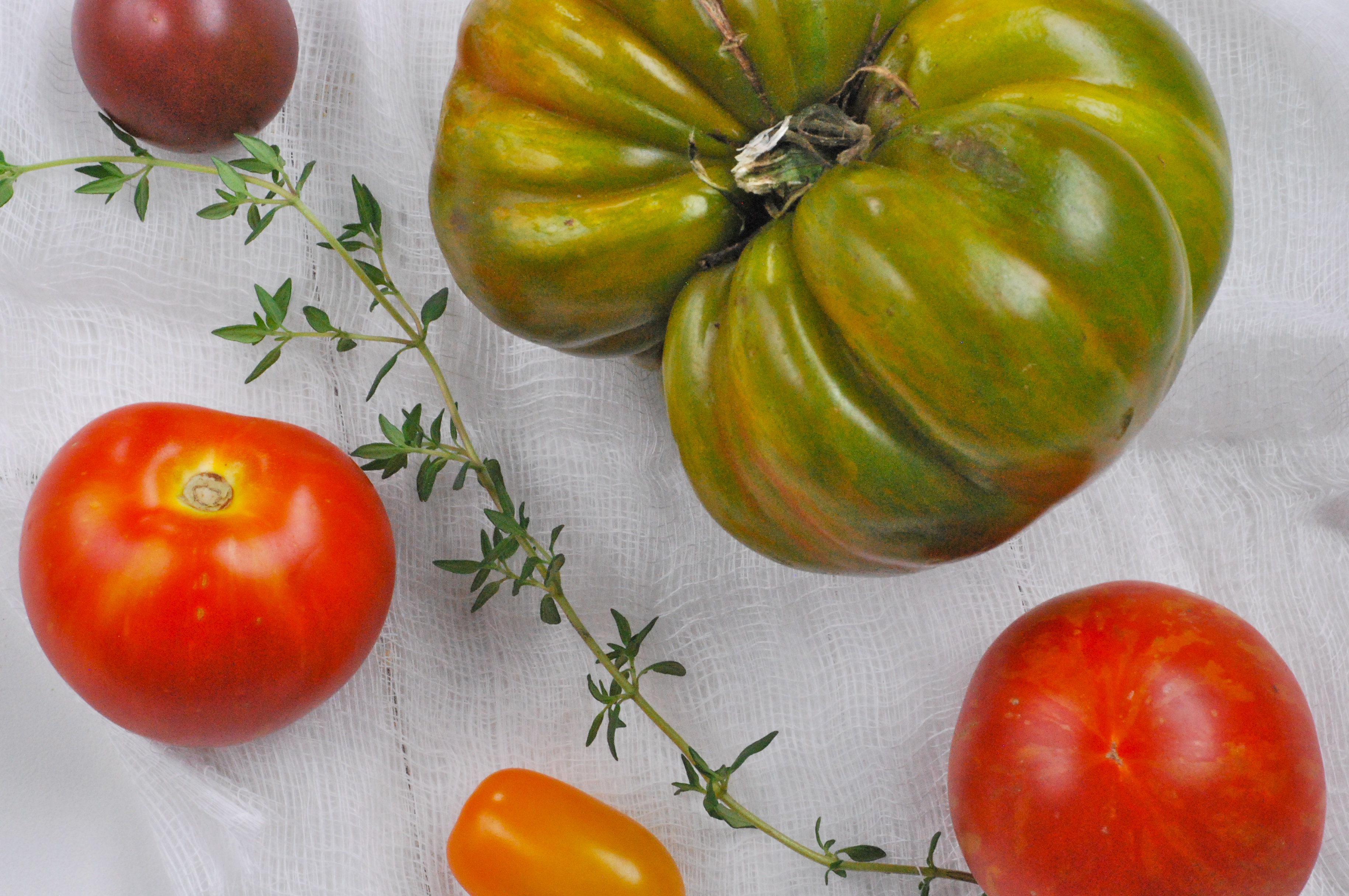
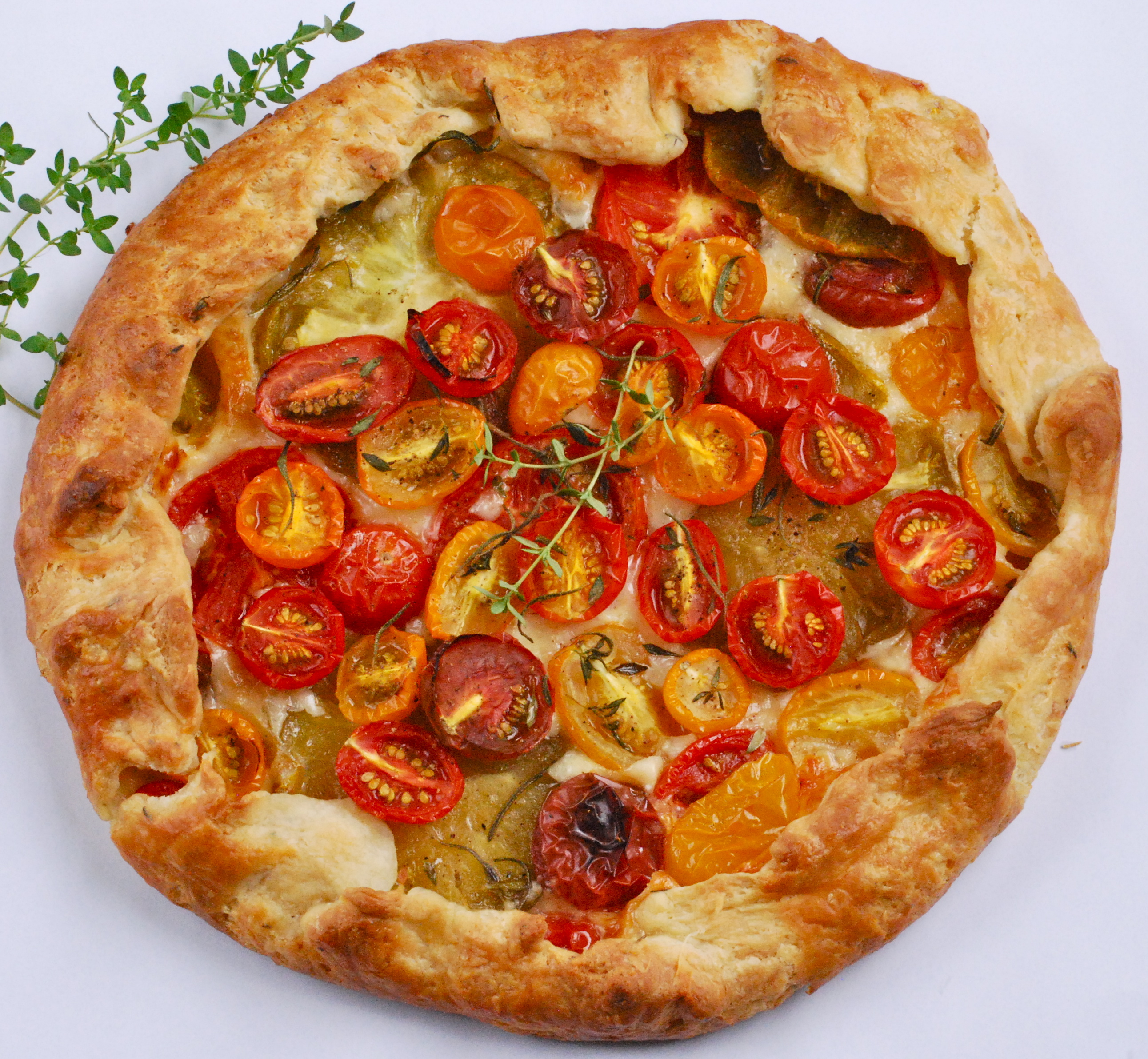
Now that you’ve had the family update, let’s talk food again.  Wow!  Do I have some exciting things to share with you!  Let’s start today with this gorgeous heirloom tomato galette.  You know I love fresh tomatoes, but are you aware that I’m that slightly-crazy person who refuses to buy one all winter long?  More than any other vegetable (cucumbers are a close second), tomatoes purchased out of season and shipped in simply do not taste the same.  Not even close.  Thankfully, they’re  in-season now, so you can expect to see several more tomato-based dishes in the coming weeks.

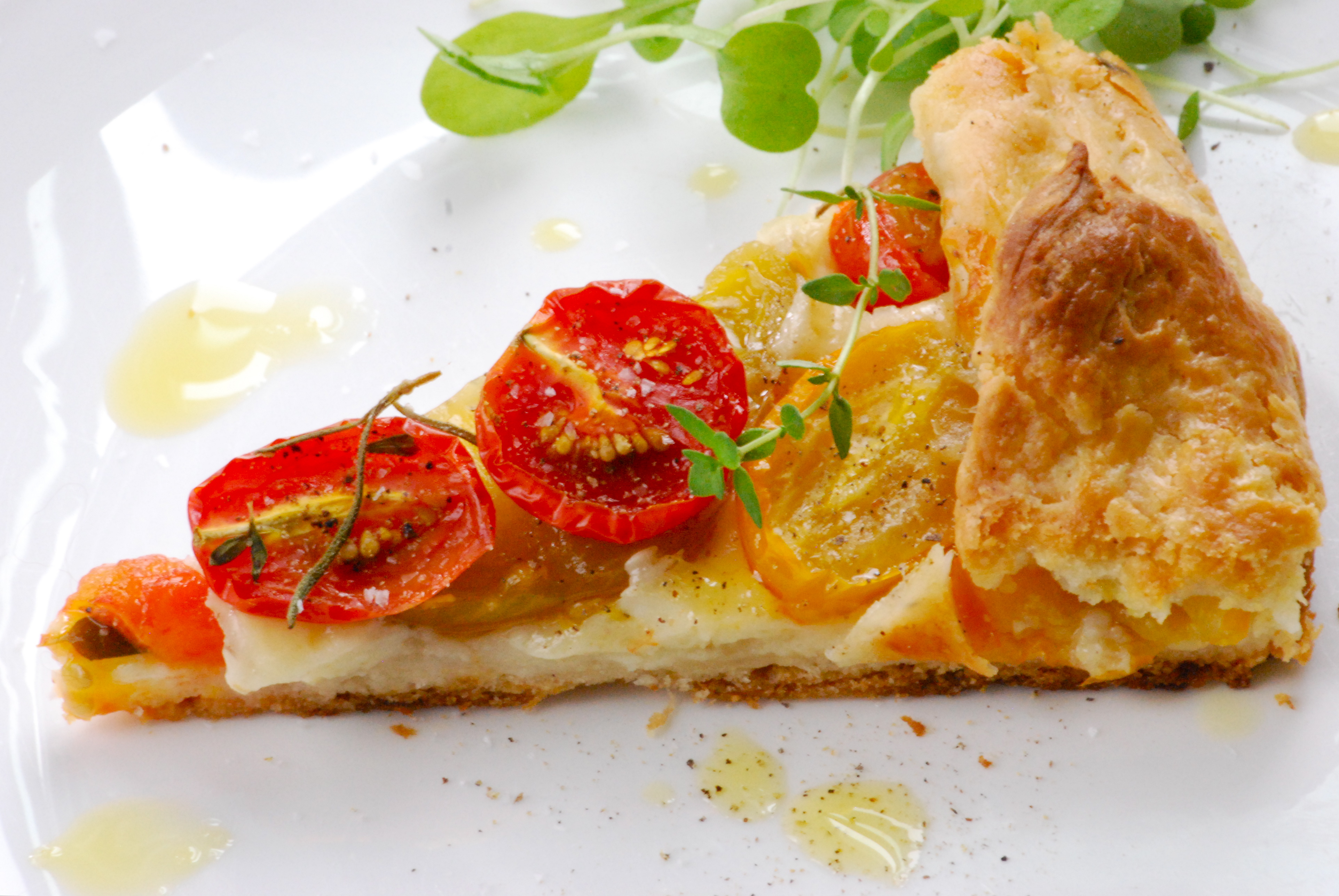
This show-stopper of a tart is the perfect way to feature the pure flavor of ripe tomatoes.  I’ve been waiting to make this recipe for awhile– not only because it looks incredible– but because it’s the creation of chef/owner Naomi Pomeroy from the fabulous restaurant Beast in Portland, OR.  Last October, Radd and I vacationed in the Pacific Northwest and stumbled into Beast– a communal-style locavore paradise.  We shared a table and company with six strangers.  The food was divine, and it was easily one of the best dining experiences I’ve ever had.  When I saw that this tart came from Beast, I knew I had to make it.

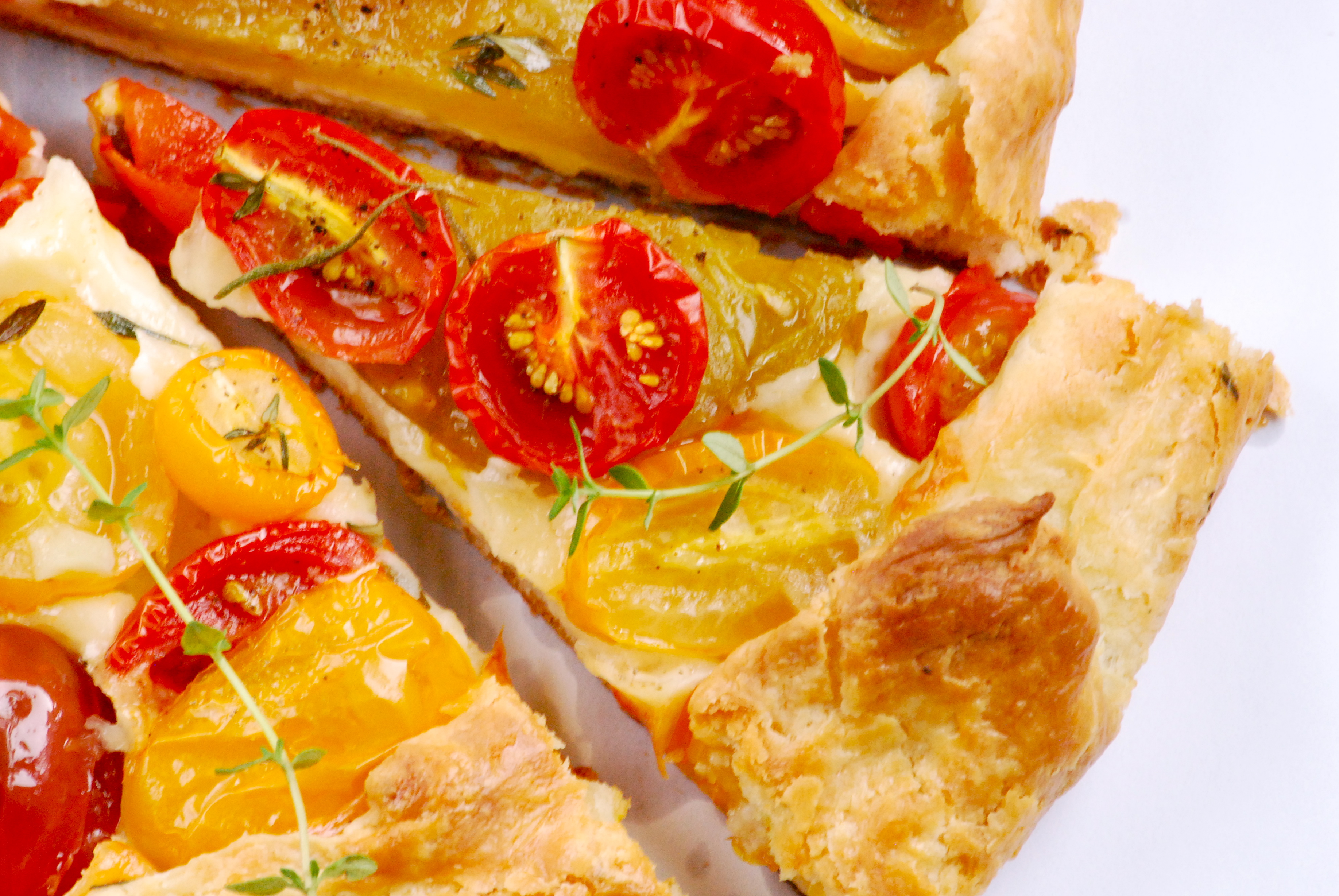
So how is it?  Better than you can imagine.  When I showed Radd, he thought it looked great, but he wasn’t exactly fired-up to try it.  After his third piece, he said it was one of the best things he’s eaten in a long, long time.  The crust is so delicate and flakey.  The manchego cheese adds a creaminess that perfectly compliments the acidity of the tomatoes.  Finally, the olive oil and herbs provide subtle complexity– the flavor really goes on and on.  It’s delicious warm, but even better at room temperature.  If you make only one savory dish from my blog over the next couple of weeks, it should be this one.  It’s that good.

The Recipe:  Heirloom Tomato Tart

Makes one 12-inch tart

Serves 4 to 6

For the Galette

1 cup all-purpose flour; plus more for work surface

1/2 teaspoon course salt; plus more for tomatoes

1 teaspoon baking powder

1 teaspoon chopped fresh thyme or rosemary for the dough, plus more for on top of the galette

1 stick (8 tablespoons), unsalted butter, chilled and cut into 1/2 – inch pieces

1/2 cup sour cream (full fat), chilled

1 pint tomatoes  (a combination of heirloom cherry tomatoes and other tomatoes, cut in half or sliced if large)

1/3 pound manchego cheese, or other semi-hard sheep’s milk cheese

1 egg white,  for an egg wash

For the Garnish (Optional)

1 bunch microgreens (arugala microgreens worked well)

Extra-virgin olive oil

Red-wine vinegar

Coarse salt

To make the dough: Combine the flour, salt, baking powder,  and 1 teaspoon of minced herbs in a food processor and pulse a few times to mix.  Then add the butter and pulse until the butter is just incorporated into the dry ingredients, making sure not to over-mix.  Some of the butter may be the size of a pea, which is fine.  This can also be done by hand if you don’t have a food processor.  Mix in the sour cream, being careful, once again, not to over-mix.  Turn the entire mixture out onto a cutting board and gently push it together into a ball.  Wrap it tightly with plastic wrap and refrigerate for 2 hours.

To make the filling: Put the tomatoes in a colander and sprinkle generously with coarse salt.  Lay the tomatoes on several sheets of paper towel to drain (dried tomatoes will make a crisp tart).

In the meantime: Heat the oven to 425°F.  Lay out a sheet of parchment paper that will fit onto your baking sheet.  Dust it with flour, as well as your rolling pin, and roll the dough out to a 12-inch circle about 1/8 – inch thick.   Leaving a  3 -inch border, scatter the cheese on the top of the dough, then arrange the tomatoes evenly over the cheese.  Sprinkle with a bit more thyme and rosemary.  Fold the edges of the dough over the tomatoes, making pleats as you fold and leaving the center of the tart open.  Make sure there are no holes in the dough; pinch the dough together if one appears.  Whisk the egg white and apply to the tart dough with a pastry brush or paper towel.  Transfer the tart with parchment paper still underneath to a baking sheet.

Bake the galette until golden brown, 30 -40 minutes.  Let cool on rack.

While the galette cools, lightly dress the microgreens with the olive oil, vinegar and salt.  Drizzle the top of the galette with olive oil and sprinkle it with course salt.  Slice the galette and serve with microgreens, of desired.    Enjoy!

Source:  Adapted from Harvest to Heat Cookbook via Naomi Pomeroy from Beast in Portland, OR

Thanks for visiting Relishing It today!  Hope you are all enjoying your summer.  See you soon.

Laurie

Follow me on Twitter

I am still on vacation in North Dakota, visiting my family.  We’re having a great time, despite the 90 degree temperatures. My kids have had so much fun with their grandparents.  Aria (all of two years old) rode her first horse today.  She has been asking to ride one for awhile, and now that she has a new pink cowboy hat and pink boots, my Dad figured he should line up a horse ride.  She loved it.  Anyway, I wanted to leave you with a fantastic recipe for this 4th of July weekend.

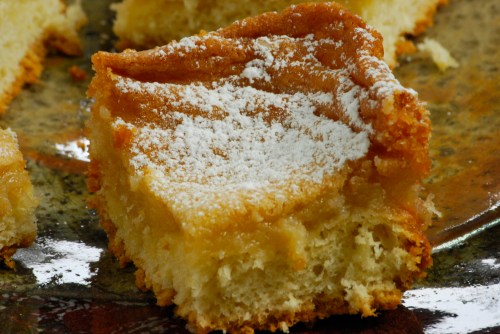
This is a St. Louis Gooey Butter Cake.  Actually, it’s not much of a cake– more like a bar.  It may not visually be a show-stopper, but trust me, the flavor and texture more than make up for it’s lack of flare.  I may overuse the word ‘amazing’ from time to time in describing food, but trust me, it REALLY applies here!  These are creme brulee in bar form.  They start out as dough that rises for a few hours, but then you add this perfectly-sweetened topping and bake it.  The cake rises and falls in the oven and when it’s done there is a slight crispness to the top layer.  The middle layer finishes gooey and delicious, while the cake layer is simple and sturdy.  I suggest hoarding the corner pieces, as they’re the crispiest.  Heavenly.

The Recipe:  St. Louis Gooey Butter Cake

For the Crust

3 tablespoons milk, at room temperature

1  3/4 teaspoons active dry yeast

6 tablespoons unsalted butter, at room temperature

3 tablespoons sugar

1 teaspoon kosher salt

1 large egg

1  3/4 cup all-purpose flour

For The Topping

3 tablespoons plus 1 teaspoon honey (or corn syrup — I’ve done it both ways)

2  1/2 teaspoons vanilla extract

12 tablespoons (1  1/2 sticks) unsalted butter, at room temperature

1  1/2 cups sugar

1/2 teaspoon kosher salt

1 large egg

1 cup plus 3 tablespoons all-purpose flour

Confectioners’ sugar for dusting

In a small bowl, mix together the milk with two tablespoons lukewarm water.  Add the yeast and whisk gently until it dissolves.  The mixture should foam slightly, though mine doesn’t always.

Using an electric mixer with the paddle attachment, cream the butter, sugar, and salt.  Scrape down the sides of the bowl and beat in the egg.  Alternately add the flour and milk mixture, scraping down the sides of the bowl between each addition.  Beat the dough on medium speed until it forms a smooth mass and pulls away from the sides of the bowl, 5 to 7 minutes.

Press the dough into an ungreased 9 x 13 -inch baking dish at least 2 inches deep.  Cover the dish with plastic wrap or a clean kitchen towel and allow to rise until doubled,  2 1/2  to 3 hours, in a warm, dry place.

When the dough is almost ready, preheat the oven to 350°F and make the topping.  In a small bowl, mix together the honey with two teaspoons water and the vanilla.  Using an electric mixer with the paddle attachment, cream the butter, sugar, and the salt until light and fluffy, 5 to 7 minutes.  Scrape down the sides of the bowl and beat in the egg.  Alternately, add the flour and honey mixture, scraping down the sides of the bowl between each addition.

Spoon the topping onto the risen dough and gently spread it out evenly in the pan.  Bake for 35 to 45 minutes.  The cake will rise and fall in waves in the dish and will become golden brown.  Allow to cool in pan.  Dust with confectioners’ sugar before serving.  Enjoy!

Source:  Adapted from Melissa Clark’s In the Kitchen with a Good Appetite Cookbook

For those of you in the United States, I hope you all have a very happy and safe 4th of July holiday!  Thanks for stopping by Relishing It today.

Laurie


I made the long drive across the entire state of North Dakota to my home town yesterday.  It was me, my four-year-old and my two-year-old…in a car…for 8 1/2 hours.  I made the same drive last Summer, also without Radd (who’ll be joining us later this week), and was so proud of myself for having arrived with my little kids and sanity intact that you’d have thought I split the atom.  Fortunately it went well again this year, though was about as fun as you’d expect.  


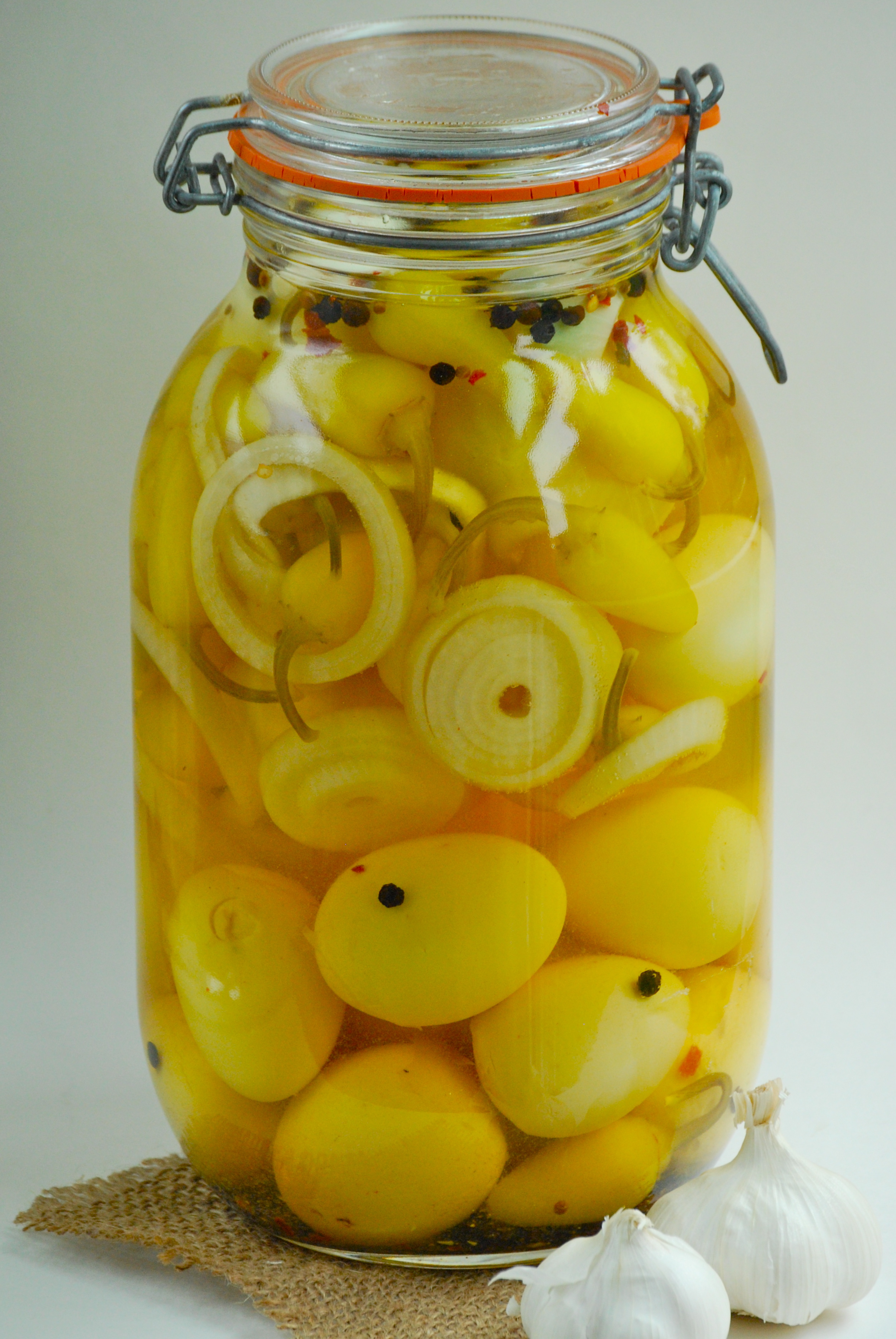
Since I’m heading back to my roots this week, I thought I’d share a little treasure from my childhood–pickled eggs.  It seems a bit odd to follow up French-style recipes for clafoutis and galettes with ‘pickles-in-a-jar’, but there’s something to be said for comfort food.  I grew up with jars of these treats sitting on our counter.  While pouring over childhood pictures recently, I noticed that there was an egg jar in the background in so many photos.  My Mom made the best pickled eggs– we absolutely loved ’em.

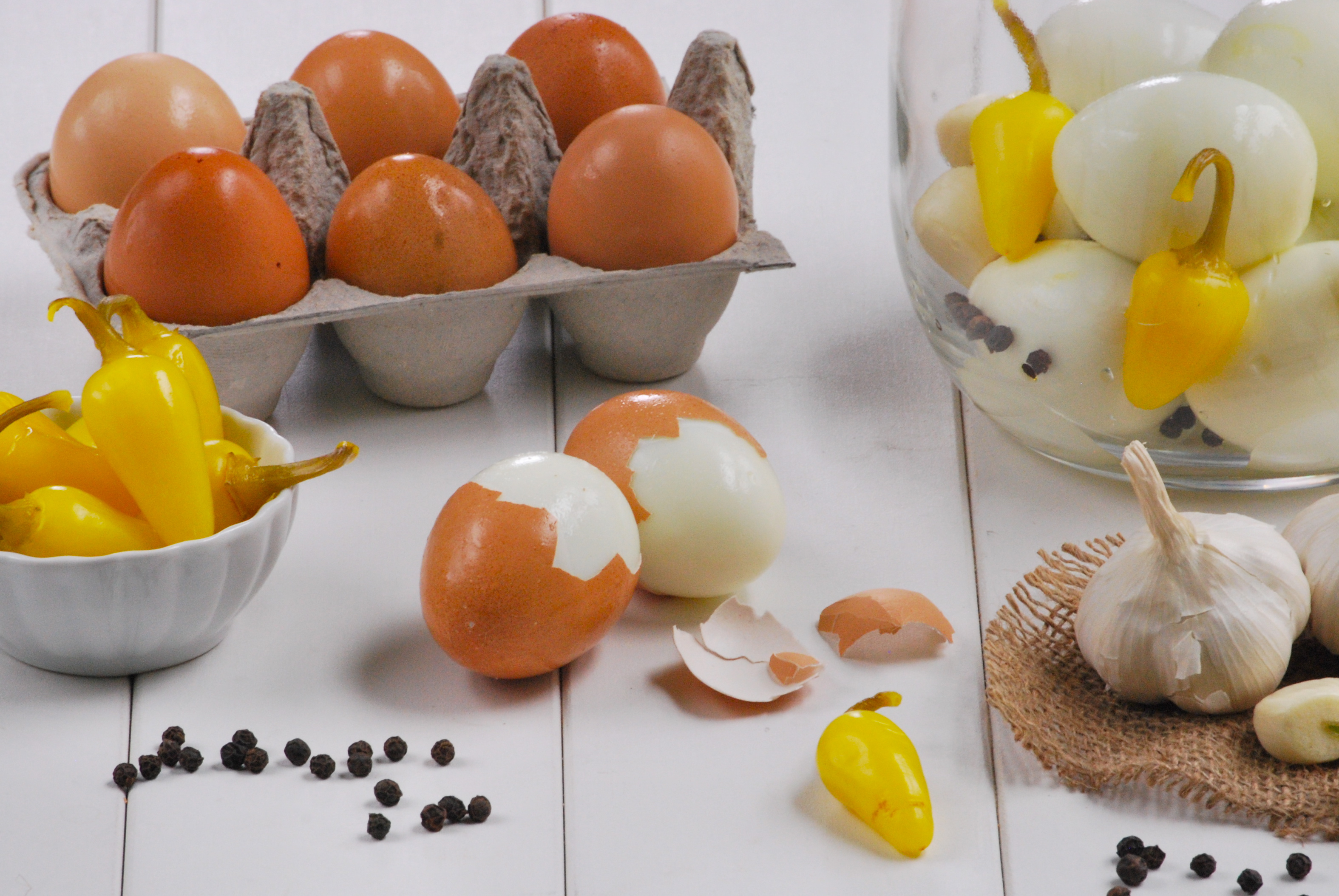
In continuing with my food philosophy, I use high-quality eggs in all of my baking and cooking.  I’m talking about eggs that come from a farm where the chickens roam freely and peck at nutritious food– not the cheap, supermarket eggs that sell for $1 a dozen, as these generally come from perpetually-caged chickens that have never seen daylight.  Yes, organic/cage-free eggs are a bit more expensive, but compared to your other proteins (meat) they are affordable.  Free-range cage-free eggs are not only a great source of protein, but they provide healthy Omega-3’s.  They’re also relatively low in calories.

Through the years, my brother and I have made adjustments to our Mom’s pickled-egg recipe.  We’ve been on a quest to improve upon ‘the best’ by making it a bit spicier.  This is my latest version. Now if you don’t fancy spicy food– you can skip the chili peppers and the red pepper flakes.  My family prefers to eat these eggs with a basket of pretzels, a few drops of Chalupa (or a Louisiana-style) sauce, and a nice cold beer.  Perfect.

The Recipe:  Pickled Eggs

Roughly 2 dozen eggs, hard boiled

1 liter white vinegar

1 jar hot chili peppers and the juice (Mezzetta is my favorite brand for these)

1 white onion, thickly sliced

1 bulb garlic, cloves peeled and left whole

1 teaspoon pickling spice

1 tablespoon peppercorns

To boil the eggs:  Gently place the eggs in a 4 quart sauce pan.  Cover with cold water.  Let cook over medium heat until water begins to boil.  Boil for 1 minute only.  Cover and remove from heat immediately.  Set a timer for 12 minutes.  After that, pour out the hot water and run cold water over the eggs to stop the cooking process.  Let cool completely before peeling.  (Note: older eggs peel more easily than fresh ones)

Once your eggs are cool and peeled, start layering your ingredients into your jar.  This doesn’t have to be precise.  Once the eggs, onions, garlic, hot chili pepper and their juice, peppercorns, and pickling spice are in the jar — you can add the white vinegar.  Make sure you have enough liquid to cover the eggs.  These eggs will start to taste “pickled” in about 3 days, and will keep getting better and hotter the longer they sit.  They can be stored, tightly sealed on your counter.  Enjoy!

For this post I decided to make crostini from start-to-finish… not just a variety of toppings, but the whole bread-baking process.  Yes, it’s easier to simply find a wonderful crusty bread from a nearby bakery (and I often do this), but there’s something therapeutic about baking bread.  While it takes more patience and planning, in the end I found it to be so much more satisfying.  The smell of fresh bread throughout my house alone convinced me to do this more often.  Just look at this loaf!

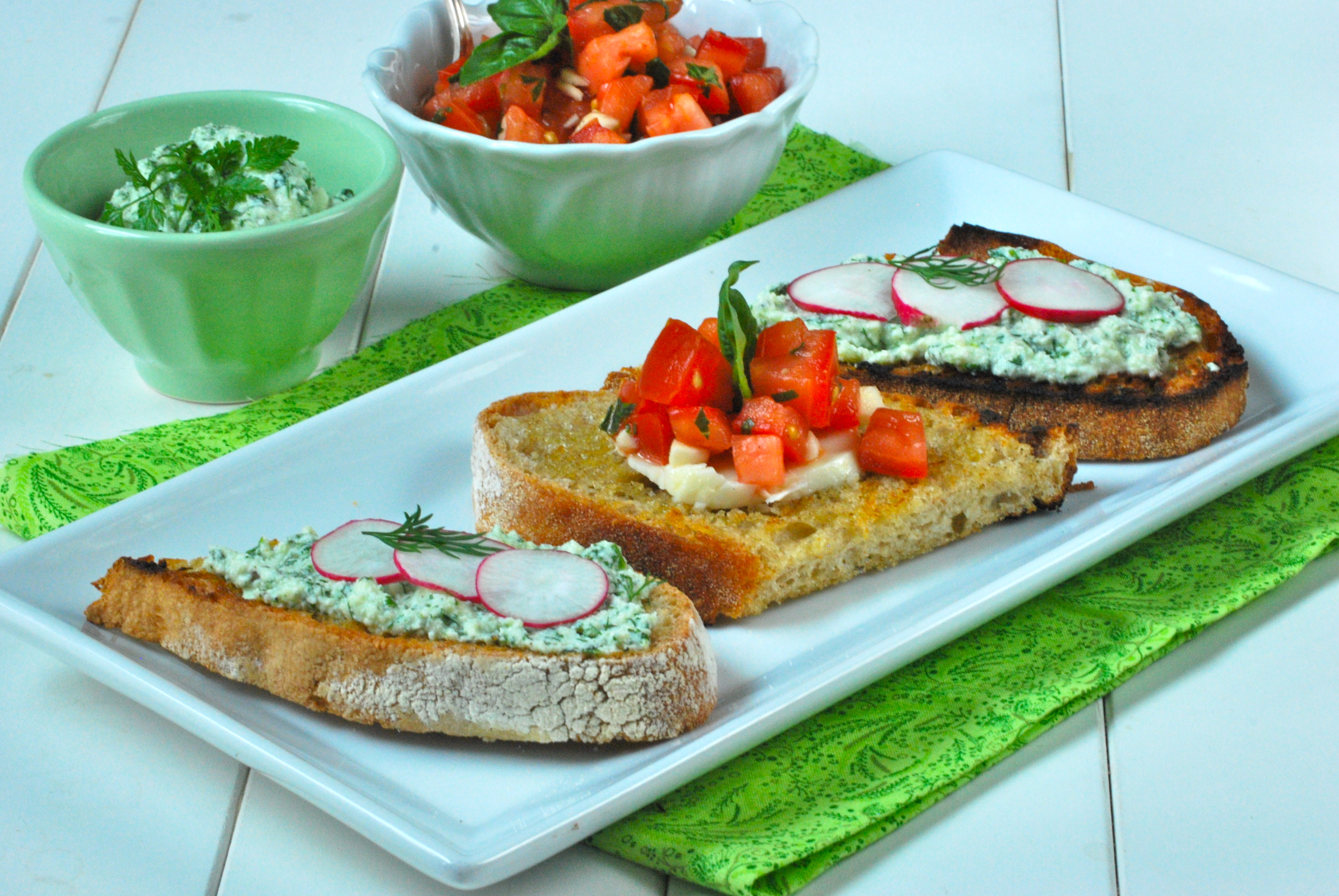
The bread I chose for this appetizer is crusty on the outside, but has a soft-yet-firm interior.  It keeps well, which means you can bake it long ahead of time if you’re hosting a party and need to get other things prepared.  To turn it into crostini, I grilled the bread and added two fresh, colorful, and oh-so-tasty toppings.  For the first, I was so happy to be able to use garlic, basil, and a batch of the first tomatoes of the season from our farmers’ market.  This is the first fresh-tomato post of the Summer– it will not be the last.

For the second, I threw together a simple herbed-ricotta topping with thinly-sliced radishes.  I love ricotta cheese, and unabashedly admit that I often scoop and eat spoonfuls while standing in front of the open-door refrigerator.  If you can find one locally, buy it.  Mixing in the fresh herbs gives it a nice flavor-burst.

The Recipe:  An Honest Loaf

1 tablespoon active dry yeast

2 cups lukewarm water (110-115°F)

2 cups unbleached bread flour

1/2  cup whole wheat flour

1/2  cup semolina, plus extra for dusting

2 teaspoons salt

Put the yeast and water into a large mixing bowl.  Stir in 1 cup of the bread flour to make a batter.  The mixture will begin to bubble, letting you know that the yeast is working.  Let the mixture sit at room temperature for about an hour, until it is frothy and has risen in the bowl.

Add the white flour, whole wheat flour, semolina, and salt to the starter and stir well.  When the dough is gathered, but still shaggy, turn it out onto a floured counter and knead it for a couple of minutes, dusting with flour if necessary; the dough should remain somewhat sticky.

Put the dough in a mixing bowl, cover with plastic wrap, and refrigerate overnight.  The dough will rise a bit in the bowl.

The next day, remove the dough from the bowl and punch it down to get the air out.  Knead the dough again for a few minutes, and form it into a smooth ball.

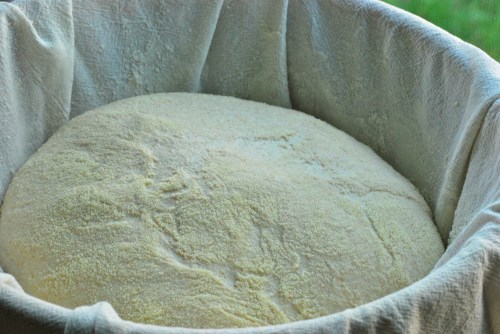
Select a linen-lined basket or low, wide bowl large enough to contain the dough when it doubles in size.  Place a linen napkin in a bowl, if that’s what you’re using.  I used a regular flour-sack towel and my bamboo salad bowl and that worked just fine.  Make sure to dust linen or napkin heavily with white flour before you add the dough.  Set the dough ball in the basket or bowl, dust the top with semolina, and cover loosely with plastic wrap.  Let the dough rise at a cool room temperature for 2 to 3 hours, or until doubled in size.  The longer and cooler the rise, the better the texture of the bread will be.

Preheat oven to 450°F – make sure it’s thoroughly preheated!  I am a true believer in a oven thermometer.  If you don’t have one — pick one up.  They’re cheap.  Sprinkle baking sheet with semolina.  Ease the dough onto the baking sheet by carefully inverting the basket or bowl over the sheet.  This part was tricky.  Remove the basket or napkin.  The top of the dough will have a light coating of flour.  Sprinkle on a bit more.

With a sharp, thin knife or razor blade, quickly slash a large  “X” in the middle of the dough, about 1/2 – inch deep.  Immediately put the pan into the hot oven and bake for 15 minutes.  The loaf will puff dramatically and the crust will have begun to form.

Turn down the oven to 400°F and bake for 45 minutes more, or until the bread is dark and crusty.  Remove the bread from the oven and put onto a cooling rack.  Wait until the bread has cooled completely before cutting.  In fact, this bread gets better the longer you wait to cut into it, unlike a baguette.  It will be even better the following day.

Source:  Adapted from David Tanis’ Heart of the Artichoke and Other Kitchen Journeys

The Recipe: Crostini with Tomatoes, Garlic, and Basil & Fresh Mozzarella  and  Herbed Ricotta with Radishes


Tomatoes, Garlic, and Basil Topping:

2 large farmer’s market tomatoes, diced

3-4 cloves minced garlic

7-8  fresh basil leaves, chopped

1 “glug” of red wine vinegar (about 1 tablespoon)

1 “glug” of good extra-virgin olive oil (about 1 tablespoon)

sprinkle of red pepper flakes (as much as you can handle)

kosher salt to taste  (make sure you don’t under-salt this — salt really brings out the flavor of tomatoes)

Mix all of the ingredients in a bowl.  Let sit  at room temperature for a 1/2 hour or so. The flavors will combine wonderfully.  Re-season, if necessary.


Herbed Ricotta

1 cup fresh ricotta cheese (buy some that is made locally, if possible.  The flavor is usually superior)

3 cloves of garlic, minced

2 scallions, finely chopped

Handful of mixed herbs, finely chopped — I used, mint, basil, chervil, parsley, chives and dill.  Use whatever you happen to have.  You should end up with about 1/2 cup finely chopped herbs.

Kosher salt and cracked black pepper, to taste.

Mix all of the ingredients together in a bowl and let sit for about 20 minutes.  Add more salt and pepper, if necessary.

Pre-heat the grill.  Slice the loaf of bread.  Brush with olive oil on each side  and top with a sprinkle of salt.  Grill for just a few minutes on each side, until you get the color you like.  Top with a slice of fresh mozzarella and the tomato, garlic, and basil topping.  The bread will soak up the juice wonderfully.  Top another piece of crostini with the herbed ricotta and a few thinly sliced radishes.  Enjoy with a lovely cocktail, of course!

Thanks again for stopping by Relishing It today!  As always, I enjoy reading  your comments.  Let me know if you’ve been busy in the kitchen with any of these recipes.  Have a great weekend.

Laurie

Follow me on Twitter!

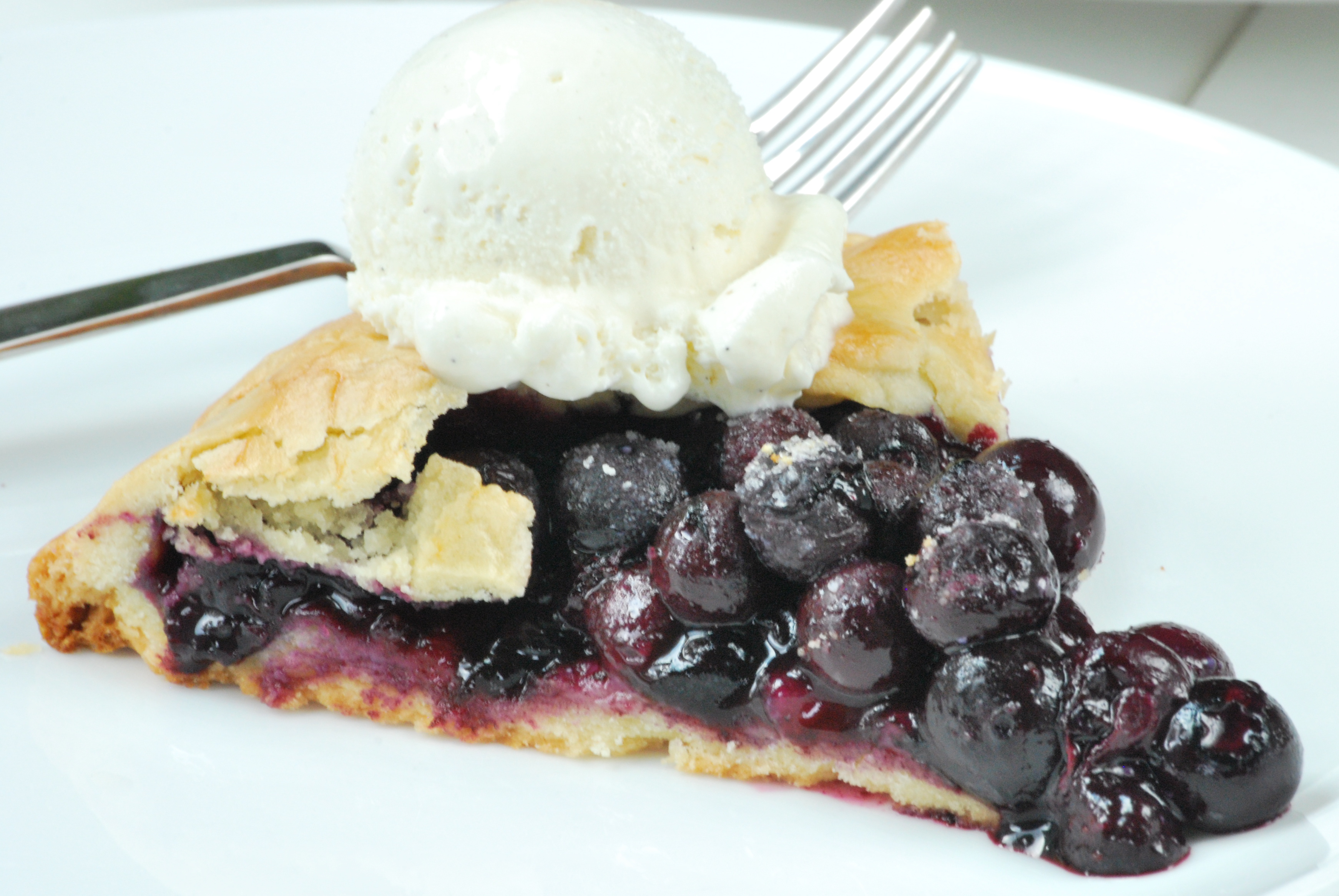
I’m bursting with excitement over this incredible dessert.  True, this galette is–at heart– simply a blueberry pie.  Now a good blueberry pie is exciting on its own, but what makes me so happy about this one is the fact that it’s absolutely gorgeous and anyone can make it.  It really is that easy.  My intent was to steer away from another dessert recipe– I’m working on mixing up weekly themes for those of you that haven’t caught the baking bug that I can’t seem to shake.  But Fathers’ Day rolled around and I wanted to make something sweet for my husband, so the savory post will have to wait until later.  Today it’s blueberries!

I’ve made this galette many times, but I always forget how brilliant it is.  Blueberries are one of my favorite fruits for baking (sour cherries too!).  Blueberries taste like summer, and this galette really showcases that.  I love peeking in the oven to see the blueberries and sugar melding into a juicy, bubbly filling.  And the smell of the buttery pastry crust is pure bliss.

For this recipe I chose a  sweet tart dough– what the French call a pâte sablée.  It’s buttery and crumbly, almost like a shortbread.  It works beautifully with fruit and is simple with the help of a food processor.  As a bonus, you can make a few dough balls ahead of time and freeze them.  With just a quick thaw you can pull this fruit galette together whenever you like.  The trick with the dough is to warm it up a bit if it’s been refrigerated– it’ll be much easier to work with.  If you’re making it fresh, just shape it right away.  Both methods make a beautiful pastry.  And of course (do I sound repetitive?) it’s even better with a dollop of freshly whipped cream or ice cream.  I think I may go and make another one today….

The Recipe: Blueberry Galette

Pâte Sablée

1  1/2 cup all-purpose flour

1/2 cup confectioners’ sugar

1/2 teaspoon salt

1 stick plus 1 tablespoon very cold butter (9 tablespoons), cut into tiny cubes

1 large egg yolk

Put the flour, confectioners’ sugar, and salt into a food processor.  Pulse a few times to mix.  Scatter the butter on top of the dry ingredients and pulse until the mixture is course.  Some pieces will be bigger than others.  Stir the yolk in a small bowl and add a little at a time, pulsing after each addition.  When the egg is completely in, process in longer pulses of 10 seconds each – until the dough, which should look granular soon after the egg is added, forms clumps and curds.  Just before your reach this stage, the sound of the machine will change a bit.  Turn the dough out onto a work surface and, very lightly and sparingly, knead the dough just to incorporate any dry ingredients that may have escaped mixing.

Blueberry Galette:

1 Pâte Sablée

2 cups blueberries

1/4  cup sugar

1 egg (for egg wash)

Preheat the oven for 375°F.  Put rack in center of oven.

On a large piece of parchment paper that is big enough to fit onto your baking sheet, roll out the dough into a large circle, until it reaches 12-inches in diameter.

In a bowl, mix the blueberries with the sugar.  Place in the center of the dough.  Carefully fold the dough on top of the blueberries.  Making sure that most of the blueberries are visible.  If any of the dough cracks or separates, just pinch it together with your fingers.

Transfer the galette, still on the parchment paper, to a large baking sheet.  Place the galette in freezer for 10-15 minutes.

Remove galette from freezer.  Whisk the egg in a bowl, and using a pastry brush, apply the egg wash to the sides of the galette.   Place into oven and bake for 35 minutes, or until the crust is golden brown and the blueberries are bubbling.  Let cool until just warm before serving.  Enjoy!

Source:  Pâte Sablée was adapted from Dorie Greenspan’s Baking From My Home To Yours

Thanks for stopping by Relishing It today — hope you enjoy the galette!

Laurie

Follow me on Twitter!