Feeds:
Posts
Comments

My husband, Radd, and I celebrated our 10 year anniversary this past Fall by taking an unforgettable trip to Portland, OR.  What an incredible city!  One of the many highlights was stumbling upon THE most impressive bookstore I’ve ever set foot in– Powell’s.  We wandered it’s labyrinthine rooms, stairwells, and aisles for hours.   Though I’d heard buzz about Dorie Greenspan’s new book, it was at Powell’s that I first saw– and of course bought– Around My French Table.  It’s one of my favorite cookbooks, so unsurprisingly the plane ride home went far too fast.
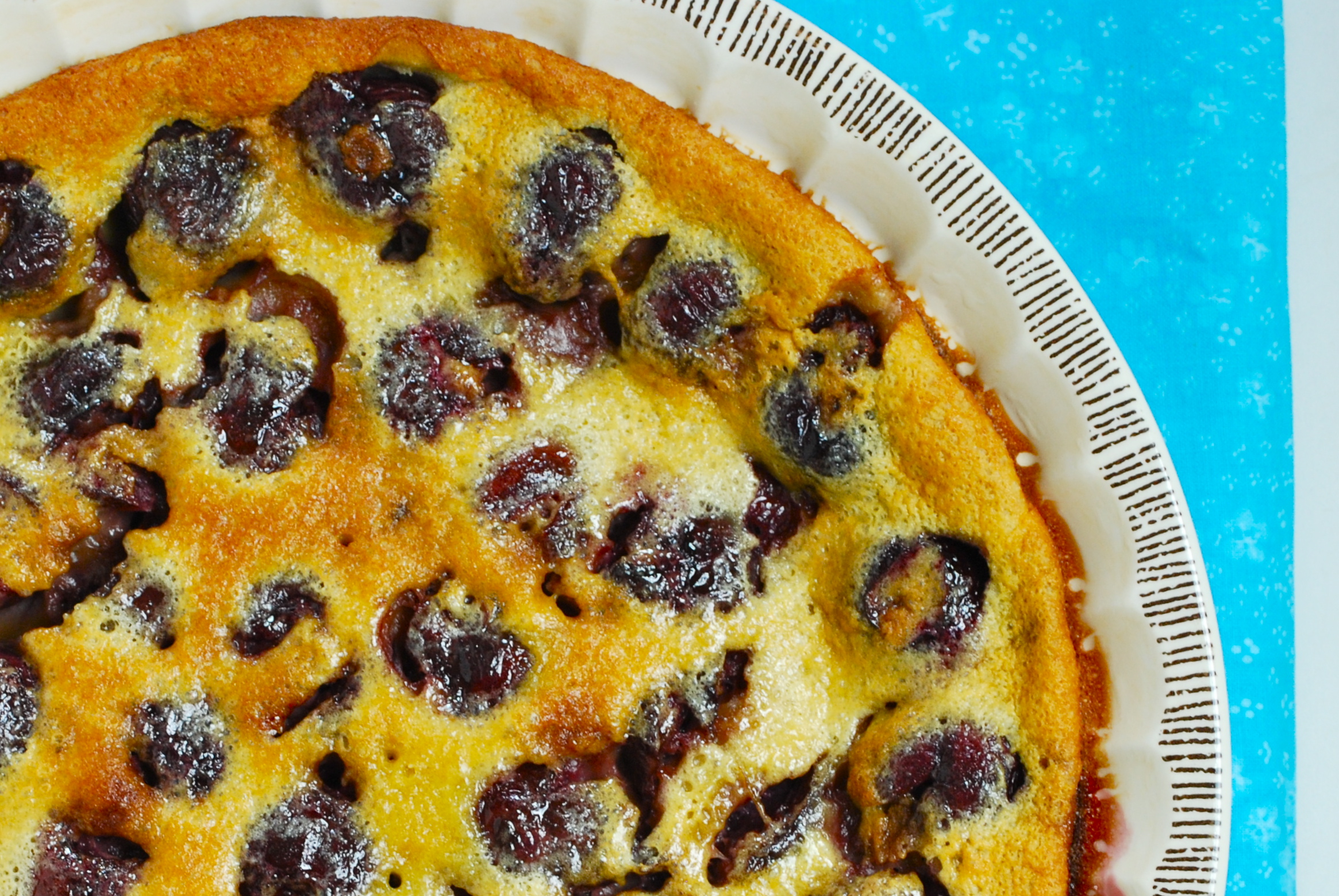
This recipe comes from that cookbook.  Cherry Clafoutis– a fancy French name for a very simple dessert.  A clafoutis (cla-foo-tee) is like a cross between a cake and a custard– almost like a flan.  Aside from the cherries, it’s silky and smooth– there’s very little flour, with cream, milk, and eggs as the main ingredients.  The traditional French way to prepare this dessert is to leave the cherries whole (including the pits), cover with the batter, and bake.  Purists believe the pits add a nutty, more intensely complex flavor.  I’ve baked a clafoutis in the traditional method, and yes the flavor was delicious.  Despite this, I’ve decided that the reward wasn’t worth the trouble– especially since I wanted my children to be able to eat the dish without me having to worry about them eating a cherry pit.  To get that “nutty” flavor without the pit, I added a teaspoon of almond extract.

I enjoy making clafoutis because they’re easy, yet different.  No special equipment is required, and the majority of the prep time is in pitting the cherries.  And if you don’t have a cherry pitter, no problem.  Put a cherry on top of a long-necked bottle and poke through the center with a chopstick– or anything else long and slender.  Simple.  Enjoy your clafoutis with powdered sugar alone, or ignore those purists and pile a scoop of vanilla ice cream on top.
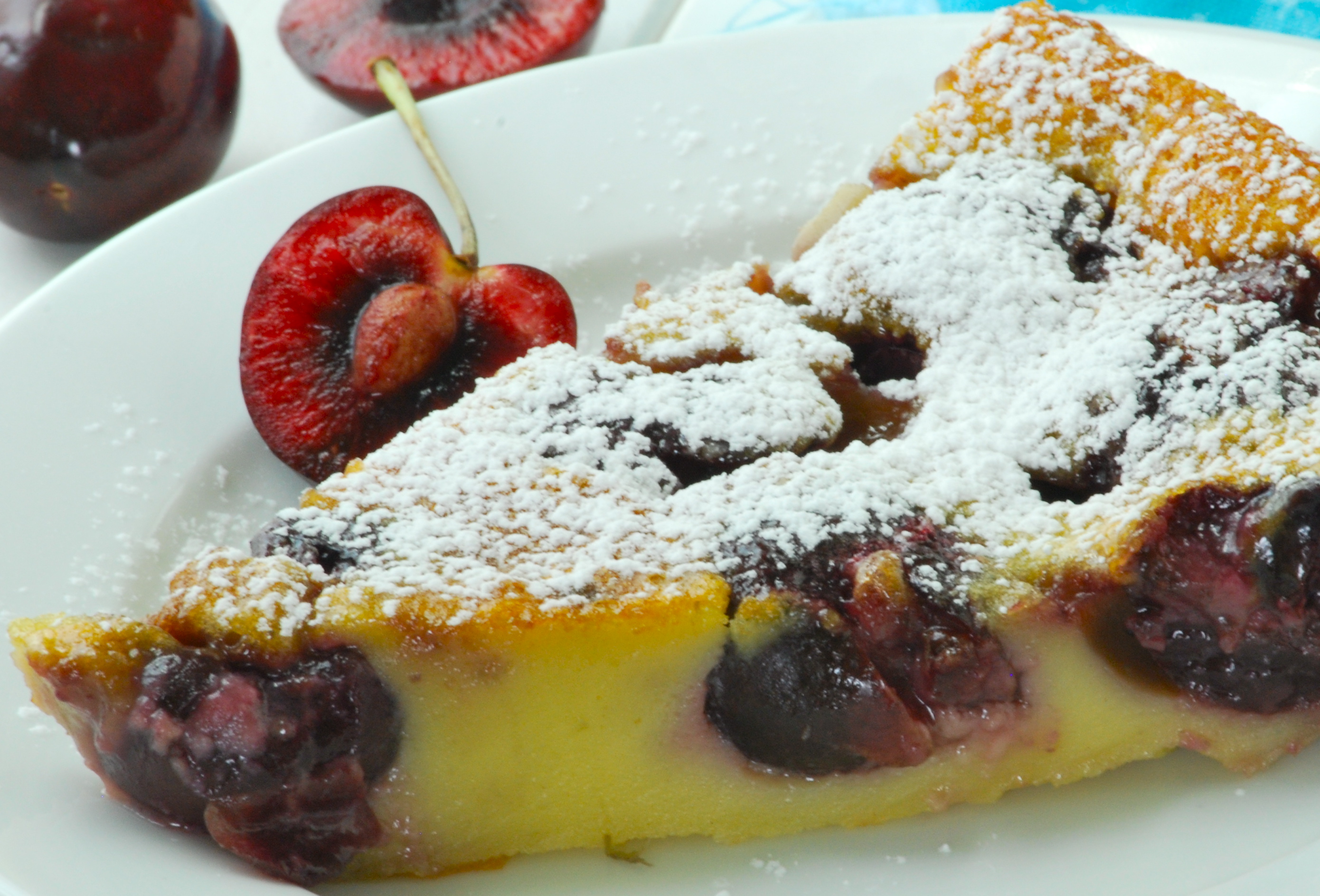
The Recipe:  Cherry Clafoutis

1 pound sweet cherries, stemmed and pitted

3 large eggs (room temperature)

1/2 cup sugar

pinch of salt

1 teaspoon pure vanilla extract

1 teaspoon almond extract

1/2 cup all-purpose flour

3/4 cup heavy cream  (room temperature, if possible)

1/2 cup 2% milk  (room temperature, if possible)

Confectioners’ sugar, for dusting

Preheat oven to 350°F and place rack in the center.  Liberally butter a 9-inch deep-dish pie pan (or another baking pan with a 2-quart capacity).

Place the cherries in a single layer into the pie-pan.

Whisk the eggs, in a medium bowl, (note: to get eggs to room temperature more quickly, place them in a bowl of warm water for about 5 minutes) until they’re foamy, then add the sugar and whisk for another minute.  Whisk in the salt and the vanilla and almond extracts.  Add the flour and whisk vigorously  (when adding flour to baked goods, normally you should be gentle — this is an exception) until the batter is smooth.  While still whisking, gradually pour in the milk and cream and whisk until blended.  Tap the bowl on the counter to remove any air bubbles and pour the batter over the cherries.

Bake the clafoutis for 35-45 minutes, or until it’s puffed and lightly browned, and most importantly, a knife inserted into the center comes out clean.  Transfer the clafoutis to a cooling rack and allow it to cool until it’s barely warm, or until it’s room temperature.

Dust with confectioners’ sugar and serve with whipped cream or ice cream.  This dessert is best eaten on the day it is made, however, leftovers should be covered and chilled.  Enjoy!

Source:  Adapted from Dorie Greenspan’s Around My French Table

Thanks so much for stopping by!  Hope you all have a wonderful weekend.

Laurie

Follow me on Twitter!
I don’t believe I’ve mentioned my love affair with farmers’ markets here in previous articles.  The entertaining Mill City Farmers’ Market (for delicious vendor fare and people watching) and the amazing St. Paul Farmers’ Market (for fresh produce and locally-sourced meat and eggs) are my happy places.  I absolutely love being surrounded by all of that fresh, healthy, vibrant produce, as well as visiting with the local farmers about their offerings.  Our family’s weekend adventures almost always start with a trip to the market.  I’m glad it’s a tradition that my kids will carry with them, even if at their ages, they have to be bribed with the promise of kettle corn.

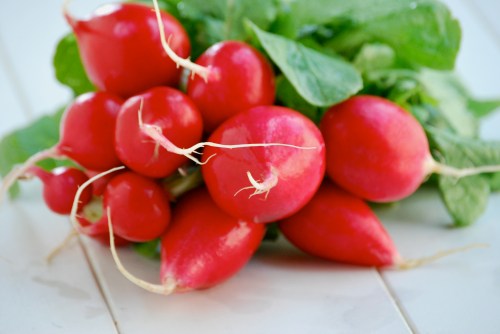
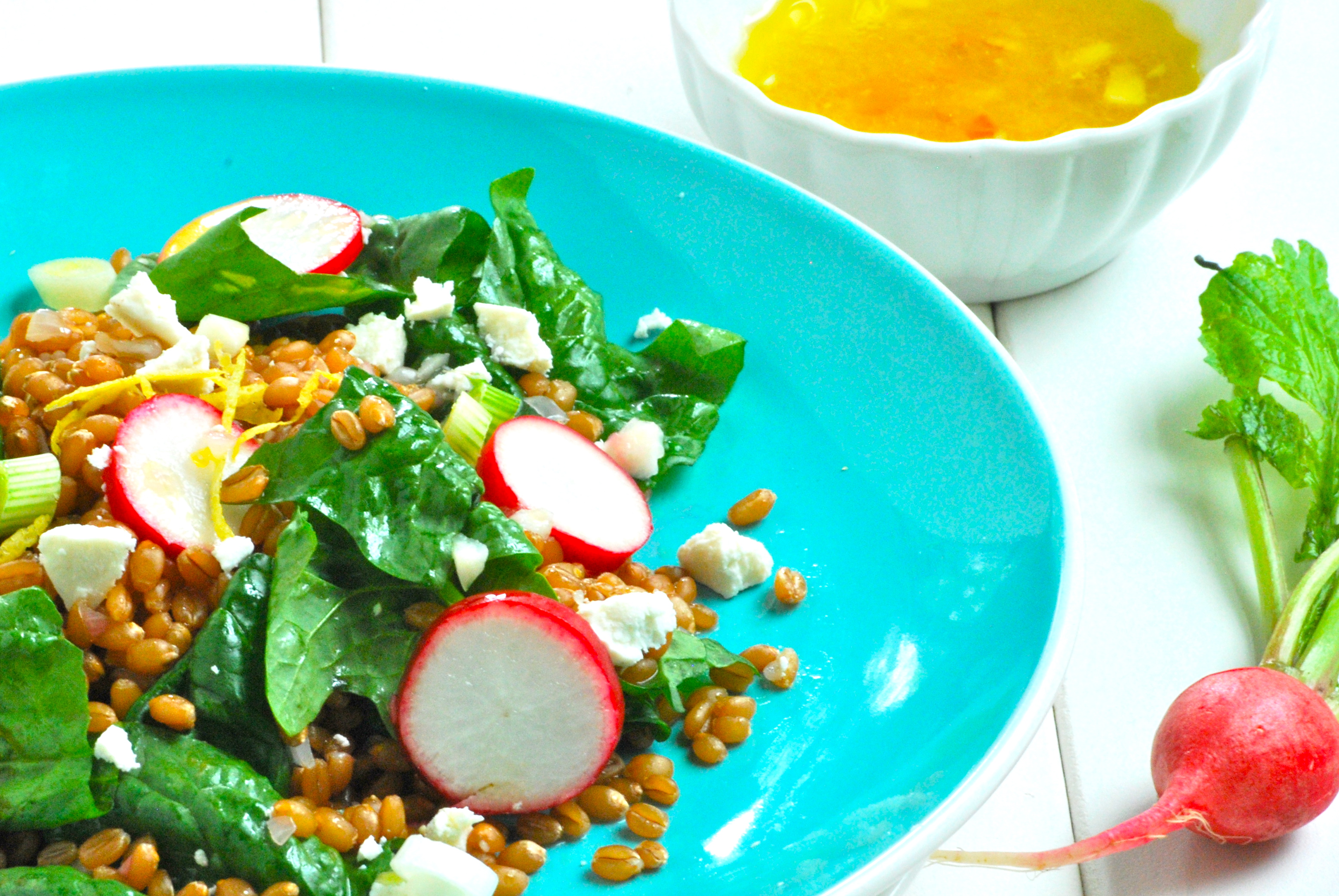
This dish is an example of how I try to incorporate my farmers’ market purchases into what we eat a few nights of the week during Summer.  I’m a grain enthusiast, so I chose wheat berries for this salad.  Wheat berries are the entire delicious wheat kernels with the hulls removed.  They are firm, chewy, and “toothsome”, and really add heft here.  You can soak them over night and boil them the next day for softening, or just boil them longer when you are ready to make your dish.  Fresh, garden-grown spinach is abundant right now and pairs beautifully with the wheat berries.  Throw a bunch crunchy radishes and a few onions on and you’re almost set.

Two additional ingredients really make this salad work:  the dressing– with the sublime combination of lemon and shallots– and ricotta salata cheese.  This is my favorite cheese for summer salads, as it’s creamy and subtle with just the right amount of saltiness.  You can substitute feta, though use the ricotta salata if you can find it.  Both the dressing and the cheese balance the hearty texture and flavor of the grains, and really brighten up this salad.

The Recipe:  Spinach and Wheat Berry Salad with Lemon/Shallot Vinaigrette

1 cup red winter wheat berries

2 cups (or more) fresh garden spinach, torn

5-6 radishes, sliced

2 spring onions, sliced

ricotta salata cheese, crumbled

To make the wheat berries: soak in refrigerator overnight in 3 cups of cold water.  Rinse the next day and place in saucepan filled with 3 cups of cold water and 1 tablespoon salt.   Bring to a boil, then reduce to a medium simmer.  Cook for 35-40 minutes, or until wheat berries are soft and have a “chewy” feel to them.  Drain and toss with half of the vinaigrette.  The warm wheat berries will soak up all of the wonderful flavor.  Let cool before completing the salad.  (Note:  Feel free to make extra wheat berries for a later use.  They freeze well and can kept frozen for up to a month.)

Lemon and Shallot Vinaigrette:

1 clove garlic, minced

2 1/2 tablespoons of shallots, finely chopped

Juice of 1 lemon

2 tablespoons champagne vinegar

1/2 teaspoon kosher salt

1/4 cup extra virgin olive oil

To make the vinaigrette:  Mince the garlic and shallot and place in a bowl.  Mix in the lemon juice, vinegar, and salt  and let soften for about 15 minutes.   After the shallots have softened,  slowly whisk in the olive oil.

Combine the spinach, radishes, spring onion and wheat berries in a bowl.  Toss with the  remaining vinaigrette and top with the crumbled cheese.   Enjoy and healthy eating to you all!

Thanks for stopping by today!

Laurie

Follow me on Twitter!

I’ve been known to daydream about travelling.  I do this a lot, and I’m guessing it has something to do with growing up in one of the most-rural areas of the country.  My Dad is the same way.  In our daily phone call, we often talk about where we would take a big family vacation if money were no object.  The destination-of-the-day almost always revolves around cuisine (surprise!).   It’s all in the family, I guess.  For me, the pinnacle would be Paris.  I know, I know– pick the obvious, right?  But the food!  The wine!  The history and culture!  Sadly, jetting off to France isn’t in the cards right now, so this week I’ve decided to bring a bit to my kitchen.


This dessert–that’s right, even with those greens this is a dessert– is definitely French.  You wouldn’t normally see it here in the US.  I found it in a beautiful cookbook by David Tanis, called–Heart of the Artichoke and Other Kitchen Journeys.   Tanis is the co-chef at one of the most well-known, well-respected, restaurants in the United States, Chez Panisse.    He’s been there since the 1980’s, though he spends six months at the restaurant in California, and lives the other six months in Paris.  Sounds like a good gig.  He’ll soon be leaving Chez Panisse in order to write  a column for the New York Times that I’m really looking forward to reading.  When Tanis wrote that the odd combination of ingredients in this recipe make a dessert that tastes fantastic, I figured I had to give it a try.

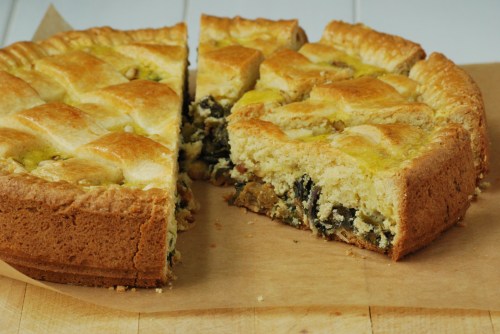
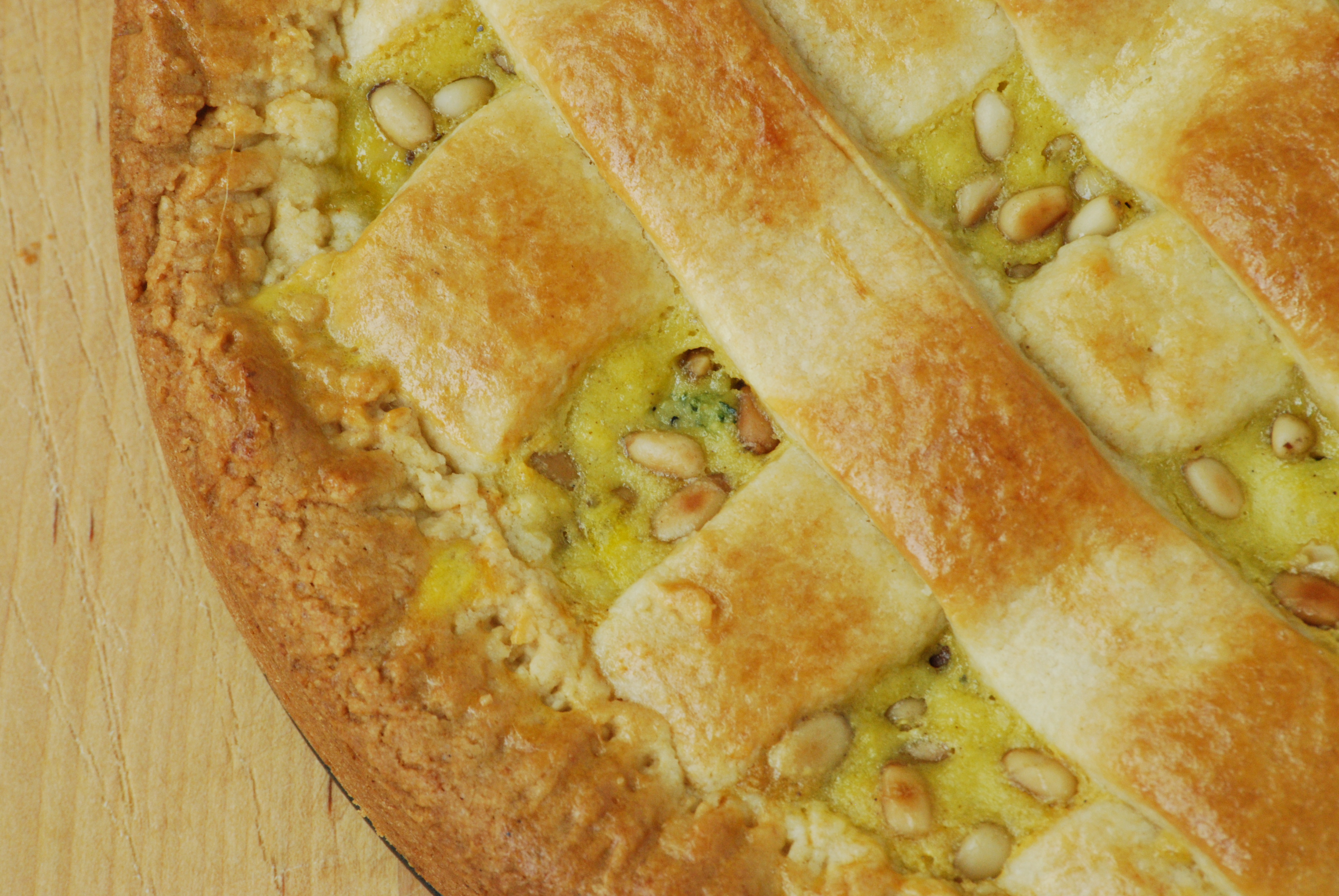
Though the title says it’s a tart, the texture is that of a cake– the baking powder makes it puff while baking.  This is a traditional dessert in the south of France and Italy (alright, perhaps it’s not Parisian, but it’s my daydream.)  Tanis’ recipe calls for Swiss Chard– which I really like– but I’ve been trying to figure out new ways to use use kale, so I made the substitution.  They are similar greens, and the result was excellent.  The kale was delicious, while the ricotta and warm spice added a firm texture and balanced sweetness.  The pine nuts– now these were the the star in this tart.  No substitutions here.  They add a subtle, nutty flavor and lend a nice crunch.  This unique dessert is remarkable.  It’s not savory, but subtly sweet.    Give it a try, you’ll like it.

The Recipe:  Kale and Ricotta Tart

For the Dough:

2 cups all-purpose flour

1 tablespoon baking powder

1/2 cup sugar

pinch of salt

8 tablespoons (1 stick) cold butter, cut into small pieces

1 egg, beaten with 1 tablespoon milk

Grated zest of  1/2 lemon

For the Filling:

1 large bunch of kale,  ribs discarded, chopped  (about 4 cups)

1 cup ricotta cheese (I used part-skim, but the original recipe calls for whole-milk)

2 eggs

1/4 cup sugar  (I reduced from 1/3 cup from the original recipe –it was perfectly sweet for me)

Grated zest of 1/2 lemon

1/4 teaspoon powdered ginger

1/4 teaspoon allspice

1/2 cup golden raisins, soaked in warm water until plumped

1/4 cup pine nuts, toasted

To make the dough, in the bowl of an electric mixer, fitted with the paddle attachment, mix the dry ingredients on low speed.  Add the butter and mix for about 2 minutes more, until crumbly.  Add the egg mixture and the lemon zest and mix another minute, or until you can pinch the dough together.  Turn the dough out and form 2 balls, one twice as big as the other ( use a kitchen scale, if you have one).  Chill for at least an hour.

To make the filling, bring a large pot of salted water to a boil.  Blanch the kale for 1 minute; drain well.  Let cool, and squeeze out any liquid.

Preheat the oven to 350°F.  In a small bowl, whisk together the ricotta, 1 egg, sugar, lemon zest, and spices.

Dust a pastry cloth with flour and roll out the larger dough ball into a circle 2 inches larger than the diameter of your 9- or 10-inch spring form pan.  Roll the dough onto the rolling pin, then carefully unroll it over the pan and gently press it into place, so that it comes about 2-inches up the sides of the pan.  Expect the dough to be pretty soft; if it tears, just press on a scrap to cover any holes.

Drain the raisins, mix them with the greens, and spread over the dough in the pan.  Pour the ricotta mixture over the greens and smooth out.  Sprinkle the pine nuts over the ricotta.

To make the lattice top, roll out the second piece of dough into a 1/8 -inch-thick rectangle.  Cut the dough into 3/4-inch-wide strips.  Fashion a lattice top by alternating crosswise and lengthwise strips.  Leave a gap of 3/4 inch between strips running in the same direction.

Fold the edges of the bottom crust over the ends of the lattice strips.  Whisk remaining egg in a small bowl for an egg wash.  Using a pastry brush, gently coat the tart with the egg.  Bake for 40 to 50 minutes, until the crust is golden.

Cool on a rack before serving.  Enjoy!

Source: Adapted from Heart of the Artichoke and Other Kitchen Journeys by David Tanis

Thanks for stopping by Relishing It today….as always, I appreciate hearing your feedback.

Laurie

Follow me on Twitter!

Notice anything different?  Look at the URL (and blog title) above.  That’s right, my blog is now ‘Relishing It’, with the profanity in my web address (though it provided a few chuckles) now gone.  Let me know what you think.

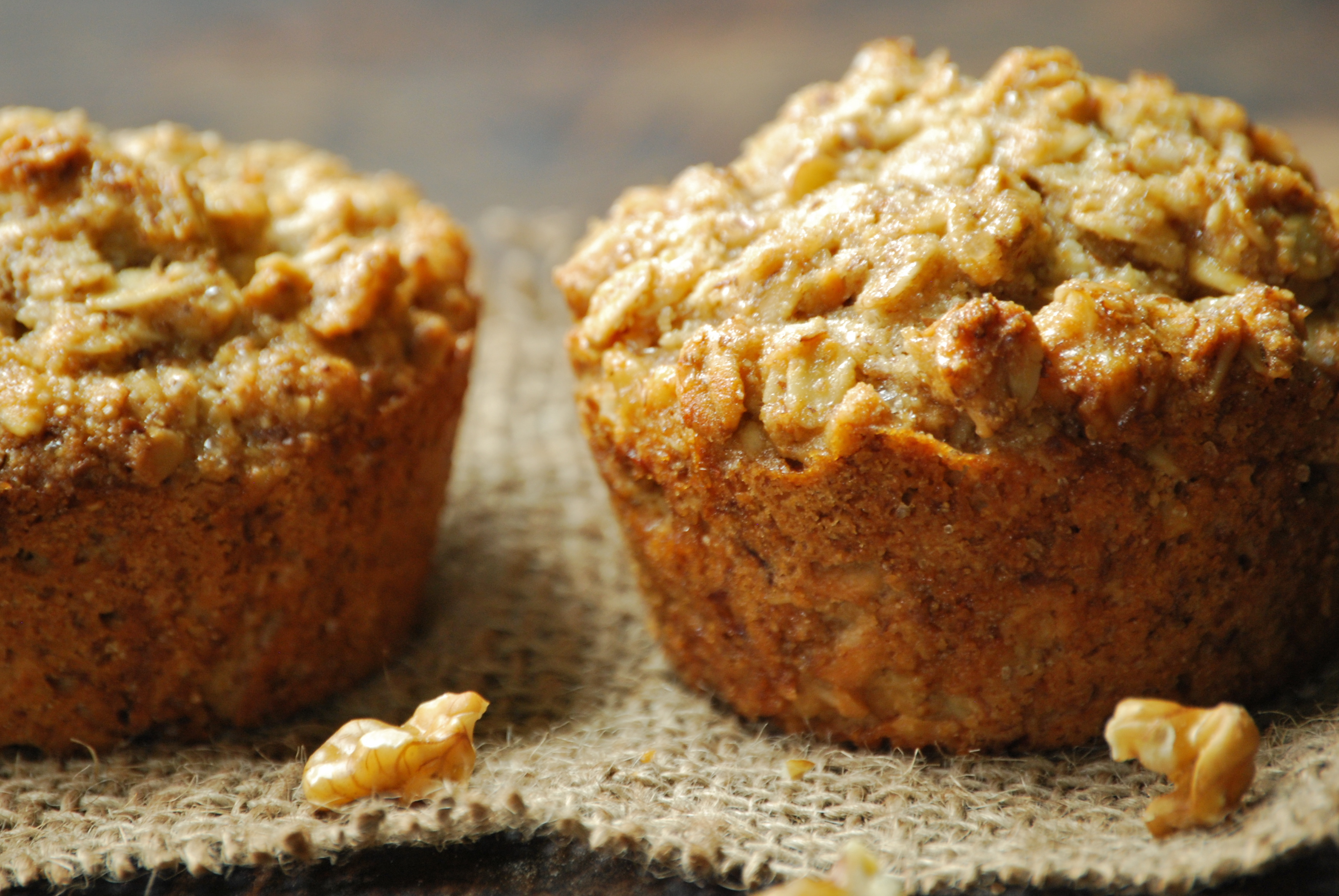
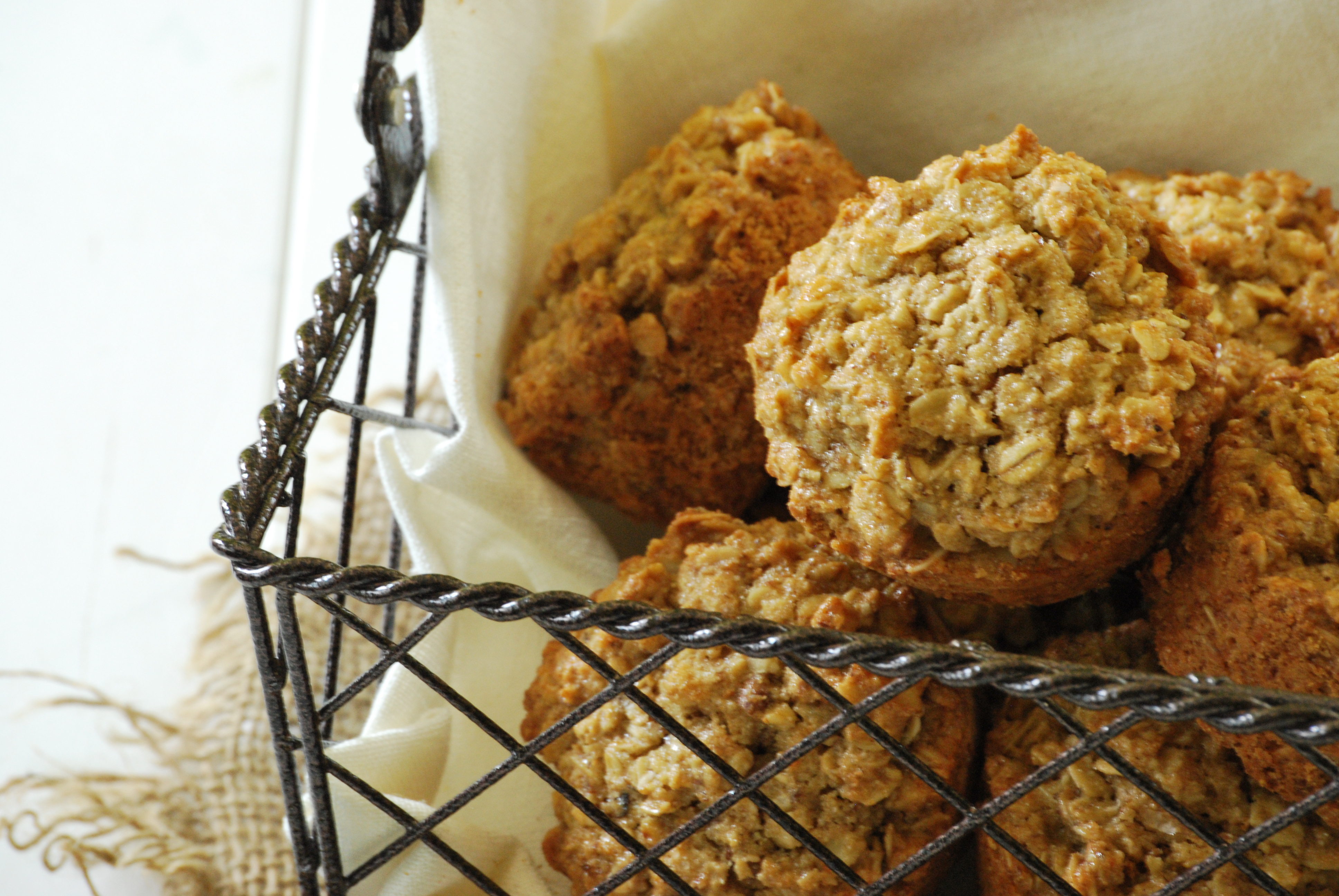
On to today’s post.  Oatcakes?  No doubt the title of this recipe alone is so inviting that you can’t wait to try it.  Alright, it may not sound exciting, but these little creations are incredible.  I want implore you to make them to prove that even with a title like ‘oatcakes’, these are delicious.  Did I mention that they’re also easy and convenient?   I stumbled across these hearty cakes in another recently published cookbook, Super Natural Every Day by Heidi Swanson.  Heidi authors the blog 101 Cookbooks  , which I’ve been following for some time.  This book is fantastic, with a concentration on healthy and vegetarian foods.  I’ve made these oatcakes several times over the last couple of weeks, as my family (mostly my husband) devours them.  These are most certainly not muffins.  To be honest, I’m not really a muffin fan.  While they’re sweet and cake-like, I find that I always choose something else if given the option.  Yes, these oatcakes have that tell-tale ‘muffin shape’, but the comparison ends there.  These are very dense, hearty, and flavorful, though not particularly sweet.  Even better, they’re filled with ingredients that are nutricious and tasty.  You’ll see that the recipe contains a few items that you may not have on hand.  Don’t let that stop you from making them.  My guess is that once you have the ingredients on-hand, you’ll make this recipe again and again.

Whole grains, oatmeal, and whole wheat pastry flour provide the heft here.  The original recipe also called for whole flax seeds, though my variation relies on flax meal.  Whole flax seeds are too hard for your body to break down.  They simply pass through, without giving you the healthy benefits of omega-3 fatty acids, fiber, and antioxidants that you get in the ground form.  Whether you use whole seeds or ground meal, store them in the refrigerator once opened.  Heart-healthy walnuts add a nutty crunch to the cakes, and also contain omega-3 fatty acids that are good for you.  The cakes are sweetened with raw cane sugar, honey, and maple syrup– a sublime combination.  Here I deviated from the original recipe as well, as it called for just the maple syrup and sugar.  I was feeling a bit stingy about my dwindling maple syrup supply being depleted by another 3/4 cup, so I substituted half with honey.  It really paid off, as the honey and oat combination is heavenly.  There are also two different oils that keep the cakes moist– butter and extra virgin coconut oil.  The latter is emerging as a healthy alternative oil that’s seeing more use in cooking and baking.  You can read about some of it’s health benefits here.  When you go to purchase it, take note that it will not be a liquid.  It will be white and solid.

These oatcakes are a perfect snack for your busy summer.  They keep well and transport easily.  Take them on walks, bike rides, camping, or for a simple morning breakfast.  They are very filling, and they’ll satisfy your hunger for longer than you think.  I hope you enjoy them as much as we do!

The Recipe: Oatcakes

(makes 1 dozen)

3 cups rolled oats

2 cups whole wheat pastry flour or spelt flour

1/2 teaspoon aluminum-free baking powder

2 teaspoons kosher salt

1/4 cup flax meal

3/4 cup chopped walnuts, lightly toasted

1/3 cup extra virgin coconut oil

1/3 cup unsalted butter

1/4 cup plus 2 tablespoons honey

1/4 cup plus 2 tablespoons maple syrup  (Note:  just to be clear — 3/4 cup total of equal parts maple syrup and honey)

1/2 cup raw cane sugar or natural cane sugar

2 large eggs, lightly beaten

Preheat the oven to 325°F with a rack in the top third of the oven.  Butter a standard 12-cup muffin pan.

Combine the oats, flour, baking powder, salt, flax meal, and walnuts in a large mixing bowl.

In a medium saucepan over low heat, combine the coconut oil, butter, honey, maple syrup, and sugar and slowly melt together.  Stir just until the butter melts and sugar has dissolved, but don’t let the mixture get too hot.  And if it does, let it cool a bit – you don’t want it to cook the eggs in the next step.

Pour the coconut oil mixture over the oat mixture.  Stir a bit with a fork, add the eggs, and stir again until everything comes together into a wet dough.  Spoon the dough into muffin cups, nearly filling them.

Bake for 25-30 minutes, until the edges of each oatcake are deeply golden.  Remove pan from oven and let cool for a couple of minutes.  Then run a knife around the edges of the cakes and tip them out onto a cooling rack.  Serve warm or at room temperature.  They are especially good with a smear of butter and a drizzle of honey.  Enjoy!

Source: Adapted from Super Natural Every Day Cookbook by Heidi Swanson

Thanks again for stopping by!

Laurie

Follow me on Twitter!

I hope you all had a lovely Memorial Weekend.  Ours was fun, though not ENTIRELY relaxing– both kids were sick Friday and Saturday– so we didn’t get out as much as we would have liked.  Thankfully, by Sunday all was well and we enjoyed a fantastic barbeque at our friends’ house down the street.  The dodgy weather even complied!  Much of the neighborhood was there, with kids running to-and-fro.  Everyone brought something to share.  I made these beauties and this dish from my friend, Angharad’s blog.  Fantastic!

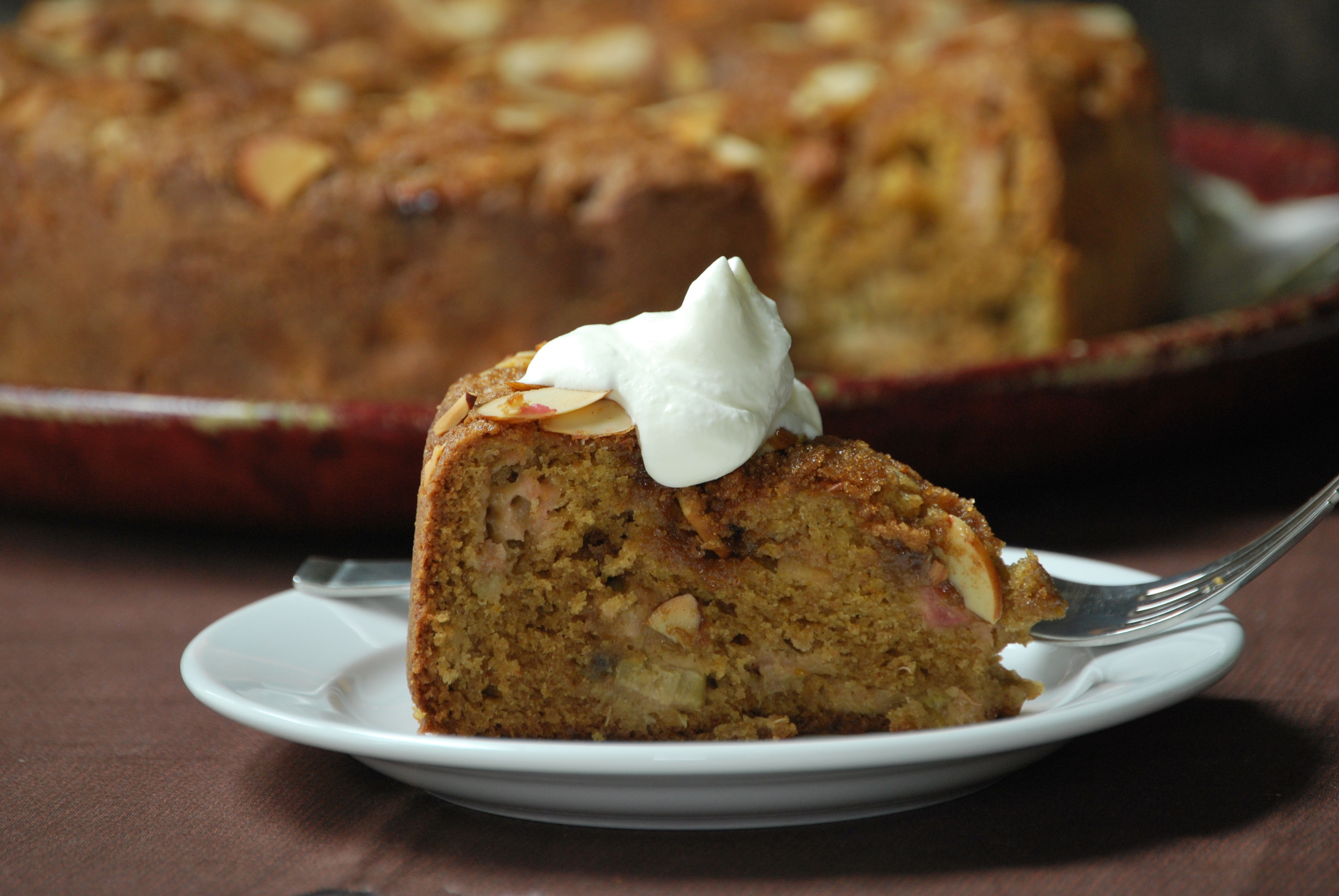
Today I’m offering you another one of my favorite recipes to try before rhubarb season comes to a close.  (Hopefully you’ll freeze some rhubarb so you can enjoy it throughout the year).  I love coffee cake.  It’s simple and uncomplicated, not fussy, and almost always tastes sublime.  It’s one of those cakes that makes afternoons so much better– brew a pot of French-press coffee and enjoy.  The rhubarb makes this cake very moist, yet it doesn’t become mushy.  Even better, it’s not overly sweet– like many rhubarb dishes can be.  I added orange  zest for a hint of citrus, and topped it with almonds.  Together these three really came together to make a fantastic, delicious flavor.

The Recipe: Rhubarb Coffee Cake

For the Cake:

1 cup brown sugar, packed

1/2 cup white suger

1/2 cup, butter (at room temperature)

1 cup sour cream (at room temperature, if possible)

1 teaspoon salt

1 teaspoon almond extract (vanilla can be substituted)

1 egg (at room temperature)

1 teaspoon baking soda

1 teaspoon baking powder

Zest from 1-2 large oranges

1 cup whole wheat flour  (If you don’t have whole wheat flour, all-purpose can be substituted)

1 cup unbleached, all-purpose flour, plus more to coat the rhubarb

3 cups diced rhubarb

For the Crumb Topping:

1/2 brown sugar

1/4 cup butter (at room temperature)

1/2 teaspoon cinnamon

1/4 cup plus 2 tablespoons sliced almonds, toasted.

Preheat oven to 350°F.

Prepare a springform pan by buttering it, placing parchment paper on the bottom, buttering the parchment paper, then flouring. Shake out excess flour.  (Note: a 9×9 square pan can also be used)

To make the topping:  Mix the sugar, butter, and cinnamon together using a fork.  Then gently add the 1/4 cup of almonds.  Set aside.

In a small bowl, whisk together the flours, baking soda, baking powder, and salt.  Set aside.

In another bowl, toss the diced rhubarb with a little bit of flour so it is evenly coated.  Do not mix the excess flour into the cake.  This will prevent the rhubarb from falling to the bottom of the cake.  Set aside.

Using a stand mixer fitted with the paddle attachment, cream the sugars and butter until creamy, 2-3 minutes.  Beat in the egg.  Next,  add the sour cream, almond extract, and orange zest and combine until just mixed.  Add the flour mixture and blend until just mixed (over-mixing any cake when the flour is added will yield a very tough cake).  Next,  fold the rhubarb into the cake using a rubber spatula.  Pour into prepared pan, making sure it is even.  Sprinkle the topping on top of the cake (I found that using my fingers worked the best).  Then finish with the remaining sliced almonds.  Bake for 45-55 minutes, or until a cake tester comes out clean.  Let cake cool completely in pan on a cooling rack.  Run a knife around the edge of the pan and remove.  Enjoy!

Source: Adapted from Cakes and Frostings with Schmecks Appeal by Edna Staebler

Thanks for stopping by Relish It today!

Laurie

Follow me on Twitter!
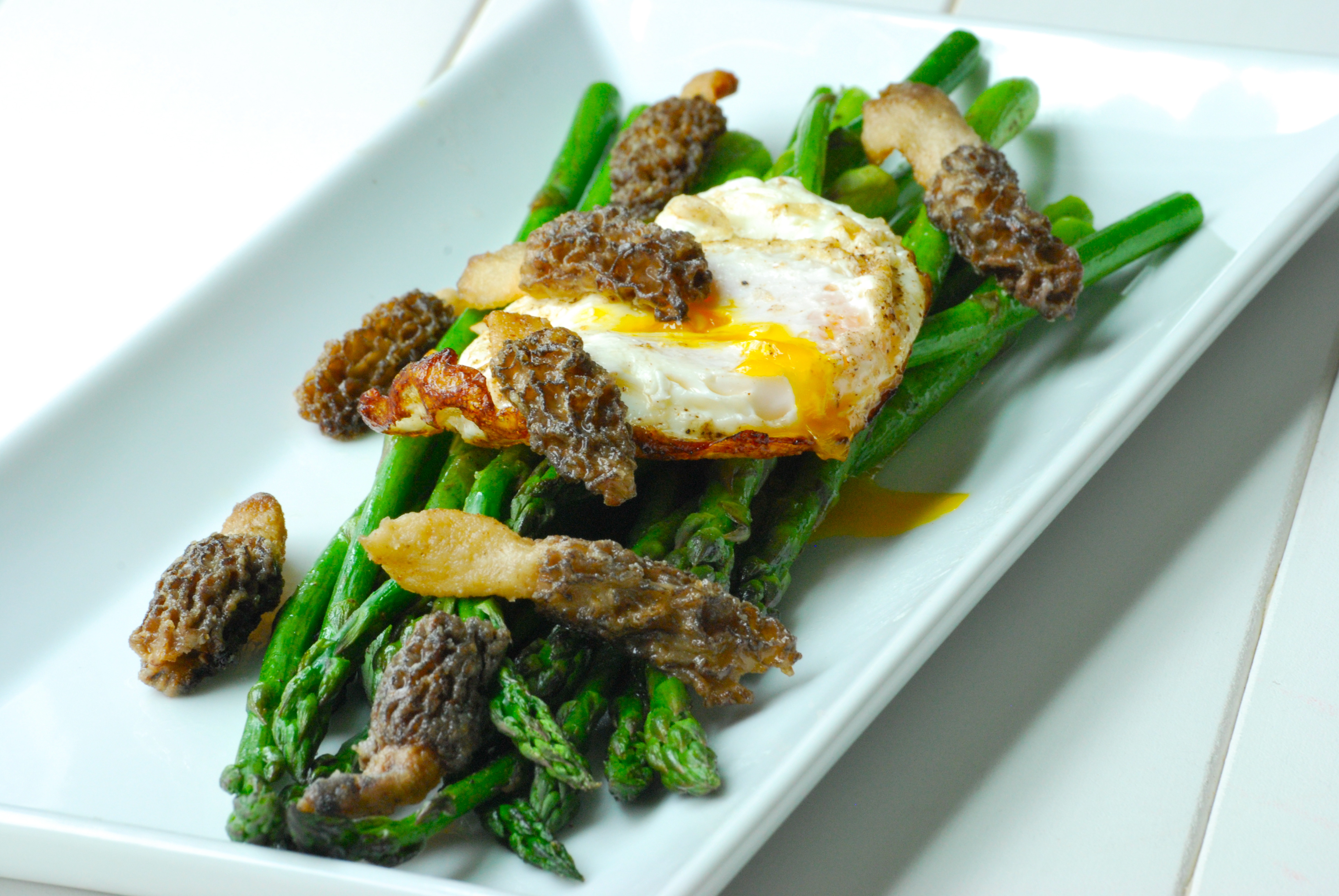
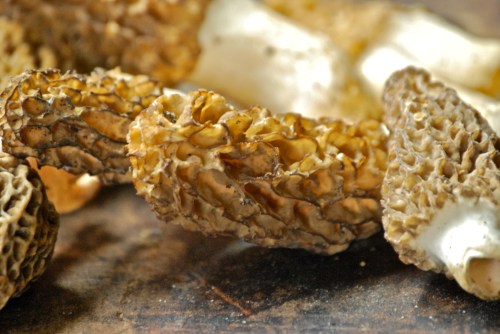
Too soon for another asparagus recipe?  Of course not.  Actually this recipe isn’t really about the asparagus, though it is beautiful and works well as an accompaniment to the real star– these gorgeous morel mushrooms.  Like asparagus, morels are now in season in Minnesota.  These rather odd looking mushrooms tend to grow in moist conditions and are often found around dying or dead Elm, Sycamore, and Ash trees.  Old apple orchards are another place to hunt for them.  Morels have an unbelievable, almost indescribable flavor.  As you’d expect, it’s very earthy, but there’s some other unique complexity there as well.  I can’t place it, but it is incredible. The texture is firm and meaty– there’s real substance.

I’ve always wanted to be a mushroom forager, but simply haven’t had the time– yet.  From what I can tell, foraging is both a science (separating the poisonous from the edible) and an art (instinct about where and when to hunt.)  There’s also mystery and secretiveness.  Foragers don’t like to share their hunting grounds.  Exciting!  Though perhaps this is more a reflection of my entertainment standards than anything else.

My husband surprised me with a small bag of morels this week.  He saw some at a Farmer’s Market for a better price than I’d found anywhere else.  Here’s the bad news:  morels are expensive.  Remember that “part science/part art” comment above?  There’s a cost for that.  Even so, you shouldn’t let the price deter you because you won’t need many to make a dish shine.  Their powerful flavor is apparent even in small quantities.  For this dish, I borrowed an idea from my friend Matt, who swears that sauteing them in butter is the best way to enjoy morels.  That’s what I did here, and it turned out beautifully.   This is less a ‘recipe’ and more me just combining three separate ingredients.  With morels, keep in simple in order to focus on the flavor of the mushroom.

The Recipe: Morels with Roasted Asparagus and Crispy Fried Eggs

(Serves 2)

1 bunch thin asparagus (ends trimmed, peeled if necessary)

2 tablespoons olive oil

1/4 pound  morel mushrooms

4 tablespoons salted butter

2 free-range eggs

Flour, for coating the mushrooms

salt and freshly cracked pepper

To Prepare the Mushrooms:  Cut the mushrooms in half, lengthwise.  Place in a bowl of cold water with 2 tablespoons of salt.  This will kill any bugs that may be on the mushrooms.  Let them sit for a few hours or overnight.  Rinse with cold water when ready to use and pat dry.  Allow to air dry a bit, if time permits.  (Note:  People are quite divided on the subject of wiping them off with a damp cloth or submerging into water.  Do whatever you want.  This worked for me.)

To Roast the Asparagus:  Pre-heat oven to 400°F.  Place asparagus on a rimmed baking sheet and toss with the olive oil. Sprinkle with salt and pepper.  Roast for 10-12 minutes, or until tender.

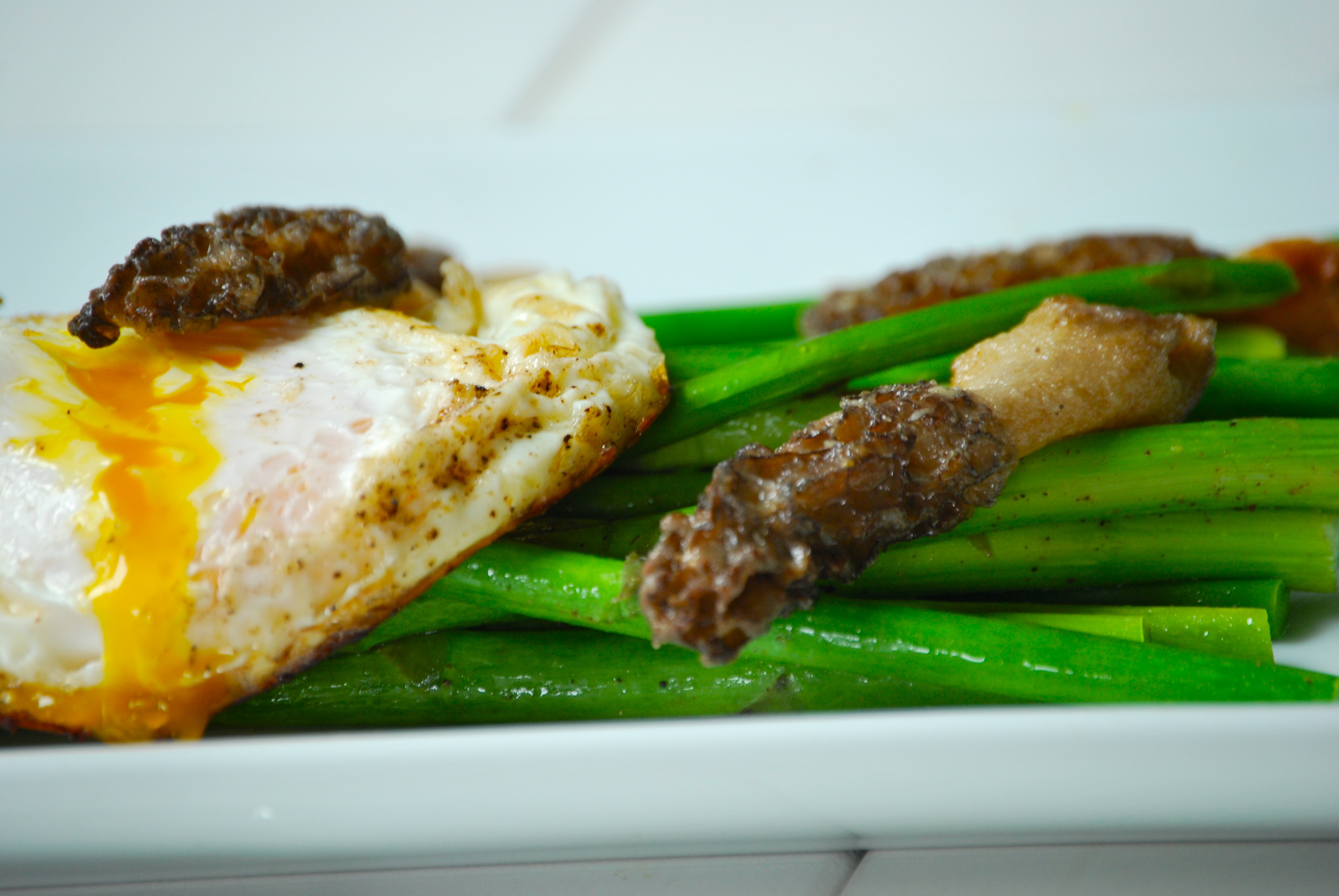
Meanwhile:  In a medium-sized skillet, heat the butter.  Lightly coat the mushrooms in the flour.  Place into the hot butter and saute for around 2 minutes on each side, depending upon the size of your mushrooms.  When finished, remove mushrooms and place on a paper towel.

In the same skillet, using the butter the mushrooms were sauteed in, cook the eggs to your liking.  I prefer mine over-easy.

To assemble: Place the roasted asparagus on a plate and put the egg on the top.  Then sprinkle with the crispy mushrooms.  Finish with salt and pepper, if necessary.  Enjoy!

I hope you enjoy the morels as much as I do.  For other inspirational ideas, check out my friend, Amy’s blog, “Green Your Plate”.  Thanks for stopping by today — have a great weekend!

Laurie

Follow me on Twitter!

I grew up on a farm in a very rural area of the country.  We had a big grove of trees right behind our house that was perfect for all sorts of adventures– not to mention a few fantastic tree forts.  As a kid, this ‘forest’ was our playground to explore– so long as we were mindful (due to constant warning) of not trampling the wild asparagus.  It grew in bunches right in the middle of the grove, and popped up in late spring.  I recall my parents (as well as my grandmother) ceremoniously harvesting the first asparagus of the year.

I don’t grow my own asparagus, though I wish I did.  Instead, I [im]patiently wait for it to show up at the local farmer’s markets each Spring.  And once it does we tend to go through an “asparagus fest” for the two weeks that its in season. I know, I know, it’s available almost year round at some grocery stores.  I’d rather not buy it unless it’s actually in season though, just as I wait for summer tomatoes and cucumbers to show up locally in July.  It’s just not worth it to buy transported asparagus in the winter– it’s not a winter vegetable, so it doesn’t taste the same.

This Asparagus and Gruyere Tart is so easy it’s almost embarassing to write a blog post about.  The ‘crust’ is made from puffed pastry.  If your not familiar with this little gem, you can either choose to make your own (which can take a little while), or you can buy it ready-made from the grocery store.  This is one of those few times where I recommend buying the pre-made product– it’s in the freezer section, and is generally high-quality and easy to work with.

When preparing the asparagus for the tart, choose medium to thick stalks.  Cut the stalk-ends off, and use a vegetable peeler to peel them about 1/2 way up the stalk.  This will ensure  that the asparagus is tender.  This vegetable pairs so beautifully with the gruyere cheese, while the ridiculously flakey puff pastry is a the perfect canvas to hold it all together. The flavor is incredible.  My husband confessed that he really wasn’t looking forward to this meal– but he ended up loving it.

The Recipe:  Asparagus and Gruyere Tart

(Serves 4)

Flour, for work surface

1 sheet frozen puff pastry  (thaw it according to package instructions)

2 cups shredded Gruyere cheese (Emmentaler or Fontina cheese would also work beautifully)

1 1/2 pounds medium or thick asparagus spears (bottoms trimmed and peeled for optimum tenderness)

1 tablespoon olive oil

Salt and freshly cracked pepper

Preheat oven to 400°F.  On a floured surface, roll the puff pastry into a 16 x 10 – inch rectangle ( I had a difficult time getting mine to 16 inches — use your best judgement).   Trim uneven edges.  Place pastry on a baking sheet.  With a sharp knife, lightly score the pastry dough 1 inch in from the edges to mark a rectangle.  Using a fork, pierce dough inside the markings at 1/2-inch intervals.  Bake until golden, about 15 minutes.

Remove pastry shell from the oven, and sprinkle with the Gruyere cheese.  Place asparagus in a single layer over the cheese, alternating ends and tips.  Brush  with oil, and season with salt and pepper.  Bake until spears are tender, 20 – 25 minutes.   Can be served warm or at room temperature.

Source: Everyday Food: Great Food Fast

Thanks for stopping by Relish It today!  Hope you’re having a great start to your week!

Laurie

Follow me on Twitter!

Confession time:  I may have a bit of an addiction to cookbooks.  Obviously I cook a lot, so this probably doesn’t sound too out of the ordinary.  Here’s the thing though, even when I acquire a new one (which seems to be happening more and more lately) I’m not satisfied.  I plow through it looking for ideas and admiring the photos, yet almost immediately want another.  This is true, no matter how good the book.  Yup, its an addiction.

There has been chatter lately that with the advent of electronic reading devices, cookbooks may become a thing of the past.  I guess the idea is that the internet (including blogs) and paperless “cookbooks” will make those comforting recipe tomes obsolete.  I disagree.  It seems that as a country, we’re becoming more interested in real, wholesome food.  As people become more comfortable with cooking at home again, I think they’ll return to beautifully written and photographed hard-copy cookbooks.  Sure, being able to find a meal based on ingredients you have on hand by using your computer is nice, but stumbling across a recipe that expands your horizons is what it’s all about.

Anyway…2010 was a stellar year for cookbooks.  Take a look at a few lists here or here.  Today’s recipe comes from one of my favorite new books– Harvest To Heat by Darryl Estrine and Kelly Kochendorfer.  It’s a collaboration of recipes from America’s best chefs, farmers, and artisans.  It is an absolute stunner.

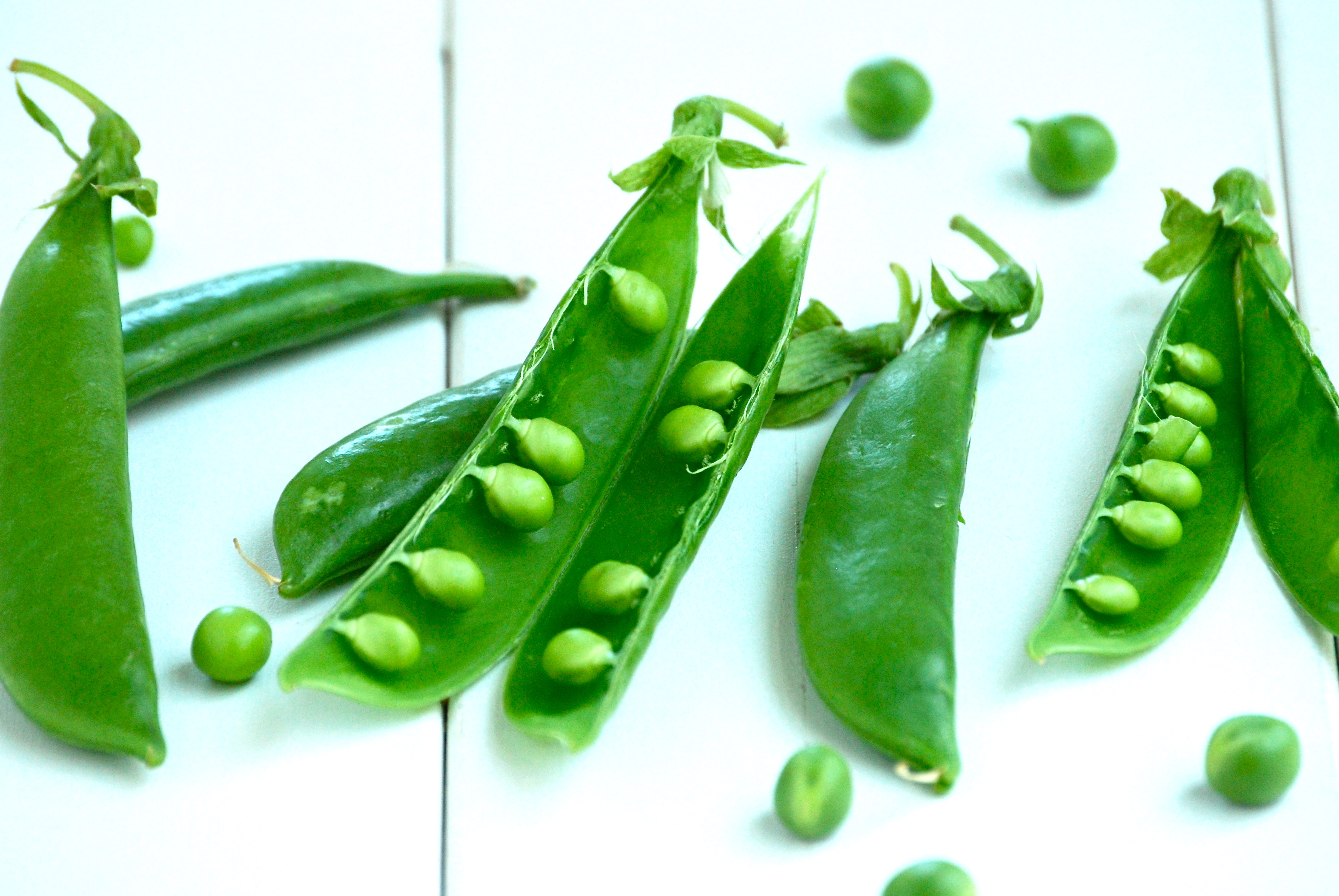
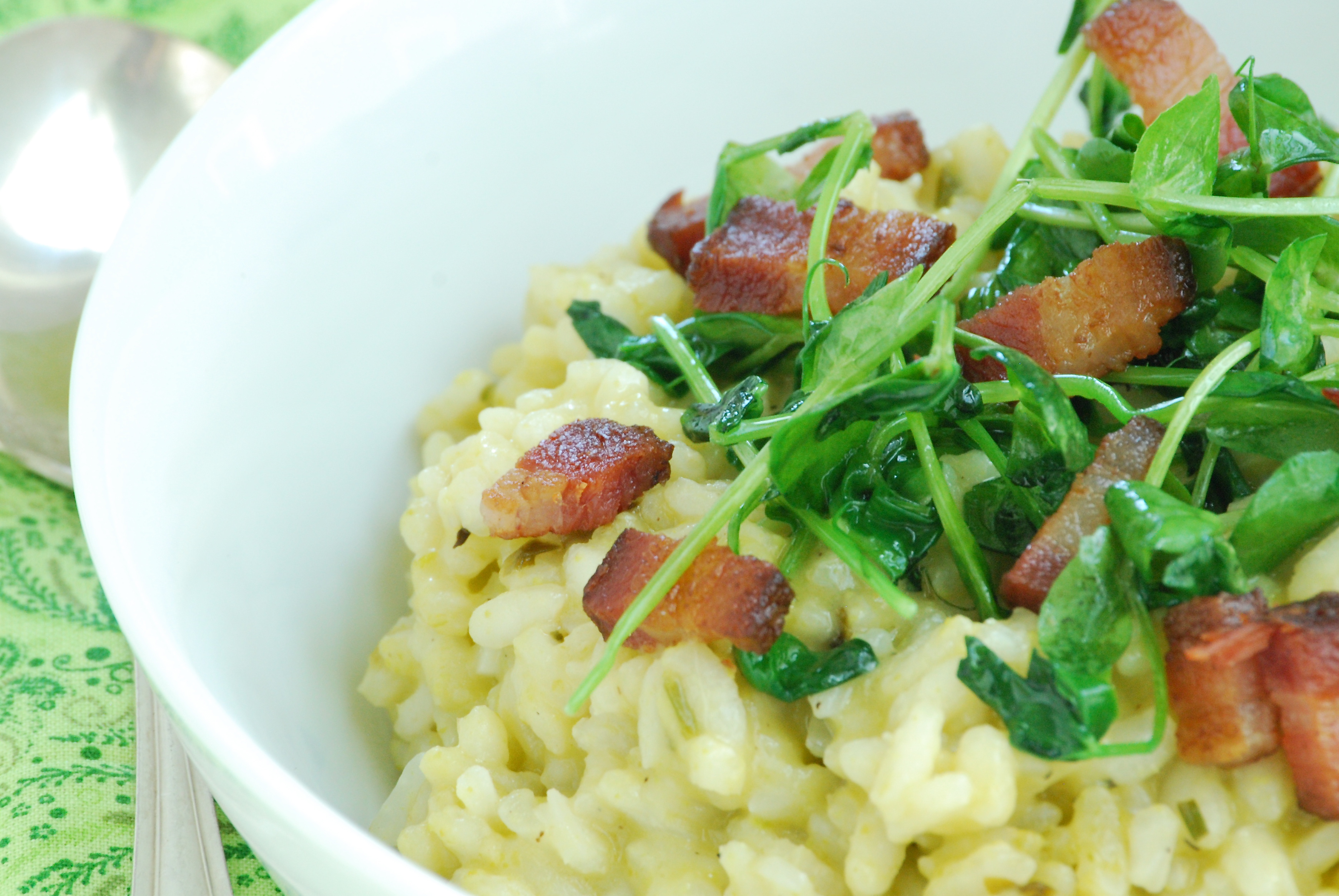
This dish uses pea shoots, which are in-season, locally.  Hopefully, you can get your hands on some of these little gems.  If you can’t, don’t worry.  You can still make it by simply omitting the pea shoots at the end.  Pea shoots are the leaves and tendrils of pea plants.  They are delicate and taste just like peas, but with a bit of a crunch.   Mixing them with salad greens is another way to really enjoy them.  In this dish they are sauteed for just a few seconds and then placed on top of this fantastic risotto.

The risotto itself has a pea puree  swirled into it.  My first thought was to skip making the puree and just add whole peas.  I’m so glad I didn’t.  The puree is lovely and gives the risotto a beautiful soft-green hue.  This dish comes together quickly, so go ahead and put the extra effort in by making the puree.   The herbs add loads of character to what would otherwise be a straight-forward risotto.  The fennel, in particular, really stands out.   The additional acidity of the white wine, countered by the rich flavor of the bacon really brings it together.  It’s creamy, salty, smokey, and fresh– all at once.

The Recipe:  Risotto with Pea Shoots and Bacon

(Serves 6)

2 cups fresh peas (or frozen)

4 sprigs fresh flat-leaf parsley, 2 left whole and 2 chopped (2 tablespoons)

4 sprigs fresh thyme

2 bay leaves

1 teaspoon black peppercorns

1 teaspoon fennel seeds

4 cups chicken or vegetable broth

5 tablespoons unsalted butter

1/2 small yellow or white onion, finely chopped

1 clove garlic, minced

2 cups arborio or carnaroli rice

2 cups dry white wine (I used a Sauvignon Blanc from the Loire– though next time I’ll try a less aggresive style.  Perhaps a Pinot Bianco or Pinot Grigio.)

1/4 cup grated Parmesan or Grana Padano cheese

1/4 pound bacon or pancetta (about 6 slices), diced

2 cups pea shoots

1 tablespoons finely chopped fresh chives

Course salt and freshly ground pepper

Bring a small saucepan of water to a boil.  Add the peas and cook for 1 minute.  Drain and cool.  Transfer to a food processor or blender and puree; strain through a mesh strainer and discard and solids.  Set aside.

Wrap the whole parsley sprigs, thyme, bay leaves, peppercorns, and fennel seeds tightly in cheesecloth and tie with butcher’s twine.

Heat the broth in a medium saucepan over medium heat to a simmer.  Melt 4 tablespoons of butter in a large saucepan over medium heat; add the bouquet of herbs, the onions, and the garlic.  Cook until the onions and garlic are softened, about 5 minutes.  Add the rice and stir to coat evenly with the onion mixture.  Add the wine, increase the heat to medium-high, and cook, stirring constantly, until the wine is almost completely absorbed, about 15 minutes.  Reduce the heat to medium, then add the warm broth 1 cup at a time, stirring the rice constantly until most of the liquid is absorbed before adding additional broth.  Continue to add broth, stirring until the rice is almost cooked through, about 20 minutes.  ( Note: you may not need to use all of the broth.)

Meanwhile, in a medium skillet over medium-high heat, cook the bacon or pancetta until crisp, 5-8 minutes.  Drain on a paper towel-lined plate, then transfer to a small plate and set aside.  Wipe out the skillet and heat 1 teaspoon butter over medium heat; add the pea shoots and cook until just wilted, about 1 minute.  Set aside.

When the rice is just cooked through, remove the bouquet of herbs,  then add the pea puree, chopped parsley, chives, and Parmesan or Grana Padano cheese.  Season with salt and pepper to taste.

To serve, ladle the risotto into soup bowls.  Top each bowl with the crisp bacon or pancetta and pea shoots.  Enjoy!

Source:  Adapted from Harvest to Heat Cookbook

Thanks for stopping by!  I love your feedback, so feel free to leave a comment.  Have a fabulous weekend!

Laurie

Follow me on Twitter!
I’ve had a wonderful few weeks here in St. Paul.  Yes, I’ll admit it has been a bit too rainy and cold for my taste, but there have been beautiful days as well.  As for those rainy days, well, they green the grass and allow the flowers and trees to bloom.  I’ve been wandering around the neighborhood with my children, taking in Spring while they shake off the effects of a Winter spent indoors.  Getting back outside is magical.

Once the weather turns for the better, I start counting the days until various fruits and vegetables ripen.  Rhubarb is one of the first, and its also one of my favorites.  As a child, I never understood why anyone would ever put rhubarb in anything.  I had tasted it raw, as many children have, and was less than impressed.  Bitter, sour, overly-tough celery. Yum.  Now I love baking with it, and love the tartness that it adds to any dessert– especially those that are quite sweet.

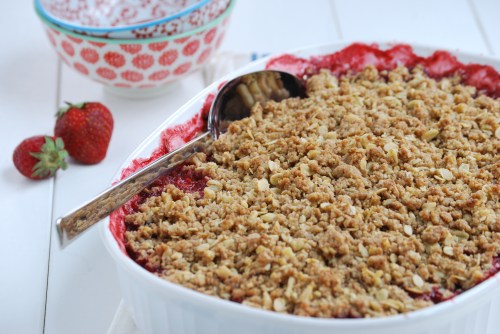
Rhubarb goes great in many desserts (rhubarb-strawberry pie, anyone?), but I really love it in that simplest of inventions– the fruit crumble.  Cut up some ripe, delicious fruit, mix it with a bit of sugar, then make a crumb topping and bake.  Done.  It’s the perfect stress-free dessert to throw together and enjoy with friends.  It’s very difficult to mess up a crumble– no matter what it’ll be delicious.

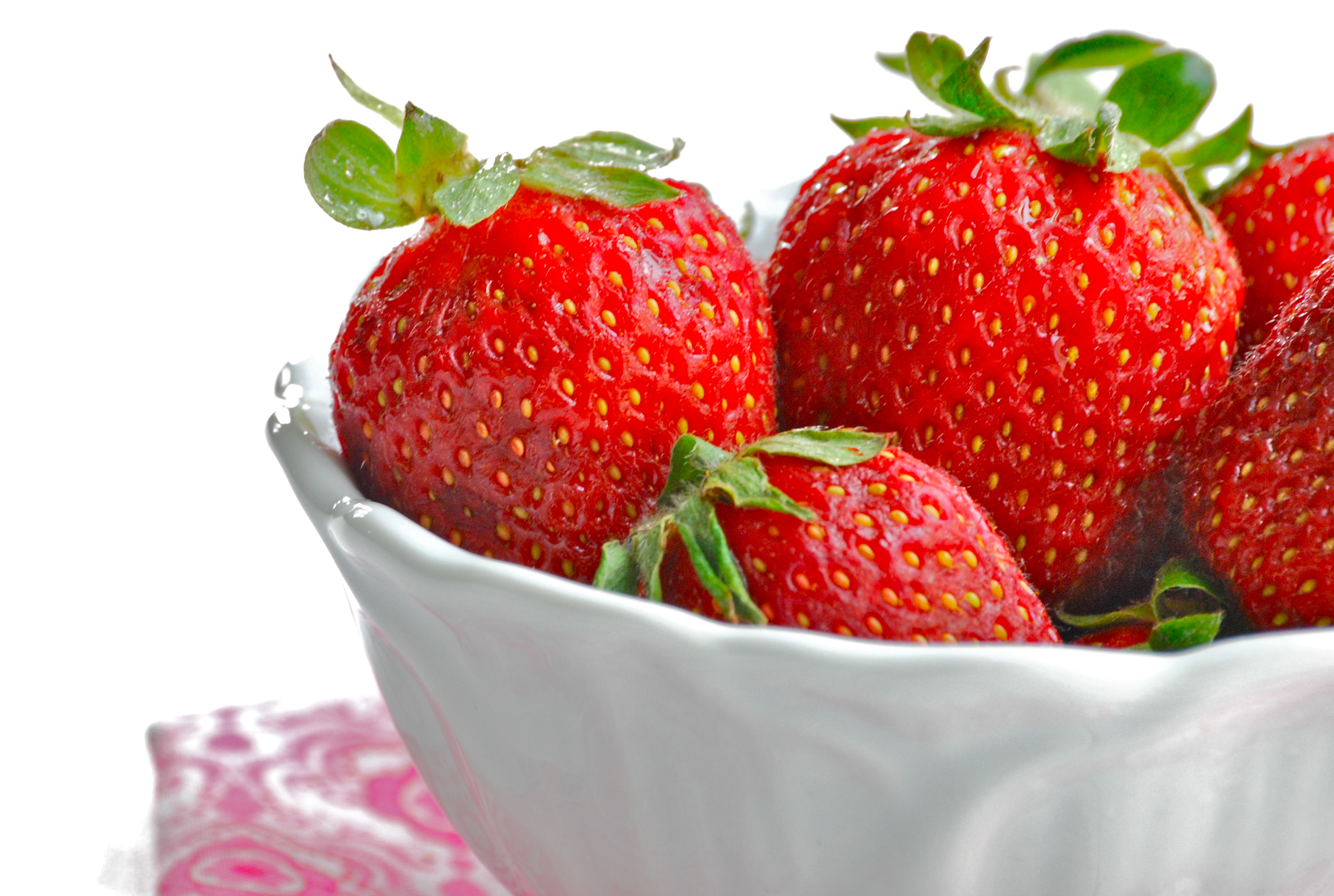
The original recipe called for just rhubarb.  I’m sure it would be fantastic if you use just the one ingredient, but I didn’t have enough so I improvised.  Instead, I replaced half the recipe with fresh organic strawberries.  It ended up with that perfect balance of sweet and tartness.

The Recipe:  Rhubarb, Strawberry, and Sticky Ginger Crumble

2  3/4 cups rhubarb, cut into 1-inch chunks

5 cups strawberries, cut into large chunks

2/3 cup brown sugar

Zest and juice of 2 small blood oranges (or 1 regular orange)

1 scant cup of whole-wheat flour

1/2 cup cold butter

1/2 cup rolled oats

1/2 cup chopped, toasted walnuts

2 pieces of fresh ginger, pealed and chopped

Pre-heat your oven to 350°F.  Put the rhubarb half of the sugar (1/3 cup) into a sauce pan.  Add the orange juice and zest, put lid on top, bring to a boil and simmer for a few minutes.  Remove the lid and simmer for a couple more minutes, until the rhubarb has softened slightly.  Remove from heat and add the strawberries.  Pour into an ovenproof baking dish and spread out evenly.

To make the crumble topping, use your fingers to lightly rub together the flour and butter until the mixture resembles fine bread crumbs.  Stir in the oats, walnuts, the rest of the sugar (1/3 cup),  and the ginger.  (If you like, you can make the crumble topping in the food processor.  Just add the flour, butter, sugar,  and ginger and pulse a few times.  Then add the oats and walnuts and pulse for a few seconds more.)  Sprinkle the crumble over the rhubarb and bake in the preheated oven for 40 to 45 minutes, or until the rhubarb is bubbling and the crumble is golden.

Source:  Adapted from Jamie Oliver’s Jamie At Home Cookbook

Thanks again for stopping by for a visit!  Would love to hear if you are making any of the recipes and how they are turning out for you.  Hope you have a great start to the week!

Laurie

Follow me on Twitter!

I have been craving steamed mussels for a few weeks now.  The culprit was a visit to our favorite gastropub a month or two ago, where we shared steamed mussels with sliced chorizo sausage and had a few local craft beers.  It was a good night.  I love seafood, but don’t get a chance to eat it as much as I’d like here in the Upper Midwest.  A week later, as if to taunt me, the most recent issue of ‘Fine Cooking’ had a steamed-mussel recipe that looked similar to what I’d recently loved while out on the town.  Then I saw another variation on this theme on her blog.  Obviously this was a sign, so I headed down to Coastal Seafoods to buy some shellfish.

No, this is not a “local” dish.  I wish it were.  But fresh walleye is about as close to local seafood as I’m going to get in Minnesota, and this dish definitely won’t work with fish.  Now, back to the mussels.  I can’t believe I don’t make these more often!  They turn an ordinary middle-of-the-week dinner into an exciting and new meal.  Did I mention that they’re incredibly easy to make?  That they taste amazing?  That they’re relatively inexpensive?  How about this:  the whole process– start to finish– takes less than 30 minutes.

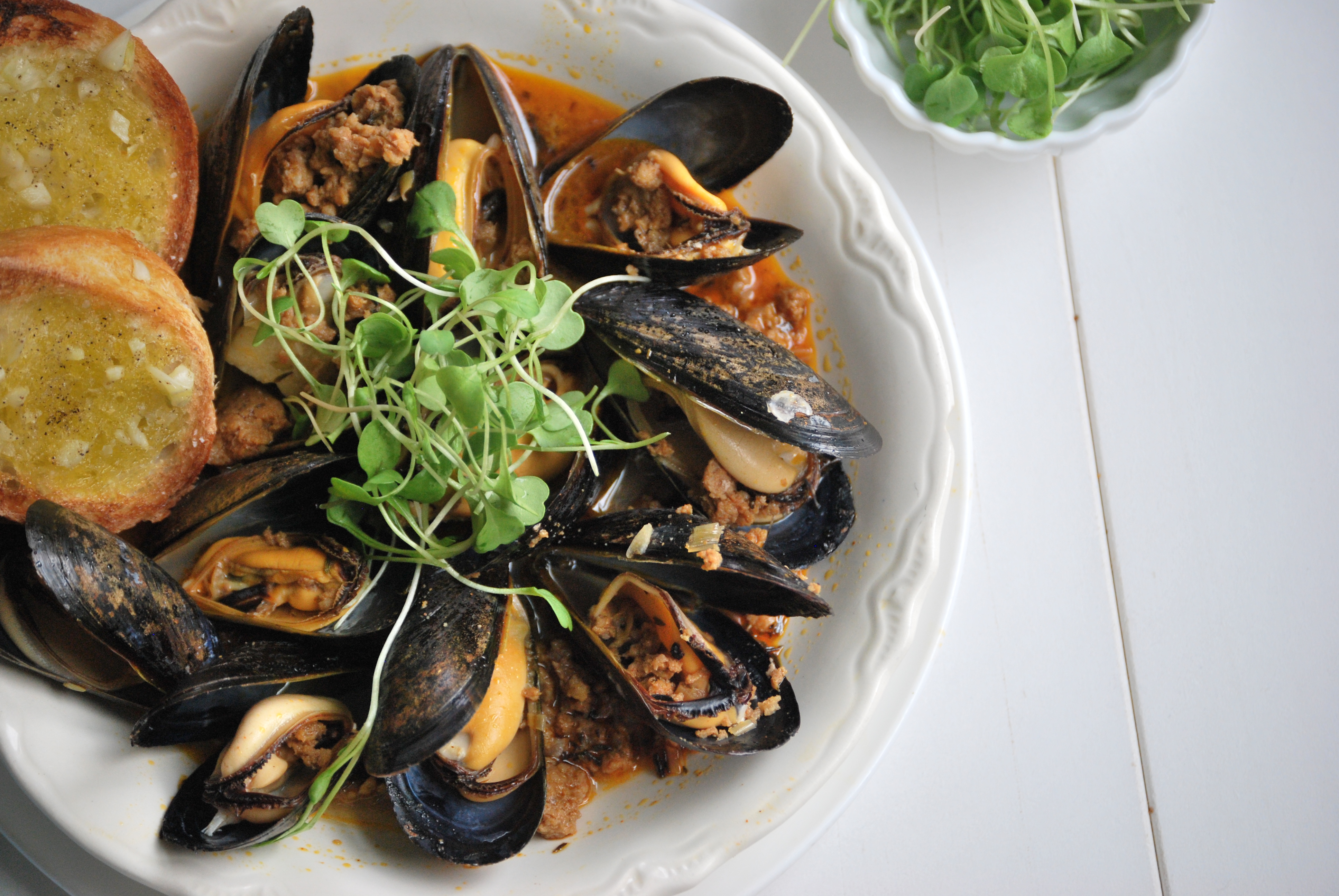
The mussels flavor is best described as a “briny goodness.”  The chorizo adds a little spice and contrasting texture.  I chose ground chorizo specifically because of this textural variation– and because we have a local (Yay!) brand that competes for the best I’ve ever tasted.  You can certainly use a Spanish-style, rather than ground, chorizo if you’d like.  Just slice it up 3/8 -inch thick.   The ramps (see here for a discussion on ramps), garlic, and smoked paprika combine nicely with the chorizo.  The dish is completed with a a small amount of white wine.  I made this with a Spanish Albariño– it’ll never lead you astray when matching with seafood.  The dish tastes spicy and divine.  Serve it with the garlicky croutons, pour a glass of that delicious wine, and settle in on the patio for the night.

The Recipe:  Steamed Mussels with Chorizo, Ramps, and Smoked Paprika

Serves 2, generously

3 tablespoons of extra-virgin olive oil

4 cloves garlic, 2 minced and 2 thinly sliced

1/2 bunch of ramps, chopped  (white and green parts, only)

1 cup dry white wine,  an Albariño worked nicely (though I’m intrigued by how a minerally wine, like a Sancerre or even Chablis would change the flavor)

1/2 teaspoon smoked sweet paprika

1/2 pound ground chorizo

1 teaspoon dried thyme (or 2 sprigs fresh)

2 pounds mussels, scrubbed and debearded

1 baguette, cut on the diagonal into 1/2-inch slices

Sea salt and cracked black pepper

Microgreens (for garnish, optional)

Combine the olive oil and the 2 cloves of minced garlic in a small bowl and set aside.

Position an oven rack about 4 inches from the broiler element and heat the broiler on high.

In a 6-quart Dutch oven, brown the chorizo until fully cooked.  There should be a bit of oil leftover from the chorizo in the pan, if not add a couple tablespoons of olive oil.  Add the garlic and ramps and saute along with the chorizo for just a few minutes, until soft.  Add the smoked paprika and cook for 30 seconds longer.  Add the wine and thyme and bring to a simmer, stirring occasionally.  Stir in the mussels, coating them with the sauce mixture.  Cover and cook, stirring 2 or 3 times, until the mussels have opened, 8 to 10 minutes.

Meanwhile, arrange the baguette slices in a single layer on a rimmed baking sheet and brush them with the garlic oil, dividing the bits of garlic evenly among the slices.  Sprinkle with salt and pepper and then broil, rotating the baking sheet as needed, until evenly browned and crisp, 1 to 2 minutes.  Make as many as you like.

Discard any mussels that have not opened.  Serve the mussels with the sauce, croutons, and microgreens.  Enjoy!

Source:  Adapted from Fine Cooking Magazine

Make sure to come out and support the National Food Blogger Bake Sale on Saturday.  Proceeds to support Share Our Strength.  Our local gathering in Minneapolis/ St. Paul is at the Midtown Global Market –920 East Lake St. Minneapolis.  The hours are 11:00am – 4:00 pm.  Check to see if your city is having one.

Thanks again for stopping by– I appreciate all of your kind comments.  Hope you all have a wonderful weekend.

Laurie

Follow me on Twitter!