Feeds:
Posts
Comments

Spring is here!  I know, I know– it was official a while back.  But, it’s really official now because ramps have arrived! I look forward to ramp season every year– so much so that my husband eventually ridicules how often I mention “ramps.”  Unfortunately, they’re not available for long, which forces me to fit as many ramp recipes as I can into a brief amount of time.

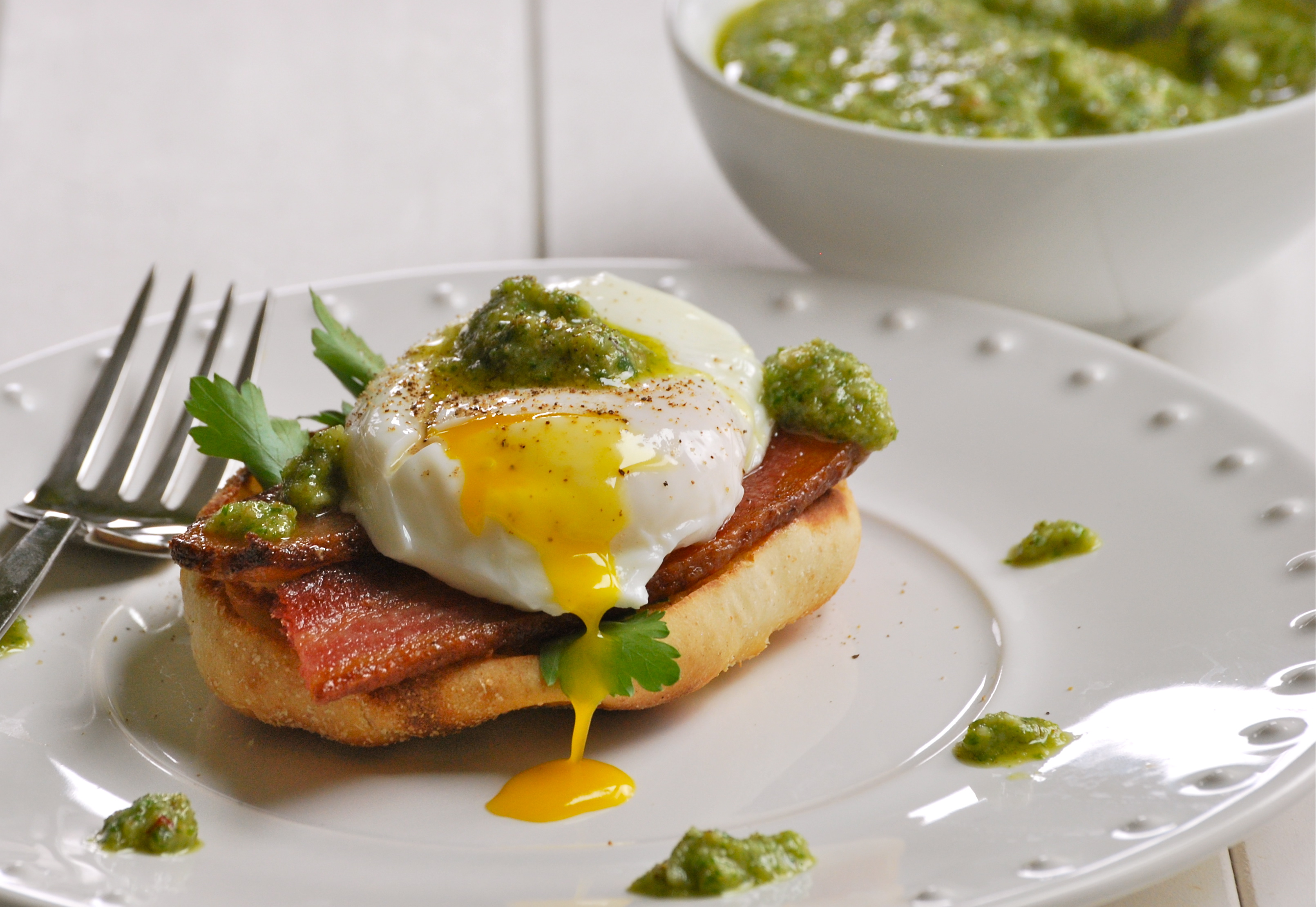
For the uninitiated, a ramp is actually a wild leek.  Their flavor most closely resembles a cross between a green onion and garlic.  While this makes them versatile, I really love allowing their unique flavor to take center stage.  This pesto does just that.  The wonderful garlic notes from the ramps blend well with the parsley and parmesan without overpowering them.  And ramps and eggs are a heavenly match, whether scrambled (with chopped ramps) or poached, as in this version of Eggs Benedict.

There are many ways to get the most out of this pesto.  It’s a fantastic sauce for pasta with a sprinkle of parmesan, add it as a topping to a rich risotto, or spread some on a toasted baguette with roasted tomatoes.  As the ramp season is so short, you can make extra pesto and freeze it– it keeps well.  Then, when tomatoes peak later this summer, you can bring some out and really get the best of this combination.  I can’t wait!

The Recipe:  Ramp Pesto

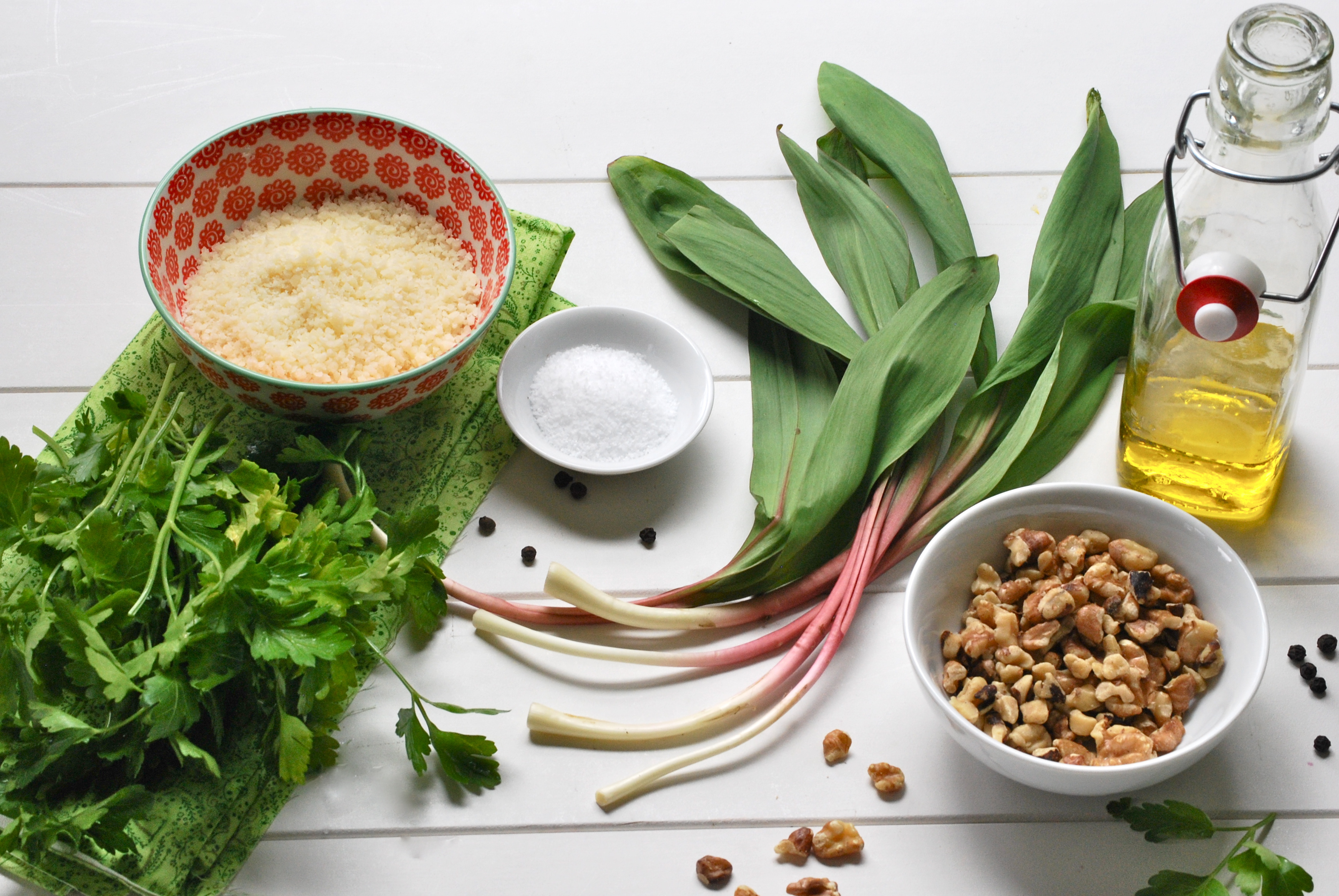
1/2 cup toasted walnuts pieces

1 cup Italian parsley (packed, then loosely chopped)

1 bunch ramps, (white and red parts only), chopped

1/4 cup grated Parmesan or Grana Padano cheese

1/2 cup extra virgin olive oil

kosher salt and cracked black pepper, to taste

red pepper flakes, to taste

Begin by toasting the walnuts in a small frying pan for a couple of minutes until they become aromatic.  Stirring and being very careful not to burn them.   They don’t need to be fully toasted, just enough to bring out their nutty flavor.  Remove from pan, and set aside.

Next, in a small food processor, combine the ramps, parsley, walnuts, parmesan, red pepper flakes, and a sprinkle of salt and cracked black pepper.  Pulse the mixture for a few seconds until it is somewhat mixed.  Turn the food processor on and slowly stream the olive oil through the liquid hole on top of the lid.  When the pesto looks homogeneous, after a minute or two, turn off the machine and  adjust seasonings, if necessary.  The pesto will keep covered in the refrigerator for around 3 days.  Enjoy!

I hope you all have a wonderful week!  Thanks for stopping by!

Laurie

Follow me on Twitter! 

I live in Minnesota, where the maple trees are now being tapped.  Yes, its a bit of poetic dreaming, but this makes me long for a little country home with my very own maple trees, big red barn, and sprawling garden.  I conveniently ignore the “back-breaking labor” part of that dream.  While I don’t get to live the bucolic life here in the middle of the city, I’m fortunate enough to have access to the local, delicious maple syrup from nearby (not to mention a few fantastic farmers markets).

I love maple syrup, though this wasn’t always true.  The fact is, for most of my childhood I’d never had the real thing.  I detested the overly-thick, sugary mess that most restaurants labled “maple syrup.”  At home, we usually had a berry syrup, as getting real maple in rural North Dakota wasn’t an option at the time.  Once I finally had a taste, I was hooked.  I couldn’t believe that it was nothing like the gloppy corn syrup-based knock-offs I had been exposed to.  It was thin– delicate almost– and just sweet enough.

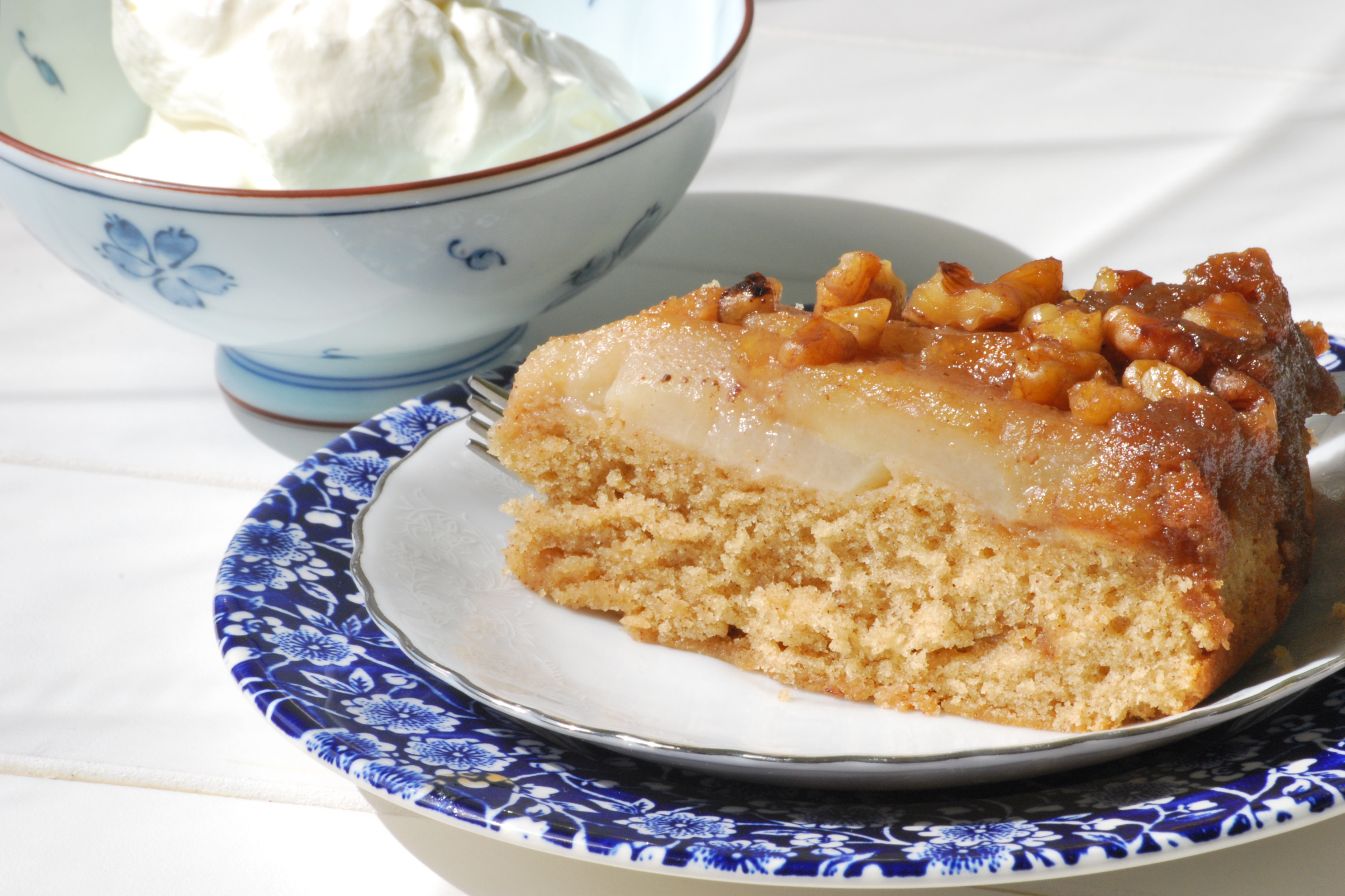
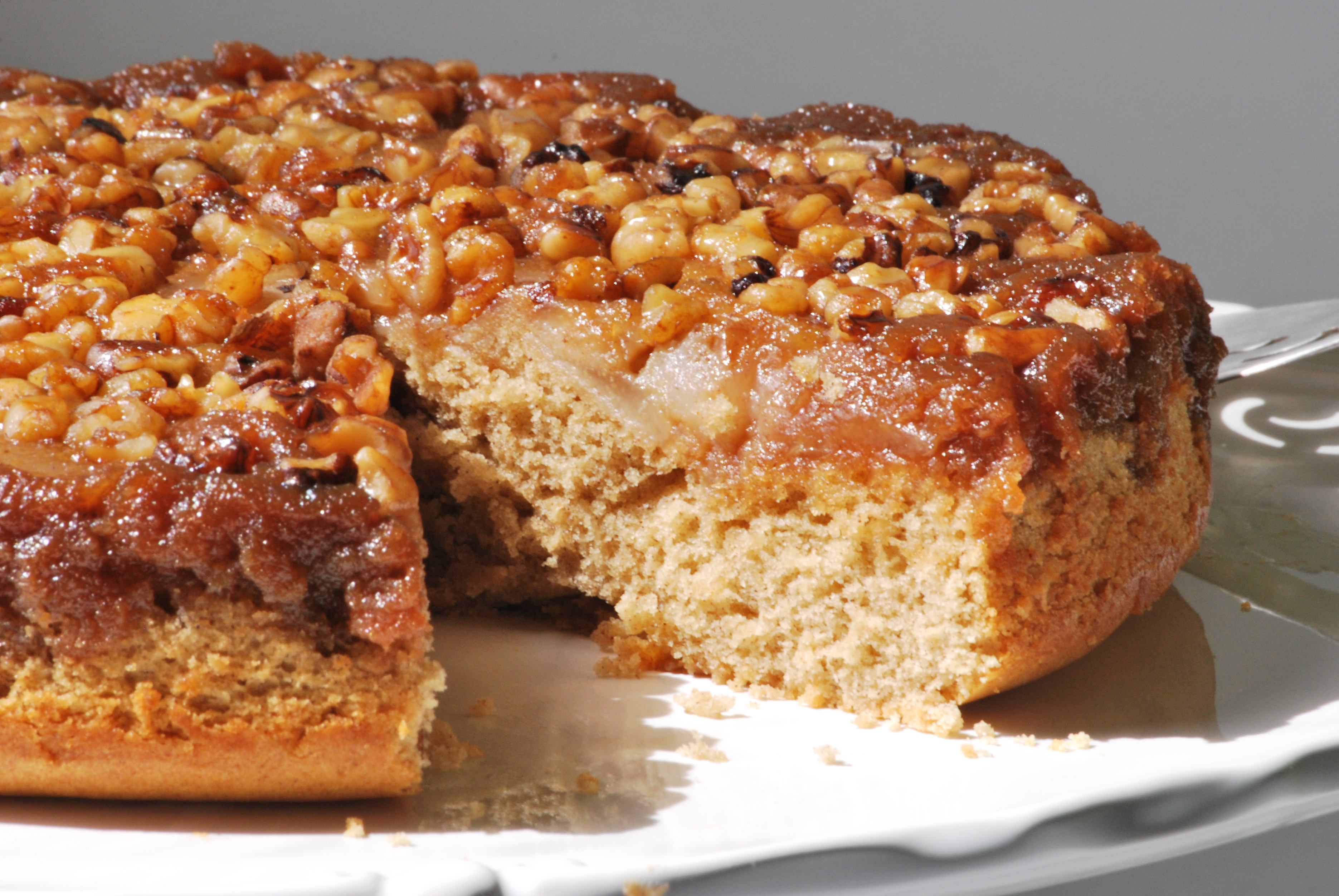
A friend recently told me about a fantastic cake recipe by David Lebovitz— one of my favorite accomplished chefs.  This maple walnut pear cake is perfect for this time of year.  It’s one of those desserts that’s simple to throw together and toss into the oven, yet the result is so much more than an ordinary cake.  The flavor-combination is beautiful.  The maple syrup, walnut, and pear build off of one another, while the cinnamon binds them all together.  This is a moist cake that gets better with each passing day.  I think I even prefer it on the second day when the glaze really gets a chance to soak in.  But seriously,who’s going to wait that long for a piece?  Try it– you’ll love it.  And for goodness sakes, don’t forget the whipped cream!

The Recipe: Maple Walnut Pear Cake 

Topping:

1/3 cup maple syrup

1/4 cup packed light or dark brown sugar

1/2 cup walnuts, toasted and coarsely chopped

3 ripe Bosc pears (I used D’Anjou and they worked fine), peeled, quartered, cored, and cut lengthwise into 1/4-inch slices

Cake:

1 1/2 cups all-purpose flour

1 teaspoon baking powder

2 teaspoons ground cinnamon

1/2 teaspoon salt

1/2 cup unsalted butter, at room temperature

1/2 cup granulated sugar

1/4 cup packed light brown sugar

1/2 teaspoon vanilla extract

2 eggs, at room temperature

1/2 cup whole milk, at room temperature

Directions:

Preheat the oven to 350°F.

Make the topping:  Combine the maple syrup and 1/4 cup dark or light brown sugar in a 9-inch cake pan or a cast-iron skillet.  Set the pan directly over the heat on the stovetop until it begins to bubble; simmer gently for 1 minute, stirring often.  Remove pan from heat.

Sprinkle walnuts evenly over maple mixture in the pan, then arrange the pear slices over the walnuts.  A pinwheel pattern works perfectly.

Make the cake:  In a small bowl, whisk together the dry ingredients (flour, baking powder, cinnamon, salt).  In a stand mixer fitted with a paddle attachment or by hand, beat together the butter, granulated sugar, and 1/4 cup light brown sugar on medium speed until light and fluffy, about 3 to 5 minutes.  Add the vanilla and eggs, one at a time, beating until each is incorporated.  Gradually mix in half of the flour mixture, then stir in the milk, then add the remaining flour mixture.  Mix just until combined.

Scrape the batter over the pears in the pan and carefully smooth into an even layer.  Bake for about 50 minutes, or until a tester inserted into the middle of the cake comes out clean.  Cool 15 minutes in the pan.

Run a knife around the sides of the cake to loosen it from the pan.  Invert a serving plate, or cake stand, over the pan, and carefully invert cake onto it.  Gently lift the pan off of the cake and arrange any walnuts that may have gone astray.

(Note:  Apples can easily be substituted for the pears in this cake.)

Source:  David Lebovitz’s: Ready for Dessert

One last note…Food Bloggers across the country are uniting on May 14 to help fight childhood hunger.  In Minneapolis/St. Paul the bake sale will be held at 920 East Lake St. Mpls, MN 55407 — in the Midtown Global Market.  The hours of the sale are 11:00am-4:00 pm.  I hope you come out and support this important cause.

Hope you are all well and enjoying a bit of spring!  As always, I appreciate your comments!

Thanks for stopping by,

Laurie

Follow me on Twitter!

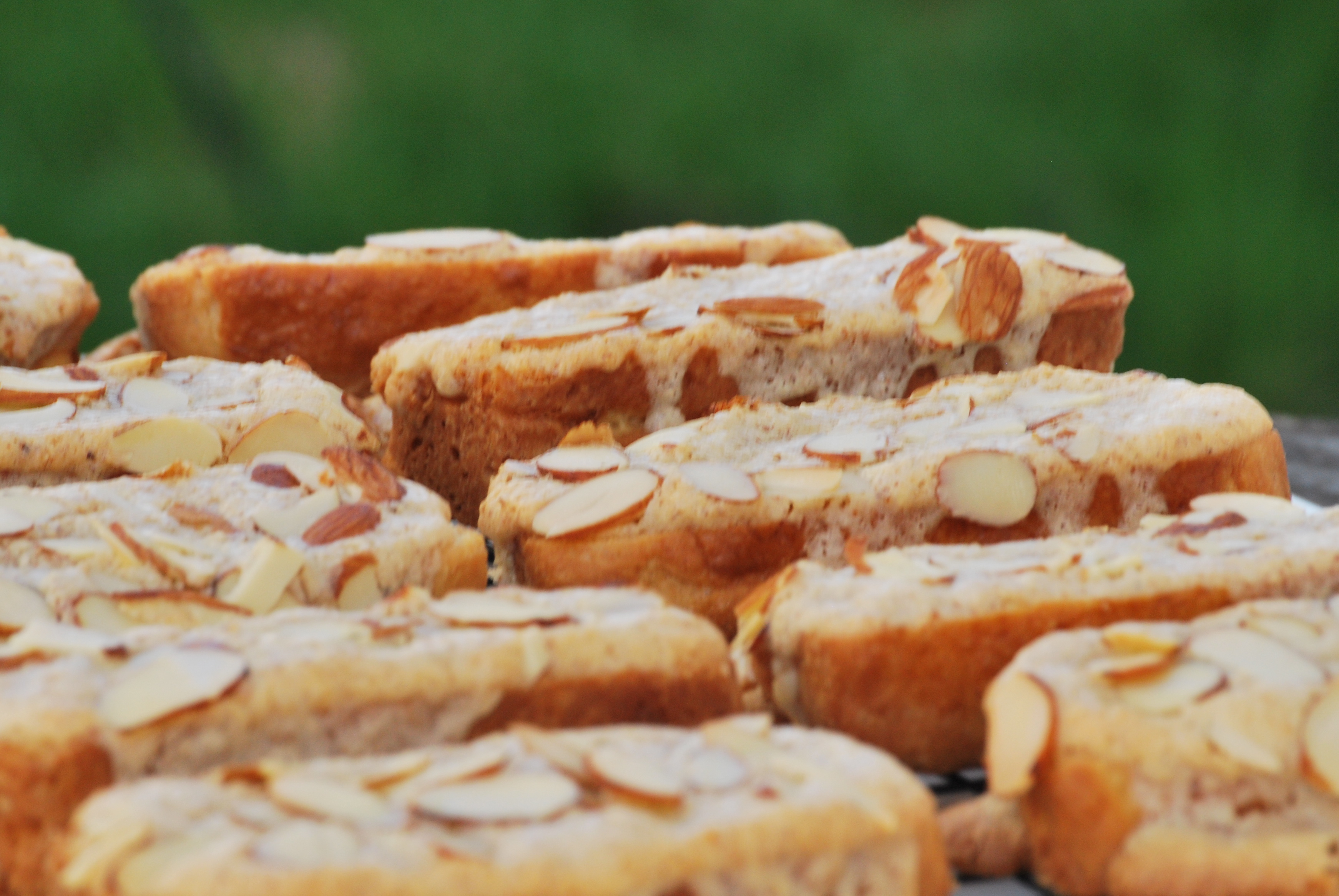
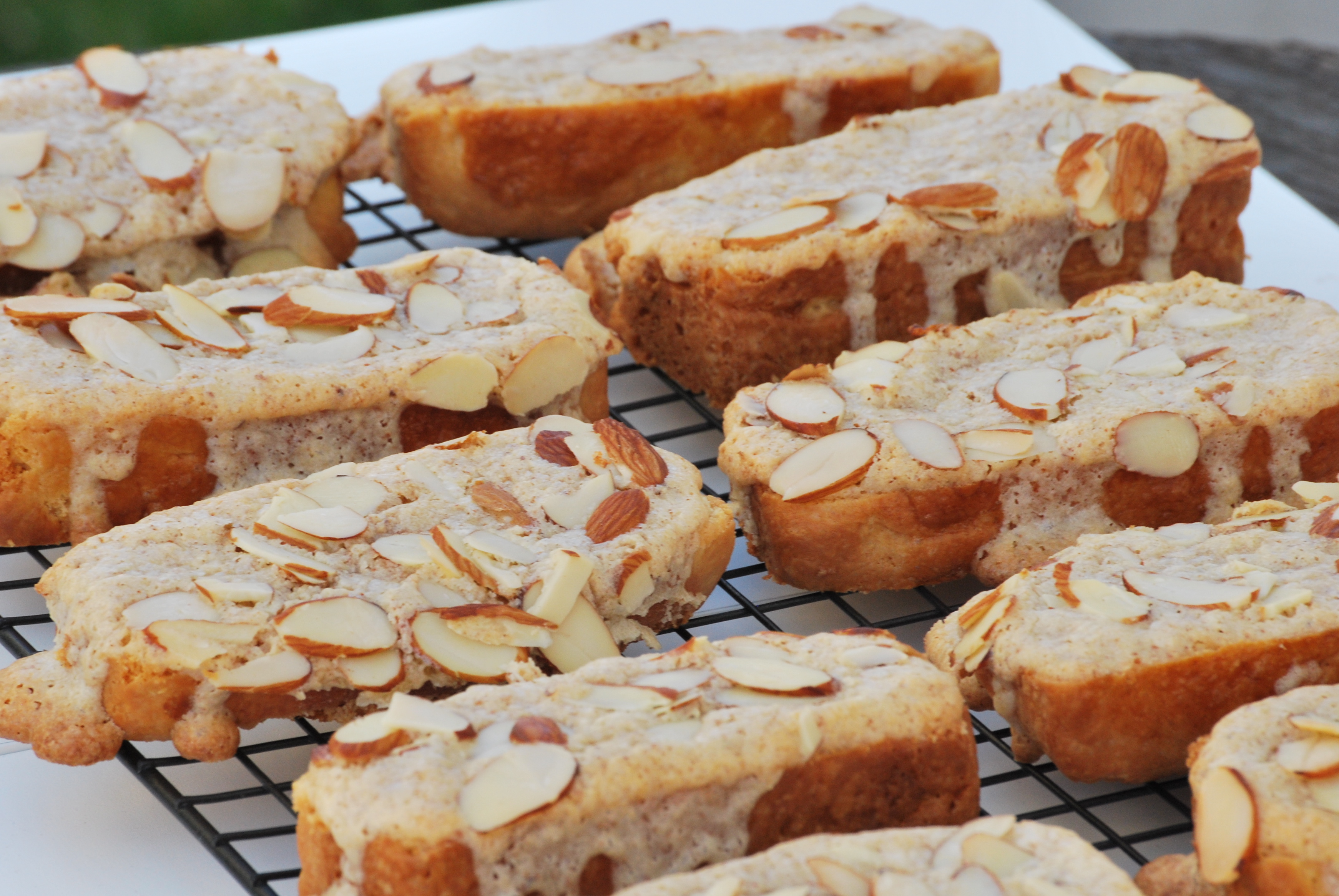
A few weeks back I wrote about brioche — that delicious buttery French bread.  I used half of the dough to make one of my favorite recipes, these sticky buns.   Here’s the thing, in that roll recipe I said you could use half of the dough recipe for rolls, while the other could be made into a fantastic bread.  Full disclosure, that bread loaf rarely stays in it’s original form at my house.  The reason is…bostock.  It’s simple, yet amazing.  Ordinary (though it’s anything but) brioche bread is transformed into a slightly sweet, almond-y treat that begs you to linger over a cup of coffee.  Its exterior is crisp, with a soft, filling body.  Bostock has become my pastry of choice when seeking out sweets at area bakeries.  Now, with the brioche bread recipe, I  make it at home and serve it with strong push-press French coffee.

While you can make as little of the loaf of brioche into bostock as you like, I suggest making the entire thing– you’ll end up craving it after you’ve had a piece or two.  The covered almond cream keeps in the refrigerator for up to 3 days.

The Recipe: Bostock

Use a loaf of brioche from this recipe.

Almond Cream:

3/4 stick (6 tablespoons) unsalted butter, at room temperature

2/3 cup sugar

3/4 cup ground blanched almonds (I usually don’t blanch mine)

2 teaspoons all-purpose flour

1 teaspoon cornstarch

1 large egg

2 teaspoons dark rum or 1 teaspoon vanilla extract

To Make the Cream Using a Food Processor:  Put the butter and sugar in the food processor and process until the mixture is smooth and satiny.  Add the ground almonds and continue to process until well blended.  Add the flour and cornstarch and process to blend, then add the egg.  Process for about 15 seconds more, or until the almond cream is homogeneous.  Add the rum or vanilla and pulse just to blend.

To Assemble the Bostock: Cut a slice of brioche to 1/2  to  3/4- inch thick.  Spread the bread with about 3 tablespoons almond cream, leaving a little border bare, and scatter over some sliced almonds, blanched or not.  Put the bread on a baking sheet lined with parchment paper or a silicone mat, and bake at 350°F until the almond cream is puffed and golden brown, 10 to 15 minutes.  Serve the bostock warm or at room temperature.

Source:  Dorie Greenspan’s Baking from my home to yours

You are going to love this little breakfast treat and you’ll find yourself baking and freezing an extra loaf of bread so you can have these gems whenever you want.  Thanks so much for stopping by!  As always — drop me a comment, I love hearing from you!

Laurie

Follow me on Twitter!

My family loves Italian food, though neither my husband or I are Italian.  If we’re celebrating a special occasion, there’s a good chance we’ll be making pasta.  For years we relied on dry, packaged pasta for spaghetti, lasagna, and seafood dishes.  My husband bought a pasta maker some time ago, and while we were first a bit indimidated by the work involved in making fresh pasta, now we’re hooked.  Rather than look at it as extra time and effort, we separate out the tasks and make it a family affair:  I prepare the dough and the sauce, while my husband and four-and-a-half year old son crank out the noodles.  My two-year-old daughter provides moral support– or more accurately does her best to disrupt the process.  My hope is that the group effort makes nice “food” memories for my family and that they’ll always remember our time in the kitchen.

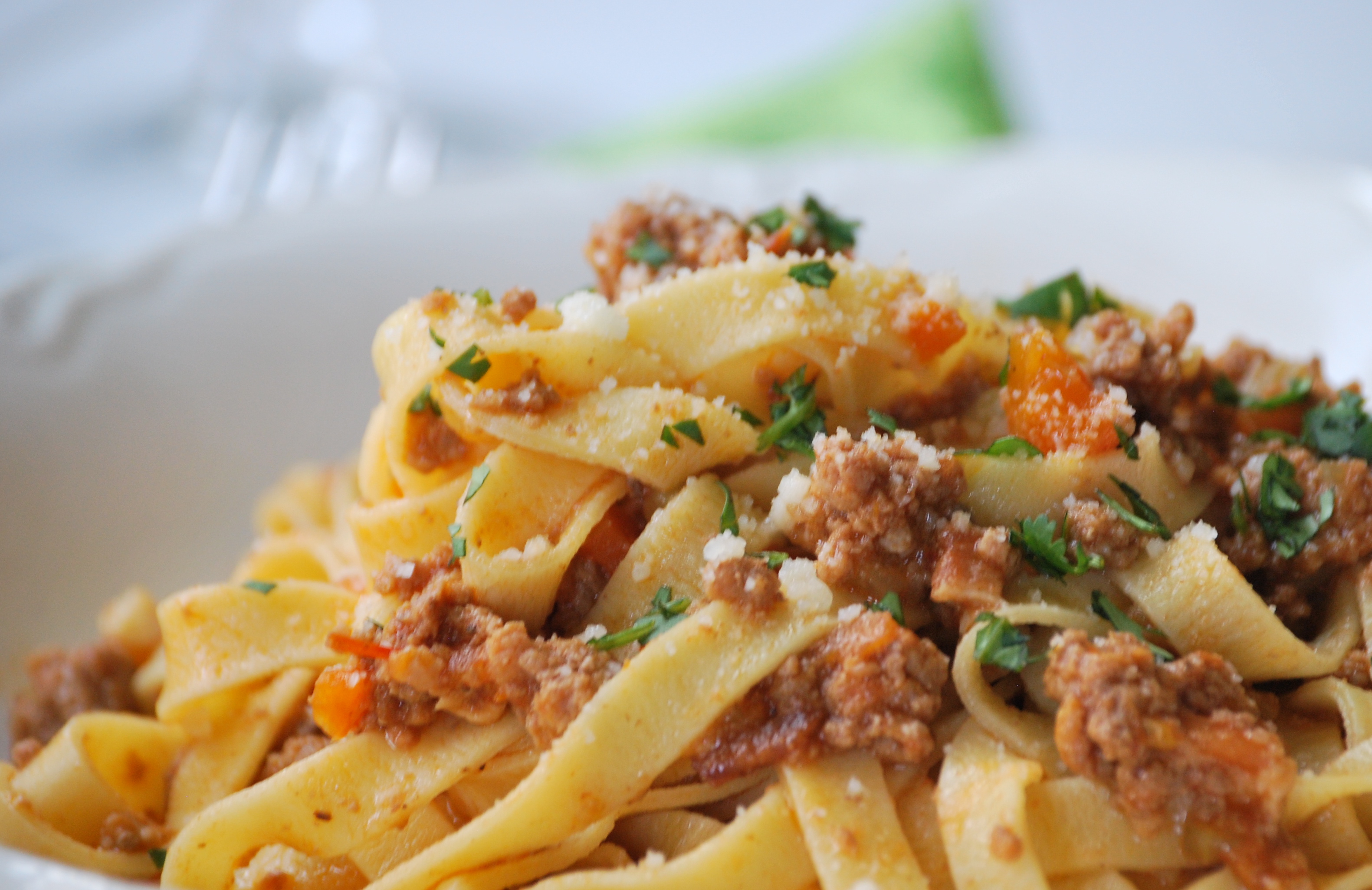
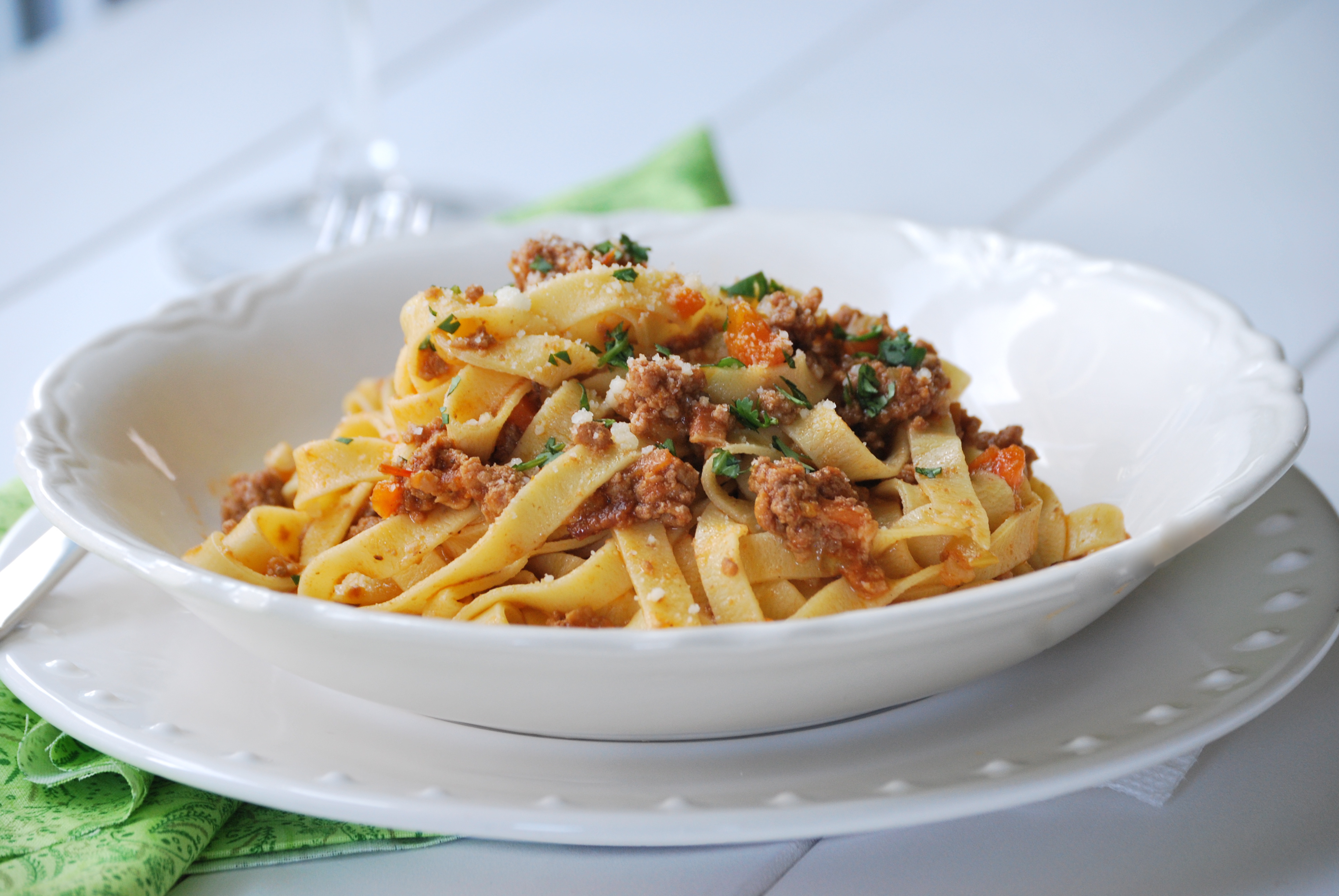
The pasta recipe here comes from one of the queens of Italian cuisine, Lidia Bastianich.  The pasta is silky, beautifully firm, and has that genuine “toothiness” when you bite into it.  If you’ve never had fresh pasta, you’re missing out as the texture is so different from boxed dry noodles.  This particular pasta pairs well with slow-cooked meat sauces.  They cling to it beautifully.  One of my favorites is a bolognese-style sauce.  I’ve made several from cook books, but they’ve never been exactly what I was looking for, so I took my own route for this recipe.  I’ve discovered that ‘bolognese’ sauces can be quite varied.  Some recipes and restaurants use lots of tomatoes, while others rely on them sparingly.  Some call for simmering in milk for long periods of time, while others add cream at the end of the cooking process.  I created this sauce to fit my own tastes– some tomatoes, yet different from a traditional tomato-based sauce.  I slowly simmer it in milk for a few hours to allow the flavors to fully incorporate.  Note that there are no herbs in the sauce, so the meat (especially the pancetta) and vegetables are the stars.

Homemade Tagliatelle: 

(Makes one pound of pasta)

2 cups all-purpose flour

1 egg yolk (from a large egg)

3 large whole eggs

2 tablespoons extra-virgin olive oil

Making the dough in a food processor:

Fit the regular cutting blade in the bowl of a processor  (these batches are too small for the dough blades of most machines).  Measure the flour into the bowl; process for a few seconds to blend and aerate.  Drop the eggs and egg yolk into a spouted measuring cup , or a bowl; beat briefly with a fork to break them up.  Mix in the oil  (you should have 7 fluid ounces).   To minimize the chance of overheating the dough, use eggs right from the refrigerator.

Start the machine running with the feed tube open.  Pour the wet mixture into the bowl quickly; scrape all the egg drippings out of the cup into the processor too.

Let the machine run for about a half minute.  The dough should form quickly; most of it should clump or ball up on the blade – some may spread on the sides of the bowl –  where it will twist and knead.  Let the machine knead the dough for about 10 seconds (no more than 40 seconds total processing).  Turn the dough out onto a very lightly floured surface, and knead by hand for another half minute or so, until it’s smooth, soft and stretchy.  Wrap and rest the dough at room temperature for at least a half hour.  Store, very well wrapped, in the refrigerator for a day; or a month or more in the freezer.  Defrost frozen dough slowly in the refrigerator, and let it return to room temperature before rolling.  Defrosted dough will need a bit more flour.

If you have problems in the food processor – if there’s no apparent clumping after 30 seconds, or the dough stiffens up very quickly – stop the machine and feel the dough.  Adjust for stickiness or dryness by working in either flour or water in small amounts.  You can continue to work the dough in the machine, but don’t process for more than a total of 40 seconds – or turn the dough out to correct the consistency and finish kneading by hand.

Rolling the dough by machine:

I used a manual pasta machine for this.  Have your dough at room temperature for rolling.  Cut 1 pound of dough into four pieces.  Work with one piece and keep the others covered to prevent drying.  Have a large tray or baking sheet nearby (or two if you have them) lightly sprinkled with flour, on which to lay thin dough strips.  Smooth kitchen towels are also useful as resting surfaces and to seperate layers of strips.  Have flour for sprinkling and a knife handy, too.

Turn the knob to the widest setting– you’ll work at this setting for awhile.  Roll the first dough piece out with a rolling pin into an rectangle so that it’s thin enough for the machine to grab on the widest setting.  Roll it through the machine two times.  Fold the now elongated rectangle in thirds, and turn the dough 90 degrees  (so the fold is on the side, verticle), and roll it through.

Catch the dough; fold it and roll it through again with the fold on the side.  Repeat the folding and rolling six more times to strengthen and smooth the dough.  Like kneading, this will make it more resilient and workable.  Lay the first piece down, sprinkle it with a tiny bit of flour on both sides, and cover it (with plastic wrap or a towel).  Put the remaining pieces of dough through the same steps of rolling and folding.

Reset the rollers to the third setting (I roll pasta at every other setting from wide to narrow).  Roll your first strip through, but don’t fold in thirds again.  Let the rollers grab and move the dough– don’t push it or pull it through– and catch it with your hand as it comes out.  Roll the strip again to stretch and widen it; lay the strip down (on the lightly floured tray) and stretch the others in the same way.

Reset the machine even narrower; you should be on the fifth setting by now.  If the rollers fail to grab the dough, apply just a dab of water to the tip of the pasta dough.  Pass the first strip through once; it will lengthen rapidly, and you will need to catch and support it as it comes through the rollers.  Flour the strip lightly if it is sticking to the rollers.  After the second pass, if the strip is 20 inches or longer (and it really should be so), cut it crosswise in half, to get two shorter strips of about 10 to 15 inches.  Lay these down (not overlapping) and dust with flour; roll and cut the other strips in the same way.

You should have eight long strips at this point, each 5 -inches wide (nearly the width of the rollers).  I’ve found that this is generally the thickness that I want.  If you have a different pasta maker, and the noodles are 1/8 – inch thick (and the strips are shorter then 12- inches), you should pass them through the next narrow setting.  Roll the dough as thin as you like, as long as it doesn’t tear or fall apart.  If it does tear, fold the strip in half or thirds (making it shorter and enclosing the tear) and reroll at wider setting.

Set the finished strips down, lightly floured and not overlapping, in the big trays.  If necessary, cover a layer of strips with a floured kitchen towel, and rest more strips on top.

Keeping cut pasta:

You can cook the pasta as soon as it is cut, or let it sit and dry at room temperature until you are ready, but use them within a day.  Lay them out on trays, lightly floured and separated so they don’t stick together.  Arrange the pasta into “nests”.  Pasta that has been air-dried will take a bit longer to cook.

To freeze cut pasta for storage, set the nests  on trays that fit into your freezer.  After they’re solidly frozen, pack them in small airtight plastic bags or containers.  Don’t defrost before cooking; simply drop the pasta into the boiling water.

Cooking the pasta:

For 1 pound of pasta, bring 6  quarts of water to a full boil and stir in 1 tablespoon kosher or sea salt.  The dough has no salt, so it is particularly important that the cooking water be well salted.

Before adding pasta to the water, shake off any excess flour.  Drop the pasta into the boiling water in several batches, stirring with each addition to separate the pieces.

Keep the high heat, but don’t cover the pot.  Cook at a boil at least until the pasta rises to the top.  It should take 2-3 minutes.  Remember, fresh pasta is not cooked until  al dente like dried pastas.  Cook them until they are tender and cooked all the way through.

Source: Homemade Tagliatelle adapted from Lidia Matticchio Bastianich’s Lidia’s Family Table.  Bolognese recipe is my own.

Ragu alla Bolognese

(Simmer time: the longer the better.  At least 2-3 hours for optimum flavor)

2 teaspoons kosher salt

Freshly cracked black pepper

1 dry bay leaf

6 cloves garlic, minced

1 cup onions, finely chopped

1 cup carrots, peeled and finely chopped

1 cup celery, finely chopped

1/4 pound pancetta or bacon, diced

1 pound  free-range ground pork

1 pound grass-fed ground beef

6 tablespoons double-concentrate tomato paste

2 cups puréed canned tomatoes ( I can my own, I would suggest buying something low in sodium)

2 cups whole milk

3/4 – 1 cup white wine, such as Soave or Pinot Bianco (both Italian whites)

In a large Dutch oven, brown the beef and pork over medium-high heat.  Drain and discard the grease and remove the browned meat from the pan.  In the same pan, cook the pancetta or bacon until crisp.  Remove pancetta from the pan leaving the drippings behind.  Sauté the vegetables in the bacon drippings until tender, about 6-7 minutes.   Season with salt and cracked pepper.  Add the ground beef, pork, and pancetta to the pan.  Mix in the vegetables and the tomatoes, tomato paste, milk, bay leaf, and wine.  Bring to a boil, then cover and immediately turn down to low for a long, slow simmer for at least 2 hours, but hopefully a bit more.  The longer you can simmer this sauce, the better it will taste.  3 hours makes it delicious.  Remove cover near the end, if it needs to reduce/thicken  a bit more.  Adjust salt and pepper if necessary.  Combine the bolognese and tagliatelle and top with freshly grated parmesan.  Serve immediately.  Enjoy!

Have a fabulous day, everyone!  Thanks for stopping by, and as always, I appreciate any feedback.

Laurie

Follow me on Twitter!


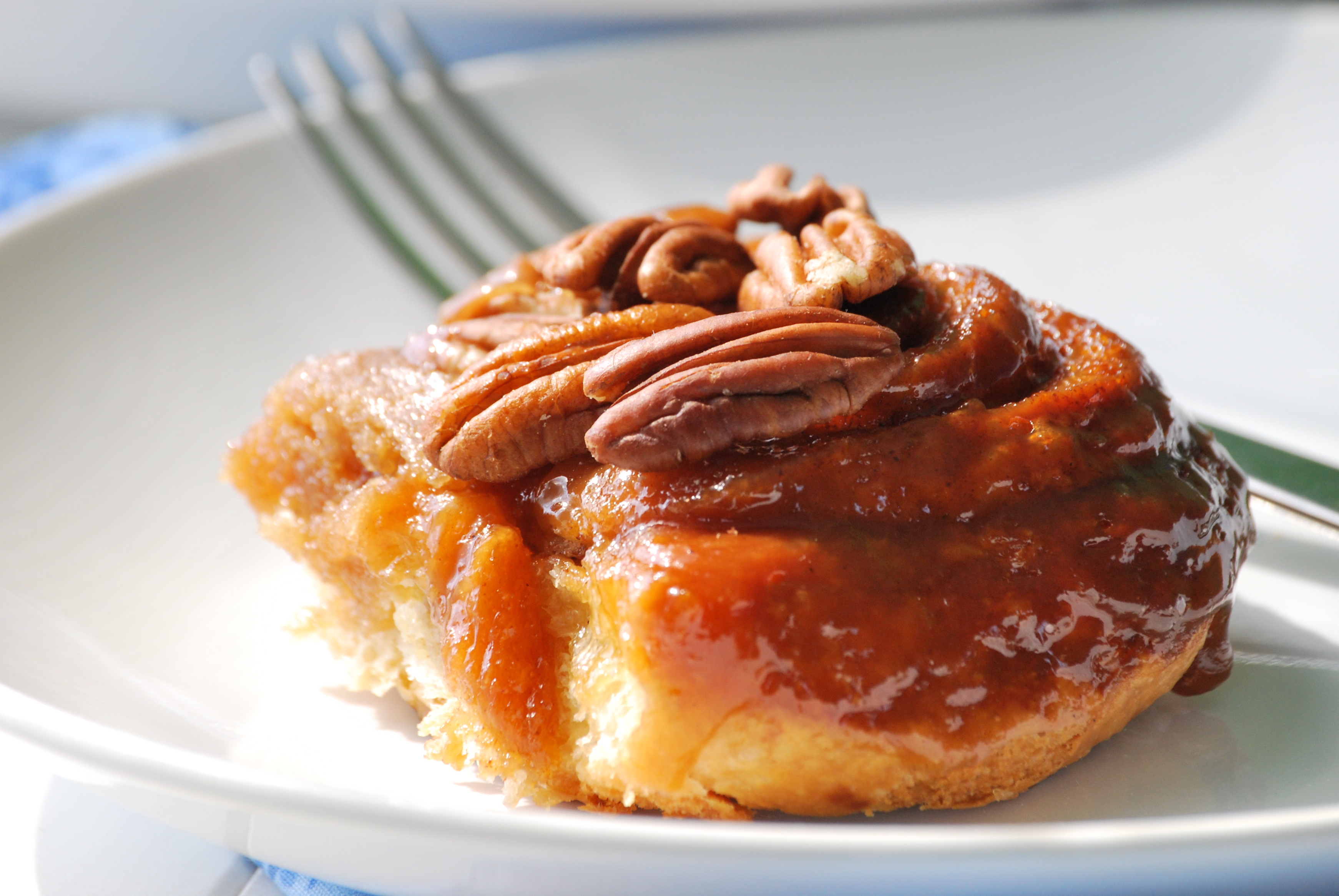
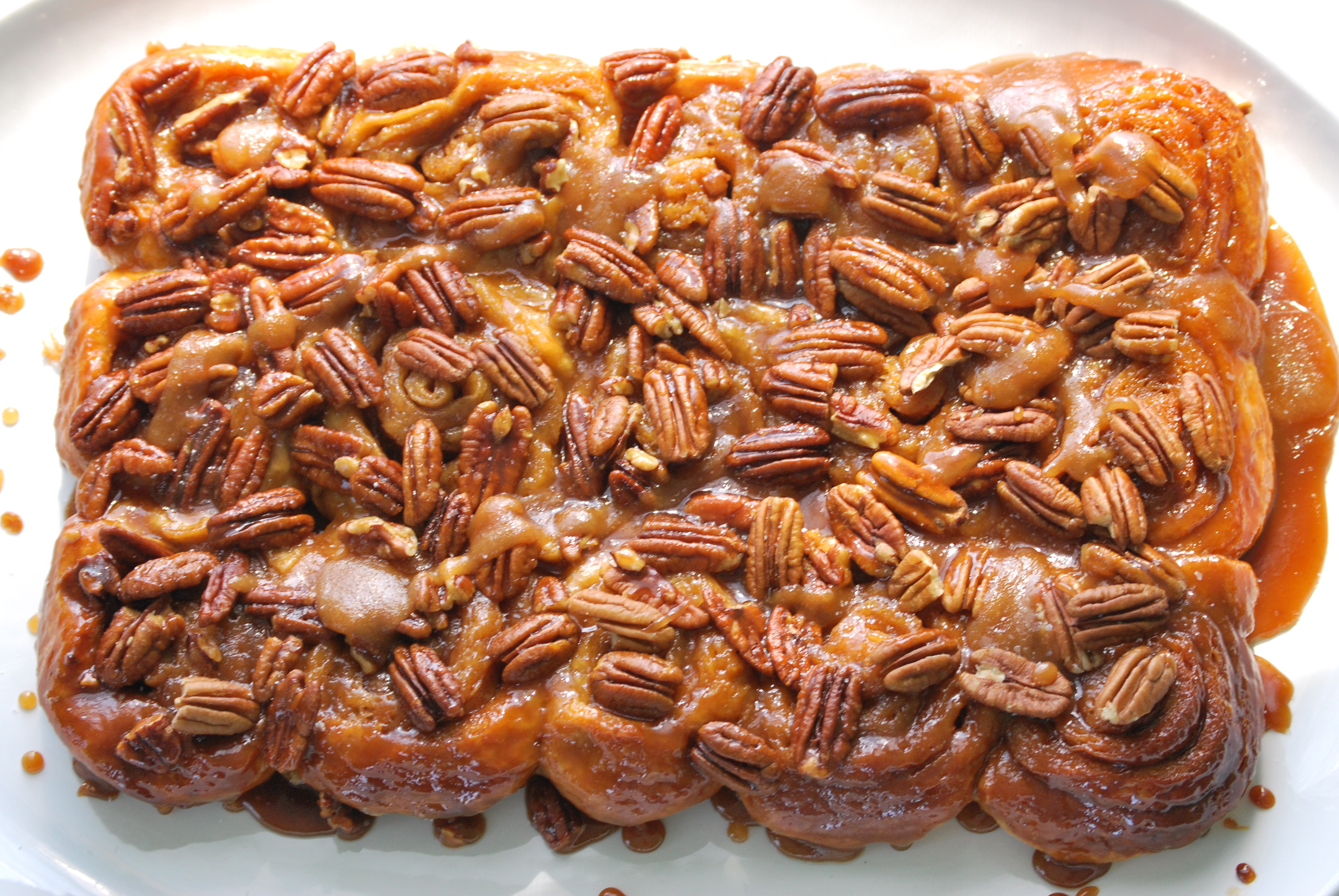
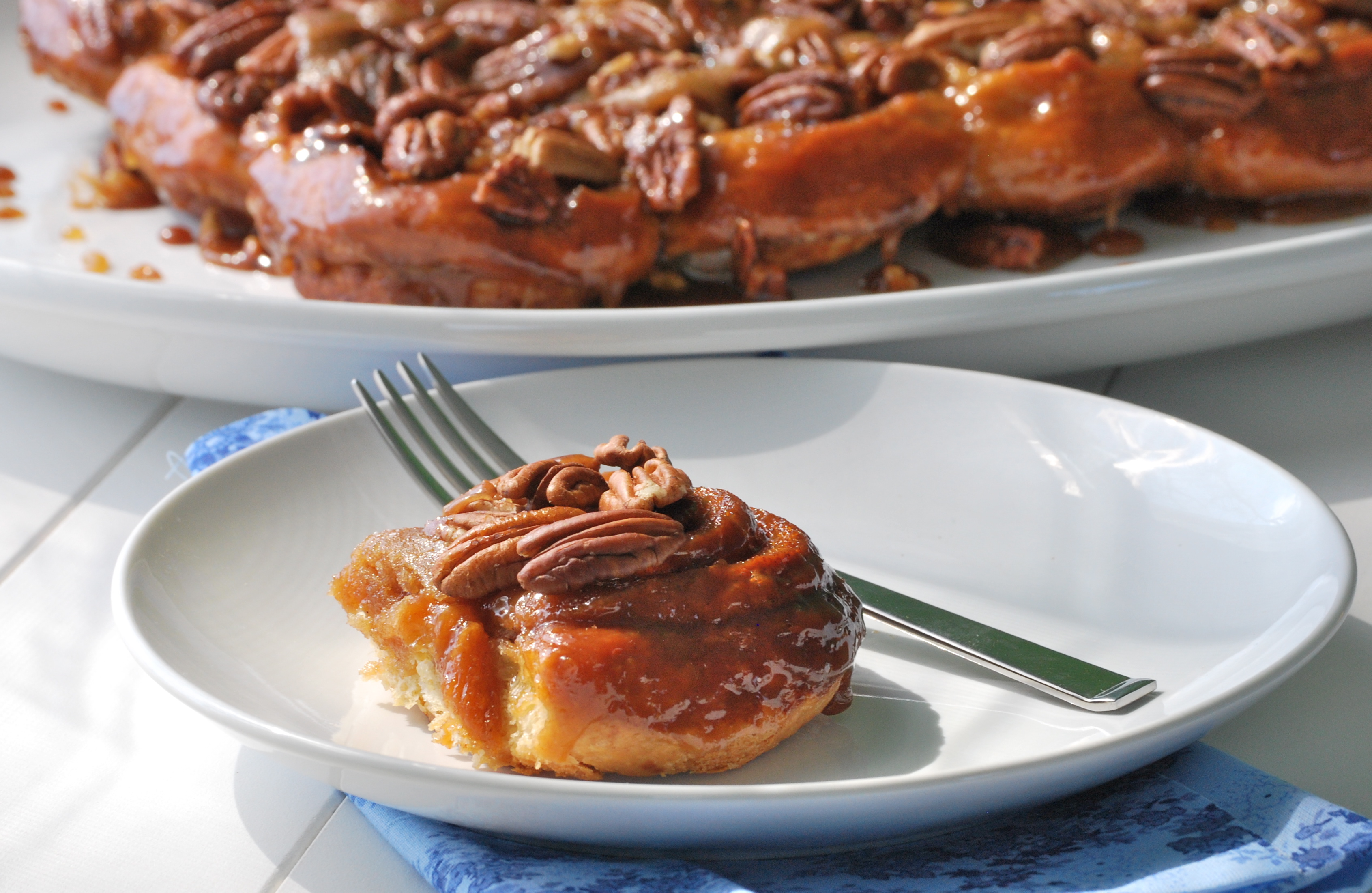
We’re hosting Easter Brunch this year.   In preparation, I spent much of whatever free time I could grab this weekend paging through cookbooks and magazines to put together the menu.   That was the goal, anyway– as usual, I got distracted.  Reading cookbooks, food magazines, and culinary blogs tends to have this effect.  And, of course, I always end up thinking that there is one more cookbook out there that I must have.  Anyway, my hours spent wandering through recipes paid off.  I’ve nailed down most of the brunch menu.  These Pecan Honey Sticky Buns from Dorie Greenspan will definitely make an appearance.  My family loves them.

Even if you’re not a bread baker, don’t be intimidated by this recipe.  While there are several steps, they’re straight-forward and the result is marvelous.  The buns are made from a very silky, buttery brioche dough.  The first time I worked with this dough, I was stunned.  Its soft, like satin– unlike any other dough I had worked with.  It makes the buns flakey, rather than doughy, as in a normal roll.  The brioche also doesn’t ‘puff up’ much, so the buns don’t get as big as you might expect.  I find them to be the perfect size.

The glaze, as you can see, is sublime.  It’s made of brown sugar, butter, honey, and pecans.  The result is firm, delicious toffee-like caramel.  Sprinkle a bit of sea salt on top when they’re done.  The salt will trick your taste buds in to emphasizing the sweetness.  Give ’em a try this weekend!

The Recipe:  Pecan Honey Sticky Buns

Brioche Dough

(Note:  Make sure to allow enough time to let the dough rest overnight in the refrigerator before proceeding with the Pecan Honey Sticky Bun recipe.)

2 packets active dry yeast

1/3 cup just-warm-to-touch water (110 – 115°F worked for me)

1/3 cup just warm-to-touch whole milk

3 3/4 cups all-purpose flour

2 teaspoons salt

3 large eggs, at room temperature

1/4 cup sugar

3 sticks (12 ounces) unsalted butter, at room temperature, but still slightly firm.

Glaze:  (If baking loaves of bread)

1 large egg

1 tablespoon water

To make the Brioche Dough: Put the yeast, water and milk in the stand of a mixer and, using a wooden spoon, stir until the yeast is dissolved.  Add the flour and salt, and fit the mixer with the dough hook, if your have one.  Toss a kitchen towel over the mixer, covering the bowl as completely as your can –  this will help keep your kitchen clean from flour.  Turn the mixer on for a few short pulses, just to dampen the flour.  Remove the towel and increase the mixer speed to medium-low and mix for a minute or two, just until the flour is moistened.  At this point you’ll have a fairly dry, shaggy mass.

Scrape the sides of the bottom of the bowl with a rubber spatula, set the mixer to low and add the eggs, followed by the sugar.  Increase the mixer speed to medium and beat for about 3 minutes, until the dough forms a ball.  Reduce the speed to low and add the butter in 2-tablespoon-size chunks, beating until each piece is almost incorporated before adding the next.  You’ll have a dough that is very soft, almost like a batter.  Increase the speed to medium-high and continue to beat until the dough pulls away from the sides of the bowl, about 10 minutes.   ( Note: Sometimes when I make this dough, it clumps around the hook and pieces don’t incorporate into the dough well.  I’ve found that if this happens, stop the machine, and with a rubber spatula separate the dough from the hook completely and start again.  It really helps to incorporate everything into a uniform dough.)

Transfer the dough to a clean bowl ( or wash out the mixer bowl and use it), cover with plastic wrap and leave at room temperature until nearly doubled in size, 40-60 minutes, depending upon the warmth of your room.

Deflate the dough by lifting it up around the edges and letting it fall with a slap into the bowl.  Cover the bowl with plastic wrap and put it in the refrigerator.  Slap the dough down every 30  minutes until it stops rising, about 2 hours, then leave the covered dough in the refrigerator to chill overnight.

From this point, you can proceed with the Pecan Honey Sticky Bun recipe.  Take note that that recipe calls for only half of this dough.  So, you can either bake two pans of the sticky buns or make the other half of the dough into a loaf of bread.

If choosing to make a loaf of bread:

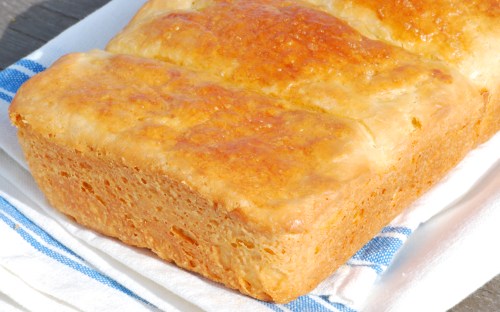
Butter and flour a 8 1/2-x-4 1/2-inch loaf pan.  Using half of the brioche dough, cut each piece into 4 equal pieces and roll each piece into a log about 3 1/2 inches long.  Arrange  4  logs crosswise in the bottom of each pan.  Put the pans on a baking sheet lined with parchment paper or a silicone mat, cover the pans lightly with wax paper and leave the loaves at room temperature until the dough almost fills the pan, 1-2 hours. Again, it will depend on the warmth of your room.

Center a rack in the oven and preheat and preheat the oven to 400°F.

To make the GlazeBeat an egg with water.  Using a pastry brush, gently brush the tops of the loaf with the glaze.  Bake the loaf until it is well risen and deeply golden, 30-35 minutes.  Transfer the pan to a rack to cool for 15 minutes, then run a knife around the sides of the pans and turn the loaf out onto the racks.  Invert again and cool for at least an hour.
Pecan Honey Sticky Buns:  ( Makes 15-16 buns)

For the Glaze:

1 cup (packed) light brown sugar

1 stick ( tablespoons) unsalted butter, cut into 4 pieces

1/4 cup honey

1 1/2 pecans ( whole or pieces)

For the Filling:

1/4 cup sugar

3 tablespoons ground cinnamon

3 tablespoons unsalted butter, at room temperature

For the Buns:

1/2 recipe for the Brioche Dough, chilled.  Don’t be tempted to downsize the recipe.  The dough works better in a larger batch.

Generously butter a 9-x-13-inch baking pan ( a pyrex pan is perfect for this).

To make the Glaze:  In a heavy -bottomed saucepan, bring the brown sugar, buter, and honey to a boil over medium-low heat, stirring frequently to dissolve the sugar.  Pour the glaze into the buttered pan, evening it out as best you can by tilting the pan or spreading the glaze with a heatproof spatula.  Sprinkle over the pecans.

To make the Filling:  Mix  the sugars and cinnamon together in a bowl.  If necessary, in another bowl, work the butter with a spatula until it is soft, smooth and spreadable.

To shape the Buns:   On a flour-dusted work surface, roll the chilled dough into a 16-inch square.  Using your fingers or pastry brush, spread the softened butter over the dough.  Sprinkle the dough with the cinnamon sugar, leaving a 1-inch strip bare on the side farthest from you.  Starting with the side nearest you, roll the dough into a cylinder, keeping the roll as tight as your can.  ( At this point, you can wrap the dough airtight and freeze it for up to 2 months.  Defrost in refrigerator overnight, then proceed with the glaze and let them rise and bake as directed.)

With a chef’s knife, using a gentle sawing motion, trim away just a tiny bit from the ends of the roll of they’re ragged and not well filled, then cut the log into 1-inch-thick buns.  Fit the buns into the pan cut side down, leaving some space between them.

Lightly cover the pan with a piece of wx paper and set the pan in a warm place until the buns have doubled in volume, about 1 hour and 45 minutes.  The buns are properly risen when they are puffy, soft, doubled, and, in all likelihood, touching one another.

Baking the Buns:  When the buns have almost fully risen, center a rack in the oven and preheat the oven to 375°F.  Remove the sheet of wax paper and put the pan on a baking sheet lined with parchment paper or a silicone mat.  Bake the sticky buns for about 30 minutes, or until they are puffed and golden; the glaze will be bubbling.  Pull the pan from the oven.

The sticky buns must be unmolded minutes after they come out of the oven.  Be very careful –  the glaze is very hot and and sticky.

Source:  Dorie Greenspan’s Baking From My Home to Yours

I do hope your try this recipe — it isn’t as complicated as it seems, and the end result is so worth your time!  As always, I love to hear your feedback!   Thanks for stopping by.

Laurie

Follow me on Twitter!


I bought a new pan– a mini-bundt pan, and I love it.  I’ve recently found myself coming up with excuses to bake more, just so I can see those tiny, adorable cakes.  As my husband has mentioned (after listening to me justify making another little bundt-shaped treat) , the line between a hobby and mental illness can be a thin one.  Who cares when the results are fabulous?  I love these orange and vanilla-scented bundt cakes.  They’re incredibly flavorful, and just small enough to justify eating more than one.

For this recipe, do not cheat and use anything other than freshly-squeezed orange juice.  Trust me, you won’t get the concentrated flavor that these cakes can deserve from a bottle or from a frozen can.  I love it when a cake recipe delivers a potent, layered, flavor.  Here, the orange zest in the cake batter is the first wonderful layer.  Next, there’s the glaze with its freshly-squeezed orange juice that also moistens the cake.  Finally, there’s the fantastic icing.  These three layers really combine for a powerful citrus punch.  Here’s the thing though, the cake flavors aren’t limited solely to orange citrus.  This cake also offers strong vanilla notes.  If you’ve baked with vanilla beans before, you know that they are not subtle.  They give you big flavor.  Together, the vanilla and orange citrus pair beautifully in this cake–or cakes, if you want to break out the mini-bundt pan.

The Recipe: Orange and Vanilla Scented Bundt Cake

( Makes 1 bundt cake or 26 mini-bundt cakes)

Cake

3 cups unbleached all purpose flour

3/4 teaspoon salt

1/2 teaspoon baking soda

1 2/3 cups sugar

1 tablespoon finely grated orange peel

1 vanilla bean, split lengthwise  (2 teaspoons vanilla can be substituted, if in a pinch)

3/4 cup (1 1/2 sticks) unsalted butter, room temperature

3 large eggs

2/3 cup freshly squeezed orange juice

2/3 cup buttermilk  (To make your own buttermilk — 2/3 cup regular milk with 2 teaspoons white vinegar mixed in.     Let sit for 10 minutes).

Glaze

1/2 cup freshly squeezed orange juice

2 tablespoons sugar

2 tablespoons (1/4 stick) unsalted butter

Icing

2/3 cup powdered sugar

4 teaspoons (roughly) freshly squeezed orange juice

For the Cake:

Position rack in center of oven and preheat to 350° F.  Butter and flour 12-15 cup Bundt pan.  Whisk flour, salt, and baking soda in medium bowl to blend.  Using electric mixer, beat sugar and orange peel in large bowl at low speed to release essential oils from peel.  Scrape seeds from vanilla bean into sugar mixture and beat to blend well.  Add butter and beat until light.  Add eggs one at a time, beating well after each addition.  Mix in orange juice (mixture will look curdled).  Stir in flour mixture, then buttermilk.  Transfer batter to prepared pan; smooth top.  Bake cake until tester inserted near center comes out clean, about 50 minutes.  (Note: if using mini bundt pans — fill them 3/4 full and bake between 12-15 minutes. A toothpick inserted should come out clean.)

For the Glaze:

Meanwhile, boil orange juice, sugar, and butter in heavy small saucepan over medium heat until reduced to 1/2 cup, swirling pan occasionally, about 5 minutes.

Cool cake in pan for 10 minutes ( less for mini-bundts).  Using small sharp knife, cut around the sides and center tube of pan to loosen cake.  Turn cake out onto rack and brush with glaze.  Cool completely.

For the icing:

Place sugar in small bowl.  Mix in orange juice, 1 teaspoon at a time, until thick pourable consistency forms.  Drizzle icing over cake.  Let stand until icing sets.  (Note: I felt there wasn’t enough icing to top all of the mini-bundts, so I double the icing ingredients.  The recipe already reflects the change). Enjoy with a relaxing cup of coffee or tea.

Source: Bon Appetit Desserts

I hope you all enjoy this cake as much as we did!  Have a great day and see you soon!

Laurie


So I have cravings.  I’m not really sure what brings them on, but once I start thinking about certain flavors, I can’t stop.  Sometimes the cravings are typicial (vanilla ice cream with peanut butter, anyone?), while other times they’re a bit more “specific”.  Recently I found myself coating bananas in honey and dipping them in Grape Nuts cereal.  Seriously.  My latest obsession was to find something that would satisfy a spicey/tangy desire.  First, I ended up eating pickled jalapenos out of the jar with a dab of  Sriracha sauce on top.  Again, I’m not kidding.  Keep in mind, this need for spicy food is new for me.  I used to be a “medium heat” girl.   Now it seems as though there’s nothing I can’t handle.  The hotter, the better.

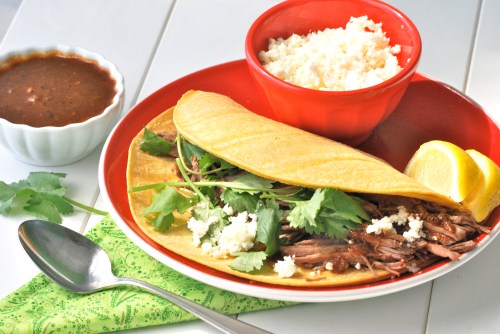
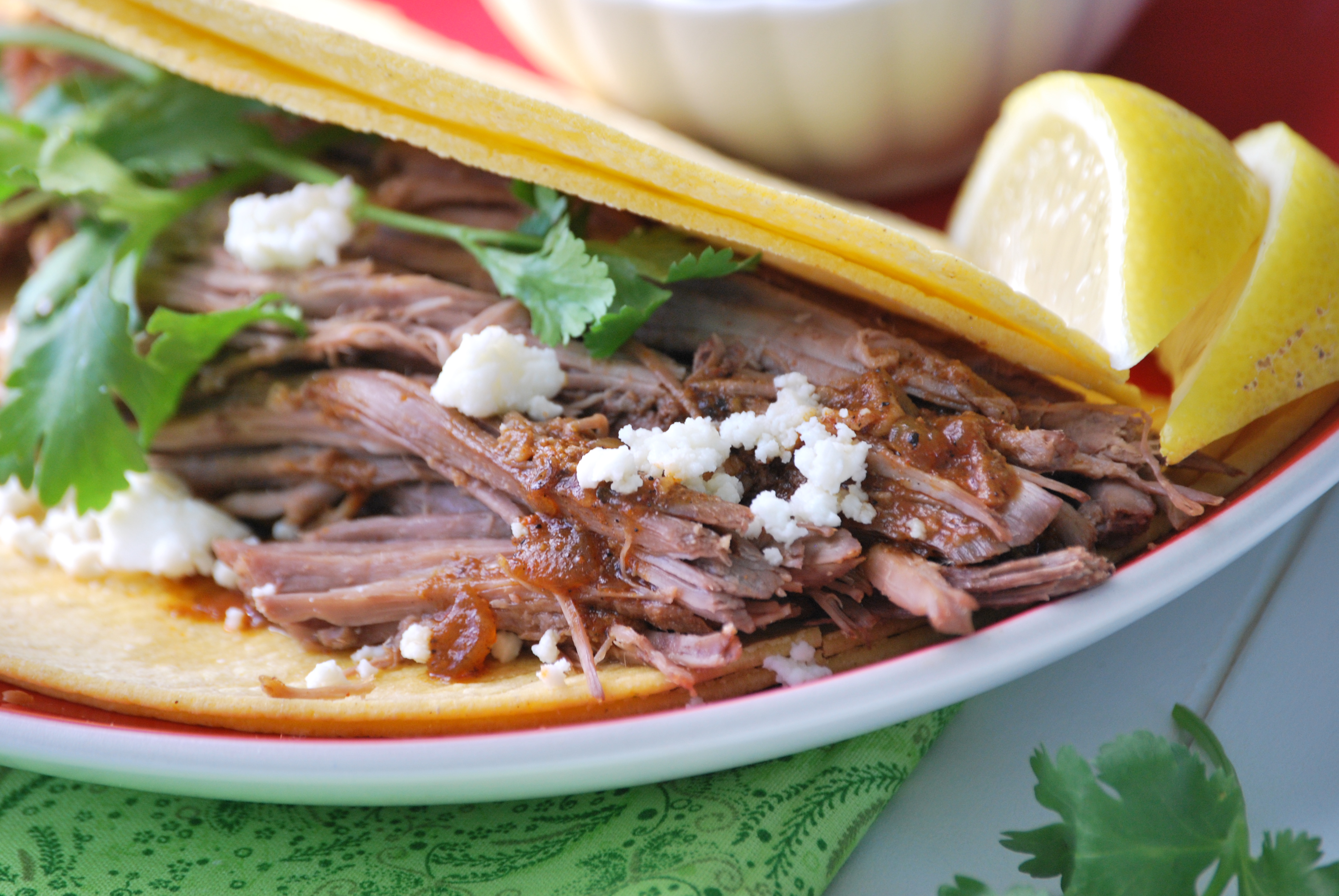
I found the answer to my cravings with today’s recipe.  You’re looking at an excellent braised-beef taco.  Though it has a bite, it isn’t so hot that it should scare you away.  It’s more on that “tangy” side that I had been craving– though you can adjust the heat to your liking.   I added queso fresco (Mexican cheese) for balance, and plenty of cilantro to give it a fresh flavor.  Corn tortillas give it an authentic texture, though my guess is it’ll be good with flour ones, as well.   For the beef, I turned to Mr. Reliable, Mark Bittman.  The result was a tender, perfectly-flavored braised meat.  While these tacos pack a little heat, it’s not overwhelming.  My kids were able to eat them.  For my own, I scaled up the scovilles by loading them with fresh-chopped jalapenos.

If you prefer a milder dish, reduce the amount of cayenne pepper.  You can also use less vinegar if you don’t want that powerful tangy “pop” that I was looking for.  Even scaled down, the combination of the warm spices and the vinegar cooking with the beef for hours makes an incredible sauce.  You’ll want to drizzle it on the tacos, and use it as a dipping sauce.  I can’t stress this enough, but like all meat-based dishes, you should use the best meat you can find and/or afford.  I used a grass-fed beef brisket for this recipe.  Enjoy!

The Recipe:  Spicy Braised-Beef Tacos with Vinegar

The Spice Rub:

1 teaspoon salt

2 teaspoons sugar

2 teaspoons ground cumin

1 teaspoon ground black pepper

1-2 teaspoons cayenne pepper

1/2 teaspoon ground coriander

2 teaspoons paprika ( I used 1 tsp sweet and 1 tsp sharp)

Ingredients:

5 tablespoons vegetable or olive oil, divided

1 whole beef brisket, about 5 pounds

salt and lots of freshly ground pepper

2 cups minced onions

3 tablespoons tomato paste or 1 large ripe tomato, cored and chopped (peeled and seeded if you have time)

3-4 cloves minced garlic

3 cups chicken, beef, or vegetable stock, or water ( I used chicken)

3-5 tablespoons white vinegar ( more, if necessary)

1. Preheat oven to 325° F.  ( You can cook also cook this brisket on top of the stove if you like).    In a small bowl mix together the mixture for the spice rub: salt, sugar, cumin, black pepper, cayenne, coriander, and paprika.  Rub mixture over the meat.  At this point you can choose to sear the meat or not.  If you chose to do so, heat 2 tablespoons vegetable or olive oil in a large Dutch oven that can be covered over medium -high heat for 2-3 minutes.  Swirl oil around, then add the beef.  Sear it for about 5 minutes on each side, or until it is nicely browned.  Remove to a platter.

2. Wipe out pan with paper towel and return to medium heat.  Add the remaining 3 tablespoons of vegetable or olive oil.  Add the onions and cook, stirring, until they are golden and soft, about 10 minutes.  Add salt and pepper, then stir in the tomato paste/or tomato and garlic.  Return the meat to pan, add the stock or water and vinegar, and cover.

3. Cook over low heat or in the oven, turning the meat about every 30 minutes, until tender, 2 1/2  – 3 hours.  If the sauce seems too thin, allow the meat to rest on a platter for a few minutes while you boil the liquid down over high heat, scraping the bottom of the pan with a wooden spoon, until it thickens somewhat.  Taste the sauce and add more salt, black pepper, or vinegar if necessary.  Shred the meat and assemble the tacos.  Serve with corn or flour tortillas,  queso fresco, cilantro, and jalapenos.  Be sure to serve with plenty of the sauce for dipping your taco into.  Enjoy!

Source:  Adapted from Mark Bittman’s How to Cook Everything

Thanks so much for stopping by Relish it today.  As always, I love to hear your feedback.

Laurie

Follow me on Twitter: @LaurieJKul

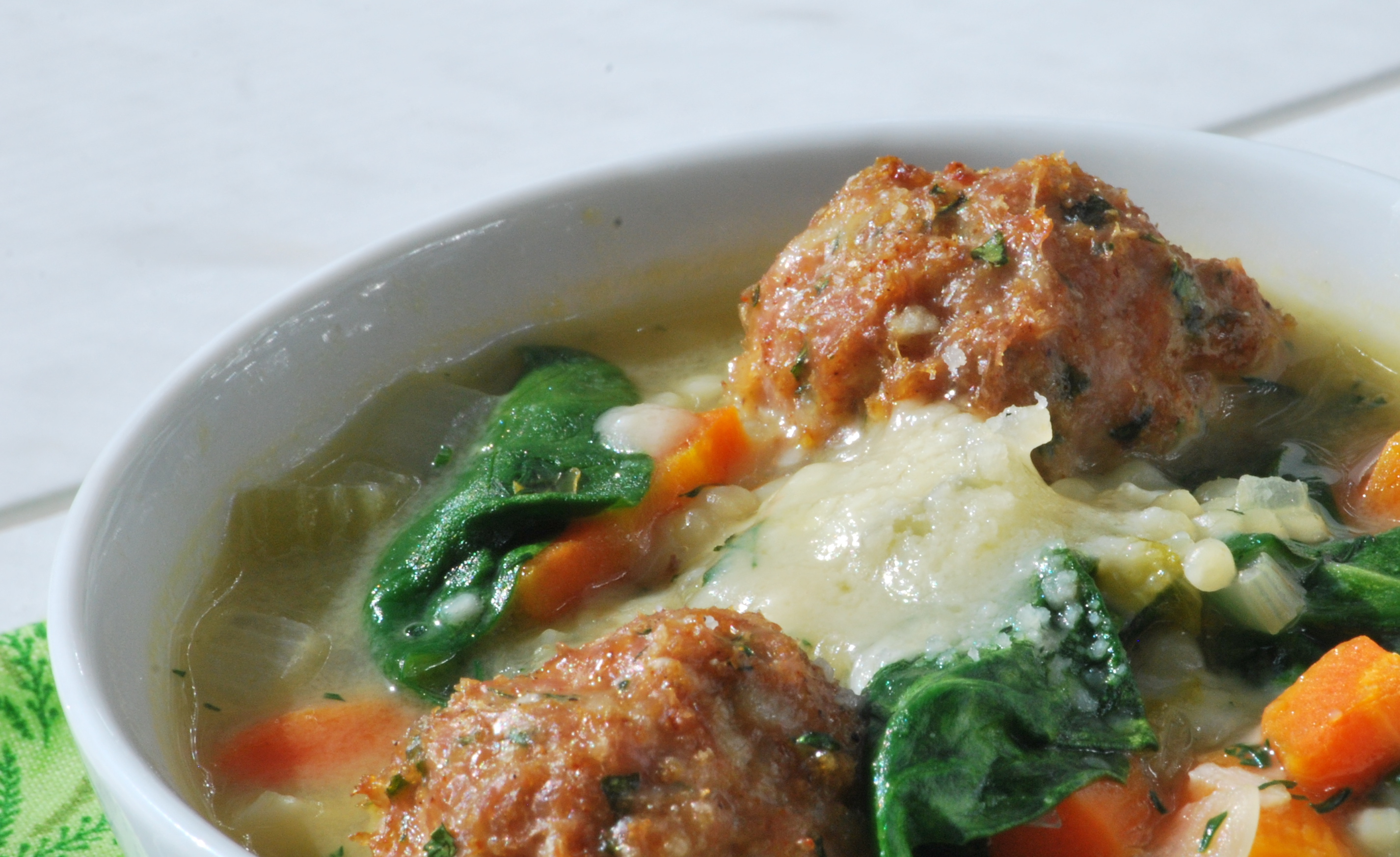
Judging by my previous posts here (as well several others on Bliss), you probably think its all sweets at our house. Obviously I love to bake, and I generally agree that we shouldn’t deprive ourselves or our kids of these treats. Truthfully though, we eat healthy meals.  I  usually prepare something with fruits, vegetables, whole grains, and/or legumes.  My husband can confirm that I probably make quinoa with chickpeas more often than I should.  Which brings me to today’s dish.  This soup is incredibly flavorful and healthy.

Meatballs?!  Yup.  Healthy soup with meatballs?  That’s right.  A little background:  I come from a German/Hungarian/Bohemian background.  From my childhood through today, whenever my extended family gets together for a holiday, we have four different types of meatballs.  Four!  I’m a connoisseur.  When I saw this soup– with it’s chicken meatballs (rather than the beef versions of our holiday meals)– I had to give it a try.

I’ve made a few variations on the meatballs in this soup.  They’re all fantastic.  Ground turkey (rather than ground chicken, as in the recipe) works just fine.  Also, if you can’t find chicken sausage, substitute an equal amount of ground chicken and add extra black pepper and one teaspoon each of sweet and sharp paprika to the mixture.  While each is slightly different, no one version is better than the others.

What about the flavor?  It’s amazing.  The meatballs, with their combined garlic, parsley, parmesan, and romano cheese are both savory and fresh.  Fresh may sound weird, but there’s really no other way to describe how the parsley affects these little meatballs.  The broth is incredible as well.  The dill stands out, but it doesn’t overpower the soup. The spinach really adds to the fresh-feel of this Spring dish.  Make it– you’ll be happy you did so.

The Recipe: Italian Wedding Soup

(Serves 6-8)

For the meatballs:

3/4 pound ground chicken

1/2 pound chicken sausage, casings removed

2/3 cup fresh whole wheat bread crumbs (Ina uses white)

2-3 teaspoons minced garlic (3 cloves)

3 tablespoons chopped fresh parsley

1/4 cup freshly grated Pecorino Romano cheese

1/4 cup freshly grated Parmesan cheese, plus more for serving

3 tablespoons milk

1 large egg, lightly beaten

Kosher salt and freshly ground black pepper

For the Soup:

2 tablespoons good olive oil

1 cup minced white onion

1 cup diced carrots ( 3 carrots)

3/4 cup diced celery ( 2 stalks)

10 cups good quality chicken stock

1/2 dry white wine  (Note: If you don’t have any wine, the soup will still be delicious without it)

1 cup any small pasta, such as tubetini or stars

1/4 cup minced fresh dill

12 ounces baby spinach, washed and trimmed   (Use a little less if you feel this is too much for you)

Preheat oven to 350 degrees.  Line a cookie sheet with parchment paper.

For the meatballs, place the ground chicken, sausage, bread crumbs, parsley, Pecorino, Parmesan, garlic, milk, egg, 1 teaspoon salt, and 1/2 teaspoon pepper in a bowl and combine gently with a fork.  You should get 40 meatballs from this mixture.  Make a round ball and score the meat into 4 equal parts.  You will get 10 meatballs from each of them.  Drop meatballs onto the pan with parchment paper and bake for 30 minutes, or until cooked through and lightly browned.  Set aside.

In the meantime, for the soup, heat the oil over medium-low heat in a large dutch oven or soup pot.  Add the onion, carrots, and celery and saute until softened, 5-6 minutes, stirring occasionally.  Add the chicken stock and wine and bring to a boil.  Add the pasta to the simmering broth and cook for 6-8 minutes, until the pasta is tender.  Add the fresh dill and then the meatballs to the soup and simmer for 1 minute.  Taste for salt and pepper.  Stir in the fresh spinach and cook  for another minute, until it is just wilted.  Ladle into soup bowls and sprinkle with extra Parmesan cheese.

Source:  Adapted from Ina Garten’s Barefoot Contessa Back to Basics Cookbook

Thanks again for stopping by!

Laurie

Happy Spring to all!  It was such a lovely Monday in St. Paul.  The snow is melting and I can actually smell the “earthiness” as everything thaws.  Hopefully we’ve seen the last of the weekly snowfall that has blanketed the Upper Midwest for months.  (Ha!  After I posted this it started snowing and continued through the night.  Did I just curse us with another foot of snow?– Ed.)

I’ve had an amazing week– not earth-shattering, but exciting in my little world.  I finally committed to a MN Food Bloggers event.  It took place at Corner Table in Minneapolis.  Forty food bloggers were guests to Chef Scott Pampuch in his beautiful “farm to table” restaurant.  Scott is a chef with big ideas.  He’s taking things beyond supporting local, sustainable food in the running of his business.  Along with offering cooking and teaching classes, he’s also the founder of “tour de farm“.  This concept has people travel to local farms to get involved in and enjoy farm-to-table food production and preparation.  He recently launched a new “Farm and Table CSK (community-supported kitchen) Box”, as well.  It’s similar to a CSA (community-supported agriculture), but contains various meats, sides, mirepoix, and stocks.  The idea is basically to help you get local farm raised meat to your table.  It’s a nice addition to your CSA box or farmers’ market produce.

I loved being surrounded by so many amazing people who are not only involved in food blogging, but who also share my philosophy on food production and preparation.  It really helped validate what I’m trying to do through this site.  I’m looking forward to many more get-togethers with these kind, supportive foodies.  (I’m also looking forward to more flutes of Brut Cava).  A special thanks goes out to Stephanie Meyer for organizing the event.

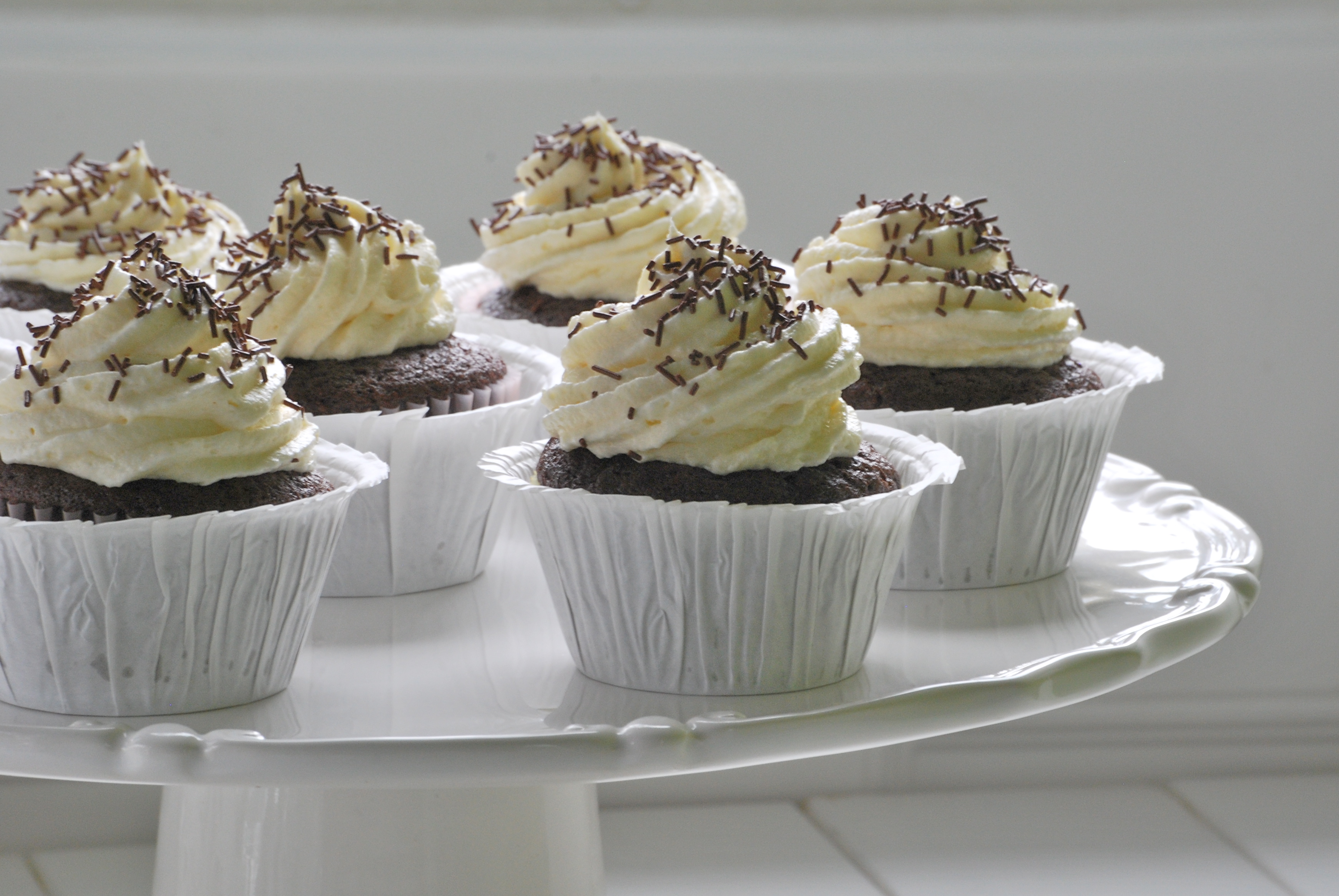
Now to the topic at hand.  Killer Chocolate Cupcakes.  Why Killer?  Because it sounds better than the ol’  “Devil’s Food”, which is what they originally started as.  Then I tweaked them a little a lot.  The result is honestly “killer”.  They’re that good.  My husband says they might be the best cupcakes he’s ever eaten, and we did a cupcake tour of nearly every bakery in the Twin Cities this past summer.  How about that!  They combine the ideal amount of chocolate with a rich cream-cheese frosting.  They are made with cake flour– rather than all-purpose flour– which gives them a soft, tender texture.  That’s not to say that they’re not good, solid cupcakes.  These little numbers are still dense enough to compliment the thick, heavenly frosting.  Hope you enjoy them!

The Recipe: Killer Chocolate Cupcakes with Cream Cheese Frosting

Cupcakes:

1/2 cup natural unsweetened cocoa powder

2 ounces high-quality semi-sweet chocolate (60% cacao works great), chopped

1/2 cup strong, very hot coffee

1/2 cup sour cream

1 cup cake flour

3/4 teaspoon baking soda

3/4 teaspoon kosher salt

2/3 cup (packed) dark brown sugar

1/2 cup vegetable or corn oil

1/2 cup granulated sugar

2 large eggs, room temperature

1 teaspoon vanilla extract

Frosting:

1  –  8 ounce package cream cheese, room temperature

8 tablespoons (1 stick) unsalted butter, room temperature

1 cup confectioners’ sugar, sifted

1 teaspoon vanilla

For the Cupcakes: Preheat oven to 350°.  Line 16-18 standard (1/3 cup) muffin cups with paper liners.  Spray with non-stick spray. Combine cocoa powder and chocolate in medium bowl.  Pour 1/2 cup hot coffee over; whisk until smooth.  Whisk in sour cream.

Whisk flour, baking soda, and salt in another medium bowl to blend.  Using electric mixer, beat brown sugar, oil, granulated sugar, eggs, and vanilla in large bowl until light and creamy, about 2 minutes.  Beat in flour mixture, alternating with chocolate mixture in 2 additions. Careful not to over-mix.  Divide batter among paper liners.

Bake until tester inserted into center comes out with some crumbs attached, about 16-18 minutes.  Cool in pans for about 10 minutes.  Transfer cupcakes to cooling racks and cool completely.

For the frosting:  Combine cream cheese and butter in a bowl for an electric mixer.  Beat on high until light and fluffy, a couple of minutes.  Add the sifted confectioners’ sugar and vanilla and beat on low at first, then increase to high.  When frosting is light and airy — it is ready to put on top of the cupcakes.  Of course, sprinkles add a lovely touch!

Source for cupcakes:  Adapted from Bon Appetit Desserts Cookbook

One more thought– thank you all for the wonderful and supportive comments last week.  I appreciated each and every one of them, and would love to hear if any of you made the tart.  Have a fantastic week!

Laurie

Welcome to Relishing It!  I’ve finally taken the leap and committed to writing a weekly blog.  Obviously I love to cook and bake, but more recently I’ve come to appreciate the photography aspect of food blogs as well.  Food has always been a significant part of my life– a passion, I guess.  It’s a creative and social outlet for me and my family.

So what about me?  Well, for more detail you can check here.  In brief, I’m originally a small-town North Dakota girl, now a thirty-something mother of two who lives in St. Paul, MN.  My children keep me busy, as they’re only four and two years old.  This makes the baking/cooking/photography “interesting” during the day.  I was lucky enough to marry my high-school sweetheart (who may make a guest appearance here every once in a while).

I have fairly strong views on food, from how it’s marketed, to nutrition, to its effect on the environment.  I generally subscribe to the Bittman/Pollan food models.  I use organic, locally-sourced ingredients when possible, and usually shy away from anything overly processed.  While I’ll do my best not to preach, you’ll likely get a sense of my convictions through individual recipes and asides on these topics.

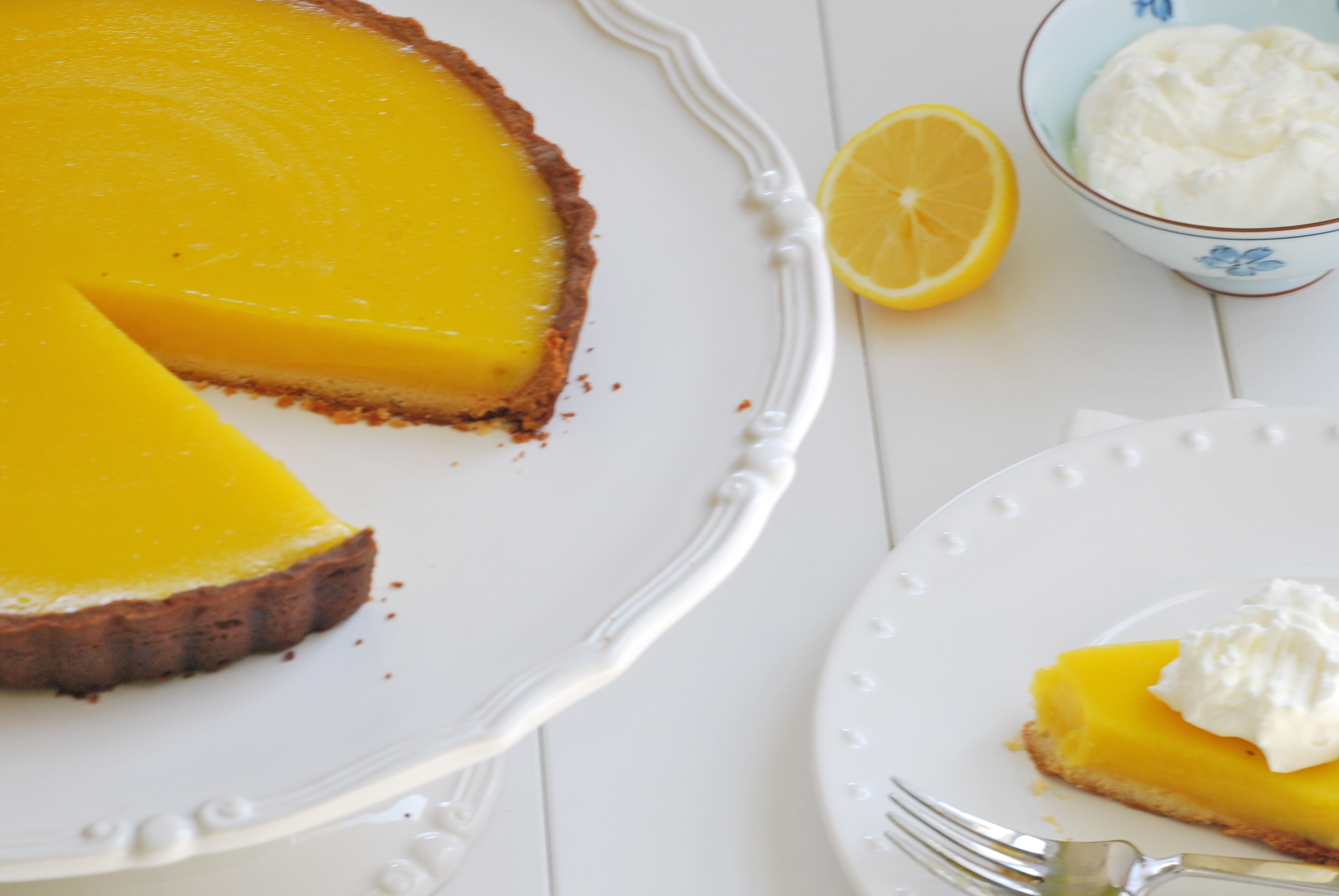
One of my closest friends was kind enough to ask me to guest blog about my culinary experiences in a Blissful Eats section every Thursday on her beautiful “Bliss“.  This has not only given me a chance to get my feet wet, but it has also given me time to think about where to begin with my own blog.  To be honest, I’ve spent a fair amount of time pondering my first recipe.  Too long.  I finally decided to go with what I was really wanting to eat today– this Classic Lemon Tart.  I have so many organic lemons right now– I’ve taken to stockpiling these babies.

I first sampled this lemon tart three years ago.  We had a dinner party and one of our friends– a fellow ‘foodie’– brought this incredible dessert.  I was stunned, and had to have the recipe immediately. I realize that writing about one’s experience of food– trying to convey it to others– is usually imperfect.  The words just can’t capture the “punch” of a really powerful flavor, or the “silkiness” of creamy filling.  So how to describe this tart?  It’s intense.  Seriously intense.  The “jolt” of lemon in every bite is incredible.  You almost question whether or not its made from some super-distilled extract, though the natural flavor of the juice and zest of the lemons reassures you that you’re eating the real thing.  And then there’s the color.  If you use farm-fresh free-range egg yolks, the natural deep yellow color will be stunning.

In the past, I’ve tended to reserve this stellar dessert for special occasions– not because it’s difficult, but because it’s a real show-stopper. It’s beautiful and light with a flaky crust, making it perfect for Spring.  On the other hand, while we still have several feet of snow on the ground, it sure made my family happy this afternoon, too.  Come to think of it, I may not wait for a holiday or dinner party to make this one any more.  Why not brighten even an ordinary, everyday?

The Recipe:  Classic Lemon Tart

Sweet Tart Pastry:

1 large egg yolk

1 tablespoon heavy cream

1/2 teaspoon vanilla extract

1 1/4 cup all-purpose flour

2/3 cup confectioners’ sugar

1/2 teaspoon kosher salt

8 tablespoons unsalted butter ( 1 stick, very cold), cut into twenty-four 3/4-inch cubes

1 tablespoon unbleached all-purpose flour for dusting

Instructions:

Whisk together the yolk, cream, and vanilla in a small bowl; set aside.  Pulse to combine 1 1/4 cups flour, sugar, and salt in bowl of food processor  fitted with steel blade.  Scatter butter pieces over flour mixture; pulse to cut butter into flour until mixture resembles course meal, about fifteen 1-second pulses.  With the machine running, add egg mixture and process until dough just comes together, about 25 seconds.  Turn dough onto sheet of plastic wrap and press into 6-inch disk.  Wrap in plastic and refrigerate at least 2 hours.

If the dough feels too firm when you’re ready to roll it out, let it stand at room temperature for a few minutes.  If, on the other hand, the dough becomes soft and sticky while rolling, don’t hesitate to re-chill it until it becomes easier to work with.  Better to re-chill than add too much flour, which will damage the delicate, crisp texture of the dough.  Bake the tart in a 9 – 9 1/2 -inch tart pan with a removable bottom and fluted sides about 1 to 1 1/8 inches high.

Unwrap dough; lightly flour large sheet of parchment paper or plastic wrap and place dough in center.  Roll out dough and line tart pan.  Freeze dough 30 minutes.

Meanwhile, adjust one oven rack to upper-middle position and other to lower-middle position; heat oven to 375 degrees.  Place chilled tart shell on a cookie sheet; press 12-inch square of foil inside tart shell and fill with metal or ceramic pie weights ( I skipped the pie weights and just placed the foil down on the tart, which worked fine, because it was chilled).  Bake on lower rack for 30 minutes, rotating halfway through baking time.  Carefully remove foil and weights by gathering edges of foil and pulling up and out.  Transfer cookie sheet with tart shell to upper rack and continue to bake until shell is golden brown, about 5 minutes longer.

The Lemon Tart:

1 fully baked warm tart shell (9 to 9 1/2 inch)

7 large egg yolks, preferably organic

2 large eggs

1 cup granulated sugar

2 tablespoons granulated sugar

2/3 cup freshly -squeezed lemon juice, preferably organic, from 4 – 5 medium lemons

1/4 cup grated lemon zest

pinch of salt

4 tablespoons unsalted butter, cut into 4 pieces

3 tablespoons heavy cream

Instructions:

Once the lemon curd ingredients have been combined, cook the curd immediately; otherwise it will have a grainy finished texture.  To prevent the curd from acquiring a metallic taste, make absolutely sure that all utensils coming into contact with it — bowls, whisk, saucepan, and strainer — are made of non-reactive stainless steel or glass.  Since the tart has a removable bottom, it is more easily maneuvered when set on a cookie sheet.  If your pre-baked tart has already cooled, place it in the oven just before you start the curd and heat until warm, about 5 minutes.

Adjust the oven rack to upper-middle position and heat oven to 375 degrees.  Place the tart pan with shell on cookie sheet.

In medium non-reactive bowl, whisk together yolks and whole eggs until combined, about 5 seconds.  Add sugar and whisk until just combined, about 5 seconds.  Add lemon juice, zest, and salt; whisk until combined, about 5 seconds.  Transfer mixture to medium non-reactive saucepan, add butter pieces, and cook over medium-low heat, stirring constantly with wooden spoon, until curd thickens to thin sauce-like consistency and registers 170 degrees on an instant-read thermometer, about 5 minutes.  Immediately pour curd through single-mesh steel strainer set over clean non-reactive bowl.  Stir in heavy cream; pour curd into warm tart shell immediately.

Bake until filling is shiny and opaque and until center 3 inches jiggle slightly when shaken, 10 to 15 minutes.  Cool on wire rack to room temperature, about 45 minutes.  Serve with freshly whipped cream.  Enjoy!

Source:  Adapted from Cook’s Illustrated

Thanks for stopping by Relishing It today– I always appreciate feedback, so please leave a comment and let me know your thoughts.  See you soon!

Laurie