Feeds:
Posts
Comments

Posts Tagged ‘dessert’

Classic Berry Tart

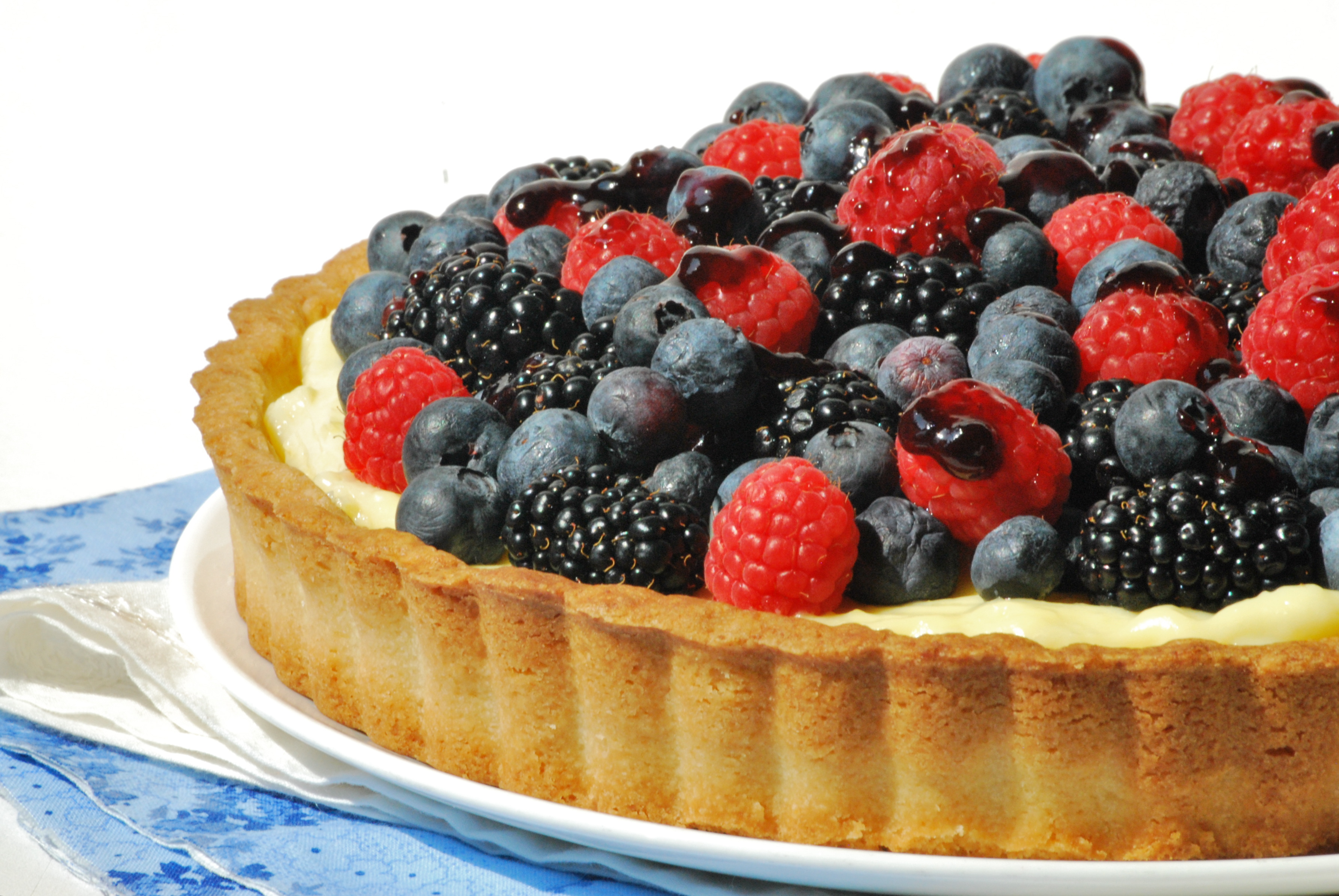
So you already know that I love a good tart.  I think I’ve been open about my love of pastry cream, as well.  This week, I’ve combined both and added fresh, dazzling fruit for this fabulous Summer dessert.  Not surprisingly, my kids love pastry cream, too.  And who can blame them– it’s virtually a custard or pudding.  As for the berries, now is the time to really start using them in dishes like this– they’re fresh and full-flavored. 

Most sources recommend freezing an unbaked tart shell in the tart pan– to be baked right before you assemble the dish.  If you do this, the dough can be kept frozen for up to two months, and refrigerated up to five days.  Keep in mind, if you bake it right before serving, you must make sure the crust is completely cooled before filling with the pastry cream and berries.  On hot days like we’ve had for much of the past month, I like to actually bake the tart shell ahead of time, wrap tightly and freeze it.  It’ll last for a few days that way.  This allows me to bake at night (or early morning) when the stifling heat of the day has dropped a bit.  When I’m ready to fill it with pastry cream and berries, I take it out of the freezer and thaw– it really doesn’t take long.    Enjoy!
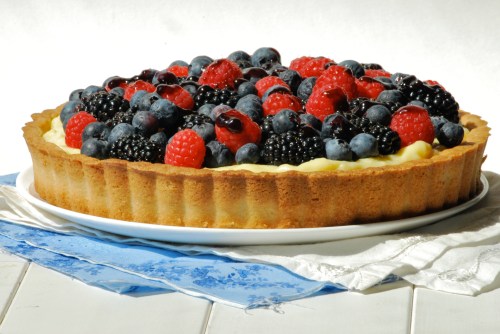
The Recipe:  Classic Berry Tart

2 pints of berries, use your favorites

1 9 – inch tart shell made with this Sweet Tart Dough

Lemon Pastry Cream:

2 cups whole milk

6 large egg yolks

1/2 cup sugar

1/3 cup cornstarch, sifted

1 teaspoon vanilla extract

zest of 1 lemon

3 1/2 tablespoons unsalted butter, at room temperature, cut into small pieces

Glaze:

1/3 cup blackberry jam

1 teaspoon lemon juice


To bake the crust:  Butter a 9-inch fluted tart pan with a removable bottom.  Press the dough evenly over the bottom and up the side of the pan, using all but one little piece of the dough, which you should save in the refrigerator in case the tart needs to be patched after it is baked.  Butter the shiny side of aluminum foil and press against the tart.  Freeze the crust for 30 minutes before baking.   Leave the foil on the tart and place on a baking sheet.  Bake at 375°F for 25 minutes.  Remove the foil and bake for another 8-10 minutes, or until the crust is a beautiful, deep golden brown.  If the tart has a crack and needs to be patched — apply the extra dough and bake for just two minutes.

To make the pastry cream:  Bring the milk and lemon zest to a boil in a sauce pan.

Meanwhile, in a medium heavy-bottomed saucepan, whisk the yolks together with the sugar and cornstarch.  Still whisking, slowly add about 1/2 cup of the hot milk — this will temper the yolks, so they won’t curdle.  Still whisking, slowly add the rest of the hot milk.  Put the pan over medium heat and whisk vigorously and constantly.  Make sure to get the edges of the pan, too.  Bring to a boil.  Keep at a boil for 1-2 minutes, or whenever it appears to be thick enough. Remove from heat.

Whisk in the vanilla extract.  Let sit for 5 minutes, then whisk in the bits of butter, stirring until they are completely incorporated and the pastry cream is smooth and silky.  Scrape the cream into a bowl.  You can press a piece of plastic wrap against the cream to create an airtight seal and refrigerate until cold.  Or, if you need it cooled more quickly than that, place the bowl of cream into a larger bowl filled with ice and water.  Stir the pastry cream until cold, around 20 minutes.

To make the glaze:  Bring the jam and lemon juice to a boil.  Using a pastry brush or paper towel,  dab the glaze onto the fruit.  Feel free to drizzle it onto the pastry cream, as well.  This tart is best eaten the day it is made, but leftovers can be loosely covered and refrigerated.  Enjoy!

Source:  Adapted from Dorie Greenspan’s Baking from my home to yours

Thanks for stopping by Relishing It today!  See you soon!

Laurie

Follow me on Twitter

Read Full Post »

I am still on vacation in North Dakota, visiting my family.  We’re having a great time, despite the 90 degree temperatures. My kids have had so much fun with their grandparents.  Aria (all of two years old) rode her first horse today.  She has been asking to ride one for awhile, and now that she has a new pink cowboy hat and pink boots, my Dad figured he should line up a horse ride.  She loved it.  Anyway, I wanted to leave you with a fantastic recipe for this 4th of July weekend.

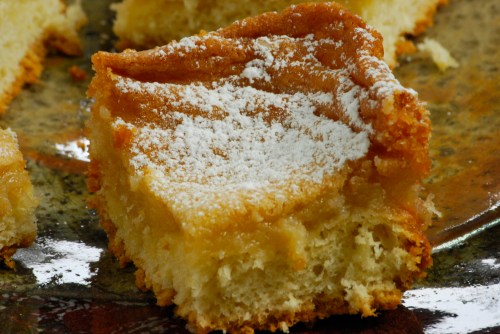
This is a St. Louis Gooey Butter Cake.  Actually, it’s not much of a cake– more like a bar.  It may not visually be a show-stopper, but trust me, the flavor and texture more than make up for it’s lack of flare.  I may overuse the word ‘amazing’ from time to time in describing food, but trust me, it REALLY applies here!  These are creme brulee in bar form.  They start out as dough that rises for a few hours, but then you add this perfectly-sweetened topping and bake it.  The cake rises and falls in the oven and when it’s done there is a slight crispness to the top layer.  The middle layer finishes gooey and delicious, while the cake layer is simple and sturdy.  I suggest hoarding the corner pieces, as they’re the crispiest.  Heavenly.

The Recipe:  St. Louis Gooey Butter Cake

For the Crust

3 tablespoons milk, at room temperature

1  3/4 teaspoons active dry yeast

6 tablespoons unsalted butter, at room temperature

3 tablespoons sugar

1 teaspoon kosher salt

1 large egg

1  3/4 cup all-purpose flour

For The Topping

3 tablespoons plus 1 teaspoon honey (or corn syrup — I’ve done it both ways)

2  1/2 teaspoons vanilla extract

12 tablespoons (1  1/2 sticks) unsalted butter, at room temperature

1  1/2 cups sugar

1/2 teaspoon kosher salt

1 large egg

1 cup plus 3 tablespoons all-purpose flour

Confectioners’ sugar for dusting

In a small bowl, mix together the milk with two tablespoons lukewarm water.  Add the yeast and whisk gently until it dissolves.  The mixture should foam slightly, though mine doesn’t always.

Using an electric mixer with the paddle attachment, cream the butter, sugar, and salt.  Scrape down the sides of the bowl and beat in the egg.  Alternately add the flour and milk mixture, scraping down the sides of the bowl between each addition.  Beat the dough on medium speed until it forms a smooth mass and pulls away from the sides of the bowl, 5 to 7 minutes.

Press the dough into an ungreased 9 x 13 -inch baking dish at least 2 inches deep.  Cover the dish with plastic wrap or a clean kitchen towel and allow to rise until doubled,  2 1/2  to 3 hours, in a warm, dry place.

When the dough is almost ready, preheat the oven to 350°F and make the topping.  In a small bowl, mix together the honey with two teaspoons water and the vanilla.  Using an electric mixer with the paddle attachment, cream the butter, sugar, and the salt until light and fluffy, 5 to 7 minutes.  Scrape down the sides of the bowl and beat in the egg.  Alternately, add the flour and honey mixture, scraping down the sides of the bowl between each addition.

Spoon the topping onto the risen dough and gently spread it out evenly in the pan.  Bake for 35 to 45 minutes.  The cake will rise and fall in waves in the dish and will become golden brown.  Allow to cool in pan.  Dust with confectioners’ sugar before serving.  Enjoy!

Source:  Adapted from Melissa Clark’s In the Kitchen with a Good Appetite Cookbook

For those of you in the United States, I hope you all have a very happy and safe 4th of July holiday!  Thanks for stopping by Relishing It today.

Laurie


Read Full Post »

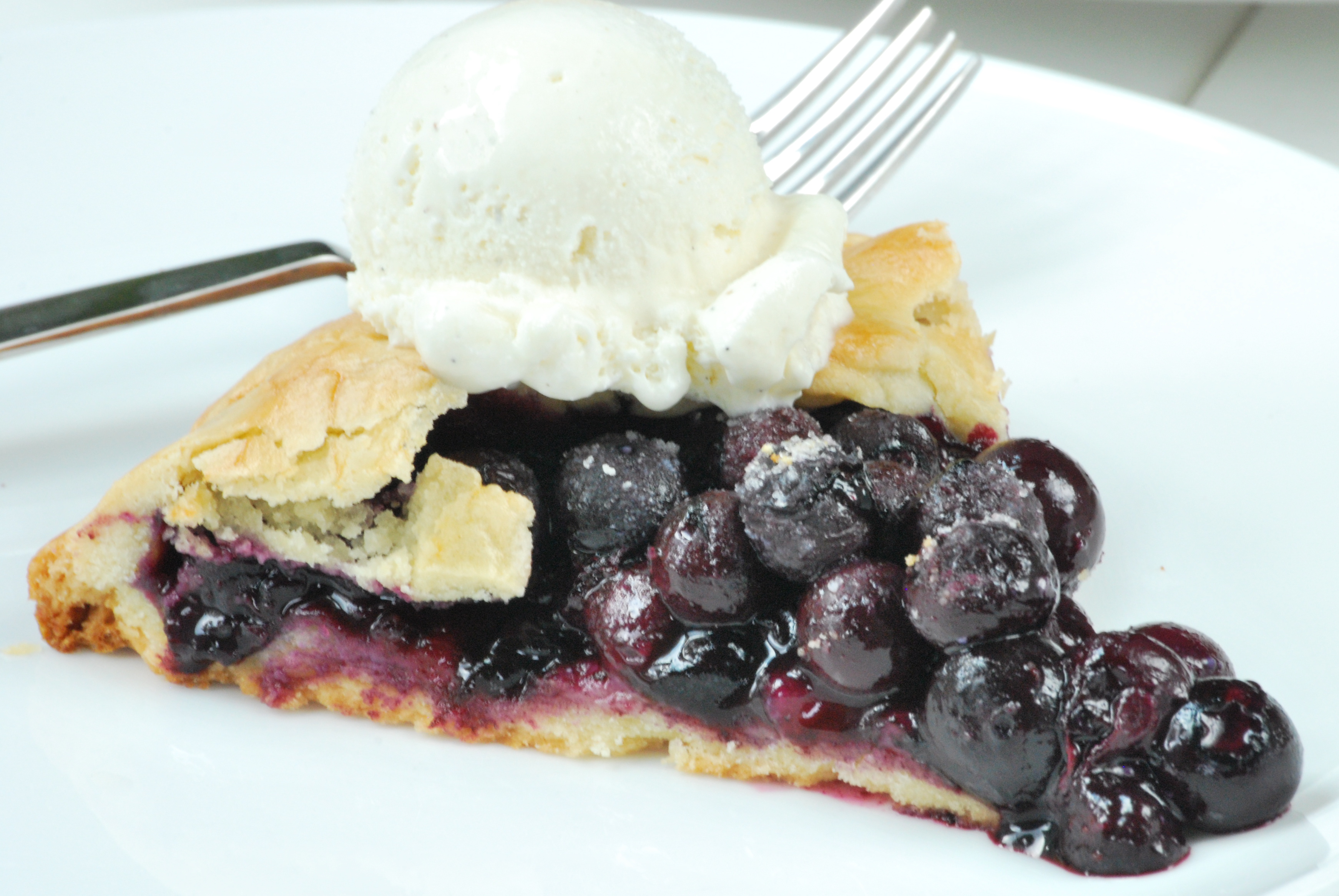
I’m bursting with excitement over this incredible dessert.  True, this galette is–at heart– simply a blueberry pie.  Now a good blueberry pie is exciting on its own, but what makes me so happy about this one is the fact that it’s absolutely gorgeous and anyone can make it.  It really is that easy.  My intent was to steer away from another dessert recipe– I’m working on mixing up weekly themes for those of you that haven’t caught the baking bug that I can’t seem to shake.  But Fathers’ Day rolled around and I wanted to make something sweet for my husband, so the savory post will have to wait until later.  Today it’s blueberries!

I’ve made this galette many times, but I always forget how brilliant it is.  Blueberries are one of my favorite fruits for baking (sour cherries too!).  Blueberries taste like summer, and this galette really showcases that.  I love peeking in the oven to see the blueberries and sugar melding into a juicy, bubbly filling.  And the smell of the buttery pastry crust is pure bliss.

For this recipe I chose a  sweet tart dough– what the French call a pâte sablée.  It’s buttery and crumbly, almost like a shortbread.  It works beautifully with fruit and is simple with the help of a food processor.  As a bonus, you can make a few dough balls ahead of time and freeze them.  With just a quick thaw you can pull this fruit galette together whenever you like.  The trick with the dough is to warm it up a bit if it’s been refrigerated– it’ll be much easier to work with.  If you’re making it fresh, just shape it right away.  Both methods make a beautiful pastry.  And of course (do I sound repetitive?) it’s even better with a dollop of freshly whipped cream or ice cream.  I think I may go and make another one today….

The Recipe: Blueberry Galette

Pâte Sablée

1  1/2 cup all-purpose flour

1/2 cup confectioners’ sugar

1/2 teaspoon salt

1 stick plus 1 tablespoon very cold butter (9 tablespoons), cut into tiny cubes

1 large egg yolk

Put the flour, confectioners’ sugar, and salt into a food processor.  Pulse a few times to mix.  Scatter the butter on top of the dry ingredients and pulse until the mixture is course.  Some pieces will be bigger than others.  Stir the yolk in a small bowl and add a little at a time, pulsing after each addition.  When the egg is completely in, process in longer pulses of 10 seconds each – until the dough, which should look granular soon after the egg is added, forms clumps and curds.  Just before your reach this stage, the sound of the machine will change a bit.  Turn the dough out onto a work surface and, very lightly and sparingly, knead the dough just to incorporate any dry ingredients that may have escaped mixing.

Blueberry Galette:

1 Pâte Sablée

2 cups blueberries

1/4  cup sugar

1 egg (for egg wash)

Preheat the oven for 375°F.  Put rack in center of oven.

On a large piece of parchment paper that is big enough to fit onto your baking sheet, roll out the dough into a large circle, until it reaches 12-inches in diameter.

In a bowl, mix the blueberries with the sugar.  Place in the center of the dough.  Carefully fold the dough on top of the blueberries.  Making sure that most of the blueberries are visible.  If any of the dough cracks or separates, just pinch it together with your fingers.

Transfer the galette, still on the parchment paper, to a large baking sheet.  Place the galette in freezer for 10-15 minutes.

Remove galette from freezer.  Whisk the egg in a bowl, and using a pastry brush, apply the egg wash to the sides of the galette.   Place into oven and bake for 35 minutes, or until the crust is golden brown and the blueberries are bubbling.  Let cool until just warm before serving.  Enjoy!

Source:  Pâte Sablée was adapted from Dorie Greenspan’s Baking From My Home To Yours

Thanks for stopping by Relishing It today — hope you enjoy the galette!

Laurie

Follow me on Twitter!

Read Full Post »

Cherry Clafoutis

My husband, Radd, and I celebrated our 10 year anniversary this past Fall by taking an unforgettable trip to Portland, OR.  What an incredible city!  One of the many highlights was stumbling upon THE most impressive bookstore I’ve ever set foot in– Powell’s.  We wandered it’s labyrinthine rooms, stairwells, and aisles for hours.   Though I’d heard buzz about Dorie Greenspan’s new book, it was at Powell’s that I first saw– and of course bought– Around My French Table.  It’s one of my favorite cookbooks, so unsurprisingly the plane ride home went far too fast.

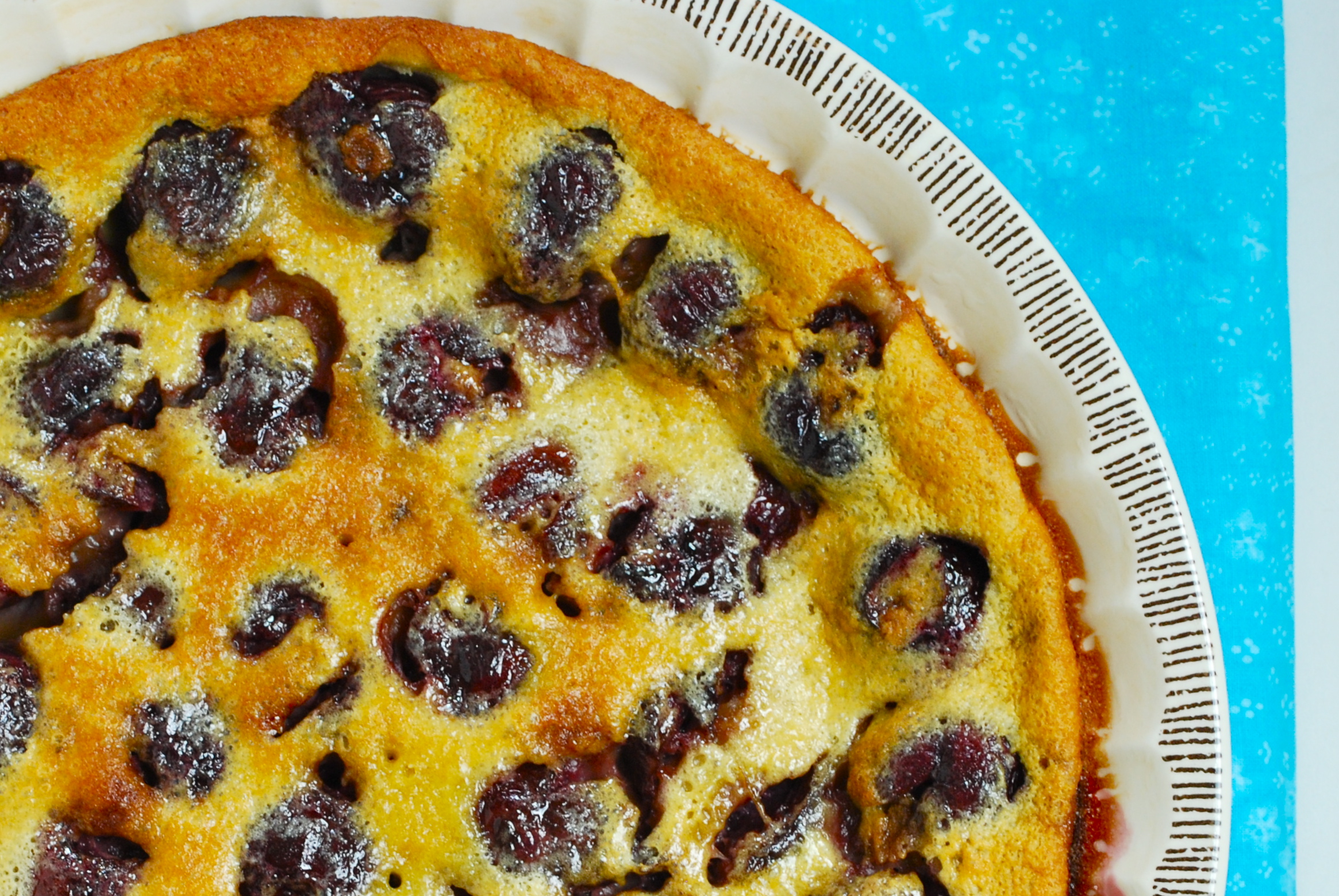
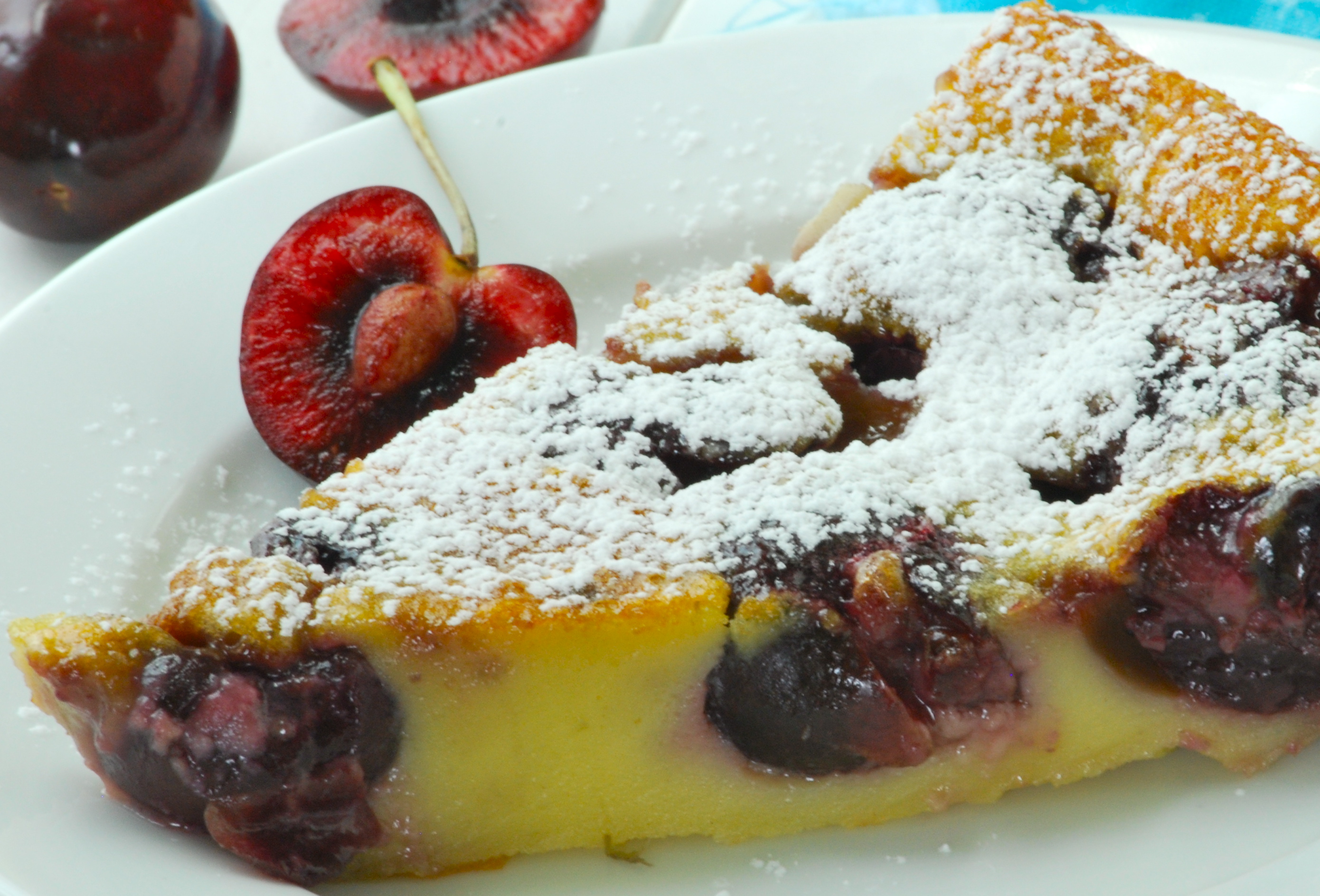
This recipe comes from that cookbook.  Cherry Clafoutis– a fancy French name for a very simple dessert.  A clafoutis (cla-foo-tee) is like a cross between a cake and a custard– almost like a flan.  Aside from the cherries, it’s silky and smooth– there’s very little flour, with cream, milk, and eggs as the main ingredients.  The traditional French way to prepare this dessert is to leave the cherries whole (including the pits), cover with the batter, and bake.  Purists believe the pits add a nutty, more intensely complex flavor.  I’ve baked a clafoutis in the traditional method, and yes the flavor was delicious.  Despite this, I’ve decided that the reward wasn’t worth the trouble– especially since I wanted my children to be able to eat the dish without me having to worry about them eating a cherry pit.  To get that “nutty” flavor without the pit, I added a teaspoon of almond extract.

I enjoy making clafoutis because they’re easy, yet different.  No special equipment is required, and the majority of the prep time is in pitting the cherries.  And if you don’t have a cherry pitter, no problem.  Put a cherry on top of a long-necked bottle and poke through the center with a chopstick– or anything else long and slender.  Simple.  Enjoy your clafoutis with powdered sugar alone, or ignore those purists and pile a scoop of vanilla ice cream on top.

The Recipe:  Cherry Clafoutis

1 pound sweet cherries, stemmed and pitted

3 large eggs (room temperature)

1/2 cup sugar

pinch of salt

1 teaspoon pure vanilla extract

1 teaspoon almond extract

1/2 cup all-purpose flour

3/4 cup heavy cream  (room temperature, if possible)

1/2 cup 2% milk  (room temperature, if possible)

Confectioners’ sugar, for dusting

Preheat oven to 350°F and place rack in the center.  Liberally butter a 9-inch deep-dish pie pan (or another baking pan with a 2-quart capacity).

Place the cherries in a single layer into the pie-pan.

Whisk the eggs, in a medium bowl, (note: to get eggs to room temperature more quickly, place them in a bowl of warm water for about 5 minutes) until they’re foamy, then add the sugar and whisk for another minute.  Whisk in the salt and the vanilla and almond extracts.  Add the flour and whisk vigorously  (when adding flour to baked goods, normally you should be gentle — this is an exception) until the batter is smooth.  While still whisking, gradually pour in the milk and cream and whisk until blended.  Tap the bowl on the counter to remove any air bubbles and pour the batter over the cherries.

Bake the clafoutis for 35-45 minutes, or until it’s puffed and lightly browned, and most importantly, a knife inserted into the center comes out clean.  Transfer the clafoutis to a cooling rack and allow it to cool until it’s barely warm, or until it’s room temperature.

Dust with confectioners’ sugar and serve with whipped cream or ice cream.  This dessert is best eaten on the day it is made, however, leftovers should be covered and chilled.  Enjoy!

Source:  Adapted from Dorie Greenspan’s Around My French Table

Thanks so much for stopping by!  Hope you all have a wonderful weekend.

Laurie

Follow me on Twitter!

Read Full Post »

I’ve been known to daydream about travelling.  I do this a lot, and I’m guessing it has something to do with growing up in one of the most-rural areas of the country.  My Dad is the same way.  In our daily phone call, we often talk about where we would take a big family vacation if money were no object.  The destination-of-the-day almost always revolves around cuisine (surprise!).   It’s all in the family, I guess.  For me, the pinnacle would be Paris.  I know, I know– pick the obvious, right?  But the food!  The wine!  The history and culture!  Sadly, jetting off to France isn’t in the cards right now, so this week I’ve decided to bring a bit to my kitchen.


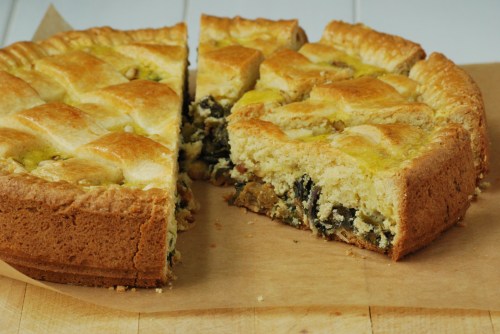
This dessert–that’s right, even with those greens this is a dessert– is definitely French.  You wouldn’t normally see it here in the US.  I found it in a beautiful cookbook by David Tanis, called–Heart of the Artichoke and Other Kitchen Journeys.   Tanis is the co-chef at one of the most well-known, well-respected, restaurants in the United States, Chez Panisse.    He’s been there since the 1980’s, though he spends six months at the restaurant in California, and lives the other six months in Paris.  Sounds like a good gig.  He’ll soon be leaving Chez Panisse in order to write  a column for the New York Times that I’m really looking forward to reading.  When Tanis wrote that the odd combination of ingredients in this recipe make a dessert that tastes fantastic, I figured I had to give it a try.

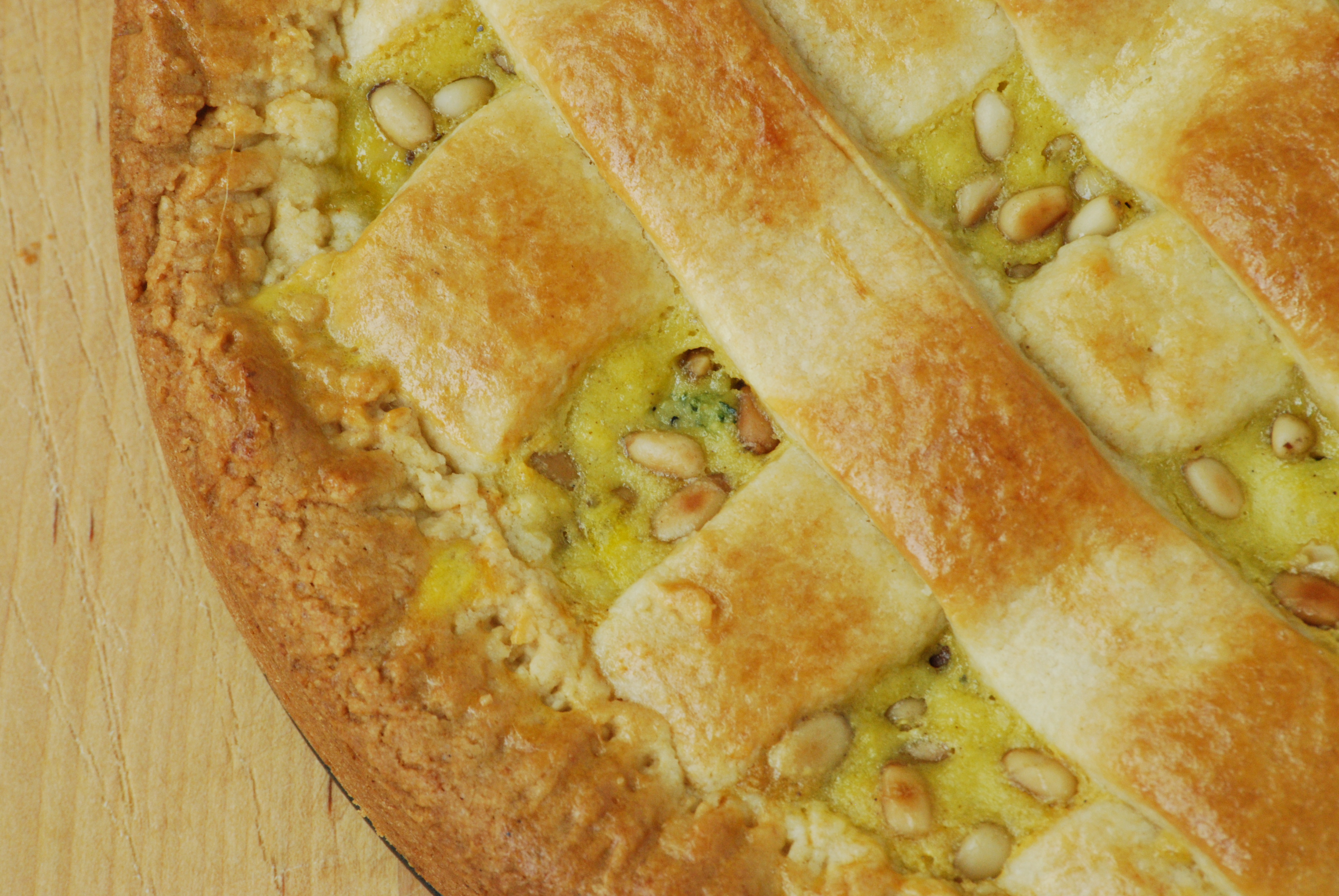
Though the title says it’s a tart, the texture is that of a cake– the baking powder makes it puff while baking.  This is a traditional dessert in the south of France and Italy (alright, perhaps it’s not Parisian, but it’s my daydream.)  Tanis’ recipe calls for Swiss Chard– which I really like– but I’ve been trying to figure out new ways to use use kale, so I made the substitution.  They are similar greens, and the result was excellent.  The kale was delicious, while the ricotta and warm spice added a firm texture and balanced sweetness.  The pine nuts– now these were the the star in this tart.  No substitutions here.  They add a subtle, nutty flavor and lend a nice crunch.  This unique dessert is remarkable.  It’s not savory, but subtly sweet.    Give it a try, you’ll like it.

The Recipe:  Kale and Ricotta Tart

For the Dough:

2 cups all-purpose flour

1 tablespoon baking powder

1/2 cup sugar

pinch of salt

8 tablespoons (1 stick) cold butter, cut into small pieces

1 egg, beaten with 1 tablespoon milk

Grated zest of  1/2 lemon

For the Filling:

1 large bunch of kale,  ribs discarded, chopped  (about 4 cups)

1 cup ricotta cheese (I used part-skim, but the original recipe calls for whole-milk)

2 eggs

1/4 cup sugar  (I reduced from 1/3 cup from the original recipe –it was perfectly sweet for me)

Grated zest of 1/2 lemon

1/4 teaspoon powdered ginger

1/4 teaspoon allspice

1/2 cup golden raisins, soaked in warm water until plumped

1/4 cup pine nuts, toasted

To make the dough, in the bowl of an electric mixer, fitted with the paddle attachment, mix the dry ingredients on low speed.  Add the butter and mix for about 2 minutes more, until crumbly.  Add the egg mixture and the lemon zest and mix another minute, or until you can pinch the dough together.  Turn the dough out and form 2 balls, one twice as big as the other ( use a kitchen scale, if you have one).  Chill for at least an hour.

To make the filling, bring a large pot of salted water to a boil.  Blanch the kale for 1 minute; drain well.  Let cool, and squeeze out any liquid.

Preheat the oven to 350°F.  In a small bowl, whisk together the ricotta, 1 egg, sugar, lemon zest, and spices.

Dust a pastry cloth with flour and roll out the larger dough ball into a circle 2 inches larger than the diameter of your 9- or 10-inch spring form pan.  Roll the dough onto the rolling pin, then carefully unroll it over the pan and gently press it into place, so that it comes about 2-inches up the sides of the pan.  Expect the dough to be pretty soft; if it tears, just press on a scrap to cover any holes.

Drain the raisins, mix them with the greens, and spread over the dough in the pan.  Pour the ricotta mixture over the greens and smooth out.  Sprinkle the pine nuts over the ricotta.

To make the lattice top, roll out the second piece of dough into a 1/8 -inch-thick rectangle.  Cut the dough into 3/4-inch-wide strips.  Fashion a lattice top by alternating crosswise and lengthwise strips.  Leave a gap of 3/4 inch between strips running in the same direction.

Fold the edges of the bottom crust over the ends of the lattice strips.  Whisk remaining egg in a small bowl for an egg wash.  Using a pastry brush, gently coat the tart with the egg.  Bake for 40 to 50 minutes, until the crust is golden.

Cool on a rack before serving.  Enjoy!

Source: Adapted from Heart of the Artichoke and Other Kitchen Journeys by David Tanis

Thanks for stopping by Relishing It today….as always, I appreciate hearing your feedback.

Laurie

Follow me on Twitter!

Read Full Post »

I hope you all had a lovely Memorial Weekend.  Ours was fun, though not ENTIRELY relaxing– both kids were sick Friday and Saturday– so we didn’t get out as much as we would have liked.  Thankfully, by Sunday all was well and we enjoyed a fantastic barbeque at our friends’ house down the street.  The dodgy weather even complied!  Much of the neighborhood was there, with kids running to-and-fro.  Everyone brought something to share.  I made these beauties and this dish from my friend, Angharad’s blog.  Fantastic!

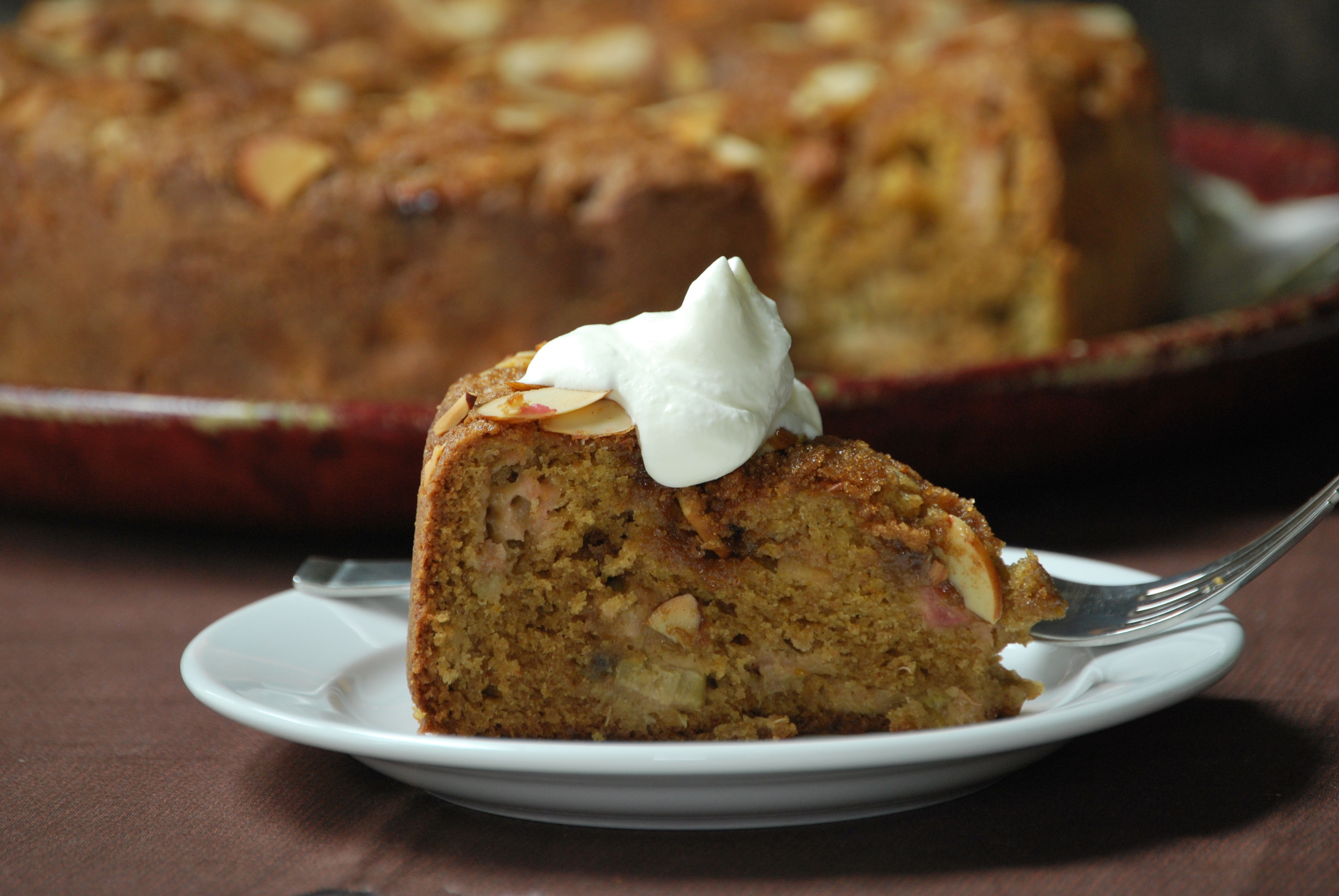
Today I’m offering you another one of my favorite recipes to try before rhubarb season comes to a close.  (Hopefully you’ll freeze some rhubarb so you can enjoy it throughout the year).  I love coffee cake.  It’s simple and uncomplicated, not fussy, and almost always tastes sublime.  It’s one of those cakes that makes afternoons so much better– brew a pot of French-press coffee and enjoy.  The rhubarb makes this cake very moist, yet it doesn’t become mushy.  Even better, it’s not overly sweet– like many rhubarb dishes can be.  I added orange  zest for a hint of citrus, and topped it with almonds.  Together these three really came together to make a fantastic, delicious flavor.

The Recipe: Rhubarb Coffee Cake

For the Cake:

1 cup brown sugar, packed

1/2 cup white suger

1/2 cup, butter (at room temperature)

1 cup sour cream (at room temperature, if possible)

1 teaspoon salt

1 teaspoon almond extract (vanilla can be substituted)

1 egg (at room temperature)

1 teaspoon baking soda

1 teaspoon baking powder

Zest from 1-2 large oranges

1 cup whole wheat flour  (If you don’t have whole wheat flour, all-purpose can be substituted)

1 cup unbleached, all-purpose flour, plus more to coat the rhubarb

3 cups diced rhubarb

For the Crumb Topping:

1/2 brown sugar

1/4 cup butter (at room temperature)

1/2 teaspoon cinnamon

1/4 cup plus 2 tablespoons sliced almonds, toasted.

Preheat oven to 350°F.

Prepare a springform pan by buttering it, placing parchment paper on the bottom, buttering the parchment paper, then flouring. Shake out excess flour.  (Note: a 9×9 square pan can also be used)

To make the topping:  Mix the sugar, butter, and cinnamon together using a fork.  Then gently add the 1/4 cup of almonds.  Set aside.

In a small bowl, whisk together the flours, baking soda, baking powder, and salt.  Set aside.

In another bowl, toss the diced rhubarb with a little bit of flour so it is evenly coated.  Do not mix the excess flour into the cake.  This will prevent the rhubarb from falling to the bottom of the cake.  Set aside.

Using a stand mixer fitted with the paddle attachment, cream the sugars and butter until creamy, 2-3 minutes.  Beat in the egg.  Next,  add the sour cream, almond extract, and orange zest and combine until just mixed.  Add the flour mixture and blend until just mixed (over-mixing any cake when the flour is added will yield a very tough cake).  Next,  fold the rhubarb into the cake using a rubber spatula.  Pour into prepared pan, making sure it is even.  Sprinkle the topping on top of the cake (I found that using my fingers worked the best).  Then finish with the remaining sliced almonds.  Bake for 45-55 minutes, or until a cake tester comes out clean.  Let cake cool completely in pan on a cooling rack.  Run a knife around the edge of the pan and remove.  Enjoy!

Source: Adapted from Cakes and Frostings with Schmecks Appeal by Edna Staebler

Thanks for stopping by Relish It today!

Laurie

Follow me on Twitter!

Read Full Post »

I live in Minnesota, where the maple trees are now being tapped.  Yes, its a bit of poetic dreaming, but this makes me long for a little country home with my very own maple trees, big red barn, and sprawling garden.  I conveniently ignore the “back-breaking labor” part of that dream.  While I don’t get to live the bucolic life here in the middle of the city, I’m fortunate enough to have access to the local, delicious maple syrup from nearby (not to mention a few fantastic farmers markets).

I love maple syrup, though this wasn’t always true.  The fact is, for most of my childhood I’d never had the real thing.  I detested the overly-thick, sugary mess that most restaurants labled “maple syrup.”  At home, we usually had a berry syrup, as getting real maple in rural North Dakota wasn’t an option at the time.  Once I finally had a taste, I was hooked.  I couldn’t believe that it was nothing like the gloppy corn syrup-based knock-offs I had been exposed to.  It was thin– delicate almost– and just sweet enough.

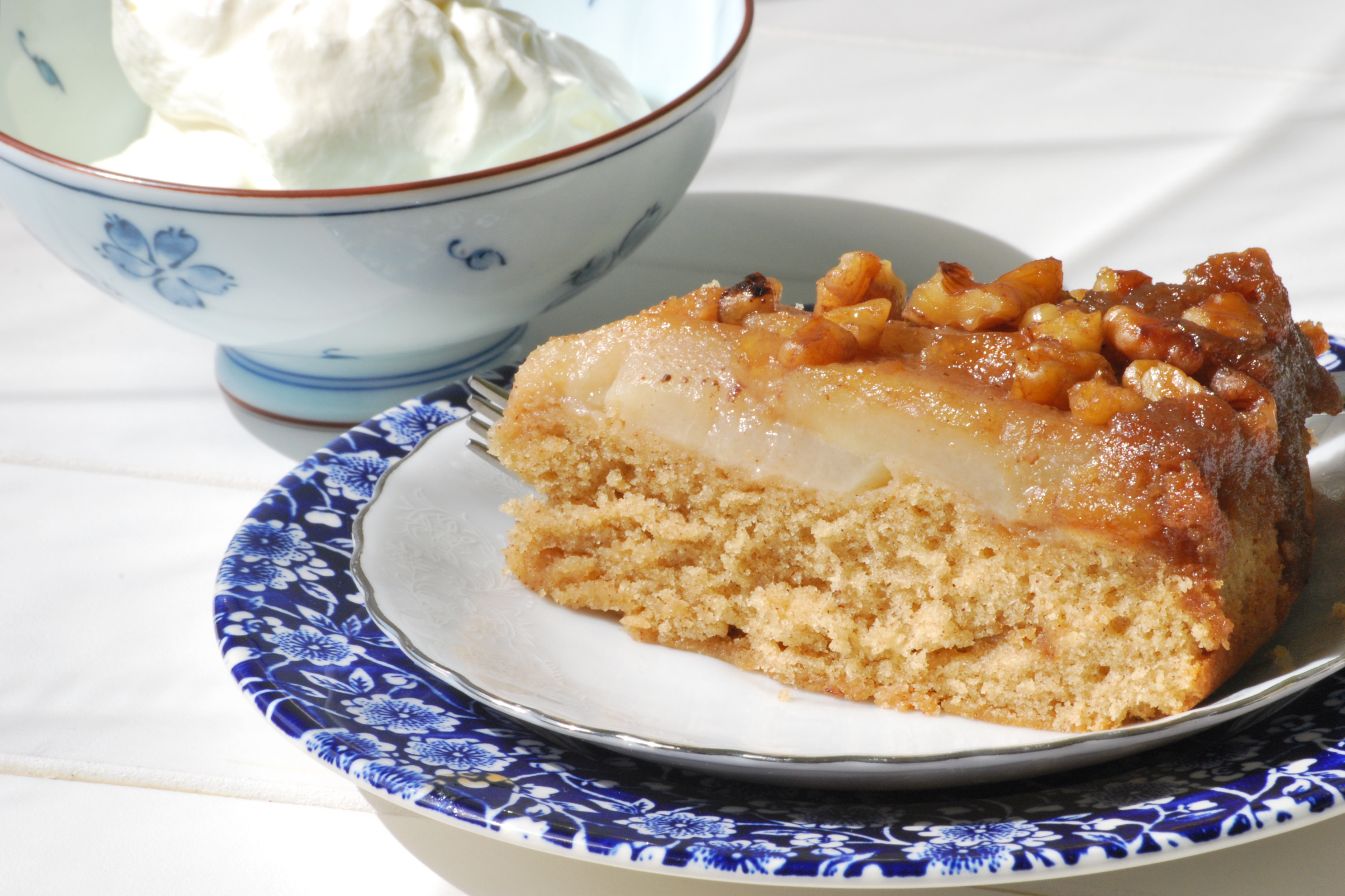
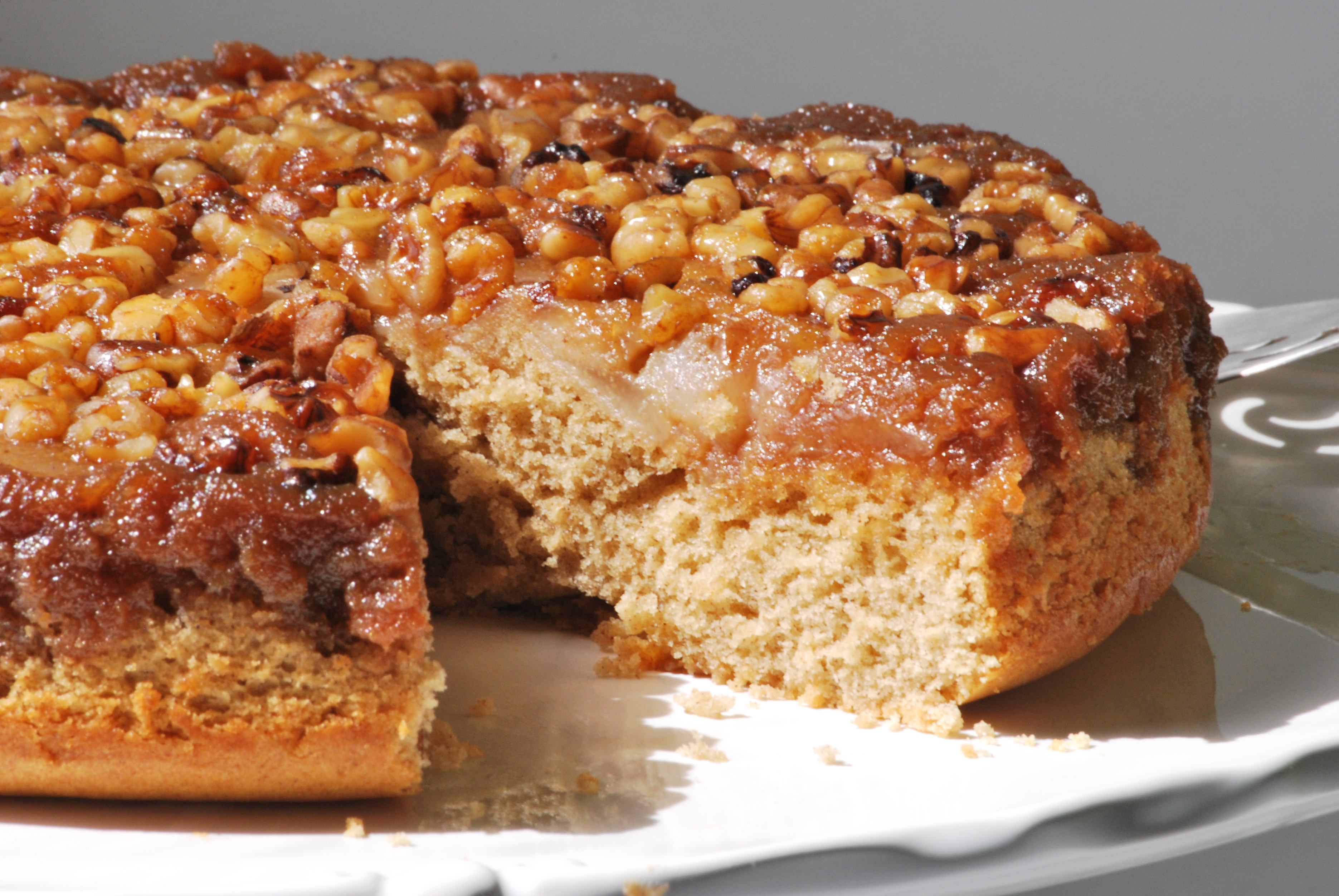
A friend recently told me about a fantastic cake recipe by David Lebovitz— one of my favorite accomplished chefs.  This maple walnut pear cake is perfect for this time of year.  It’s one of those desserts that’s simple to throw together and toss into the oven, yet the result is so much more than an ordinary cake.  The flavor-combination is beautiful.  The maple syrup, walnut, and pear build off of one another, while the cinnamon binds them all together.  This is a moist cake that gets better with each passing day.  I think I even prefer it on the second day when the glaze really gets a chance to soak in.  But seriously,who’s going to wait that long for a piece?  Try it– you’ll love it.  And for goodness sakes, don’t forget the whipped cream!

The Recipe: Maple Walnut Pear Cake 

Topping:

1/3 cup maple syrup

1/4 cup packed light or dark brown sugar

1/2 cup walnuts, toasted and coarsely chopped

3 ripe Bosc pears (I used D’Anjou and they worked fine), peeled, quartered, cored, and cut lengthwise into 1/4-inch slices

Cake:

1 1/2 cups all-purpose flour

1 teaspoon baking powder

2 teaspoons ground cinnamon

1/2 teaspoon salt

1/2 cup unsalted butter, at room temperature

1/2 cup granulated sugar

1/4 cup packed light brown sugar

1/2 teaspoon vanilla extract

2 eggs, at room temperature

1/2 cup whole milk, at room temperature

Directions:

Preheat the oven to 350°F.

Make the topping:  Combine the maple syrup and 1/4 cup dark or light brown sugar in a 9-inch cake pan or a cast-iron skillet.  Set the pan directly over the heat on the stovetop until it begins to bubble; simmer gently for 1 minute, stirring often.  Remove pan from heat.

Sprinkle walnuts evenly over maple mixture in the pan, then arrange the pear slices over the walnuts.  A pinwheel pattern works perfectly.

Make the cake:  In a small bowl, whisk together the dry ingredients (flour, baking powder, cinnamon, salt).  In a stand mixer fitted with a paddle attachment or by hand, beat together the butter, granulated sugar, and 1/4 cup light brown sugar on medium speed until light and fluffy, about 3 to 5 minutes.  Add the vanilla and eggs, one at a time, beating until each is incorporated.  Gradually mix in half of the flour mixture, then stir in the milk, then add the remaining flour mixture.  Mix just until combined.

Scrape the batter over the pears in the pan and carefully smooth into an even layer.  Bake for about 50 minutes, or until a tester inserted into the middle of the cake comes out clean.  Cool 15 minutes in the pan.

Run a knife around the sides of the cake to loosen it from the pan.  Invert a serving plate, or cake stand, over the pan, and carefully invert cake onto it.  Gently lift the pan off of the cake and arrange any walnuts that may have gone astray.

(Note:  Apples can easily be substituted for the pears in this cake.)

Source:  David Lebovitz’s: Ready for Dessert

One last note…Food Bloggers across the country are uniting on May 14 to help fight childhood hunger.  In Minneapolis/St. Paul the bake sale will be held at 920 East Lake St. Mpls, MN 55407 — in the Midtown Global Market.  The hours of the sale are 11:00am-4:00 pm.  I hope you come out and support this important cause.

Hope you are all well and enjoying a bit of spring!  As always, I appreciate your comments!

Thanks for stopping by,

Laurie

Follow me on Twitter!

Read Full Post »

I bought a new pan– a mini-bundt pan, and I love it.  I’ve recently found myself coming up with excuses to bake more, just so I can see those tiny, adorable cakes.  As my husband has mentioned (after listening to me justify making another little bundt-shaped treat) , the line between a hobby and mental illness can be a thin one.  Who cares when the results are fabulous?  I love these orange and vanilla-scented bundt cakes.  They’re incredibly flavorful, and just small enough to justify eating more than one.

For this recipe, do not cheat and use anything other than freshly-squeezed orange juice.  Trust me, you won’t get the concentrated flavor that these cakes can deserve from a bottle or from a frozen can.  I love it when a cake recipe delivers a potent, layered, flavor.  Here, the orange zest in the cake batter is the first wonderful layer.  Next, there’s the glaze with its freshly-squeezed orange juice that also moistens the cake.  Finally, there’s the fantastic icing.  These three layers really combine for a powerful citrus punch.  Here’s the thing though, the cake flavors aren’t limited solely to orange citrus.  This cake also offers strong vanilla notes.  If you’ve baked with vanilla beans before, you know that they are not subtle.  They give you big flavor.  Together, the vanilla and orange citrus pair beautifully in this cake–or cakes, if you want to break out the mini-bundt pan.

The Recipe: Orange and Vanilla Scented Bundt Cake

( Makes 1 bundt cake or 26 mini-bundt cakes)

Cake

3 cups unbleached all purpose flour

3/4 teaspoon salt

1/2 teaspoon baking soda

1 2/3 cups sugar

1 tablespoon finely grated orange peel

1 vanilla bean, split lengthwise  (2 teaspoons vanilla can be substituted, if in a pinch)

3/4 cup (1 1/2 sticks) unsalted butter, room temperature

3 large eggs

2/3 cup freshly squeezed orange juice

2/3 cup buttermilk  (To make your own buttermilk — 2/3 cup regular milk with 2 teaspoons white vinegar mixed in.     Let sit for 10 minutes).

Glaze

1/2 cup freshly squeezed orange juice

2 tablespoons sugar

2 tablespoons (1/4 stick) unsalted butter

Icing

2/3 cup powdered sugar

4 teaspoons (roughly) freshly squeezed orange juice

For the Cake:

Position rack in center of oven and preheat to 350° F.  Butter and flour 12-15 cup Bundt pan.  Whisk flour, salt, and baking soda in medium bowl to blend.  Using electric mixer, beat sugar and orange peel in large bowl at low speed to release essential oils from peel.  Scrape seeds from vanilla bean into sugar mixture and beat to blend well.  Add butter and beat until light.  Add eggs one at a time, beating well after each addition.  Mix in orange juice (mixture will look curdled).  Stir in flour mixture, then buttermilk.  Transfer batter to prepared pan; smooth top.  Bake cake until tester inserted near center comes out clean, about 50 minutes.  (Note: if using mini bundt pans — fill them 3/4 full and bake between 12-15 minutes. A toothpick inserted should come out clean.)

For the Glaze:

Meanwhile, boil orange juice, sugar, and butter in heavy small saucepan over medium heat until reduced to 1/2 cup, swirling pan occasionally, about 5 minutes.

Cool cake in pan for 10 minutes ( less for mini-bundts).  Using small sharp knife, cut around the sides and center tube of pan to loosen cake.  Turn cake out onto rack and brush with glaze.  Cool completely.

For the icing:

Place sugar in small bowl.  Mix in orange juice, 1 teaspoon at a time, until thick pourable consistency forms.  Drizzle icing over cake.  Let stand until icing sets.  (Note: I felt there wasn’t enough icing to top all of the mini-bundts, so I double the icing ingredients.  The recipe already reflects the change). Enjoy with a relaxing cup of coffee or tea.

Source: Bon Appetit Desserts

I hope you all enjoy this cake as much as we did!  Have a great day and see you soon!

Laurie


Read Full Post »

Happy Spring to all!  It was such a lovely Monday in St. Paul.  The snow is melting and I can actually smell the “earthiness” as everything thaws.  Hopefully we’ve seen the last of the weekly snowfall that has blanketed the Upper Midwest for months.  (Ha!  After I posted this it started snowing and continued through the night.  Did I just curse us with another foot of snow?– Ed.)

I’ve had an amazing week– not earth-shattering, but exciting in my little world.  I finally committed to a MN Food Bloggers event.  It took place at Corner Table in Minneapolis.  Forty food bloggers were guests to Chef Scott Pampuch in his beautiful “farm to table” restaurant.  Scott is a chef with big ideas.  He’s taking things beyond supporting local, sustainable food in the running of his business.  Along with offering cooking and teaching classes, he’s also the founder of “tour de farm“.  This concept has people travel to local farms to get involved in and enjoy farm-to-table food production and preparation.  He recently launched a new “Farm and Table CSK (community-supported kitchen) Box”, as well.  It’s similar to a CSA (community-supported agriculture), but contains various meats, sides, mirepoix, and stocks.  The idea is basically to help you get local farm raised meat to your table.  It’s a nice addition to your CSA box or farmers’ market produce.

I loved being surrounded by so many amazing people who are not only involved in food blogging, but who also share my philosophy on food production and preparation.  It really helped validate what I’m trying to do through this site.  I’m looking forward to many more get-togethers with these kind, supportive foodies.  (I’m also looking forward to more flutes of Brut Cava).  A special thanks goes out to Stephanie Meyer for organizing the event.

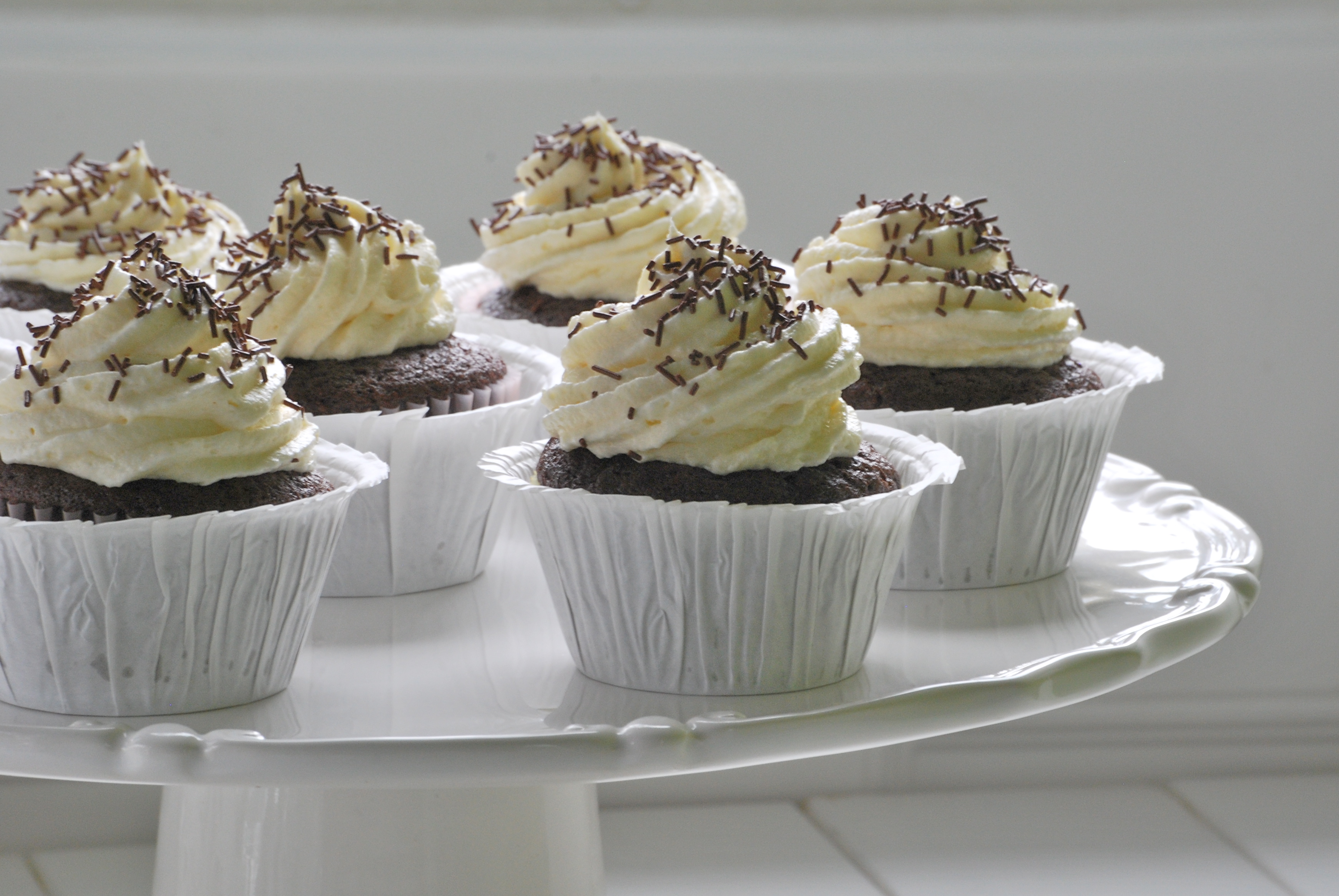
Now to the topic at hand.  Killer Chocolate Cupcakes.  Why Killer?  Because it sounds better than the ol’  “Devil’s Food”, which is what they originally started as.  Then I tweaked them a little a lot.  The result is honestly “killer”.  They’re that good.  My husband says they might be the best cupcakes he’s ever eaten, and we did a cupcake tour of nearly every bakery in the Twin Cities this past summer.  How about that!  They combine the ideal amount of chocolate with a rich cream-cheese frosting.  They are made with cake flour– rather than all-purpose flour– which gives them a soft, tender texture.  That’s not to say that they’re not good, solid cupcakes.  These little numbers are still dense enough to compliment the thick, heavenly frosting.  Hope you enjoy them!

The Recipe: Killer Chocolate Cupcakes with Cream Cheese Frosting

Cupcakes:

1/2 cup natural unsweetened cocoa powder

2 ounces high-quality semi-sweet chocolate (60% cacao works great), chopped

1/2 cup strong, very hot coffee

1/2 cup sour cream

1 cup cake flour

3/4 teaspoon baking soda

3/4 teaspoon kosher salt

2/3 cup (packed) dark brown sugar

1/2 cup vegetable or corn oil

1/2 cup granulated sugar

2 large eggs, room temperature

1 teaspoon vanilla extract

Frosting:

1  –  8 ounce package cream cheese, room temperature

8 tablespoons (1 stick) unsalted butter, room temperature

1 cup confectioners’ sugar, sifted

1 teaspoon vanilla

For the Cupcakes: Preheat oven to 350°.  Line 16-18 standard (1/3 cup) muffin cups with paper liners.  Spray with non-stick spray. Combine cocoa powder and chocolate in medium bowl.  Pour 1/2 cup hot coffee over; whisk until smooth.  Whisk in sour cream.

Whisk flour, baking soda, and salt in another medium bowl to blend.  Using electric mixer, beat brown sugar, oil, granulated sugar, eggs, and vanilla in large bowl until light and creamy, about 2 minutes.  Beat in flour mixture, alternating with chocolate mixture in 2 additions. Careful not to over-mix.  Divide batter among paper liners.

Bake until tester inserted into center comes out with some crumbs attached, about 16-18 minutes.  Cool in pans for about 10 minutes.  Transfer cupcakes to cooling racks and cool completely.

For the frosting:  Combine cream cheese and butter in a bowl for an electric mixer.  Beat on high until light and fluffy, a couple of minutes.  Add the sifted confectioners’ sugar and vanilla and beat on low at first, then increase to high.  When frosting is light and airy — it is ready to put on top of the cupcakes.  Of course, sprinkles add a lovely touch!

Source for cupcakes:  Adapted from Bon Appetit Desserts Cookbook

One more thought– thank you all for the wonderful and supportive comments last week.  I appreciated each and every one of them, and would love to hear if any of you made the tart.  Have a fantastic week!

Laurie

Read Full Post »

Classic Lemon Tart

Welcome to Relishing It!  I’ve finally taken the leap and committed to writing a weekly blog.  Obviously I love to cook and bake, but more recently I’ve come to appreciate the photography aspect of food blogs as well.  Food has always been a significant part of my life– a passion, I guess.  It’s a creative and social outlet for me and my family.

So what about me?  Well, for more detail you can check here.  In brief, I’m originally a small-town North Dakota girl, now a thirty-something mother of two who lives in St. Paul, MN.  My children keep me busy, as they’re only four and two years old.  This makes the baking/cooking/photography “interesting” during the day.  I was lucky enough to marry my high-school sweetheart (who may make a guest appearance here every once in a while).

I have fairly strong views on food, from how it’s marketed, to nutrition, to its effect on the environment.  I generally subscribe to the Bittman/Pollan food models.  I use organic, locally-sourced ingredients when possible, and usually shy away from anything overly processed.  While I’ll do my best not to preach, you’ll likely get a sense of my convictions through individual recipes and asides on these topics.

One of my closest friends was kind enough to ask me to guest blog about my culinary experiences in a Blissful Eats section every Thursday on her beautiful “Bliss“.  This has not only given me a chance to get my feet wet, but it has also given me time to think about where to begin with my own blog.  To be honest, I’ve spent a fair amount of time pondering my first recipe.  Too long.  I finally decided to go with what I was really wanting to eat today– this Classic Lemon Tart.  I have so many organic lemons right now– I’ve taken to stockpiling these babies.

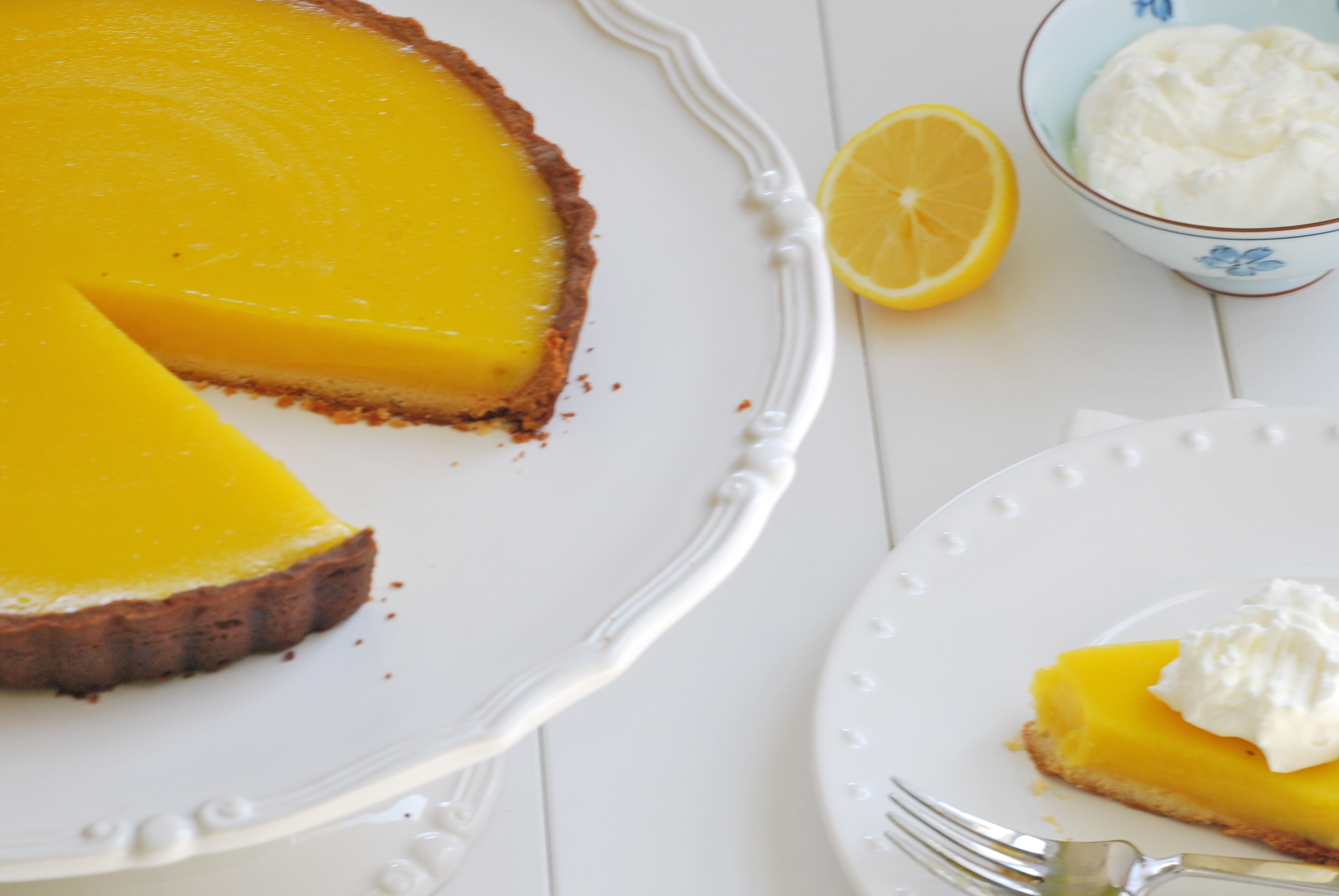
I first sampled this lemon tart three years ago.  We had a dinner party and one of our friends– a fellow ‘foodie’– brought this incredible dessert.  I was stunned, and had to have the recipe immediately. I realize that writing about one’s experience of food– trying to convey it to others– is usually imperfect.  The words just can’t capture the “punch” of a really powerful flavor, or the “silkiness” of creamy filling.  So how to describe this tart?  It’s intense.  Seriously intense.  The “jolt” of lemon in every bite is incredible.  You almost question whether or not its made from some super-distilled extract, though the natural flavor of the juice and zest of the lemons reassures you that you’re eating the real thing.  And then there’s the color.  If you use farm-fresh free-range egg yolks, the natural deep yellow color will be stunning.

In the past, I’ve tended to reserve this stellar dessert for special occasions– not because it’s difficult, but because it’s a real show-stopper. It’s beautiful and light with a flaky crust, making it perfect for Spring.  On the other hand, while we still have several feet of snow on the ground, it sure made my family happy this afternoon, too.  Come to think of it, I may not wait for a holiday or dinner party to make this one any more.  Why not brighten even an ordinary, everyday?

The Recipe:  Classic Lemon Tart

Sweet Tart Pastry:

1 large egg yolk

1 tablespoon heavy cream

1/2 teaspoon vanilla extract

1 1/4 cup all-purpose flour

2/3 cup confectioners’ sugar

1/2 teaspoon kosher salt

8 tablespoons unsalted butter ( 1 stick, very cold), cut into twenty-four 3/4-inch cubes

1 tablespoon unbleached all-purpose flour for dusting

Instructions:

Whisk together the yolk, cream, and vanilla in a small bowl; set aside.  Pulse to combine 1 1/4 cups flour, sugar, and salt in bowl of food processor  fitted with steel blade.  Scatter butter pieces over flour mixture; pulse to cut butter into flour until mixture resembles course meal, about fifteen 1-second pulses.  With the machine running, add egg mixture and process until dough just comes together, about 25 seconds.  Turn dough onto sheet of plastic wrap and press into 6-inch disk.  Wrap in plastic and refrigerate at least 2 hours.

If the dough feels too firm when you’re ready to roll it out, let it stand at room temperature for a few minutes.  If, on the other hand, the dough becomes soft and sticky while rolling, don’t hesitate to re-chill it until it becomes easier to work with.  Better to re-chill than add too much flour, which will damage the delicate, crisp texture of the dough.  Bake the tart in a 9 – 9 1/2 -inch tart pan with a removable bottom and fluted sides about 1 to 1 1/8 inches high.

Unwrap dough; lightly flour large sheet of parchment paper or plastic wrap and place dough in center.  Roll out dough and line tart pan.  Freeze dough 30 minutes.

Meanwhile, adjust one oven rack to upper-middle position and other to lower-middle position; heat oven to 375 degrees.  Place chilled tart shell on a cookie sheet; press 12-inch square of foil inside tart shell and fill with metal or ceramic pie weights ( I skipped the pie weights and just placed the foil down on the tart, which worked fine, because it was chilled).  Bake on lower rack for 30 minutes, rotating halfway through baking time.  Carefully remove foil and weights by gathering edges of foil and pulling up and out.  Transfer cookie sheet with tart shell to upper rack and continue to bake until shell is golden brown, about 5 minutes longer.

The Lemon Tart:

1 fully baked warm tart shell (9 to 9 1/2 inch)

7 large egg yolks, preferably organic

2 large eggs

1 cup granulated sugar

2 tablespoons granulated sugar

2/3 cup freshly -squeezed lemon juice, preferably organic, from 4 – 5 medium lemons

1/4 cup grated lemon zest

pinch of salt

4 tablespoons unsalted butter, cut into 4 pieces

3 tablespoons heavy cream

Instructions:

Once the lemon curd ingredients have been combined, cook the curd immediately; otherwise it will have a grainy finished texture.  To prevent the curd from acquiring a metallic taste, make absolutely sure that all utensils coming into contact with it — bowls, whisk, saucepan, and strainer — are made of non-reactive stainless steel or glass.  Since the tart has a removable bottom, it is more easily maneuvered when set on a cookie sheet.  If your pre-baked tart has already cooled, place it in the oven just before you start the curd and heat until warm, about 5 minutes.

Adjust the oven rack to upper-middle position and heat oven to 375 degrees.  Place the tart pan with shell on cookie sheet.

In medium non-reactive bowl, whisk together yolks and whole eggs until combined, about 5 seconds.  Add sugar and whisk until just combined, about 5 seconds.  Add lemon juice, zest, and salt; whisk until combined, about 5 seconds.  Transfer mixture to medium non-reactive saucepan, add butter pieces, and cook over medium-low heat, stirring constantly with wooden spoon, until curd thickens to thin sauce-like consistency and registers 170 degrees on an instant-read thermometer, about 5 minutes.  Immediately pour curd through single-mesh steel strainer set over clean non-reactive bowl.  Stir in heavy cream; pour curd into warm tart shell immediately.

Bake until filling is shiny and opaque and until center 3 inches jiggle slightly when shaken, 10 to 15 minutes.  Cool on wire rack to room temperature, about 45 minutes.  Serve with freshly whipped cream.  Enjoy!

Source:  Adapted from Cook’s Illustrated

Thanks for stopping by Relishing It today– I always appreciate feedback, so please leave a comment and let me know your thoughts.  See you soon!

Laurie

Read Full Post »

« Newer Posts