Feeds:
Posts
Comments

Archive for the ‘Savory’ Category

For the record, healthy eating is NOT the theme on Relishing It this week.  Don’t worry, I’ll return with several wonderful recipes next week loaded with seasonal produce.  But not this week.  For now, let’s just enjoy these fantastic sticky buns  from earlier, and today’s ridiculously good mini-burgers.  I am a bit of a burger connoisseur.  I know, I know.  I say that about a lot of things.  But the fact is, if there’s a dish I like, I try as many versions of it as I can.  It’s almost as if I need to approach it from every angle.  For burgers, I have my favorite combinations.  I enjoy the fancy ones with melted brie cheese just as much as I enjoy the not-so-classic with swiss and sauerkraut (which is incredible, by the way).  And the classic thick piece of raw onion on a plain burger with ketchup and mustard is heavenly.  I could go on and on.

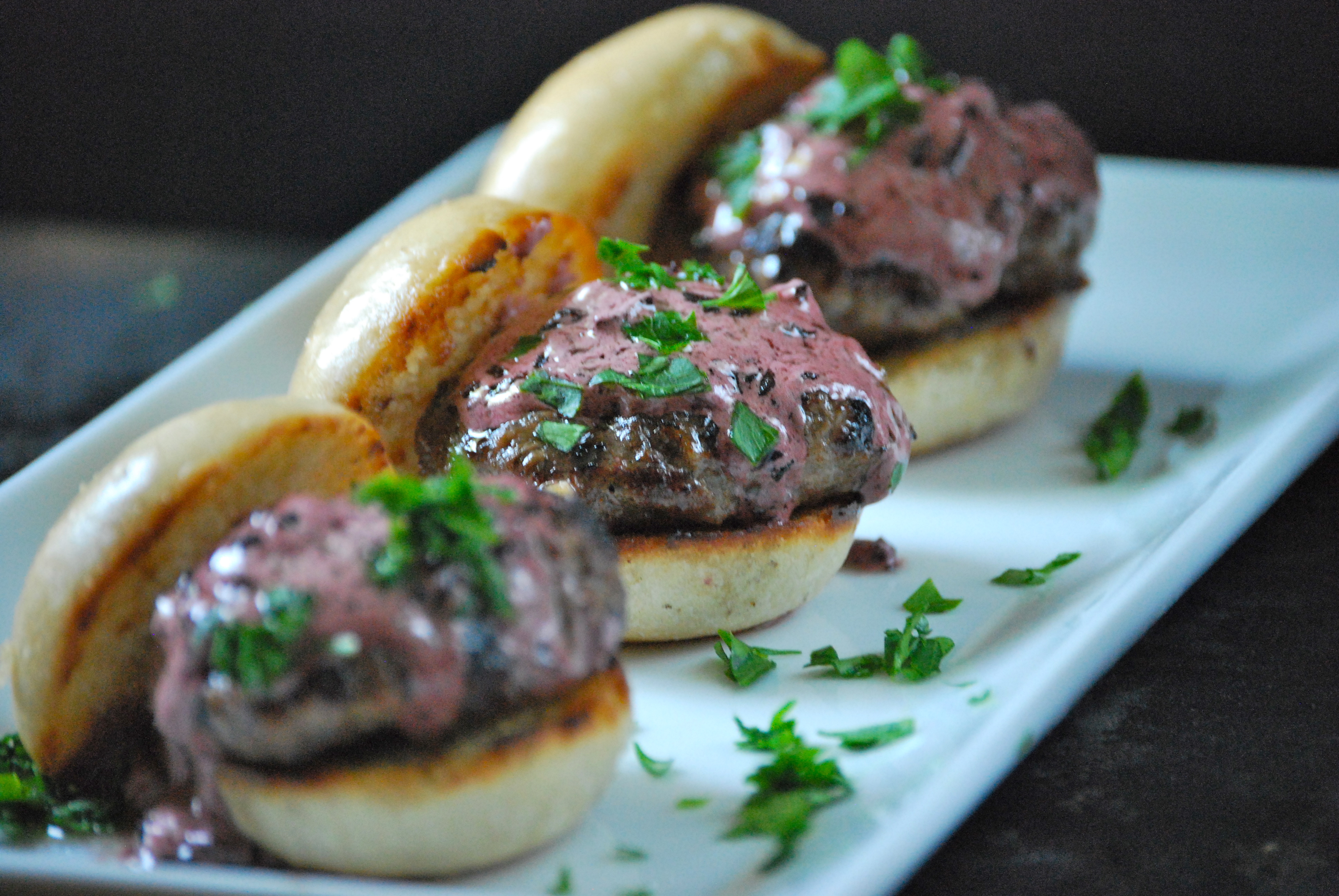
These mini-burgers (I have a hard time calling them ‘sliders’, because it just reminds me of White Castle) with red wine shallot butter are one of my favorite glammed-up ways to eat a burger.  They are, quite simply, amazing.  More like, over-the-top amazing.  I could eat them everyday, but my clothes would not fit within a few weeks.  They’re perfect if you’re looking for a show-stopper for a Summer party.  You can make everything ahead of time, and once the guests arrive, just pop them on the grill.

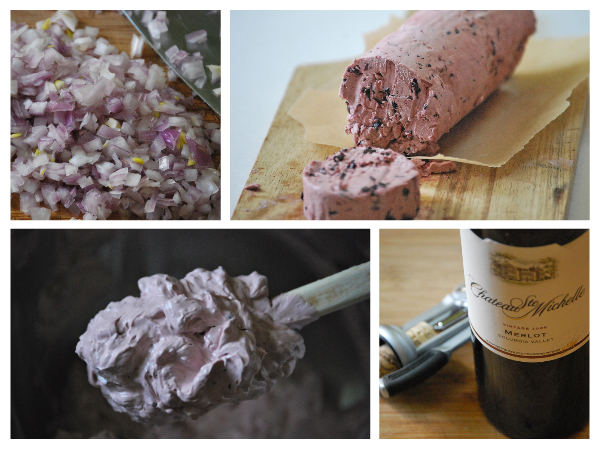
One of the biggest flavors– and certainly the biggest time consumer– is making the incredible red wine shallot butter.  You reduce an entire bottle of red wine with one cup of shallots, for about an hour.  Once it’s reduced, you mix this into the whipped butter and chill it.  This butter is the key to the whole dish, and it’s so intense that you only need a little pat on your burger.  You’ll see in the photos that I tend to add a thicker slice, because I just can’t get enough of the flavor.  When you make the red wine shallot butter, you’ll end up having some left-over.  This is good, because it keeps well in the freezer and can be used later…perhaps on a steak for the weekend?
I flavored the grass-fed beef with onions and a fair amount of fresh thyme.  The thyme adds a wonderful earthiness and pairs perfectly with the red wine and shallots.  And yes, if you’ve looked ahead to the recipe, you’ll see there’s also butter mixed in with the ground beef.  It works here, because the grass-fed beef is so lean.  Trust me on this, it’s phenomenal.  Personally, I like these burgers in mini-form.  I made the sourdough buns in the photos, as well.  They ended up being a perfect fit.  Find whatever small bun you can, or make your own.  Just gather some friends and make these burgers, everyone will be happy.

The Recipe:  Grass-Fed Mini Burgers with Red Wine Shallot Butter

For the Burgers:

2 pounds grass-fed ground beef

1 stick unsalted butter

1 medium white onion, minced

1 3/4 tablespoons chopped fresh thyme

1 1/2 teaspoons freshly cracked pepper

1 egg, lightly beaten

1 1/2 tablespoons kosher salt

Freshly chopped parsley

Red Wine Shallot Butter

1/2 cup minced shallots

2 tablespoons granulated sugar

1 bottle of red wine (Merlot or Cabernet work great)

1/2 pound unsalted butter, whipped

To make the red wine shallot butter:  In a large saucepan, combine the shallots, red wine, and sugar.  Bring to a boil, then reduce heat to a medium simmer.  Continue to reduce for about an hour  until the mixture it is somewhat “syrupy”, but almost dry.  See photos.  Remove from heat and let cool to room temperature.  Mix into the whipped butter until homogenous.  Use parchment paper or plastic wrap to roll into logs and chill until firm.

To make the burgers:  Remove ground beef from the refrigerator for about 1/2 hour before mixing.  It’ll need to warm a bit to properly mix with the butter.  In a medium skillet over medium-high heat, add about 2 tablespoons of the butter and the onion.   Sweat them until they are translucent.  Remove from heat and cool to room temperature.  In a large bowl, add the thyme, pepper, egg,  salt, and onions.  Whip the remaining butter until smooth.  Add the butter and ground beef to the bowl and mix until just combined, being careful not to over mix (which can lead to a tough burger).  Form into patties and place on waxed paper and chill in the refrigerator for at least an hour.  Grill or fry the burgers and top with a slice of the red wine shallot butter and a sprinkle of parsley!

Source:  Adapted from Bar Lurcat, in Minneapolis, MN

Thanks for stopping by Relishing It!  Hope you all have a safe and fun holiday weekend!

Laurie

Read Full Post »

Every once in awhile an idea for a recipe pops into my head, and I can’t believe I hadn’t considered it before.  On the one hand, I get a bit disappointed in myself for missing something so obvious.  But then I think, ‘Who cares?  This is going to be incredible!’  Today’s recipe came from one of those epiphanies.  I wanted something bursting with Spring flavors, and this pea shoot and mint pesto does just that.

Pea shoots should be showing up at your local farmers market right now.  If you haven’t tasted them before, please go buy some.   These tasty little shoots are the young tendrils and leaves of the pea plant.  They’re packed with nutrients, including vitamins A and C.  And they’re wonderful on sandwiches, salads, mixed into stir fry, pureed into soups– and of course, in this pesto.

Mint and peas make a great combination– remember this carbonara?  Pea shoots taste like fresh peas, but you don’t have to go through the fuss of shelling.  Here, I blanched the pea shoots for a few seconds to brighten their color.  I added a few mint leaves, and finished it off with a squeeze of fresh lemon.  Do not leave out the lemon!  It’s fine without, but we’re looking for better than ‘fine’ with this pesto.

A couple tips on the bruschetta:  First, make sure you grill the bread.  Season it with olive oil, salt, and pepper.  It makes a huge difference.  I also recommend tearing– rather than cleanly slicing– the mozzerella.  It creates nice crevices and curves to drizzle the olive oil into.  I think it also happens to  look much more interesting.  The radishes add an additional pop of color and fresh crunch.  Aside from using this pesto on bruschetta, you can add it to pasta.  If you think it’s going to be too thick to toss with pasta, add a little more olive oil and remember to always reserve a bit of hot pasta water to get the texture you want.  Either way, I think you’ll be happy with this fresh dish.  Enjoy!

The Recipe: Bruschetta with Pea Shoot Mint Pesto and Fresh Mozzarella

Pea Shoot Mint Pesto:

1 1/2 cups packed pea shoots

2-3 tablespoons freshly grated parmesan or grana padano cheese

1/4 cup lightly toasted walnuts, chopped

1 garlic cloves

10 fresh mint leaves

1/4 cup extra-virgin olive oil

squeeze of lemon juice, to taste

sea salt and freshly cracked pepper, to taste

hot pepper flakes, to taste

For the Bruschetta:

1-2 balls of fresh mozzarella

1 -2 cloves of garlic

extra-virgin olive oil

pea shoot  mint pesto

handful of radishes, diced

Good quality rustic bread, sliced  ( I used sour dough)

To make the pesto:  Bring a medium sized saucepan filled with water to a small boil.  Prepare an ice bath, set aside.  Place the pea shoots in the hot water for 30 seconds.  Remove immediately and submerge into the ice bath.  Remove pea shoots from water and gently “wring” them out.  It’s ok if they have a bit of water on them.  Let cool.

Place the pea shoots, mint leaves, and 1 clove of garlic in a mini-food processor.  Pulse a few times, until the greens are adequately chopped.  Add the parmesan or grana padano and walnuts, pulse a few more times.  With the processor running, slowly drizzle in the olive oil.  You may need to stop the machine and scrape down the sides of the bowl.  Once the pesto is thoroughly combined, taste it.  Stir in some salt, cracked pepper, hot pepper flakes, and a squeeze or two of lemon to brighten the pesto.  Use immediately or store in the refrigerator with plastic wrap placed directly on it.

To make the Bruschetta:  Fire up your grill.  Brush olive oil on both sides.  Sprinkle with salt and pepper. Place on a hot grill and let it toast on each side until it is beautifully golden, but not burnt.  Remove from the grill and while still hot, rub a clove of garlic on one side of the toast.  Spread the pesto on that.  Rip the mozzarella, to create crevices, and place on the pesto.  Top with the chopped radishes.  Drizzle with a bit of olive oil and finish with a sprinkle of sea salt.  Enjoy!

I’m currently in North Dakota with my kids — made the long 8 hour trip to spend Mother’s Day with my Mom.  I hope all of you Moms out there have a wonderful day.  Thanks to everyone for stopping in — see you next week!

Laurie

Read Full Post »

One of the best perks of late spring and early summer cooking is that so many dishes are quick and simple– there’s isn’t much fussing or preparation time.  This is a good thing– especially if you have little ones either underfoot or begging to get outside and enjoy the sunshine.  And even if you don’t have to keep one eye on the kids while you cook, who wants to spend these longer, warm days in the kitchen?  I know I sound like a skipping record, but I happen to be delighted that summer produce is starting to appear.  Aside from the fresh seasonal flavors, it’s easy– and that means more playtime.

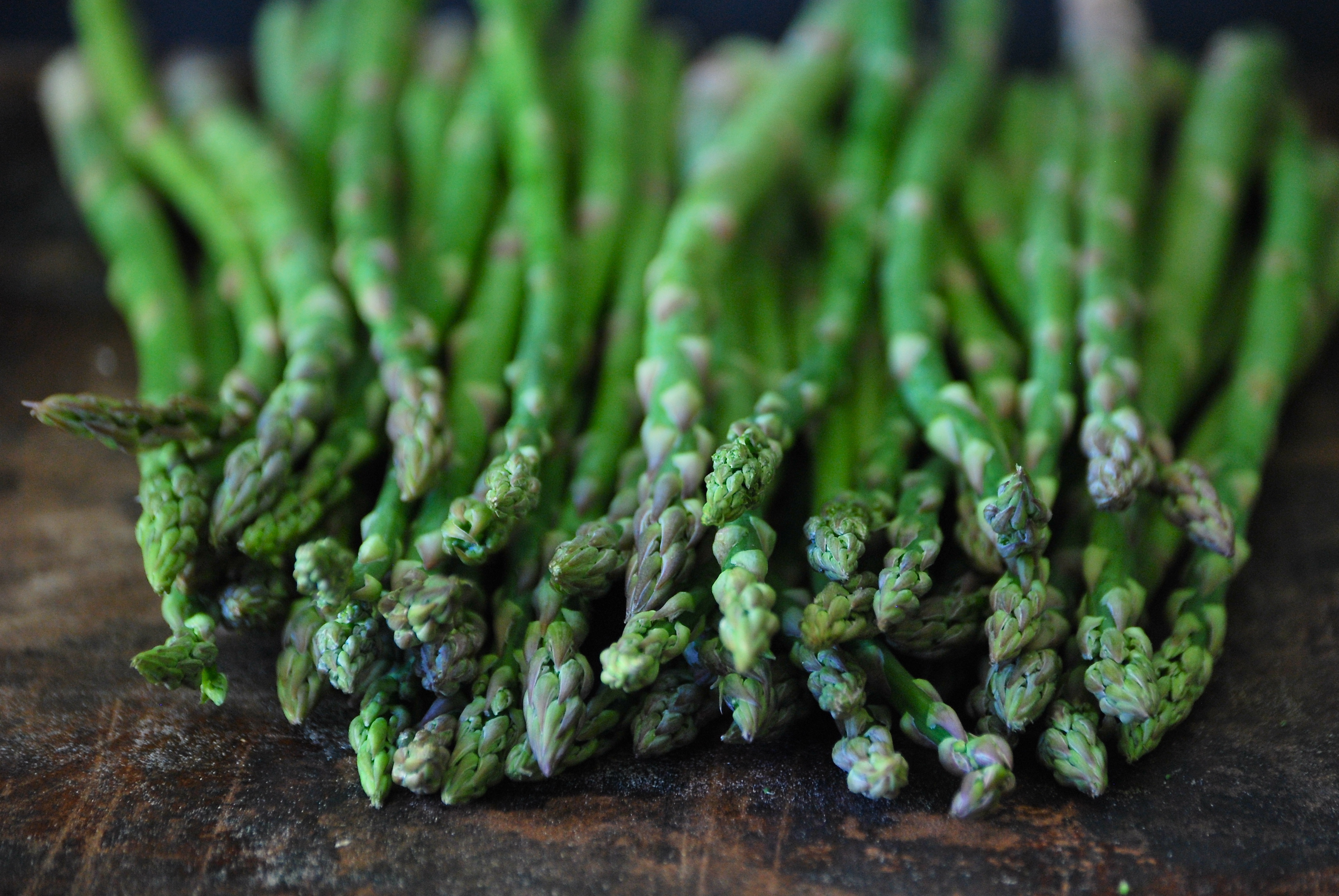
This week, it’s time for asaparagus!  Yes, that sentence was worthy of an exclamation point.  You see, asaparagus isn’t around for long, so when it arrives, I go all out.  I have several simple asparagus dishes that I make this time of year.  This gorgeous tart is one of my favorites. And this one, which combines two fantastic seasonal ingredients– asparagus and morels, still makes me swoon. But the best of all is the dish in today’s post- roasted asparagus with balsamic browned butter.  It is, unquestionably, my favorite way to prepare asparagus.

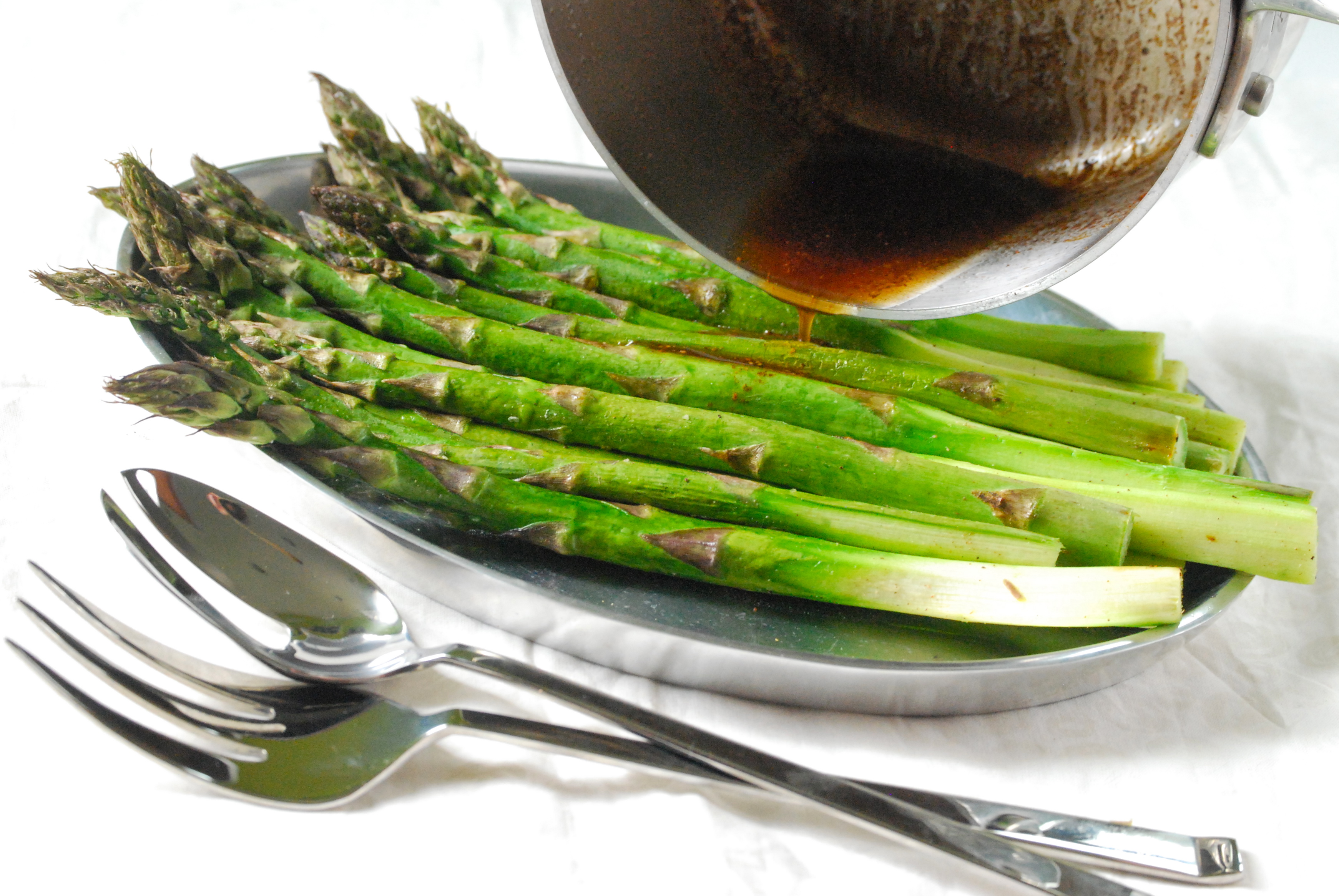
I first made this dish years ago for my in-laws.  They loved it enough that they started preparing asparagus this way, too.  I think the chances are better than average that you’ll do the same.  This side is perfect because it relies on a simple flavor combination.  Browned Butter, balsamic vinegar, and soy sauce.  That’s it.  These three ingredients pack an amazing punch.  So much so, that you don’t want your asparagus swimming in the sauce.  Less is more, here.

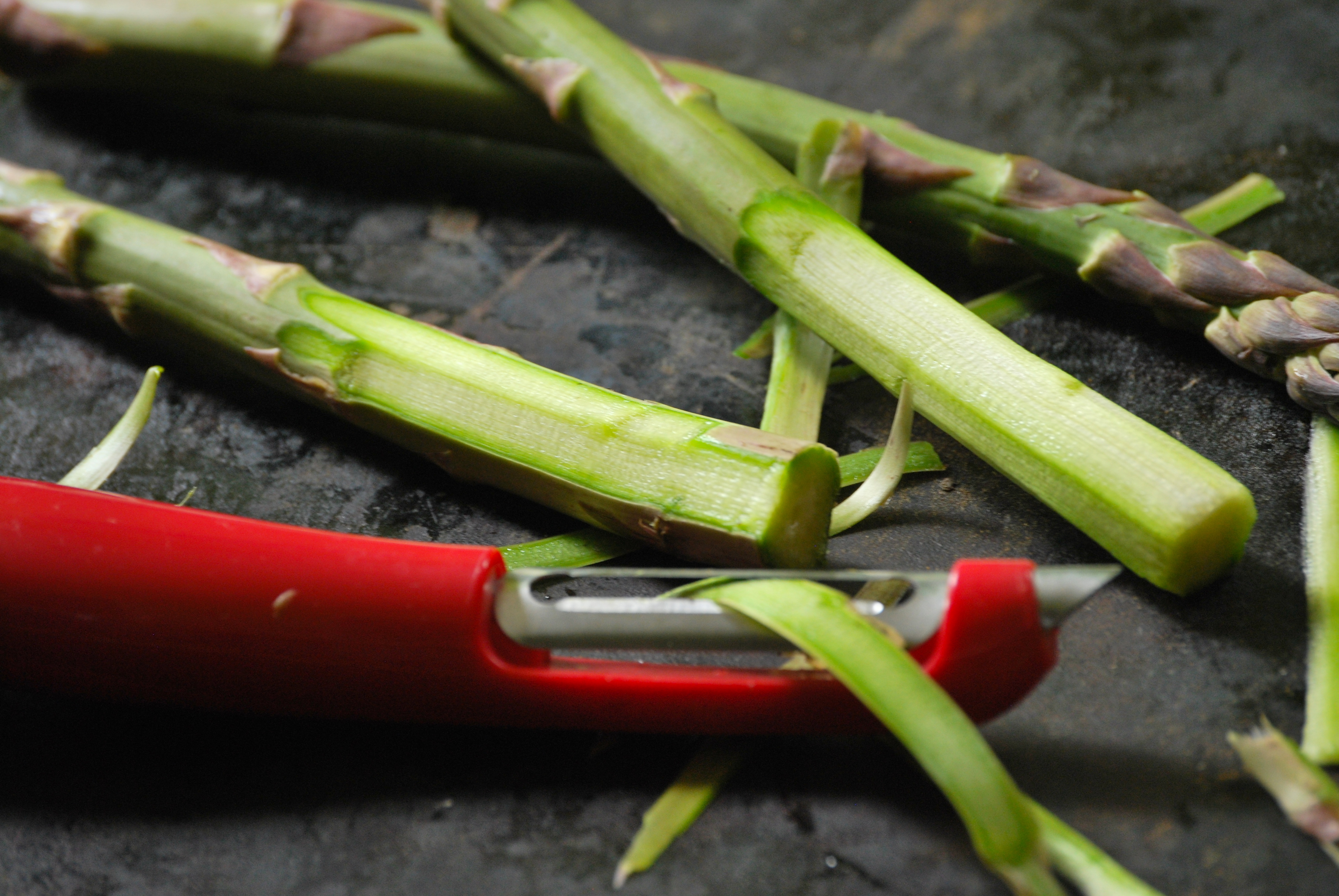
A word or two about the preparation of the asparagus.  First, use fresh seasonal asparagus.  Don’t get me started on that asparagus you often see year-round in some grocery stores and restaurants.  Those oversized, tough, tasteless, shoots are not what I’m talking about.  Asparagus should be enjoyed when it was meant to be– for those few weeks in spring when it’s fresh and tastes amazing.  When looking for asparagus at the market, look for the tops of them to be tight and closed.  This indicates they were recently harvested.  Asparagus should be eaten as soon as possible after you buy it, as the flavor dissipates pretty quickly.  Also, I don’t follow the school of thought that you should snap huge chunks off the bottom of the stem to avoid the “woody” portion.  Instead, I simply use a vegetable peeler and peel the bottoms.  It becomes just as tender as the top section and you avoid wasting a fair amount.  Hope you enjoy this dish!

The Recipe:  Roasted Asparagus with Balsamic Browned Butter

1 pound asparagus

olive oil, to drizzle

kosher salt

cracked black pepper

2 tablespoons unsalted butter

2 teaspoons soy sauce

1 teaspoon balsamic vinegar

toasted, sliced almonds, optional

shaved lemon zest, optional

Preheat an oven to 400°F.  Line a baking sheet with parchment paper; set aside.

Wash and dry the asparagus.  Cut off the very bottoms with a sharp knife.  Use a vegetable peeler to peel the bottom 1-inch to 1  1/2 -inch.  Toss the asparagus with a drizzle of olive oil and a sprinkle of salt and pepper.  Place on the baking sheet and roast for about 12 minutes, or until tender.

Meanwhile, place the butter in a small sauce pan over medium heat.  Stirring frequently, melt the butter until it is a deep golden brown, about 3 minutes.  Be careful not to burn it.  Remove from heat and add the soy sauce and vinegar to the pan.  Mix it together well with a wooden spoon, making sure to incorporate any brown bits in the butter.

Place the asparagus on a serving platter and pour the balsamic browned butter over the top.  Sprinkle with toasted almonds and a bit of shaved lemon zest.  Serve immediately.  Enjoy!

Source:  Adapted from Cooking Light

Thanks for stopping in — have a wonderful weekend!

Laurie

Read Full Post »

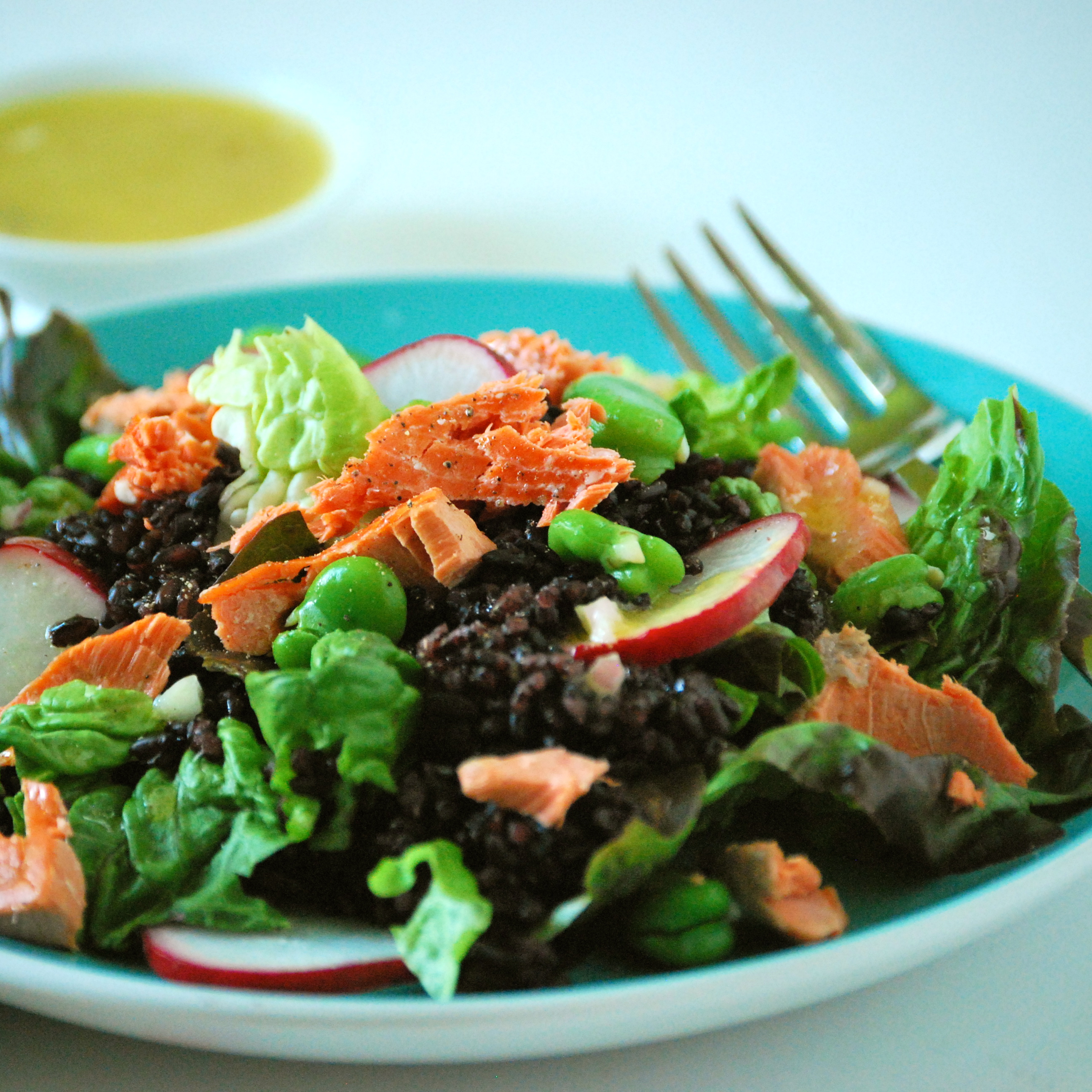
Today’s dish is one of the most-satisfying, healthy salads around.  It combines several healthy food pyramid components– protein, vegetables, and grains, so in a sense it’s a ‘one-plate meal’.  It has the added benefit of being convenient and delicious, not to mention looking gorgeous, too.  The centerpiece of this salad is the salmon.  In this dish, it’s simply prepared.

Now it’s time for a little story.  Radd and I have had an ‘on again/off again’ relationship with salmon over the last few years.  Have you ever eaten one particular food so often that its no longer appealing?  That’s what happened to us.  You see, during both of my pregnancies we ate a ton of wild salmon.  It’s loaded with omega 3’s, which are important for a baby’s developing brain.  So…we went overboard.  I’m sure my memory is tricking me now, but I swear we ate salmon three to four times a week.  It got to the point where it was almost torturous to sit down to a nice grilled meal.  After Aria was born we swore off salmon for awhile.  That ‘awhile’ turned into nearly two years, so our kids never really got to try it.  Well, we finally came around, gave it a try, and remembered all those things that we love about the fish.  And as luck would have it, turns out our kids love it too.

Along with the salmon, this salad has those wonderful Spring fava beans and radishes.  The beans add a nice ‘pop!’ of color along with their firm texture, while the radishes give the dish a healthy crunch.  Another ingredient is black rice.  Not familiar?  You can read about it here.  Aside from looking pretty cool, it’s loaded with fiber and iron.  It’s also an anti-inflammatory and great source for antioxidants.  I used ‘forbidden’ black rice in this dish.  The texture is the same as a firm white rice, but the flavor is a bit more ‘nutty’– kind of like wild rice.  If you can’t find black rice, you can use wild rice, quinoa, or wheat berries.  All will work well here.

The final ingredient is a mustard tarragon vinaigrette, which brings all of the flavors together.  It’s worth experimenting with tarragon vinegar, if you can find it– it’s so interesting.  Tarragon has a strong anise-like flavor, so make sure it suits your palate before you add it to the vinaigrette.  And if you don’t have it, a nice white wine or champagne vinegar will work just fine.  Enjoy!

The Recipe:  Wild Salmon with Black Rice, Fava Beans, and Spring Radishes

(Serves 4)

1 pound wild salmon

1 cup forbidden black rice, rinsed

1 bunch Spring radishes, sliced

1 head boston, bibb, or romaine lettuce, torn

1/2 – 1 cup shelled fava beans

olive oil, for drizzling

Mustard Tarragon Vinaigrette:

1 clove garlic

1 tablespoon shallot, chopped

1/4 cup tarragon vinegar, or white wine vinegar

2 teaspoons Dijon mustard, more if you like it more potent

1/2 cup extra-virgin olive oil

sprinkle of red pepper flakes

kosher salt and cracked pepper, to taste

To begin:  Place the rinsed black rice in a medium sauce pan with a scant 1 3/4 cup of water.  Bring to a boil uncovered.  Then cover and reduce heat to low and cook for about 35 minutes, or until the rice is tender and the water has been absorbed.  If the rice is tender, yet a bit of water remains, just drain it off.  Fluff with a fork and set aside.

Meanwhile, preheat an oven to 375°F.  Line a large baking sheet with aluminum foil.  Place the salmon on it along with a drizzle of olive oil and salt and pepper.  Bake for about 15-20 minutes, or until it just barely flakes when you twist a fork into it.  Keep in mind that it will continue to bake after you remove it from the oven from the residual heat, so be careful not to over-bake.  Remove from oven and break apart into chunks, when cool.

Prepare the fava beans by placing the shelled beans into a small saucepan of boiling water.  Boil for about 2 minutes.  Drain water and place beans in a bowl of ice water.  Remove the light green peel.  Set beans aside.

To make the vinaigrette:  place the garlic, shallot, Dijon, vinegar, salt, pepper, and hot pepper flakes into a bowl.  Slowly whisk in the extra-virgin olive oil.  Taste.  Adjust seasonings, if necessary.

On a large platter, place the torn lettuce, black rice, salmon, radishes, and fava beans.  Pour the mustard tarragon vinaigrette over the salad and gently toss.  Ricotta salata cheese also works very well with this meal.  Enjoy!

I hope you all have a fantastic weekend!  See you next week!

Laurie

Read Full Post »

A quick stroll through my dessert and cookie sections pretty much confirms that I have an insatiable sweet tooth.  Even so, when we go to our near-by patisserie, I choose a savory bite almost every time.  And if they’ve made a savory tartlet, my decision is easy.  Thankfully, I now have a recipe to make these little beauties at home– and this is one of the best tartlets I’ve ever had.

This wonderful, firm but flakey crust is made from olive oil rather than butter.  It lends a light floral, almost earthy, quality to the dish. Even though it is not par-baked, the crust becomes perfectly crispy on the outside, yet is still substantial enough to hold up to the liquid center.  Even after days in the refrigerator, the crust has an excellent texture.  And you know what that means– this is a great dish to make ahead of time.

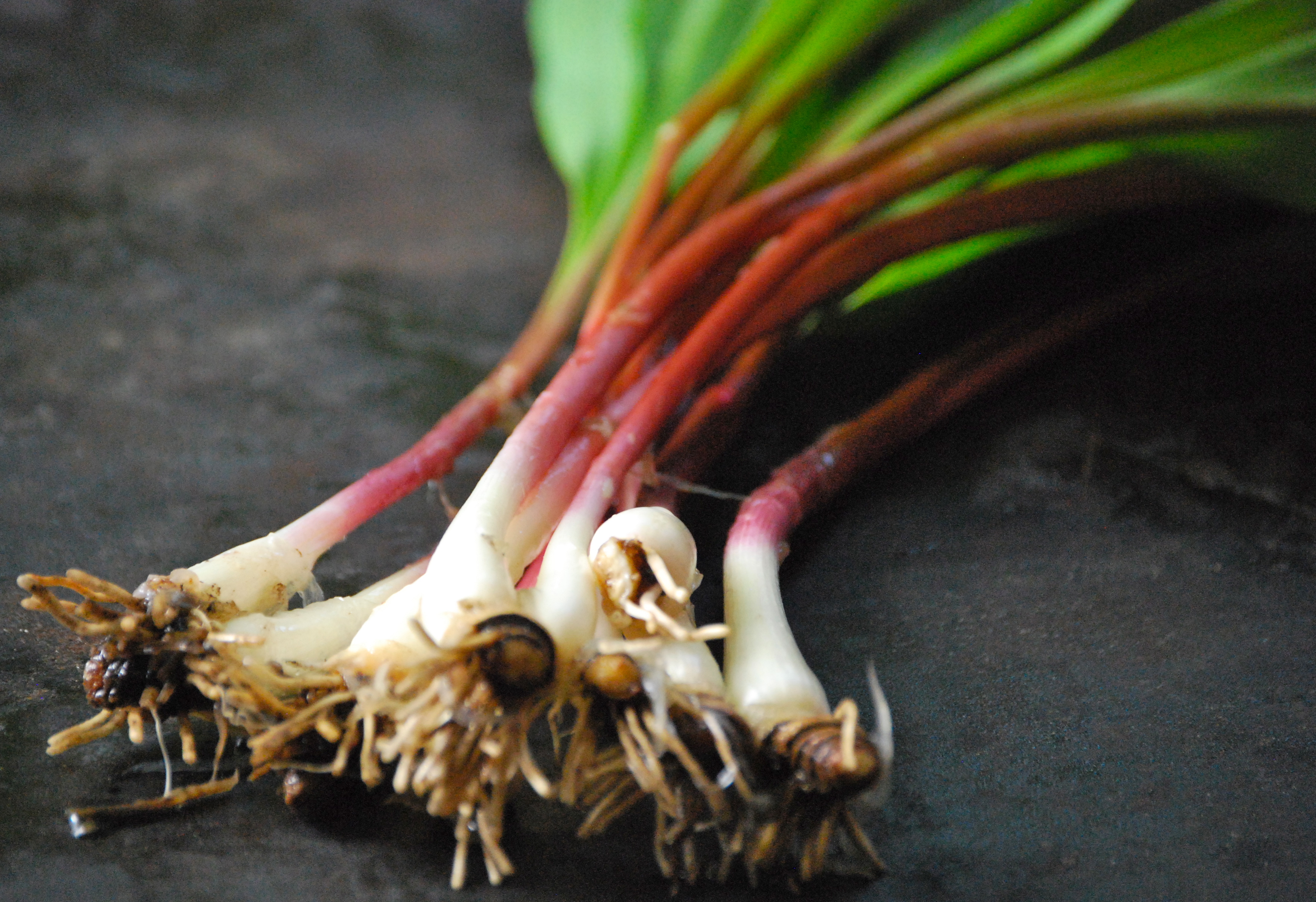
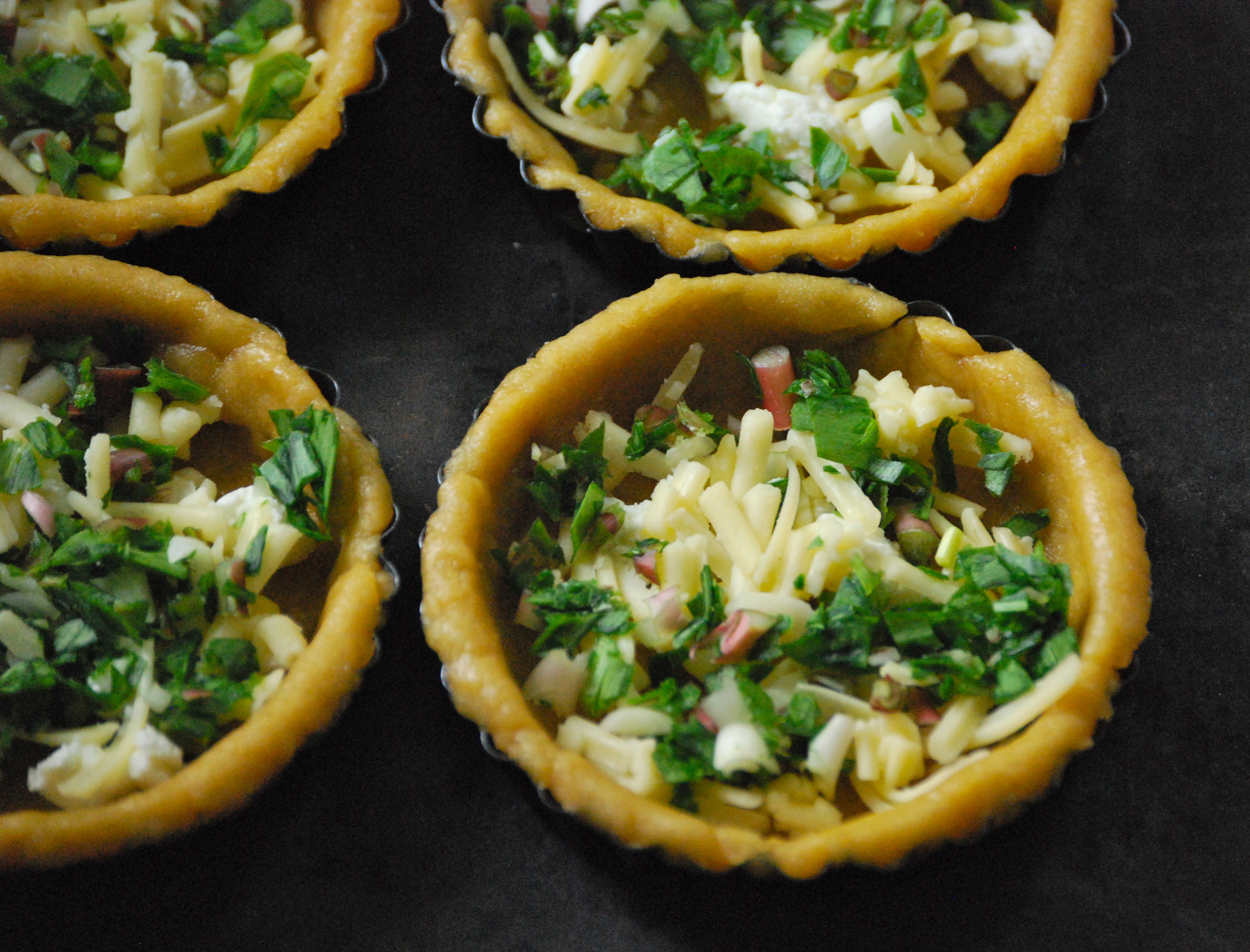
The savory filling contains ramps, gouda, and goat cheese.  That’s right, it’s ramp season.  Remember last year when I was so excited and made this ramp pesto?  Well, I’m just as excited this year– and Radd is again making fun of the fact that I talk about ramps far too much.  If you don’t recall, or are unfamiliar with them, ramps are basically a wild leek.  They taste a bit like green onions combined with garlic.  If you find them, buy and enjoy them right away.  They’re not in season for long.  If you can’t find ramps, substitute green onions or leeks with a couple cloves of garlic.  It will still taste amazing.  I love the combination of ramps and goat cheese, and in this dish it really shines.  The goat cheese is soft and pillowy as you bite into the tartlet, while the gouda melts into the creamy center.  Enjoy!

The Recipe:  Ramp and Goat Cheese Tartlets

(Makes six 4-inch tarts or one 9 – 10-inch tart)

For the Savory Tart Dough:

3/4 cup all-purpose flour

1/2 cup white whole wheat flour

1/2 teaspoon kosher salt

1/2 teaspoon granulated sugar

2 large eggs, lightly beaten

1/4 cup olive oil

For the Tart Filling:

about 1  1/4 ounces goat cheese, crumbled

about 1  1/2 ounces gouda, grated

3 ramps, chopped (about 1/4 cup plus 1 tablespoon)

4 eggs

1/4 cup heavy whipping cream

kosher salt and black pepper, to taste

To make the Savory Tart Dough:  Place both flours, salt, and sugar in a food processor and pulse a few times to combine.  Add the eggs and olive oil and pulse about 10-15 times until the dough forms a ball.  Remove dough and place on a lightly floured work surface.  Knead  3-4 times, careful not to over work the dough.  Wrap in plastic wrap and place in the refrigerator for at least 1 hour.   Can be made ahead and kept in the refrigerator for up to 2 days or frozen.  The dough will defrost quickly at room temperature when you are ready to use it.

Preheat oven to 400°F.  Position rack in the center of the oven.  If making tartlets, measure out the dough into 6 equal portions, about 1  7/8 ounces each.  Roll the dough in a circle 1-inch larger than the tartlet pan or just press the dough evenly into the pans.  Distribute the goat cheese, gouda, and ramps evenly between the 6 pans.  In a small bowl, combine the eggs and cream and pour over each of the tarts, careful not to over fill them.

Place tartlets on a baking sheet and put into the oven.  Bake for about 35 minutes, or until the crust is a deep golden brown and the filling is puffed and becoming golden brown, as well.  Serve the tartlets warm or at room temperature.  They keep well for about 3 days in a covered container in the refrigerator and can be reheated in a 350°F oven.  Serve with a dollop of creme fraiche, if desired. Enjoy!

Source:  Olive Oil Crust adapted from Nick Malgieri’s How to Bake

Thanks for stopping by!

Laurie
Read Full Post »


I seems like I’ve been preaching the ‘Spring vegetable gospel’ for the last few weeks.  I can’t help it.  That’s how excited I get about them.  For this dish, I decided to incorporate one of those Spring gems– fava beans.  They aren’t available for very long, so I grab them when I can.  Preparing fava beans is a little out-of-the-ordinary.  They need to first be shelled, then peeled.  Once you’ve removed the shells, boil for a few minutes and place them in an ice bath.  The light green peel then comes off easily.  It’s a bit of a process, but it’s worth it.  Fava beans are soft and delicious, and again, they’re versatile.  They’re perfect mixed into sauces, tossed into salads, or mashed into a fantastic bruschetta topping.

Fava beans are a great addition to the typical meat sauce like this one.  Here, they add an interesting texture, and pair wonderfully with the sweet Italian sausage and tomatoes.  I buy a local sausage that has plenty of seasoning, so I didn’t add much.  In fact, I didn’t use one grain of salt– the sausage and grana padano cheese added enough.  Test your sauce as you go, add seasonings and salt as you see fit.  I also didn’t have white wine on hand, but would have added a glug or two if I did.  Even my freezer wine stock was empty.  As an aside, you can freeze leftover wine in ice cube trays and add them to sauces as you need them.  Slick, huh?  For the pasta, you can use dry pappardelle, or if you want that silkiness of fresh pasta, use this recipe.  It’ll be more time-consuming, but the texture is amazing.  If you make it fresh, note that you’ll need to cut the pasta a bit wider than shown in the recipe.  Hope you give this pasta with fava beans a whirl.

The Recipe:  Pappardelle with Italian Sausage and Fava Beans

(serves 4)

1 pound fresh or dried pappardelle pasta (you can use this recipe for fresh pasta)

1 pound sweet Italian sausage

1 1/2 cups shelled fava beans

1/2 medium white onion, chopped (about 3/4 scant cup)

3 garlic cloves, finely chopped

1 teaspoon dried oregano

1 1/2 cups crushed canned tomatoes

2 tablespoons tomato paste

cracked black pepper

grated grana padano or parmesean-reggiano, for garnish

To begin, bring a small saucepan of water to a boil.  Once it is boiling, add the fava beans that have been shelled.  Boil for 1 1/2  to  2 minutes.  Remove from heat, drain, and immerse the beans into an ice bath (a bowl of cold water with ice in it).  Let cool in the water for a couple of minutes.  Next, remove the light green “peel” from the beans using your hands.  The fava beans will be dark green in color.  Set aside.

Bring a large pot of water to a boil for the pasta.  Meanwhile, begin making the sauce.  Heat a large skillet and add the Italian sausage to it.  When it is cooked, drain and discard any grease.  Add the onion and garlic to the pan of Italian sausage and continue to cook for a few minutes over medium-high heat until the onions start to become somewhat tender.  Add the tomatoes, tomato paste, oregano, and cracked black pepper.  Cook for a few minutes until the flavors have combined a bit and the sauce has thickened.  Add the fava beans and cook a few more minutes.  Taste the sauce and adjust the seasonings.

Add the pasta to the pot of boiling water when the sauce is nearly done.  Cook pasta until al dente.  Reserve a bit of the pasta water, in case you need to loosen your sauce with it.  Drain pasta and combine with the sauce.  Serve sprinkled with generous amounts of grana padano cheese!  Enjoy!

I hope you all have a wonderful weekend — do you have any big plans?  I’m looking forward to having some fun with my family and hopefully getting a chance to do some relaxing and a little cooking/baking.  See you next week!

Laurie
Read Full Post »

Before Radd and I had kids, there would be nights that we weren’t able to have dinner together.  School, work, and friends sometimes just got in the way of sitting down for a full meal with each other.  Now if I happened to be home on one of those nights, there was absolutely no doubt about what my dinner plan would be– egg salad.  Wild, right?

You see, I was never able to make egg salad for the both of us because– and I still don’t understand this– Radd despises hard-boiled eggs. To this day, I’m quite certain he would gag if he had to swallow a bite of egg salad.  Even more incomprehensible is the fact that he’ll eat eggs any other way.  He loves these pickled versions, and can even do this mollet version.  Why not regular?  Weirdo.  At any rate, I’ve always loved egg salad.  It’s creamy and so versatile.  I make it a different way almost every time.

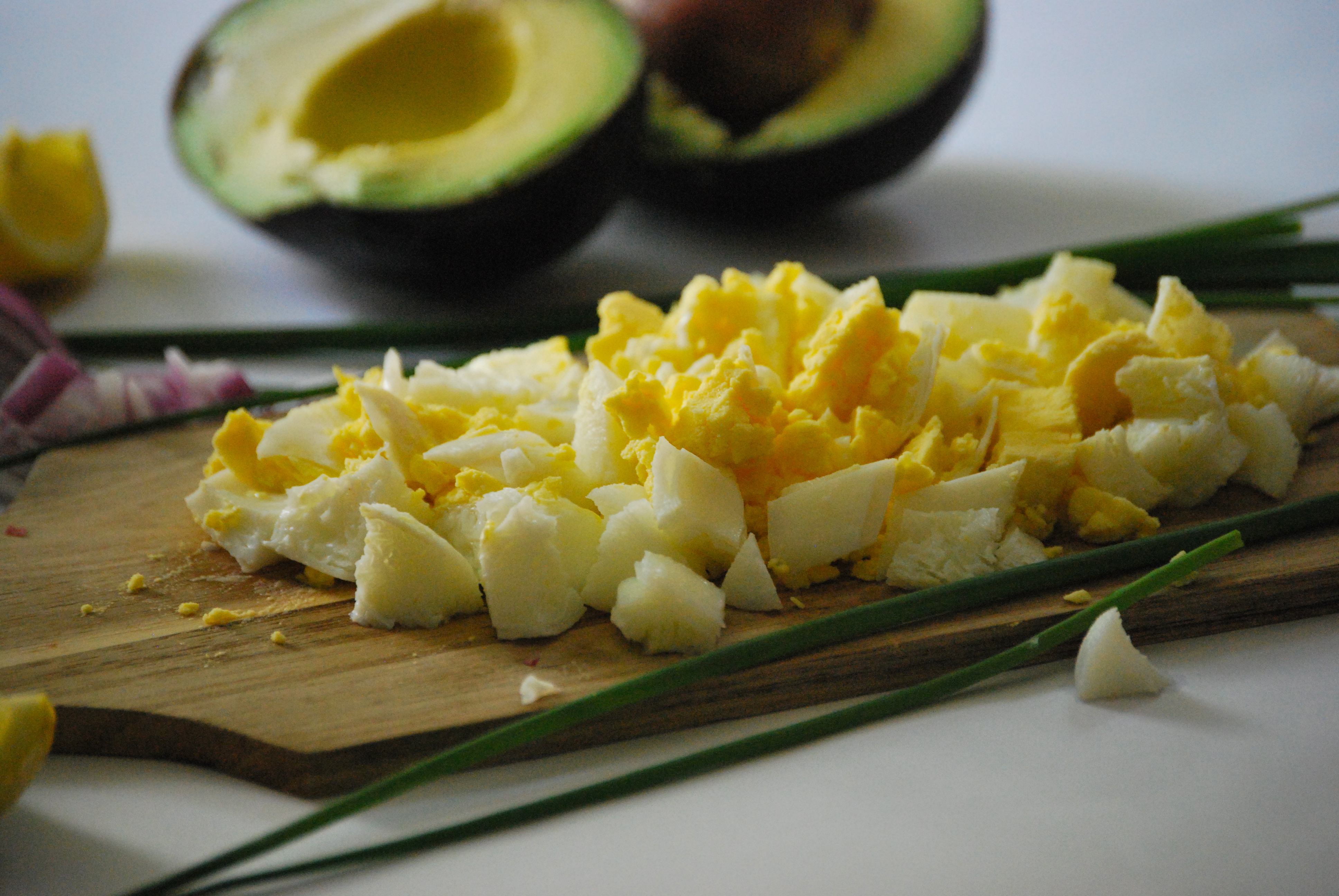
Here, I’ve swapped out mayonnaise for a mashed avocado.  Let’s be clear, I have no problem with a little bit of mayonnaise.  Especially the really good homemade stuff.  But, I love avocados so much, that I figured I’d incorporate them into a spread.  Plus, they are loaded with good fat that your body needs.  I like to keep the eggs diced and gently fold them in– nice for a bit of texture.  The avocado binds everything together wonderfully and adds such beautiful color.  This is comfort food– delicious, quick to prepare, and healthy.  And in case my constant urging for you to buy organic/local eggs hasn’t convinced you to do so quite yet — read this article.  Want another option?  Check out this fantastic recipe for Curried Egg Salad.

The Recipe:  Avocado Egg Salad

(Serves 1)

2 hard-boiled eggs, diced, preferably organic/local

1/2 ripe avocado, mashed

1 1/2 tablespoons red onion, diced

1 1/2 tablespoons fresh chives, finely chopped

juice of 1/4 of a small lemon

kosher salt and freshly cracked pepper

How to make perfect hard-boiled eggs:  In a sauce pan, place the eggs in a single layer.  Fill pan with cold water and make sure it covers the eggs by an inch.  Place pan on the stove and bring to a boil.  Boil for 1 minute.  Cover and remove from heat.  Set a timer for 10 minutes.  After 10 minutes, place eggs into an ice bath to stop the cooking process.

To make the egg salad:  In a medium-sized bowl, mash the avocado and some of the lemon juice together until creamy, add salt and pepper.  Remember you can always add more lemon juice at the end to get it to your desired consistency, but you can never take it out.  Gently fold in the egg, red onion, and chives.  Re-season with lemon juice, salt, or pepper, if necessary.  Feel free to add a jalapeño or sriracha sauce for a bit of heat.  Enjoy with arugula and whole wheat bread or by the spoonful!

Have a wonderful weekend, friends!

Laurie
Read Full Post »

As a blogger, I try not to write about dishes that other bloggers have recently covered.  Obviously, many of us are cooking with seasonal produce, so there’s going to be some ingredient overlap.  For other, more random foods that can be made everyday, I try to avoid imitation.  But every once in awhile, I come across something like these amazing tacos.  I first encountered these beauties on Pinterest, and knew I had to make them right away.  Aaand…they were incredible.  Really, really incredible.  So good that I figured I had to share them with you.

One of the strange paradoxes of Spring and Summer is that as the days get longer, our amount of free time for preparing meals gets shorter.  More time spent driving kids from one practice to the other.  More time trying to squeeze every last minute of fun out of warmer days.  These tacos are a nice solution to that time crunch.  You can put the meat in the crockpot in the morning or the night before.  As an aside, I find it odd that so many people think the crockpot is for winter cooking.  Who wants to turn on the oven in the middle of the summer heat?  I use mine as much, if not more, during the warm months.  And again, if you don’t own a crockpot, throw all the ingredients into a Dutch oven and braise.

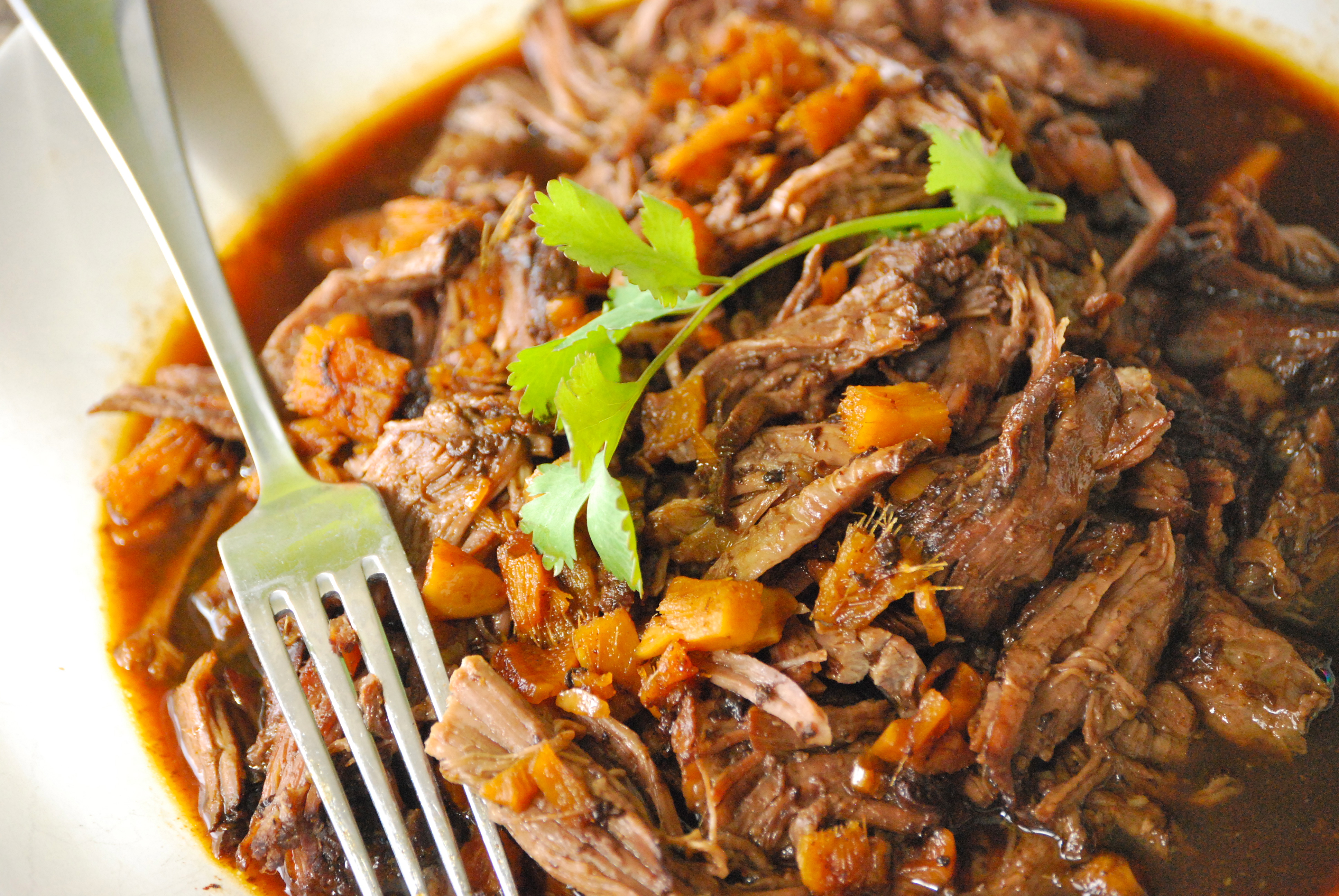
These Asian-inspired tacos taste amazing. The ginger and garlic mixed in with the subtle, sweet flavors pair perfectly with the beef.  I made these mildly spicy  for my kids, but feel free to add extra sriracha sauce for more of a punch.  I love the pickled cucumbers and red onions.  It’s a quick extra step that shouldn’t be avoided.  The pickled flavors are the final perfect touch to this  meal.  Hope you enjoy!

The Recipe: Asian-Inspired Beef Tacos with Pickled Vegetables

2 – 2  1/2 pounds of grass-fed beef chuck roast

1/2 cup water

3  1-inch knobs of ginger, finely chopped

4 – 6 cloves of garlic, rough chopped

3 tablespoons soy sauce

3 tablespoons rice vinegar

1 tablespoon sesame oil

1 tablespoon sriracha sauce

1/4 cup dark brown sugar

2 tablespoons fresh orange juice

For the Garnishes:

1 English cucumber, thinly sliced

1/2 red onion, thinly sliced

cilantro or green onions

lime wedges

about 1/2 cup white vinegar

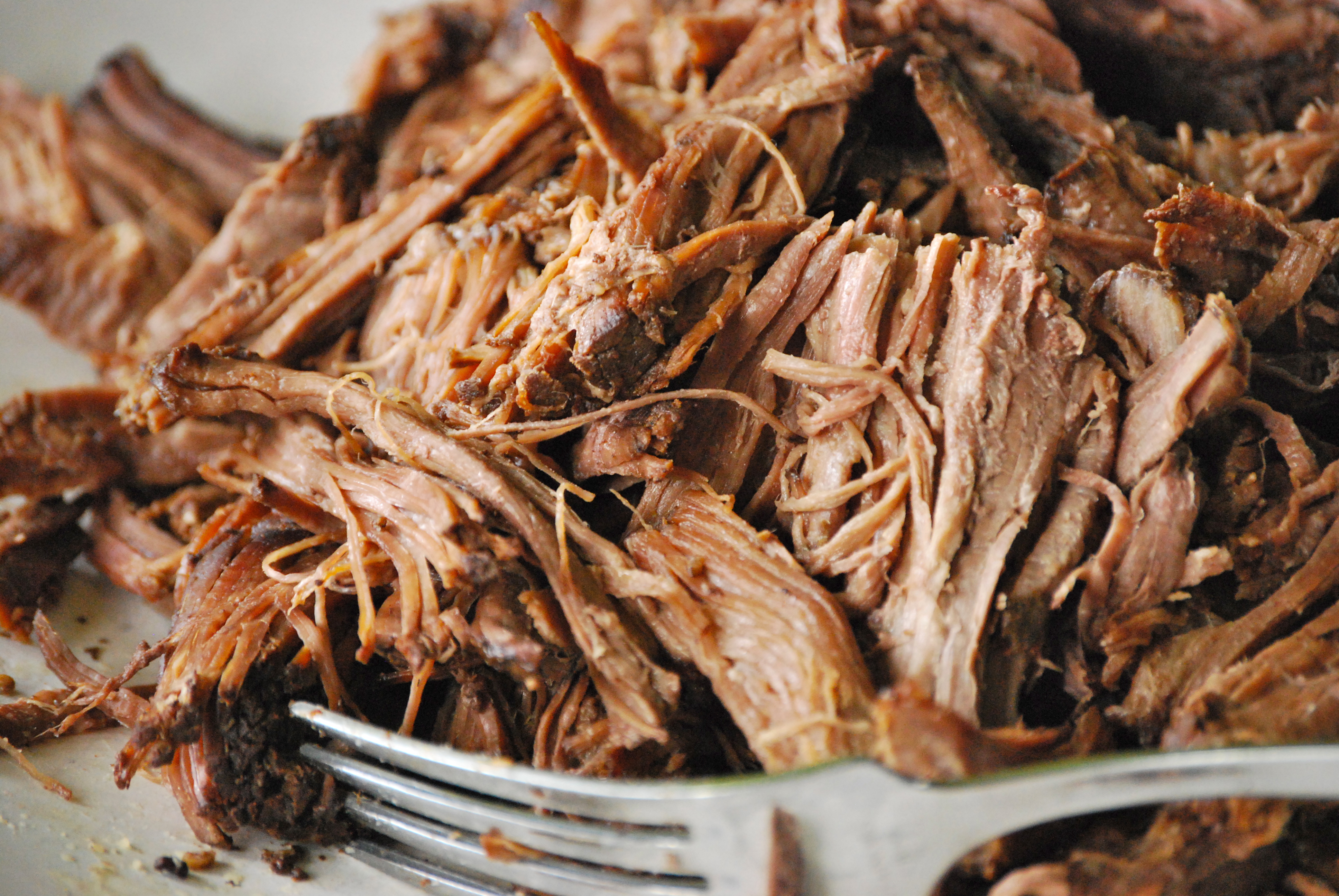
To make the tacos:  In a small bowl, combine the water, ginger, garlic, soy sauce, rice vinegar, sesame oil, sriracha sauce, brown sugar, and orange juice.  Place the chuck roast in a crock pot and pour the mixture over it.  Set the crockpot to low and leave on overnight.

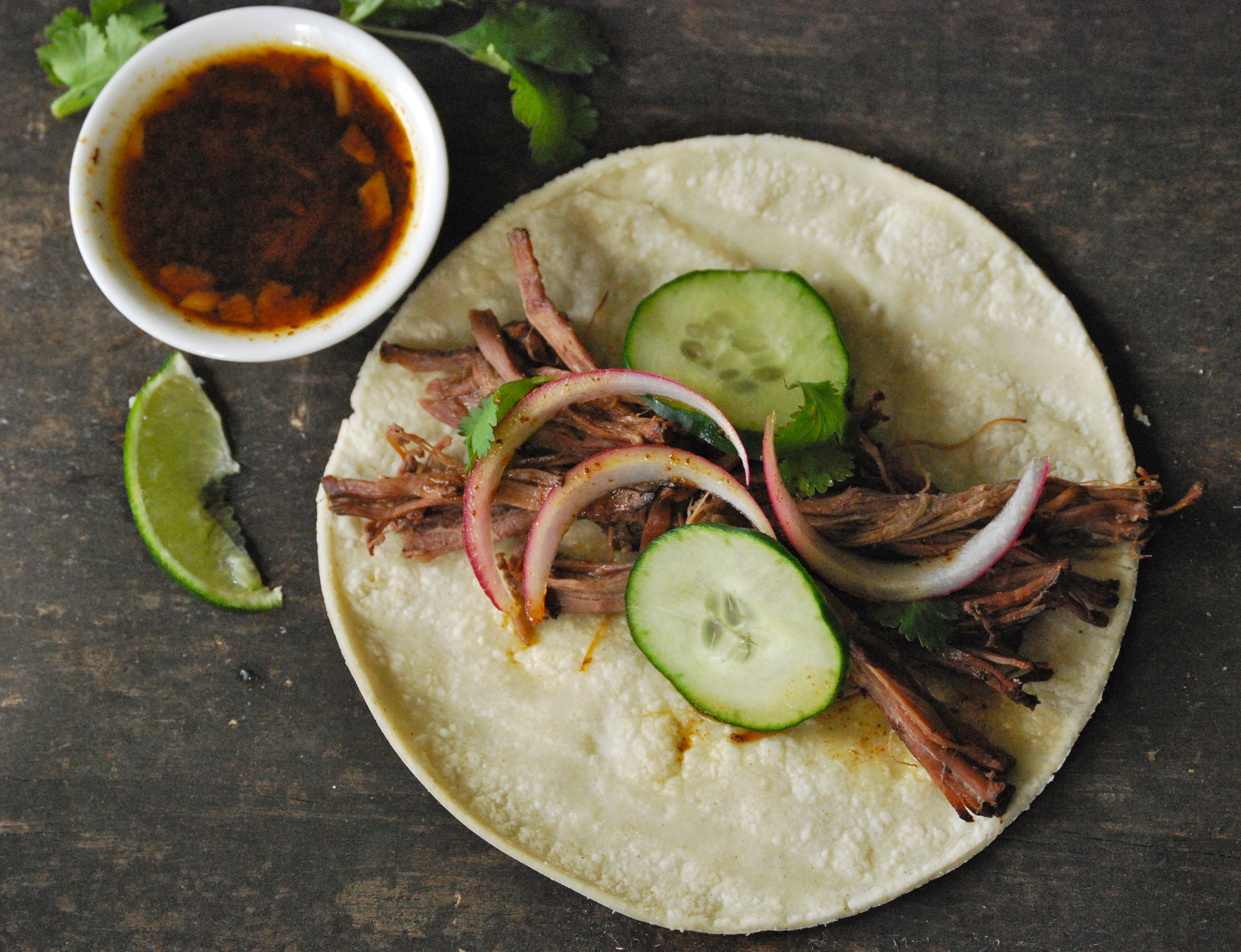
In the morning, remove the chuck roast,  place on a plate, and wrap in aluminum foil.  If time allows,  place the liquid from the crockpot into the refrigerator or freezer for about a half hour.   The fat will harden and be easy to remove.  Otherwise, spoon out as much fat as you can.  Place liquid (don’t strain) into a small sauce pan and simmer until it has reduced a bit.  Re-season, if necessary.

Meanwhile,  place the sliced cucumbers and red onion into a small bowl.  Pour enough white vinegar over them so they are covered and let them sit for a bit to “pickle”.  After a while,  use two forks and shred the chuck roast.  Pour the reduced sauce over the meat.  Serve with tacos shells,  pickled cucumbers and red onions, cilantro, and limes.  Enjoy!

Source:  Adapted from Confections of a Foodie Bride

Thanks for stopping by Relishing It today!  See you soon.

Laurie

Read Full Post »

This is one of my family’s favorite weeknight meals.  It’s quick, easy, pretty healthy, and best of all it tastes fantastic.  The pea and mint combination is so refreshing– it’s perfect for this time of the year and will remind you of Spring.  Ideally, I like to use fresh peas in this dish, but frozen ones make an exceptional alternative.  And the little salty bites of crisp, smoky bacon are a nice contrast to the fresh flavors.

Now I love a good, rich carbonara– really, I do.  But this dish is not thick and creamy.  This is a much lighter version that contains very little cream and only one egg.  Despite this, it works remarkably well.   I reserve the heavy version for an evening when I feel like being a bit more indulgent,  but for our everyday meals, I cut back significantly.  The key to this recipe is to remember that it’s really just an outline.  Use as much bacon, mint, peas, and parmesan cheese as you like- it’s a matter of personal taste.  My family loves peas, so we use an entire package.  You can certainly add more parmesan, as well.  Just remember to loosen the pasta with reserved pasta water to get the level of creaminess that you want.  And most importantly, be ready to eat this dish immediately.  The creaminess will not last long, so it’s best served right away.

One last thing:  be sure to enter my cookbook giveaway I’m having to celebrate Relishing It’s First Anniversary– enter here!

The Recipe: Whole Wheat Pasta Carbonara with Bacon, Peas, and Mint

(Makes 4 servings)

1  pound of whole wheat spaghetti or linguine

1 10 ounce package of organic sweet peas

6-8 slices bacon, or more to taste

handful of grated parmesan or grana padano cheese (about 1/2 cup)

about 1/4 cup chopped fresh mint

1 large organic egg lightly beaten with 1/4 cup organic heavy cream

a few grates of fresh nutmeg

Cook the bacon in a large skillet until crisp.  Remove from pan and wipe pan clean with a paper towel.  Chop the bacon and set aside.   In a small bowl lightly beat the egg, cream, and nutmeg together.  Set aside.  Meanwhile, cook the pasta according to directions on package.  Add the peas into the hot water when the pasta is one minute from being “al dente”.  Reserve one cup of the pasta water.  Drain pasta and peas and pour into the skillet the bacon was cooked into.  Pour the egg/cream/nutmeg mixture over the hot pasta and toss with thongs.  The hot pasta will cook the egg.  Add a bit of the reserved pasta water to loosen the pasta more, if you desire.  Sprinkle the parmesan over the pasta.  Top with the chopped bacon and chopped mint.  Eat immediately!  Enjoy.

Source:  Adapted from Jamie Oliver’s Jamie’s Dinners

Thanks for stopping by!

Laurie

Read Full Post »

Alright, I’m salivating looking at the pictures of this unbelievable mole-inspired pork shoulder (MOLE-lay).  You see,  I often blog at night before I go to bed, which means I’m just starting to get hungry.  It’s been a few days since we had this delicious meal, but now I’m thinking that I may have to make it again this weekend.  I’m not sure I’ll be able to prepare pork shoulder any other way (that might be a lie, but dang– it’s really amazing!).

I love the varied spice combination here.  Combining the cocoa and cinnamon, along with the pork works perfectly– they compliment each other so well.  We were able to enjoy two meals out of this one pork shoulder.  The first time we made shredded tacos served with chunks of avocado and lime.  Wowzer!  Then we made these fantastic savory cornmeal cakes to go with it the next night.  The cakes were perfect, they were substantial and best of all, had that nice ‘toothsome’ bite.  The flavor of the cornmeal was a nice base for the the intriguing mole flavors.

A few things to consider when you make this.  Sometimes it’s difficult to get the exact amount of meat listed for recipes.  If you can’t find a 2 1/2 pound pork shoulder, or would just like to make more (because the leftovers are fabulous) just get a bigger one.  Increase the amount of the seasonings a little, and cook it a bit longer.  It’s not a big deal at all– one of the joys of cooking is getting confident enough to make changes and substitutions as needed.  Remember, it’s just food.  Take control of it and make it your own.  Enjoy the pork shoulder on either the cornmeal cakes or as tacos.  They’re brilliant!

The Recipe: Mole-Inspired Roasted Pork Shoulder with Crackling Cornmeal Cakes

For the Mole-Inspired Pork Shoulder:

1 tablespoon chili powder

1 teaspoon smoked paprika

1/2 teaspoon natural cocoa powder

1 teaspoon dark brown sugar

1/3 teaspoon ground cumin

1/2 teaspoon ground cinnamon

1/4 teaspoon dried oregano

1/2 teaspoon granulated sugar

1 tablespoon kosher salt

2 1/2 pounds pork shoulder, (bone-in or boned are both fine), trimmed of fat

1 head of garlic, broken into cloves, peeling is optional

In a medium sized bowl, add all of the dry ingredients.  Stir with a spoon, or use your fingers like I do, until thoroughly combined.  Place pork shoulder on a plate and rub the spice mixture all over it.  Let sit at room temperature for 1 hour, or in the refrigerator for 2 – 24 hours.

Preheat oven to 275°F.  Place the pork shoulder in a Dutch oven, or a similar pan of some sort that is deep and has a lid.  (If you don’t have either, you can also wrap the pork shoulder in aluminum foil, making sure the seam is at the top, so the juices don’t seep out.  Then place in an oven-proof skillet or casserole.) Add the garlic cloves to the pan.  Place a sheet of aluminum foil over the top of the Dutch oven and then place the lid securely on it.

Roast the pork until it is very tender and falling off of the bone, about 2 hours.  When it is done, transfer to a platter and cover with foil.  Defat the juices by putting them in the freezer for 10 minutes and then spoon the fat off with a spoon.  Shred the pork with two forks and pour the juices over the top of them.

Crackling Cornmeal Cakes

(makes about ten to twelve 2-inch cakes)

1 teaspoon kosher salt

1 2/3 cups coarse cornmeal

1/3 cup all-purpose flour

2 teaspoons baking powder

1/4 teaspoon baking soda

1 cup buttermilk

2 eggs, lightly beaten

2 tablespoons melted butter, plus more for the pan

In a large bowl, whisk the dry ingredients together until combined.  Stir in the buttermilk, eggs, and melted butter.  (Add more or less buttermilk depending upon if you prefer your pancake thick or crispy.)

Heat a large skillet over medium heat and brush the surface with butter.  Pour the batter onto the pan, 2 tablespoons at a time works well.  Cook the cakes until they bubble at the surface and set and the edges on the underside are brown.  Flip them and continue to cook.  Repeat until all of the batter is gone, making sure to butter the pan each time.  Serve as soon as they are done, or keep warm, covered with tea towels in an oven warmed to 200°F.

Serve the pancakes smeared with sour cream and piled high with the mole-inspired pork shoulder.  A squirt of lime juice and a few sprigs of cilantro will complete the meal nicely.  Enjoy!

Source:  Adapted from Sally Schneider’s the Improvisational Cook

Thanks for stopping by Relishing It today!

Laurie

Read Full Post »

« Newer Posts - Older Posts »