Feeds:
Posts
Comments

Garlic Habanero Hot Sauce | Relishing It

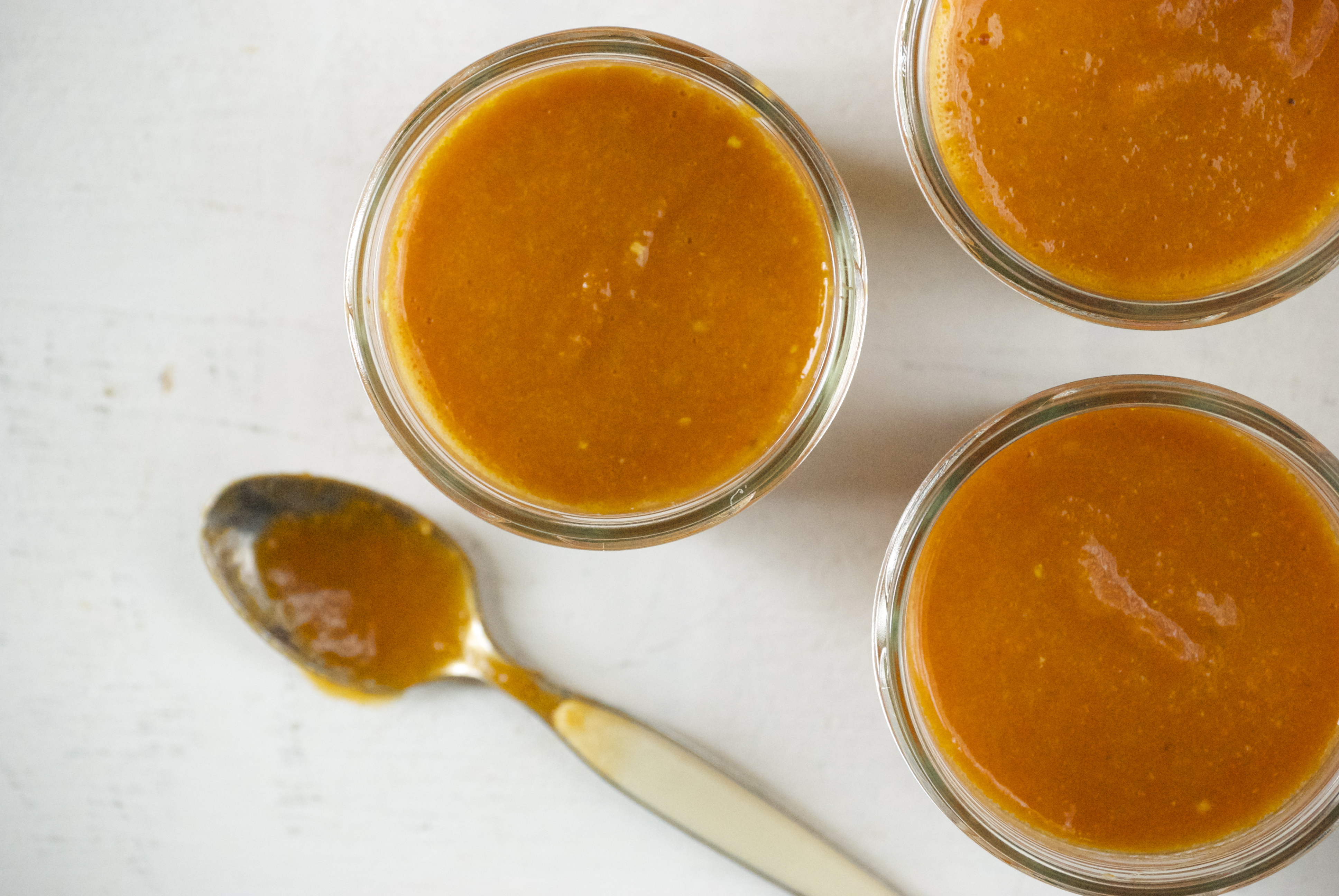
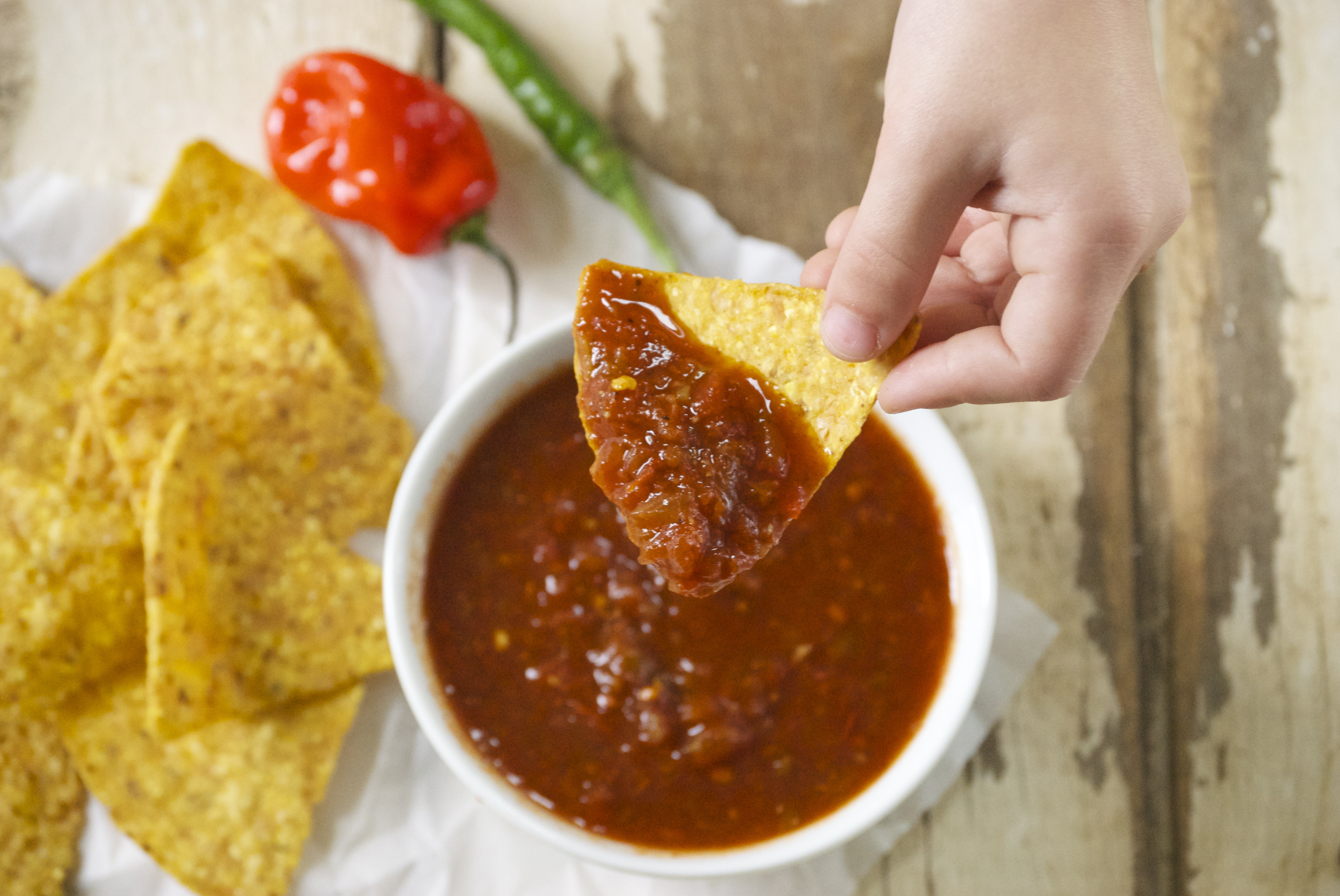
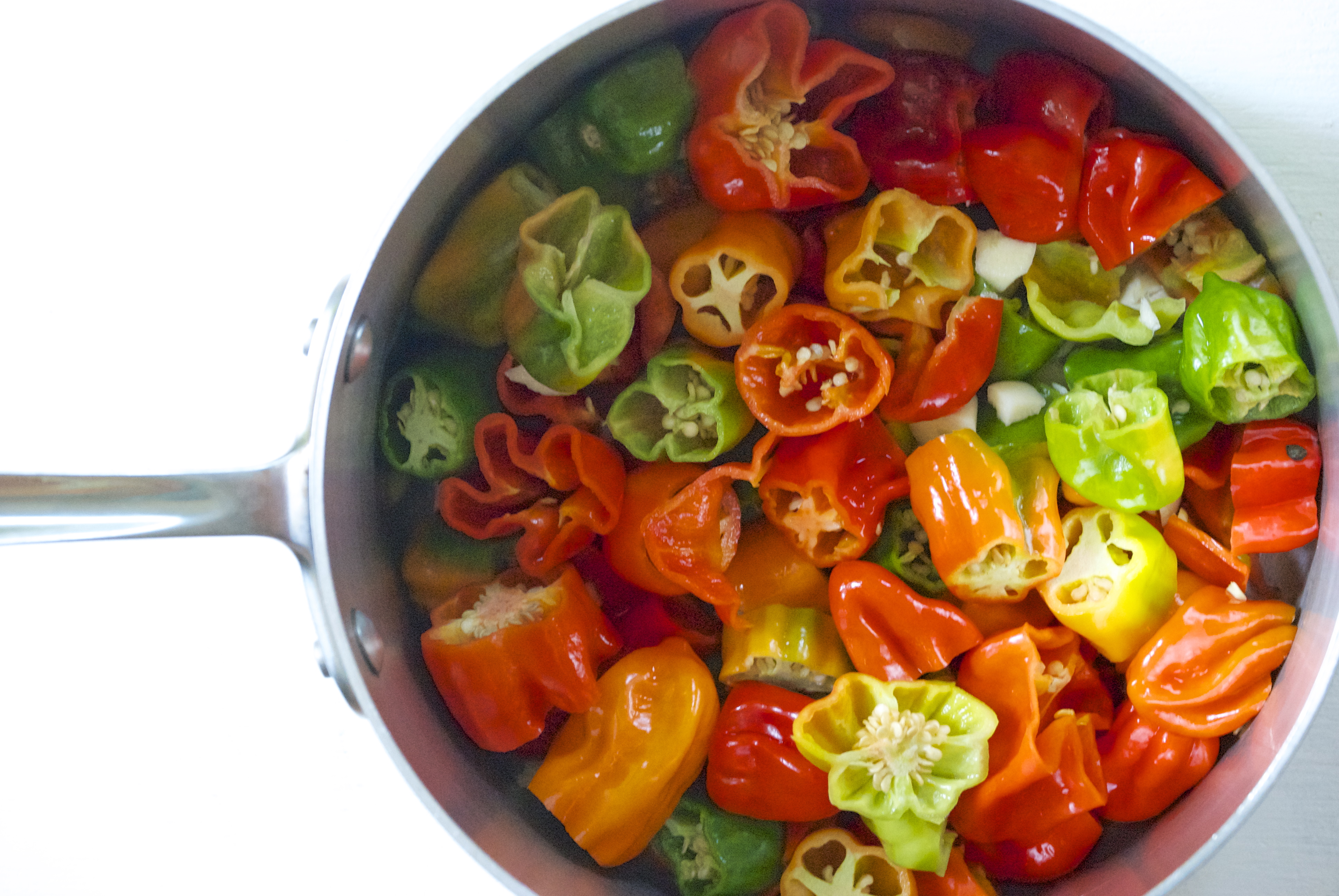
There’s a fair chance that our household goes through more hot sauce than any other in the Twin Cities.  I often wish it was sold in vats, rather than puny little bottles.  Speaking of those bottles, we have no fewer than six different kinds of hot sauce in the refrigerator.  And I’ve just added a seventh– my own.  I knew I wanted to make hot sauce this year, and I was initially interested in making a fermented version.  But after talking to a vendor at our farmers market (and I love his unfermented styles), I decided to forge ahead and make a fresh super-spicy version.

Garlic Habanero Hot Sauce | Relishing It

This hot sauce is not for the timid.  It will make you tough or else destroy you.  The primary pepper is the amazing habanero.  I just love it’s unique, sweet, flavor.  With the first bite, it plays nice, and you think, “That’s not so hot.”  But then the burn starts to build.  Of course, you keep eating because it tastes so good, and while the heat is ratcheting up, you think you can handle it.  You start sweating, thinking maybe you should go grab a glass of milk, but no, just one more bite.  And then your face melts off.  That’s this hot sauce.

Garlic Habanero Hot Sauce | Relishing It

Obviously this recipe isn’t for everyone.  But, for those of you who enjoy a good habanero hot sauce, it’s pretty darn amazing.  It has a nice balanced combination of the sweet habanero flavor, a bit of garlic, and vinegar.  It’s also really easy to make.  I decided against making a canned version, instead opting for something that will keep for a while in my refrigerator.  I haven’t tracked down any cute little hot-sauce bottles in the area yet (hence the jars you see here), but I found some on Amazon that are going to work marvelously.  Enjoy!

Garlic Habanero Hot Sauce | Relishing It

The Recipe: Garlic Habanero Hot Sauce

(makes about 3 cups)

1 pound fresh habanero peppers

1 – 1 1/2 bulbs of fresh garlic, peeled and chopped

2 1/4 – 2 1/2 cups white vinegar

1/2 teaspoon kosher salt

Note: Working with habaneros is serious business.  Use plastic or latex gloves, if you have them.  Be careful of what you touch.  Also, be mindful of how close you breath-in near the chopped peppers– or coughing will ensue.

Carefully remove the stems from the habaneros and chop them, seeds and all.  Place the habaneros, garlic, salt, and 2 1/4 cups of white vinegar in a large saucepan.  Cook the habaneros on medium/high heat for about 30 minutes, or until the peppers feel a bit soft to the touch  (note: be cautious when removing the lid to check the peppers).  When they are soft enough, place the mixture into a blender, or food processor.  Blend until smooth.  Taste.  If you still want a bit more tang, add the remaining 1/4 cup of vinegar.  Place in jars or bottles and store in the refrigerator.  Enjoy!

Thanks for stopping by Relishing It!

Laurie

Perfect Canned Summer Salsa | Relishing It

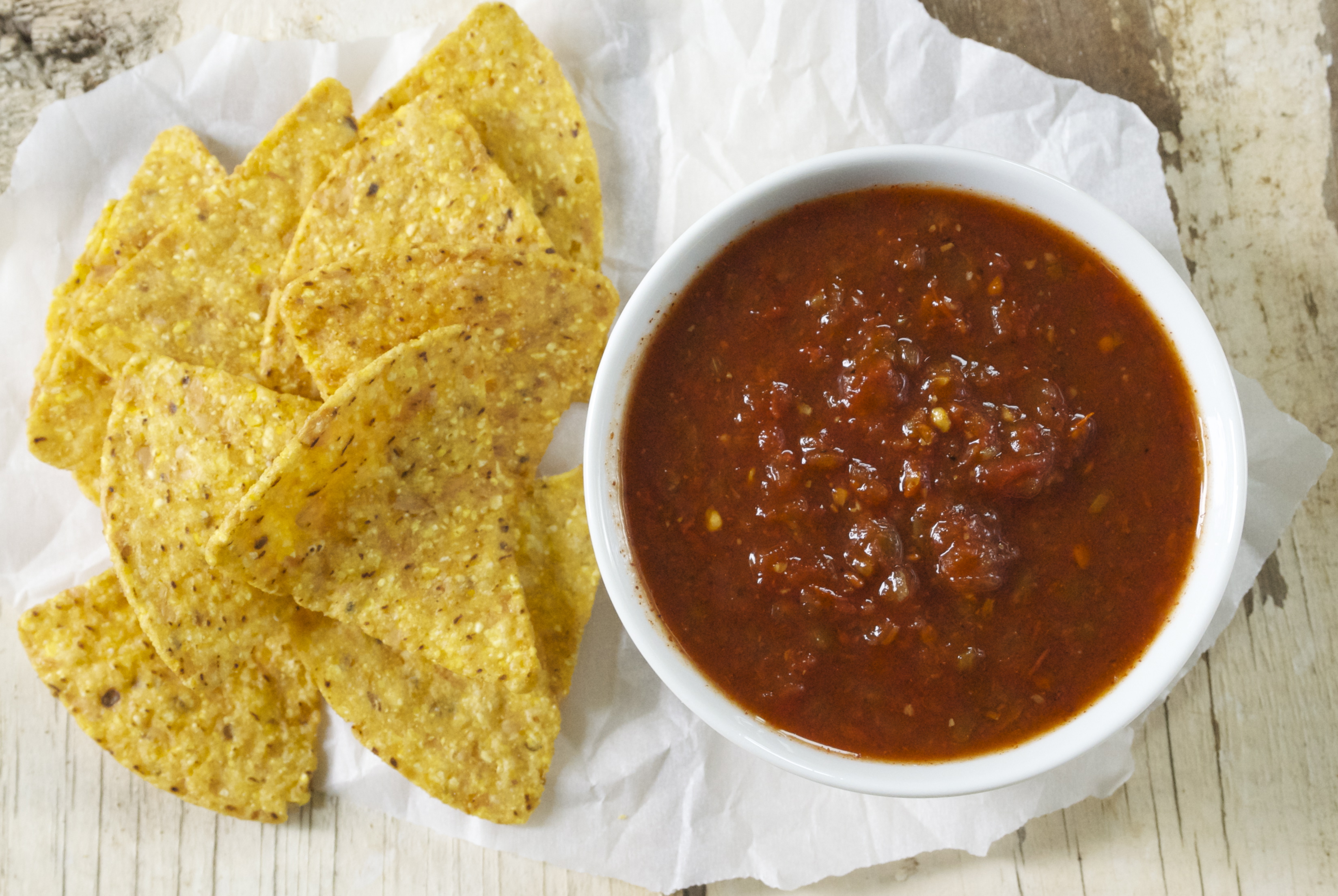
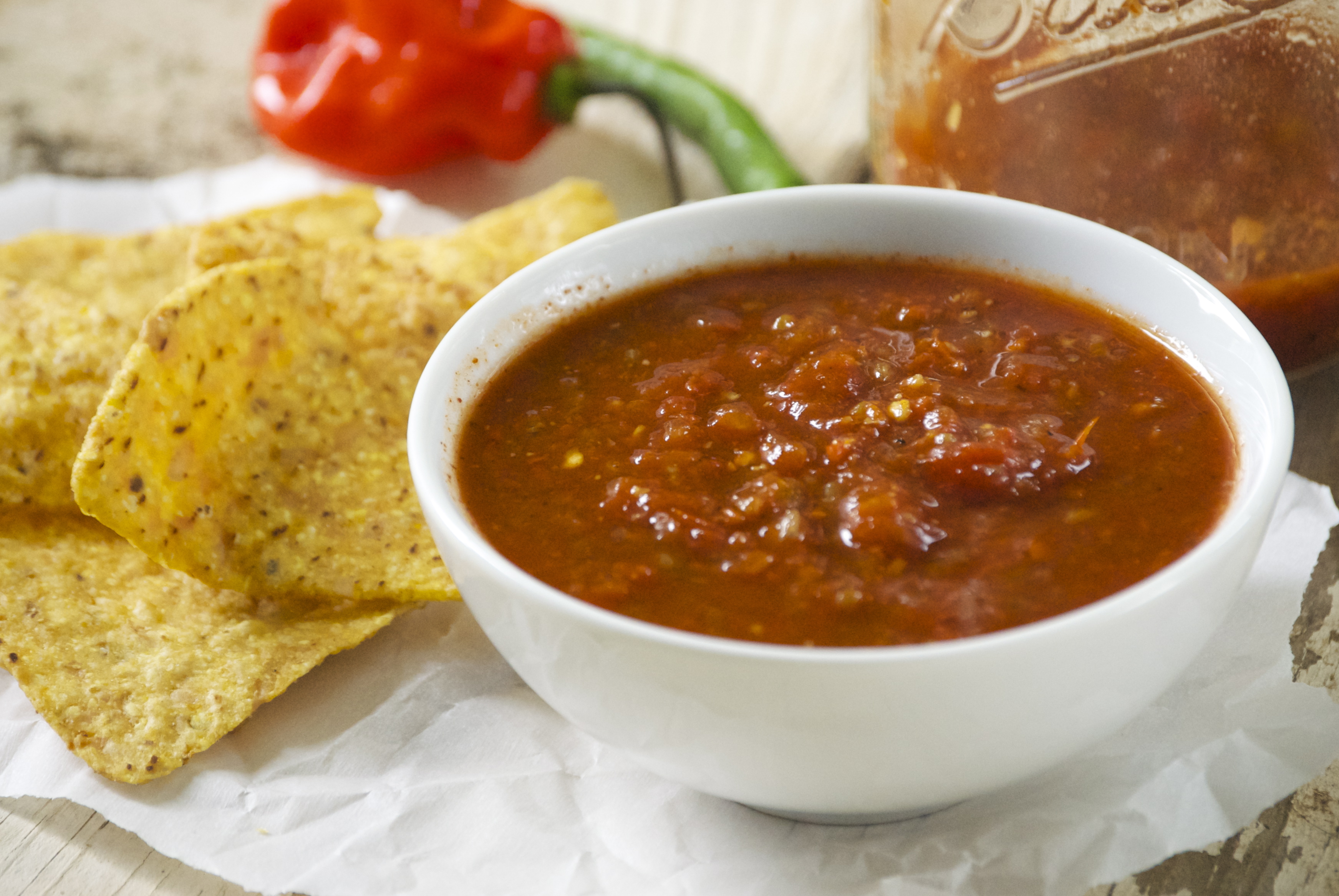
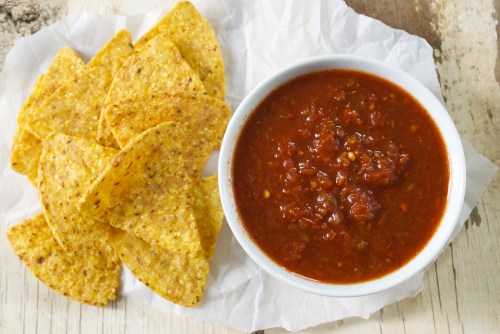
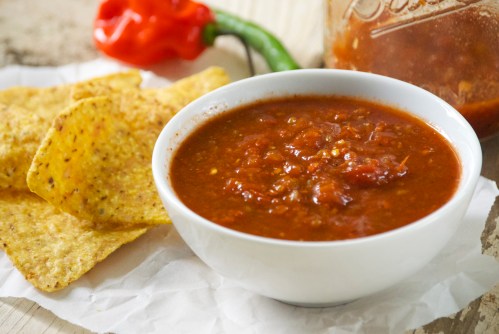
Alright everybody, this post has been a long time coming.  We have here one of my most cherished recipes.  It’s the salsa that causes me to miss out on the first few weeks of fall.  I’m busy chopping tomatoes and canning so many batches that I don’t get a chance to get out and enjoy the beautiful weather.  Sounds a bit exaggerated, I know.  But, it’s not.  Now don’t let my canning-in-bulk experience deter you from making this wonderful salsa.  Obviously you need not make as many batches as I do, and realistically you should be able to get everything done in one sitting.  That is, until your friends and family get a taste of it…

Perfect Canned Summer Salsa | Relishing It

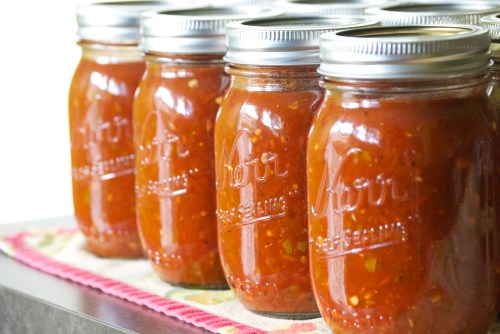
I know that was a bit of bragging, but the truth is, nearly everyone I’ve share this salsa with has loved it.  I started small, giving a few jars here and there to family.  Then friends had a chance to sample it at get-togethers, and suddenly I was spending a few weeks every September in the kitchen making batch after batch.  Even now, I inevitably run out of jars to give away by winter’s end.  For me, all the time spent with boxes of tomatoes and piles of peppers is worth it.  I like to share–it’s like giving a little part of myself to those closest to me.  Sometimes, the easiest way for me to say I care is through food.
Perfect Canned Summer Salsa | Relishing It

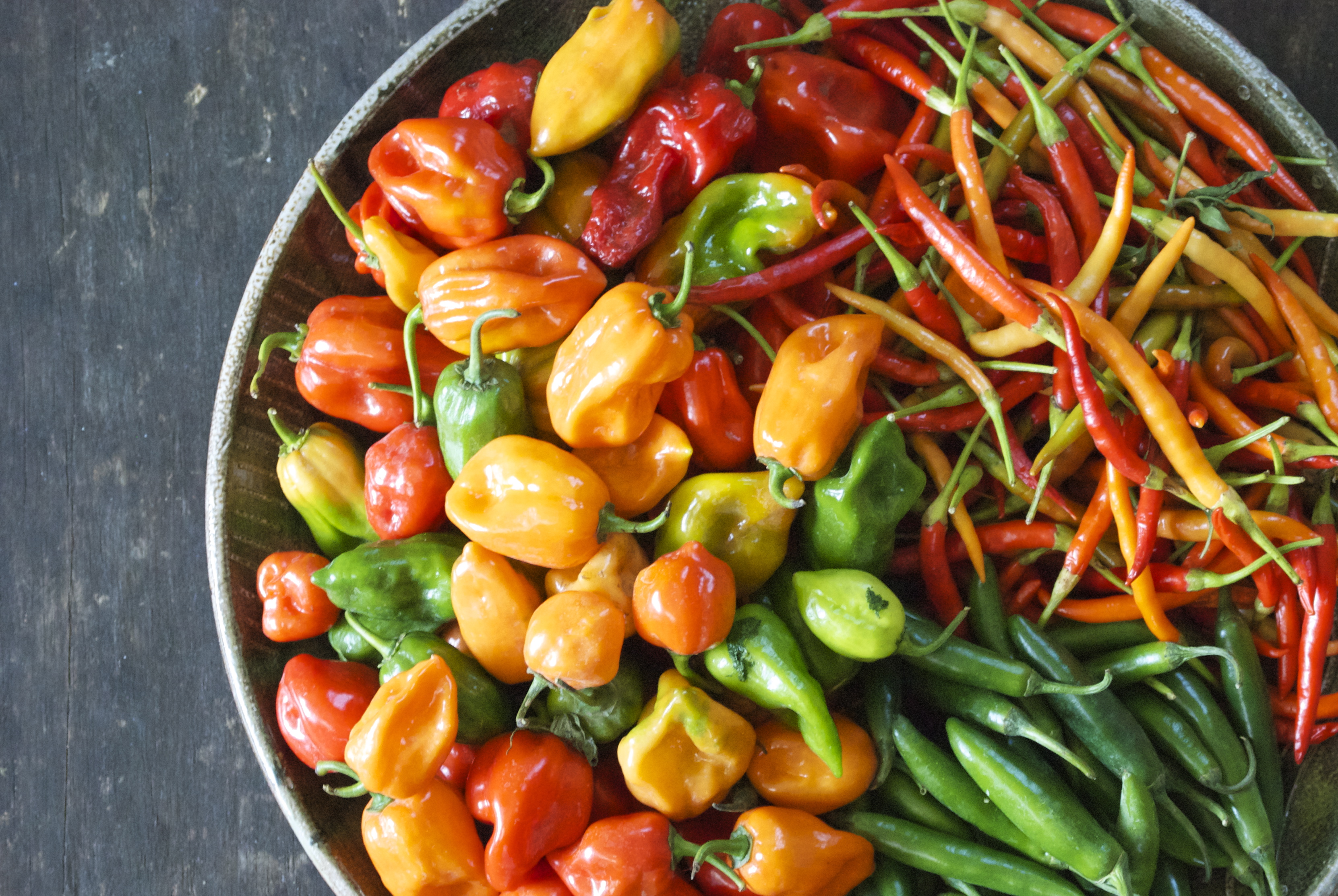
I started making a version of this salsa years ago– Radd’s aunt shared her base recipe with me.  Over time and many, many experimental batches, the recipe evolved into what you see here.  As you likely know, we like things spicy in our house.  For those less-courageous friends, as well as our kids, I make a much milder version.  The point is, you really have full control over how fiery you want this salsa to be.  If you have questions on how much heat a specific type of pepper adds, take a look here for comparison.  This year I made my mild version, but for my hotter “Inferno” batches I used a pile of habaneros.  And this weekend I tracked down some Bhut Jolokia “Ghost” peppers  (1,000,000+ Scovilles!) for a batch that I hope will be face-meltingly hot for my husband, who is crazy.
Perfect Canned Summer Salsa | Relishing It

Aside from control of the heat, you can also vary how chunky you want the salsa to be.  Over the years I’ve changed my method.  I used to roughly chop everything and then use an immersion blender at the end for a very smooth texture.  More recently, I’ve stopped doing that, since I like my salsa to have a few more chunks.  Instead, I pulse everything in the food processor before cooking it.  It cooks down to the perfect consistency for my taste.  If you don’t have a food processor– you can just chop, chop chop!  To be honest, the bulk of the work in making salsa is chopping the ingredients– the rest is a waiting game.  Waiting for it to become the right consistency.  Waiting for it to process in the water bath.  All in all, it generally takes me about 3-4 hours from start to finish.  But it’s well worth the time.  Especially when you get to open up a jar and settle in front of the t.v. during a January snowstorm.

Perfect Canned Summer Salsa | Relishing It

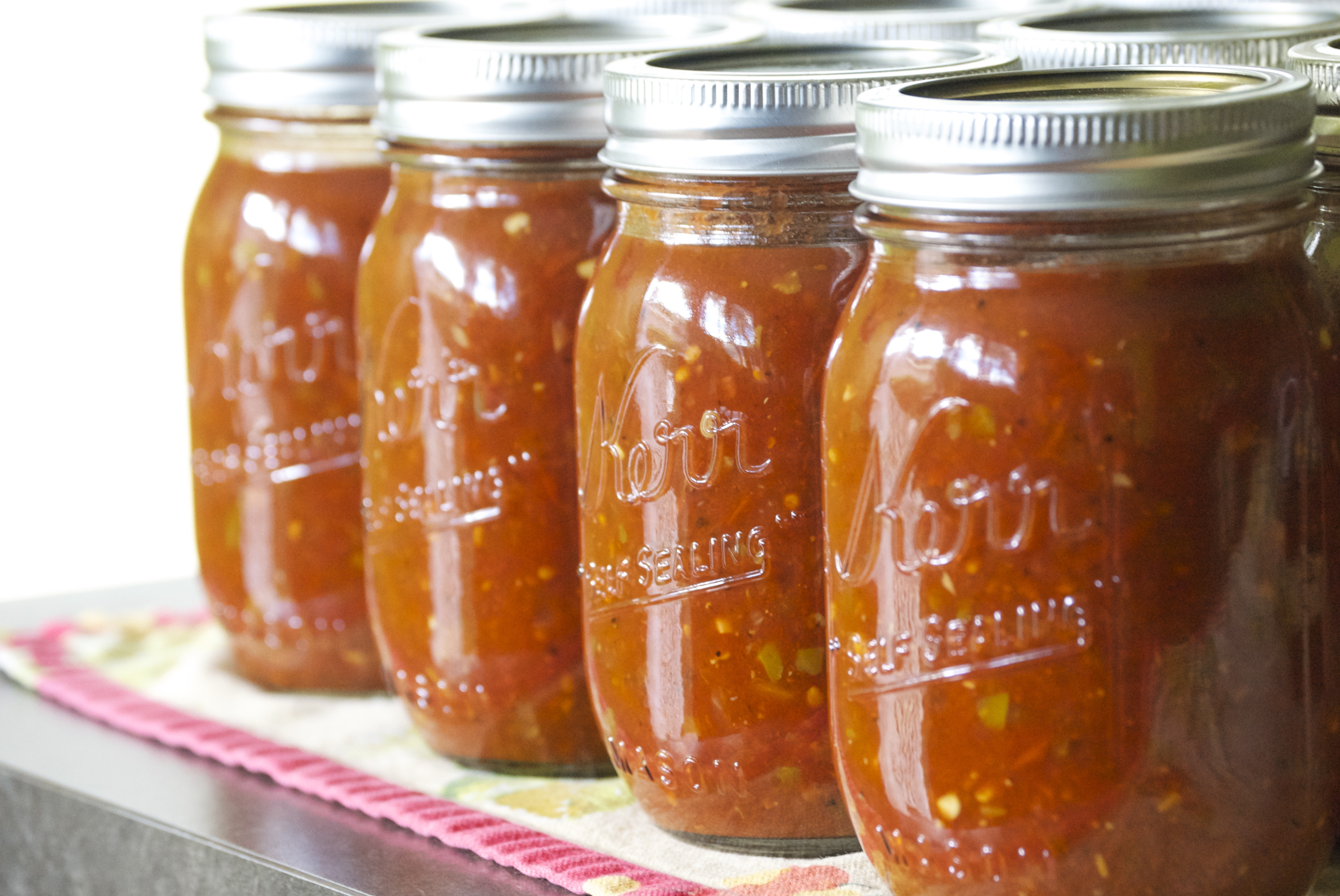
Just a few notes on preserving your salsa.  Since this recipe is my own, it obviously doesn’t come from a canning website.  Canning is a big responsibility.  It’s not difficult, but there can be risks.  I’ve poked around the internet to compare this recipe with others for safety purposes.  The amounts and ratios of vinegar, tomatoes, and peppers is typical of many from canning sites.  I’ve made my salsa this way for about 15 years and have never encountered a problem.  Even so, if you do have any concerns, I suggest taking a look at one of the many websites and blogs devoted to canning.

Perfect Canned Summer Salsa | Relishing It

So, for those of you who have been patiently waiting for me to share this recipe– here you go!  I hope you love it so much that you make batches upon batches for your family and friends, as well.  Cheers.

The Recipe: Perfect Canned Summer Salsa

(makes about 14-15 pints.  Though I generally get different amounts each batch.  Much will depend on the water content of your tomatoes and how long you cook the salsa.)

16 cups chopped tomatoes  *measured in a liquid measuring cup after they have been through the food processor  (about 8 pounds) I use big, huge canning tomatoes– no need to peel them

3 large green bell peppers, chopped

3 large white onions, chopped

2 bulbs of garlic, chopped  (not 2 cloves–2 entire bulbs!)

hot peppers, seeds too  (to your liking)  *See Note

5 tablespoons ancho chili powder

3 tablespoons canning salt

3 tablespoons granulated sugar

2 tablespoons coarsely ground black pepper

2 teaspoons smoked paprika

1/2 teaspoon of EACH of these:

ground cumin, onion powder, garlic powder, and oregano

1 cup plus a splash extra cider vinegar

15 ounce can of plain tomato sauce- preferably organic and definitely without added sugar  (Muir Glen works well)

Note:  You can make this salsa as hot or as mild as you want.  I would suggest using about 3 jalapeños for a mild version.  I chop the seeds and all.  It won’t be spicy, but the jalapeños will give it a great flavor.  For our favorite version that we call “Inferno”, I use: 12 habaneros, 5 jalapeños, 12 chilis, and 8 serranos.  If you do enjoy hot salsa, I would encourage you to seek out some habaneros, as their unique, almost sweet-like flavor cannot be beat.  When working with the very spicy peppers, it is a good idea to use plastic or latex gloves, if possible.  Be very careful about what you touch.  Also, be careful about inhaling too closely to the chopped peppers.  

Note: Jars and rims can be re-used over and over again.  Lids (the flat piece with a glue-like substance)  needs to be replaced every time you can something.  

You will need:  A very large heavy-bottomed canning kettle to hold all of the chopped ingredients.  Another very large kettle (or two) to process the filled jars of salsa, and hopefully a rack to set on the bottom of it (though you’ll be fine without, too).   A small saucepan to boil the lids and tongs to lift them out of the hot water.  A ladle to fill the jars.  A jar lifter, to remove the processed salsa from the hot water bath.  Paper towels, for wiping the edge of the jars clean.  15-16 pint jars with lids and rims.

Let’s get started!  Use a food processor (or a knife and cutting board) and pulse each type  of vegetable separately.  I do mix the onions and garlic together.  You will not want large chunks and you will not want it finely puréed, but something in between.  Place all of the ingredients for the salsa into a large heavy-bottomed kettle and stir.  Bring to a boil, then reduce heat to medium (uncovered) and let cook for about an hour (or more), or until it is your desired consistency.  It should be bubbling, but not at a rolling boil.  You may need to cook it longer to get it as thick as you want it.  A lot will depend on your tomatoes and their water content.  Make sure to stir frequently, to avoid scorching.

Meanwhile, fill a large canning kettle (or two) halfway full of water and begin to heat.   You will be using this to give your filled jars a hot water bath.  I used to use two smaller kettles for this, but recently discovered that my husbands huge kettle for brewing beer worked very well.  If you can fit a cooling rack on the bottom, do it.  It’s good to not have the jars on direct heat– but, you should be fine if you don’t have one.  At this point, you should have decided how you want to sterilize your jars and rims.  Some people like to dip them in the boiling water to do so.  I use my dishwasher on the “sterilize cycle” and time it out for them to be done just as the salsa is ready to be jarred.  You will also want to fill a small saucepan with water and place the lids in it.  Turn it on low/medium– this is an important step as it not only sterilizes the lids, but more importantly, it softens the glue-substance, so it can seal properly.

When your salsa is ready, begin ladling each jar with salsa.  Make sure to leave about 1/4 – 1/2-inch space at the top.  Wipe the edge of the jar clean with a wet paper towel.  Place a lid (using tongs to grab them out of the hot water), and then a rim on each jar.  Repeat until all the jars are full and the salsa is gone.  Next,  use a jar lifter to gently place the filled jars into the hot water bath.  Fit as many as you can into the kettle.  The jars should be covered with boiling water.  Cover and process for 20 minutes.  Remove using the jar lifter and place on a kitchen towel.  You will most likely hear the seals start to pop within minutes.  This is a good thing.   Repeat until all the jars are processed.  After a few hours, touch the tops of the jars, they should all be flat against the jar and not make a sound if tapped.   If not, it did not seal properly and you should place that particular jar in the refrigerator and use first.

Alright!  You did it– let me know if you have anymore questions.  I hope I covered everything.  Your first canning experience may seen lengthy, but the more you do it, the more comfortable you will become.  Enjoy!

As always, thanks for stopping by Relishing It!

xo

Laurie
Healthy Chocolate Zucchini Muffins | Relishing It

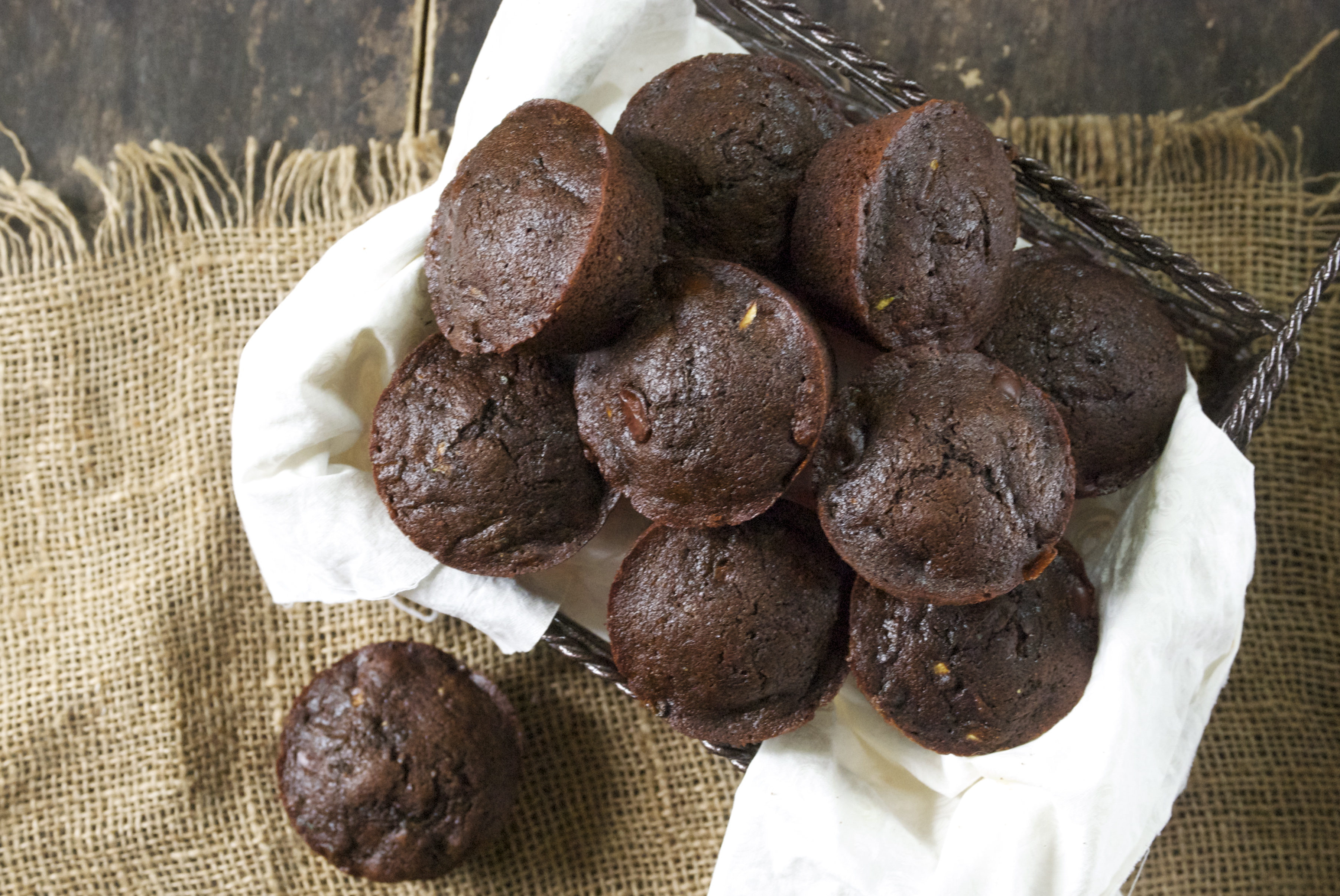
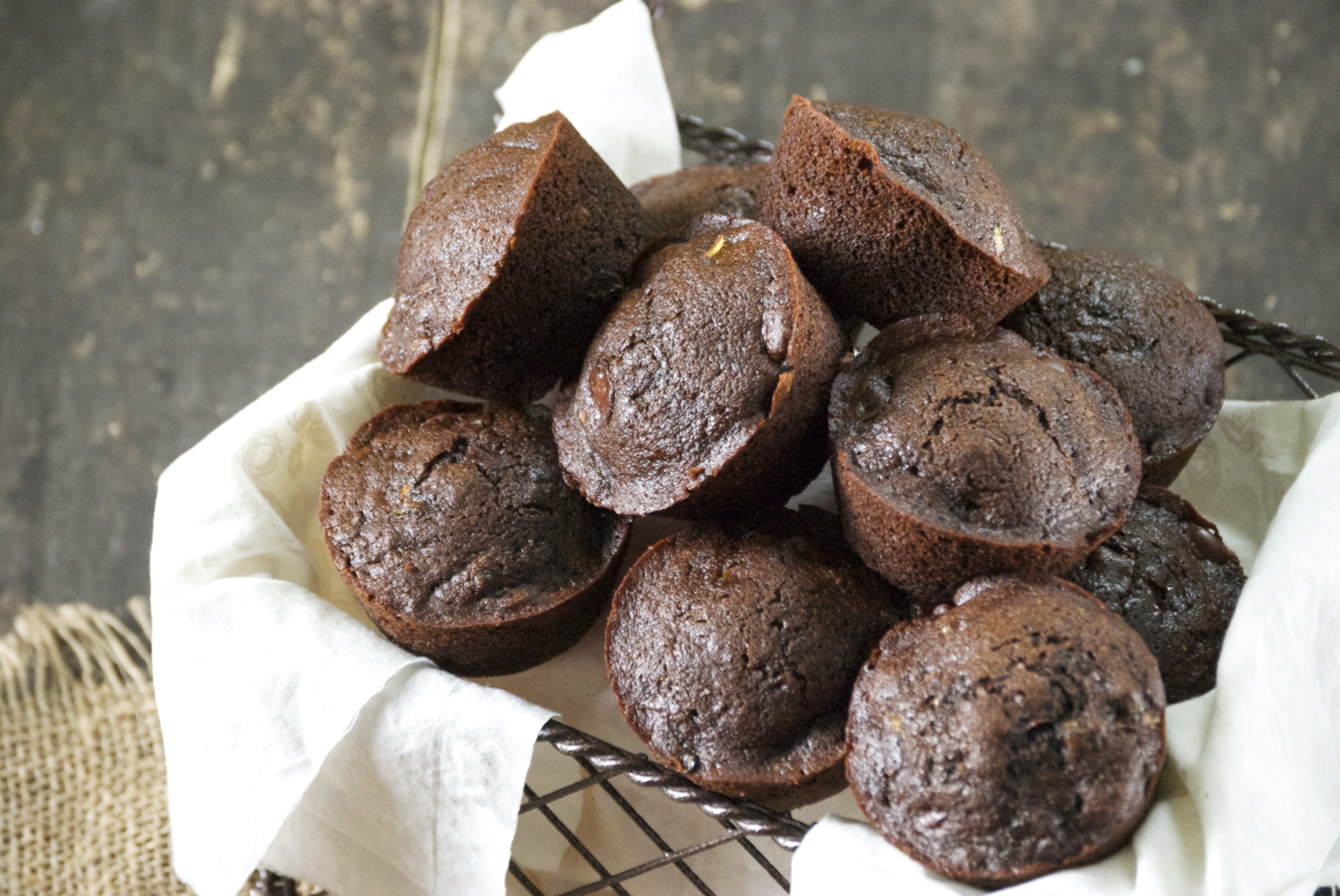
As you know I sent my little girl off to Pre-Kindergarten on Monday– and she is absolutely loving it.  I sometimes like to bake treats for their lunch boxes, or for an after-school sweet when they get home.  I distinctly recall getting off the school bus as a kid and walking into the house to the smell of something wonderful that my mom had made during the day.  She’d have batches of cookies ready, or even racks (yes, racks) of pies on the counter.  And she always timed it out so they were ready when my brother and I walked through the door.  However… I’m a little hesitant to bake such delights using all of that sugar on a daily– or even weekly– basis.  Don’t get me wrong, my kids get their share of sugar, but it’s nice to be able to put something a little healthier, something more substantial, into their little growing bodies.

Healthy Chocolate Zucchini Muffins | Relishing It

Healthy Chocolate Zucchini Muffins | Relishing It

Healthy Chocolate Zucchini Muffins | Relishing It

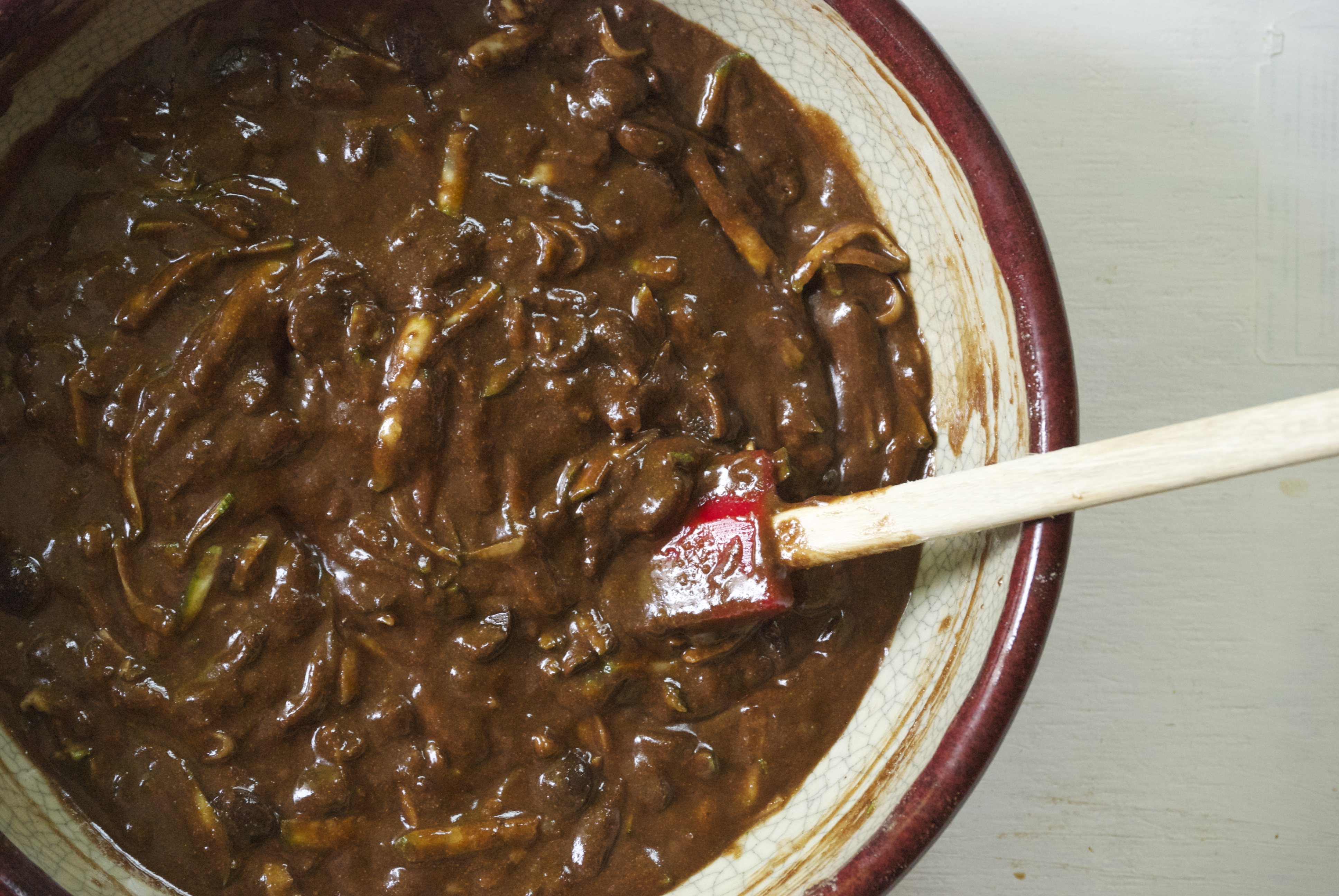
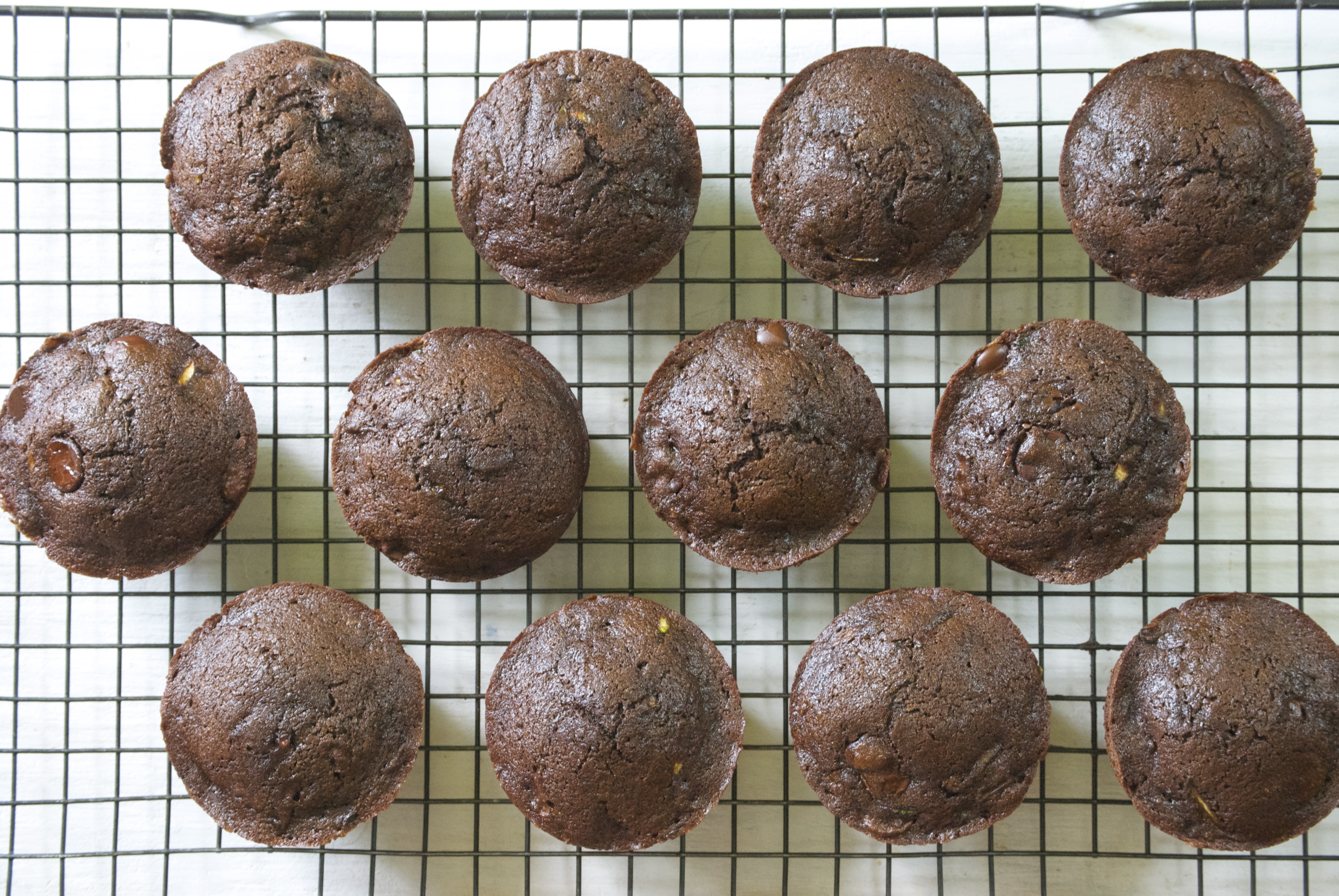
I was able to create a healthy muffin recipe that was made with whole grains, healthy coconut oil, and no processed sugar (alright, there are chocolate chips, but they’re optional…kind of.  You’ll want them in there).  These muffins are also loaded with vegetables, and your kids will be none the wiser!  What more could one want?  They are perfectly chocolate-y, but not overly sweet.  They stay very moist– quite like a small cake.  I really have no guilt about giving this treat to my kids, or eating it myself for that matter.  I hope you like them as much as we do!

Healthy Chocolate Zucchini Muffins | Relishing It

Healthy Chocolate Zucchini Muffins | Relishing It

The Recipe:  Healthy Chocolate Zucchini Muffins

(makes 12)

1 cup white whole wheat flour (whole wheat pastry flour works, too)

1/2 cup unsweetened cocoa powder

1/2 teaspoon kosher salt

1 teaspoon baking soda

1 teaspoon baking powder

1/2 cup virgin coconut oil (warmed to the liquid state, but not hot)

1/2 cup honey

2 eggs, at room temperature

1 teaspoon vanilla

1 1/2 cups coarsely grated zucchini (about 1 medium)

3/4 cup chocolate chips (Ghirardelli 60 % Cacao Bittersweet are the best, in my opinion)

Note:  The coarsely grated zucchini is definitely visible in these muffins, which is how I prefer them.  If you don’t fancy that, simply grate the zucchini finer.

Preheat the oven to 350°F.  Spray or butter a 12-cup muffin tin.  Set aside.

In a large bowl, sift, then whisk together the flour, salt, baking powder, baking soda, and cocoa.   Toss the chocolate chips into the mixture. Set aside.

In another large bowl, thoroughly mix the honey, coconut oil, vanilla, and eggs together until uniform.  Add the zucchini and mix until evenly coated.

Combine the two bowls together, mix until everything is wet.  Do not over mix. Evenly distribute the batter–1/4 cup per muffin is about right.  Bake for about 18 minutes, or until a tester inserted into a muffin comes out clean.  Remove from oven and let cool for about 3 – 5 minutes before removing from the pan.  Keeps well for days in an airtight container.  Enjoy!

Thanks for stopping by Relishing It!

Laurie

Homemade Sandwich Buns | Relishing It

St. Paul was buzzing yesterday.  School started and everyone was excited as the kids headed out the door.  My sweet boy, Aanen, proudly made the walk down the street and into our nearby school, hand-in-hand with his dad.   I was both proud and sad to see him wave goodbye.  I have Aria for several more days at home, since pre-kindergarten doesn’t start until next week.  To be honest, I’ve been surprised that these first few days went off without a hitch.  All summer our kids stayed up far too late, and slept in until 9 a.m. every morning.  But the change in schedule didn’t seem to affect them too much, and we haven’t skipped a beat.

Homemade Sandwich Buns | Relishing It

The other big news in my world is that one of my dearest friends, Angharad, is moving to the UK.  Yesterday Aria and I had a chance to say our goodbyes to her at lunch.  She and her husband are moving to London, and while I’m happy and excited for them, I’m more than a bit sad.  I will miss this girl tremendously.  I’m already plotting how to save money for a visit to England.  Best of luck to the both Dan and Angharad as they settle in on their new life overseas.

Homemade Sandwich Buns | Relishing It

Alright, on to talking about food.  I’ve been excited to share this amazing bun recipe with you all summer.  I’ve made several batches, and every time they’ve turned out perfectly.  The flavor can’t be beat.  The buttermilk gives them a subtle tang, while the butter keeps them moist (sorry to those of you that hate that word).  These are great all-purpose buns.  We’ve eaten them with pulled pork (doused with this amazing mustard sauce), burgers, and regular summer sausage.  This bun is it!  It holds up really well– it isn’t too soft, or too dense, and has a nice beautiful crust.  Best of all, it lasts for a few days (when properly re-warmed in the oven).  It really is the only bun recipe you’ll ever need.

Homemade Sandwich Buns | Relishing It

A couple thoughts on baking bread.  First of all, if you dismiss the idea of baking your own because you think it’s too difficult and not worth the trouble, reconsider.  There is virtually no work involved in these buns (or most any bread, for that matter).  Most of it is a waiting game. The results are fabulous and you will feel so happy when you pull that pan out of the oven.  Second, and I know I’ve mentioned this before, but if you invest in a scale, your baking will turn out perfectly almost every time.  Accuracy is the key to better results.  I hope you give these buns a try and enjoy them as much as we have!

Homemade Sandwich Buns | Relishing It

The Recipe:  Homemade Sandwich Buns

21 1/4 ounces (4 1/4 cups) bread flour

2 teaspoons rapid rise yeast

1 1/2 teaspoon kosher salt

3 tablespoons granulated sugar

1/4 cup (4 tablespoons) butter, cut into pieces,  at room temperature

1 1/2 cups buttermilk, heated to 100°F

1 egg, lightly beaten, at room temperature

1 egg mixed with 1 teaspoon water, for egg wash

Poppy and sesame seeds, for sprinkling, if desired

Note:  I’m giving the instructions for making these buns using a stand mixer, because I have one.  If you don’t, they buns can easily be made the old-fashioned way.  Instead of using a dough hook, just knead it with your hands/arms for several minutes.  You’ll want the dough to be smooth and silky.  You don’t want it to be too dry or too sticky.  If it is a bit dry, simply add more buttermilk.

In the bowl of a stand mixer fitted with a paddle attachment, add the flour, salt, yeast, and sugar.  Mix to combine for a few seconds.  Then add 1 egg, butter pieces, and warmed buttermilk.  Mix on low until the liquid has absorbed and the dough forms a ball.  Remove the paddle attachment and use the dough hook.  Mix on medium for about 6-8 minutes, or until a beautiful, silky ball has formed.  Then place in an oiled bowl.  Drizzle a bit of oil on the top of the dough and gently smooth it all over.  Cover the bowl with plastic wrap and place in a draft-free area.  Let rise for about 1 1/2 – 2 hours, or until doubled in size.

When the dough has properly risen, divide the dough into 12  3-ounce balls (you may have a smidge of dough leftover).  Work the balls into proper bun shapes, placing the seam side down.  Place them on a 12 x 15 baking sheet (or use two smaller ones) that has been lined with parchment paper.  Spray olive oil on top of the buns and cover with plastic wrap for 20 minutes.  Then, with the plastic wrap still on the buns,  gently press down on each bun with your fingers to flatten it a bit.  Otherwise you will end up with a round dinner roll (which can be great, but not for sandwiches).  Let rise again for another 1- 1 1/2 hours, or until they are big enough for your liking.

Meanwhile, preheat the oven to 400°F.  When the buns have adequately risen, use a pastry brush to apply the egg wash.  Sprinkle with sesame or poppy seeds.  Bake for about 15 – 20 minutes, or until the tops of the buns are a deep, golden brown.  Enjoy immediately or keep for days in an airtight container.  Re-warm in a 350°F oven for a couple minutes before eating.

Source:  Adapted from Brown-Eyed Baker.

Thanks for stopping by Relishing It!

xo

Laurie
Rustic Apple Galette | Relishing It

The end of our summer.  I honestly don’t know whether to jump for joy or curl up into a ball and sulk.   My boy starts school next week– first grade.  He isn’t dreading school this year– unlike the last two– when he saw it only as a limitation on ‘play time’.  That’s not to say that he didn’t love school.  He did, once he got there.  But he has serious home-body tendencies that can be a bit…difficult to overcome sometimes.  Now the prospect of making new friends has him excited.   And my baby, Aria, starts the following week in pre-kindergarten.  She is so excited.  She has Aanen’s previous teacher, whom we all adore.  Aria starting school really brings out mixed emotions in me.  Joy because I’ll finally get to enjoy an hour or two of quiet each day.  Aria is a talker.  Nonstop.  Really.  She’s a relentless, wonderful hurricane.  A true sensing extrovert on the Meyers-Briggs scale.  The other three of us are the opposite.  But even though I’ll get to enjoy some quiet, I’m also a bit panicked.  Not having my baby at home reminds me just how fast time is passing.  And to add to my melancholy of another season ending, and my kids off to school, I turned 39 on Monday.  Time.  It just rolls on.

Rustic Apple Galette | Relishing It

It’s very strange, because it’s not just the days, or even years that are flying past.  It’s the decades!  I don’t feel 39 years old, but somehow it just happened.  I’ll turn around tomorrow and my kids will be off to college.  But to be brutally honest, my kids growing up, and me aging isn’t what really hurts.  No, the most painful realization is that my parents are aging right along with us.  It seems like just yesterday that I’d watch my dad play softball, goofing off on the pitcher’s mound or galloping around the bases like a kid.  Strange to think that that was 20 years ago.  The fact is, they’re getting older.  And while they’re both still doing great and keeping busy, they’re slowing down.  Through a daughter’s eyes…I can tell.  I know I can’t do anything about it, but I really don’t want the next 20 years to pass as quickly as the last have.  I need time to slow a bit, so I can savor every moment with my loved ones.

Rustic Apple Galette | Relishing It

Rustic Apple Galette | Relishing It

Rustic Apple Galette | Relishing It

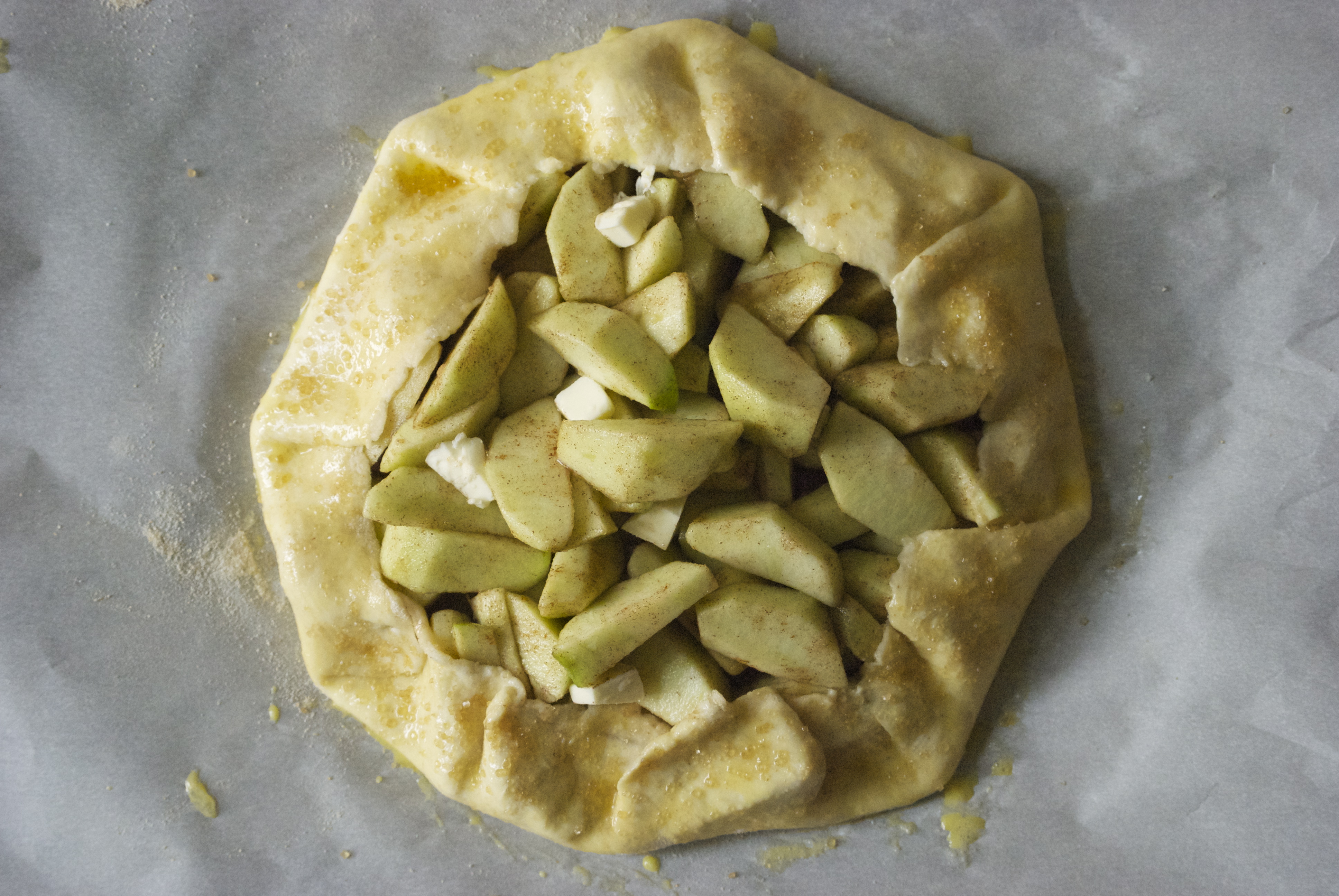
It feels a bit strange to delve into such deep issues here on a food blog, but there it is.  I guess if there’s a tie-in to Relishing It, it’s that working in the kitchen soothes me.  It’s my balm, so to speak.  This week a kind neighbor offered up her gorgeous apple tree– free for the picking.  Aria and I gathered a huge box-ful, which I’ve turned into several apple galettes.  I’ve written before here about my love for galettes.  They’re perfect in that un-perfect, rustic way.  I like my apple desserts with just a hint of cinnamon and not much else.  I want to taste the apples.  I also like to add a drizzle of icing to apple galettes that I normally don’t with other fruits, since the apples don’t have that beautiful sheen that you get with a berry or peach galette.  The icing makes it look so much more appealing, and adds a subtle sweetness.  Enjoy!

Rustic Apple Galette | Relishing it

The Recipe:  Rustic Apple Galette

3 cups / 400 grams sliced firm tart apples (from 6 small apples)

3 teaspoons fresh lemon juice (from 1 small lemon)

1/3 cup granulated sugar

1 teaspoon ground cinnamon

1/2 teaspoon kosher salt

2 tablespoons cold butter, diced

1 egg mixed with 1 teaspoon water, for egg wash

1 tablespoon turbinado sugar, for sprinkling

1 cup powdered sugar with a splash of milk, for the glaze

1 single All-Butter Pie Crust

Preheat oven to 375°F.

Follow the instructions for making the All-Butter Pie Crust. After it has chilled for at least 2 hours, it will be ready for use.

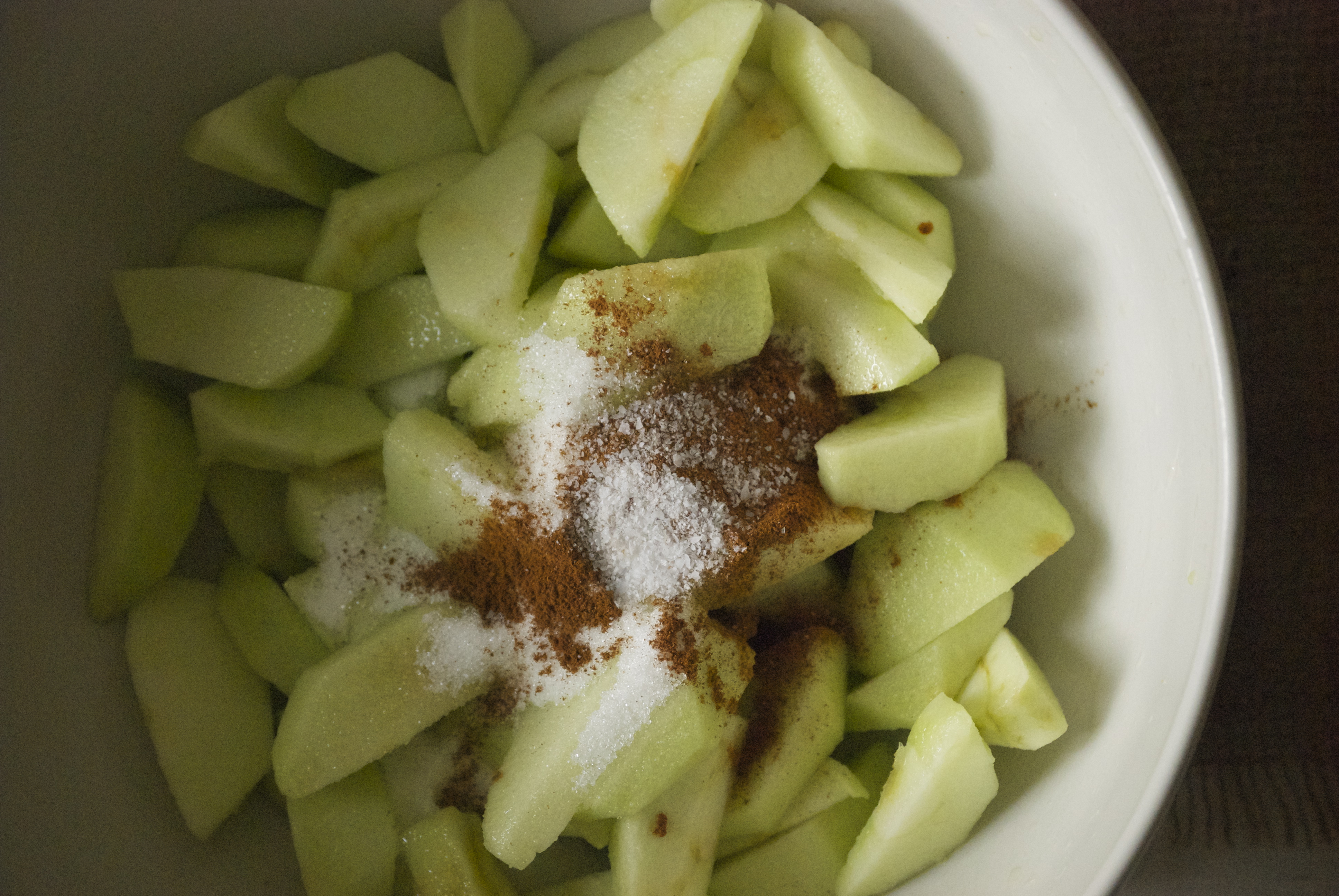
Peel and slice, not too thick (so they bake properly) and not too thin (so they don’t turn to mush) the apples.  Place into a large bowl and toss with the lemon juice.  Then add the sugar, cinnamon, and salt.  Toss again.  Set aside.

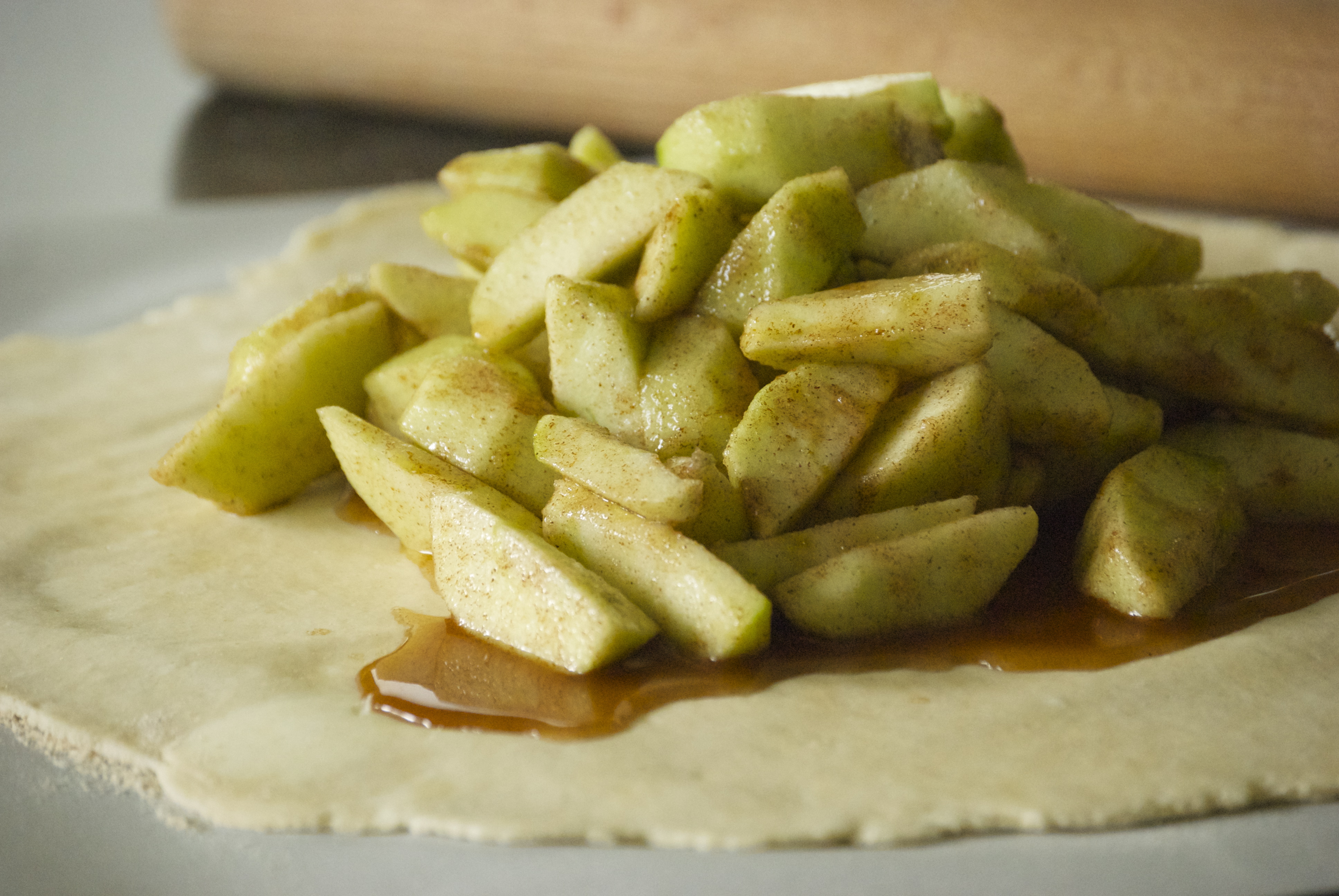
Roll the pie dough out onto a piece of parchment paper.  Lightly dust parchment and rolling pin with flour.  Roll the pie dough into a 12-inch circle.  Place the apples and juices into the center.  Place the butter pieces on top of the apples.   Gently flip the edges over the apples.  Pinch the seams together as much as possible, to prevent leaking while baking.  Using a pastry brush, apply the egg wash to the dough.  Then sprinkle with turbinado sugar.  Gently pat down the apples so they are somewhat level– this will prevent the peaks from burning.

Bake for about 40 minutes, or until the crust is a beautiful golden brown and the apples are tender.  Keep an eye on the apples in the final minutes, so they don’t get too dark.  Remove from oven and let cool.  Mix the glaze to your desired consistency and drizzle over the galette when cool.  Enjoy!

Thanks for stopping by today!

Laurie

Whole Grain Blueberry Scones | Relishing It

Alright, let’s have a serious talk about scones.  I absolutely love them, but I’m amazed at how difficult it is to get a good scone at most bakeries.  They’re often too cake-y, too hard, or too dry.  I can’t count the number of times I’ve ordered a scone that looked just right behind the display, but ended up disappointed once I took that first bite.  Of course, there are those few bakeries that get it perfectly right.  I’ve tried to capture their perfect combination of texture and flavor in this recipe.

Whole Grain Blueberry Scones | Relishing It

For me, the ideal scone needs to be both dense and airy.  And no, I don’t think those qualities are mutually exclusive.  A scone should have heft, or substance, but at the same time not resemble a cake.  If I wanted cake, I’d have made one.  And I don’t want a dry scone that crumbles apart and leaves a dusty, parched feel in my mouth.  I guess what I’m trying to say is that a really good scone requires a delicate balance– and I think this receipe gets that balance just right.  Plus, you get the added bonus of whole grains and delicious blueberries that transform into something close to a jam when baked.  Delicious.

Whole Grain Blueberry Scones | Relishing It

Whole Grain Blueberry Scones | Relishing It

Whole Grain Blueberry Scones | Relishing It

Whole Grain Blueberry Scones | Relishing it

These scones take only a few minutes to mix up and about 20 minutes to bake.  The less you fuss with them, the better they tend to be.  In other words, don’t overmix these babies.  Those butter clumps will melt in the oven and result in that beautiful airy quality that you’re looking for.   Frozen butter works just as well here as refrigerated, so don’t stress if you forgot to thaw it.  So whether it’s for a weekday breakfast or a relaxing one on the weekend– these scones are what you’re looking for.  Give them a try.

Whole Grain Blueberry Scones | Relishing it

Whole Grain Blueberry Scones | Relishing It

The Recipe:  Whole Grain Blueberry Scones

Makes 6-8

1 1/2 cups fresh blueberries or frozen (not thawed)

10 ounces (2 cups) white whole wheat flour

3 tablespoons granulated sugar

1 tablespoon baking powder

1 teaspoon kosher salt

3 eggs, divided

1/2 cup whole milk yogurt

6 tablespoons very cold, or frozen butter

zest of one lemon

1 tablespoon turbinado sugar, for sprinkling

For the Glaze:

1 cup powdered sugar

1 1/2 –  2 tablespoons fresh lemon juice

Preheat an oven to 400 °F.  Line a baking sheet with parchment paper.  Set aside.

In a small bowl, mix 2 eggs, the yogurt, and lemon zest together.  Set aside.

In another small bowl, mix 1 egg with 1 teaspoon water for an egg wash.  Set aside.

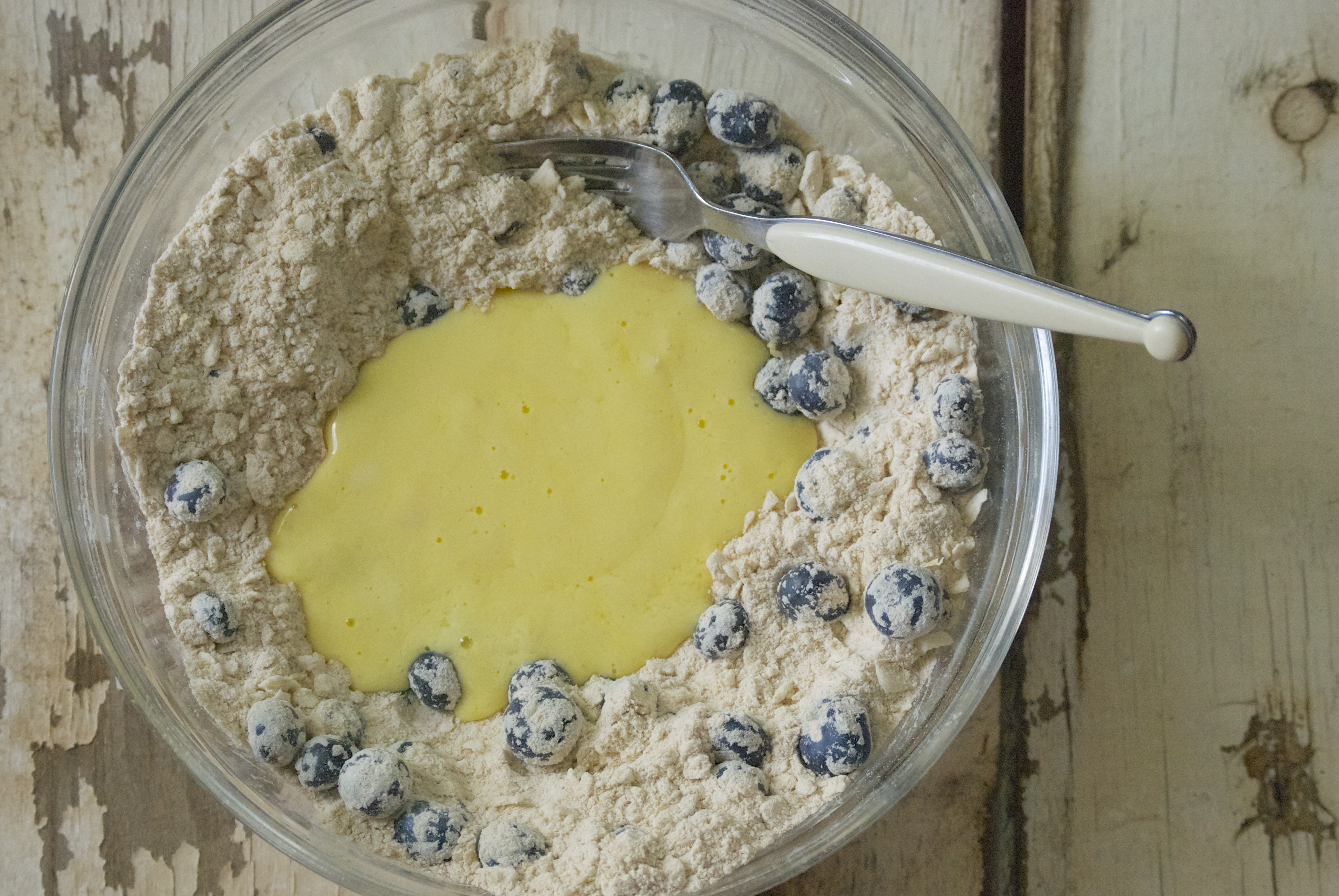
In a large bowl, whisk the flour, granulated sugar, baking powder, and salt together.  Then cube or grate (with the large holes of a box grater) your cold or frozen butter.  Use a pastry blender to mix it together.  Incorporate it until the clumps are pea sized.  This will take virtually no time if using grated butter.  Just be sure to coat all the butter with the flour.  Then add the blueberries.  Use the pastry blender to incorporate by flipping/tossing the ingredients together.  Don’t smash the blueberries, for goodness sakes.  Then, add the egg/yogurt mixture and stir together with a fork or a rubber spatula.  Remember to not overwork the dough.

Sprinkle a bit of flour down on a clean surface and pour the dough onto it.  Pat it into a 6-inch round.  Use a knife or a bench knife to cut it into 6-8 triangles.  Place them on the parchment paper and use a pastry brush to lightly cover each scone with the egg wash.  Sprinkle with the turbinado sugar and bake for 20 minutes, or until a nice golden brown.  Let cool.

In a small bowl, mix the powdered sugar and lemon juice together until your desired consistency.  Drizzle over the scones.   They keep well for days in an airtight container.  Enjoy!

Thanks for stopping by Relishing It today!

Laurie

Caprese Salad with a Basil Vinaigrette | Relishing It

Now I’ve mentioned here before how much I love tomotoes, but just in case you’re new to Relishing It, let me emphasize this.  It’s not just that I love tomotoes– I’m obsessed with them.  Every summer I wait.  And wait.  And wait until the first ripe tomotoes show up at the farmers’ market.  And then I try to fit them into almost every meal.  For the record, I don’t buy tomatoes when they’re not in season for a number of reasons.  First, obviously, is the taste.  Out-of-season tomatoes tend to be stiff and flavorless.  Second, I have serious ethical concerns about the industrial tomato industry, which is where many of our “winter” tomatoes come from.  Take a look at ‘Tomatoland’, a brilliant book by Barry Estabrook if you’re interested in just how terrible the industry is.  Here’s a link to the NY Times review.  Now that THAT is out of the way…

Caprese Salad with a Basil Vinaigrette | Relishing It

I love creating all sorts of dishes with tomatoes.  This heirloom tomato tart is among my favorite summer dishes.  And this tomato Jam is a versitle spread for both sweet and savory things.  If you’ve ever wanted to make your own homemade ketchup–this recipe is a good one to try.  I also can salsa every year to share with family and friends, and can a huge supply of plain tomatoes that help get us through the winter.

Caprese Salad with a Basil Vinaigrette | Relishing It

Basil Vinaigrette | Relishing It

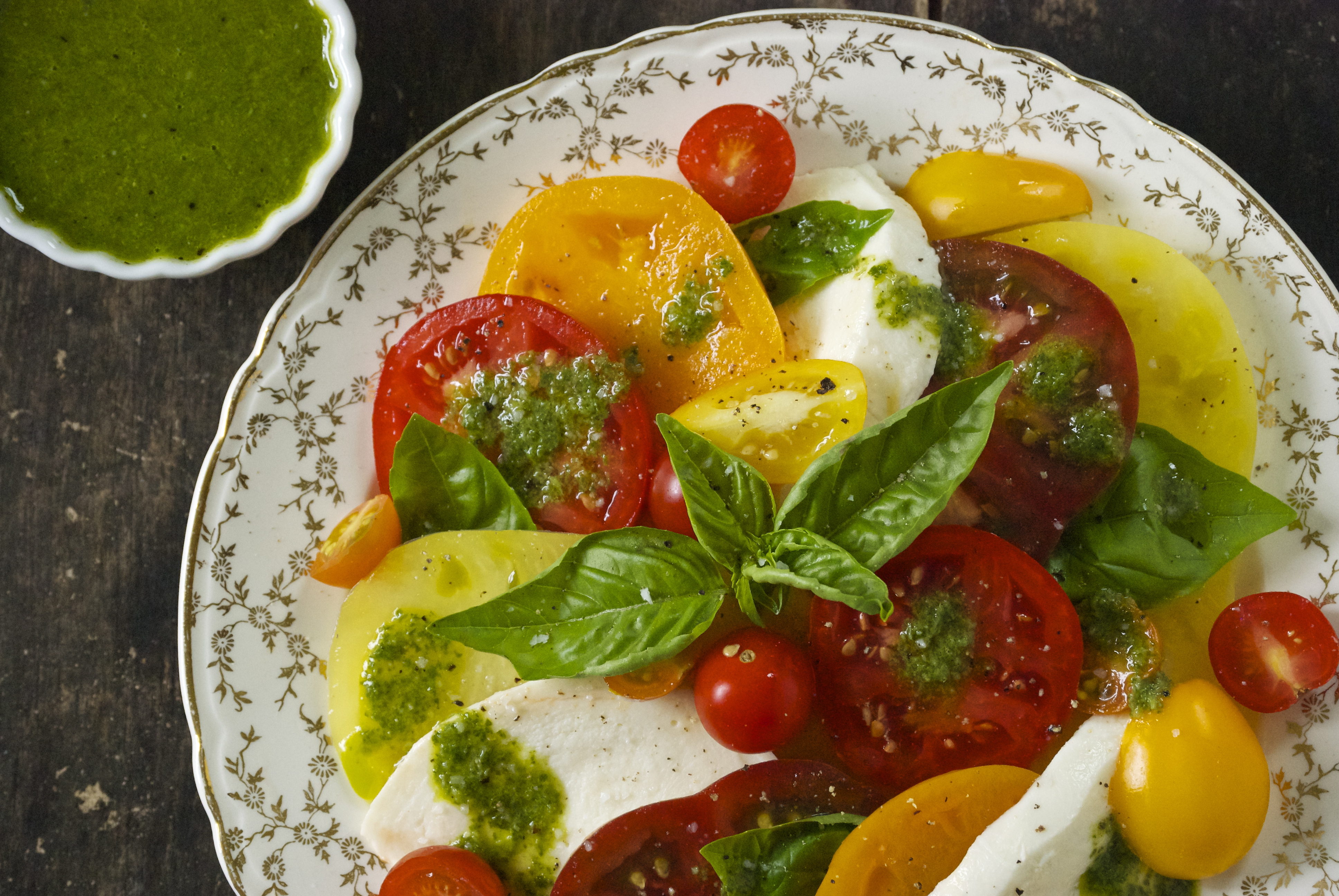
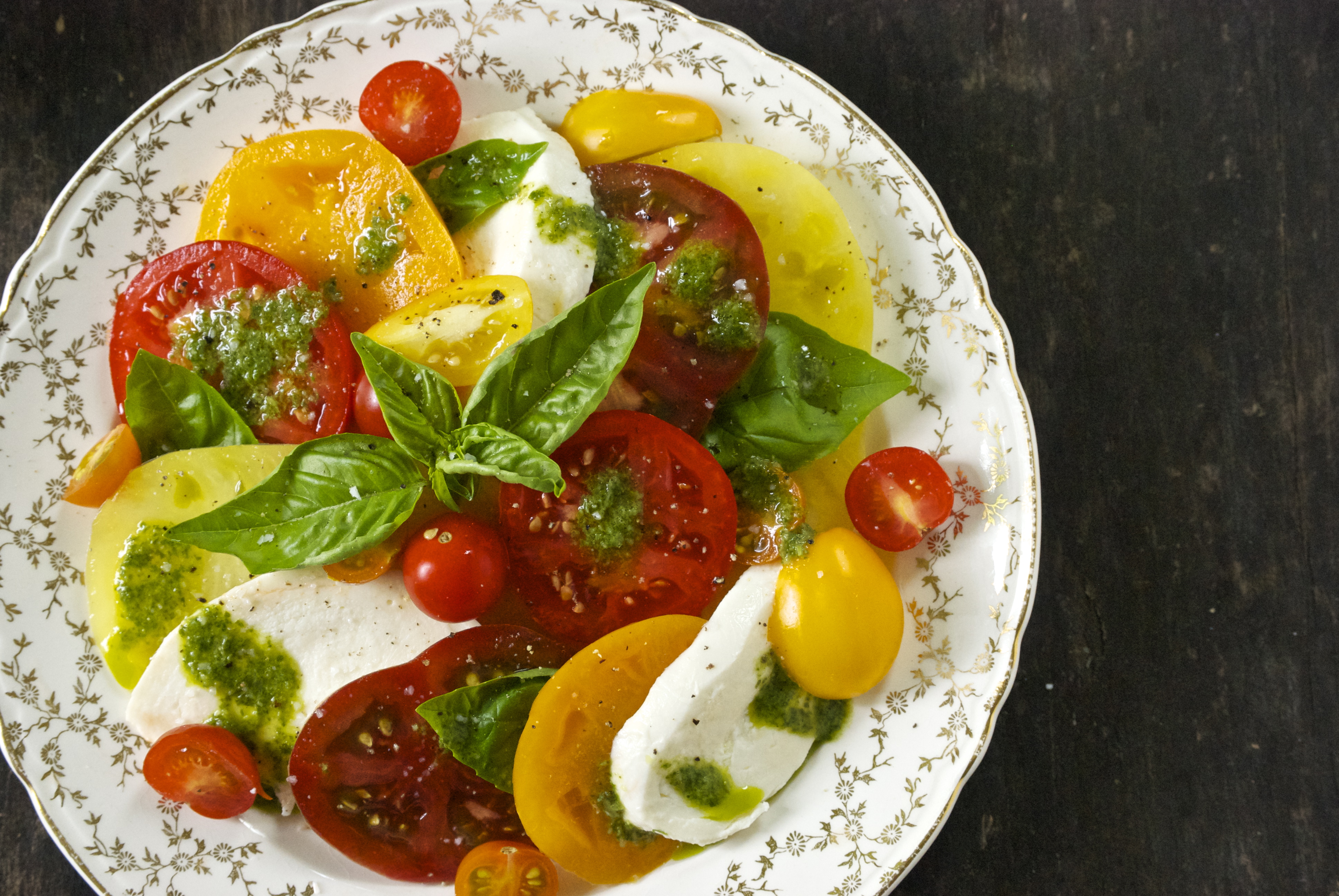
As much as I love to use them as an ingredient, nothing beats eating them in their natural state.  They are so juicy and slightly tender.  A sprinkle of salt brings out their amazing robust flavor.  I love a good caprese salad.  However, I’ve discovered that I’m not a huge fan of eating whole basil leaves.   A few here and there are fine, but I much prefer the basil flavor to come through in a delicious vinaigrette that I can let my tomatoes and fresh mozzarella swim in.  Every bite gets a little basil burst.  It works for me, and I hope it works for you!  Enjoy!

Caprese Salad with a Basil Vinaigrette | Relishing It

The Recipe:  Caprese Salad with a Basil Vinaigrette

Heirloom tomatoes, big and small

Fresh mozzarella

Extra basil leaves, for garnish

Sea salt and freshly ground pepper

For the Basil Vinaigrette:

(makes enough for a small platter)

2 tablespoons white wine vinegar

1 garlic clove, sliced

1/2 cup packed fresh basil

2 large anchovy fillets in olive oil, minced

1/3 cup extra virgin olive oil

sea salt and pepper, to taste

To make the Basil Vinaigrette:  Place all of the ingredients except the olive oil in a mini food processor.  Pulse it a few times to finely chop the basil.  Scrape the sides, as needed.  Slowly add the olive oil and continue running the machine until the vinaigrette is a relatively smooth consistency.  Use immediately, or store covered in the refrigerator for a few days.  Let it come to room temperature before using.

Arrange the heirloom tomatoes and fresh mozzarella on a platter, using as many as you would like (double the vinaigrette recipe, if making a larger portion).   Pour the dressing over and sprinkle with sea salt and pepper.  Eat immediately.  Enjoy!

Thanks for stopping by Relishing It!  Have a lovely weekend.

xo

Laurie

Homemade Mayonnaise via Relishing It

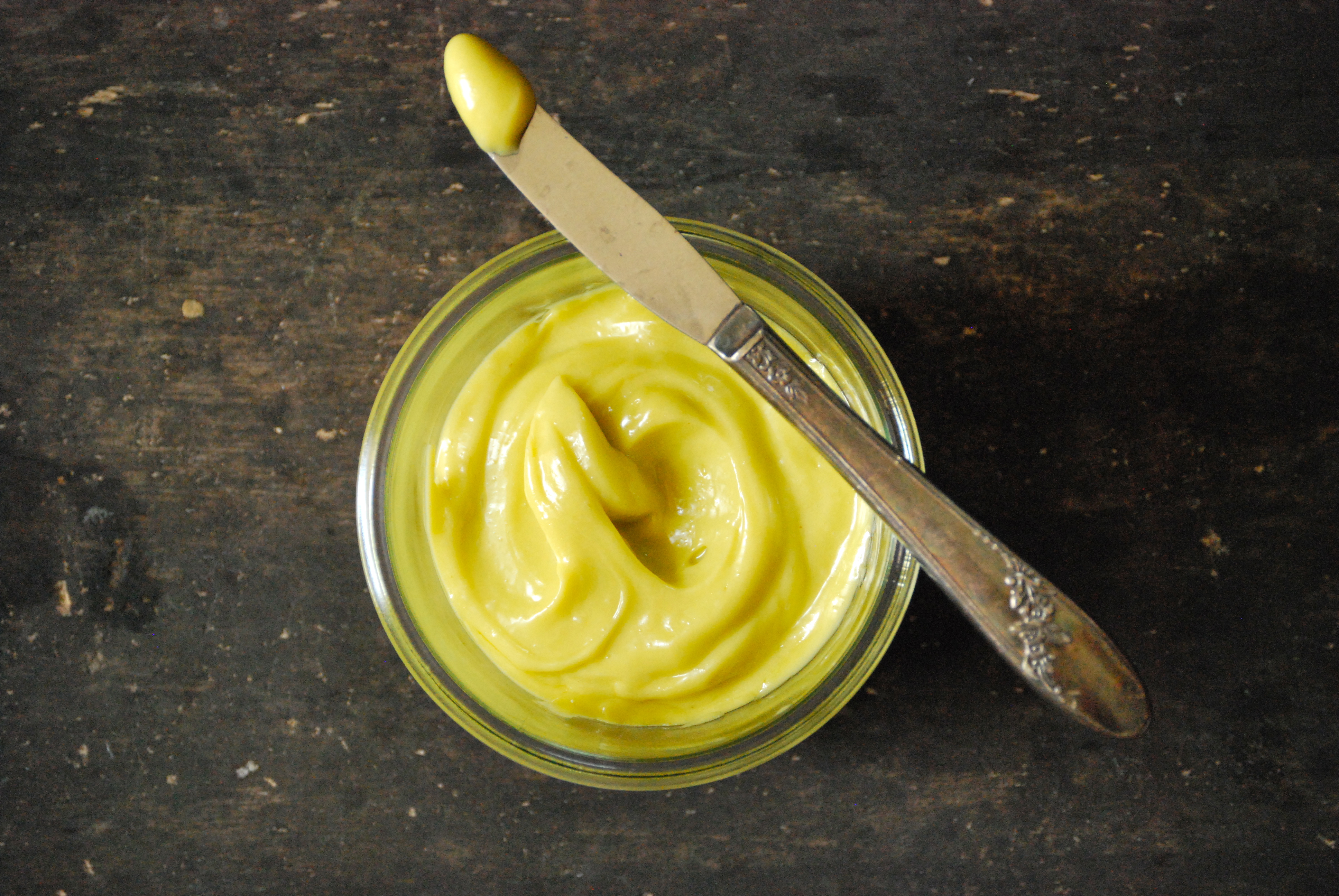
Are you ready for another do-it-yourself recipe?  This time it’s homemade mayonnaise.  And yes, there’s a pattern here– I love making my own condiments.  If you missed them, here’s are a few recipes for ketchup, mustard, and tomato jam.  They taste more interesting, and to be honest, better than the same old highly-processed formulas you find at the grocery store.  Making your own mayonnaise is easy, and despite what you may have read, doesn’t take long.  There’s only one catch– you’ll need to use it up within a week since it contains a raw egg yolk.  Trust me, you won’t have a problem finishing it off with all the fresh produce out this time of year.  Sandwiches, BLTs (fresh tomatoes, yay!), potato salad, aioli’s, everything tastes better with homemade mayonnaise.

Homemade Mayonnaise via Relishing It

Homemade Mayonnaise via Relishing It

Homemade Mayonnaise via Relishing It

Homemade Mayonnaise via Relishing It

Homemade Mayonnaise via Relishing It

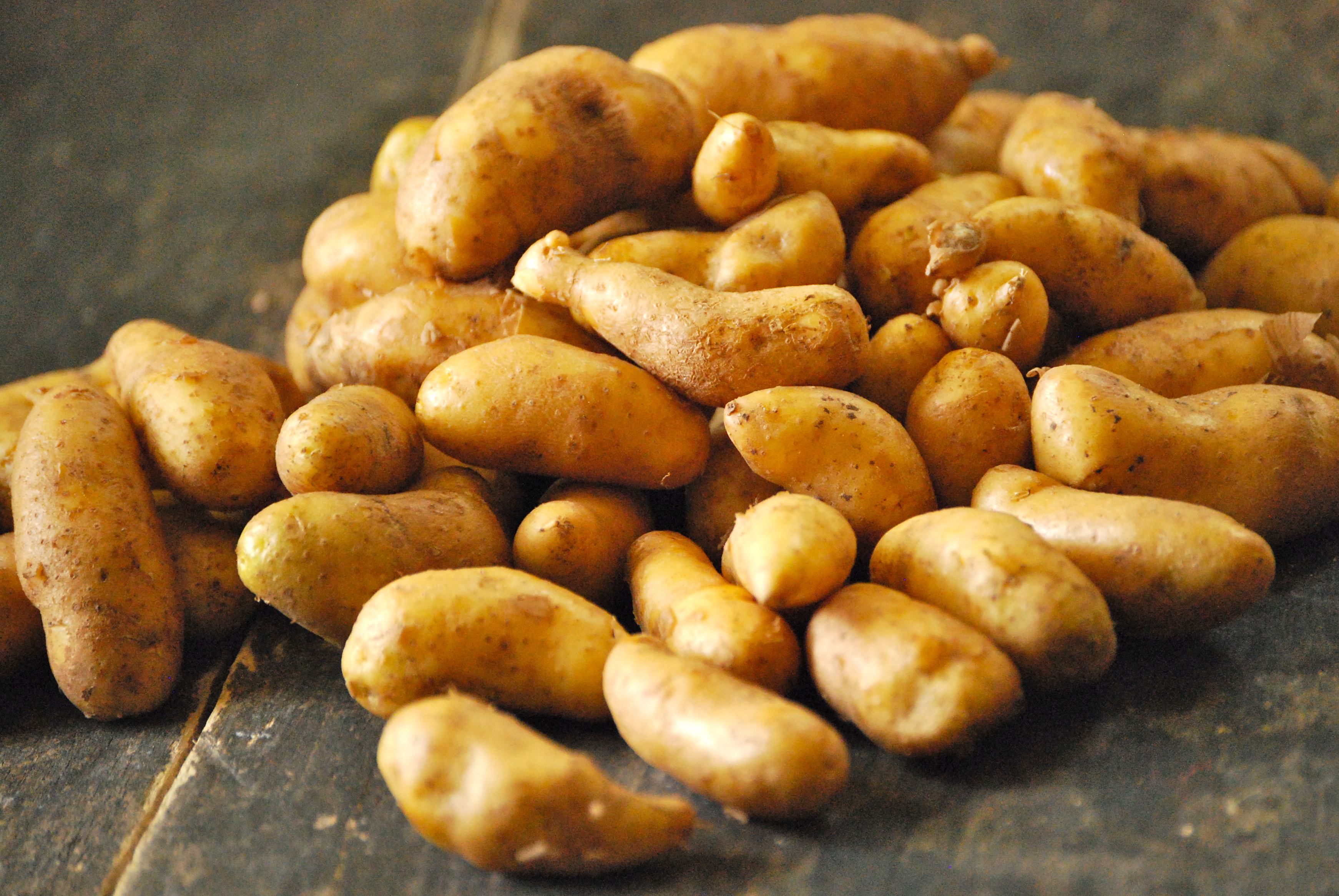
I like to make my mayonaisse with healthy olive oil, which gives it a wonderful layered flavor.  You can use canola instead if you prefer something more subtle.  Or feel free to do a mix, just make sure you equal the amount of oil listed in the recipe and you’ll be fine.  One other note on this recipe that’ll make it almost foolproof.  A trick I learned from food writer, Melissa Clark.  Add one teaspoon of water to the mixture.  It’s such a simple step, but it can make a huge difference on whether or not the mayonnaise turns out perfectly silky.  That’s it.  It works every time for me.  Now get in there and whip up your own batch of homemade mayonnaise.  And don’t forget you can make it as interesting as you like by adding fresh herbs, spices, or harissa. Or you can simply fold it into a bowl of steamed fingerlings and top with freshly chopped parsley.  It’s one of the quickest and most delicious potato salads around.  Enjoy!

Homemade Mayonnaise via Relishing It

Fingerling Potato Salad with Homemade Mayonnaise via Relishing It

Fingerling Potato Salad with Homemade Mayonnaise via Relishing It

The Recipe: Homemade Mayonnaise

1 teaspoon Dijon mustard

1 pasteurized egg yolk, at room temperature

1 tablespoon lemon juice (from 1/2 large lemon)

1/4 teaspoon fleur de sel

1 teaspoon water

3/4 cup extra virgin olive oil (I prefer California Olive Ranch— both for the fantastic quality and the great price)

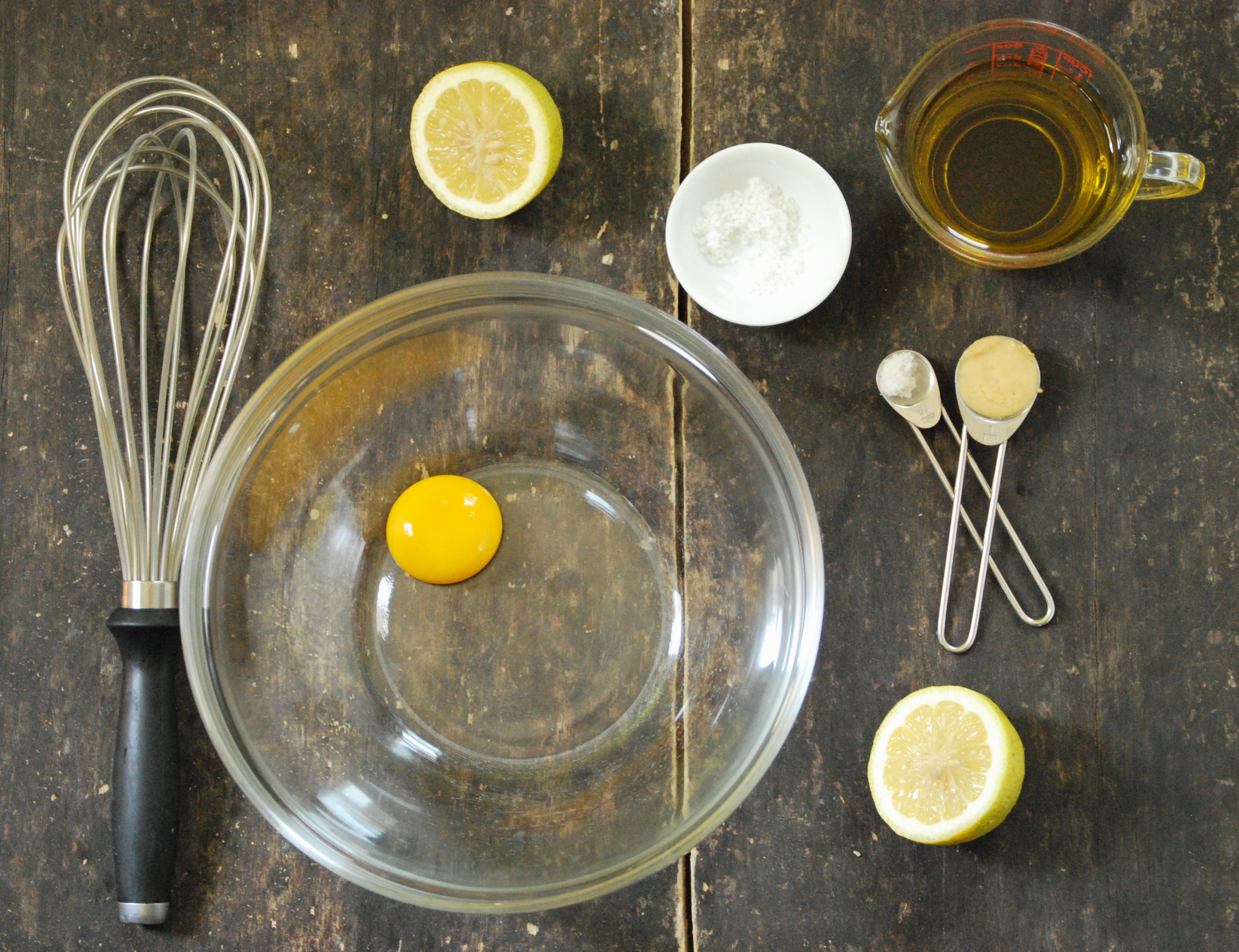
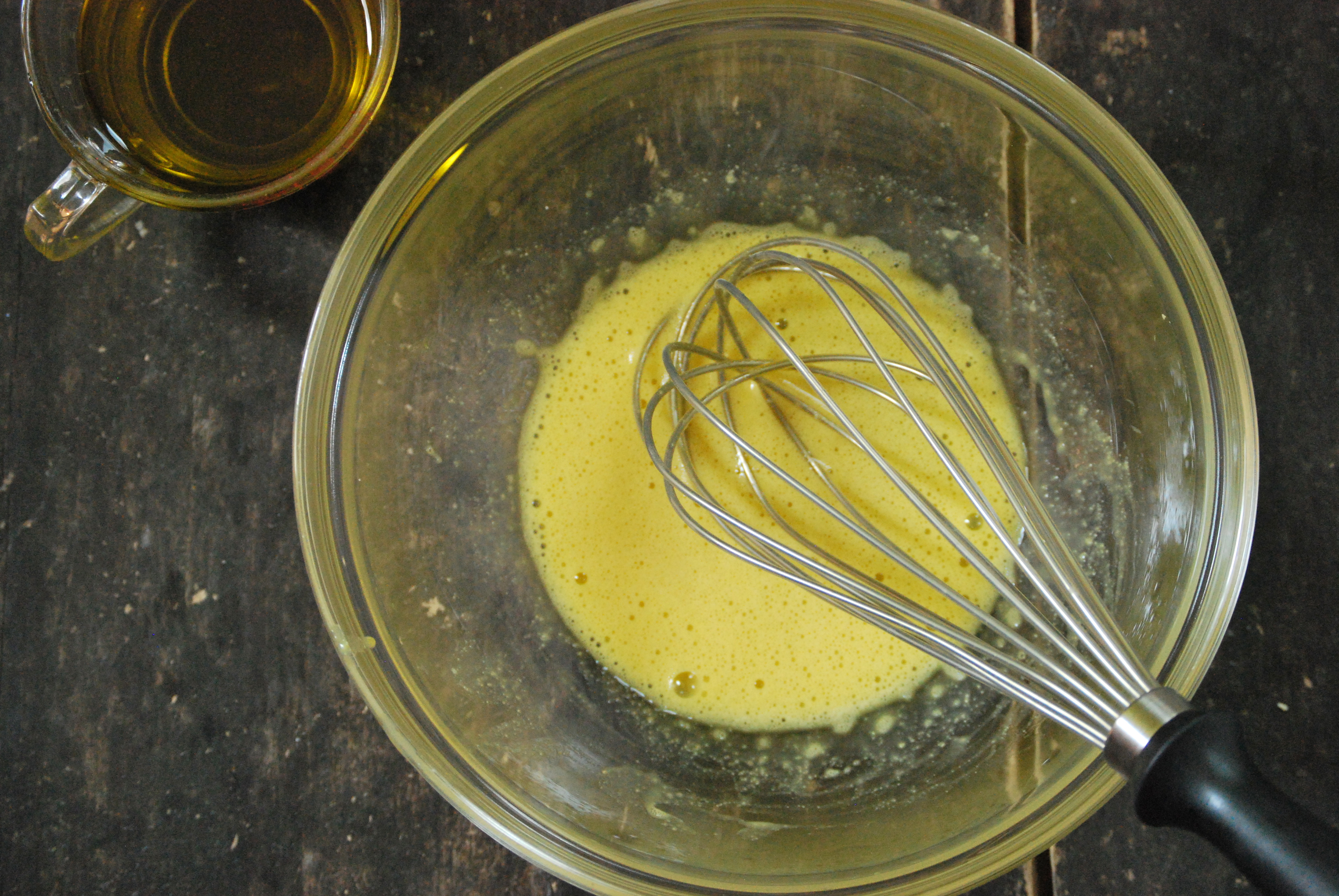
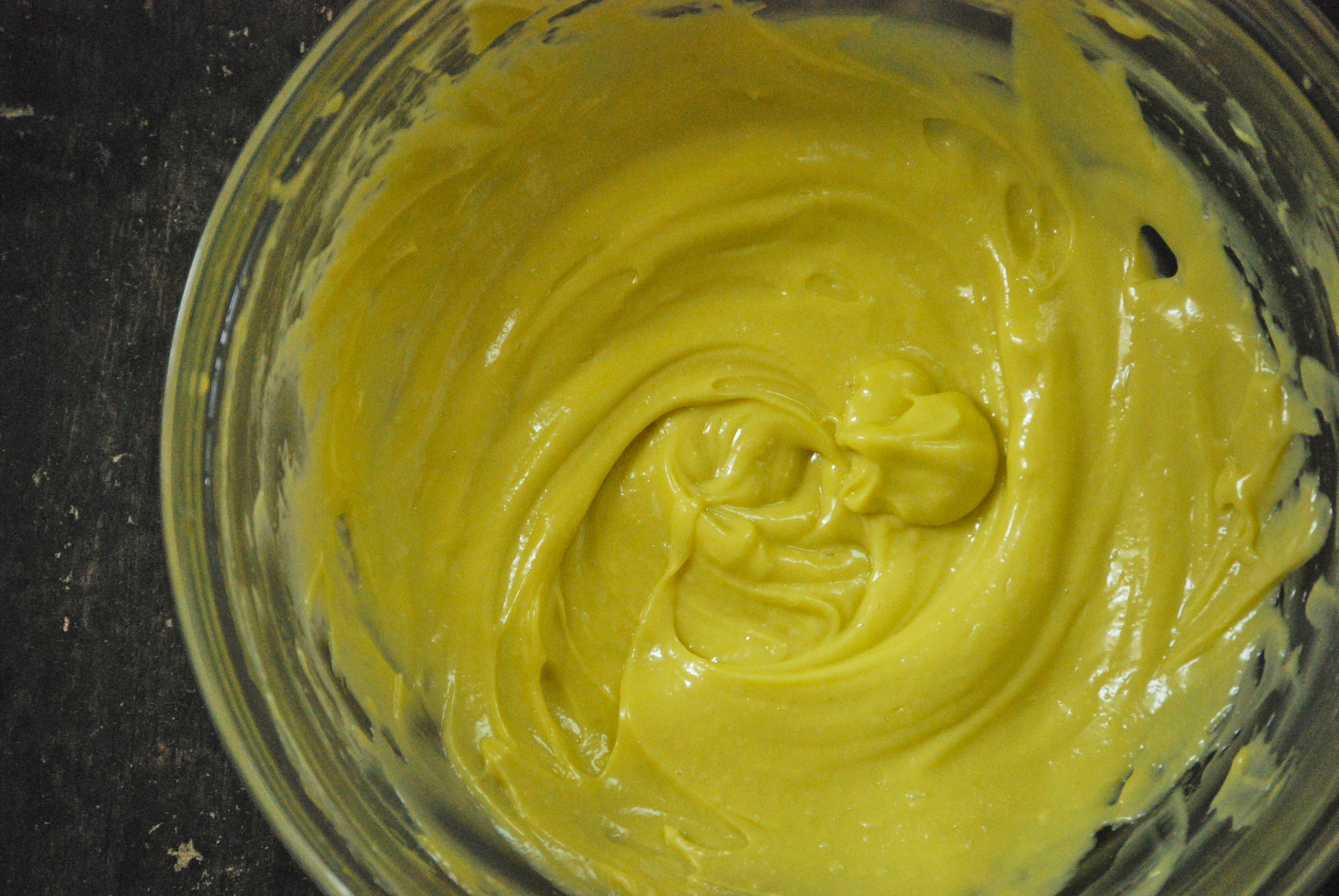
In a medium sized bowl, whisk all of the ingredients together, except the olive oil, for a minute or so until frothy.  Then, while continuously whisking, slowly begin adding the olive oil a drop at a time.  As it begins to thicken, you may start adding it in a very thin stream, remembering to whisk the entire time.  The slower you add the olive oil, the better chance you have of it not breaking.   The whole process will take about 15 minutes, or so.  Transfer it to a jar, and store in the refrigerator.  Re-season with salt, if necessary.  Use within one week.  Enjoy!

Thanks for stopping by!

Laurie

Salad of Green and Yellow Split Peas with Pesto via Relishing It

In case you haven’t caught on yet, I’m a huge advocate of having a pantry stuffed with dried goods.  Legumes, grains, you name it, I’ve got it in a mason jar ready for use.  And on those occasions when I notice it isn’t stocked full, I briefly panic and then run out to replenish whatever is missing.  I guess it’s almost a compulsion, since it’s not like I’m going to not have access to food– I live a few blocks from our co-op.  I may be a little crazy, but I embrace it.

Salad of Green and Yellow Split Peas with Pesto via Relishing It

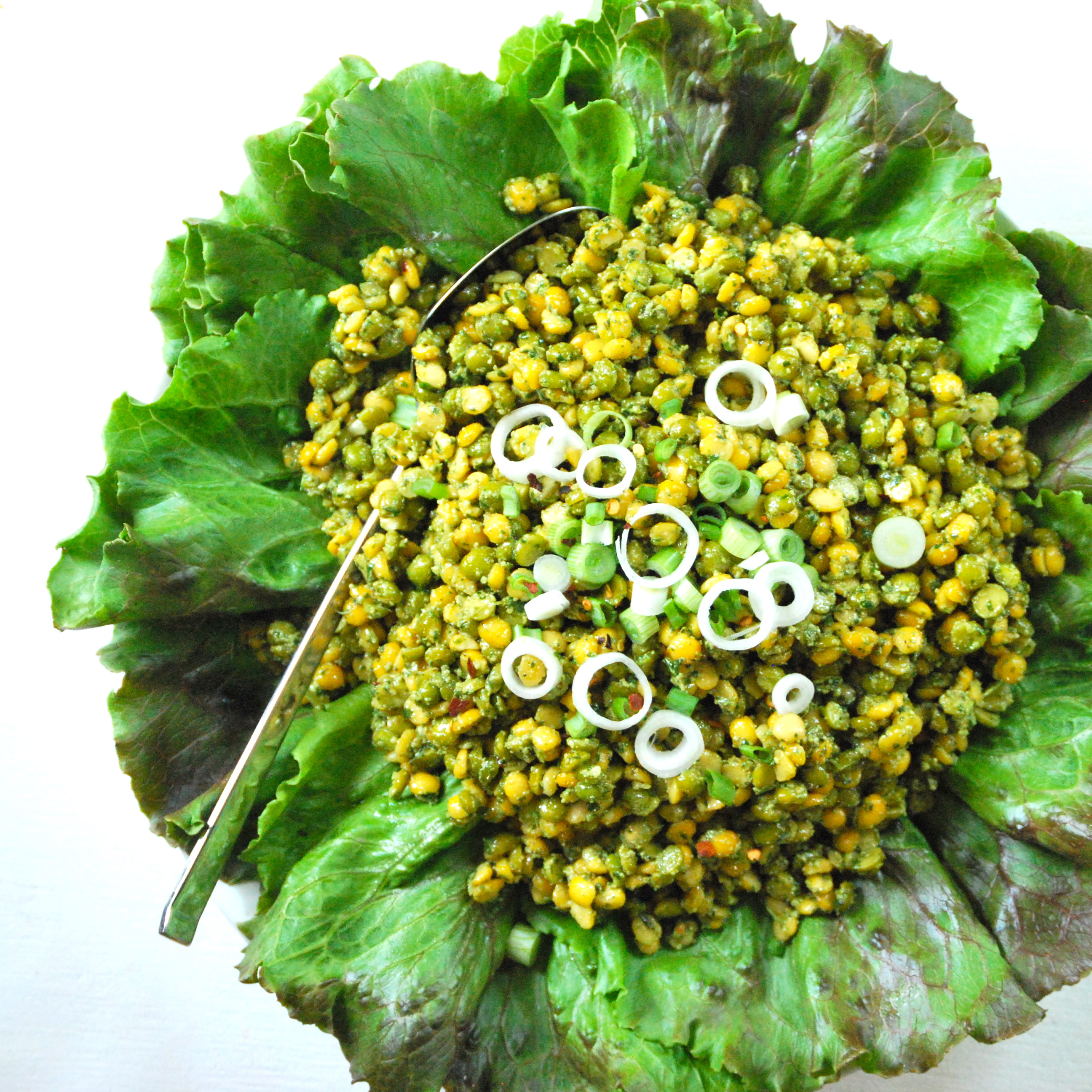
Summer is a great time to combine those dried goods with some of the season’s freshest offerings.  I love the combination of peas and pesto.  Using dried yellow and green split peas here works beautifully and is absolutely stunning to look at.  The sliced scallion on top provides a nice crunch and a burst of freshness.  This salad is also very filling– it’s one of those that can be a stand-alone meal.  And with a smaller portion size, it pairs wonderfully with most any grilled foods.

Salad of Green and Yellow Split Peas with Pesto via Relishing It

Salad of Green and Yellow Split Peas with Pesto via Relishing It

About this time of year, I also start to make large batches of pesto to freeze for the winter.  I’ll pop a small portion into ice cube trays or muffin tins to fully freeze.  I then pop them out, wrap them in plastic wrap, and put them into freezer bags (or use my vacuum sealer).  It’s a wonderful treat in the cold winter months to have pesto to mix into pasta or to dollop into soups.  If you choose to do this– a word of advice.  If you blanch your greens for just 30 seconds or so, then put it into an ice bath to stop the cooking process and proceed with the recipe–your pesto will remain a beautiful, vibrant green, even after it has been frozen.  I always use this method if I’m planning to freeze my pesto, or even if I know I’m going to have leftovers that may sit in my refrigerator for a few days.  The color just ‘pops’.  One more trick regarding pesto, remember you have the option to add a bit of water instead of more olive oil to loosen it up if it’s a bit thick.  Either way, be sure to season it appropriately with kosher salt– the right amount can make the pesto sing!  Enjoy!

Salad of Green and Yellow Split Peas with Pesto via Relishing It

The Recipe: Salad of Green and Yellow Split Peas with Pesto

(serves 4-6)

Large bed of leafy lettuce leaves

1 cup dried green split peas

1 cup dried yellow split peas

1 bunch of sliced scallions to garnish

For the Pesto:

1 cup packed basil leaves

1/4 cup packed Italian leaf parsley

3 cloves garlic, smashed

1/4 cup grated parmesan or grana padano cheese

1/4 cup walnut halves, toasted and roughly chopped

1/3 – 1/2 cup extra virgin olive oil, or more

sprinkle of hot pepper flakes

kosher salt and freshly ground pepper, to taste

To cook the Split Peas:  Rinse the peas and place in a large saucepan.  Cover with salted water, making sure that about two inches of water are above the peas.  Bring to a boil, then reduce to a medium/low.  Cook for about 25 minutes, then begin testing them for doneness.  You may need to cook them longer, depending upon how high your heat was.  You will want them to be soft, but retain their shape.  Be careful not to overcook them, or they will turn to mush.  When done, drain the water and let cool.

To make the Pesto:  As I stated above, you can choose to blanch the greens or not, depending upon how fast you’re going to use the pesto.  You decide.  Place either the blanched or unblanched basil and parsley into a small food processor (use a large one, if making a bigger batch).  Pulse a few times to chop up a bit.  Add the parmesan, walnuts, garlic, red pepper flakes, and a pinch of salt and pepper.  Pulse a couple more times to combine.  With the machine running on low, slowly begin adding the olive oil.  Scrape down the sides, as necessary.  Add as much olive oil to reach your desired consistency.  Or, add a few tablespoons of water at the very end to loosen it up a bit.  Re-season with salt and pepper.  Use right away, or place in the refrigerator with plastic wrap tightly pushed onto it’s surface, or freeze.

Place the lettuce leave onto a large platter.  Mix the cooled split peas with about 1/3 cup of the pesto, use more if desired.  Add salt and pepper, if needed.  Pour mixture over the lettuce, top with sliced scallions, and a drizzle of good olive oil.  Enjoy!

Thanks for stopping by today!

xo

Laurie

Sour Cherry Galette with an All Butter Pie Crust via Relishing It

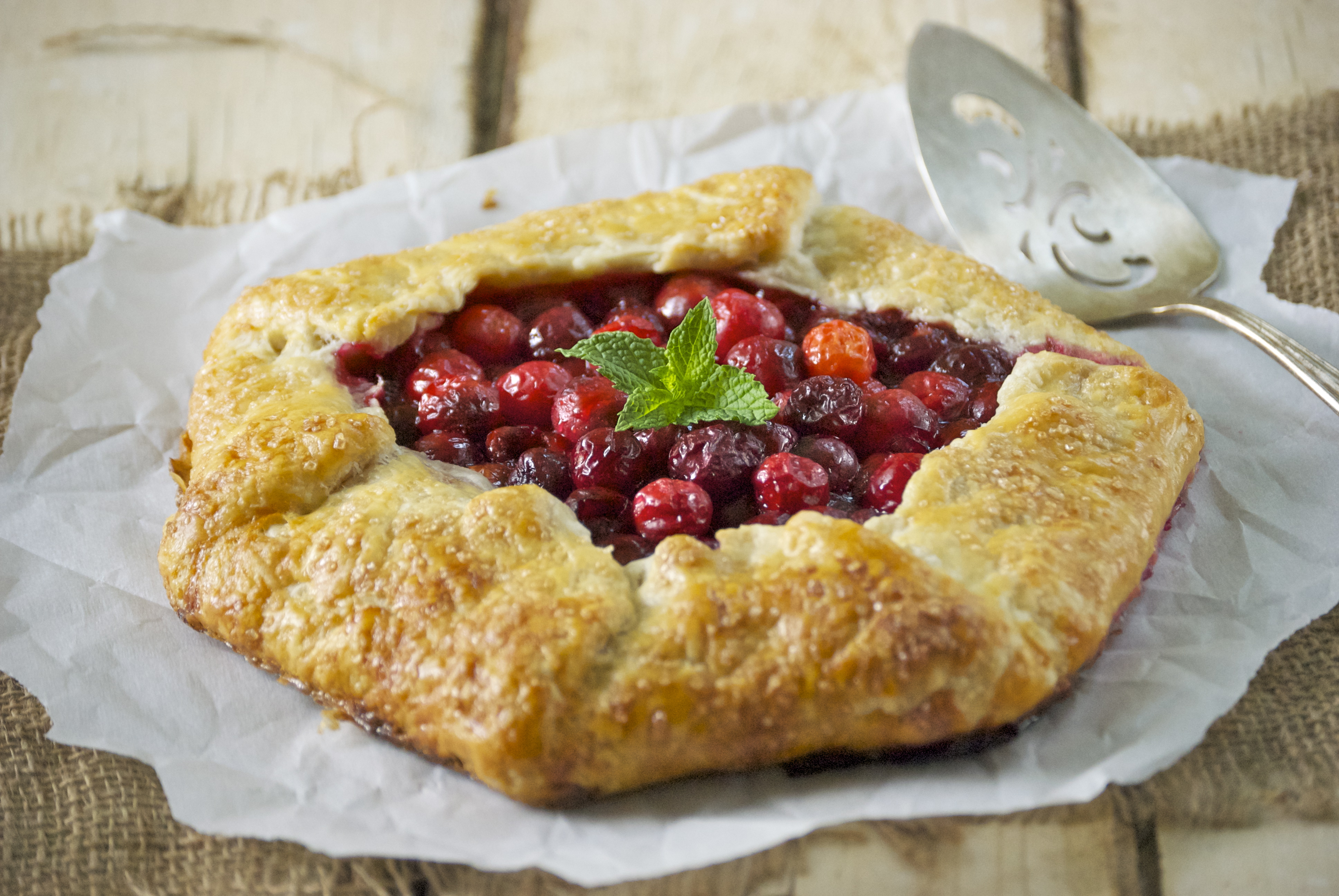
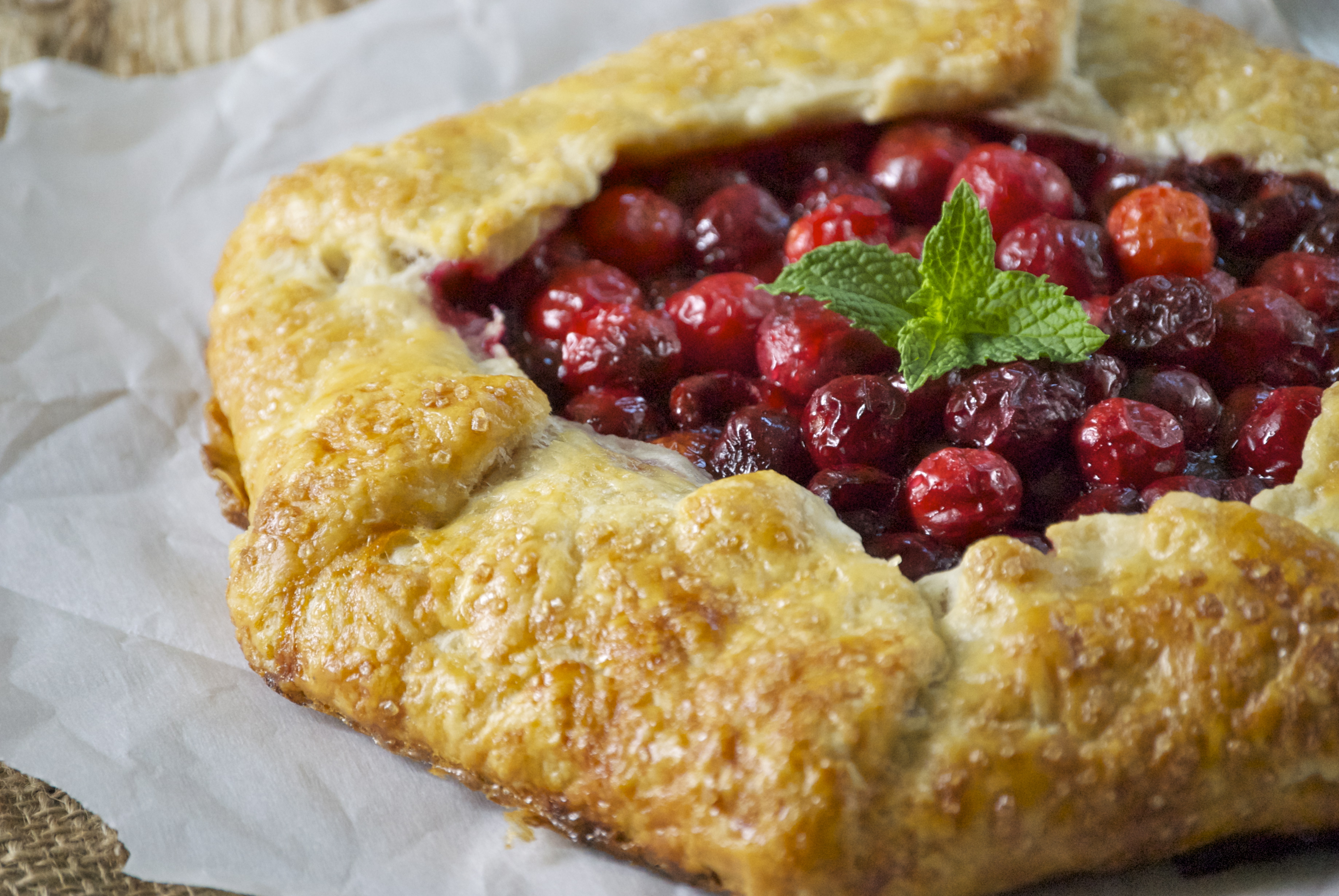
I wait all year long for sour cherries to come into season.  They are my absolute favorite fruit to bake with, just nudging out blueberries.  Sour cherries have such a unique flavor– that brilliant tartness which I soften with a bit of sugar.  Today’s recipe is a wonderful sour cherry galette that is perfect for capping a summer dinner on the patio.  If you can get your hands on a few baskets of sour cherries,  I can’t think of a better way to showcase them than in this dessert (or breakfast– no judging).

Sour Cherry Galette with an All Butter Pie Crust via Relishing It

I love the simplicity of the galette–there’s just something genuine about it’s rustic look.  And the fruit-to-crust ratio is perfect.  Galettes have another advantage– they’re virtually foolproof.  The crust is my go-to all purpose pie crust.  It’s an all butter crust, so there’s no shortening or lard.  I know that some folks incorporate other fats into their crust because they say it makes it a bit crispier.   However, this one is perfectly crisp,  and I try to avoid cooking with those sorts of fats.

All Butter Pie Crust via Relishing It

All Butter Pie Crust via Relishing It

All Butter Pie Crust via Relishing It

All Butter Pie Crust via Relishing It

All Butter Pie Crust via Relishing It

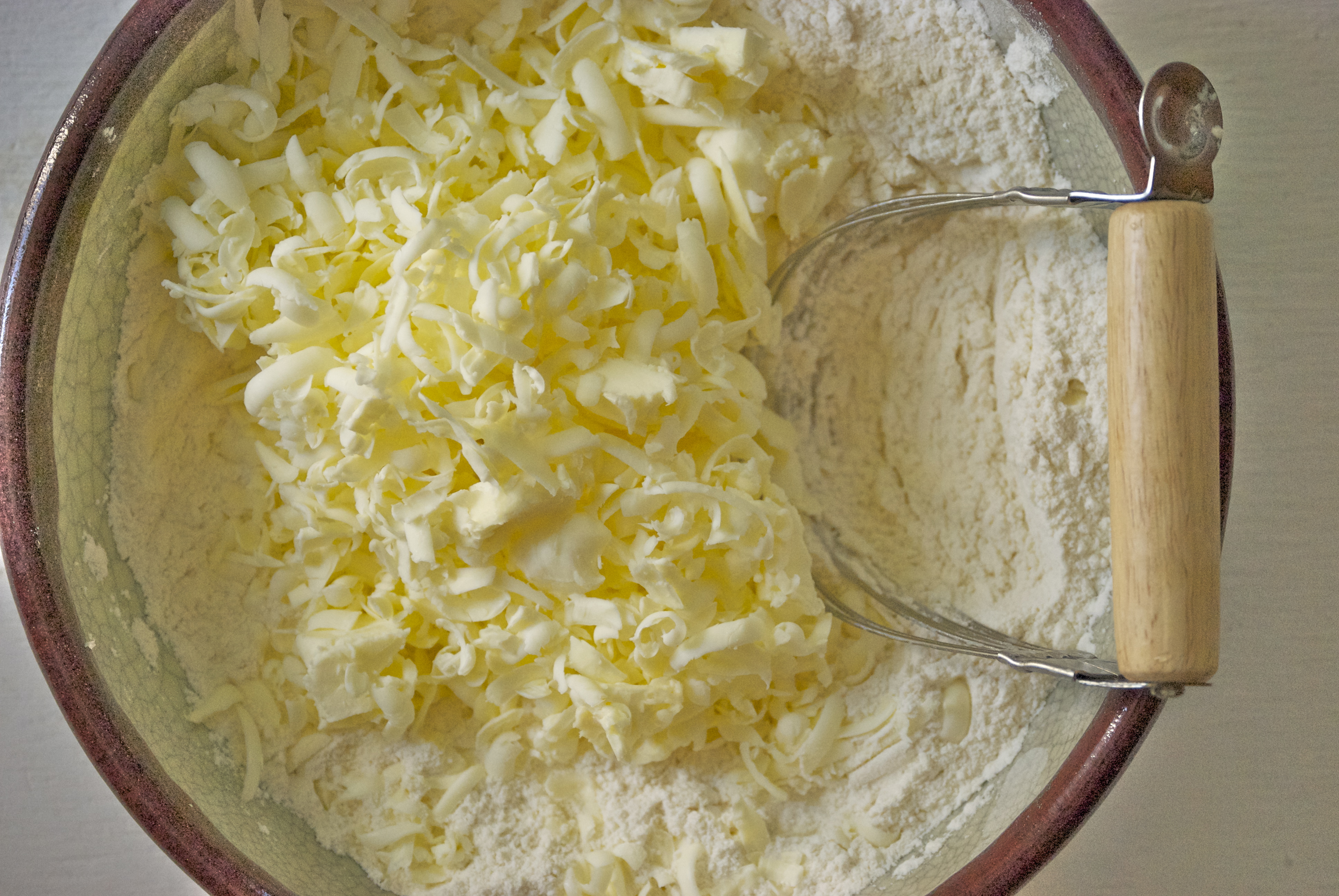
The trick here is to use very, very cold butter.  So cold, in fact, that most times I use frozen butter that has been run through a large box grater.  The other key here– whether it’s in a galette, pie, scones, or biscuits– is to not overwork the dough.  Yes, you still have to use your muscles a bit, but the less you work it, the better it tends to be.  My food processor gets a break when I make pie crust.  I feel more in control if I do it by hand using my pastry blender.  If the butter becomes too soft, just pop it in the freezer for a few minutes.  You get the idea.  If you haven’t made a galette before, this is a great place to start.  It’s also easy to make with fresh blueberries– just dial back the sugar to 1/4 cup.  Enjoy!

Sour Cherry Galette with an All Butter Pie Crust via Relishing It

Sour Cherry Galette with an All Butter Pie Crust via Relishing It

Sour Cherry Galette with an All Butter Pie Crust via Relishing It

Sour Cherry Galette with an All Butter Pie Crust via Relishing It

A couple of other fruit desserts you may enjoy: Blueberry Galette and Sour Cherry Hand Pies

The Recipe:  Sour Cherry Galette with an All Butter Pie Crust

(serves 4-6)

For the All Butter Pie Crust

(Makes enough for 2 galettes,  one double-crusted pie, or two single-crusted pies)

315 grams of all-purpose flour (2 1/2 cups)

2 sticks of frozen, unsalted butter (1 cup)

1 tablespoon granulated sugar

1 teaspoon kosher salt

1/2 cup, plus about 3 tablespoons ice cold water

For the Sour Cherry Pie Filling

2 cups sour cherries, pitted

1 tablespoon cornstarch

1/3 cup granulated sugar

pinch of salt

1 egg mixed with 1 teaspoon water (for egg wash)

about 1 tablespoon turbinado sugar, for sprinkling

To make the pie dough:  Pour the water into a large measuring cup.  Add a couple of ice cubes.  Set aside.  In a large bowl, whisk together the flour, salt, and sugar.  Set aside.  Using the large holes of a box grater, quickly grate the frozen butter.  Place the butter into the bowl with the flour mixture.  Using a pastry blender, quickly work the butter into the flour until the mixture resembles small peas.  Feel the butter, if it doesn’t feel very cold, you can place it into the freezer for a few minutes.  Continuing, measure out 1/2 cup of ice water (careful not to add the ice cubes) and using a rubber spatula incorporate the water into the butter/flour mixture by folding it in.  Add more water, if necessary, a tablespoon at a time.  Three tablespoons does the trick for me.  The mixture will look like a shaggy mess.  Press it together and if it sticks, but isn’t sticky– it is ready.  You don’t want it wet, but you don’t want it dry either.  Knead it together with your hands a couple of times to form a ball shape.  Divide the dough into half and wrap each half into plastic wrap.  Refrigerate for at least 1-2 hours before using.  Or freeze for months and thaw in the refrigerator.  For this recipe, you will use only 1 of the balls of dough.  Save the other one for another time.

Preheat the oven to 375°F.  In a medium-sized bowl, stir the cherries, sugar, cornstarch, and salt together.  On a large piece of parchment paper that will fit onto a large baking sheet, sprinkle a tiny amount of flour onto the paper and onto your rolling pin to help it roll out more easily.  Roll out 1 ball of pie dough into a 12-inch circle on the parchment paper.   Place the cherry mixture into the center, and carefully fold the sides over each other.  Press them together so they adhere– this will help prevent too much cherry juice from leaking when it bakes.  Gently slide the galette and the parchment paper onto a large baking sheet. Using a pastry brush, lightly paint the egg wash onto the dough.  Then sprinkle with the turbinado sugar.  Place the baking sheet into the oven and bake for about 45 minutes, or until the crust is a deep golden brown and the cherry juices are bubbling a bit and possibly oozing out.  Let cool before eating.  Keeps well in an airtight container.  Enjoy!

Thanks so much for stopping by today!

xo

Laurie