Feeds:
Posts
Comments

Posts Tagged ‘Garlic’

Orecchiette with Sausage, Broccoli, and Sun-Dried Tomatoes | Relishing It

As much as I love to dabble in the kitchen all day long, I admit that there are days when our family is busy or I just don’t feel like dedicating  that much time to dinner.  The problem is, I don’t like to fall back on some overly-processed meal-in-a-box as the alternative.  Sound familiar?  I’ve found that it’s helpful to have a few quick, delicious dishes up my sleeve, and in talking with friends and family I’ve come to realize that I need to blog more about those types of meals.  If you need a little inspiration, I hope you find it in a few of the coming recipes for quick meals that I’ll be writing about throughout the winter.

Orecchiette with Sausage, Broccoli, and Sun-Dried Tomatoes | Relishing It

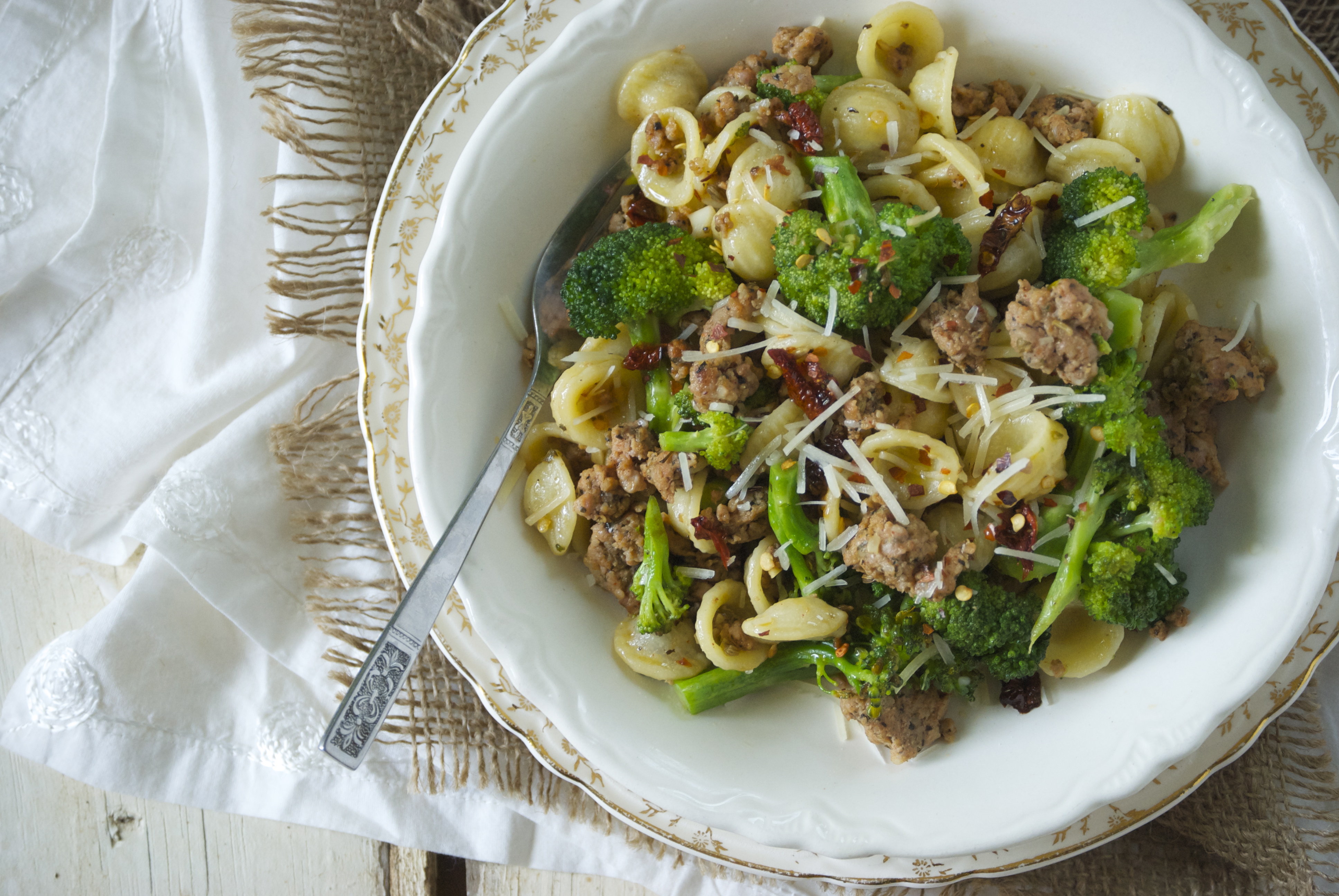
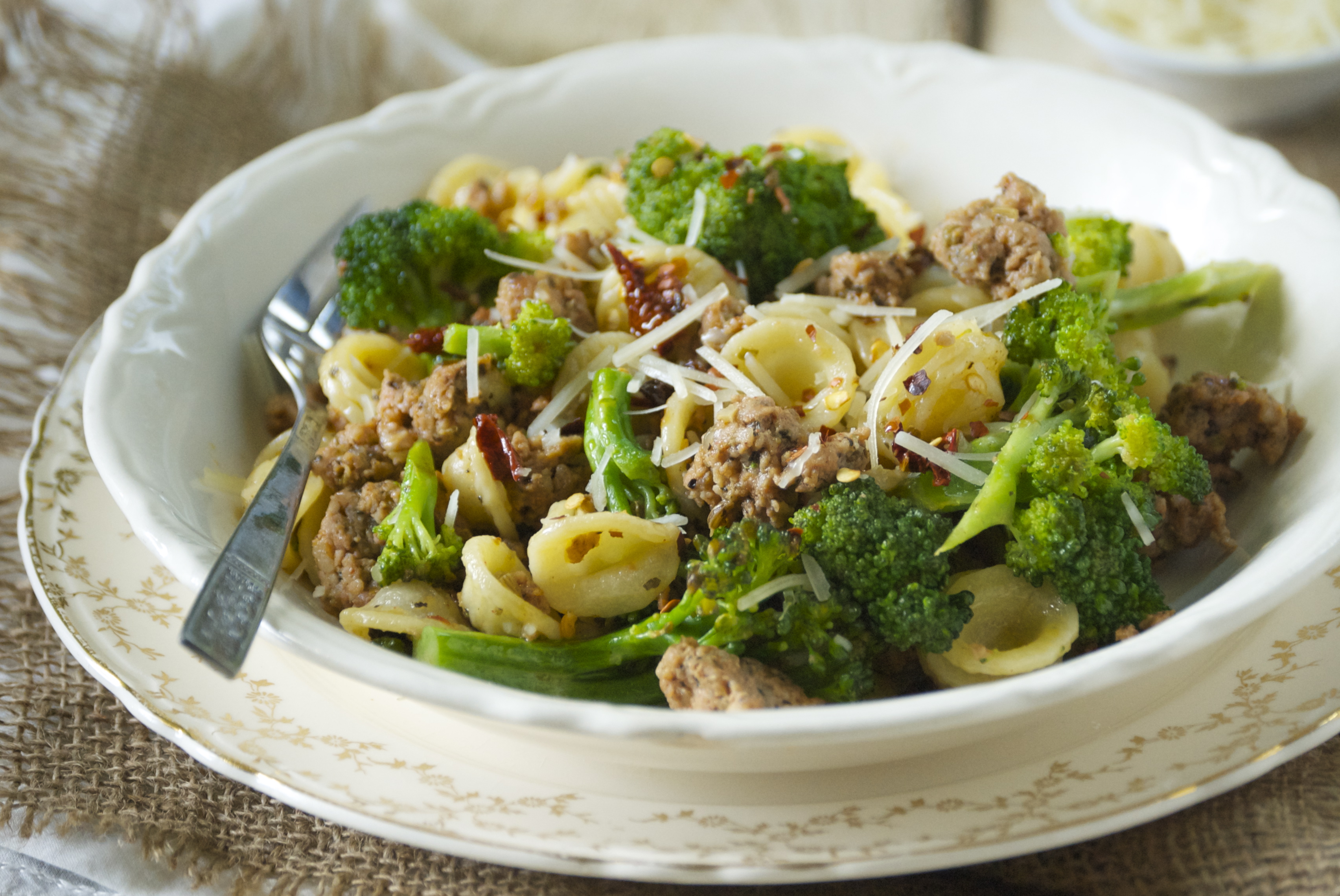
This orecchiette with sausage, broccoli, and sun-dried tomatoes, takes barely any time at all.  Maybe 30 minutes to get it on the table, if even.  I love to load a meal up with a healthy vegetable– the broccoli (or broccoli rabe, if you prefer) is just lovely in this dish.  Pairing it with sweet italian sausage is always a good decision.  Make sure to buy a good sweet italian sausage– we get ours locally and the spices are amazing!  And remember all of those sun-dried tomatoes I’ve been making?  The ones I put in a jar of olive oil are absolutely sublime in here.  If you didn’t dedicate the time to preparing your own, you can always buy a jar at your local market.  I like to kick this dish up with a few sprinkles of red pepper flakes and some freshly grated parmesan.  So, even if you’re pressed for time, I hope you can sit down and enjoy a delicious home-cooked meal.  Enjoy!

Orecchiette with Sausage, Broccoli, and Sun-Dried Tomatoes | Relishing It

The Recipe:  Orecchiette with Sausage, Broccoli, and Sun-Dried Tomatoes

(serves 4)

1 pound sweet Italian sausage

1 large head broccoli, cut into small florets (around 4 1/2 cups)

1/2 pound dried orecchiette

4 garlic cloves, minced

1/4 – 1/3 cup extra virgin olive oil  (or substitute part of it with the olive oil from sun-dried tomatoes, if you can spare any)

1/3  cup chopped sun-dried tomatoes in olive oil

1/3 cup (or more) parmesan cheese, for garnish

red pepper flakes, for garnish

Fill a large saucepan with water and bring to a boil.

In a large 12-inch skillet over medium-high heat, brown the sweet italian sausage.  Drain grease.  Meanwhile, cook the pasta.  To the skillet add the olive oil (if you can spare any from the sun-dried tomatoes, the flavor is incredible), garlic, and broccoli and cook until the broccoli is tender, but not mushy– about 5 minutes.  When the pasta is al dente (follow the cooking instructions), reserve a bit of the water, and drain the rest.  Add the hot pasta to the pan of sausage and broccoli.  Toss in the sun-dried tomatoes.  If more moisture is needed, either loosen with more olive oil, or a bit of pasta water.  Salt and pepper, as needed.  This is big– don’t forget the salt!  Top with parmesan cheese and red pepper flakes.  Enjoy!

Thanks for stopping by Relishing It!

Laurie

Read Full Post »

Garlic Habanero Hot Sauce | Relishing It

There’s a fair chance that our household goes through more hot sauce than any other in the Twin Cities.  I often wish it was sold in vats, rather than puny little bottles.  Speaking of those bottles, we have no fewer than six different kinds of hot sauce in the refrigerator.  And I’ve just added a seventh– my own.  I knew I wanted to make hot sauce this year, and I was initially interested in making a fermented version.  But after talking to a vendor at our farmers market (and I love his unfermented styles), I decided to forge ahead and make a fresh super-spicy version.

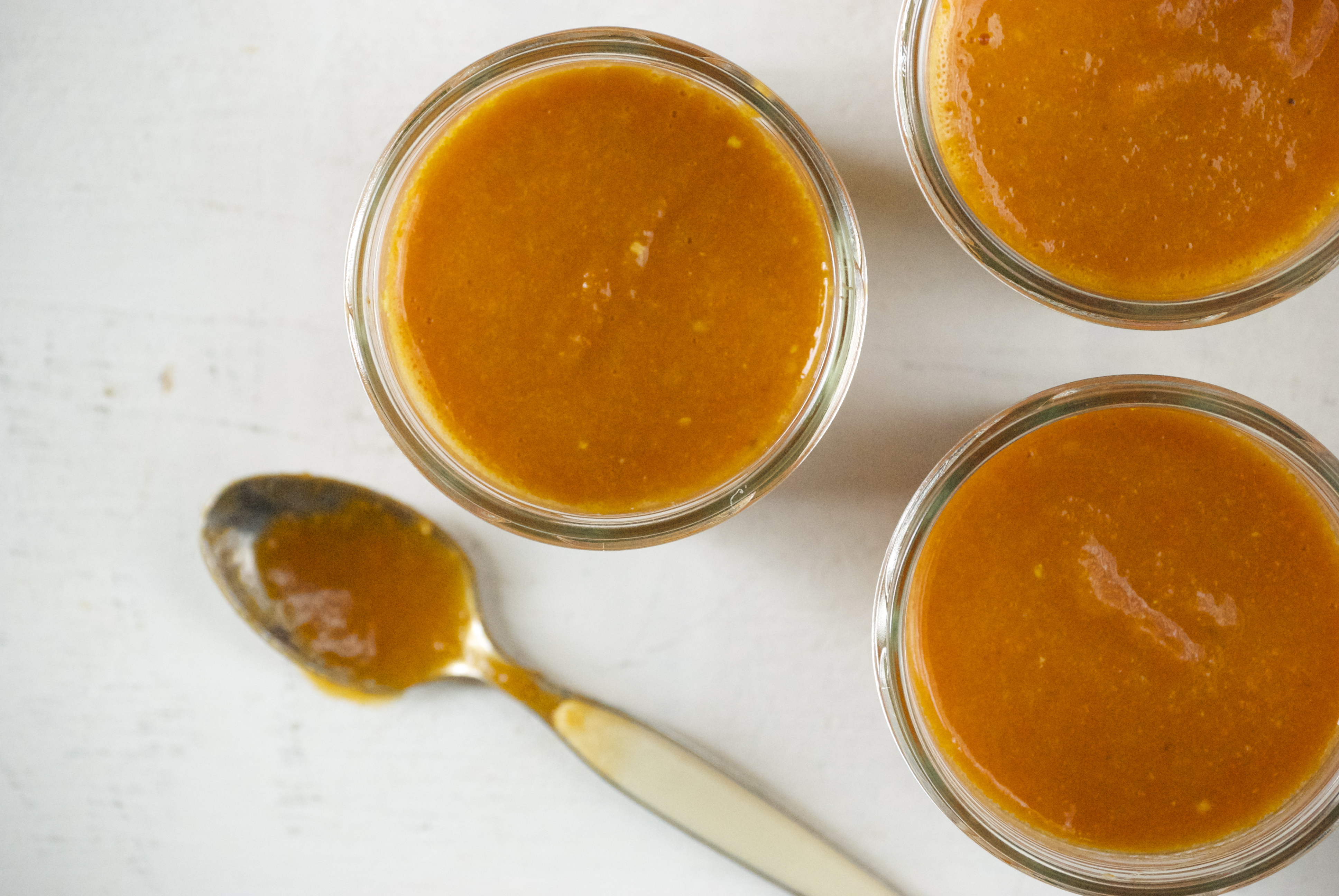
Garlic Habanero Hot Sauce | Relishing It

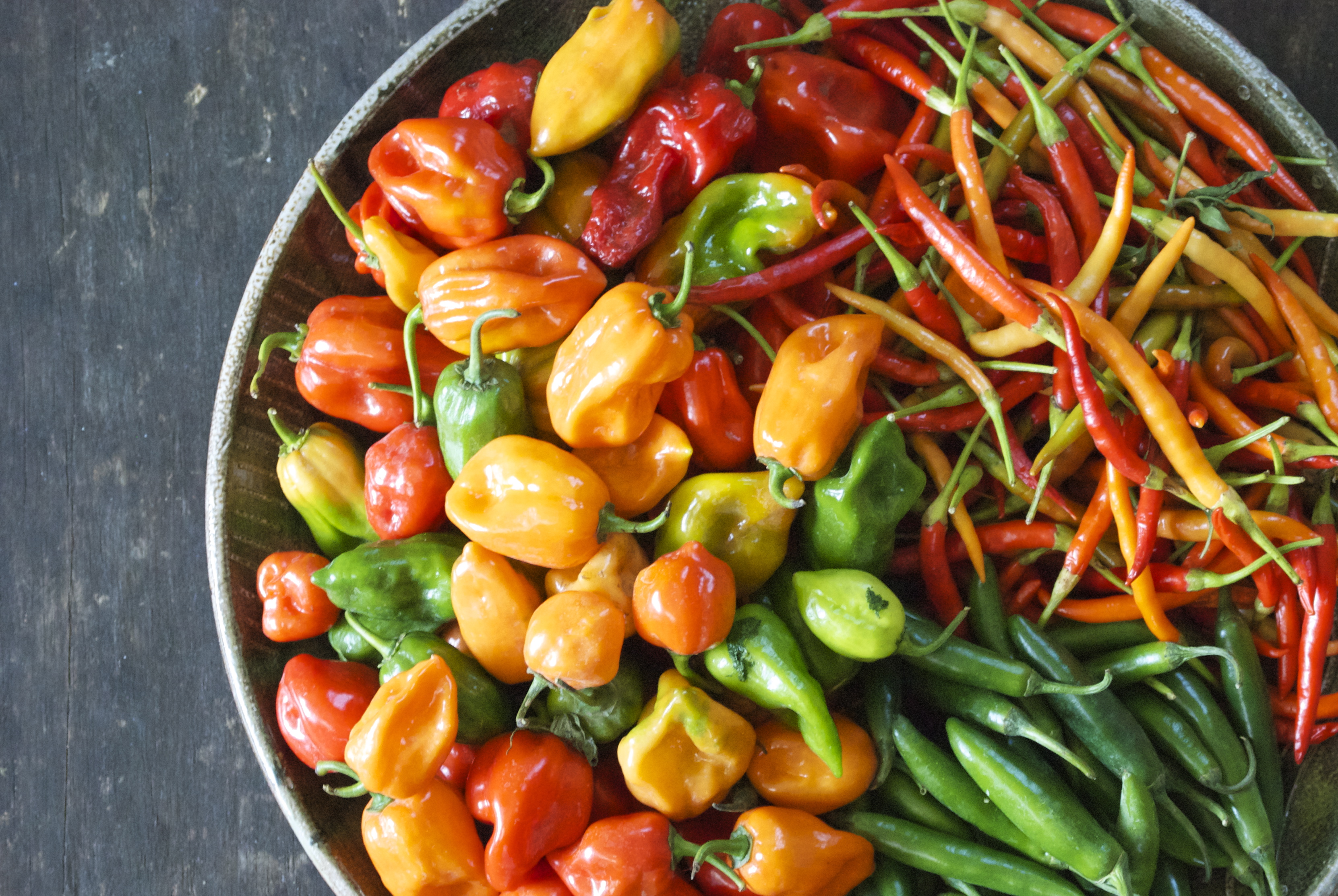
This hot sauce is not for the timid.  It will make you tough or else destroy you.  The primary pepper is the amazing habanero.  I just love it’s unique, sweet, flavor.  With the first bite, it plays nice, and you think, “That’s not so hot.”  But then the burn starts to build.  Of course, you keep eating because it tastes so good, and while the heat is ratcheting up, you think you can handle it.  You start sweating, thinking maybe you should go grab a glass of milk, but no, just one more bite.  And then your face melts off.  That’s this hot sauce.

Garlic Habanero Hot Sauce | Relishing It

Obviously this recipe isn’t for everyone.  But, for those of you who enjoy a good habanero hot sauce, it’s pretty darn amazing.  It has a nice balanced combination of the sweet habanero flavor, a bit of garlic, and vinegar.  It’s also really easy to make.  I decided against making a canned version, instead opting for something that will keep for a while in my refrigerator.  I haven’t tracked down any cute little hot-sauce bottles in the area yet (hence the jars you see here), but I found some on Amazon that are going to work marvelously.  Enjoy!

Garlic Habanero Hot Sauce | Relishing It

The Recipe: Garlic Habanero Hot Sauce

(makes about 3 cups)

1 pound fresh habanero peppers

1 – 1 1/2 bulbs of fresh garlic, peeled and chopped

2 1/4 – 2 1/2 cups white vinegar

1/2 teaspoon kosher salt

Note: Working with habaneros is serious business.  Use plastic or latex gloves, if you have them.  Be careful of what you touch.  Also, be mindful of how close you breath-in near the chopped peppers– or coughing will ensue.

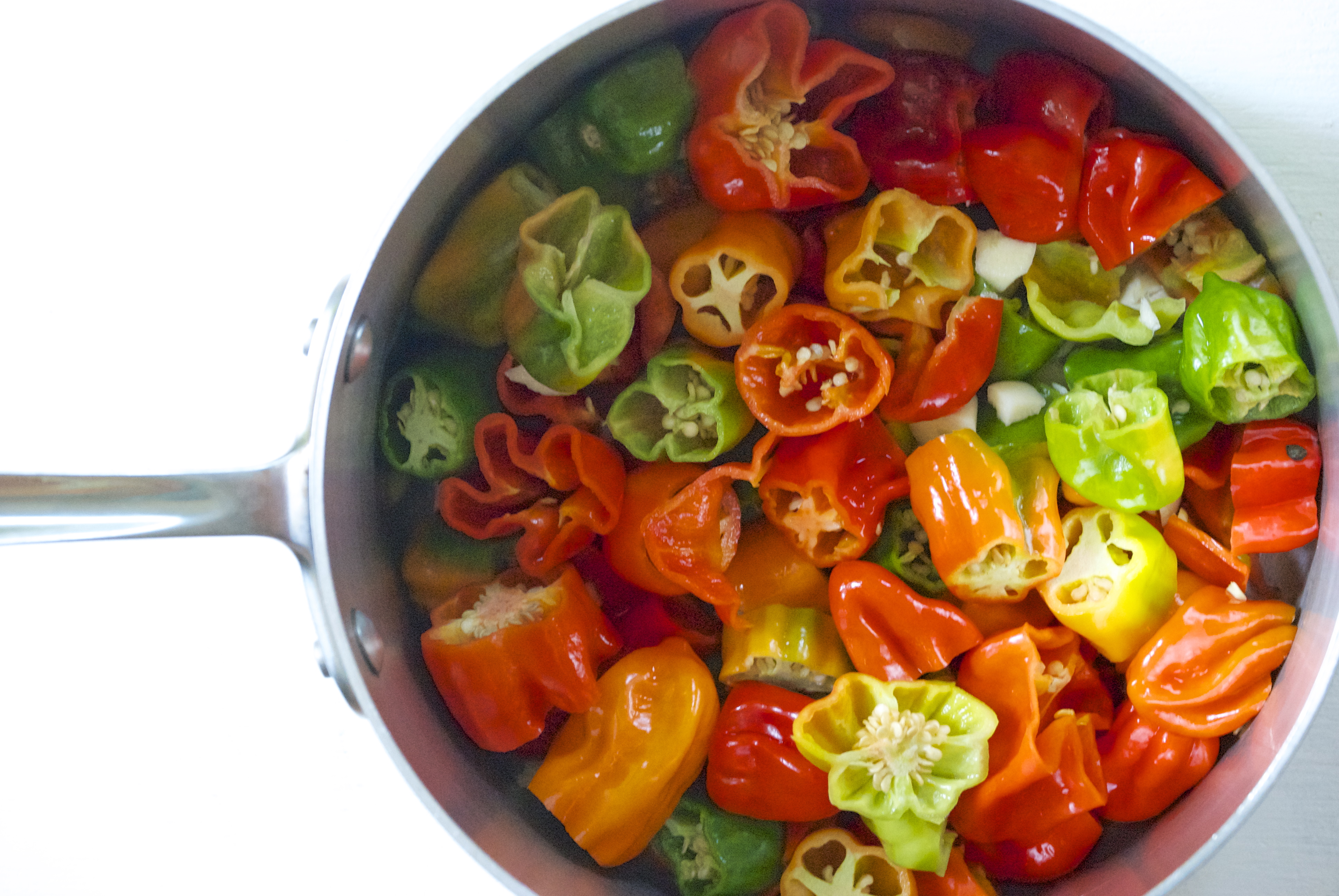
Carefully remove the stems from the habaneros and chop them, seeds and all.  Place the habaneros, garlic, salt, and 2 1/4 cups of white vinegar in a large saucepan.  Cook the habaneros on medium/high heat for about 30 minutes, or until the peppers feel a bit soft to the touch  (note: be cautious when removing the lid to check the peppers).  When they are soft enough, place the mixture into a blender, or food processor.  Blend until smooth.  Taste.  If you still want a bit more tang, add the remaining 1/4 cup of vinegar.  Place in jars or bottles and store in the refrigerator.  Enjoy!

Thanks for stopping by Relishing It!

Laurie

Read Full Post »

Perfect Canned Summer Salsa | Relishing It

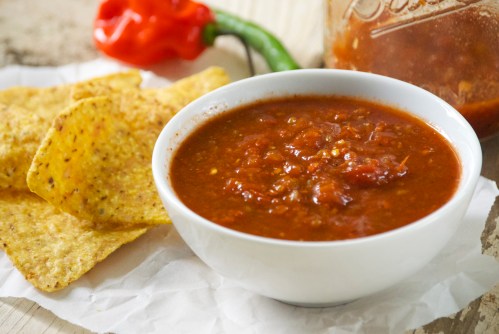
Alright everybody, this post has been a long time coming.  We have here one of my most cherished recipes.  It’s the salsa that causes me to miss out on the first few weeks of fall.  I’m busy chopping tomatoes and canning so many batches that I don’t get a chance to get out and enjoy the beautiful weather.  Sounds a bit exaggerated, I know.  But, it’s not.  Now don’t let my canning-in-bulk experience deter you from making this wonderful salsa.  Obviously you need not make as many batches as I do, and realistically you should be able to get everything done in one sitting.  That is, until your friends and family get a taste of it…

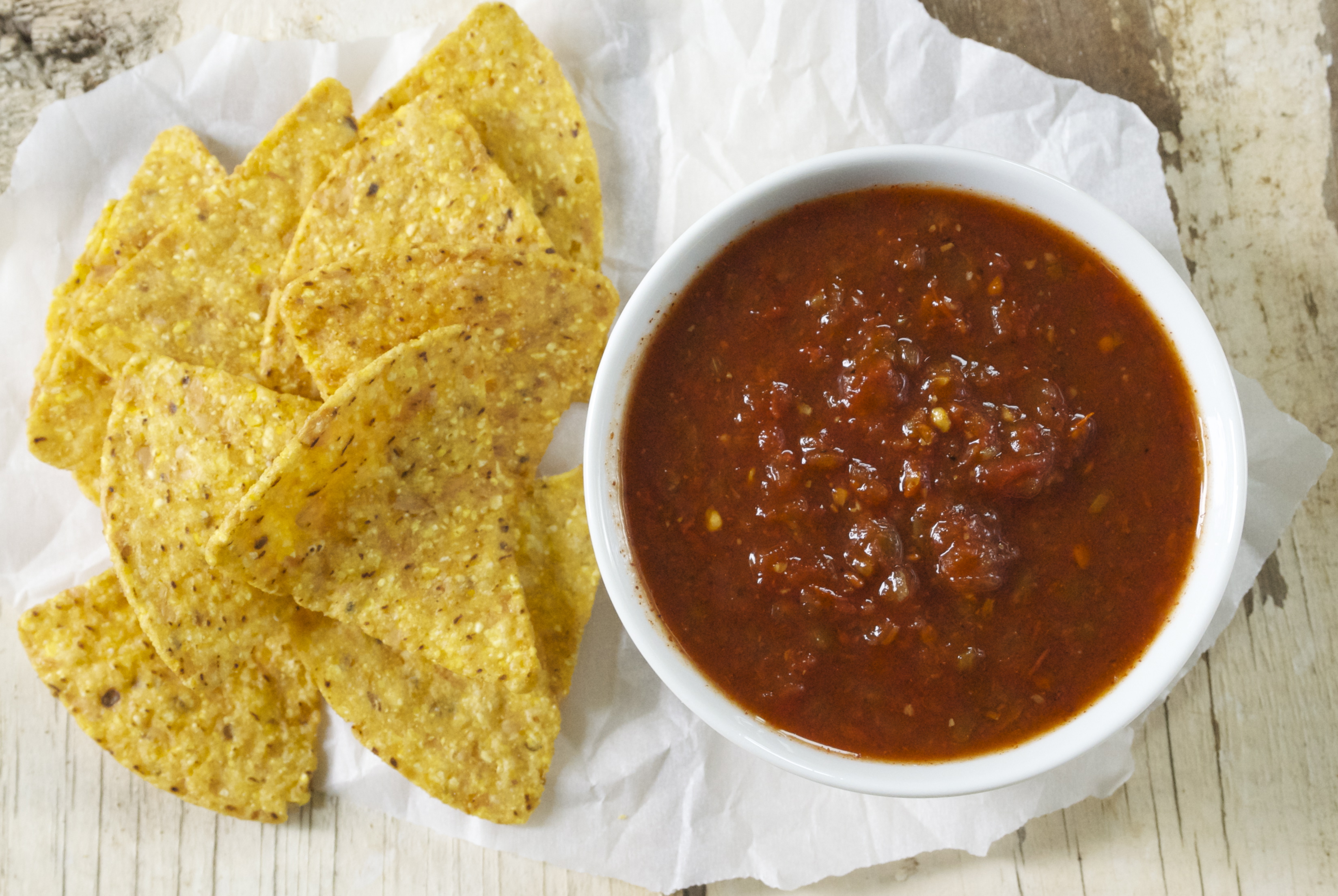
Perfect Canned Summer Salsa | Relishing It

I know that was a bit of bragging, but the truth is, nearly everyone I’ve share this salsa with has loved it.  I started small, giving a few jars here and there to family.  Then friends had a chance to sample it at get-togethers, and suddenly I was spending a few weeks every September in the kitchen making batch after batch.  Even now, I inevitably run out of jars to give away by winter’s end.  For me, all the time spent with boxes of tomatoes and piles of peppers is worth it.  I like to share–it’s like giving a little part of myself to those closest to me.  Sometimes, the easiest way for me to say I care is through food.
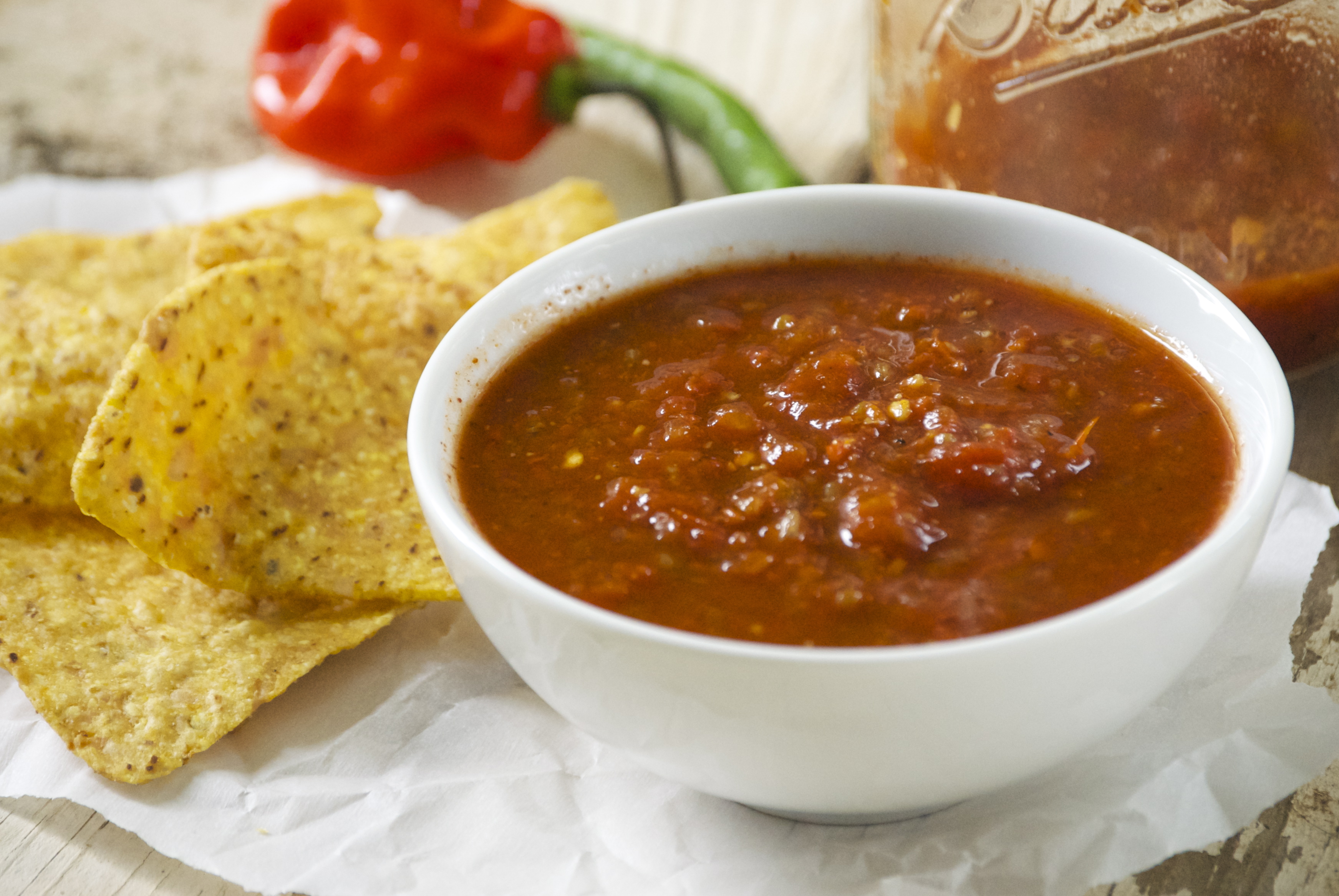
Perfect Canned Summer Salsa | Relishing It

I started making a version of this salsa years ago– Radd’s aunt shared her base recipe with me.  Over time and many, many experimental batches, the recipe evolved into what you see here.  As you likely know, we like things spicy in our house.  For those less-courageous friends, as well as our kids, I make a much milder version.  The point is, you really have full control over how fiery you want this salsa to be.  If you have questions on how much heat a specific type of pepper adds, take a look here for comparison.  This year I made my mild version, but for my hotter “Inferno” batches I used a pile of habaneros.  And this weekend I tracked down some Bhut Jolokia “Ghost” peppers  (1,000,000+ Scovilles!) for a batch that I hope will be face-meltingly hot for my husband, who is crazy.
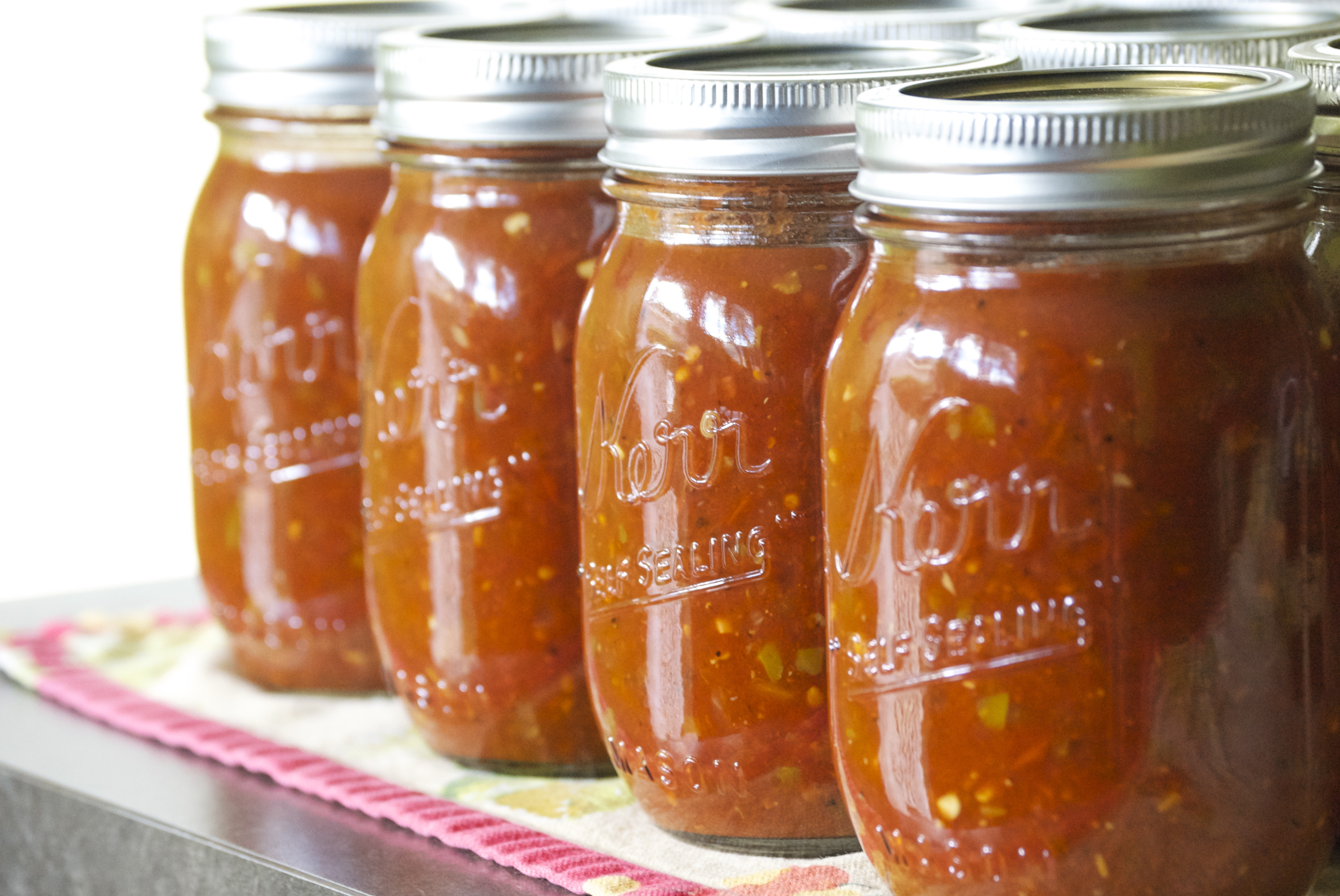
Perfect Canned Summer Salsa | Relishing It

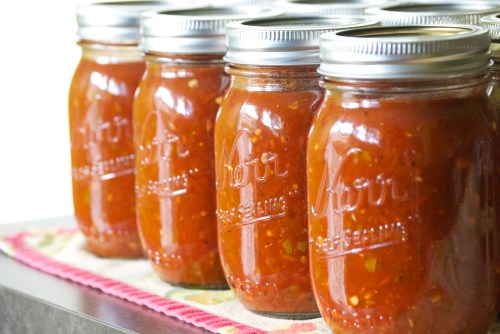
Aside from control of the heat, you can also vary how chunky you want the salsa to be.  Over the years I’ve changed my method.  I used to roughly chop everything and then use an immersion blender at the end for a very smooth texture.  More recently, I’ve stopped doing that, since I like my salsa to have a few more chunks.  Instead, I pulse everything in the food processor before cooking it.  It cooks down to the perfect consistency for my taste.  If you don’t have a food processor– you can just chop, chop chop!  To be honest, the bulk of the work in making salsa is chopping the ingredients– the rest is a waiting game.  Waiting for it to become the right consistency.  Waiting for it to process in the water bath.  All in all, it generally takes me about 3-4 hours from start to finish.  But it’s well worth the time.  Especially when you get to open up a jar and settle in front of the t.v. during a January snowstorm.

Perfect Canned Summer Salsa | Relishing It

Just a few notes on preserving your salsa.  Since this recipe is my own, it obviously doesn’t come from a canning website.  Canning is a big responsibility.  It’s not difficult, but there can be risks.  I’ve poked around the internet to compare this recipe with others for safety purposes.  The amounts and ratios of vinegar, tomatoes, and peppers is typical of many from canning sites.  I’ve made my salsa this way for about 15 years and have never encountered a problem.  Even so, if you do have any concerns, I suggest taking a look at one of the many websites and blogs devoted to canning.

Perfect Canned Summer Salsa | Relishing It

So, for those of you who have been patiently waiting for me to share this recipe– here you go!  I hope you love it so much that you make batches upon batches for your family and friends, as well.  Cheers.

The Recipe: Perfect Canned Summer Salsa

(makes about 14-15 pints.  Though I generally get different amounts each batch.  Much will depend on the water content of your tomatoes and how long you cook the salsa.)

16 cups chopped tomatoes  *measured in a liquid measuring cup after they have been through the food processor  (about 8 pounds) I use big, huge canning tomatoes– no need to peel them

3 large green bell peppers, chopped

3 large white onions, chopped

2 bulbs of garlic, chopped  (not 2 cloves–2 entire bulbs!)

hot peppers, seeds too  (to your liking)  *See Note

5 tablespoons ancho chili powder

3 tablespoons canning salt

3 tablespoons granulated sugar

2 tablespoons coarsely ground black pepper

2 teaspoons smoked paprika

1/2 teaspoon of EACH of these:

ground cumin, onion powder, garlic powder, and oregano

1 cup plus a splash extra cider vinegar

15 ounce can of plain tomato sauce- preferably organic and definitely without added sugar  (Muir Glen works well)

Note:  You can make this salsa as hot or as mild as you want.  I would suggest using about 3 jalapeños for a mild version.  I chop the seeds and all.  It won’t be spicy, but the jalapeños will give it a great flavor.  For our favorite version that we call “Inferno”, I use: 12 habaneros, 5 jalapeños, 12 chilis, and 8 serranos.  If you do enjoy hot salsa, I would encourage you to seek out some habaneros, as their unique, almost sweet-like flavor cannot be beat.  When working with the very spicy peppers, it is a good idea to use plastic or latex gloves, if possible.  Be very careful about what you touch.  Also, be careful about inhaling too closely to the chopped peppers.  

Note: Jars and rims can be re-used over and over again.  Lids (the flat piece with a glue-like substance)  needs to be replaced every time you can something.  

You will need:  A very large heavy-bottomed canning kettle to hold all of the chopped ingredients.  Another very large kettle (or two) to process the filled jars of salsa, and hopefully a rack to set on the bottom of it (though you’ll be fine without, too).   A small saucepan to boil the lids and tongs to lift them out of the hot water.  A ladle to fill the jars.  A jar lifter, to remove the processed salsa from the hot water bath.  Paper towels, for wiping the edge of the jars clean.  15-16 pint jars with lids and rims.

Let’s get started!  Use a food processor (or a knife and cutting board) and pulse each type  of vegetable separately.  I do mix the onions and garlic together.  You will not want large chunks and you will not want it finely puréed, but something in between.  Place all of the ingredients for the salsa into a large heavy-bottomed kettle and stir.  Bring to a boil, then reduce heat to medium (uncovered) and let cook for about an hour (or more), or until it is your desired consistency.  It should be bubbling, but not at a rolling boil.  You may need to cook it longer to get it as thick as you want it.  A lot will depend on your tomatoes and their water content.  Make sure to stir frequently, to avoid scorching.

Meanwhile, fill a large canning kettle (or two) halfway full of water and begin to heat.   You will be using this to give your filled jars a hot water bath.  I used to use two smaller kettles for this, but recently discovered that my husbands huge kettle for brewing beer worked very well.  If you can fit a cooling rack on the bottom, do it.  It’s good to not have the jars on direct heat– but, you should be fine if you don’t have one.  At this point, you should have decided how you want to sterilize your jars and rims.  Some people like to dip them in the boiling water to do so.  I use my dishwasher on the “sterilize cycle” and time it out for them to be done just as the salsa is ready to be jarred.  You will also want to fill a small saucepan with water and place the lids in it.  Turn it on low/medium– this is an important step as it not only sterilizes the lids, but more importantly, it softens the glue-substance, so it can seal properly.

When your salsa is ready, begin ladling each jar with salsa.  Make sure to leave about 1/4 – 1/2-inch space at the top.  Wipe the edge of the jar clean with a wet paper towel.  Place a lid (using tongs to grab them out of the hot water), and then a rim on each jar.  Repeat until all the jars are full and the salsa is gone.  Next,  use a jar lifter to gently place the filled jars into the hot water bath.  Fit as many as you can into the kettle.  The jars should be covered with boiling water.  Cover and process for 20 minutes.  Remove using the jar lifter and place on a kitchen towel.  You will most likely hear the seals start to pop within minutes.  This is a good thing.   Repeat until all the jars are processed.  After a few hours, touch the tops of the jars, they should all be flat against the jar and not make a sound if tapped.   If not, it did not seal properly and you should place that particular jar in the refrigerator and use first.

Alright!  You did it– let me know if you have anymore questions.  I hope I covered everything.  Your first canning experience may seen lengthy, but the more you do it, the more comfortable you will become.  Enjoy!

As always, thanks for stopping by Relishing It!

xo

Laurie

Read Full Post »

Carnitas Tacos and Fresh Tomatillo Salsa via Relishing It

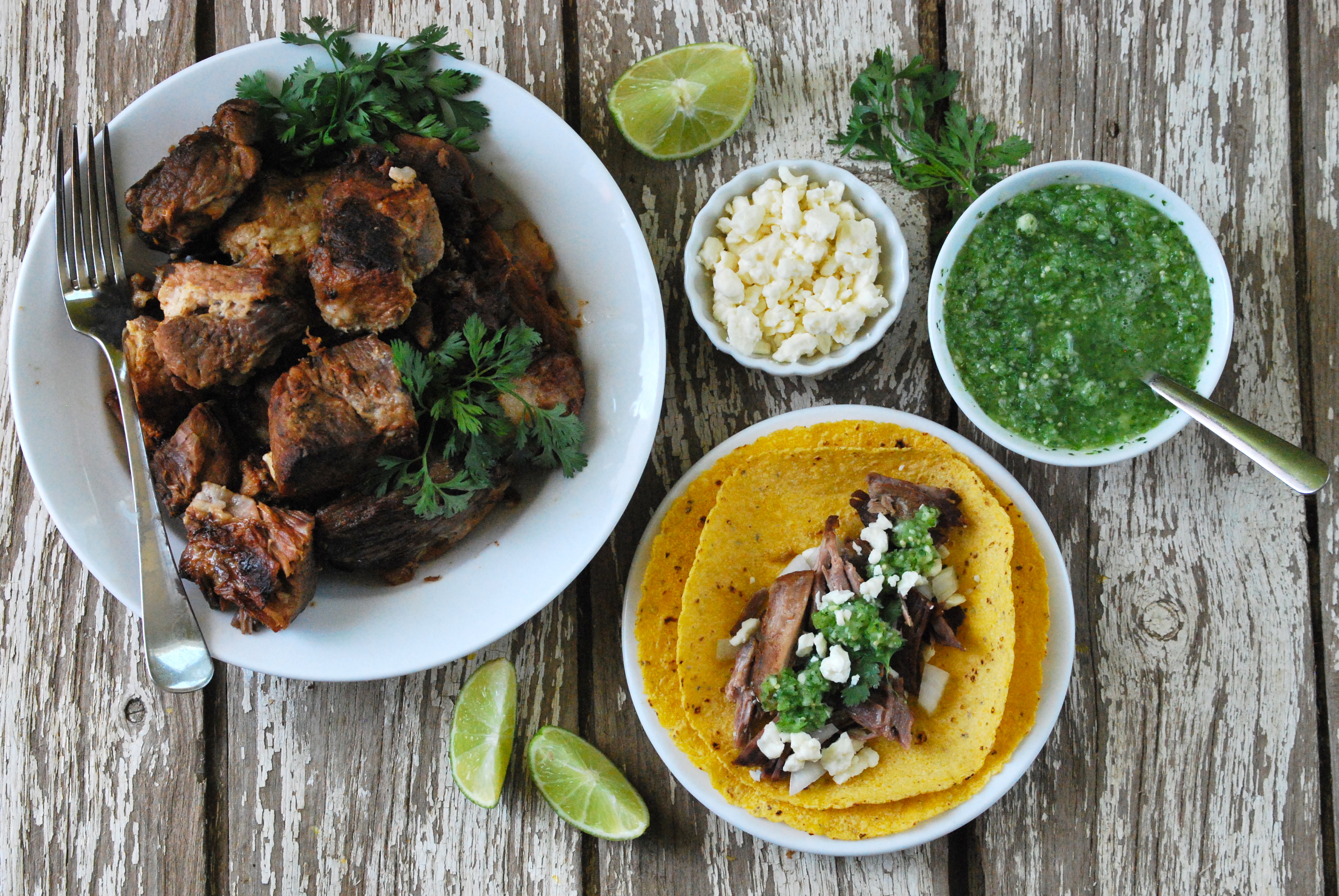
I’m now well into my sixth month of being obsessed with tacos.  Seriously, we’ve been eating them at least once a week for more than a half year, and I’m not even close to getting sick of them.  Tacos al pastor?  Sure.   Spicy shredded beef?  Yes.  And then there are these amazing carnitas tacos that we’ve been enjoying.  They’re perfect to prepare in advance (and I live for meals like this in the summer), they’re healthy (if you don’t go overboard), and they’re oh so tasty.

Carnitas Tacos and Fresh Tomatillo Salsa via Relishing It

Carnitas Tacos and Fresh Tomatillo Salsa via Relishing It

Carnitas Tacos and Fresh Tomatillo Salsa via Relishing It

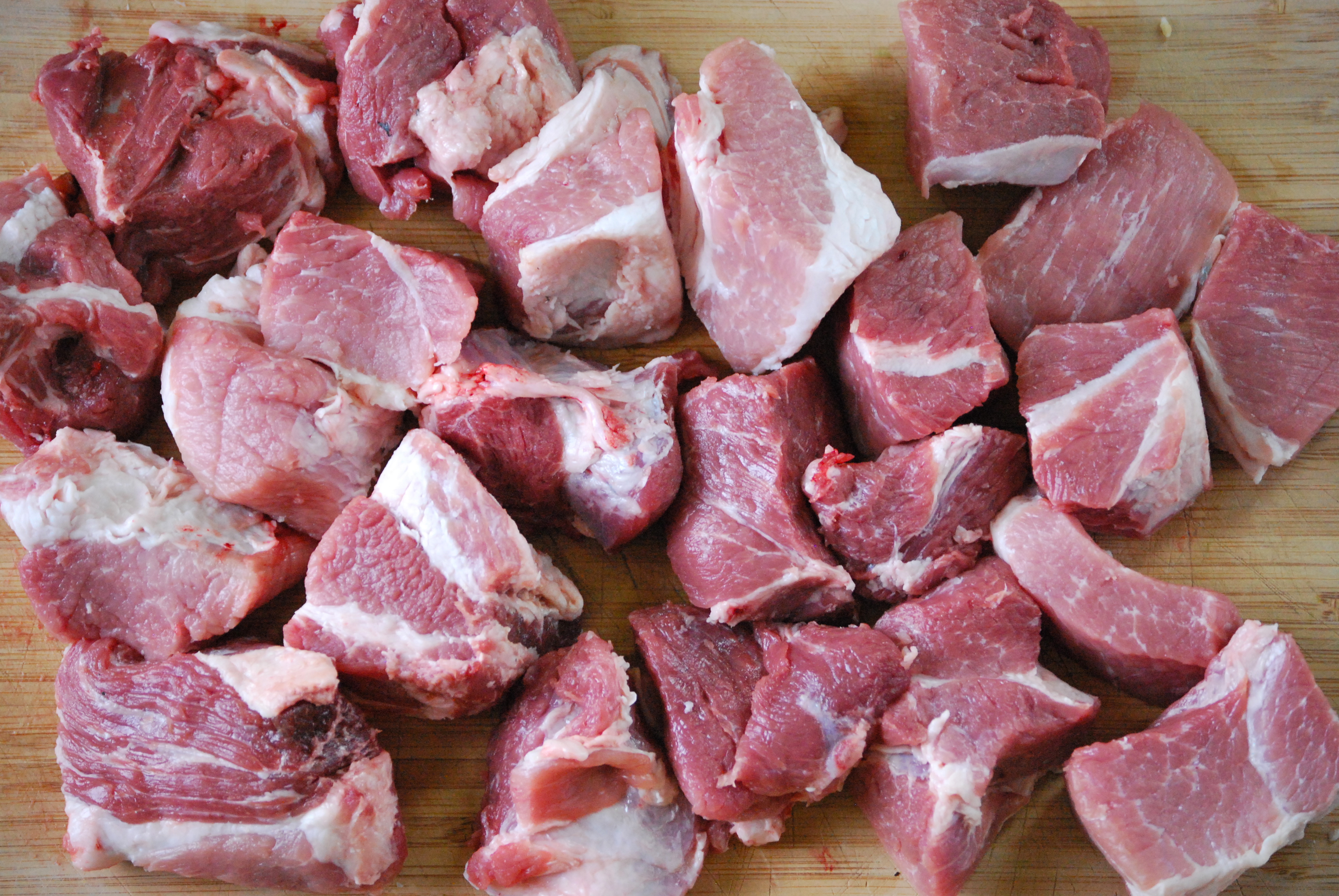
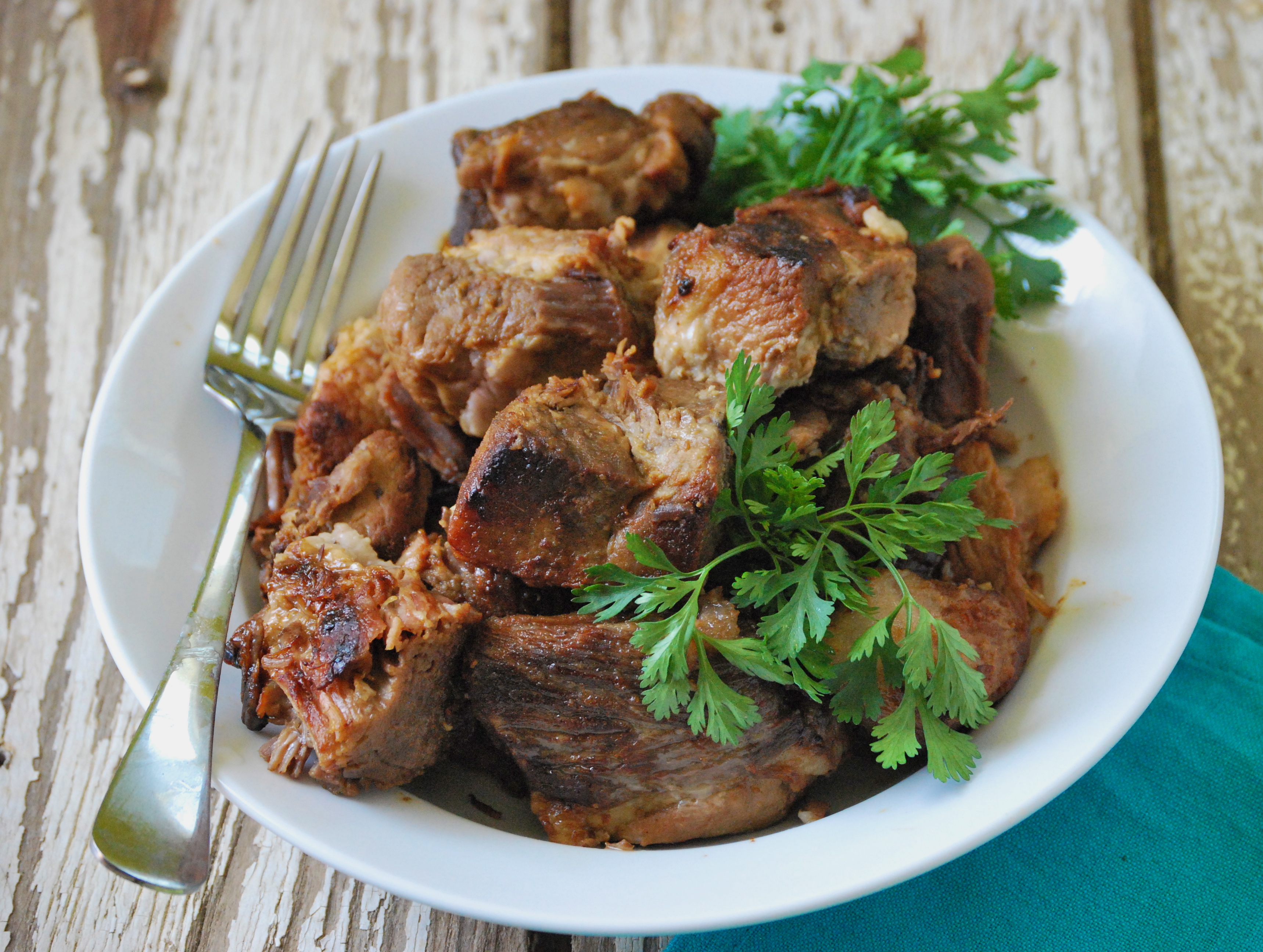
Carnitas, or “little meats”, can be served simply as a stand-alone dish, but I love it in these tacos even more.  It’s a new addition to my repetoire, which also includes these, and these— both of which are also favorites.  This carnitas version combines the lively flavors of lime and orange, which pair beautifully with pork, cumin, and garlic.  The recipe couldn’t be simpler–  you can make it on the stovetop.  Perfect for when firing up the oven in the summer heat doesn’t sound so tantalizing.  Put all of the ingredients into a pot, no sautéing required.  When cutting your pork shoulder up into cubes, don’t trim off any fat– you’re going to need that so the meat doesn’t get dry.  Let it cook down for about 2 hours and then sear the pork at the end.  That’s it.  Did I mention that it’s completely delicious?

Fresh Tomatillo Salsa via Relishing It

Carnitas Tacos and Fresh Tomatillo Salsa via Relishing It

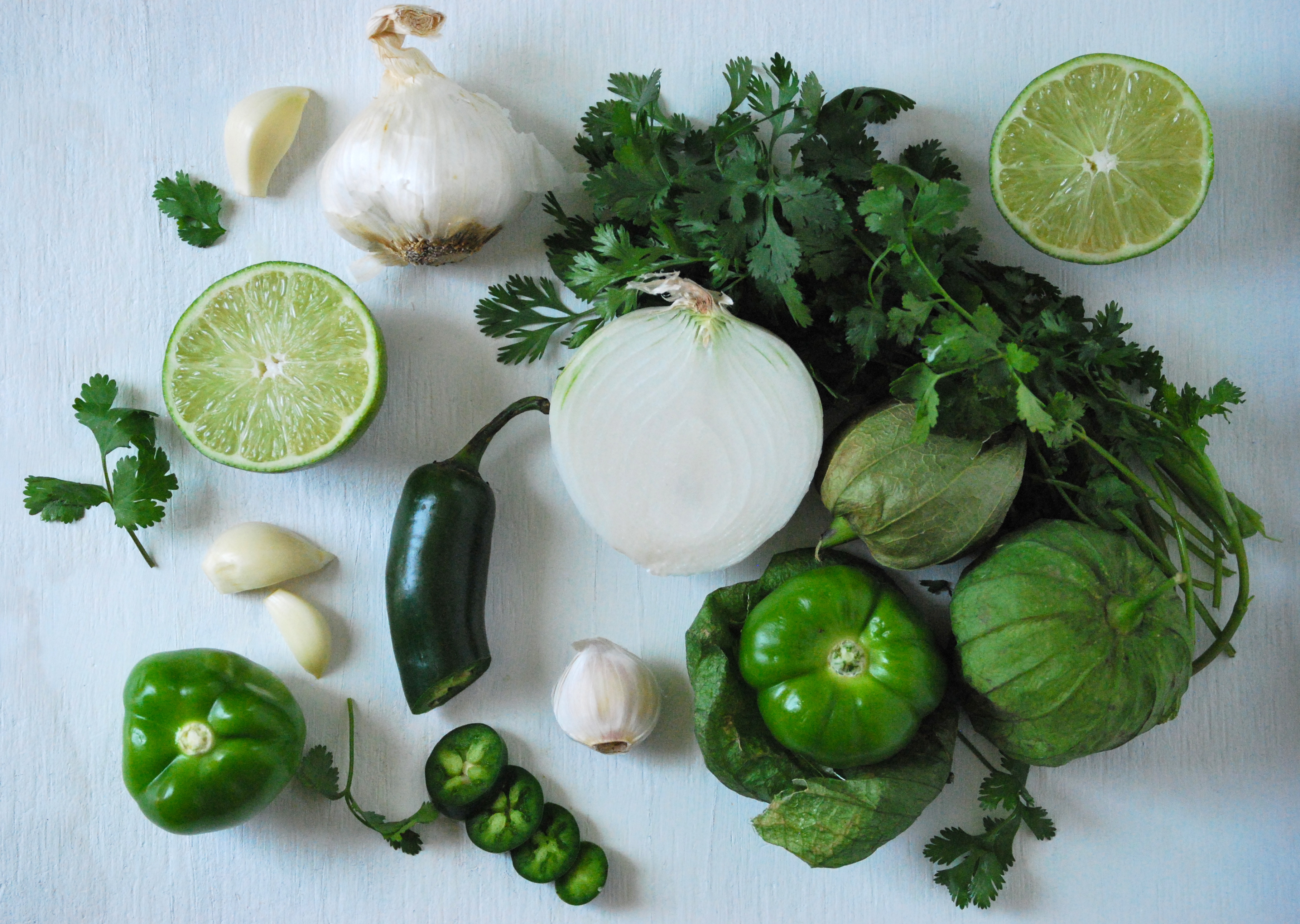
The fresh tomatillo salsa is a fantastic compliment to the carnitas.  You may be tempted to buy a ready-made salsa from the store, but don’t.  The freshness of this topping cannot be bottled and you’ll end up spending more on a store-bought version that pales in comparison.  It only takes a minute to either chop or pulse the ingredients together– definitely worth your time.  And as far as toppings go, I’m stuck on queso fresco cheese, white onions, and cilantro.  The combination is sublime and it tastes so fresh.  Hope you enjoy them as much as my family does.

Carnitas Tacos and Fresh Tomatillo Salsa via Relishing It

The Recipe: Carnitas Tacos and Fresh Tomatillo Salsa

For the Carnitas:

4 pounds boneless pork shoulder, cut into 2-inch cubes (do not trim the fat)

2/3 cup freshly squeezed orange juice (about 3 oranges)

1/3 cup freshly squeezed lime juice (about 3 limes)

1 1/2 teaspoon cumin seed, toasted then ground

2 teaspoons kosher salt

6-7 garlic cloves, chopped

Corn tortillas, queso fresco cheese, limes, cilantro, and white onions for toppings

For the Tomatillo Salsa:

4 tomatillos

1/2 medium white onion

4 garlic cloves

1 jalapeño

small handful of cilantro (around 1/3 cup)

juice of 1 lime

kosher salt

To make the Carnitas:  Place all of the ingredients into a large Dutch oven.  Add enough water to just cover the pork.  Bring to a boil, then simmer the pork uncovered for about 2 hours.  Do not touch the pork.  Let it do it’s thing.  After 2 hours, bring the heat up to medium/high and begin reducing the liquid for about the next 45 minutes.  When the liquid is mostly gone, sear all the sides of the pork pieces.  They will be tender and practically fall apart.  Keep a watchful eye at this point, as you don’t want them to burn.

To make the Tomatillo Salsa:  Rough chop the ingredients and place them into a food processor and give them a few pulses until the salsa is your desired consistency.  Alternatively, you can chop all of the ingredients by hand.  Make sure to season correctly with salt.

Source:  Carnitas recipe adapted from The Homesick Texan

Thanks for stopping by Relishing It today!

Laurie

Read Full Post »

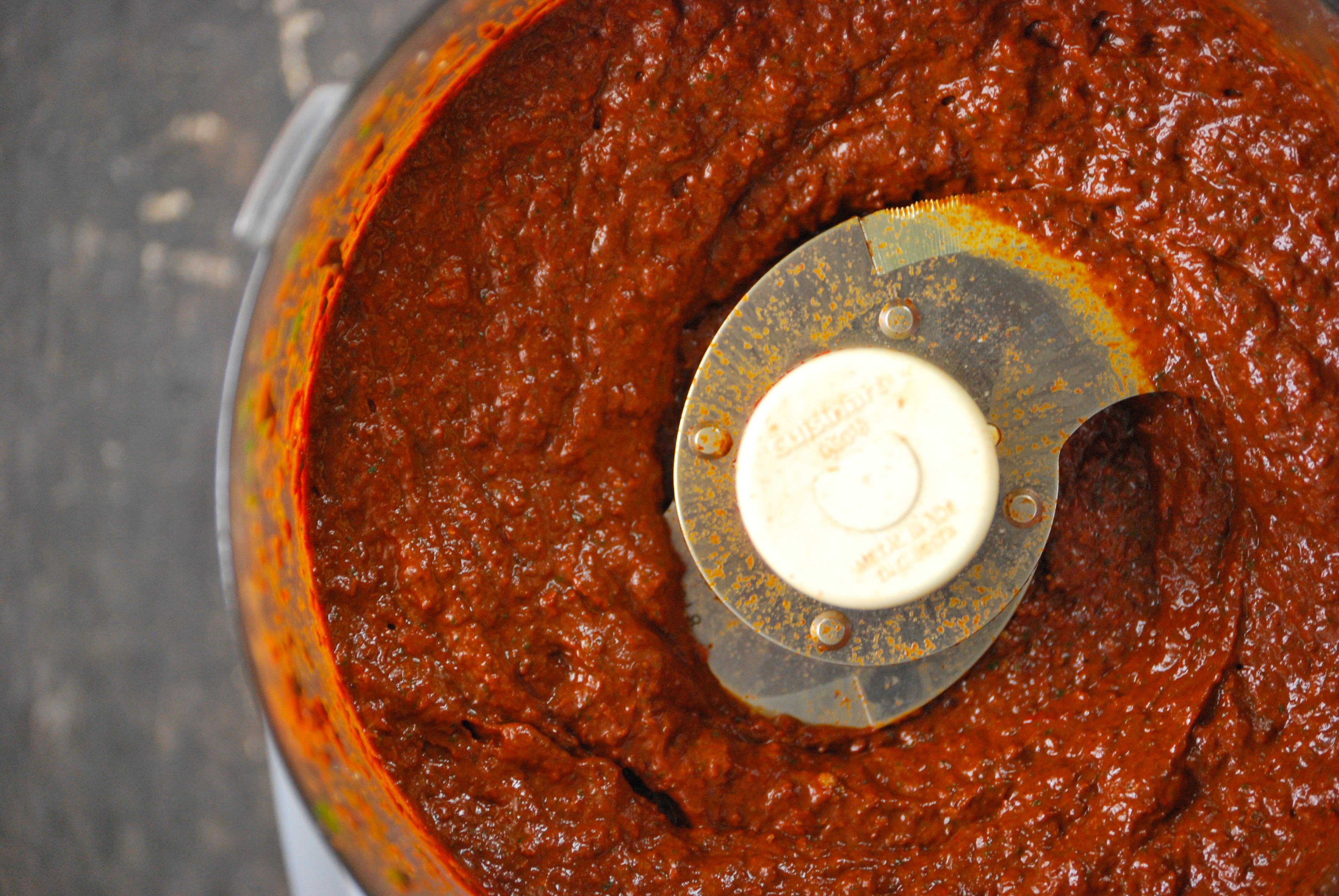
Homemade Harissa via Relishing It

If you’ve spent much time reading food blogs or magazines, you probably know what harissa is, but for those of you that don’t (Hi Dad!), let me fill you in.  Harissa is a North African condiment made mostly from peppers and spices.  And it is amazing.  Like a punch-of-flavor-to-your-tongue amazing.  It’s often found on Moroccan tagines, but I’ve found so many more day-to-day uses for it.  I love to slather it on sandwiches.  Try it on this meatloaf with a bit of mayonnaise and some hot peppers.  Heavenly.  It’s also fantastic on an egg sandwich where the yolk is still a bit oozy.  Crunchy salads, or paired with carrots– harissa transforms an ordinary meal into something divine.

Homemade Harissa via Relishing It

Lemon for Homemade Harissa via Relishing It

Homemade Harissa via Relishing It

Homemade Harissa via Relishing It

If you’ve been visiting Relishing It for awhile, or taken a stroll through the ‘menu’ section, you know that I love to make my own condiments.  It’s not difficult, and to be honest, they just taste better than those bottled versions that are mass manufactured and sit on the shelf for months.  This mustard, ketchup, and red curry paste are a few of my favorites.  Harissa isn’t quite so common, but there really are a ton of recipes out there, and they are all a bit different.  Some use tomatoes, some don’t.  Some use fresh herbs, others stick with dried spices.  For this harissa, I was looking for something a bit smokey, but not too spicey.  I also wanted it to have a fresh, herb flavor.  If you want more of a kick, you can simply add more cayenne pepper or choose a hotter variety of dried peppers for the base.  One nice thing about this recipe is that you can easily manipulate it to suit your own tastes.  For my  part, I think this one turned out perfectly, so I won’t be changing a thing.  Top your Harissa with a bit of olive oil to store in the refrigerator for an extended period of time, it should last a few months this way.  But…it won’t.  You’ll eat it up in no time.  It’s that good.  Hope you enjoy!

Homemade Harissa via Relishing It

Cheddar and Stout Meatloaf via Relishing It

The Ultimate Meatloaf Sandwich with Homemade Harissa via Relishing It

The Recipe:  Homemade Harissa

(Makes about 1 cup)

5 dried Ancho chile peppers

5 dried Guajillo chile peppers

3 cloves garlic, chopped

1 teaspoon cumin seed, toasted and ground with a mortar and pestle (or use the flat side of a large knife to smash them)

1 teaspoon coriander seed, toasted and ground with a mortar and pestle

2 teaspoons fresh lemon juice

2 tablespoons fresh parsley, chopped

2 tablespoons fresh cilantro, chopped

pinch of ground cayenne pepper, more to taste

3 tablespoons extra virgin olive oil

3 tablespoons champagne vinegar (white or red wine vinegar will also work)

1 tablespoon tomato paste

sea salt, cracked black pepper, to taste

3 tablespoons soaking liquid, or more, if needed

Place the dried peppers into a medium sized bowl.  Pour enough boiling water over them so they are covered.  Place a small plate on top of them to keep them submerged.  Cover the entire bowl with another larger plate, to keep the heat in.  Let sit for 1 hour.

When the peppers are soft, begin by reserving some of the soaking liquid.  Remove the peppers from the water.  Remove the stem and carefully dump out the seeds.  Place the peppers and the remaining ingredients into a food processor.  Process for a few minutes until completely smooth.  Taste.  Adjust seasonings and thickness, if necessary.  Store in a jar with a lid in the refrigerator.  Cover with a layer of olive oil, if intending to keep for an extended period of time (several months).  I don’t cover mine with olive oil, but I generally use it within a few weeks.  Enjoy the heck out of this!

Thanks for stopping by today, friends! xo

Laurie

Read Full Post »

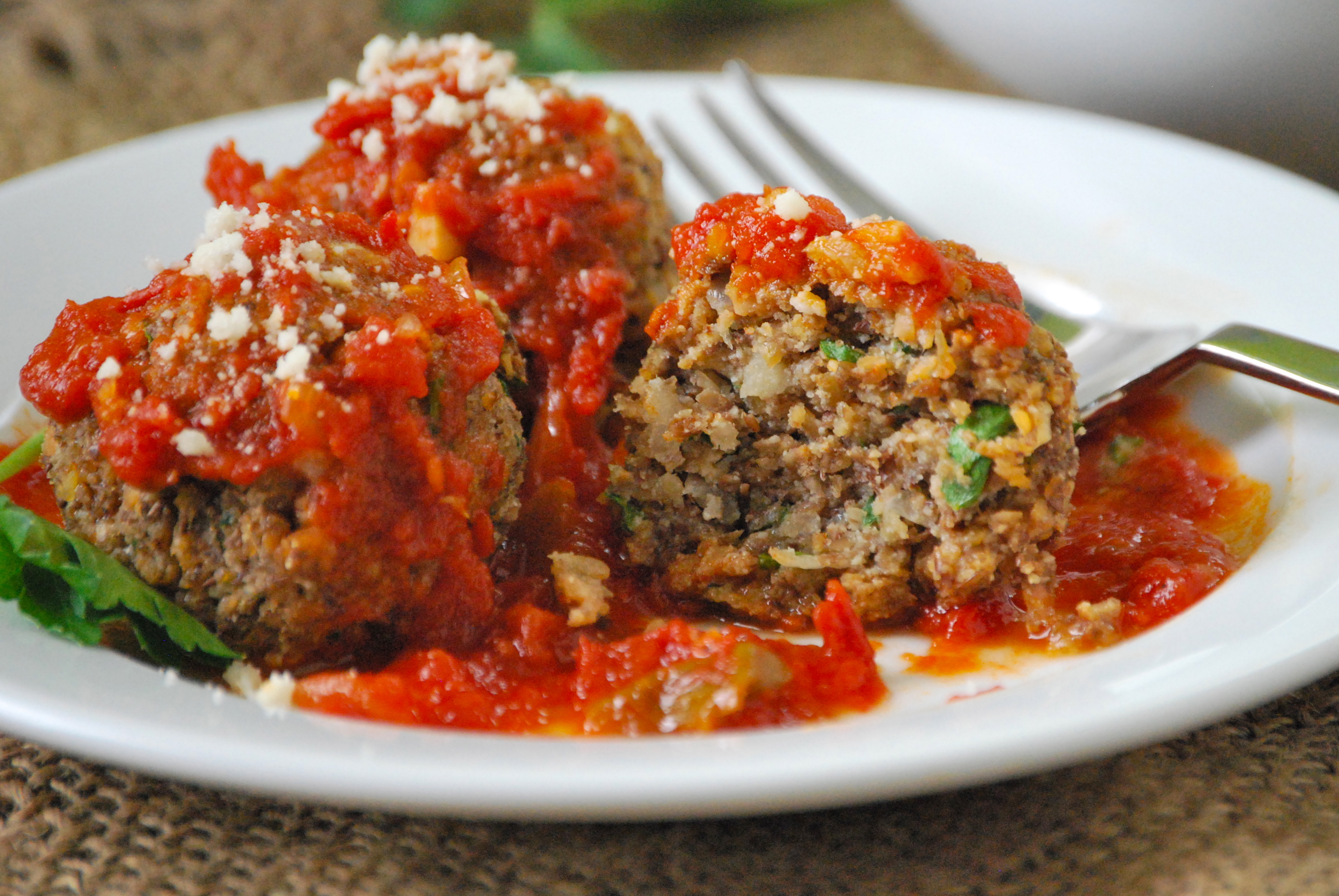
Vegetarian Lentil Meatballs via Relishing It

The calendar says that Spring is on the way, though the snowstorm that rolled through the Midwest over the last four days had my family looking for more warming comfort food.  I obliged, by making these meatless “meatballs.”  Yes, I realize calling something that has no meat in it a meatball is a bit ridiculous, but it sounds more generally appealling that “lentilballs.”  And to be honest, it gives you a better idea of what to expect.  I kid you not, these lentil meatballs have the same taste, texture, and appearance of traditional meatballs.

Brown Lentils via Relishing It

Lentil Meatball Ingredients via Relishing It

Not to belabor the point of how much this version tastes like a traditional meatball, but my husband– a complete carnivore and self-described ‘bean-hater’– devours them.  They’re made much like a traditional meatball, except for the addition of ricotta cheese.  It really helps bind the ingredients together and provides a rich texture.  I loaded these ones up with garlic, onion, parmesan, and parsley, but another nice thing about this dish is that it can be easily modified to evoke other ethnic food flavors.  Add a little curry powder, cilantro, and ginger; or to make a Greek version, add mint and oregano, and serve it with feta and tzatziki.  We enjoyed this latest batch with my homemade canned tomato sauce from last summer for an Italian vibe.  The point is, these little numbers are versatile enough to allow you to follow your imagination.

Vegetarian Lentil Meatballs via Relishing It

Homemade Tomato Sauce via Relishing It

In our family, we generally live by the “eat meat, though not all the time” mantra. These lentil meatballs are a great alternative, whether you’re like us or eat strictly vegetarian, and you still want that meaty texture and flavor.  The fact that brown lentils are also budget-friendly is a nice bonus.  Now if you’re interested in more traditional meatballs, I’ve got those for you too.  Take a look here and here for a few of my other favorite recipes.  And these are an interesting take that makes a nearly-perfect soup.  Heck, give them all a try and let me know what you think.  Enjoy!

Vegetarian Lentil Meatballs via Relishing It

Vegetarian Lentil Meatballs via Relishing It

The Recipe:  Vegetarian Lentil Meatball

(makes 40 small meatballs)

2 cups dried brown lentils

1 bay leaf

3 teaspoons kosher salt, divided

6 garlic cloves, chopped

1/2 cup whole wheat breadcrumbs, lightly toasted

2 eggs, lightly beaten

1/2 cup chopped onion

1/3 cup chopped parsley

3/4 cup ricotta cheese (mine was part-skim)

3/4 cup grated parmesan or grana padano cheese

freshly cracked pepper

To prepare the lentils:  Rinse the lentils and put into a large saucepan with 2 cups water, bay leaf, and 1 teaspoon of kosher salt.  Bring to a boil, then reduce to a medium-low and simmer covered for about 25 minutes, or until all of the water has been absorbed into the lentils.  Turn off the burner and let the lentils sit for about 10-15 more minutes covered.  The lentils will be tender when done, but still hold their shape.  Remove the bay leaf, and place the lentils in a food processor and process for about 1 minute, or until they are broken up.  The appearance will look like that of cooked ground beef.

Preheat the oven to 400°F.  Line the largest baking sheet you have with parchment paper.  Set aside.

To make the meatballs:  In a large bowl, combine the puréed lentils, garlic, breadcrumbs, eggs, onion, parsley, ricotta, parmesan, black pepper and 2 teaspoons of salt by mixing together with your hands.  Be careful not to over mix, as with all meatball recipes. Form smallish balls using your hands or a scoop– you should yield about 40.  Place on the prepared baking sheet and bake for about 18 minutes.  They will be a nice golden brown on the top and bottom when they are finished baking.  Serve right away.  Enjoy!

Thanks so much for stopping by Relishing It today!

xo

Laurie

Read Full Post »
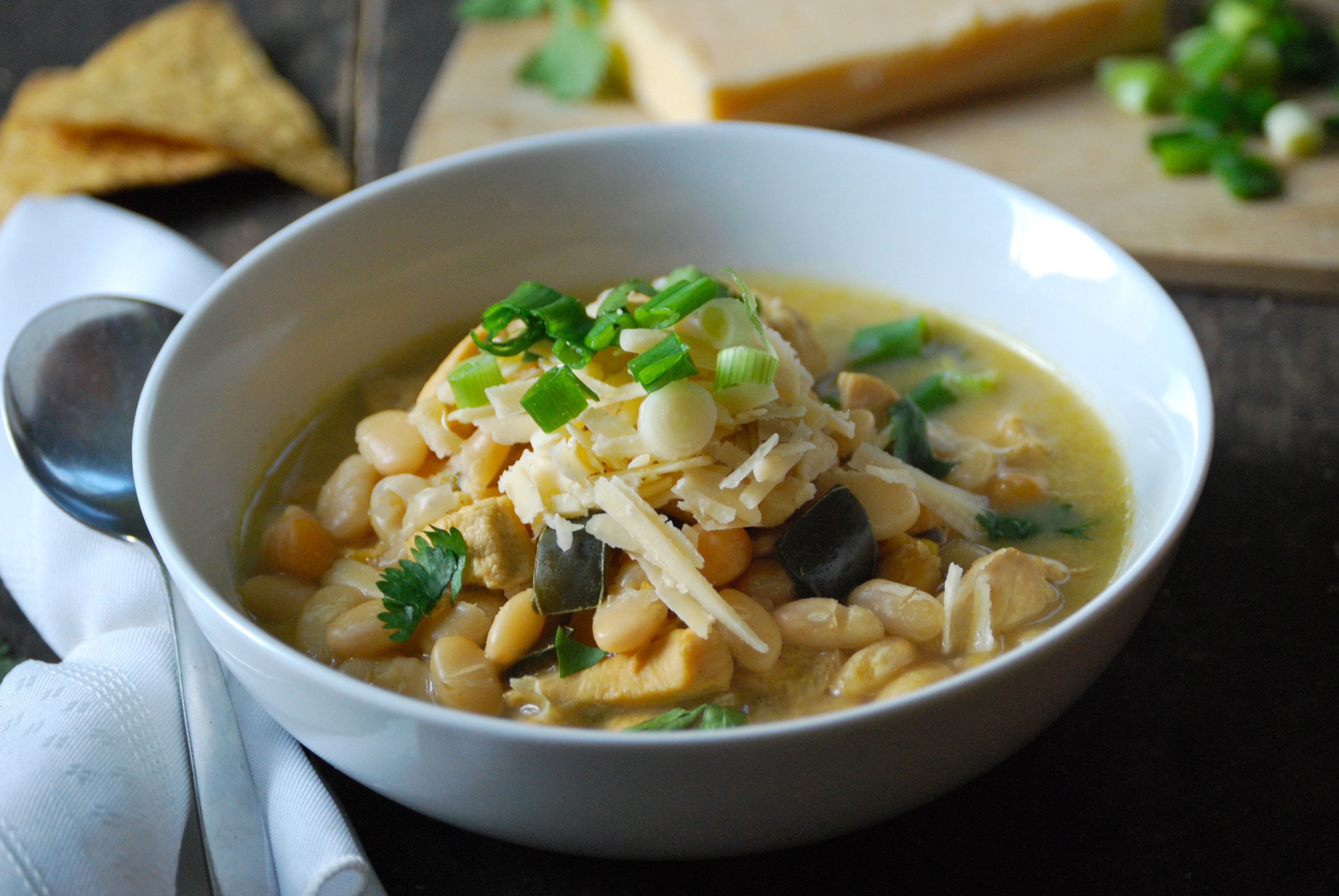
White Chili via Relishing It

If you’ve spent much time with me here on Relishing It, you already know that I love spending time in the kitchen, working my way through an intricate recipe.  Not much makes me happier than pouring through ingredients in the afternoon sun, with the sound of my little ones playing in the next room.  Yes, that’s my heaven.  But of course, the sun doesn’t stream through the windows much here in January, and– let’s be honest– kids generally have a way of needing something every 15 minutes.  So I often have to be more realistic, and for that I love turning to one-pot meals.  This white chili is a great meal that doesn’t require much attention.  It’s hot, healthy, delicious, and best of all, mostly tends to itself.  Perfect for a cold Sunday afternoon when you’re busy playing inside, or (lucky you) when you get a chance to just settle into the couch with a good book.

Dried Beans via Relishing It

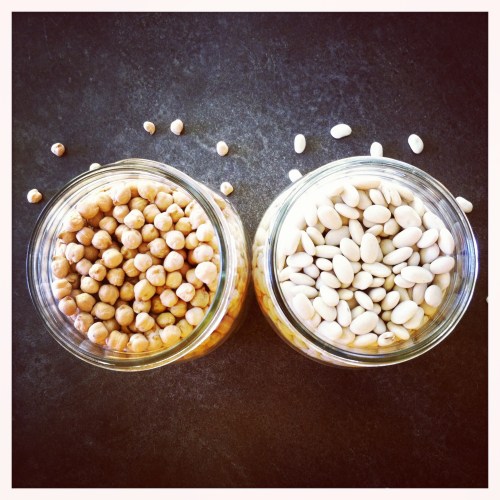
We eat more than our fair share of chili here in the cold months.  I like that it’s relatively healthy, and that I get a chance to experiment with different ingredients and flavor combinations.  Last weekend I made a batch with cubed beef, dark chocolate, toasted cumin seed, an oyster stout beer, and dried ancho chiles that I toasted and ground myself.  Loved it!  But enough about that (for now).  Today’s recipe is for my favorite version of white chili.  I prefer this style to not be too heavy.  If you’ve ordered it in a restaurant, you probably know what I’m talking about.  To get the right consistency, I smash a few of the beans as a thickener, and then use evaporated milk to give it a nice creaminess.  The chickpeas have a wonderful, firm texture that holds up well, while the white cannellini beans add a nice silkiness.  The combination is sublime.  A generous squeeze of lime into the pot for the finish gives it vibrancy and freshness.

White Chili via Relishing It

White Chili via Relishing It

The Recipe: White Chili

(serves at least 4)

1 pound chicken breast, cubed OR about 2 cups shredded roasted chicken (see note 1)

2-3 tablespoons olive oil

1/2 large white onion, chopped

1 jalapeño, finely chopped

1 large poblano pepper, chopped

3 garlic cloves, finely chopped

1 1/3 cups dried chickpeas, soaked OR two 15 ounce cans (see note 2)

1 1/3 cups cannellini beans, soaked OR two 15 ounce cans (see note 2)

1 quart chicken broth

3 tablespoons ground cumin

2 teaspoons ground coriander

1 can evaporated milk

juice of 1/2 – 1 lime, to taste

kosher salt and cracked black pepper

cilantro, lime, green onions, and white cheddar cheese for garnishes

Note 1:  If you choose to use shredded roasted chicken, do not add it to the chili immediately or it will fall apart.  Add it after you purée some of the beans near the end of the cooking time.  Make sure it has enough time to warm through.

Note 2:  Soaking the beans overnight in the refrigerator is one way to prepare the beans ahead of time.  However, if that isn’t possible, place the dried chickpeas and cannellini beans in a large pot and cover with a few inches of water and a couple teaspoons of salt.  Bring the water to a boil.  Cover and remove from heat and let sit for at least two hours.  At this point, check the beans for doneness.  If they are not quite done, you may want to bring them back to a boil once again for a few minutes to soften up a bit more (I find that the chickpeas take a little longer). If you add them to the chili and they are not fully tender, they will soak up a bit more of the liquid.  When they are your preferred texture, drain and set aside.

In a large Dutch oven over medium-high heat, add the olive oil. When it is hot, add the chicken and a sprinkle of salt and pepper.  Brown for a few minutes until cooked through.  Remove the chicken from pan.  To the same pan add a bit more olive oil, if necessary, and the poblano pepper, jalapeño, onions, and garlic.  Sauté for a few minutes until somewhat tender.  Return the chicken to the pan, along with the cumin and coriander.  Cook for 1 minute and then add the chicken stock, chickpeas and cannellini beans.  Bring to a boil.  Reduce heat to low-medium and cook for about 30 minutes – 1 hour.  More if the beans need extra time to soften, less if they don’t.

When the texture of the chili seems right to you, remove about 1 1/2 cups of beans from the pot and place in a shallow bowl.  Use a fork to smash the beans and make smooth.    This will help thicken the chili naturally.  Return the smashed beans to the pot.  Add the evaporated milk and cook uncovered  for a few minutes longer.   Add the juice of 1/2 of a lime to start, and more if you choose.  Taste and re-season with salt and pepper, if necessary.  Enjoy!

Thanks for stopping in today! xo
Laurie

Read Full Post »

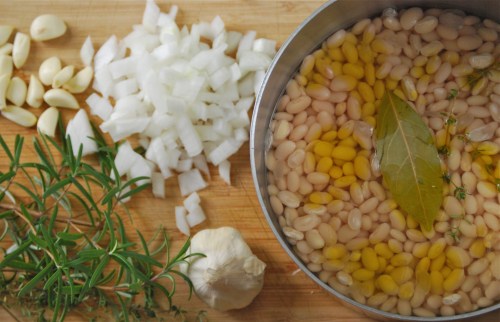
Simple White Beans with Rosemary and Garlic

Greetings friends!  It feels so good to be back here at Relishing It.  Turns out my Summer vacation from posting lasted a little longer than I intended.  At any rate, I’ve missed writing and talking with all of you.  I hope you’ve had a fantastic few months.  Life has been great in my little corner of Minnesota.  The holidays were good to us– we had beautiful traveling weather for our trip back to North Dakota, where we were able to spend time with our families.  Everyone remains in good health, and that is basically all that I need.

Simple White Beans with Rosemary and Garlic via Relishing It

Despite not writing as much lately, I’ve been very busy in the kitchen making new things.  I’ve tried desperately to not bake quite so much, because frankly, we just don’t need all those sweets around.  But…I’ve fallen short of keeping that vow every couple of weeks.  Simply put, I love to bake.  It makes me (and my kids) happy.  So now I’ve modified the vow– we just share more.

I’ve spent the rest of my time in the kitchen preparing healthy and delicious meals.  The pressure to ‘change your diet!’ and ‘lose weight!’ always amps up this time of year, but to be honest, I’m pretty content with where we are.  While I do make foods with butter, oils, sugar, and flour, I do my best to use limited amounts, or find healthier alternatives.  Not to sound too preachy, but there really isn’t a thing I’d change about my diet (especially with the ‘share baked goods vow’).  And that feels pretty good.

I continue to try to learn about how various foods affect my body, as well as how the production of those foods affects the environment.  And I feel lucky to have connected with so many people that feel the same way.  I want to stay healthy and fit for me and for my family, so I stick with the mantra that whole foods and exercise are the key.  If you’ve come here looking for healthy ideas for family meals, you’ll see there’s plenty to choose from.  I love helping people figure out how to eat “clean”.  It’s easier than you think.  Just stay away from packages and long lists of ingredients, add more vegetables, and eat whole foods.  You’ll be amazed.

Simple White Beans with Rosemary and Garlic via Relishing It

This simple pot of beans is a good example of the type of meal I’m talking about.  It’s not fancy, but is perfect for a cold night.  This dish is creamy, comforting, and bold.  The flavors can change dramatically depending on how you season this one, so play to your palate.  If you like Dijon, add a bit more.  Want more of a tang, be liberal with the vinegar.  Play around with it a bit!  The recipe below is how I enjoy it the most.  I generally make a batch of these beans and we eat half of it served alongside roasted buttercup squash (they’re perfect together).  I freeze the other half, and then use it in a simple cassoulet for a quick weeknight meal.  For that cassoulet, prepare some kielbasa sausage and/or some leftover pork shoulder, cut it into chunks,  place it in a shallow baking dish, cover with the thawed then re-warmed white beans, and top with some panko bread crumbs.  Bake at about 375°F for 10-15 minutes (or until the bread crumbs are toasted).  Sprinkle with fresh parsley, and voila!

Simple White Beans with Rosemary and Garlic via Relishing It

The Recipe:  Simple White Beans with Rosemary and Garlic

Serves 4-6

3 cups dried white beans (preferably cannellini, buy navy would work, too)

1/2 large white onion, chopped

2 bulbs garlic, peeled

2 large sprigs of fresh rosemary, chopped

a few sprigs of fresh thyme, left whole

1 dried bay leaf

extra-virgin olive oil

kosher salt and cracked pepper

1-2 tablespoons red wine vinegar

1 heaping tablespoon Dijon mustard

Begin by either covering the white beans with cold water in a large pot and soaking overnight (which I never do) or do a quick-soak method (which I always do) by placing the beans in a large pot or Dutch oven, cover with cold water and a sprinkle of kosher salt.  Bring the beans to a boil.  Boil for one minute.  Remove pot from heat and cover with a lid.  Let sit for two hours.  Drain beans when ready to use.

In that same Dutch oven, to the beans add the chopped onion, garlic cloves (from the two bulbs), chopped rosemary, whole sprigs of thyme, bay leaf, a bit of kosher salt and cracked black pepper.  Just barely cover the beans with fresh cold water.  Then add a couple of glugs of olive oil — about 1/4 cup.   Bring to a boil, then immediately reduce heat to a medium/low simmer.  Let cook for about one hour, stirring every so often, or until the beans are your desired consistency.  I like mine to be rather soft, but still hold their shape a bit.

When they are done cooking, remove from the heat.  Remove the thyme twigs and the bay leaf.  Using an old potato masher or a fork, mash a few of the beans to thicken them up a bit,  3/4 cup or so.  Add the Dijon and red wine vinegar and stir a bit to emulsify.  Re-season with more salt and pepper.  Drizzle with a bit more olive oil when serving and some fresh thyme leaves on top.    Enjoy!

Thanks for stopping by!  xo

Laurie

Read Full Post »
Gazpacho

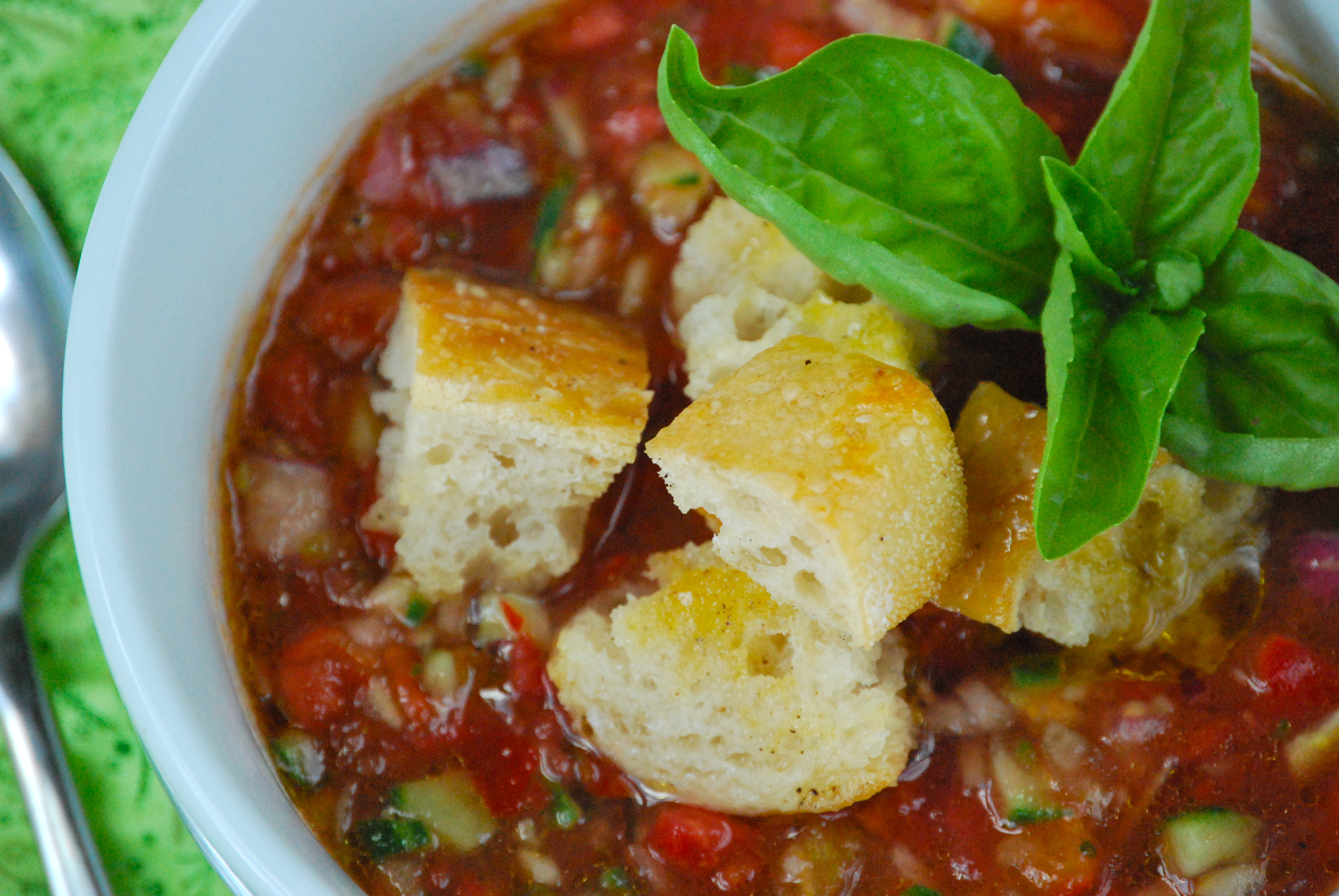
Gazpacho.  Cold soup.  Not much of a selling point is it?  But for those of you who have had gazpacho, you know just how refreshing it is.  Gazpacho is a Spanish tomato-based raw vegetable soup.  It originated in the sunny southern region of Andalusia as a fresh, cool meal to combat the summer heat.  There are many different versions, though this one is my favorite.  For those of you who are hesitant to eat a cool soup, I can only say this: give it a try– I guarantee you’ll make this one every summer as the temperatures get above 90 degrees.  It’s one of the most refreshing dishes you’ll ever taste.

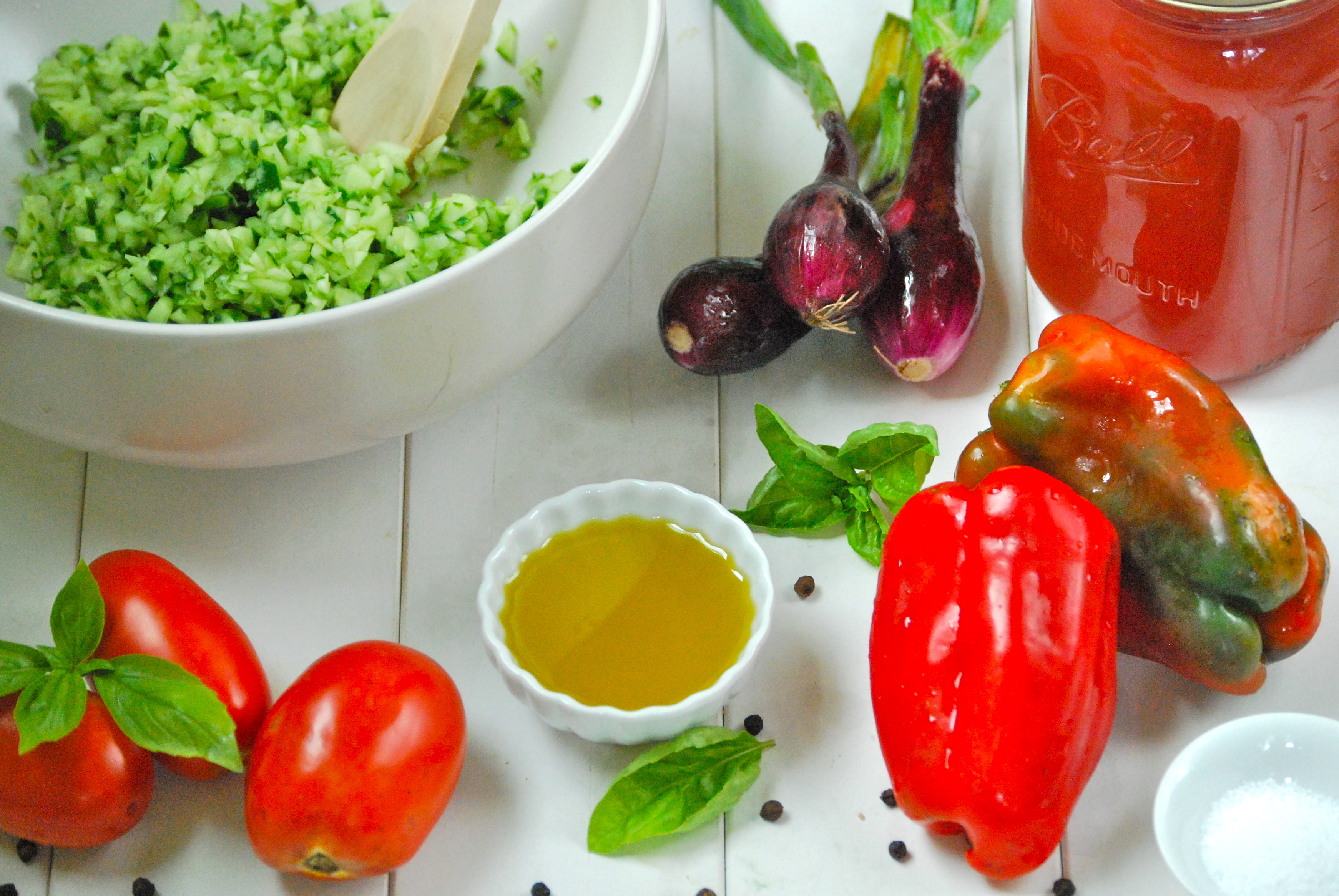
The soup is a combination of the all the wonderful usual suspects from your late-summer garden or farmers’ market– cucumbers, red peppers, purple onion, garlic, and fresh tomatoes.  They’re finely chopped in a food processor and then combined with tomato juice,  a bit of white wine vinegar, and a really good olive oil.   For gazpacho, you’ll definitely want to go with the best olive oil you have as it’s flavor is central to the soup.  I also used my homemade, canned tomato juice, though as my stock is running low (canning tomatos will be available soon!) I can’t lend you an extra jar.  If you can juice, use it as you’ll notice the difference in the final flavors.  As an alternative, several grocery stores carry high-end juices which should work well.  If you instead use a nation-wide brand, use Sacramento.  I personally think it tastes better than any of the other well-known brands.

Gazpacho is the perfect make-ahead dish.  It tastes better the longer it sits– the flavors have a chance to meld together.  I like to make some homemade croutons to top it all off with.  Hope you enjoy!

The Recipe:  Gazpacho

2 medium-sized garden cucumbers, halved and seeded, but not peeled

2 red bell peppers, cored and seeded

5-6 Roma tomatoes

1 red onion

3 large garlic cloves

3 cups good quality tomato juice

1/4 cup white wine vinegar

scant 1/4 cup good extra-virgin olive oil

1/2 tablespoon kosher salt

1 teaspoon freshly ground black pepper

Add 1/4 teaspoon red pepper flakes for a little heat, if desired

For the Croutons:

2 – 3 cups crusty bread, such as a baguette, cut into 1-inch cubes

2 tablespoons olive oil

salt and pepper

To make the croutons: Preheat oven to 375°F.  Toss cubed bread pieces with the olive oil, salt and pepper.  Place on a baking sheet.  Bake for about 10-15 minutes or until they have reached your desired crunchiness.

Roughly chop the cucumbers, bell peppers, tomatoes, and red onions into small pieces, roughly a 1-inch cube.  Put each vegetable into a food processor fitted with a steel blade, separately.  This is important for texture.  Pulse until it is coarsely chopped.  Make sure not to over-process.

After each vegetable is processed, combine them in a large bowl and add the garlic, tomato juice, vinegar, olive oil, salt and pepper.  Mix well and chill before serving.  The longer it sits, the better it will be.  Before serving top each bowl of soup with a handful of homemade croutons and some torn basil, if desired.  Enjoy!

Source:  Adapted from Ina Garten’s The Barefoot Contessa Cookbook

Thanks for stopping by!

Laurie

Follow me on Twitter!

Read Full Post »

I made the long drive across the entire state of North Dakota to my home town yesterday.  It was me, my four-year-old and my two-year-old…in a car…for 8 1/2 hours.  I made the same drive last Summer, also without Radd (who’ll be joining us later this week), and was so proud of myself for having arrived with my little kids and sanity intact that you’d have thought I split the atom.  Fortunately it went well again this year, though was about as fun as you’d expect.  


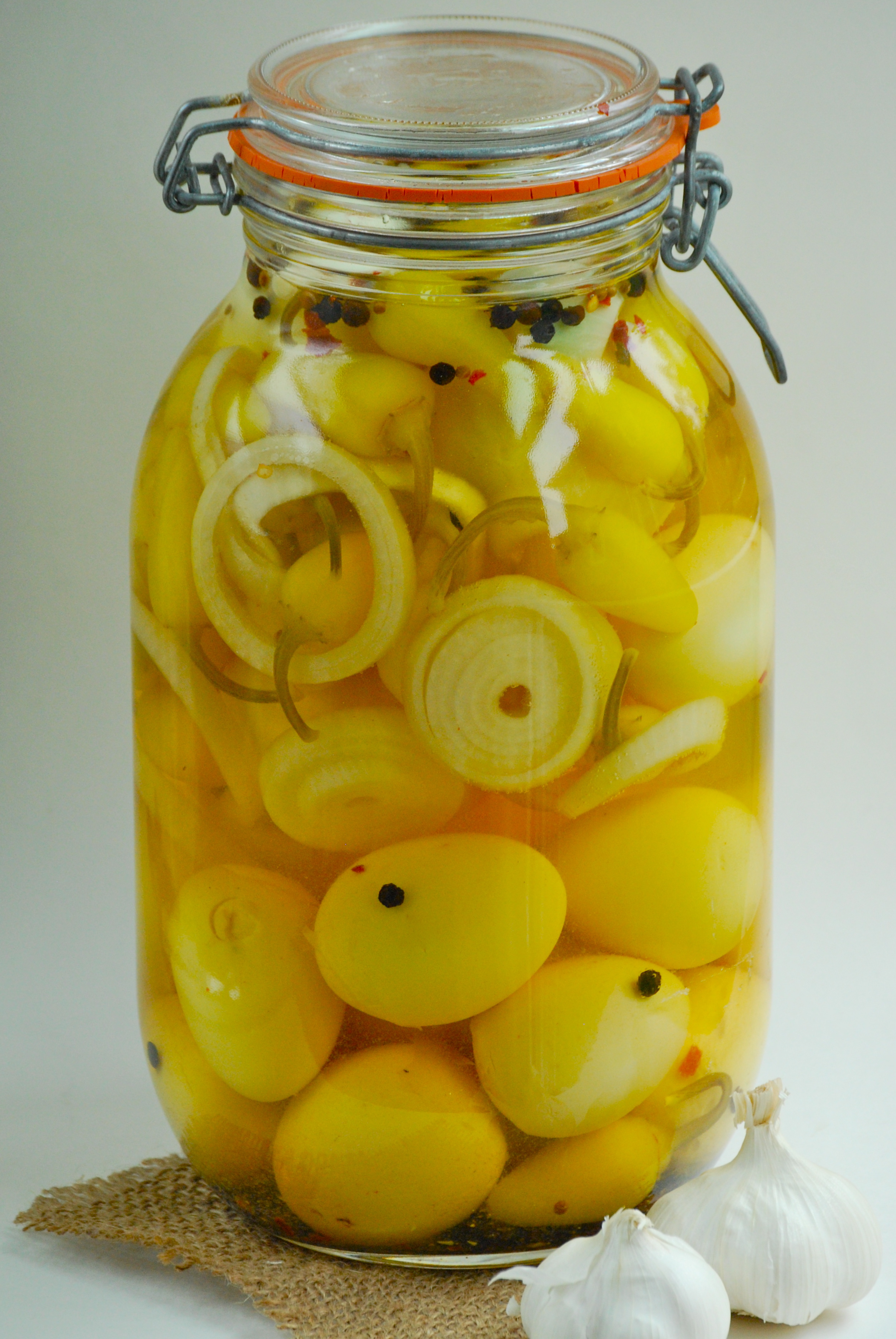
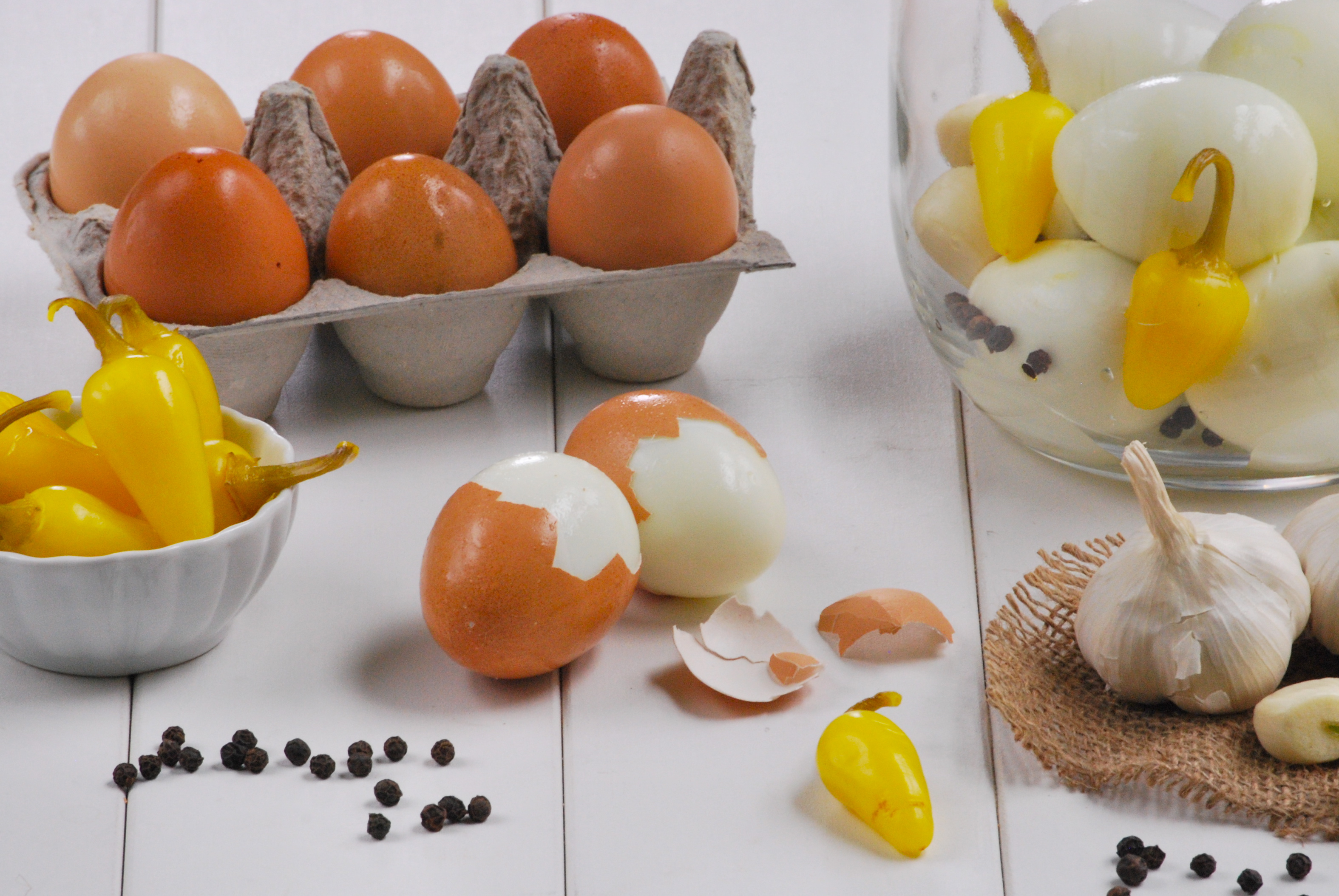
Since I’m heading back to my roots this week, I thought I’d share a little treasure from my childhood–pickled eggs.  It seems a bit odd to follow up French-style recipes for clafoutis and galettes with ‘pickles-in-a-jar’, but there’s something to be said for comfort food.  I grew up with jars of these treats sitting on our counter.  While pouring over childhood pictures recently, I noticed that there was an egg jar in the background in so many photos.  My Mom made the best pickled eggs– we absolutely loved ’em.

In continuing with my food philosophy, I use high-quality eggs in all of my baking and cooking.  I’m talking about eggs that come from a farm where the chickens roam freely and peck at nutritious food– not the cheap, supermarket eggs that sell for $1 a dozen, as these generally come from perpetually-caged chickens that have never seen daylight.  Yes, organic/cage-free eggs are a bit more expensive, but compared to your other proteins (meat) they are affordable.  Free-range cage-free eggs are not only a great source of protein, but they provide healthy Omega-3’s.  They’re also relatively low in calories.

Through the years, my brother and I have made adjustments to our Mom’s pickled-egg recipe.  We’ve been on a quest to improve upon ‘the best’ by making it a bit spicier.  This is my latest version. Now if you don’t fancy spicy food– you can skip the chili peppers and the red pepper flakes.  My family prefers to eat these eggs with a basket of pretzels, a few drops of Chalupa (or a Louisiana-style) sauce, and a nice cold beer.  Perfect.

The Recipe:  Pickled Eggs

Roughly 2 dozen eggs, hard boiled

1 liter white vinegar

1 jar hot chili peppers and the juice (Mezzetta is my favorite brand for these)

1 white onion, thickly sliced

1 bulb garlic, cloves peeled and left whole

1 teaspoon pickling spice

1 tablespoon peppercorns

To boil the eggs:  Gently place the eggs in a 4 quart sauce pan.  Cover with cold water.  Let cook over medium heat until water begins to boil.  Boil for 1 minute only.  Cover and remove from heat immediately.  Set a timer for 12 minutes.  After that, pour out the hot water and run cold water over the eggs to stop the cooking process.  Let cool completely before peeling.  (Note: older eggs peel more easily than fresh ones)

Once your eggs are cool and peeled, start layering your ingredients into your jar.  This doesn’t have to be precise.  Once the eggs, onions, garlic, hot chili pepper and their juice, peppercorns, and pickling spice are in the jar — you can add the white vinegar.  Make sure you have enough liquid to cover the eggs.  These eggs will start to taste “pickled” in about 3 days, and will keep getting better and hotter the longer they sit.  They can be stored, tightly sealed on your counter.  Enjoy!

Read Full Post »

« Newer Posts - Older Posts »